
Single-Setup Concentricity as Standard
Multi-journal concentricity — front bearing journal, rear bearing journal, encoder seat, output flange register — held to ±0.002mm from one datum, one chucking .
CNCPioneer is a China robot output shaft manufacturer machining custom hollow and solid actuator shafts for cable routing, encoder coupling, bearing journals and output flange interfaces.
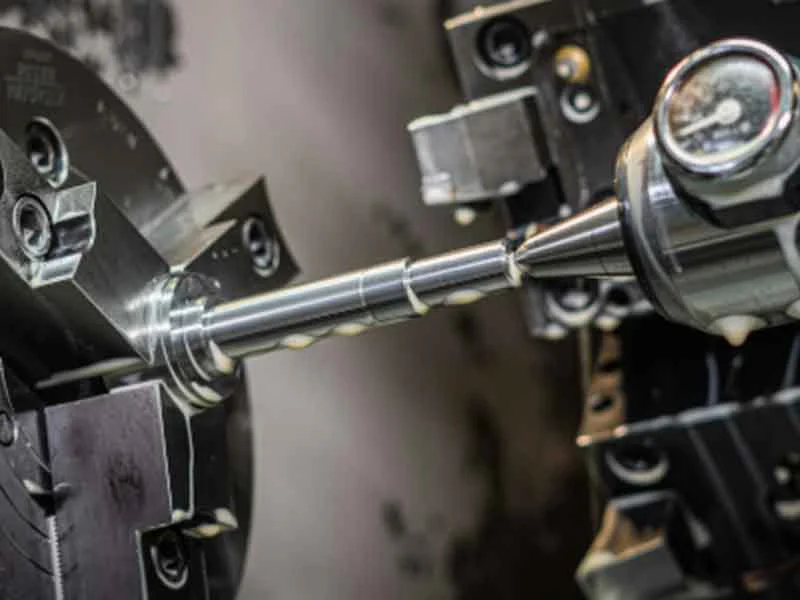
The robot output shaft occupies a uniquely consequential position in actuator architecture because it is the single component where every subsystem intersects: the gearbox connects to it, the output bearing seats on it, the structural link attaches through it, the position encoder reads from it, and the cables pass through it.
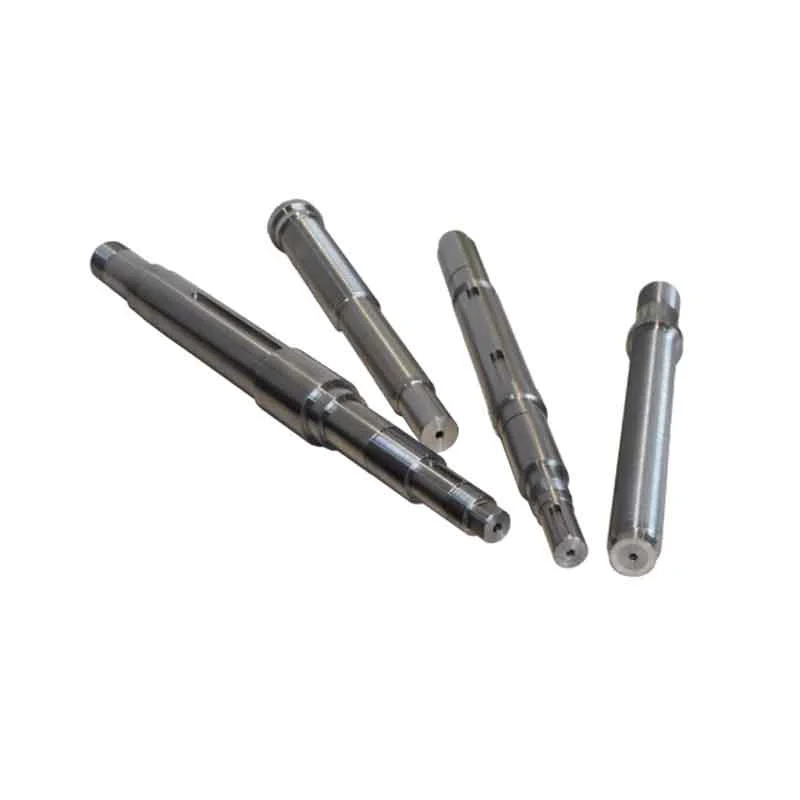
Coordinate geometry, material, finishing and inspection around the part's intended function.
Multi-journal concentricity — front bearing journal, rear bearing journal, encoder seat, output flange register — held to ±0.002mm from one datum, one chucking .
Torsional stiffness analysis, bore-to-OD coaxiality coordination to ±0.005mm , and wall thickness uniformity verification at ±0.050mm provided as standard DFM practice for every custom hollow shaft program — not an afterthought discovered at prototype testing.
Encoder seat total indicator runout treated as a primary quality specification — ≤0.003mm standard, ≤0.002mm high-precision — verified by roundness tester on every lot, with TIR records included in the dimensional documentation package.
Review bearing journals together with flats, cross-holes and drive features. The shaft length, stock diameter and feature access determine the proposed turning and milling route.
Supply the shaft drawing, mating fits and annual or batch quantity. Review slender sections, setup references and any missing acceptance criteria before price and delivery are agreed.
CNCPioneer provides DFM review and dimensional documentation for solid and hollow robot output shaft programs, including journal concentricity, encoder seat TIR, bearing interference class, bore coaxiality, material certificates and PPAP requirements .
Explore representative configurations and share your drawing for a product-specific review.
Standard integral-flange shafts (output bearing journal ±0.002mm, flange perpendicularity 0.005mm), short stub disc-format shafts for ultra-compact harmonic drive joint packaging, and tapered output shafts (Morse or metric taper, angular accuracy ±0.01°) for joints without through-shaft cable routing requirements.
Ø10–25mm OD, through-bore Ø4–10mm, wall 2.0–4.0mm — Swiss CNC gun-drilled bore position ±0.020mm over 50–80mm shaft length, bore coaxiality ±0.003mm.
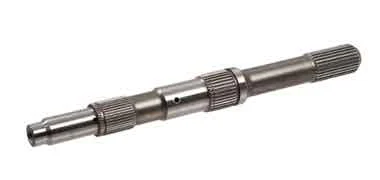
Strain-gauge instrumented output shafts with precision-machined sensing zones (OD accuracy ±0.005mm for consistent torque calibration), and modular actuator shaft families with common output flange bolt patterns and constant hollow bore diameter across torque-class variants for one cable harness design.
Match the component to its operating environment, assembly interfaces and documentation requirements.

Aluminum Shafts CNC Turning for robot joints, actuators and mechanical assemblies, with material and inspection requirements confirmed for the application.

Aluminum Shafts CNC Turning for robot joints, actuators and mechanical assemblies, with material and inspection requirements confirmed for the application.

Aluminum Shafts CNC Turning for robot joints, actuators and mechanical assemblies, with material and inspection requirements confirmed for the application.
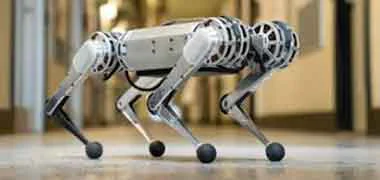
High-torque 42CrMo4 hollow shafts for quadruped and biped legged robot hip, knee and ankle actuators — fatigue-rated geometry, impact-tolerant material selection and China production planning for legged robot hardware programs.

Aluminum Shafts CNC Turning for medical equipment, instruments and component assemblies, with material and inspection requirements confirmed for the application.
Explore medical machining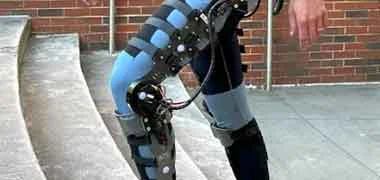
Lightweight hollow robot output shafts for exoskeleton joint actuators, alongside scheduled actuator shaft production for industrial robot joint modules with dedicated MAZAK capacity and production documentation.
Explore machining capabilities, material options and quality support for robotics components.
Explore robotics machiningMaterials
Confirm the exact grade, delivery condition and finish compatibility with your drawing.
Confirm the exact material grade, condition, heat-treatment requirements and certificates against the approved drawing.
Confirm the exact material grade, condition, heat-treatment requirements and certificates against the approved drawing.
Confirm the exact material grade, condition, heat-treatment requirements and certificates against the approved drawing.
Surface HRC 58–62, 0.1–0.3mm case depth · Bearing-quality journal hardness without full through-hardening distortion — post-nitride cylindrical grinding restores ±0.002mm diameter and Ra 0.1μm on all bearing journals
Surface HRC 60–62, tough core · Robot output shafts with integrated gear zones where the shaft body doubles as a gear element, combining a hard wear surface with a ductile core resisting fatigue crack propagation
HRC 62–65 · Maximum surface fatigue resistance · Integrated bearing-race robot output shaft designs where the journal itself functions as an inner race surface under sustained rolling contact load
Titanium options for weight-sensitive and corrosion-resistant components. Confirm the approved grade, material condition and surface requirements.
Aluminum options for lightweight machined components. Confirm the alloy, temper, finishing allowance and critical assembly dimensions.
Finish selection
Select the finish around the specified material, functional surfaces and service conditions. Confirm process details and acceptance requirements with your drawing.
Review passivation against the material, functional surfaces and intended service conditions.
Low-reflectance mild corrosion protection for 42CrMo4 steel robot output shafts in camera-adjacent joint locations — minimal dimensional change (≤0.0002mm), compatible with ±0.002mm journal tolerances without allowance.
Corrosion protection for steel robot output shafts in corrosion-exposed joint environments, and lubrication-enhancing coating for hollow shaft interior bores reducing cable-to-bore friction.
Ultra-low friction (μ 0.05–0.15 dry) for seal running surfaces and hollow shaft bore interiors where cable contact occurs during joint rotation — reduces cable-to-bore friction 60–70% versus uncoated aluminum or steel.
Case-hardened surface HRC 58–62, 0.1–0.3mm case depth for 42CrMo4 shafts requiring bearing-quality journal hardness without full through-hardening distortion.
Wear-resistant coating for lip seal running surfaces and high-wear sliding contact zones on robot output shafts.
Machining resources for drawing review, prototypes and repeat-production programs.
Inspection & documentation
Review material identity, machining datums, functional dimensions and production records for your component.
Final tolerances, inspection coverage and acceptance criteria are confirmed against your drawing, material and geometry.
Confirm the certificates, inspection reports and production records needed for your order when sharing your drawing.
The product range includes Solid Robot Output Shafts, Miniature Hollow Shafts, Instrumented & Modular Shaft Families. Custom geometry is reviewed against the approved drawing.
Material options include 17-4PH H900, 316L, 42CrMo4 (Through-Hardened). The exact grade and condition should be confirmed for your application.
Bore coaxiality should be set by the cable's fatigue tolerance at the bore exit, not a default precision value.
Finishing options include passivation, black oxide, electroless nickel. Applicability is reviewed against the specified material and geometry.
Pricing and delivery are confirmed after reviewing the drawing, material availability, quantity, machining route, finishing and inspection scope.
CUSTOM CNC PARTS
Share your drawing or 3D model, material, critical dimensions, finish and order quantity. We’ll review the machining route, inspection scope and delivery requirements.
 Aluminum CNC Turning Parts
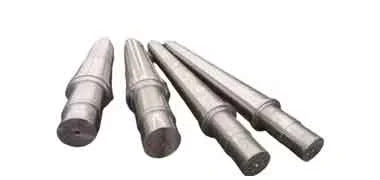 Aerospace Precision Shafts for Flight-Critical Rotating Systems
 Stainless Steel Precision Turning Shafts
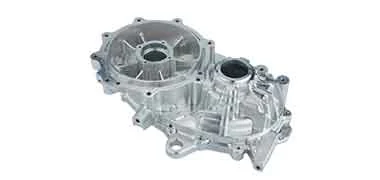 5-Axis Aluminum CNC Machining Parts