
EV Charger
Manufacturing Services
CNCPioneer is an IATF 16949 and AS9100D certified EV charger manufacturing services specialist delivering custom EV charger machining programs — AC Level 1 and Level 2 EVSE enclosure bodies, DC fast-charger power electronics housings, ultra-fast charger liquid-cooled cold plates, and complete EV charger machined component sets — with enclosure face flatness of 0.010mm/300mm for IP66/IP67 sealing, heat sink channel position accuracy of ±0.100mm, and mounting baseplate surface flatness of 0.005mm for power semiconductor module seating.

What Are EV Charger
Manufacturing Services?
EV charger manufacturing services — as delivered by CNCPioneer — are the precision CNC machining programs that produce the structural, thermal management, power electronics interface, and environmental sealing components constituting the mechanical architecture of electric vehicle supply equipment (EVSE): the charging stations, wall boxes, pedestal chargers, and fast-charging dispensers that transfer electrical energy from grid to vehicle battery across Level 1 residential chargers, Level 2 commercial chargers, DC fast chargers (DCFC), and ultra-fast chargers (UFC) at power levels from 1.4kW through 400kW and above.
The mechanical engineering challenges in EV charger manufacturing services span three distinct technical domains. First, thermal management at increasing power densities: modern 150–400kW DC fast chargers and ultra-fast chargers dissipate 5–30 kW of power loss in compact enclosures — requiring precision-machined liquid-cooled cold plates, billet-machined heat sinks with channel depth uniformity ±0.100mm, and coolant manifold bodies with 100% pressure decay leak certification. Second, outdoor environmental protection: EVSE deployed outdoors must achieve IP54, IP65, or IP66 rating — requiring machined sealing surfaces with flatness 0.020mm/300mm and gasket groove geometry controlled to ±0.020mm. Third, power electronics assembly precision: SiC MOSFET or IGBT power modules require mounting baseplates machined to 0.005mm surface flatness for maximum thermal conductance from 200°C semiconductor junctions through the thermal interface material to the coolant.
-
Thermal management at increasing power densities Modern 150–400kW ultra-fast chargers dissipate 5–30 kW of power loss in compact enclosures — requiring precision-machined liquid-cooled cold plates with top face flatness 0.010mm/300mm, billet-machined heat sinks with channel depth uniformity ±0.100mm, and coolant manifold bodies with 100% pressure decay leak certification at 1.5× rated pressure.
-
Outdoor environmental protection & IP sealing EVSE deployed outdoors must achieve IP54, IP65, or IP66 rating against rain, dust, and high-pressure wash-down — requiring machined sealing surfaces with flatness 0.020mm/300mm, gasket groove width ±0.020mm and depth ±0.010mm, and gland plate sealing bores ±0.020mm for cable ingress protection.
-
Power electronics assembly precision SiC MOSFET or IGBT power modules driving the charger's DC-DC conversion stage require mounting baseplates machined to 0.005mm surface flatness for maximum and uniform thermal conductance from 200°C semiconductor junctions through the TIM to the coolant — the flatness specification that governs the charger's continuous power rating.
-
Complete component portfolio from one source Power module baseplates, liquid cold plates, heat sinks, structural mounting frames, HV cable gland plates, connector inlet housing bodies, and complete machined component kits — all from CNCPioneer's China EV charger factory under one IATF 16949 quality system, eliminating inter-supplier dimensional tolerance accumulation.

Why CNCPioneer for EV Charger
Manufacturing Services?
Among EV charger manufacturing services providers globally, CNCPioneer's power electronics baseplate flatness discipline, liquid cooling cold plate integrity, IP sealing surface quality, complete component portfolio, 5-axis CNC capability, and China factory cost advantage establish our facility as the preferred EV charger machining partner across the full EVSE supply chain.
Power Module Baseplate Flatness as Thermal Foundation
At 0.005mm flatness (CNCPioneer production standard), the TIM layer compresses uniformly to its designed 50–100μm bond-line thickness across the full module footprint — achieving thermal resistance R_th ≤ 0.5 K/W. At 0.020mm flatness, TIM bond-line thickness varies by ±0.015mm, producing thermal resistance variation of ±0.3 K/W — equivalent to ±15°C junction temperature variation that derates the charger's continuous power rating. CNCPioneer achieves 0.005mm flatness by precision face grinding on thermally stabilized fixtures — verified by 25-point CMM grid on every baseplate before release.
Liquid Cooling Cold Plate as Continuous Power Enabler
Modern 150–350kW ultra-fast chargers sustain continuous power delivery only if the liquid cooling system extracts heat at the designed rate. The cold plate machining discipline — internal channel position ±0.100mm, minimum wall thickness uniformity ±0.050mm, and 100% pressure decay leak test at 1.5× rated pressure — determines whether the cold plate achieves the thermal design's target heat extraction rate. Residual stress relief (175°C × 3h for 6061-T6) before finish face grinding prevents plate warpage from machining stress.
IP Sealing Surface Machining as Weatherproofing Quality
Every outdoor EV charger enclosure requires IP54 through IP67 sealing at all panel joints, cable entry glands, and connector inlet openings. The sealing surface flatness (0.020mm/300mm), gasket groove geometry (width ±0.020mm; depth ±0.010mm), and gland plate bore accuracy (±0.020mm) together determine whether the assembled enclosure seals correctly against rain infiltration, dust ingress, and pressure wash-down — the most common cause of outdoor EV charger electronics damage is field moisture ingress from sealing defects.
Complete EV Charger Component Portfolio
Power module baseplates, liquid cold plates, heat sinks, structural mounting frames, HV cable gland plates, connector inlet housing bodies, conduit entry plates, display mounting bezels, pedestal base plates, and metering hardware — all from CNCPioneer's China EV charger factory under one IATF 16949 quality system. Single-source EV charger machining eliminates the inter-supplier dimensional tolerance accumulation that occurs when enclosure bodies, thermal components, and mounting structures are sourced from different facilities.
5-Axis CNC for Complex Housing & Manifold Geometry
DCFC and UFC charger housings with multi-directional cable exits, non-orthogonal mounting interfaces, and compound-angle HV connector port arrangements require 5-axis simultaneous machining for all critical geometry from one datum reference. CNCPioneer's MAZAK VARIAXIS programs machine EV charger housing compound features at ±0.020° angular accuracy — maintaining cable exit perpendicularity to housing wall, HV connector port alignment to cable routing, and mounting interface geometry that determines correct charger-to-pedestal assembly.
40–60% China EV Charger Factory Cost Advantage
CNCPioneer as a China EV charger factory delivers 40–60% below equivalent EV charger machining from US, European, and Japanese precision machining facilities at identical flatness, channel position accuracy, IP sealing surface quality, and IATF 16949 documentation — the cost advantage enabling EVSE OEMs and charging equipment integrators to achieve product cost targets in a rapidly growing but margin-competitive EV charging infrastructure market.
EV Charger Machined Components
We Manufacture
CNCPioneer's EV charger manufacturing services programs cover the complete mechanical architecture of EV charging equipment — from thermal management components that govern power density capability through enclosure sealing surfaces that determine outdoor reliability, all under one IATF 16949 quality system.

Power Module Mounting Baseplates
The SiC MOSFET or IGBT power module mounting surface is the highest-specification precision-machined surface in the entire EVSE assembly. Flatness 0.003–0.010mm per application; surface finish Ra 0.2–0.4μm for optimized TIM contact; channel machining ±0.050–0.100mm per UFC/DCFC application; 100% pressure test at 1.5× rated. Materials: 6061-T6, 6063-T5, Cu-W composite (CTE-matched for SiC modules). At 0.005mm flatness, TIM compresses uniformly to 50–100μm bond-line thickness across the full module footprint — achieving thermal resistance R_th ≤ 0.5 K/W.

Liquid-Cooled Cold Plates
The primary thermal management component for 50–400kW DCFC and UFC power modules. Top face flatness 0.010mm/300mm for power module contact; internal channel accuracy ±0.100mm position, ±0.050mm wall thickness; port threads G1/4–G1/2 BSP or NPT ±0.005mm; 100% pressure decay leak test at 1.5× rated, 30-second hold, zero decay. Residual stress relief at 175°C × 3h post-rough-mill prevents plate warpage. Material: 6061-T6 standard; 6063-T5 for highest thermal conductivity priority (200 W/m·K versus 167 W/m·K).

Billet & Extruded Heat Sinks
For DCFC designs using forced-air cooling and Level 2 EVSE air-cooled programs — billet or extruded aluminum heat sinks with precision-machined fin geometry. Base flatness 0.010mm/200mm for electronics contact; fin height ±0.200mm; fin pitch ±0.100mm governing pressure drop and heat transfer area; fan mounting bore pattern ±0.010mm true position. Materials: 6061-T6 billet (precision machined); 6063-T5 extruded profile (machines base face and fin tips from extrusion).

Enclosure Bodies & Sealing Components
Outdoor EV charger enclosure panels, wall-box back-plates, and pedestal column bases requiring IP54/IP65/IP67 weatherproofing. Panel sealing face flatness 0.020mm/300mm; gasket groove width ±0.020mm, depth ±0.010mm, 100% continuity verified visually; DIN rail mounting slots ±0.050mm; wall mounting bracket bolt hole pattern ±0.010mm. Materials: 6061-T6 aluminum (Type II anodize or powder coat); 316L stainless for marine and corrosive environment EVSE programs.

HV Cable Gland Plates
The precision-machined plate through which HV power cables enter the EVSE or DCFC enclosure — sealing against IP65/IP67 water and dust ingress. Gland bore diameter ±0.020mm for gland body OD thread engagement; bore position ±0.050mm from plate datum; plate face flatness 0.020mm for IP sealing against enclosure wall; bore perpendicularity 0.010mm for correct gland installation. Conduit entry thread NPT 3/4" or 1" ±0.005mm. Material: 6061-T6 aluminum (anodized); 316L stainless for coastal and salt-spray environments.

Connector Inlet Housing Bodies
The structural housing body that positions the charging connector inlet (CCS2, CHAdeMO, or GB/T 20234.3) in the charger front panel. Connector inlet bore ±0.050mm diameter; bore perpendicularity to housing face 0.020mm for correct inlet-to-panel alignment; sealing groove around inlet bore ±0.020mm width and depth for IP65 weather sealing; cable strain relief bracket ±0.100mm position. Material: 6061-T6 powder coated (charger front panel element).
Industries & Applications
CNCPioneer's EV charger manufacturing services serve every industry segment in the EV charging infrastructure value chain — from high-volume residential wall-box OEMs through ultra-fast charging network operators deploying 400kW+ dispensers.

EVSE OEMs — Level 1 & Level 2 Wall-Box
High-volume residential and commercial Level 1/Level 2 EVSE enclosure machined component programs — enclosure bodies, back-plates, gland plates, DIN rail mounting components, connector inlet housings, and weather sealing hardware. Production supply programs for 50,000–500,000 wall-box units annually; blanket order supply with safety stock; powder coat and anodize surface treatment coordination included.

DC Fast-Charger — 50–150 kW
DCFC power electronics housing bodies, liquid-cooled cold plates with 100% pressure decay certification, heat sink programs, HV cable gland plates, and connector inlet housing bodies — all IATF 16949 production quality for 24/7 public DCFC network station supply programs. Complete DCFC machined component BOM supply from one China EV charger factory relationship.
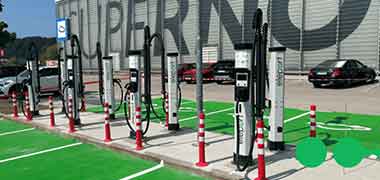
Ultra-Fast Charger — 150–400 kW+
UFC precision power module baseplates (flatness 0.003mm; CTE-matched Cu-W composite for SiC module programs), large-format liquid cold plates (6063-T5 for maximum thermal conductivity), integrated cooling manifold bodies with flow-orifice balancing, 5-axis dispenser column structural components, and UFC junction box housing machining — the highest-precision and highest-value EV charger manufacturing services programs.

Charging Network Operators & Integrators
Custom enclosure and structural components for charging network operators integrating third-party charger modules into proprietary dispenser column designs — custom column frame structural machining, branded enclosure panel machining with proprietary geometry, and network communication module housing machining per operator specification.

Fleet Charging Infrastructure
Bus depot, logistics center, and commercial fleet charging infrastructure components — high-current distribution cabinet machined elements, multi-outlet charging bay structural frames, cable management hardware for high-density fleet charger installations, and metering and power management equipment housing bodies.
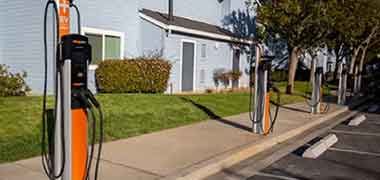
Workplace & Residential Charging Equipment
Smart home charging system enclosure bodies, bidirectional V2H (Vehicle-to-Home) EVSE housing components, and workplace charging hub mounting structures — volume EV charger manufacturing company production for 100,000+ annual unit residential and commercial EVSE programs.
EV Charger Machining
Processes & Capabilities
CNCPioneer's EV charger manufacturing services process runs on 66+ MAZAK mill-turn centers, MAZAK VARIAXIS 5-axis platforms, and 78+ Swiss CNC lathes — delivering complete EV charger machining in China production programs from single prototype components through 500,000+ annual unit volumes.
24-Hour Engineering DFM & Quote
Every EV charger machining inquiry receives engineering DFM: cold plate thermal resistance calculation confirming channel geometry achieves target R_th at specified flow rate; minimum wall thickness pressure rating from FEA at 3× test pressure; gasket groove geometry selection per IP rating requirement; Alodine vs. anodize trade-off at each interface; 6061-T6 vs 6063-T5 thermal comparison for UFC cold plate programs; residual stress relief protocol; and 5-axis routing assessment for compound-geometry housing programs.
MAZAK Mill-Turn — Power Module Baseplates
MAZAK mill-turn single-setup programs for EV charger thermal components: billet fixturing → rough face mill → rough channel mill → inter-channel wall thickness probe → residual stress relief (175°C × 3h) → finish channel mill → port machining → precision face grinding (CBN wheel, 0.002mm/pass) → 25-point CMM flatness verification → 100% pressure decay leak test. Every cold plate serialized and recorded.
5-Axis Machining — Complex Housing Bodies
MAZAK VARIAXIS 5-axis for compound-geometry charger housing components: UFC junction box housing with multi-directional HV port array — AC input, DC output, pre-charge, ground monitoring, and HV cable entry ports all machined from one housing datum in one 5-axis program. Cumulative position error ±0.030mm from any port to any other — eliminating the ±0.300mm+ inter-port error that accumulates with separate setups.
Precision Surface Grinding — Power Module Contact Faces
Dedicated surface grinding for EV charger power module baseplate and cold plate top surfaces requiring flatness below 0.010mm. CBN wheel for aluminum; temperature-controlled grinding (workpiece monitored, stops if exceeds 25°C); 25-point CMM grid measurement immediately post-grind and 15 minutes post-grind for thermal equilibration. Optical flat interferometry option for 0.003mm UFC baseplate specification programs.
Swiss CNC — Small Precision Components
Swiss CNC for miniature EV charger precision components including spacers, bushings, feed-through bodies, and small-format mounting hardware. Precision spacer program: Ø3–15mm spacers; height ±0.005mm; parallelism ±0.003mm; Ra 0.4μm. Feed-through bushing: Ø5–25mm; bore ±0.005mm; OD ±0.005mm; concentricity ±0.003mm. Miniature sensor housing: Ø8–20mm; bore ±0.003mm; thread ±0.005mm.
IATF 16949 / AS9100D Documentation
CMM dimensional report: flatness, gasket groove dimensions, channel positions, bore diameters, port thread pitch diameters, housing compound port angles. Profilometry: power module contact surface Ra; sealing face Ra. Pressure decay test record: per cold plate and manifold; test pressure, hold duration, result, serial number. Material certification: EN 10204 3.1 equivalent. Surface treatment certification. PPAP Level 3 for automotive EV charger OEM programs.
Materials for EV Charger
Manufacturing Services
EV charger manufacturing services material selection is governed by thermal conductivity for cold plates and heat sinks, corrosion resistance for outdoor enclosures, electrical isolation for HV insulators, and CTE matching for SiC power module baseplates. 6061-T6 dominates as the best all-round EVSE alloy; 6063-T5 provides 20% thermal conductivity advantage for thermal priority components.
Aluminum 6061-T6
167 W/m·K thermal conductivity · Best all-round EVSE alloy; excellent machinability. Used for enclosure bodies, cold plates, heat sinks, and mounting frames across all EV charger manufacturing services programs. CNCPioneer maintains dedicated 6061-T6 billet and extrusion safety stock for high-velocity customer part numbers. XRF composition verification on every lot — Mg 0.80–1.20%; Si 0.40–0.80%. Hardness: HRB 60–75.
Aluminum 6063-T5
200 W/m·K thermal conductivity · 20% thermal conductivity advantage over 6061-T6 — most significant for cold plates and heat sinks where the machined aluminum body is itself the primary thermal conductor. For a 50kW DCFC cold plate: reduces thermal resistance from 0.6 K/W (6061-T6) to 0.5 K/W (6063-T5) — a 10°C junction temperature reduction, enabling 10% higher continuous power rating. CNCPioneer recommends 6063-T5 for all DCFC and UFC cold plate programs where thermal performance is critical.
Aluminum 7075-T6
130 W/m·K · 503 MPa yield · Maximum strength aluminum for high-load structural applications — UFC dispenser column frames, high-load mounting brackets, and structural elements where 6061-T6 strength is insufficient. Used where structural load-bearing capacity governs over thermal conductivity. Hard anodize Type III (HV 400+) available for wear resistance on load-bearing surfaces.
Stainless 316L
16 W/m·K · Superior corrosion resistance for marine EVSE enclosures, salt-fog environment charger bodies, and coastal charging station gland plates. 316L's molybdenum content provides chloride resistance that 304 cannot match in salt-spray environments. Passivation ASTM A967 mandatory post-machining to restore passive oxide layer at machined surfaces. Used for gland plates, mounting hardware, and enclosure bodies in corrosive outdoor EVSE programs.
Stainless 304
16 W/m·K · General corrosion resistance for outdoor EVSE mounting hardware, bracket assemblies, and indoor charger components where 316L's premium corrosion resistance is not required. Cost-effective stainless option for non-coastal outdoor EV charger programs. Passivation ASTM A967 standard post-machining treatment.
Cu-W Composite 15Cu-85W
180 W/m·K · CTE 6.8 ppm/°C (matches SiC) · CTE-matched UFC power module baseplates for SiC module programs where CTE mismatch between aluminum (23.6 ppm/°C) and SiC causes module solder joint fatigue under thermal cycling. Cu-W composite baseplates eliminate the thermal fatigue failure mode that limits aluminum baseplate life in high-power-density UFC programs. Precision machined and ground to 0.003mm flatness.
Copper C11000 ETP
391 W/m·K · Maximum electrical and thermal conductivity for busbar terminal lugs, high-current distribution bars, and grounding components in EV charger power distribution assemblies. Used where electrical conductivity is the governing specification rather than structural strength. CNCPioneer machines copper busbar components to ±0.020mm position and thread ±0.005mm.
Copper C18150 CuCrZr
320 W/m·K · High-conductivity plus elevated temperature strength for high-current terminal bodies and MCS (Megawatt Charging System) contact interface elements where C11000's softness at elevated temperature is insufficient. Chromium-zirconium dispersion strengthening maintains conductivity while providing structural integrity at 150°C+ continuous operating temperature.
PEEK Victrex 450G
0.25 W/m·K · Electrical isolation; chemical resistance. HV busbar insulators, insulating spacers, and antenna mounts in EV charger assemblies. PEEK's dielectric strength and chemical resistance make it the standard engineering plastic for HV isolation applications in EVSE and DCFC power distribution cabinets. Machined to ±0.010mm bore and face perpendicularity 0.010mm.
PTFE Virgin Unfilled
0.25 W/m·K · Chemical isolation and RF-transparent properties for HV feedthrough insulators and RFID antenna window elements in EV charger user interface housings. PTFE's extremely low dielectric constant (εᵣ ≈ 2.1) makes it ideal for RF-transparent antenna windows where metallic housing would block communication signals.
Magnesium AZ91D
72 W/m·K · 1.77 g/cm³ · Ultra-lightweight UFC module housing bodies where mass reduction is critical for dispenser column weight and installation handling. AZ91D provides structural rigidity at 35% the density of aluminum — enabling lighter dispenser column designs without sacrificing housing stiffness. Corrosion protection via conversion coating and sealing mandatory for outdoor EVSE applications.
Surface Treatments for
EV Charger Machined Components
EV charger machined component surface treatment selection addresses corrosion protection for outdoor aluminum enclosures (anodize, powder coat), EMC shielding continuity at enclosure seams (Alodine Class 3), wear resistance on dispenser surfaces (hard anodize), and coolant system compatibility (electroless nickel, passivation).
Type II Clear Anodize — MIL-A-8625
Standard aluminum EVSE/DCFC component treatment — 5–15μm clear anodize providing corrosion resistance in outdoor EVSE environments (salt spray, UV, acid rain, industrial atmosphere). Electrically insulating — prevents galvanic contact between aluminum enclosure body and grounded copper busbar at panel penetrations. Bore allowance: cold plate port bores and gland plate bores machined with 5–8μm per side anodize growth allowance; post-anodize bores verified by gauge.
Type III Hard Anodize — MIL-A-8625
HV 400+ wear protection for aluminum EVSE dispenser column surfaces exposed to user contact, tool access, and installation wear — rear panel mounting rails, hinge pivot bores, latch keeper surfaces. Black hard anodize for thermal emissivity management on enclosed heat sink surfaces where radiation heat transfer supplements conduction. Provides wear resistance where Type II anodize would fail under mechanical contact.
Powder Coat — Exterior EVSE Enclosure Panels
Standard weather, UV, and impact protection for outdoor EV charger enclosure exterior faces — epoxy primer + polyester topcoat in OEM-specified RAL color; 60–80μm total film build; ASTM B117 1,000-hour salt spray resistance standard for outdoor EVSE programs. Applied over Alodine 1200S pretreatment on aluminum for maximum adhesion. Texture options: smooth, fine-texture, medium-texture per EVSE brand specification.
Alodine Class 3 — MIL-DTL-5541
Electrically conductive chromate conversion for aluminum EVSE enclosure housing-to-housing and housing-to-frame seam interfaces — contact resistance ≤5 mΩ/cm² for EMC shielding continuity. Mandatory for DCFC and UFC programs requiring CE EMC compliance (EN 55011 Class B conducted emissions; EN 61000-4 immunity) and FCC Part 15 compliance. EMC shielding effectiveness at housing joints depends on continuous low-impedance electrical contact that Alodine Class 3 provides where anodize (insulating) cannot.
Passivation — ASTM A967
316L gland plates and 304 outdoor mounting hardware — mandatory post-machining passivation restoring passive oxide layer at machined surfaces; prevents free iron flash rusting in outdoor EVSE environments with rain contact. Zero dimensional change process — no machining allowance required. Passivation certificates included in standard shipment documentation for all stainless EV charger components.
Electroless Nickel — MIL-C-26074
Corrosion and wear protection for aluminum cold plate internal channel surfaces in EV charger coolant systems using propylene glycol-water with copper ion contamination risk — electroless Ni-P coating prevents aluminum dissolution in PGW coolant systems that have experienced copper ion cross-contamination. Uniform ±0.003mm coating on channel walls; coolant compatibility verified per ASTM D3306 glycol coolant standard. Plating allowance machined into dimensions at CNC stage.
All surface treatments on EV charger manufacturing services programs — Type II/III anodize MIL-A-8625, Alodine Class 3 MIL-DTL-5541, powder coat, passivation ASTM A967, electroless nickel MIL-C-26074, and chrome-free TCP process (RoHS) — are documented with treatment certifications and post-treatment dimensional verification in the shipment package. Coating allowances are machined-in to dimensions at the CNC machining stage and confirmed post-treatment by CMM, air gauge, or thread gauge.
Quality Assurance for
EV Charger Manufacturing Services
CNCPioneer's EV charger manufacturing services quality assurance addresses thermal component integrity, IP sealing surface quality, and power electronics assembly precision with 100% pressure decay leak testing on all cooling components, 100% gasket groove CMM inspection on IATF programs, and CMM flatness 25-point grid on every baseplate and cold plate.
Engineering DFM Review (24 Hours)
Every EV charger machining inquiry receives engineering DFM: cold plate thermal resistance calculation confirming channel geometry achieves target R_th at specified flow rate; minimum wall thickness pressure rating from FEA at 3× test pressure; gasket groove geometry selection per IP rating requirement and gasket catalog number; Alodine vs. anodize trade-off at each interface; 6061-T6 vs 6063-T5 thermal comparison; residual stress relief protocol for long cold plate programs; and 5-axis routing assessment for compound-geometry housing programs.
Material Incoming Inspection
SII XRF composition verification on every 6061-T6 and 6063-T5 aluminum lot — Mg 0.80–1.20%; Si 0.40–0.80% (6061-T6); Mg 0.45–0.90%; Si 0.20–0.60% (6063-T5). EN 10204 3.1 mill certificates archived. Hardness verification: 6061-T6 T6 condition (HRB 60–75); 6063-T5 T5 condition. Visual inspection for plate or bar defects at critical machining zones. Full lot traceability from mill certificate to finished component.
In-Process Controls
First-off CMM: cold plate channel position and gasket groove dimensions before batch release. Inter-channel wall probe: in-process CMM at minimum wall cross-sections during cold plate rough milling. Thermal stabilization protocol: documented 175°C × 3h stress relief per cold plate batch; furnace chart recorded; hardness re-verified post-stress-relief. Post-grind thermal equilibration: 15-minute ambient temperature wait after grinding before CMM flatness measurement. SPC control charts on cold plate flatness and gasket groove width for volume OEM programs.
Pressure Decay Leak Testing
Every cold plate and coolant manifold: pressurize with clean dry air at 1.5× rated system pressure (minimum 4.5 bar for 3-bar rated systems); seal all ports; 30-second hold; NIST-traceable transducer (±0.01 bar accuracy) monitors pressure; acceptance criterion zero pressure decay. Test result recorded per serial number. Failed components: tagged immediately; segregated from good lot; root cause analysis mandatory (CT scan or dye penetrant to locate defect) before batch rejection or rework decision.
Final Inspection
CMM: all sealing face flatness, gasket groove dimensions, gland bore positions, channel positions, port thread positions, housing compound port angles. Profilometry: power module contact surface Ra; sealing face Ra. Thread gauge: all coolant port and electrical cable entry threads. Visual under 5×: gasket groove continuity (no pits, scratches, or interruptions >0.020mm in groove path); gland bore edge finish (no burrs that would compromise gland O-ring installation). 100% pressure decay as described above.
Documentation Package
Certificate of Conformance · CMM dimensional report: flatness, gasket groove dimensions, channel positions, bore diameters, port thread pitch diameters, housing compound port angles · Profilometry: power module contact surface Ra; sealing face Ra · Pressure decay test record: per cold plate and manifold; test pressure, hold duration, result, serial number · Material certification: EN 10204 3.1 equivalent · Surface treatment certification · PPAP Level 3 for EV charger automotive OEM programs · FAIR per AS9102 · Records retained 20 years.
IATF 16949 Quality System for
EV Charger Manufacturing Services
CNCPioneer's IATF 16949 and AS9100D certified EV charger manufacturing services quality system addresses the three critical dimensions of EV charger machined components: thermal management integrity, outdoor environmental sealing reliability, and power electronics assembly precision.
IATF 16949:2016 Automotive Certified
All EV charger machining programs are produced under IATF 16949:2016 automotive quality management — the same production quality documentation standard required by automotive OEMs worldwide. AS9100D aerospace certification extends dimensional discipline and traceability to EV charger programs requiring FAIR per AS9102. ISO 10012:2003 measurement management ensures NIST-traceable calibration on all CMM, profilometer, pressure transducer, and thread gauge equipment.
- IATF 16949:2016 production quality documentation
- AS9100D aerospace & defense certified
- ISO 10012:2003 measurement management
Dimensional Verification
Cold plate flatness: 25-point CMM grid measurement at 20°C ± 0.5°C ambient; measurement at 15 minutes post-grinding for thermal stabilization; flatness reported as maximum deviation from least-squares reference plane. Power module baseplate flatness: optical flat interferometry option for 0.003mm specification programs — fringe count measurement providing 0.0003mm resolution. IP gasket groove: CMM internal groove measurement; 6-point measurement at each of 4 orthogonal positions confirming width and depth within ±0.020mm.
- 25-point CMM grid on all baseplates and cold plates
- Optical flat interferometry for 0.003mm programs
- CMM groove verification at 4 orthogonal positions
IP Sealing Surface Quality
IP65 (dust tight + protection against water jets) requires the assembled EVSE enclosure to pass a 12.5 L/min water jet test from any angle at 3m distance for 15 minutes without water ingress. The machined enclosure components that govern this test are the panel sealing faces, gasket grooves, and cable gland plate bores. CNCPioneer's enclosure machining programs apply IP sealing surface specifications as design-critical dimensions: panel face flatness 0.020mm/300mm; gasket groove width ±0.020mm; depth ±0.010mm; 100% visual groove continuity inspection under 5× magnification.
- Panel sealing face flatness 0.020mm/300mm
- Gasket groove width ±0.020mm, depth ±0.010mm
- 100% 5× visual groove continuity inspection
PPAP Level 3 & Volume Supply Chain Qualification
PPAP Level 3 qualification for EV charger automotive OEM supply chains: design records, process flow (including single-setup sequence documentation), PFMEA (covering tool wear diameter drift, channel wall burst, thin-wall distortion, and leak path failure modes), control plan, MSA Gage R&R on CMM flatness measurement and pressure test transducer, initial capability studies (Cpk ≥1.67 on IATF special characteristics: cold plate flatness, gasket groove width, baseplate flatness), and part submission warrant.
- PPAP Level 3 for EV charger automotive OEM supply
- Cpk ≥ 1.67 on flatness and gasket groove
- MSA Gage R&R on CMM and pressure test systems
EV Charger Manufacturing Services FAQ
Common questions from EVSE OEMs, DC fast-charger manufacturers, ultra-fast charging equipment producers, charging network operators, and fleet charging infrastructure builders about CNCPioneer's EV charger manufacturing services capability, thermal specifications, IP rating requirements, and volume program economics.
The power module mounting baseplate flatness specification tightens from DCFC to UFC programs because the thermal resistance sensitivity to flatness variation increases with power level. For a SiC power module mounted on a baseplate with TIM (K_TIM = 5 W/m·K, target BLT = 75μm): at 0.010mm baseplate flatness on a 50mm×50mm module, BLT varies 75–85μm and R_th_TIM varies 13% — acceptable. At 0.020mm flatness, BLT varies 75–95μm and R_th_TIM varies 27% — producing localized hot spots. At 0.003mm flatness (UFC specification), BLT varies 75–78μm and R_th_TIM varies only 3% — junction temperature uniformity within ±0.5°C. UFC programs specify 0.003mm because at 350kW with 6× 60mm×60mm SiC modules in parallel, each 1°C of junction temperature non-uniformity produces 1% current sharing imbalance. CNCPioneer achieves 0.003mm UFC baseplate flatness by precision CBN surface grinding with temperature-controlled process — monitored by 25-point CMM grid before release.
Cold plate coolant leaks in DC fast chargers and ultra-fast chargers produce catastrophic field failures — coolant reaches power semiconductors, inductors, or DC bus capacitors, causing short circuits, arc ignition, or electrochemical corrosion that destroys power electronics in seconds. Field coolant leak failures from machining defects are the most costly EV charger field failure mode — requiring complete cold plate replacement, power electronics inspection, and charger re-commissioning at $5,000–$30,000 per event for UFC chargers. CNCPioneer's 100% pressure decay leak test detects machining defects before assembly: every cold plate pressurized to 1.5× rated coolant pressure with dry air; 30-second hold; NIST-traceable transducer (±0.01 bar) monitors pressure; acceptance criterion zero pressure decay. For a 2L internal volume cold plate, the detection threshold represents a water leak rate of ~0.3 mL/hour — a detectable macro-leak that would wet the power module baseplate within 1–3 days. Helium leak test at 10⁻⁶ Pa·m³/s is available for UFC programs where zero-leakage-over-10-year-service is specified.
IP65 requires the assembled EVSE enclosure to pass a 12.5 L/min water jet test directed from any angle at 3m distance for 15 minutes without water ingress. Correct machining specification: panel sealing face flatness 0.020mm/300mm (non-flat face creates gap that water jet penetrates); gasket groove width ±0.020mm (over-wide allows gasket to move laterally under jet pressure; under-width prevents correct compression); gasket groove depth ±0.010mm (under-depth compresses gasket beyond elastic limit, causing permanent set; over-depth leaves gasket under-compressed). The most common machining defects causing IP65 failure: (1) Pit or pit-chain in gasket groove from chip re-cutting — detected by 5× visual inspection. (2) Gasket groove dimensional drift from tool wear — prevented by SPC control chart with Cpk ≥1.67. (3) Gland plate bore oversize from thermal expansion — prevented by through-coolant drilling with ambient-temperature bore verification. CNCPioneer's enclosure machining program addresses all three defects systematically.
Prototype lead times: 6061-T6 DCFC cold plate with serpentine channels, port threads, and pressure decay test — 8–12 business days; 6063-T5 UFC cold plate with precision face grinding to 0.005mm flatness — 10–14 days; 6061-T6 DCFC power electronics housing body with IP65 sealing faces — 8–12 days; Level 2 EVSE wall-box enclosure body pair with gasket grooves — 5–7 days; 316L stainless 6-gland HV cable entry plate — 5–7 days; UFC 5-axis junction box housing — 10–14 days. Surface treatment additions: powder coat +4–5 days; anodize +2–3 days; Alodine Class 3 +1–2 days. Volume economics: a 6063-T5 DCFC liquid cold plate costs approximately $285 from a US thermal management machining specialist at 1,000 annual units; approximately $155 at CNCPioneer prototype; and $58–75 at 5,000 annual units in China EV charger factory production. A 6061-T6 Level 2 EVSE wall-box enclosure body pair costs approximately $95 from a US facility at 10,000 annual units; approximately $38–45 at CNCPioneer at equivalent volume.
The 20% thermal conductivity advantage of 6063-T5 (200 W/m·K) over 6061-T6 (167 W/m·K) is most significant for cold plates and heat sinks where the machined aluminum body is itself the primary thermal conductor. For a 50kW DCFC cold plate with 20W thermal load per power module: the 20% conductivity improvement reduces cold plate-to-coolant thermal resistance from R_th = 0.6 K/W (6061-T6) to R_th = 0.5 K/W (6063-T5) — a 10°C junction temperature reduction at 50kW, enabling either 10% higher continuous power rating at the same junction temperature limit, or 10°C increased thermal margin extending power module service life by the Arrhenius factor of 2× lifetime per 10°C reduction. CNCPioneer recommends 6063-T5 for all DCFC and UFC cold plate and heat sink programs where thermal performance is the critical specification. 6061-T6 remains the standard for enclosure bodies, mounting frames, and structural components where thermal conductivity is secondary to strength and machinability.
Get a Quote for EV Charger Manufacturing Services
Submit your EV charger component drawings, thermal specifications, IP rating requirements, or charging system BOM and receive a free engineering DFM review and competitive quotation within 24 hours — covering cold plate thermal resistance analysis, minimum channel wall pressure rating from FEA, power module baseplate flatness achievability, gasket groove geometry for your IP rating, Alodine vs. anodize surface treatment trade-off, 5-axis routing assessment, PPAP Level 3 qualification timeline, and complete pricing from prototype through volume EV charger manufacturing in China.