
Bearing Housing & Bushing
Solutions for eVTOL
CNCPioneer is an AS9100D and IATF 16949:2016 certified precision eVTOL bearing housing and bushing machining specialist delivering rotor head bearing housing blocks, flight control bearing housing bodies, landing gear pivot bearing housings, motor bearing end cap housings, gearbox bearing housing bores, and complete bushing programs — with bearing housing bore diameter accuracy of ±0.002mm, bore roundness of ±0.001mm, bore pair coaxiality of ±0.005mm from single-setup programs, and bushing bore accuracy of ±0.003mm.
What Are eVTOL Bearing Housing
and Bushing Solutions?
eVTOL bearing housing and bushing solutions are the precision CNC machined metallic bodies — housing blocks, flanged rings, cartridge bodies, bracket structures, and bushing barrels — that receive, locate, and structurally support the rolling element bearings and plain bearings throughout the mechanical systems of electric vertical takeoff and landing aircraft, from the rotor head articulation joints through the flight control linkage rod ends to the landing gear pivot points.
Every eVTOL aircraft contains dozens to hundreds of bearing interfaces — every shaft that spins, every control link that pivots, every structural joint that accommodates relative motion between airframe members requires a bearing or bushing, and every bearing or bushing requires a precision-machined housing body whose bore diameter, roundness, cylindricity, surface finish, and geometric relationship to adjacent structural features determines whether the bearing operates correctly throughout the eVTOL aircraft's certified service life.
-
Single-setup bore coaxiality guarantee Multi-setup machining introduces ±0.010–0.025mm eccentricity from chuck re-registration error. CNCPioneer's eVTOL bearing housing programs machine all coaxial bores in one MAZAK mill-turn or Swiss CNC setup — holding bore-to-bore coaxiality at ±0.005mm by machine positioning accuracy, producing bearing misalignment <0.003° across a 200mm span.
-
Thermal expansion compensation as standard Aluminum housing bores grow 0.050–0.120mm from ambient to operating temperature. CNCPioneer's 48-hour DFM calculates thermal-compensated machining targets for every eVTOL aluminum bearing housing program, preventing bearing outer ring slip at operating temperature from thermally-induced bore growth exceeding designed interference fit.
-
eVTOL bushing precision machining PTFE-lined, bronze oil-impregnated, and PEEK engineering bushings each require material-specific CNC parameters. CNCPioneer applies PCD tooling, temperature-stabilized machining, and optimized rake geometry to deliver bushing bore accuracy of ±0.003mm with Ra 0.4μm running contact finish across all bushing material types.
-
40–60% China eVTOL bearing housing cost advantage AS9100D equivalent bearing housing machining from US and European aerospace precision shops costs 2–3× CNCPioneer's pricing — the structural cost reduction that enables eVTOL bearing housing BOM to meet commercial air taxi economics without compromising aerospace quality.

Why CNCPioneer for eVTOL
Bearing Housing & Bushing?
Among eVTOL bearing housing and bushing machining providers globally, CNCPioneer's single-setup bore coaxiality precision, thermal expansion compensation discipline, bushing material-specific competency, mass optimization through DFM FEA, complete application portfolio, and China manufacturing cost advantage establish our factory as the preferred eVTOL bearing solutions partner.
Single-Setup Bore Coaxiality
Every bearing housing supporting a shaft at two or more points requires those housing bores to be coaxial. Multi-setup machining introduces ±0.010–0.025mm eccentricity from chuck re-registration error. CNCPioneer's eVTOL programs machine all coaxial bores in one MAZAK mill-turn or Swiss CNC setup — holding bore-to-bore coaxiality at ±0.005mm by machine positioning accuracy, keeping bearing misalignment within angular contact bearing tolerance limits.
Thermal Expansion Compensation
eVTOL motor bearing housings in aluminum (CTE 23.6 ppm/°C) operating at 100°C expand the housing bore by nearly 0.1mm. A bearing requiring K6 interference at operating temperature must be machined with 0.105mm additional interference at ambient. CNCPioneer's 48-hour DFM calculates this thermal-compensated machining target for every eVTOL aluminum bearing housing program as standard scope — preventing field failure from bearing outer ring rotation at operating temperature.
Bushing Precision Machining
Self-lubricating PTFE-lined bushings require PCD tooling and temperature-stabilized machining for bore accuracy ±0.003mm; bronze bushings require optimized rake geometry to prevent built-up edge; PEEK bushings require fluoropolymer-adjacent machining discipline. CNCPioneer's bore surface finish of Ra 0.4μm on running contact surfaces governs friction coefficient stability and wear rate across the bushing's service life.
Mass Optimization Through DFM FEA
An eVTOL bearing housing block 50g heavier than optimum multiplies across 40–80 critical bearing interfaces to produce 2–4 kg of avoidable structural mass. CNCPioneer's DFM FEA review calculates minimum wall from actual bearing radial/axial load × safety factor 1.5, confirming whether designer wall thickness can be reduced — generating 5–15% mass reduction per bearing housing block without design compromise.
Complete Portfolio From One Source
Rotor head bearing housing blocks, flight control bearing body housings, motor bearing end cap housing programs, gearbox bearing housing precision boring, landing gear pivot bearing body machining, pitch control bearing housing programs, and actuator bearing housing bodies — all from CNCPioneer under one AS9100D quality system, eliminating multi-supplier coordination across different bearing housing types.
China eVTOL Cost Advantage
CNCPioneer delivers eVTOL bearing housing machining at 40–60% below US and European aerospace precision shops at equivalent AS9100D tolerance and documentation. Engineering DFM review, thermal compensation calculation, FAIR per AS9102, and coating allowance planning are included in program pricing — decisive economics for eVTOL programs whose per-aircraft bearing housing BOM cost determines commercial viability.
eVTOL Bearing Housing Applications
We Manufacture
CNCPioneer's eVTOL bearing housing and bushing programs cover the complete mechanical system architecture of electric vertical takeoff and landing aircraft — from rotor head articulation joints through flight control linkages to landing gear impact pivots, including precision bushing programs for maintenance-free operation.

Rotor System Bearing Housings
Flapping hinge bearing housing blocks (articulated rotor head) with bore ±0.003mm H7 for spherical plain bearing engagement; lug bore pair coaxiality ±0.005mm; perpendicularity of bearing bore axis to hinge pin axis 0.010mm. Lag damper bearing housings with PTFE-lined spherical bearing bores. Pitch axis bearing housings with angular contact ball bearing pairs in DB arrangement. Rotor mast bearing housings with Ø60–200mm bores, cylindricity ±0.002mm/100mm, and flanged or pillow-block mounting. All in TC4 AMS 4928 or 7075-T6 with mass verified ±1g per housing.

Motor and Drivetrain Bearing Housings
Outboard motor bearing housings for overhung propeller loads with angular contact pair (DB arrangement) bores ±0.002mm and pair coaxiality ±0.005mm. Gearbox accessory drive bearing pads integral to gearbox housing body with bore ±0.002mm and perpendicularity to primary axis 0.010mm. High-speed coupling bearing housings with pilot bearing bore ±0.003mm and concentricity to coupling OD ±0.005mm. All thermal-compensated for aluminum CTE 23.6 ppm/°C at motor operating temperatures of 80–120°C.

Flight Control System Bearing Housings
Collective pitch control spider center guide bearing housings ±0.005mm. Cyclic pitch swash plate bearing housings with spherical bearing outer ring engagement flatness 0.005mm. Flight control actuator trunnion bearing housings with bore pair coaxiality ±0.005mm and perpendicularity to actuator body axis 0.010mm. Control surface hinge bearing housing inserts with all hinge bracket bores co-linear within ±0.100mm for statically determinate hinge load paths. Swiss CNC Ø5–50mm precision for miniature flight control components.

Landing Gear Bearing Housings
Landing gear pivot bearing housings in TC4 AMS 6931 STA for emergency sink-rate design loads (2.4–4.0 m/s) with FEA-verified minimum wall at impact design load × 2.0 safety factor. Shock absorber attachment bearing housings with PTFE-lined spherical bearings for thousands of landings per year. Gear door hinge bearing inserts with snap ring groove ±0.020mm. Left/right landing gear pivot housings machined as matched pairs with bore-to-bore relative position verified by CMM ±0.050mm for symmetric landing gear tracking.

Actuator and Control Mechanism Bearing Housings
Linear actuator bearing housing bodies with actuator body outer diameter interface ±0.020mm clearance fit. Rotary actuator output shaft bearing housings ±0.002mm for precision actuator shaft support. Eccentric mechanism bearing housings with eccentric bore ±0.005mm eccentricity verified by CMM. Materials: 7075-T6 for standard actuator bodies; 316L stainless for moisture-exposed gear retraction actuators; TC4 for primary structural tilt actuator attachment housings.

eVTOL Bushing Programs — Complete Portfolio
PTFE-lined self-lubricating bushings with PCD-machined bores ±0.005mm and thermal expansion allowance for CTE 100–125 ppm/°C. Bronze oil-impregnated bushings (SAE 841/863/660) with carbide tooling and optimized cutting parameters for high-PV pitch control pivots. PEEK engineering bushings with bore ±0.003mm H6 for electrical isolation and non-magnetic applications. Elastomeric bearing housing bodies with bore ±0.050–0.100mm for controlled 0.5–2.0% OD precompression. All with Ra 0.4μm running contact finish standard.
Industries & Applications
CNCPioneer's eVTOL bearing housing and bushing solutions serve every segment of the advanced air mobility ecosystem requiring AS9100D-governed precision bearing housing machining with thermal compensation and FAIR documentation.
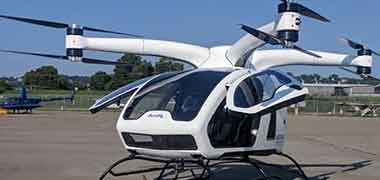
eVTOL Aircraft
Complete rotor head bearing housing programs, landing gear pivot bearing housing bodies, flight control bearing housing sets, and motor bearing housing programs — all from one AS9100D source with FAIR per AS9102 and thermal expansion compensation as standard scope, from prototype first articles through production volume supply.

Electric Rotor System
Rotor head articulation bearing housing blocks, swash plate bearing housing assemblies, pitch control bearing housing bodies, and rotor mast support bearing housing programs for rotor system suppliers delivering complete rotor assemblies to aircraft integrators.
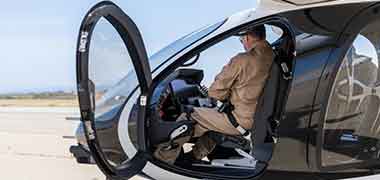
eVTOL Flight Control System
Flight control actuator bearing housing bodies, spherical plain bearing housing inserts for control linkage pivots, and rod-end bearing housing machining programs for fly-by-wire electromechanical flight control system hardware.
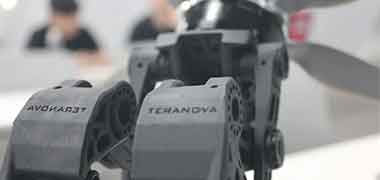
Urban Air Mobility Landing Gear
Gear pivot bearing housing blocks, shock absorber attachment bearing housing bodies, and gear retraction actuator bearing housing programs for retractable and fixed gear eVTOL landing systems — TC4 STA for impact load-governed primary gear pivot; 7075-T6 for door hinge and secondary gear structure.
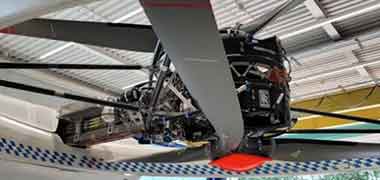
eVTOL Gearbox and Drivetrain
Integrated gearbox housing bearing bore programs, accessory drive bearing housing body machining, and high-speed coupling bearing housing programs as part of coordinated gearbox housing supply programs with center distance relationships maintained from single setup.
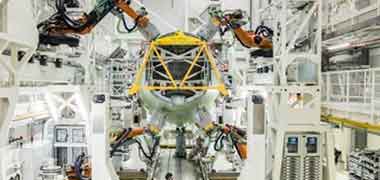
Advanced Air Mobility Structural Assembly Houses
Structural bearing housing block programs for AAM aircraft assembly houses integrating airframe and propulsion system components — multi-bore structural housing blocks, matched landing gear housing pairs, and fatigue-critical primary structural bearing housing programs with full AS9100D documentation.
eVTOL Bearing Housing Machining
Process & Capabilities
CNCPioneer's eVTOL bearing housing machining process runs on 66+ MAZAK Integrex and Quick Turn mill-turn centers, 78+ Swiss CNC lathes, and VARIAXIS 5-axis simultaneous platforms — thermal-stabilized spindles maintaining ±0.002mm bore compliance, sub-spindle transfer for single-setup completeness, and wire EDM for compound-geometry housings.
48-Hour DFM & 8-Area Engineering Review
Thermal expansion compensation calculation for every aluminum housing · Housing bore wall thickness FEA from bearing load × 1.5 safety factor · Coaxiality achievability from single-setup confirmation · Bushing PV rating check for PTFE, bronze, or PEEK applications · Spherical bearing articulation range verification · Shot peen specification adequacy for TC4 life-limited parts · Mass achievability from CAD versus budget · Fit class compatibility with adjacent parts and bearing manufacturer recommendations.
Swiss CNC (Ø5–50mm Miniature Bearing Housings)
Swiss CNC with guide bushing for miniature bearing housing bodies in eVTOL control system applications: housing bore range Ø5–50mm; bore accuracy ±0.002mm; roundness ±0.001mm; Ra 0.4μm. OD accuracy ±0.003–0.005mm for press fit into structural member. Coaxial inner and outer features — bore, OD, flange face, and thread all machined from one guide bushing position with all features coaxial to ±0.002mm. Thermal stabilization protocol: 15 minutes at 20°C ±0.5°C before finish operations.
MAZAK Mill-Turn (Ø30–300mm Standard Bearing Housings)
MAZAK mill-turn single-setup for medium to large bearing housing bodies: TC4 bar or billet fixturing with all subsequent features from one primary bore datum. Rough bore with carbide; thermal stabilization 4 hours at 20°C ±1°C for TC4; finish single-pass PCD boring ±0.003mm H7 with roundness ±0.001mm. C-axis indexed lug bores with pair coaxiality ±0.005mm. Lug face milling with co-planarity ±0.020mm. Shot peen AMS 2430 with masked bores for life-limited TC4 parts.
5-Axis CNC (Compound-Geometry Bearing Housings)
MAZAK VARIAXIS 5-axis for bearing housings with non-orthogonal bore axes or compound mounting interfaces: non-orthogonal bore pair at designed compound angle ±0.020°; both bores machined from one 5-axis program with table tilt between operations. Compound attachment face at non-perpendicular angle to bore axis machined by 5-axis tilted-table face mill with angle ±0.020° and flatness 0.010mm. Integrated nacelle bearing housing blocks and compound-angle flight control bearing bodies.
In-Process Control & Final Inspection
Bore temperature measured by contact thermometer at finish machining; dimension corrected to 20°C equivalent before comparison to thermal-compensated target. Roundness CMM probe after every finish bore. Coaxiality verification for two-bore housings measured in-machine before release. Split housing cap-and-base co-machined bolted together before bore machining; separated only after CMM verification. 100% bearing bore air gauge on production programs with records per serial number.
AS9100D / IATF 16949 Documentation
AS9102 FAIR with 100% of drawing dimensions measured; measurement uncertainty ≤10% tolerance per characteristic. Material traceability chain from mill certificate to housing serial number. Special process certificates: shot peen per serial number; anodize lot certificate with bore mask verification; DLC certificate. Cpk ≥1.67 on bearing bore diameter and coaxiality. SPC monitoring with MSA Gage R&R ≤10%. Records retained 20 years per AS9100D requirements.
Materials for eVTOL Bearing Housing
and Bushing Programs
eVTOL bearing housing material selection is governed by bearing radial or axial load divided by safety factor: TC4 titanium for high load (σ_wall >350 MPa), 7075-T6 aluminum for moderate load, and 6061-T6 for secondary structures. Bushing materials span PTFE composite, bronze SAE alloys, and PEEK engineering grade.
TC4 Titanium AMS 4928
Non-magnetic; CTE 8.6 ppm/°C; 950 MPa yield. Primary structural flapping hinge housings, landing gear pivot housings, and rotor mast supports where high load (σ_wall >350 MPa) demands titanium's strength-to-mass ratio. Shot peen AMS 2430 standard for life-limited primary structure classification.
TC4 Titanium AMS 6931 STA
1,100 MPa yield; maximum strength-per-mass. Life-limited impact-load housing for tiltrotor structural bearing housings and landing gear pivot applications where emergency sink-rate loads govern. Almen A 0.18–0.22mm shot peen intensity with 98% coverage.
7075-T6 Aluminum AMS-QQ-A-225
572 MPa; lightweight; CTE 23.6 ppm/°C. Motor bearing end cap housing, gearbox bearing housing, and control system bearing bodies. Thermal expansion compensation mandatory for all 7075-T6 bearing seat bores. Type II/III anodize MIL-A-8625 with bore masked to prevent dimensional change.
2024-T4 Aluminum AMS-QQ-A-225
470 MPa; SCC resistance; fatigue resistant. Sustained-load bearing housings and control arm bearing blocks where stress corrosion cracking resistance is prioritized over the absolute strength of 7075-T6.
6061-T6 Aluminum AMS 2770
310 MPa; weldable; economical. Secondary bearing housing, bushing housing mounting bodies, and fairings. Electroless nickel MIL-C-26074 for corrosion barrier in outdoor environments without anodize dimensional change concerns.
17-4PH H900 Stainless AMS 5643
1,310 MPa; corrosion resistant; non-magnetic. Corrosion-resistant precision bearing housing and actuator clevis housing where stainless strength exceeds aluminum capability and magnetic interference must be avoided.
316L Stainless AMS 5653
Corrosion resistant; UHV compatible; 485 MPa. Moisture-exposed landing gear bearing housing and outdoor environment pivot bodies. Passivation ASTM A967 restores passive oxide layer at all machined surfaces.
4340 Steel QT HRC 40
1,480 MPa; highest fatigue; 700 MPa endurance limit. Highest-load impact bearing housing where mass is uncritical and fatigue resistance is the absolute design priority.
Inconel 718 AMS 5664 STA
High temperature + corrosion resistance. Motor-adjacent bearing housing in extreme thermal environments where aluminum strength degrades and titanium oxidation limits apply.
PEEK Victrex 450G
100 MPa; electrical isolation; 250°C service temperature. Isolation bushing housing and non-magnetic bearing body for motor HV feedthrough and encoder mounting isolation. ASTM E595 TML ≤0.030% for enclosed avionics environments.
Bronze SAE 841 / 660
Self-lubricating; high PV; 50 W/m·K thermal conductivity. Bushing material and plain bearing inserts for high-PV control pivots where PTFE's 3 MPa·m/s limit is exceeded. Oil-impregnated for maintenance-free operation.
PTFE Composite 25%GF/CF
Self-lubricating; chemical resistance; low friction. Bushing liner material for flight control plain bearings and landing gear shock absorber pivots. CTE 100–125 ppm/°C requires thermal expansion compensation in bore machining target.
Surface Treatments for
eVTOL Bearing Housing Components
eVTOL bearing housing surface treatment selection addresses corrosion protection for aluminum housings, fatigue life enhancement for TC4 life-limited primary structure, wear resistance at bushing running surfaces, and dimensional precision post-treatment — coating allowances are machined-in and verified post-treatment.
Type II/III Anodize — MIL-A-8625
Standard corrosion protection for 7075-T6 and 6061-T6 aluminum eVTOL bearing housing bodies — 5–10μm clear anodize preventing moisture corrosion while maintaining electrical insulation. Critical: bearing bore surfaces must be masked during anodize application — anodize growth would reduce precision bore below designed bearing interference fit by 10–30μm per side. CNCPioneer's anodize mask protocol: precision bore masked with mandrel or tape; post-anodize bore 100% air-gauged to confirm bore within tolerance; re-bored if mask imperfection allowed partial anodize.
Shot Peen — AMS 2430
All TC4 AMS 6931 STA bearing housing bodies classified as life-limited primary structural parts — Almen A 0.18–0.22mm intensity; 98% coverage; bearing bore surfaces masked; structural arm roots and wall transitions covered; certificate per housing serial number. Life benefit: TC4 bearing housing wall root stress at bearing design load is typically 60–80% of endurance limit; shot peen raises effective endurance limit by 30%, providing positive fatigue margin through certified life.
Electroless Nickel — MIL-C-26074
For landing gear bearing housings and outdoor-environment pivot bodies in 6061-T6 or 7075-T6 aluminum exposed to rain, de-icing fluid, and contaminated airfield environments — Ni-P 5–8μm provides corrosion barrier without the dimensional change concern of anodize. Bearing bore: Ni-P deposits uniformly; ±0.003mm per side allowance incorporated in machined bore before plating; post-Ni-P bore air gauge confirms bore within bearing interference specification.
Passivation — ASTM A967
All 316L and 17-4PH stainless eVTOL bearing housing components — passivation restores passive oxide layer at all machined surfaces; documented per ASTM A967 method for manned aviation program material records. Applied after all machining is complete including cross-holes, grooves, threads, and bores; passivation liquid penetrates all internal features uniformly. Certificates included in standard shipment documentation.
DLC Coating — Ultra-Low Friction
Diamond-like carbon (1–3μm, μ 0.05–0.15, HV 2,000+) for PEEK and metal bushing bore running surfaces in high-cycle eVTOL pitch control applications. DLC-on-TC4 shaft surfaces running against DLC bushing bore provides minimum pitch control actuator force. Thickness 1–3μm applied by PVD after bore finish machining; negligible dimensional change (≤0.001mm per side).
Alodine Class 3 — Chromate Conversion
Chromate conversion coating for aluminum bearing housings and bushing mounting bodies requiring electrical conductivity alongside corrosion protection. Alodine Class 3 preserves electrical continuity for grounding paths while providing mild corrosion resistance. Applied to non-bearing surfaces; bearing bores masked to prevent dimensional change. Standard for 6061-T6 secondary structure bearing housing programs where electrical bonding is required.
All surface treatments on eVTOL bearing housing programs — Type II/III anodize MIL-A-8625 (bore masked), AMS 2430 shot peen, electroless nickel MIL-C-26074, ASTM A967 passivation, DLC coating, and Alodine Class 3 — are documented with treatment certifications and post-treatment dimensional verification. Plating and coating allowances are machined-in to journal and bore dimensions at the CNC machining stage and confirmed post-treatment by air gauge or CMM.
Quality Assurance for
eVTOL Bearing Housing Machining
eVTOL bearing housing quality assurance addresses bearing-quality bores with 100% air gauge verification, CMM concentricity measurement resolving sub-5μm tolerances, thermal compensation target verification, and AS9102 FAIR documentation for every new part number.
Material Verification
SII XRF composition verification on every TC4, 7075-T6, 17-4PH, PEEK, bronze, and PTFE composite lot before machining. Hardness per condition. AMS 2154 Class A UT for TC4 STA life-limited impact bearing housings. Full material certificate archived per lot number; traceability chain to housing serial number documented for AS9100D compliance.
In-Process Controls
Thermal expansion compensation target verification: at bore finish machining, bore temperature measured by contact thermometer; bore dimension corrected to 20°C equivalent before comparison to thermal-compensated target. Bore roundness CMM probe after every finish bore. Coaxiality verification for two-bore housings measured in-machine before release. Split housing cap-and-base co-machined bolted together before bore machining.
Final Inspection and FAIR
CMM: all bore diameters; roundness (minimum 8 angular positions); cylindricity (minimum 3 axial positions); bore pair coaxiality; mounting face flatness; bolt circle true positions; lug bore coaxiality; compound bore angles (5-axis). Air gauge: 100% bearing bore diameter on production programs. Profilometry: bearing seat Ra; bushing running bore Ra. Mass: calibrated balance ±0.1g; matched-set documentation.
AS9102 First Article Inspection
100% of drawing dimensions measured per AS9102; measurement uncertainty ≤10% tolerance per characteristic; material traceability chain; special process certificates (shot peen per serial number; anodize lot certificate; DLC certificate). 52/52 characteristics conforming on first FAIR submission achieved on complex TC4 7-bore rotor head housing programs.
SPC and Production Monitoring
Quality metrics: 99% qualification rate; 100% on-time delivery; 100% bearing bore air gauge on all production programs; 100% coaxiality CMM on two-bore housings; Cpk ≥1.67 on bearing bore diameter and coaxiality for eVTOL bearing housing production programs. SPC monitoring with investigation triggered when Cpk falls below 1.67.
Volume Supply Documentation
Pre-purchased TC4 and 7075-T6 aerospace alloy safety stock for eVTOL bearing housing programs. Matched-set packaging for split bearing housing pairs and multi-component bearing assembly kits. Thermal expansion compensation machining targets locked at production approval. AS9100D life-limited part records per housing serial number for primary structural classified bearings.
AS9100D Quality System for
eVTOL Bearing Housing Programs
CNCPioneer's AS9100D and IATF 16949 certified eVTOL bearing housing quality system addresses the four quality dimensions specific to aerospace bearing housings: single-setup coaxiality governance, thermal compensation compliance, 100% dimensional verification at sub-3μm resolution, and FAIR-per-part-number documentation.
Single-Setup Bore Coaxiality Governance
Bore pair coaxiality ±0.005mm is a structural guarantee — not an outcome of skilled operators. CNCPioneer's MAZAK mill-turn and Swiss CNC single-setup programs make coaxiality a machine-positioning accuracy outcome: all bores share the same spindle axis, eliminating re-registration error from the coaxiality budget entirely. This guarantee extends through volume production without degradation.
- Bore pair coaxiality ±0.005mm structural
- No rechucking error in coaxiality budget
- Machine positioning accuracy governed
100% Air Gauge & CMM Verification
Every eVTOL bearing housing lot receives 100% dimensional verification: air gauge on all precision bores and CMM on all geometric relationships. 100% verification rather than sampling eliminates escape probability when specification bandwidth is ±0.002mm. Roundness tester verifies bearing-journal and bore form. This instrument suite resolves all bearing-quality dimensions.
- 100% air gauge bore verification
- 100% CMM coaxiality on two-bore housings
- Roundness tester + profilometer form verification
Thermal Compensation & Fit Class Compliance
CNCPioneer's thermal compensation protocol verifies that every aluminum bearing housing bore is machined to a target that achieves the designer's specified interference fit at operating temperature — not at ambient. Bore temperature measured at finish machining; dimension corrected to 20°C equivalent. Prevents the catastrophic failure mode where bearing outer rings spin in housing bores at operating temperature.
- ΔD_thermal calculated for every Al housing
- Ambient machining target = nominal − interference − ΔD
- Operating temperature fit class verified
AS9102 FAIR & Volume Production Programs
AS9102 FAIR on 100% of new eVTOL bearing housing part numbers with 52/52 characteristics conforming on first submission achieved on complex 7-bore TC4 rotor head housings. Volume production at 2-week monthly blanket releases with dedicated MAZAK and Swiss CNC capacity. Pre-certified shot peen lots with certificate per batch covering complete monthly release quantity.
- AS9102 FAIR 100% new part numbers
- Cpk ≥ 1.67 on bore dia / coaxiality
- Life-limited part records per serial number
eVTOL Bearing Housing & Bushing FAQ
Common questions from eVTOL aircraft manufacturers, electric rotor system OEMs, flight control system suppliers, and landing gear builders about CNCPioneer's eVTOL bearing housing bore accuracy, thermal expansion compensation, bushing material selection, and production economics.
The difference between ±0.010mm and ±0.002mm housing bore accuracy determines whether a bearing achieves its rated L10 life or fails at a fraction of rated life. A bore with ±0.010mm diameter variation and ±0.005mm roundness distorts the bearing outer ring into an oval cross-section, producing elevated ball-raceway contact stress at the major axis. For a Ø52mm bearing, this effective contact stress increase is ≈8–12% above nominal. Since ISO 281 bearing life L10 ∝ (C/P)³·³³, a 10% contact stress increase reduces L10 by 38% — from 10,000 flight hours to 7,250 hours. At ±0.002mm bore roundness (CNCPioneer standard), contact stress increase is only 2–2.5% and L10 reduction is 8% — entirely within the bearing safety factor of ≥2× rated life that airworthiness-governed bearing selection applies. For primary rotor and tilt mechanism bearings, the consequence of ±0.010mm accuracy is potential in-flight bearing seizure; for non-safety-critical bearings, increased maintenance cost and unscheduled replacement.
The calculation involves three parameters: bearing outer ring OD at operating temperature (steel, CTE 11.7 ppm/°C); designed housing bore fit class at operating temperature; and housing material CTE and temperature rise. For a representative 6061-T6 motor bearing housing (CTE 23.6 ppm/°C), bearing seat Ø52mm, operating temperature 100°C: ΔD_thermal = 52 × 23.6 × 10⁻⁶ × 80 = 0.098mm. With designed K6 interference of 0.015mm at operating temperature, the target machined bore at 20°C = 52.000 − 0.015 − 0.098 = 51.887mm. Omitting thermal compensation and machining to 51.985mm (K6 at ambient) produces a housing bore of 52.083mm at 100°C while the bearing OD grows to only 52.049mm — creating 0.034mm clearance. This allows the outer ring to rotate (creep) relative to the housing, generating fretting wear particles, progressively loosening the fit, and eventually allowing outer ring freewheeling — the catastrophic failure mode where the bearing-housing interface becomes the primary sliding contact and generates seizure heat.
For a representative pitch control link pivot (Ø16mm bore × 20mm length, link force 2,000 N, oscillation 2 Hz, ±15° amplitude): P = 6.25 MPa; V = 0.017 m/s; PV = 0.106 MPa·m/s. PTFE composite (25% glass fiber) maintenance-free PV limit is approximately 0.10–0.15 MPa·m/s in oscillating application. Wear life calculation shows 0.00092mm radial wear over 10,000 hours — adding only 0.0018mm diametral wear to initial clearance, well within the ±0.050mm maximum clearance. PTFE composite is therefore adequate. Bronze (SAE 841) would be specified if PV exceeded PTFE's 0.15 MPa·m/s limit or if oil replenishment at 1,000-hour inspections were acceptable. PEEK is selected when the bushing is adjacent to electrical/electronic components requiring non-conducting, non-magnetic material. CNCPioneer's DFM PV analysis follows exactly this first-principles calculation for every eVTOL bushing program.
Prototype lead times: TC4 rotor head flapping hinge bearing housing (Ø45–60mm bore with lug bores, FAIR) — 8–12 business days; TC4 landing gear pivot (impact-load rated, shot peen, FAIR) — 10–14 days; 7075-T6 split pillow block matched pair (co-machined, anodize, FAIR) — 6–9 days; Swiss CNC flight control bearing cartridge set (Ø18–35mm, matched mass) — 5–8 days; TC4 multi-bore rotor head block (7 bores, 5-axis, FAIR) — 10–16 days; PTFE bushing set (PCD machined, Swiss CNC) — 5–7 days. Volume economics: at 3,000 TC4 housings annually, approximately $275–$400 per housing versus $680–$950 from US specialists — $840,000–$1,650,000 annual savings. At 6,000 aluminum cartridge sets annually, $45–$65 per set versus $115–$175 — saving $420,000–$660,000 annually. Total bearing housing and bushing cost reduction across a 500-aircraft/year eVTOL program: $1,500,000–$2,500,000 annually.
Pillow block bearing housings — freestanding blocks that bolt to structural frames; split design for easy installation (split faces coplanar to 0.005mm) or solid design for higher rigidity. Flanged cartridge housings — flanged rings or cartridges that press into structural bores or bolt to flat faces; OD ±0.008–0.015mm for press fit with snap ring or lockring retention. Integrated bearing housings — bearing features machined directly into structural members (rotor head arms, nacelle rings, landing gear struts) for minimum mass; requires 5-axis accessibility and CMM verification from structural datum. Multi-bore housing bodies — single body supporting multiple shaft positions (gearbox housings, rotor head bodies) with all bores from one MAZAK mill-turn setup maintaining bore-to-bore position ±0.020mm. CNCPioneer's 48-hour DFM verifies boring bar tool path accessibility for all integrated and multi-bore programs.
Get a Quote for eVTOL Bearing Housing & Bushing Solutions
Upload your eVTOL bearing housing drawings, bushing specifications, or bearing system layouts and receive a competitive quotation within 24 hours and a complete 8-area engineering DFM analysis within 48 hours — covering thermal expansion compensation, bore wall FEA, coaxiality achievability, bushing PV rating, spherical bearing articulation range, shot peen adequacy, mass optimization, and fit class compatibility.