
Landing Gear & Actuator Components
Machining for eVTOL
CNCPioneer is a precision eVTOL landing gear and actuator component machining specialist and AS9100D certified China manufacturing facility delivering custom eVTOL landing gear and actuator machined component programs — main landing gear strut body precision boring, nose gear leg structural body machining, oleo-pneumatic shock absorber cylinder body programs, shock absorber piston rod precision turning, gear retraction mechanism housing body machining, EMA and EHA actuator components, and complete eVTOL landing gear and actuator machined component sets from prototype first article through AS9100D-governed production.
What Is eVTOL Landing Gear and
Actuator Component Machining?
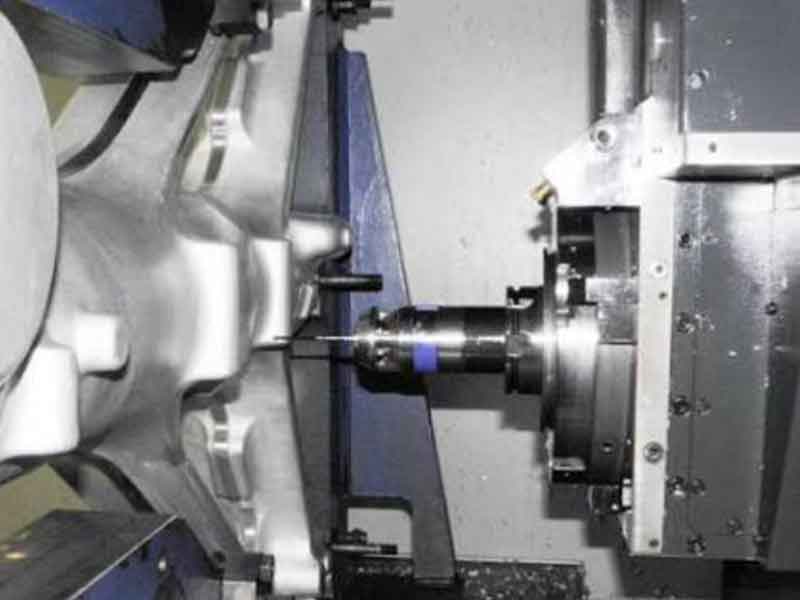
eVTOL landing gear and actuator component machining is the precision CNC manufacturing process — executed on MAZAK mill-turn centers, MAZAK VARIAXIS 5-axis simultaneous machining platforms, Swiss CNC turning systems, precision cylindrical grinding equipment, and wire EDM — that produces the structural bodies, dynamic sealing bores, piston rods, cylinder housings, pivot fittings, and mechanism components of the landing systems and actuation hardware of electric vertical takeoff and landing aircraft.
eVTOL landing gear and actuator components represent two distinct but structurally related product families unified by one critical design requirement: the combination of high structural load capacity and minimum mass. No other machined components in an eVTOL aircraft are simultaneously subject to the highest single-event structural loads in the aircraft (landing impact) and the most demanding recurring dynamic loading (flight control actuator cycling at 2–20 Hz over a 10,000-hour service life) while remaining subject to the same ±0.5g-per-part mass accountability that governs every other eVTOL component.
-
Impact-load structural analysis as a standard DFM deliverable Every eVTOL landing gear primary structural component must be designed and machined for the dynamic design landing load. CNCPioneer's 48-hour DFM review calculates the impact load chain for every inquiry — determining required strut wall thickness from calculated peak force, confirming design adequacy with documented margin, and flagging any wall under-thickness before machining commitment.
-
Piston rod cylindrical grinding at Ra 0.1μm for seal performance The performance of every dynamic seal in eVTOL actuator systems is governed primarily by the piston rod surface finish. At Ra 0.4μm, dynamic seal wear rate is approximately 3–5× higher than at Ra 0.1μm. CNCPioneer's CBN cylindrical grinding programs achieve Ra 0.1μm, OD ±0.002mm, and roundness ±0.0005mm — eliminating the seal replacement interval gap that Ra 0.4μm produces.
-
EMA ball screw housing bore precision for actuator accuracy The housing bore accuracy (±0.003mm) governs whether the ball screw nut is correctly centered in the actuator housing for designed running clearance. CNCPioneer's EMA housing bore programs maintain ±0.003mm bore diameter and ±0.002mm bore-to-screw-axis concentricity from single-setup MAZAK mill-turn boring — keeping EMA actuator position error within the ±0.1mm hysteresis specification of eVTOL fly-by-wire systems.
-
TC4 STA primary structural programs for manned flight certification All primary structural eVTOL landing gear components are life-limited primary structural parts under proposed FAA AC 21.17-1. CNCPioneer's TC4 AMS 6931 STA programs provide AMS 2154 Class A UT, AS9102 FAIR, AMS 2430 shot peen with Almen verification per serial number, and full material traceability — the AS9100D primary structure documentation that airworthiness authority review demands.

Why CNCPioneer for eVTOL
Landing Gear & Actuator Machining?
Among eVTOL landing gear and actuator component machining providers globally, CNCPioneer's impact-load structural analysis, piston rod grinding precision, EMA housing bore accuracy, TC4 STA primary structural capability, complete portfolio coverage, and China manufacturing cost advantage establish our facility as the preferred eVTOL landing system and actuator partner.
Impact-Load Structural Analysis DFM
Every eVTOL landing gear primary structural component must be designed for the dynamic design landing load. CNCPioneer's 48-hour DFM review calculates the impact load chain from aircraft weight, gear configuration, and sink rate specification — determining required strut wall thickness from the calculated peak force, confirming the design's wall is adequate with documented margin, and flagging any wall under-thickness before machining commitment.
Piston Rod Cylindrical Grinding at Ra 0.1μm
The performance of every dynamic seal in eVTOL actuator systems is governed by piston rod surface finish. At Ra 0.4μm, seal wear rate is 3–5× higher than at Ra 0.1μm. CNCPioneer's CBN cylindrical grinding programs achieve Ra 0.1μm, OD ±0.002mm, and roundness ±0.0005mm — delivering the seal life that enables 10,000-hour TBO without unscheduled replacement.
EMA Ball Screw Housing Bore Precision
The housing bore accuracy (±0.003mm) governs whether the ball screw nut is correctly centered for designed running clearance. CNCPioneer's EMA housing bore programs maintain ±0.003mm bore diameter and ±0.002mm bore-to-screw-axis concentricity from single-setup MAZAK mill-turn boring — keeping actuator position error within the ±0.1mm hysteresis specification of eVTOL fly-by-wire systems.
TC4 STA Primary Structural Programs
All primary structural eVTOL landing gear components are life-limited primary structural parts under proposed FAA AC 21.17-1. CNCPioneer's TC4 AMS 6931 STA programs provide AMS 2154 Class A UT, AS9102 FAIR, AMS 2430 shot peen with Almen verification per serial number, and full material traceability — the AS9100D primary structure documentation that airworthiness authority review demands.
Complete Landing Gear & Actuator Portfolio
From shock absorber strut cylinder bodies and piston rods through skid gear attachment brackets, wheel axles, EMA actuator housings, EHA manifolds, and uplock/downlock mechanism bodies — all from CNCPioneer under one AS9100D quality system, eliminating multi-supplier coordination cost and quality risk.
China eVTOL Machining Cost Advantage
AS9100D equivalent eVTOL landing gear and actuator component machining from US and European aerospace precision facilities costs 2–3× CNCPioneer's program pricing — the structural cost reduction enabling eVTOL landing system and actuator OEMs to achieve BOM cost targets in competitive commercial air mobility markets.
eVTOL Landing Gear & Actuator
Components We Manufacture
CNCPioneer's eVTOL landing gear and actuator machining programs cover the complete machined component architecture of electric vertical takeoff and landing aircraft landing systems and actuation hardware — from shock absorber strut cylinders and precision-ground piston rods through EMA actuator housings, EHA manifolds, and complete landing gear structural kits.

Shock Absorber Strut Body & Piston Rod
Outer cylinder body: inner bore ±0.005mm for piston sliding surface and seal engagement; bore cylindricity ±0.003mm/100mm; bore-to-OD concentricity ±0.050mm; top closure thread ±0.005mm pitch diameter; 100% hydrostatic test at 1.5× rated pressure. Piston rod: OD ±0.002mm h6 class; Ra 0.1μm from CBN cylindrical grinding; roundness ±0.0005mm; straightness ±0.010mm/300mm; wheel axle thread or mounting flange at bottom. Metering pin: Swiss CNC taper profile ±0.005mm; governs hydraulic damping force through strut stroke.

Skid Gear Structural Fittings & Brackets
Skid attachment bracket: lug bore ±0.005mm H8; lug pair coaxiality ±0.005mm; skid tube clamp bore ±0.200mm; clamp bolt holes ±0.010mm true position; TC4 AMS 6931 STA at landing load-governed cross-sections; AMS 2430 shot peen; mass ±2g. Skid cross-tube end fitting: tube insertion bore ±0.100mm; skid attachment bore ±0.005mm; bonding surface Ra 3.2μm. Material: 7075-T6 for standard skid fittings; TC4 for primary structural arms.

Retractable Gear Structural Components
Gear pivot trunnion structural body: pivot bore ±0.002mm; upper structural lug pair ±0.005mm; actuator hard-point ±0.010mm; drag brace attachment lug ±0.005mm; 5-axis compound face angles ±0.020°; TC4 AMS 6931 STA; shot peen. Drag brace structural fitting: upper/lower clevis attachment ±0.005mm bore pair coaxiality; streamlined body from FEA. Uplock/downlock mechanism body: 17-4PH H900; hook engagement geometry ±0.020mm; passivation ASTM A967.

Wheel Axle & Hub Programs
Wheel axle: outboard/inboard bearing seats ±0.002mm k5; concentricity ±0.002mm single-setup; brake disc flange face perpendicularity 0.010mm; thread ±0.005mm pitch diameter. 4340 QT HRC 38–42; hard chrome bearing seats Ra 0.1μm. Wheel hub body: axle bearing bores ±0.005mm H7; bore pair concentricity ±0.005mm; wheel rim bolt circle ±0.010mm; brake rotor/disc mount flatness 0.010mm; 7075-T6 with Type III anodize bore masked.

EMA Actuator Components
EMA cylinder housing: ball screw nut engagement bore ±0.003mm H7; roundness ±0.002mm; output rod guide bore ±0.003mm; motor interface flange ±0.005mm; mounting trunnion/clevis bore pair coaxiality ±0.005mm; angular alignment ±0.020°. EMA piston rod: OD ±0.002mm; Ra 0.1μm CBN cylindrical grinding; roundness ±0.0005mm; straightness ±0.010mm/300mm; electroless Ni-P or DLC coating. Ball screw housing: separate housing bore ±0.003mm; shoulder flatness 0.005mm.

EHA Manifold & Retraction Actuator Components
EHA manifold body: main cylinder bore ±0.003mm; hydraulic passage bores ±0.050mm position; pressure relief valve seat bore ±0.003mm; seat face Ra 0.1μm lapped; 100% hydrostatic test 1.5× rated pressure. Landing gear retraction EMA: housing bore ±0.003mm; attachment clevises ±0.005mm coaxiality; clevis-to-clevis angular relationship ±0.020°; stroke limiter ±0.200mm. Collective pitch and variable-pitch actuator bodies: hub-integrated designs with dynamic balance G1.0.
Industries & Applications
CNCPioneer's eVTOL landing gear and actuator machining serves every industry segment in the advanced air mobility ecosystem — from eVTOL aircraft manufacturers and electric air taxi landing system suppliers through flight control actuator OEMs, undercarriage Tier 1 builders, and certification engineering partners.
eVTOL Aircraft
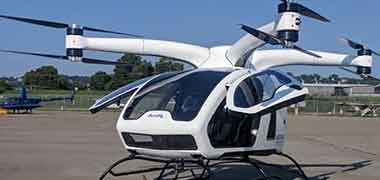
Complete landing gear strut body, piston rod, metering pin, trunnion fitting, and drag brace machined component programs for commercial eVTOL aircraft — AS9100D primary structural documentation for manned flight landing gear; retractable gear machined kit coordination under one supply relationship. EMA and EHA actuator body and rod programs for flight control and gear retraction actuation systems.
Electric Air Taxi Landing System
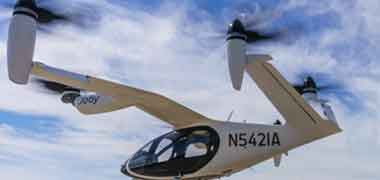
Landing gear system Tier 1 suppliers delivering complete landing gear assemblies to aircraft integrators — CNCPioneer as the machined component manufacturer producing all structural bodies, dynamic members, and mechanism components to Tier 1 supplier specification; coordinating chrome, anodize, and shot peen through AS9100D qualified sub-tier network.
eVTOL Flight Control
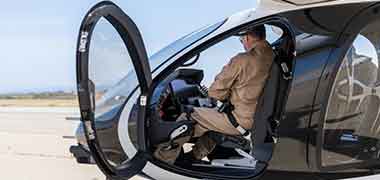
EMA actuator OEMs producing fly-by-wire flight control actuators for eVTOL programs — CNCPioneer machines EMA cylinder housing, output piston rod (Ra 0.1μm), ball screw housing bore, and actuator mounting clevis as complete actuator mechanical kit supply; FAIR on all new part numbers; production blanket programs at eVTOL aircraft OEM required rates.

Urban Air Mobility Undercarriage
Landing gear Tier 1 suppliers entering the commercial eVTOL undercarriage market — CNCPioneer's eVTOL landing gear machining DFM and AS9100D quality capability supports Tier 1 supplier qualification to aircraft OEM requirements without investing in eVTOL-specific machining capability internally.
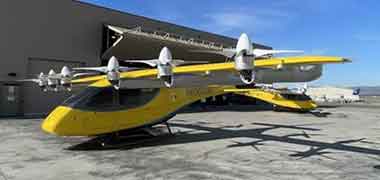
AAM Structural Component
AAM program structural assembly houses integrating landing gear, actuation, and structural system machined components from qualified supply chains — CNCPioneer provides AS9100D primary structural landing gear and actuator machined component supply with full material traceability and FAIR documentation supporting the AAM program's airworthiness substantiation data package.
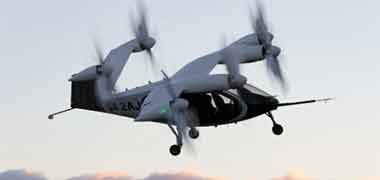
eVTOL Certification Engineering
Third-party certification support firms assisting eVTOL OEMs through FAA/EASA type certificate applications — CNCPioneer provides manufacturing capability data (strut cylinder pressure test records; piston rod Ra Cpk data; material UT compliance records; landing load DFM analysis documentation) supporting the applicant's showing of manufacturing process adequacy.
eVTOL Landing Gear & Actuator
Process & Capabilities
CNCPioneer's eVTOL landing gear and actuator machining programs run on 66+ MAZAK mill-turn centers, VARIAXIS 5-axis simultaneous machining platforms, Swiss CNC lathes, precision cylindrical grinding systems, and wire EDM — delivering complete eVTOL landing gear and actuator machined components from single prototype first articles through production volume supply.
48-Hour DFM & Impact Load Structural Analysis
Impact load chain calculation from aircraft weight, gear configuration, and design sink rate. Strut cylinder wall thickness adequacy at lug-to-cylinder transition from FEA. Piston rod Ra specification confirmation from seal type and service life requirement. EMA housing ball screw bore achievability from ball screw OD tolerance. Actuator geometry side-load analysis from mount angular variation through stroke. Metering pin taper tolerance assessment from damping force specification. TC4 AMS 4928 vs AMS 6931 STA selection from calculated lug root stress.
MAZAK Mill-Turn Strut Body & Actuator Housing Programs
4340 QT strut cylinder: rough bore and OD; thermal stabilization; cylinder bore finish ±0.005mm; seal zone bore ±0.003mm; closure thread ±0.005mm; pivot trunnion ±0.020°; 100% hydrostatic test 1.5× rated pressure; hard chrome or Ni-P bore. 7075-T6 EMA housing: ball screw bore ±0.003mm; seal bore ±0.003mm; motor interface ±0.005mm; clevis bore pair coaxiality ±0.005mm; Type III anodize bore masked.
CBN Cylindrical Grinding Piston Rod Ra 0.1μm
Between precision center bores; CBN wheel 180→280→600 grit; 0.001mm/pass finish; spark-out 5–10 revolutions; temperature-controlled coolant 20°C ± 0.5°C; in-process air gauge every 3 passes; final roundness tester at 5 axial positions; Ra profilometry at 3 positions. 4340 QT HRC 52–56 with hard chrome or Ni-P; TC4 AMS 4928 with DLC 2–4μm. Straightness ±0.010mm/300mm; OD ±0.002mm; roundness ±0.0005mm.
Swiss CNC Metering Pin & Miniature Actuator Rod
Metering pin taper profile: Swiss CNC with programmable taper; profile ±0.005mm at each cross-section from CMM profile trace verification. Small actuator rod Ø5–25mm L/D > 10:1: guide bushing prevents deflection; OD ±0.002mm; Ra 0.1μm from CBN tool. Uplock release plunger Ø5–15mm: guide bushing; OD ±0.002mm; shoulder features ±0.020mm; spring engagement geometry ±0.010mm.
5-Axis CNC Complex Gear Fitting & Bracket Programs
MAZAK VARIAXIS for compound-geometry landing gear structural fittings: wing-to-trunnion fitting with compound face angles (wing dihedral + gear retraction plane + drag brace attachment plane) all from one 5-axis datum ±0.020°. Multi-plane drag and side brace junction fitting: three attachment interfaces at non-orthogonal angles from single setup. Gear bay structural frame cutout fitting: compound face ±0.020° for retracted gear clearance.
AS9100D Documentation & Certification
Certificate of Conformance · CMM dimensional reports · Material certifications with lot traceability · Heat treatment and surface treatment certifications · AMS 2430 shot peen certificates per serial number · AMS 2154 UT certificate per billet · Pressure test records per serial number · PPAP Level 3 for volume programs · FAIR per AS9102 for all new part numbers · SPC monitoring · MSA Gage R&R ≤10% · Records retained 20 years.
Materials for eVTOL
Landing Gear & Actuator Machining
eVTOL landing gear and actuator material selection is governed by impact load capacity, fatigue endurance, corrosion resistance for operational geography, pressure vessel requirements, seal surface hardness, and manufacturing cost at production volume. 4340 QT steel dominates shock absorber and piston rod programs; TC4 STA governs primary structural fittings; 7075-T6 is standard for housings and hubs.
4340 Steel QT HRC 40–44
UTS: 1,480 MPa; Yield: ~1,380 MPa; Density: 7.85 g/cm³; Fatigue: 700 MPa true endurance limit. Highest fatigue life; excellent pressure vessel column + bending combination; hard chrome and Ni-P compatible. Standard for shock absorber cylinder bodies, wheel axles, and high-load actuator piston rods. Elastic modulus 200 GPa provides superior stiffness for strut column stability versus TC4.
4340 Steel QT HRC 52–56
UTS: 1,800 MPa; Yield: ~1,650 MPa; Density: 7.85 g/cm³; Fatigue: 800 MPa. Maximum surface hardness for chrome/Ni-P compatibility and seal contact wear resistance. Standard for EMA piston rods, shock absorber piston rods, and actuator output rods requiring Ra 0.1μm cylindrical grinding and surface treatment adhesion.
TC4 Ti-6Al-4V AMS 6931 STA
UTS: 1,100 MPa; Yield: 1,000 MPa; Density: 4.43 g/cm³; Fatigue: 650 MPa; K_IC ≥ 55 MPa·√m. Best structural efficiency for primary landing gear fittings — gear pivot trunnion, skid attachment bracket, drag brace structural body. AMS 2430 shot peen mandatory for life-limited primary structure; AMS 2154 Class A UT per billet.
TC4 Ti-6Al-4V AMS 4928
UTS: 950 MPa; Yield: 880 MPa; Density: 4.43 g/cm³; Fatigue: 600 MPa. Non-magnetic; corrosion-resistant; no coating required. Standard for TC4 EMA piston rods (with DLC coating for seal hardness), gear structural fittings where AMS 6931 STA strength is not required, and mass-optimized strut components.
7075-T6 Aluminum
UTS: 572 MPa; Yield: 503 MPa; Density: 2.80 g/cm³; Fatigue: ~160 MPa at 10⁸. Highest strength aluminum; lightweight for EMA actuator housings, wheel hub bodies, gear door brackets, and skid cross-tube fittings. Type III hard anodize for wear resistance; all precision bores masked during anodize.
2024-T4 Aluminum
UTS: 470 MPa; Yield: 324 MPa; Density: 2.78 g/cm³; Fatigue: ~138 MPa; K_IC ≈ 33 MPa·√m. Superior SCC resistance and fatigue performance to 7075-T6 for sustained-load structural applications. Preferred for coastal-operation gear strut bodies, drag braces in humid environments, and structural frames near battery electrolyte vapor.
17-4PH H900 Stainless
UTS: 1,310 MPa; Yield: 1,170 MPa; HRC 44–47; Density: 7.78 g/cm³; Fatigue: 620 MPa. Corrosion resistance without plating; compact high-strength mechanism body material. Standard for uplock/downlock mechanism bodies, actuator clevises, metering pins, and landing gear mechanism components in humid gear bay environments. Passivation ASTM A967.
316L Stainless Steel
UTS: 485 MPa; Yield: ~170 MPa; Density: 7.99 g/cm³; Fatigue: 210 MPa. Superior corrosion resistance in DI water, hydraulic fluid, and salt-fog gear bay environments. Standard for EHA manifold bodies in corrosive environment programs, landing gear bay exposed components, and hydraulic fluid-wetted parts where 7075-T6 corrosion performance is inadequate.
Inconel 718 AMS 5664 STA
UTS: 1,375 MPa; Yield: ~1,100 MPa; Density: 8.19 g/cm³; Fatigue: 550 MPa. High-temperature + corrosion resistance for actuator components in hot nacelle vicinity or engine-adjacent landing gear bays where thermal exposure exceeds standard aluminum and steel limits. STA condition for maximum strength.
Surface Treatments for
eVTOL Landing Gear & Actuators
eVTOL landing gear and actuator surface treatment selection addresses dynamic seal wear resistance, corrosion protection in gear bay environments, pressure vessel bore compatibility, and RoHS compliance for European programs — with coating allowances machined-in and verified post-treatment.
Hard Chrome — AMS 2460
Conventional surface treatment for dynamic seal contact surfaces on 4340 steel piston rods and strut cylinder bores: HV 850–1,100+; thickness 0.015–0.050mm per side; uniform deposition on rotational surfaces; excellent wear resistance at seal contact. Post-chrome cylindrical grind to ±0.002mm OD and Ra 0.1μm on piston rods. Bore chrome thickness ±0.005mm per side; post-chrome bore measurement confirms dimensional compliance. CNCPioneer offers AMS-compliant hard chrome; European RoHS programs directed to Ni-P alternative.
Electroless Ni-P — MIL-C-26074
RoHS-compliant alternative to hard chrome for 4340 and 7075-T6 piston rods and actuator components: 10–12% P high-phosphorus Ni-P; thickness 5–10μm on seal contact surfaces; post-Ni-P cylindrical grind to Ra 0.1μm and OD ±0.002mm; hardness HV 500 as-deposited; corrosion resistance 1,000+ hours salt spray per ASTM B117; compatible with DI water-based hydraulic fluid for EHA systems. European programs standard.
DLC Coating — Diamond-Like Carbon
For eVTOL actuator piston rods where maximum wear resistance at minimum thickness is required — particularly TC4 rods where base hardness is insufficient for seal contact: DLC 2–4μm by PVD after precision grinding; dimensional change ±0.001mm per side; hardness HV 2,000–3,500; friction coefficient μ = 0.05–0.15 (30–50% lower than hard chrome); dynamic seal wear rate approximately 5× lower than hard chrome at equivalent Ra 0.1μm; extends seal replacement beyond 10,000-hour TBO.
Type III Hard Anodize — MIL-A-8625
For 7075-T6 EMA housing bodies, wheel hub bodies, and secondary gear structural fittings: HV 400+ wear resistance; corrosion protection in gear bay environment. All precision bores (bearing bores, actuator bore, ball screw housing bore) masked during anodize; post-anodize dimensional verification 100% to confirm bore remains within H7 specification after masking removal. Standard on all aluminum landing gear and actuator housing programs.
Shot Peen — AMS 2430
Mandatory for TC4 AMS 6931 STA primary structural landing gear components (gear trunnion fitting, skid attachment bracket, drag brace structural body): Almen A 0.18–0.22mm; 98% coverage; pivot bores, bearing bores, and sealing faces masked; certificate per component serial number. Life benefit at gear fitting lug root: TC4 fatigue endurance in shot-peened condition ~780 MPa effective (vs 650 MPa unpeened) — providing positive fatigue margin at FAA design landing load × 1.5 safety factor.
Passivation — ASTM A967
All 17-4PH H900 uplock/downlock bodies, actuator clevises, and metering pins — passivation restores passive oxide layer at all machined surfaces; prevents flash rusting in gear bay humidity environment. Standard mandatory treatment for all stainless landing gear mechanism components; zero dimensional change; certificates included in standard shipment documentation.
All surface treatments on eVTOL landing gear and actuator components — hard chrome AMS 2460, electroless Ni-P MIL-C-26074, DLC coating, Type III anodize MIL-A-8625, AMS 2430 shot peen, and ASTM A967 passivation — are documented with treatment certifications and post-treatment dimensional verification in the shipment package. Coating allowances are machined into journal and bore dimensions at the CNC stage and confirmed post-treatment by air gauge, laser micrometer, or CMM.
Quality Assurance for
eVTOL Landing Gear & Actuator Machining
CNCPioneer's AS9100D quality assurance for eVTOL landing gear and actuator machining addresses material verification, in-process machining control, pressure and leak testing, and final inspection with FAIR per AS9102 — the documentation chain that eVTOL certification engineering requires.
Material Verification
SII XRF on every lot: 4340 (Cr 0.80–1.10%; Mo 0.20–0.30%; Ni 1.65–2.00%); TC4 AMS 6931 STA (Al 5.5–6.75%; V 3.5–4.5%); 7075-T6 (Zn 5.1–6.1%; Mg 2.1–2.9%); 17-4PH H900 (Cr 15.0–17.5%; Ni 3.0–5.0%; Cu 3.0–5.0%); 316L (C ≤0.030%; Mo 2–3%). Hardness per condition verified. AMS 2154 Class A UT for TC4 AMS 6931 STA life-limited primary structural components — one sample per billet section. Full EN 10204 3.1 material certificate archived per lot with component serial number traceability.
In-Process Machining Control
Strut cylinder bore: in-process CMM cylindricity probe at 5 axial positions after rough bore and before thermal stabilization. Piston rod straightness: V-block indicator sweep after semi-finish turning; any rod >0.050mm/300mm flagged before precision grinding. EMA housing ball screw bore: in-process CMM after finish boring; roundness tester on bore; any bore outside ±0.003mm investigated before proceeding. Cylindrical grinding temperature: rod temperature monitored; halt if >22°C during grinding from coolant drift.
Pressure & Leak Testing
Every strut cylinder body and EHA manifold: hydrostatic test at 1.5× maximum operating pressure; NIST-traceable pressure transducer ±0.01 MPa; 10-minute hold (strut cylinder) or 5-minute hold (EHA manifold); zero pressure decay acceptance; test date, pressure, duration, result, and technician ID recorded per serial number. Piston rod DLC adhesion: Rockwell C indentation scratch test at 3 locations; no peeling or delamination = PASS before shipment.
Final Inspection & FAIR
CMM: strut cylinder bore diameter and cylindricity; piston rod OD, roundness, straightness; axle bearing seat diameters and concentricity; EMA housing bores; gear fitting lug bore positions and coaxiality; compound interface angles; fillet radii; mounting face flatness. Air gauge: 100% seal bore and ball screw bore per EMA housing; 100% strut cylinder bore per cylinder body. Roundness tester: piston rod and axle bearing seat OD; strut cylinder bore seal zone. Profilometry: piston rod Ra; cylinder bore Ra; axle bearing seat Ra. Surface coating verification: chrome/Ni-P thickness at 3 positions per rod per lot.
Production SPC & Cpk Monitoring
Cpk ≥1.67 on critical features for production programs: strut cylinder bore diameter; piston rod OD; EMA housing ball screw bore; lug bore coaxiality. SPC monitoring on all critical dimensions with control limits at 50% of drawing tolerance. MSA Gage R&R ≤10% on all measurement systems. Adaptive offset correction for tool-wear diameter drift maintaining ±0.002mm compliance without operator intervention. 100% hydrostatic test on strut cylinders and EHA manifolds; 100% piston rod roundness tester.
Documentation Package
Certificate of Conformance · CMM dimensional report · Material certifications with lot traceability · Heat treatment and surface treatment certifications · AMS 2430 shot peen certificate per serial number · AMS 2154 UT certificate per billet · Pressure test records per serial number · Surface coating verification records · PPAP Level 3 for volume programs · FAIR per AS9102 for all new part numbers · All records retained 20 years per AS9100D requirements.
AS9100D Quality System for
eVTOL Landing Gear & Actuator Machining
CNCPioneer's AS9100D and IATF 16949:2016 certified eVTOL landing gear and actuator machining quality system addresses the four quality dimensions specific to these components: impact-load structural analysis DFM, CBN grinding temperature and straightness control, 100% hydrostatic pressure verification, and FAIR/PPAP documentation for certification.
Impact-Load Structural Analysis DFM
Every eVTOL landing gear primary structural component DFM calculates the impact load chain from aircraft weight, gear configuration, and design sink rate — producing required strut wall thickness at lug-to-cylinder transition from FEA, confirming design adequacy with documented margin, and flagging under-thickness before machining commitment. Prevents the common failure mode of components that pass static testing but crack at the lug root during drop test.
- Strut impact load calculation from customer specs
- Lug-to-cylinder wall thickness FEA verification
- Design margin documented before machining
CBN Grinding Temperature & Straightness Control
Precision cylindrical grinding for Ra 0.1μm piston rod surfaces requires temperature control to prevent thermal expansion distortion: rod temperature monitored during grinding; halt if >22°C from coolant drift. Straightness verified at semi-finish turning stage (>0.050mm/300mm flagged before grinding investment). CBN wheel dressing at 8-rod intervals maintains Ra consistency across production batches. Roundness tester at 5 axial positions per rod.
- Coolant temperature 20°C ± 0.5°C controlled
- Straightness pre-screening before grinding
- CBN wheel dressing interval SPC monitored
100% Hydrostatic Test & Pressure Verification
Every strut cylinder body and EHA manifold receives hydrostatic test at 1.5× maximum operating pressure with NIST-traceable transducer ±0.01 MPa; 10-minute hold (strut) or 5-minute hold (manifold); zero pressure decay acceptance; all test parameters recorded per serial number. Pressure test occurs before surface treatment to prevent investing chrome/Ni-P on leaking cylinders. EHA valve seats lapped to Ra 0.1μm and verified by bubble test.
- 100% hydrostatic test all strut cylinders
- 100% hydrostatic test all EHA manifolds
- NIST-traceable pressure records per serial
FAIR per AS9102 & PPAP Level 3
100% FAIR on all new eVTOL landing gear and actuator part numbers: 100% of drawing dimensions; material traceability chain documented; special process certificates (shot peen Almen + coverage per serial; UT certificate per billet; pressure test record per serial); 5-axis angular measurement uncertainty documentation. PPAP Level 3 for volume programs: design records, process flow, PFMEA, control plan, MSA Gage R&R, initial capability studies (Cpk ≥1.67), and part submission warrant.
- 100% FAIR AS9102 all new part numbers
- PPAP Level 3 for volume programs
- Cpk ≥ 1.67 on critical characteristics
eVTOL Landing Gear & Actuator Machining FAQ
Common questions from eVTOL aircraft manufacturers, landing system suppliers, actuator OEMs, undercarriage Tier 1 builders, and certification engineering partners about CNCPioneer's landing gear and actuator machining capability, piston rod seal surfaces, shock absorber tolerances, material selection, and production economics.
The dynamic seal in an eVTOL actuator piston rod operates by maintaining a thin elastomeric lip in contact with the moving rod surface. The rod surface finish governs seal life through two mechanisms. First, abrasive mechanism: micro-peaks at Ra 0.4μm (Rz ≈ 1.6μm) periodically penetrate through the lubrication film, cutting into the seal lip. The Archard wear coefficient at Ra 0.4μm is approximately 8× higher than at Ra 0.1μm. Second, oil film breakdown: at Ra 0.1μm, Rz ≈ 0.4μm — below hydrodynamic film thickness; full film lubrication maintained. Quantitative prediction for a collective pitch actuator at 4 Hz average over 10,000 hours: sliding distance = 28,800 km. Seal wear volume at Ra 0.4μm: 1.84 cm³ — consuming the 0.8mm lip pre-compression by approximately 5,200 hours, well short of TBO. At Ra 0.1μm: 0.23 cm³ — 0.19mm radial wear over 10,000 hours, with 76% of original pre-compression remaining. The 8× wear rate difference is the quantitative basis for requiring Ra 0.1μm on all eVTOL actuator dynamic seal surfaces.
The dimensional requirements span three interdependent components: cylinder bore, piston rod, and metering pin. The cylinder bore determines gas spring force versus stroke and sets the piston sealing interface. The piston rod determines the hydraulic orifice annular area. The metering pin OD taper profile determines orifice area A_orifice(x) and therefore hydraulic damping force. The tolerance chain: cylinder bore ±0.005mm → piston OD clearance ±0.020mm → piston guide alignment ±0.010mm → metering pin concentricity ±0.020mm → effective orifice area variation. At a representative D_pin = 12mm at mid-stroke, a ±0.005mm pin OD tolerance (CNCPioneer Swiss CNC standard) produces orifice area variation of approximately 30%, which translates to damping force variation of ~16.6% — within the ±20% tolerance band that strut designers typically use. A ±0.020mm standard turning tolerance would produce 104% damping force variation, causing strut behavior ranging from undamped to over-damped. The governing tolerance for shock absorber damping performance is the metering pin OD taper profile ±0.005mm.
The material condition choice is governed by peak stress at the minimum structural cross-section under design ultimate landing load (1.5 × limit load). For TC4 AMS 4928 annealed (yield 880 MPa): allowable stress at SF 1.5 = 587 MPa. For TC4 AMS 6931 STA (yield 1,000 MPa): allowable = 667 MPa. The critical decision boundary is whether the designed lug root cross-section produces stress between 587 and 667 MPa — if so, STA upgrade eliminates the exceedance without requiring a larger (heavier) cross-section. For a landing gear trunnion fitting at 28,000 N design ultimate load, lug root stress is typically 500–650 MPa — in the range where STA is often required for compact, mass-optimized fittings. Machining complexity: AMS 6931 STA is slightly harder (HRC 35–40 vs HRC 30–36), requiring ~12% cutting speed reduction. Lead time impact: STA bar stock may require 3–5 additional days for sourcing versus AMS 4928 stock. Shot peen AMS 2430 is mandatory for STA life-limited primary structure, adding 3–4 days. CNCPioneer's 48-hour DFM explicitly calculates lug root stress and produces the AMS 4928 vs AMS 6931 STA recommendation.
Prototype lead times: 4340 QT shock absorber strut cylinder (bore + chrome + pressure test + FAIR) — 10–14 business days; 4340 QT actuator piston rod (cylindrical grind Ra 0.1μm, hard chrome, FAIR) — 7–10 days; TC4 AMS 6931 STA gear trunnion (5-axis, shot peen, FAIR) — 12–16 days; TC4 drag brace pair (5-axis, shot peen, FAIR) — 8–12 days; 7075-T6 EMA housing (ball screw bore + seal bore, FAIR) — 7–10 days; 7075-T6 wheel hub (bearing bores, anodize, FAIR) — 6–9 days. Complete main gear strut kit: 14–18 business days. Volume economics: strut cylinder prototype $1,450; 1,000–5,000/year $520–$750; 5,000–20,000/year $350–$520. EMA piston rod prototype $520; 1,000–5,000/year $230–$330; 5,000–20,000/year $155–$230. Equivalent US aerospace precision machining costs 2–3× CNCPioneer pricing. For a 200-aircraft/year program with 21 principal machined components per aircraft (4,200 components annually), average $700 per component savings yields $2,940,000 annual cost reduction from China sourcing.
CNCPioneer provides manufacturing capability data supporting FAA/EASA structural type inspection authorization: strut cylinder pressure test records per serial number (1.5× rated pressure, NIST-traceable transducer, zero decay); piston rod Ra Cpk data from production SPC (mean, standard deviation, Cpk ≥1.67); material UT compliance records per AMS 2154 Class A for TC4 STA billets; shot peen intensity records per serial number (Almen A, coverage percentage); material traceability chain from mill certificate to component serial number; FAIR per AS9102 with 100% drawing dimension verification and 5-axis angular measurement uncertainty documentation; PPAP Level 3 for volume programs including PFMEA, control plan, MSA Gage R&R, and initial capability studies. All records retained 20 years per AS9100D requirements.
Get a Quote for eVTOL Landing Gear & Actuator Machining
Upload your eVTOL landing gear drawings, actuator component CAD models, or landing system specifications and receive a competitive quotation within 24 hours and a complete engineering DFM analysis within 48 hours — covering impact load structural analysis, strut cylinder wall thickness adequacy, piston rod Ra specification confirmation, EMA housing ball screw bore achievability, actuator geometry side-load analysis, metering pin taper tolerance assessment, TC4 material condition selection, and complete pricing from prototype through AS9100D-governed production.