
CNC
Machinery Parts
CNCPioneer is an IATF 16949 and AS9100D certified China CNC machinery part factory delivering liftfork CNC machinery parts (hot forging, nitriding, phosphating, spraying treatment, thick-wall, precision casting), brass CNC machinery parts, aluminum CNC machinery parts, stainless steel CNC machinery parts, and engineering plastic CNC machinery parts — at ±0.005mm Swiss CNC precision, 100% MPI on all forged liftfork bodies per ISO 17638, and PPAP Level 3 for OEM and wholesale supply programs since 2011.

What Is CNC Machinery
Part Manufacturing?
CNC machinery part manufacturing is the precision computer-controlled machining, forging coordination, casting coordination, surface treatment integration, and quality-verified production process — executed on 78+ Swiss CNC lathes with guide bushing, 66+ MAZAK mill-turn centers with live tooling and full C-axis, MAZAK VARIAXIS 5-axis platforms, and precision CBN cylindrical grinding systems — that produces the complete range of functional metallic and engineering polymer components constituting the working elements of industrial machinery: structural bodies, rotating shafts, sliding mechanisms, attachment hardware, bearing housings, gear bodies, coupling flanges, liftfork tines, hydraulic cylinder bodies, and precision structural members that industrial machines require across their rated service lives.
The liftfork CNC machinery part segment represents one of the highest-volume and most structurally demanding categories within industrial machinery manufacturing. Forklift liftforks are Class 1 safety-critical components under EN ISO 2328 and FEM 4.004 — whose failure at or below rated payload would produce an uncontrolled load drop creating injury risk. This drives the engineering requirements that differentiate liftfork CNC machinery part manufacturing: hot forging for maximum grain-flow structural integrity, gas nitriding for surface hardening without core softening, 100% MPI for crack detection, and hook slot dimensional compliance governing correct carriage engagement.
-
Complete material and manufacturing coverage from one source Brass fluid fittings + aluminum structural housings + stainless steel shafts + hot forged liftfork bodies + PEEK bearing elements — all from one IATF 16949 quality system. In-house Swiss CNC, MAZAK mill-turn, 5-axis, CBN grinding; coordinated forging, casting, and surface treatment from qualified local partners.
-
Liftfork CNC machinery part engineering competency EN ISO 2328 and FEM 4.004-governed liftfork programs: hot forging with aligned grain flow at the root, PLC-controlled gas nitriding to ±0.030mm case depth at HV 650–850, 100% MPI per ISO 17638, hook slot ±0.050mm 100% gauged, and structural section modulus calculation at rated payload — all from one China liftfork CNC machinery part factory.
-
Swiss CNC guide bushing precision for small machinery parts 78+ Swiss CNC lathes with guide bushing deliver ±0.003–0.005mm OD at L/D ≤ 20:1 for precision instrument, semiconductor equipment, and automation machinery parts — the smallest and most precise end of the CNC machinery parts spectrum from Ø0.5mm precision pins through Ø50mm complex turned mechanisms.
-
40–60% China CNC machinery part cost advantage Custom CNC machinery parts from European and North American precision machining equivalents cost 40–60% more than CNCPioneer's IATF 16949-equivalent programs; standard liftfork parts from Western distributors cost 50–70% more than CNCPioneer's wholesale volume pricing — the economics that determine whether OEM machinery part programs are commercially viable.

Why CNCPioneer for
CNC Machinery Parts?
Among China CNC machinery part factories, CNCPioneer's complete material and manufacturing coverage, liftfork engineering competency, Swiss CNC precision, MAZAK mill-turn multi-feature capability, IATF 16949 quality infrastructure, and OEM wholesale economics establish our factory as the preferred partner for forklift OEMs, automotive factory automation builders, industrial machinery manufacturers, and engineering distributors globally.
Complete Material & Manufacturing Coverage
OEM machinery programs require components from multiple materials and manufacturing methods in one machine assembly. CNCPioneer provides: in-house Swiss CNC, MAZAK mill-turn, VARIAXIS 5-axis, CBN grinding; coordinated hot forging (S355J2, Q345B, 4140, 4340) from qualified Shandong and Jiangsu forging partners; investment and sand casting from qualified foundry partners; and integrated nitriding, phosphating, hard chrome, PVD, and spray coat through qualified local surface treatment facilities — single-source CNC machinery part supply eliminating multi-supplier program management overhead.
Liftfork CNC Machinery Part Engineering
CNCPioneer's liftfork programs address the specific requirements of EN ISO 2328 and FEM 4.004 safety-critical classification: hot forging with aligned grain flow at the liftfork root for 30–50% fatigue strength improvement versus plate-machined equivalents; PLC-controlled gas nitriding to ±0.030mm case depth at HV 700–800 on 4140 QT base; 100% MPI per ISO 17638 on all forged bodies; hook slot ±0.050mm 100% gauged; and structural section modulus calculation at rated payload. The material compliance gate that prevents Q345B substitution for 4140 in nitriding programs is SII XRF per incoming lot — mandatory on every liftfork steel receipt.
Swiss CNC Precision for Small Machinery Parts
CNCPioneer's 78+ Swiss CNC lathes provide guide bushing-supported turning precision (±0.003–0.005mm OD at L/D ≤ 20:1) for precision instrument, semiconductor equipment, and medical machinery parts — the same precision turning applied across aerospace and connector programs brought to the general industrial CNC machinery parts market. Ø0.5mm precision pins through Ø50mm complex multi-feature turned mechanisms; Ra 0.1–0.4μm from PCD finishing; 100% laser micrometer OD verification on critical bore diameter machinery components.
MAZAK Mill-Turn for Complex Multi-Feature Machinery Parts
Complex CNC machinery parts with integrated turning, milling, drilling, and threading — hydraulic manifold bodies, gear blank bodies with keyways and hub bores, coupling bodies with milled flats, structural fittings with compound attachment faces — produced from single MAZAK mill-turn setups that maintain dimensional relationships between all features from one datum. Eliminates the multi-setup re-fixturing errors that produce geometric tolerance violations in complex machinery parts machined sequentially on separate machines. C-axis live tooling for cross-holes, flats, and bolt circles within the same turning cycle.
IATF 16949 Quality for Automotive & Automated Machinery
Material handling robots, AGVs, assembly line conveyor systems, and automotive manufacturing machinery operate under IATF 16949 supply chain requirements — mandating PPAP Level 3 documentation, SPC Cpk ≥1.67 on critical dimensions, MSA Gage R&R ≤10%, and 8D corrective action within 24 hours on quality escapes. CNCPioneer's IATF 16949 certification covers all automotive factory and automated manufacturing machinery part programs. Free sample programs (2–4 pieces) for new customer qualification on established designs.
OEM & Wholesale CNC Machinery Part Economics
CNCPioneer's case study program result: 4140 nitriding liftfork at $44–66/piece versus €85–130 from European suppliers — 53–65% cost reduction at equivalent 100% MPI, PLC-controlled nitriding, and IATF 16949 PPAP documentation. Annual saving at 24,000 liftforks/year: $888,000. Wholesale volume supply from dedicated MAZAK mill-turn and forging capacity reservation with 3-month bar stock safety stock, weekly kanban delivery, and locked blanket order pricing for 12-month contract periods.
CNC Machinery Parts
We Manufacture
CNCPioneer's CNC machinery part programs cover the complete industrial machinery component spectrum — from EN ISO 2328 safety-critical hot forged liftfork tine bodies through precision Swiss CNC instrument parts, MAZAK mill-turn brass valve manifold bodies, aluminum housing bodies, 316L stainless food machinery components, and PEEK engineering plastic bearing elements — all from one IATF 16949 certified China CNC machinery part factory.

Hot Forging Liftfork CNC Machinery Parts — S355J2, Q345B, 4140
Hot forged liftfork tine bodies for 500 kg to 10,000 kg rated capacity forklifts — open-die forging for prototype and custom programs (no die investment); closed-die forging for volume programs from $8,000–$25,000 die amortized over 500+ pieces. Materials: S355J2 (EN 10025-2; 355 MPa yield; standard European liftfork); Q345B (GB/T 1591; Chinese equivalent; 345 MPa); 4140 QT (HRC 30–35; 880 MPa UTS; high-cycle duty-rated programs). Forging temperature 1,100–1,250°C aligns grain flow along primary bending direction, increasing root fatigue strength 30–50% versus plate-machined equivalents. CNC finish machining: heel face flatness 0.020mm/100mm; hook slot ±0.050mm 100% gauged; liftfork tip taper ±0.5°; root cross-section ±0.500mm. 100% MPI per ISO 17638 before delivery; SII XRF per incoming steel lot; EN 10204 3.1 mill certificate archived per heat.

Nitriding Liftfork CNC Machinery Parts — Gas & Plasma, HV 600–900
Gas nitriding (ammonia atmosphere, 500–550°C, 15–80 hours) and plasma nitriding (ion nitriding, 430–520°C) for liftfork working surface hardening without the core softening of through-hardening. Alloy selection governs hardness: Q345B/S355J2 base achieves HV 450–550 (iron nitride only — insufficient for wear specification); 4140 QT base achieves HV 700–800 from CrN + Mo₂N alloy nitride formation; 34CrAlMo5 nitriding steel achieves HV 850–900 from Al₂N precipitate hardening. Nitrided case depth 0.30–0.60mm per AMS 2759/6A; white layer ≤0.010mm ground off; compound zone controlled for fatigue resistance. CNC finish machining post-nitriding: hook slot ±0.050mm; heel face flatness 0.020mm/100mm; 100% surface hardness spot check HV 0.5; nitriding furnace chart and microhardness profile per lot archived. White layer depth and compound zone verified by metallographic cross-section per AMS 2759/6A.

Brass CNC Machinery Parts — C36000, DZR, C26000
Brass CNC machinery parts for industrial machinery fluid control, electrical hardware, and precision mechanical components. C36000 free-machining brass (100% machinability reference) for high-volume precision turned machinery fittings; DZR CW602N for potable water and hygienically critical machinery fluid systems; C26000 cartridge brass (lead-free, RoHS compliant) for European regulated machinery components. Representative programs: hydraulic manifold bodies (MAZAK mill-turn; BSP/NPT ±0.005mm; 100% thread GO/NO-GO; 100% pressure test); pneumatic valve and spool bodies (±0.005mm bore; O-ring groove ±0.020mm; nickel plate); machine tool coolant fittings (DZR; WRAS compliant); electrical terminal bodies (Swiss CNC ±0.003mm; gold or tin plate); precision instrument machinery inserts (Ra 0.4μm PCD finish). Wholesale volumes from 10,000 to 2,000,000+ annual units with dedicated Swiss CNC cell allocation.

Aluminum CNC Machinery Parts — 6061-T6, 7075-T6
Aluminum CNC machinery parts as the lightweight structural default for industrial machinery where component mass, thermal management, and machining economy simultaneously matter. 6061-T6 (276 MPa yield; excellent machinability; Type II anodize standard) for structural housings, pneumatic cylinder bodies, and machinery brackets; 7075-T651 (503 MPa yield; Type III hard anodize; aerospace-grade) for machine tool spindle housings, high-load machinery structural bodies, and liftfork tine bodies in AGV and food processing programs; 6063-T5 (200 W/m·K; extrusion-based) for electronics machinery thermal management housings. Manufacturing: PCD v_c 600–1,200 m/min for Ra 0.4μm finish; Swiss CNC ±0.003mm OD for precision shaft bodies; MAZAK VARIAXIS 5-axis for compound-geometry machine body features; CBN grind bearing journals ±0.002mm. Surface: Type II/III anodize, Alodine Class 3 for EMC bonding, electroless Ni-P for corrosive fluid exposure.

Stainless Steel CNC Machinery Parts — 303, 304, 316L, 17-4PH
China CNC milling stainless steel machinery parts for machinery applications requiring corrosion resistance, hygienic surface quality, or high-strength non-magnetic properties. 303 for cost-effective indoor precision mechanism bodies; 304 for general industrial machinery hardware; 316L for food processing machinery structural components (ASME BPE Ra ≤0.8μm; EHEDG crevice-free; ASTM A967 passivation), pharmaceutical machinery valve and fitting bodies (EP SF2/SF3), industrial pump and valve bodies (100% pressure test per body), and semiconductor process equipment structural components (VSM μ_r ≤1.005; electroless Ni-P for DI water). 17-4PH H900 (HRC 44–47) for high-strength precision mechanism machinery bodies at aerospace mechanism tolerances. Work-hardening prevention ≥0.10 mm/tooth enforced; 70 bar through-spindle coolant all austenitic stainless machinery programs.

Engineering Plastic CNC Machinery Parts — PEEK, Delrin, PTFE
CNC machinery plastic parts for dielectric, chemical-resistant, low-friction, and lightweight machinery component applications. PEEK machinery bearing housings and wear pads (HV 30+; bore ±0.010mm; Ra 0.4μm; chemical resistance to hydraulic fluid, lubricants, and cleaning agents; ASTM E595 TML ≤0.030% for enclosed machinery); Delrin (POM acetal) guide blocks and sliding elements (μ = 0.20–0.35 versus steel; Ra 0.8μm; ±0.050mm; 120°C continuous); PTFE sealing and gasket bodies (zero-stick; chemically inert; Ra 1.6μm; ±0.100mm; −260°C to +260°C); Nylon PA66 structural guards (impact-resistant; UV-stabilized for outdoor machinery); UHMWPE conveyor wear strips (lowest-friction engineering plastic; self-lubricating; CNC turned guide profiles ±0.200mm). PCD turning for all engineering plastics; no burr acceptance standard; dimensional verification by CMM per batch.
Industries & Applications
CNCPioneer's CNC machinery part programs serve every industry where precision machined, forged, and surface-treated components govern machine performance and service life — from forklift OEMs requiring EN ISO 2328-compliant liftfork programs through automotive factory AGV system builders requiring IATF 16949-certified aluminum and stainless structural parts, industrial machinery manufacturers, food processing equipment builders, and semiconductor equipment manufacturers.
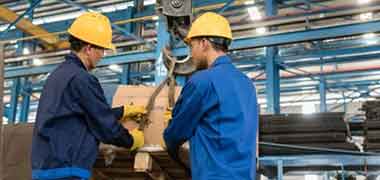
Material Handling
Complete liftfork CNC machinery part programs — hot forging, nitriding, phosphating, hard chrome, TiN PVD, spraying treatment, aluminum alloy, 316L stainless — in standard EN ISO 2328 dimensions and custom OEM geometry for Toyota, Linde, Still, Hyster-Yale, Hangcha, Heli, and all major carriage standards. 100% MPI per ISO 17638 on all forged bodies; PPAP Level 3 for OEM supply; wholesale volumes from 1,000 to 500,000 liftforks annually with weekly kanban delivery.
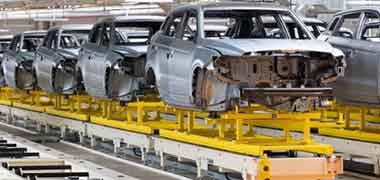
Automotive
IATF 16949-certified CNC machinery parts for automotive factory conveyor systems, welding fixture bodies, assembly line tooling, and AGV structural hardware — aluminum and stainless steel precision parts for automated guided vehicle chassis, lifting mechanism bodies, and docking connector hardware. PPAP Level 3; SPC Cpk ≥1.67 on critical dimensions; 8D corrective action within 24 hours; weekly kanban delivery for automotive assembly line supply schedules.
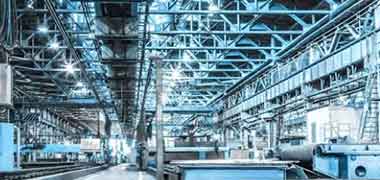
Industrial
Complete CNC machinery part portfolio for hydraulic presses, machine tools, industrial pumps and compressors, conveyor systems, mixing equipment, and packaging machinery — brass valve and manifold bodies, aluminum housing bodies, stainless steel shaft and precision mechanism bodies, steel structural fittings. IATF 16949 or ISO 9001 documented supply; prototype to production within one quality program without supplier transition discontinuity.
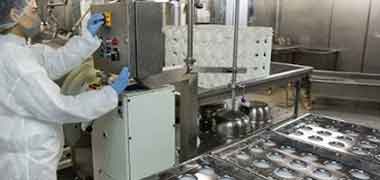
Food Processing
316L stainless and aluminum corrosion-resistant CNC machinery parts for food and pharma processing equipment — ASME BPE and 3-A SSI compliant hygienic surfaces; electropolish Ra ≤0.4μm; ASTM A967 citric acid passivation; FDA-compatible materials and coatings documentation. Aluminum alloy liftfork programs for food processing forklifts requiring corrosion resistance without stainless cost penalty; Type III hard anodize working surface for food processing floor contact service.

Construction
Hot forged and CNC finished structural machinery parts for excavator, crane, and agricultural tractor systems — 4140 and 4340 alloy steel forged structural bodies; S355J2 plate-machined and CNC finished structural hardware; hot-dip galvanized or powder coat corrosion protection for outdoor machinery service. Thick-walled liftfork programs for heavy-duty construction site forklifts (5,000–10,000 kg capacity) from heavy-section forged blanks with hard chrome working surface for abrasive ground contact.

Semiconductor
Non-magnetic 316L stainless and 6061-T6 aluminum CNC machinery parts for wafer handling equipment, lithography system structural components, and semiconductor process equipment — VSM μ_r ≤1.005 per lot; electroless Ni-P for DI water service; ASTM E595 TML ≤0.030% compliance documentation. PEEK machinery bearing housings and insulation bodies for electrically sensitive semiconductor equipment applications; Swiss CNC ±0.003mm OD for precision semiconductor machinery shafts and pins.
Materials
CNC Machinery Parts
Material Portfolio
CNCPioneer's CNC machinery part programs span the full industrial material spectrum — structural alloy steels for liftfork forging and machinery structural bodies, aluminum alloys for lightweight housing and shaft programs, free-machining brass for fluid control hardware, stainless steels for corrosion-resistant and hygienic applications, and engineering plastics for dielectric and low-friction machinery elements — all with SII XRF incoming lot verification before machining commitment.
S355J2 / Q345B Structural Steel
355 MPa yield (S355J2 EN 10025-2); 345 MPa (Q345B GB/T 1591) · Standard carbon-manganese structural steels for hot forged liftfork tine bodies in standard duty (500 kg–3,000 kg capacity) forklift programs. SII XRF per incoming lot confirms Mn 0.90–1.65%; Si 0.40–0.55%; C ≤0.22%. EN 10204 3.1 mill certificate archived per heat. Hot-dip galvanize (45–85μm per EN ISO 1461) or phosphate + epoxy/PU spray coat corrosion protection. Maximum gas nitriding hardness HV 450–550 (insufficient for HV 650+ specifications — upgrade to 4140 required). 100% MPI ISO 17638 per liftfork body.
4140 / 4340 Alloy Steel
4140 QT: Cr 0.80–1.10%; Mo 0.15–0.25%; C 0.37–0.44% SII XRF per lot · HRC 30–35 (quench-tempered before nitriding; core toughness maintained) · UTS 880–1,030 MPa · The correct base alloy for nitriding liftfork programs requiring HV 700–800 surface hardness — Cr + Mo forms CrN + Mo₂N alloy nitrides achieving HV 700–800 versus Q345B's HV 450–550 from iron nitride only. 4340 QT (Ni 1.65–2.00% + Cr + Mo): HRC 35–40; UTS 1,080–1,170 MPa for ultra-high-capacity (5,000–10,000 kg) thick-wall liftfork programs. 100% MPI per ISO 17638; Rockwell hardness per condition per lot. IATF 16949 traceability to machined part serial number.
Aluminum 6061-T6
276 MPa yield · 2.70 g/cm³ · T6 precipitation hardened · Excellent machinability; excellent anodize quality; weldable · The standard aluminum for industrial machinery housing bodies, structural brackets, pneumatic cylinder bodies, and machinery conveyor components where 7075's higher strength is not required. 6063-T5 (200 W/m·K) variant for electronics machinery thermal management housings where heat conductivity governs over strength. Surface: Type II anodize (standard corrosion protection); Type III hard anodize (35–50μm HV 400+ wear surface for mechanical contact zones); Alodine Class 3 (EMC bonding for electronics machinery); chromate-free Alodine 5200 for RoHS-compliant programs.
Aluminum 7075-T6
503 MPa yield · 2.80 g/cm³ · Approaching S355J2 carbon steel yield at one-third the density · For machine tool spindle housings, high-load machinery structural bodies, and aluminum alloy liftfork programs in food processing, clean room, and AGV/electric forklift programs where 60–70% mass reduction versus carbon steel liftfork extends battery charge range. Type III hard anodize (30–50μm HV 400+) on liftfork working surface provides wear resistance adequate for smooth warehouse floor contact. Design note: aluminum elastic modulus 71 GPa versus steel's 200 GPa → aluminum liftfork deflects 2.8× more at rated load; deflection calculated and documented in liftfork certification per EN ISO 2328. Non-weldable — all 7075 structural bodies machined from solid billet.
C36000 Free-Machining Brass
Cu 60–63%; Pb 2.5–3.7% SII XRF per lot · 100% machinability reference standard · The dominant brass grade for high-volume precision turned machinery fittings — hydraulic and pneumatic valve bodies, manifold bodies, thread inserts, and machine tool coolant fittings requiring maximum machinability and Swiss CNC cycle economy. DZR CW602N (dezincification-resistant) for potable water and hygienically critical machinery fluid systems (WRAS and ACS certification-compatible). C26000 cartridge brass (C ≤0.030%; Pb-free; RoHS compliant) for European market regulated machinery programs. Swiss CNC ±0.003mm OD; 100% thread GO/NO-GO; nickel or tin plate for corrosion protection; chromate conversion for electrical contact resistance stability.
316L Stainless Steel
C ≤0.030%; Mo 2–3% SII XRF per lot · PREN 24 chloride resistance · Standard stainless for food processing machinery structural components (ASME BPE Ra ≤0.8μm; EHEDG crevice-free from DFM; ASTM A967 citric acid passivation); pharmaceutical valve and fitting bodies (EP SF2/SF3 Ra ≤0.38/0.25μm per EP lot); industrial pump and valve bodies (100% pressure test per body); semiconductor process equipment (VSM μ_r ≤1.005 per lot; electroless Ni-P DI water service). 316L stainless liftfork programs for food processing and marine forklifts (CNC from heavy-section plate; ASTM A967 passivation; adequate for 500–2,500 kg capacity where 316L's lower yield versus carbon steel is compensated by larger cross-section). Work-hardening prevention ≥0.10 mm/tooth enforced; 70 bar through-spindle coolant all 316L programs.
17-4PH H900 Stainless
HRC 44–47 per aging lot · 1,170–1,310 MPa UTS · Two-stage machining: rough in solution-annealed condition → H900 age 480°C/1h → CBN finish at hardened condition · For high-strength precision mechanism machinery bodies in aerospace machinery programs, high-pressure instrument flanges, and precision structural machinery hardware where carbon steel or aluminum would require larger cross-sections. CBN boring bars on all H900 precision bores; AS9102 FAIR for AS9100D-documented precision machinery programs. H900 aging coordination through Pearl River Delta heat treatment cluster; Rockwell hardness verification HRC 44–47 per treated lot before returning for CBN finish machining.
PEEK / Delrin / PTFE
PEEK (HV 30+; 250°C continuous; chemical resistance to hydraulic fluid, lubricants, solvents; ASTM E595 TML ≤0.030% for enclosed machinery; bore ±0.010mm PCD turning Ra 0.4μm) for bearing housings and wear pads in precision and semiconductor machinery. Delrin (POM; μ = 0.20–0.35 versus steel; 120°C; ±0.050mm; Ra 0.8μm) for guide blocks, sliding elements, and low-friction machinery mechanisms. PTFE (zero-stick; −260°C to +260°C; chemical inert; ±0.100mm) for sealing and gasket bodies. UHMWPE (self-lubricating; lowest friction; ±0.200mm) for conveyor wear strips and guide rails. PA66 (impact-resistant; UV-stabilized) for structural guards and covers in outdoor machinery programs. PCD turning all engineering plastics; no secondary burr operations; CMM per batch.
Surface Treatments for
CNC Machinery Parts
Surface treatment selection for CNC machinery parts addresses wear resistance (gas nitriding HV 600–900; hard chrome; TiN PVD), corrosion protection base layer (manganese phosphate conversion coating), decorative and protective finishing (epoxy primer + polyurethane topcoat in RAL fleet colors; powder coat), corrosion-resistant alternatives (hot-dip galvanizing for outdoor programs; 316L stainless for chemical environments), and precision machined part treatment programs (ASTM A967 passivation; ASME BPE electropolish for food and pharma machinery).
Gas Nitriding — HV 600–900 Case Hardening
Gas nitriding (ammonia atmosphere, 500–550°C, 15–80 hours) is the preferred surface hardening treatment for liftfork CNC machinery parts — producing HV 600–900 hard surface layer without the dimensional distortion of quench hardening and without core softening. Nitrided liftforks combine hard surface (wear resistance at pallet and rack entry) with tough ductile core (fatigue and impact resistance at root). PLC-controlled ammonia dissociation ±2% NH₃ concentration stability achieves case depth ±0.030mm; microhardness profile per lot at 0.05, 0.10, 0.20, 0.30mm depth verifies case depth and surface hardness conformance. Case depth 0.15–0.50mm; 4140 QT base achieves HV 700–800; 34CrAlMo5 base achieves HV 850–900. Compressive residual stress −200 to −400 MPa at the case surface extends liftfork root fatigue life 20–40% as a bonus benefit.
Phosphating — Corrosion Inhibition & Paint Adhesion Base
Manganese phosphate (heavy, dark grey MnHPO₄ crystal; coating weight 10–25 g/m²) for liftfork tine structural bodies — providing corrosion inhibition base layer and 2–3× paint contact area increase versus bare steel that dramatically improves paint adhesion and reduces delamination at handling damage zones. 100–200 hours bare salt spray (insufficient as final protection; always used as primer base). Zinc phosphate (lighter, finer crystal; Ra 1.0–2.0μm post-phosphate) for liftfork attachment hardware where two-component epoxy primer systems limit total paint system thickness. Phosphating coordination through qualified Pearl River Delta conversion coating facilities at 1–2 day transit; coating weight certificate per bath lot; crystal size visual per lot; subsequent spray coat or powder coat coordination at same facility for complete system delivery.
Spraying Treatment — Epoxy Primer + Polyurethane Topcoat
Complete liftfork fleet finish system: shot blast Sa 2.5 (near-white metal; surface profile Rz 40–70μm); optional zinc phosphate pretreatment; 2-component epoxy primer (50–75μm DFT; excellent corrosion inhibition); polyurethane topcoat (50–75μm DFT; RAL color per fleet standard). Standard forklift fleet RAL colors: RAL 1003 signal yellow, RAL 5012 light blue, RAL 2004 pure orange, RAL 7016 anthracite grey, RAL 9005 jet black, RAL 9010 pure white — or custom RAL per OEM specification. DFT 100–150μm total; 1,000+ hours ASTM B117 on phosphate pre-treated surface. High-visibility fluorescent yellow-green tip stripe (EN ISO 2328 recommendation for warehouse tip visibility). RAL color consistency ΔE ≤2.0 per batch; DFT measurement per 5% of production. Powder coat alternative (dual coat 120–160μm; FDA-compliant for food processing forklift programs; UV-resistant for outdoor storage).
Hard Chrome & TiN PVD — Wear-Resistant Working Surfaces
Hard chrome plating (AMS 2460 industrial equivalent; 0.050–0.150mm; HV 850–1,100) for liftfork bottom working surfaces in abrasive outdoor and construction site service — coarser abrasives (gravel, sand, concrete rubble) produce wear rates exceeding nitriding's capability; hard chrome's 850–1,100 HV exceeds nitriding's 650–900 HV under coarse-grit abrasive conditions. Post-chrome CBN ground to specified Ra 0.4–0.8μm for uniform rack rail contact; XRF thickness verification per lot; dimensional check by CMM after grinding. Note: hard chrome (Cr VI process) under REACH restriction in European market — electroless Ni-P (HV 500) or HVOF thermal spray cermet available as chrome-free alternatives. TiN PVD (1–4μm; HV 2,300+) for liftfork carriage hook bodies in high-cycle quick-change systems — 10–15× wear life improvement over uncoated steel at hook slot engagement surfaces; negligible dimensional change allows coating after precision machining.
Hot-Dip Galvanizing — Outdoor & Construction Site Programs
Hot-dip galvanizing per EN ISO 1461 (zinc coating 45–85μm; 3,000+ hours ASTM B117 salt spray) for liftfork programs in outdoor storage, construction site, and agricultural forklift service where corrosion resistance without stainless steel cost is required. Complete zinc coverage including hook slot interior, tip taper, and mounting bore surfaces — superior to paint systems at damaged edges where steel exposure drives corrosive attack. Dimensional impact: ±0.050–0.200mm zinc growth; hook slot re-machined or gauged after galvanizing for carriage engagement specification compliance; CNCPioneer coordinates galvanizing and post-galvanize hook slot machining as an integrated program deliverable. Processing sequence: CNC machining → MPI → hot-dip galvanize → post-galvanize hook slot gauge/re-machine → delivery. Lead time: 10–14 business days including galvanizing transit for prototype programs.
Passivation & Electropolish — Stainless Machinery Parts
ASTM A967 passivation (nitric or citric acid) included at no additional charge on every austenitic stainless steel CNC machinery part delivery — removing free iron from machining operations and restoring passive chromium oxide at all machined surfaces. Copper sulfate test per monthly lot; certificate in standard shipment documentation. For food processing and pharmaceutical machinery parts: ASME BPE electropolish SF2 (Ra ≤0.38μm) or SF3 (Ra ≤0.25μm) with Ra certificate per EP lot at 3 positions per part. 316L stainless liftfork corrosion protection: ASTM A967 passivation standard (no additional charge). All stainless steel machinery parts — fluid manifolds, valve bodies, structural shafts, bearing housing bodies — receive passivation as standard before delivery, regardless of other surface treatment specified.
Surface treatment specification, alloy selection for nitriding target hardness, phosphating method, spray coat RAL color, and dimensional impact planning (hook slot pre-nitriding allowance; post-galvanize re-machining scope) are all included in CNCPioneer's 48-hour DFM review at no additional charge for every liftfork and general CNC machinery part program.
IATF 16949 Quality System for
CNC Machinery Parts
CNCPioneer's IATF 16949 and AS9100D certified CNC machinery part quality system addresses the four quality dimensions specific to liftfork and precision machined industrial machinery parts: SII XRF alloy verification preventing material substitution, 100% MPI on all hot forged bodies per ISO 17638, nitriding process control with microhardness verification, and PPAP Level 3 / FAIR production qualification bridge.
SII XRF Material Compliance — Alloy Substitution Prevention
SII XRF on every incoming metal lot: 4140 (Cr 0.80–1.10%; Mo 0.15–0.25%; C 0.37–0.44% — the Cr and Mo that form CrN + Mo₂N nitrides achieving HV 700–800); S355J2/Q345B (Mn 0.90–1.65%; C ≤0.22%); 6061-T6 (Mg 0.80–1.20%; Si 0.40–0.80%); 7075-T6 (Zn 5.1–6.1%; Mg 2.1–2.9%); C36000 brass (Cu 60–63%; Pb 2.5–3.7%); 316L (Cr 16–18%; Mo 2–3%; C ≤0.030%). The most common quality failure in Chinese liftfork supply — Q345B supplied as 4140 for nitriding programs — is undetectable without SII XRF incoming verification. Any lot with alloy composition outside specification is quarantined before machining; material lot traceability to machined part serial number in IATF 16949 quality system. EN 10204 3.1 or ASTM mill certificate archived per heat.
- SII XRF per incoming metal lot — every liftfork program
- 4140 Cr + Mo verified — prevents Q345B substitution
- EN 10204 3.1 / ASTM certificate archived per heat number
100% MPI on All Forged Liftfork Bodies — ISO 17638
Every hot forged and investment cast liftfork CNC machinery part receives wet fluorescent magnetic particle inspection per ISO 17638 at CNCPioneer-coordinated qualified NDT facility — Level II/III inspector per ASNT SNT-TC-1A; acceptance criteria per EN ISO 2328 for liftfork tine bodies. MPI performed before CNC finish machining (pre-machine MPI detects forging cracks before machining value is added to defective blanks). Critical detection zones: root fillet (highest bending stress concentration), heel face weld preparation zone, hook slot machined zone (stress concentration from slot corners). MPI report per serial number or per batch with individual liftfork identity traceable to the report; archived in IATF 16949 quality system. Penetrant inspection (FPI) per ASTM E165 on investment cast liftfork attachment hardware.
- 100% wet fluorescent MPI ISO 17638 all forged liftfork bodies
- MPI before CNC machining — defects detected pre-value-add
- MPI report per serial number archived in quality system
Nitriding Process Control & CMM Dimensional Verification
PLC-controlled gas nitriding furnace with ±2% NH₃ concentration stability achieves case depth ±0.030mm uniformity across furnace load; dedicated thermocouple verification at hook slot position eliminates temperature gradient-induced case depth variation (the root cause of hook slot width non-conformance identified in CNCPioneer's case study). Microhardness profile per furnace lot at 0.05, 0.10, 0.20, 0.30mm depth (Vickers indentor); surface hardness and core hardness recorded per lot against specification. Hook slot width: 100% gauge per production lot (post-nitriding — accounts for nitriding growth); CMM heel face flatness per batch; bolt hole true position CMM per batch. Spray coat DFT per 5% of production; adhesion crosshatch per lot; RAL color delta-E ΔE ≤2.0 per batch.
- PLC-controlled NH₃ ±2% — case depth ±0.030mm achieved
- Microhardness profile per nitriding lot — surface + core
- 100% hook slot gauge post-nitriding per production lot
PPAP Level 3 & AS9102 FAIR Production Qualification
PPAP Level 3 for IATF 16949 automotive factory and OEM-approved aftermarket programs: 30-piece dimensional data; Cpk ≥1.33 minimum (1.67 target) on hook slot width, heel face flatness, and bolt hole true position; MSA Gage R&R ≤10% on hook slot gauge and CMM measurement systems; PFMEA (covering alloy substitution risk, nitriding case depth variation, forging crack risk, hook slot post-nitriding growth); Control Plan; PSW. The case study result after corrective action: hook slot Cpk 1.67; surface hardness Cpk 1.61 — both meeting IATF 16949 special characteristic requirements. AS9102 FAIR for AS9100D-documented precision machinery part programs. Free sample programs (2–4 pieces) for new OEM customer qualification on established liftfork designs.
- PPAP Level 3 for OEM-approved liftfork supply programs
- Cpk ≥1.67 hook slot width + heel face flatness production
- Free sample programs (2–4 pcs) for new customer qualification
CNC Machinery Parts FAQ
Common questions from forklift OEMs and aftermarket distributors, automotive factory automation builders, industrial machinery manufacturers, and OEM engineering distributors about CNCPioneer's CNC machinery part capability, liftfork hot forging versus plate machining, nitriding versus chrome surface treatment selection, quality documentation requirements, and OEM wholesale program economics.
A liftfork CNC machinery part is a precision-machined component in the fork arm assembly of a forklift truck — either the liftfork tine body itself (the main load-bearing structural element) or the attachment, positioning, and accessory hardware connecting, adjusting, and equipping the liftfork for its specific application. The liftfork tine body requires hot forging rather than CNC machining from plate or bar stock for three reinforcing engineering reasons. Structural grain flow: rolled plate has grains elongated in the rolling direction — strongest in tension along the rolling direction but weakest in the transverse thickness direction. A plate-machined liftfork has its bending moment applied perpendicular to the plate rolling direction at the root — loading the weaker transverse grain orientation. Hot forging at 1,100–1,250°C deforms the steel billet under closed die pressure, forcing grain flow to follow the die geometry — producing aligned grain flow along the liftfork's primary bending stress direction. This alignment increases the liftfork root's tensile bending strength by approximately 25–40% and fatigue strength by 30–50% versus plate-machined equivalents at the same cross-section. Fatigue life: EN ISO 2328 requires that liftfork tine bodies withstand 700,000 load cycles at rated payload. Hot-forged liftforks with aligned grain flow routinely achieve 2,000,000+ cycles — providing 3× the standard fatigue test margin. Plate-machined liftfork tine bodies achieve 400,000–700,000 cycles — marginal to failing by EN ISO 2328 from the transverse grain at the root. Material efficiency: hot forging produces a near-net shape liftfork body requiring only 5–15% material removal by CNC finish machining. Equivalent CNC machining from rectangular bar stock requires removing 40–70% of starting material to produce the L-shaped liftfork profile — a massive material waste at the tonnages involved (a 2,000 kg rated liftfork tine body weighs 15–25 kg). At volume production, the material savings from forging versus bar machining represent $8–20 per liftfork in steel cost alone, compounding with longer service life to make hot forging the economically and technically superior manufacturing method for liftfork tine bodies.
Surface hardening treatment selection for liftfork CNC machinery parts follows an application-specific engineering decision based on three variables: dominant wear mechanism, dimensional precision requirement, and service environment. Nitriding (case depth 0.15–0.50mm; HV 600–900): preferred for liftfork tine working surfaces in standard warehouse and manufacturing facility service. Nitriding's deep case (0.25–0.35mm standard) provides 5–8× the abrasion wear life of untreated steel at the liftfork bottom surface during pallet retrieval from concrete floors, wooden pallet boards, and metal rack support rails. The nitrided case's compressive residual stress (−200 to −400 MPa at the case surface) simultaneously extends fatigue life at the root fillet by 20–40% — dual surface and structural benefit from one process. Nitriding does not require subsequent machining if case depth uniformity is controlled within ±0.030mm and the pre-nitriding hook slot is dimensioned with the +0.050mm growth allowance. Hard chrome (0.050–0.150mm; HV 850–1,100): preferred for liftfork working surfaces in abrasive outdoor and construction site service where coarser abrasives (gravel, sand, concrete rubble) produce wear rates exceeding nitriding's capability. Hard chrome's 850–1,100 HV exceeds nitriding's 650–900 HV, producing better abrasive wear resistance under coarse-grit conditions. Additionally, hard chrome provides corrosion resistance (150–500 hours ASTM B117) absent from nitriding — beneficial for outdoor programs. Requires precise masking and post-chrome CBN grinding. TiN PVD (1–4μm; HV 2,300+): preferred for liftfork attachment hook bodies and carriage engagement pins in high-cycle quick-change carriage systems where hook bar contact surface wears from 100+ engagement cycles per day. TiN's extreme hardness (HV 2,300 versus chrome's HV 1,100) provides 5–8× better wear life at high-contact-stress hook engagement surfaces. At 1–4μm, TiN adds negligible dimensional change — allowing coating after precision machining to ±0.020mm hook slot specification without re-machining. Premium option: duplex treatment (gas nitriding HV 700–800 case + TiN PVD HV 2,300+ over the nitrided case) — providing fatigue life from nitriding's deep compressive case plus extreme surface hardness of TiN at rack and pallet contact surfaces simultaneously.
CNCPioneer's OEM liftfork CNC machinery part quality documentation package consists of: material compliance (SII XRF composition data + EN 10204 3.1 mill certificate per heat number, with material lot traceability to each shipped liftfork serial number); 100% magnetic particle inspection (MPI per ISO 17638; qualified NDT facility; Level II/III inspector certification; MPI report per serial number or per batch with individual liftfork identity traceable to the report); nitriding case depth and hardness verification (Vickers microhardness profile at 0.05, 0.10, 0.20, 0.30mm depth per nitriding furnace lot; surface hardness conformance to HV specification; core hardness conformance; metallographic cross-section on one sample per lot); dimensional CMM inspection report (hook slot width 100% gauge per production lot; heel face flatness CMM per batch; bolt hole true position CMM per batch); surface treatment certificates (nitriding furnace chart per lot; phosphating bath chemistry and coating weight per lot; spray coat DFT and RAL color delta-E per batch); and IATF 16949 PPAP Level 3 for automotive factory and OEM-approved aftermarket programs (30-piece dimensional data with Cpk; MSA Gage R&R ≤10%; PFMEA; Control Plan; Process Flow; PSW). Standard Chinese CNC machinery part suppliers typically provide: mill certificate per lot (no SII XRF incoming verification); visual inspection (no MPI on forged parts); sample CMM report (no 100% hook slot gauge); no surface treatment process certification. The consequences: Q345B supplied as 4140 (undetectable without SII XRF) produces HV 450–550 nitrided hardness versus HV 700–800 specification; undetected forging cracks without 100% MPI can produce liftfork failure below rated payload; inconsistent nitriding case depth without furnace control produces hook slot width variation that prevents standard carriage engagement. For OEM liftfork programs supplying to forklift dealers extending the OEM's product liability to the end user, CNCPioneer's complete documentation package is the minimum acceptable quality evidence — the cost premium over standard Chinese suppliers represents the quality infrastructure preventing safety and liability events that inadequately documented liftfork supply can produce.
Prototype lead times: standard S355J2 hot forging liftfork (open-die forging + CNC finish + MPI + phosphate + spray coat RAL, FAIR) — 10–14 business days; 4140 QT nitriding liftfork (forged blank + CNC + gas nitriding 0.30mm case + MPI + phosphate + spray coat, FAIR) — 12–14 days; 7075-T6 aluminum alloy liftfork (CNC from billet + Type III anodize working surface, FAIR) — 8–12 days; 316L stainless corrosion-resistant liftfork (CNC from plate + ASTM A967 passivation, FAIR) — 8–12 days; investment cast liftfork attachment hook (cast + CNC + MPI + phosphate, 10-piece, FAIR) — 7–10 days. Volume economics at 24,000 liftforks/year: standard S355J2 forged liftfork (phosphate + RAL spray coat) — $26–39/piece at 10,000–50,000/year; 4140 nitrided forged liftfork — $44–66/piece; aluminum 7075-T6 — $89–132/piece. Four-market comparison for 4140 nitriding liftfork at 24,000/year: European precision machining (Germany, Czech Republic) €85–130/piece ($92–141); Taiwanese precision manufacturing $65–95/piece; CNCPioneer China (IATF 16949, SII XRF per lot, PLC nitriding, 100% MPI, 100% hook slot gauge, PPAP Level 3) $44–66/piece; standard Chinese general machining (no SII XRF, no 100% MPI, no Cpk monitoring, no PPAP) $28–42/piece. CNCPioneer versus European: 53–65% cost reduction at equivalent documentation and quality. Annual saving at 24,000 liftforks/year from CNCPioneer versus European sourcing: ($92 − $55 average) × 24,000 = $888,000. The CNCPioneer versus lowest-cost Chinese premium: $16–24/piece (36–57%) provides the four documented quality differentiators: alloy verification preventing Q345B-for-4140 substitution; 100% MPI detecting forging cracks before shipment; PLC-controlled nitriding furnace achieving Cpk 1.67 on case depth and hook slot; 100% hook slot gauge producing Cpk ≥1.67 versus unmonitored Cpk ≈0.7–1.0 at general machining facilities.
Liftfork surface treatment selection follows the service environment classification: Standard indoor warehouse service (the majority of forklift programs): phosphate pretreatment + 2-component epoxy primer (50–75μm) + polyurethane topcoat (50–75μm) in RAL fleet color — total DFT 100–150μm; 1,000+ hours ASTM B117 on phosphate base; standard system providing fleet color compliance, adequate corrosion resistance for dry indoor environments, and lowest cost. Clean-room, food processing, pharmaceutical forklifts indoors: dual-coat powder coat (epoxy powder primer 60–80μm + polyester topcoat powder 60–80μm; total 120–160μm) — FDA-compliant formulations for food processing programs; RAL color ΔE ≤2.0 between batches; superior corrosion resistance at sharp edges versus wet spray systems; or upgrade to 316L stainless liftfork (passivation; no paint system required) for direct food contact washing environments. Outdoor storage, construction site, agricultural forklifts: hot-dip galvanize (EN ISO 1461; 45–85μm zinc; 3,000+ hours ASTM B117) — complete coverage including hook slot interior and tip; corrosion resistance superior to paint systems at damaged edges; hook slot re-machined or gauged post-galvanize for engagement specification. Marine and coastal forklifts: 316L stainless liftfork tine body (ASTM A967 passivation; no additional paint required) for seawater splash environments where carbon steel even with hot-dip galvanizing corrodes at the paint-damaged zones within 12–24 months; or hot-dip galvanize + two-coat epoxy paint system for moderate coastal exposure forklifts where stainless cost is not justified. Chemical plant forklifts in corrosive chemical vapor: 316L stainless liftfork (ASTM A967 passivation; confirmed chemical compatibility for specific chemical exposure; ASTM A182 structural grade) for environments where organic coatings are incompatible with the chemical atmosphere.
Get a Quote for CNC Machinery Parts
Upload your CNC machinery part drawings, 3D CAD models, liftfork specifications (rated capacity, carriage bar width, liftfork length, cross-section dimensions), OEM part numbers, surface treatment requirements, or complete machinery part BOM and receive a competitive quotation within 24 hours and complete engineering DFM within 48 hours — covering material selection, manufacturing method recommendation (hot forging vs CNC from solid vs investment casting), liftfork structural adequacy calculation at rated payload, nitriding alloy and case depth recommendation, 100% MPI scope, surface coating specification from service environment, PPAP Level 3 scope, free sample availability, and complete pricing from prototype first articles through IATF 16949 governed production and wholesale supply.