
Metric Thread
Adapter
CNCPioneer is an IATF 16949 and AS9100D certified China metric thread adapter manufacturer delivering C36000 brass, DZR CW602N, 316L stainless, 4140 alloy steel, TC4 titanium, and PEEK metric thread adapters — metric-to-BSP (ISO 228/7-1), metric-to-NPT (ASME B1.20.1), metric-to-JIC (SAE J514), metric-to-ORFS (SAE J1453), metric-to-AN/MS, and metric-to-metric reducing configurations — with thread axis coaxiality ±0.010mm from single-setup MAZAK mill-turn, 100% ring and plug gauge on both thread ends per adapter, metric 60° vs BSP 55° thread form DFM confirmation before every metric-to-BSP program tooling assignment, and complete metric gauge inventory M5×0.8 through M64×6.0 coarse plus all DIN 3852 metric fine pitch series since 2011.
What Is a Metric
Thread Adapter?
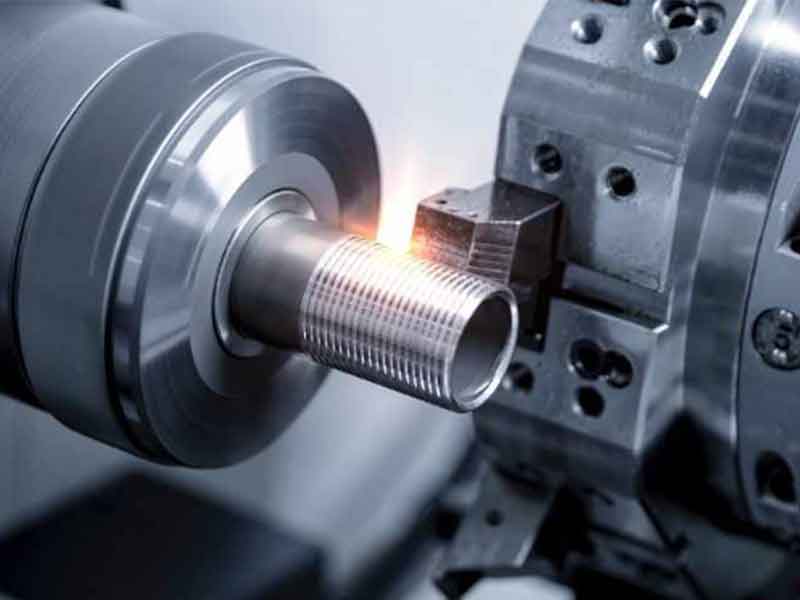
A metric thread adapter — also called a metric thread conversion fitting, metric cross-thread adapter, or metric-to-BSP / metric-to-NPT adapter — is a precision CNC turned connection component whose defining function is to create a sealed fluid system connection between a metric ISO thread (ISO 68 coarse or metric fine per DIN 3852) on one side and an incompatible thread standard — BSP, NPT, JIC, ORFS, AN/MS, or a different metric pitch — on the other side, in a single precision-turned body that eliminates the two-component approach that would otherwise be required at every cross-standard connection point in a mixed-thread fluid system.
The engineering precision that distinguishes a quality CNC machined metric thread adapter from a commodity casting or low-precision machined adapter lies in the simultaneous accuracy required at both thread ends: the metric thread (ISO 68 60° flank angle) and the mating thread (BSP 55° Whitworth; NPT 60° tapered; JIC 37° cone) must both be produced from the same MAZAK mill-turn single-setup datum to achieve ±0.010mm thread axis coaxiality — and the most consequential DFM confirmation for metric-to-BSP programs is the thread form distinction: the metric ISO 68 60° flank angle versus the BSP Whitworth 55° flank angle. A metric male thread in a BSP female port produces crest-to-crest contact after 3–5 turns, shearing both thread tips and seizing the adapter irreversibly in the port. CNCPioneer's DFM confirms the correct thread form — ISO 68 60° at the metric end, 55° Whitworth at the BSP end — before any tooling is assigned to every metric-to-BSP adapter program.
-
100% both-end gauge per adapter — metric ring/plug gauge AND mating standard gauge The most common quality shortcut is 100% gauging the metric thread end (first operation) and 5–10% sample-gauging the BSP, NPT, or JIC mating thread end. At 0.5% non-conformance rate at the mating end: 5% sample gauging allows 95% of defective-mating-end lots to ship. CNCPioneer: 100% metric gauge AND 100% mating-standard gauge per adapter, every production run — the complete quality gate that ensures every adapter will install and seal correctly at both connections.
-
Thread form DFM: metric 60° ISO 68 confirmed AND BSP 55° Whitworth confirmed — before tooling The most frequent engineering error in metric-to-BSP adapter programs — the error that produces "thread jams after 3–5 turns" field failures — is specifying the same thread form at both ends. CNCPioneer's DFM documents the correct thread form (60° metric insert at metric end; 55° BSP insert at BSP end; each confirmed from separate tooling inserts from the same MAZAK mill-turn spindle datum) before any tooling assignment, preventing the cross-form installation failure for every program.
-
Thread axis coaxiality ±0.010mm from single-setup MAZAK mill-turn When metric Thread End 1 and mating Thread End 2 are produced with re-chucking between, re-chucking introduces ±0.030–0.150mm translational offset and ±0.020–0.080° angular misalignment — visible as a cocked adapter in instrument port panel installations, and angular stress concentrations at thread roots in rigid piping systems under vibration and thermal cycling. CNCPioneer's MAZAK mill-turn single-setup: both thread ends from one continuous spindle datum producing coaxiality ±0.010mm at Cpk ≥1.67 in production.
-
$208,250 annual saving — Japanese pharmaceutical OEM case study (316L ASME BPE adapters) 316L stainless M22×1.5 male × Rc3/4 BSPT female ASME BPE SF2 EP Ra ≤0.38μm pharmaceutical adapters at $6.85/adapter (CNCPioneer, IATF 16949 PPAP Level 3, metric thread EP masking, post-EP both-end gauge 100%, post-EP pressure test, ASME BPE documentation package) versus $12.80/adapter from previous US supplier — $208,250 annual saving while adding BSPT vs. BSP G-type thread form DFM correction, metric thread EP masking protocol, and post-EP pressure test sequence.

Why CNCPioneer for Metric
Thread Adapters?
Among metric thread adapter manufacturers globally, CNCPioneer's 100% both-end gauge (metric + mating thread), single-setup MAZAK coaxiality ±0.010mm, BSPT vs. BSP G-type thread form DFM documentation before every metric-to-BSP program, complete metric gauge inventory from M5×0.8 through M64×6.0 coarse and all DIN 3852 fine pitch series, Swiss CNC guide bushing for small metric adapters, and 40–60% China cost advantage establish our factory as the preferred metric thread adapter partner across pharmaceutical, semiconductor, automotive, hydraulic, aerospace, and analytical instrument supply chains.
Both-Thread-End 100% Gauge — The Complete Quality Standard for Cross-Standard Adapters
The metric thread adapter's function — creating a sealed, mechanically sound connection between two incompatible thread standards — depends on both thread ends being within gauge specification simultaneously. The most common quality shortcut: 100% gauging the first-machined metric thread end, and 5–10% sample-gauging the BSP, NPT, or JIC mating thread end. At a 0.5% non-conformance rate at the mating thread end: 5% sample gauging from a 1,000-piece lot catches the first non-conforming adapter with only 14% probability — meaning 86% of lots with defective mating-end threads ship without detection. CNCPioneer's 100% gauge standard: metric thread end gauged with calibrated metric ring gauge (external) or plug gauge (internal) per adapter per production run; mating thread end gauged with the appropriate standard-specific gauge (BSP ring/plug, NPT L1 taper plug/ring, JIC cone CMM, ORFS groove CMM) per adapter per production run — both gauges applied before dispatch, every adapter, every lot, without exception.
Single-Setup MAZAK Mill-Turn for Thread Axis Coaxiality ±0.010mm
The metric thread adapter's alignment quality between its two thread ends — the coaxiality of the metric thread axis and the mating thread axis — determines whether the installed adapter sits perfectly perpendicular at both its connection points or cocks angularly between them. When Thread End 1 (metric) and Thread End 2 (BSP, NPT, or other) are produced in separate operations with re-chucking between, the re-chucking introduces ±0.030–0.150mm translational offset and ±0.020–0.080° angular misalignment between the two thread axes — visible as a cocked adapter in instrument port panel installations and as angular stress concentrations at thread roots in rigid piping systems under vibration and thermal cycling. CNCPioneer's MAZAK mill-turn single-setup: Thread End 1 is turned and threaded from the spindle axis; Thread End 2 is turned and threaded from the same spindle axis immediately after without re-chucking — both thread axes from one continuous datum producing coaxiality ±0.010mm at Cpk ≥1.67 in production. PPAP case study: MAZAK thermal drift without warm-up produced coaxiality Cpk 1.67 exactly at threshold — corrective action: 15-minute mandatory MAZAK warm-up SOP + first-piece coaxiality CMM per session — post-corrective Cpk 2.83.
Complete Metric Thread Gauge Inventory — M5 Through M64, Coarse and All Fine Pitches
Metric thread gauges are more diverse than BSP or NPT gauges because the metric system has two distinct series (ISO 68 coarse pitch and metric fine pitch per DIN 3852) with multiple standard pitches at each nominal diameter. M12 alone has coarse pitch 1.75mm and fine pitches 1.5, 1.25, 1.0, and 0.75mm — five distinct thread programs requiring separate gauge sets. Suppliers who gauge metric threads by pitch diameter calculation or thread micrometer measurement rather than by calibrated go/no-go gauge miss the specific pitch deviation, thread form deviation, and pitch diameter scatter that collectively determine whether the metric thread mates correctly with the equipment port. CNCPioneer's calibrated metric gauge inventory covers M5×0.8 through M64×6.0 coarse pitch and all standard metric fine pitch series (M8×1.0 through M48×1.5) and all DIN 3852 hydraulic metric fine port sizes — 100% go/no-go per metric thread end per adapter in production, available as the standard quality gate for every metric adapter program without special sampling or audit arrangement.
Metric-to-BSP Thread Form DFM — The Most Common Field Error in Metric Adapter Programs
The most frequent engineering error in metric thread adapter specification — producing the "thread jams after 3–5 turns" field failure — is confusing the metric ISO 68 60° flank angle with the BSP Whitworth 55° flank angle. When a metric 60° male thread attempts to engage a BSP 55° female port, the metric thread's 60° flanks contact the BSP port's 55° thread crests (not their valleys) — producing crest-to-crest contact that concentrates the installation torque on the weakest part of both thread forms — the thread tips. At 3–5 turns: contact pressure exceeds material shear strength at the thread tip, shearing material from both crests simultaneously and seizing the adapter body in the port irreversibly. CNCPioneer's DFM for every metric-to-BSP adapter inquiry: documents metric 60° ISO 68 thread form at the metric end AND BSP 55° Whitworth thread form at the BSP end — two different flank angles in the same adapter body, machined with different tooling inserts (60° metric insert; 55° BSP insert) from the same MAZAK mill-turn spindle datum. This thread form DFM confirmation is applied at quotation stage before any tooling or gauge assignment.
Swiss CNC Guide Bushing for Small Metric Adapters in the M5–M20 Range
Small metric thread adapters in the M5×0.8 through M20×2.5 nominal diameter range — the most common sizes in instrumentation, semiconductor, pharmaceutical, and automotive sensor port conversion programs — fall within the Ø8–30mm body OD range where Swiss CNC guide bushing support is the correct manufacturing platform. A Ø12mm × 30mm body at M10×1.0 female × G1/4 BSP male adapter, turned in a standard chuck lathe, deflects 0.015–0.035mm at the BSP thread zone from the insert's radial cutting force — producing BSP pitch diameter non-conformance before any other process variation is added. CNCPioneer's 78+ Swiss CNC lathes with guide bushing produce metric thread adapter body OD ±0.003mm and both thread pitch diameters ±0.005mm from single-setup guide-bushing-supported turning without deflection — at 3,000–8,000 small metric adapter bodies per machine-hour for C36000 brass programs and 500–2,000 per machine-hour for 316L stainless programs.
ODM Design from Port Specifications + 40–60% China Metric Thread Adapter Cost Advantage
Engineers specifying metric thread adapters frequently know the metric port specification on their equipment (M22×1.5 port per datasheet) and the distribution system thread standard (G3/4 BSP or ¾-14 NPT), but have not designed the adapter hex size, body length, thread engagement depth, and wall thickness. CNCPioneer's ODM service converts port specification pairs into production-ready 3D CAD with hex body per EN ISO 4759-1, thread engagement depth per metric thread standard minimum, wall thickness per ASME B31.3 pressure design, and 48-hour DFM — delivering the complete adapter engineering from port specifications alone. Cost advantage: case study $6.85/adapter (CNCPioneer, 316L ASME BPE SF2 EP, IATF 16949 PPAP Level 3) versus $12.80/adapter from previous US pharmaceutical fitting specialist — $208,250 annual saving at 35,000 adapters/year, while adding BSPT thread form DFM correction, metric thread EP masking, and post-EP pressure test improvements the previous supplier had not implemented.
Metric Thread Adapter
Product Portfolio
CNCPioneer's metric thread adapter programs cover the complete portfolio — metric-to-BSP (ISO 228/7-1), metric-to-NPT (ASME B1.20.1), metric-to-JIC (SAE J514), metric-to-ORFS (SAE J1453), metric-to-AN/MS aerospace, metric-to-metric reducing and pitch-conversion, pharmaceutical ASME BPE SF2 EP stainless adapters, and semiconductor electroless Ni-P adapters — across metric ISO 68 coarse (M5×0.8 through M64×6.0) and all DIN 3852 metric fine pitch series, with 100% both-end gauge per adapter, thread form DFM confirmation, and 100% pressure test per serial number as standard quality gates for all programs.

Metric-to-BSP Thread Adapters — M8×1.25 Through M64×6.0 × G1/8 Through G2 BSP
C36000 brass M22×1.5 male × G3/4 BSP female hex adapter (most common industrial combination — European flow meters, pressure transmitters, and control valves to BSP process piping): MAZAK mill-turn single-setup; M22×1.5 metric male: 60° flank ISO 68 insert; pitch 1.500mm; ±0.005mm pitch diameter; 100% M22×1.5 6g ring gauge per adapter; shoulder face flatness ±0.005mm/25mm for Dowty seal programs; body flip without re-chucking; G3/4 BSPT (Rc3/4) female: 55° Whitworth insert (different from M22 metric insert — CRITICAL thread form DFM confirmed before tooling assignment); L1 taper 1:16; 100% L1 taper plug gauge per adapter; thread axis coaxiality ±0.010mm from same spindle datum; bright nickel 10μm; 100% post-plate dual gauge (M22 ring + G3/4 plug); 100% pressure test. DZR CW602N programs for UK potable water: As XRF per lot mandatory; WRAS documentation. Standard metric-to-BSP matrix: M8×1.25 through M64×6.0 × G1/8 through G2 BSP; metric female × BSP male reverse configuration; metric fine pitch DIN 3852 programs (M22×1.5 fine × G3/4 BSP — the standard European flow meter port adapter). Prototype: 2–3 days (25-piece C36000); 3–4 days (25-piece DZR); 4–5 days (10-piece 316L).

Metric-to-NPT Thread Adapters — M8 Through M52 × ⅛-27 NPT Through 2-11½ NPT
C36000 brass M22×1.5 male × ¾-14 NPT female hex adapter (standard industrial metric-to-NPT for European process equipment entering North American facilities): MAZAK mill-turn single-setup; M22×1.5 metric male: 60° flank, 1.500mm pitch, ±0.005mm pitch diameter, 100% M22×1.5 ring gauge; ¾-14 NPT female: 60° flank (same as metric — the incompatibility is taper, not flank angle), 1.814mm pitch, tapered 1/16 inch per inch from coordinated X-Z interpolation in MAZAK mill-turn program; 100% L1 taper plug gauge per adapter; coaxiality ±0.010mm; 100% pressure test. Note: metric and NPT share 60° flank angle but differ in taper (NPT tapered; metric parallel) and pitch (M22×1.5 pitch 1.500mm; ¾ NPT pitch 1.814mm — 17% different) — the precision adapter body bridges these two genuinely incompatible thread geometries in one MAZAK mill-turn program. Standard metric-to-NPT matrix: M8×1.25 through M52×2.0 × ⅛-27 NPT through 2-11½ NPT; all combinations; PTFE pre-applied NPT end option for OEM assembly line programs. 316L stainless metric-to-NPT programs: single-point CNC threading; chip load ≥0.10 mm/rev; 70 bar coolant; ASTM A967 passivation; FAIR documentation. Prototype: 2–3 days (25-piece C36000); 4–5 days (10-piece 316L).

Metric-to-JIC and ORFS Hydraulic Thread Adapters
4140 alloy steel M22×1.5 male × 9/16-18 UNF JIC 37° female adapter (European DIN-metric hydraulic systems to North American SAE JIC circuits): SII XRF Cr 0.80–1.10%; Mo 0.15–0.25% per lot; UTS 1,000 MPa; M22×1.5 metric male: 60° flank; ±0.005mm pitch diameter; 100% ring gauge; 9/16-18 UNF JIC female: UNF thread + 37° ±0.5° internal cone seat; Ra ≤0.4μm; 100% UNF ring gauge; CMM cone angle first article per program; zinc-nickel plate ASTM B841 (720+ hours B117) for outdoor hydraulic equipment; 100% pressure test at 1.5× SAE J514 rated pressure per adapter serial number. 316L stainless M14×1.5 male × SAE J1453 ORFS female adapter (food-grade European metric hydraulic ports to North American ORFS): ORFS female O-ring groove ±0.008mm depth ±0.010mm width; face flatness 0.005mm/25mm; UNF thread 100% ring gauge; ASTM A967 passivation; 100% both-end gauge; 100% pressure test. Full metric-to-JIC size matrix: M8×1.25 through M52×2.0 × 7/16-20 UNF through 1-5/16-12 UN JIC; all combinations in C36000 brass, 4140 QT alloy steel, and 316L stainless. Prototype: 4–6 days (10-piece 4140 or 316L JIC/ORFS). IATF 16949 PPAP Level 3 for automotive hydraulic programs.

Metric-to-Metric Reducing, Pitch-Conversion, and Elbow/Tee Adapters
Metric-to-metric reducing adapter (M30×2.0 male × M18×1.5 female): in-place port size reduction within all-metric system designs without changing thread standard; large-end M30×2.0 male external single-point CNC ±0.005mm pitch diameter 100% ring gauge; small-end M18×1.5 female internal from same spindle datum ±0.005mm pitch diameter 100% plug gauge; thread axis coaxiality ±0.010mm from single MAZAK mill-turn setup — both metric threads from same datum; wall thickness at minimum section ≥2.5mm confirmed by DFM; hex body C-axis milled ±0.050mm per EN ISO 4759-1; all metric reducing combinations M6 through M64 available. Metric pitch-conversion adapter (M20×2.5 coarse male × M20×1.5 fine female): converts DIN 3852 hydraulic fine-pitch port to coarse-pitch fitting in same nominal diameter; 100% M20×2.5 ring gauge + 100% M20×1.5 plug gauge. 316L stainless M10×1.0 × G1/4 BSP 90° elbow adapter: C-axis indexes 90.000°; G1/4 BSP female from C-axis position; perpendicularity ±0.020°; 100% both-end gauge; compact hex between port zones; ASTM A967 passivation; 100% pressure test; FAIR documentation. M10×1.0 × G1/4 BSP tee adapter (three-port distribution): C-axis 90° branch perpendicularity 0.010mm; all three ports 100% gauge; 100% pressure test. Prototype: 3–4 days (reducing/pitch-conversion); 5–7 days (elbow/tee adapters).

Aerospace Metric-to-AN/MS Adapters — TC4 Titanium and 17-4PH H900
TC4 AMS 4928 titanium M16×1.5 male × AN-6 male adapter for aerospace fluid system programs where European equipment with M16×1.5 metric ports must connect to aircraft AN standard fluid fittings — 44% mass reduction versus 316L: AMS 4928 bar; SII XRF Al 5.50–6.75%; V 3.50–4.50% per lot; AMS 4928 mill certificate per heat; M16×1.5 metric male: single-point CNC threading MANDATORY for TC4 from galling prevention — die tapping triggers titanium galling within seconds; chip load ≥0.08 mm/rev; lubricating cutting oil (not flood coolant — titanium fire risk from titanium chips and water-based coolant interaction); ±0.005mm pitch diameter; 100% ring gauge; AN-6 male external (3/8-24 UNF): 37° AN flare seat from same spindle datum; 100% AN gauge; PVD TiAlN 1–3μm anti-galling on thread flanks; AMS 2700 passivation; AS9102 FAIR; 100% pressure test per AS9100D lot documentation. 17-4PH H900 stainless M24×1.5 female × MS flareless fitting male adapter for aerospace instrument programs: AMS 5643 mill cert; H900 aging 480°C/1h; HRC 44–47 per aging lot; CBN boring at HRC 44–47 (standard carbide cannot machine aged H900); ±0.005mm pitch diameter; 100% both-end gauge; AMS 2700 passivation; AS9102 FAIR. Prototype: 7–10 days (5-piece TC4); 8–12 days (5-piece 17-4PH H900). 2205 duplex metric-to-BSP offshore adapters: PREN 35; tensile per heat; NACE MR0175 on request.

Pharmaceutical ASME BPE SF2/SF3 + Semiconductor Electroless Ni-P Metric Adapters
316L stainless M22×1.5 male × Rc3/4 BSPT female pharmaceutical adapter (Japanese pharmaceutical bioreactor to European BSP plant piping — case study program): CRITICAL EP masking: M22 metric male thread zone masked with PTFE plug before EP bath — EP applies 10–20μm material removal per side on metric thread flanks, reducing M22×1.5 6g pitch diameter below minimum gauge; bore-only EP; bore Ra ≤0.38μm ASME BPE SF2 confirmed by profilometry 3 positions per adapter per EP lot; post-EP 100% M22 ring gauge (masked thread unaffected); post-EP 100% Rc3/4 L1 plug gauge; post-EP 100% pressure test at pharmaceutical circuit pressure × 1.5 (PPAP case study: all 50 adapters passed — zero EP-opened micro-cracks); ASME BPE documentation package (bore Ra cert + passivation cert + 316L C ≤0.030% SII XRF cert); citric acid passivation ASTM A967. Semiconductor Ni-P adapter (316L M10×1.0 male × G1/4 BSP female with Ni-P bore): bore pre-compensation +0.012mm before Ni-P; metric thread and G1/4 BSP thread both masked before Ni-P bath; automated bath pH ±0.05; post-Ni-P 100% both-end gauge; ASTM E595 TML ≤0.010%; VSM μ_r ≤1.005 per lot. PEEK M10×1.0 × G1/4 BSP chemical-resistance adapter: FTIR per lot; PCD turning mandatory; 100% both-end gauge. Prototype: 6–7 days (10-piece ASME BPE SF2); 5–7 days (10-piece Ni-P semiconductor).
Industries & Applications
CNCPioneer's metric thread adapter programs serve every industry where metric-ported equipment must connect to non-metric distribution systems — from Japanese pharmaceutical OEMs requiring 316L ASME BPE SF2 EP M22×1.5 × BSPT adapters with post-EP pressure test, through semiconductor equipment builders requiring Ni-P 316L metric adapters with ASTM E595 TML ≤0.010%, to AS9100D aerospace suppliers requiring TC4 titanium metric-to-AN/MS adapters with AS9102 FAIR and AMS 4928 mill certificate traceability.

Food Processing
316L stainless ASME BPE SF2/SF3 electropolished and 3-A SSI compliant metric-to-BSP and metric-to-NPT thread adapters for Japanese and Asian pharmaceutical bioprocessing equipment connecting to European BSP or North American NPT process piping, dairy and beverage filling machine metric instrument ports connecting to BSP hygienic pipeline connections, food packaging equipment metric actuator ports connecting to BSP/NPT utility piping, and pharmaceutical clean steam system metric port adapters. BSPT versus BSP G-type thread form DFM confirmation per installation position before production commitment; metric thread EP masking protocol mandatory before each EP lot; post-EP 100% both-end gauge; post-EP 100% pressure test; bore Ra ≤0.38 μm profilometry at 3 positions per adapter per EP lot; full ASME BPE documentation package per lot (Ra certificate + passivation certificate + EN 10204 3.1 material certificate); citric acid passivation per ASTM A967; C ≤0.030% SII XRF per 316L incoming lot mandatory; EC 1935/2004 food contact compliance documentation on request. Validated case study: $6.85/adapter versus $12.80 US OEM supplier at identical specification — $208,250 annual saving at 35,000 adapters/year with superior post-EP 100% pressure test compliance.

Semiconductor
316L stainless electroless Ni-P (10–12% P; automated bath pH ±0.05 control verified per lot) metric-to-BSP and metric-to-NPT thread adapters for connecting metric-ported Japanese and Korean semiconductor equipment to BSP or NPT ultrapure DI/UPW water distribution circuits, chemical delivery manifold connections (HF, H₂SO₄, H₂O₂, NH₄OH), CMP slurry line connections, and sub-fab process equipment utility connections. Bore pre-compensated +0.012 mm before Ni-P plating to preserve bore geometry after 25–30 μm Ni-P deposit; both metric thread end and mating BSP/NPT thread end masked before Ni-P bath; post-Ni-P 100% both-end gauge; post-Ni-P 100% pressure test per adapter; ASTM E595 TML ≤0.010% outgassing compliance; VSM μ_r ≤1.005 non-magnetic per lot; FAIR documentation on request. PEEK M10×1.0 × G1/4 BSP and other PEEK metric-to-BSP/NPT adapters for ultra-pure and aggressive chemical delivery programs where metallic adapters corrode or contaminate — PCD turning mandatory; FTIR material verification per lot; 100% both-end gauge; 100% pressure test at PEEK rated working pressure; individually cleanroom-bagged for ISO Class 5/6 facility delivery; surface cleanliness to SEMI F57 / SEMI F20 on request.

Medical
303 and 316L stainless and PEEK metric-to-BSP and metric-to-NPT thread adapters for connecting European and Asian medical device equipment metric ports to hospital piped medical gas distribution systems (O₂, N₂, CO₂, Ar, vacuum), dental equipment compressor circuit metric port connections to BSP distribution, HPLC and liquid chromatography metric port adapters to BSP/NPT laboratory gas supply, GC and mass spectrometry carrier gas circuit metric connections to NPT laboratory distribution, and process analyser metric instrument port adapters. Swiss CNC guide bushing body OD ±0.003 mm; 100% both-end gauge (metric ring/plug + BSP/NPT ring/plug gauge); ASTM A967 passivation for all 316L stainless adapters; FTIR material verification per lot for all PEEK adapters; VSM μ_r ≤1.005 non-magnetic certification for MRI-adjacent medical gas panel installations; RoHS and REACH compliance documentation supplied. 303 stainless free-machining grade delivers 50% higher production throughput versus 316L for high-volume indoor analytical instrument programs where corrosion resistance is not the primary constraint. Metric fine pitch DIN 3852 adapters (M10×1.0, M12×1.5, M14×1.5, M22×1.5) confirmed from customer equipment port datasheets before production commitment — coarse versus fine pitch cannot be interchanged despite same nominal M designation; annual supply from 5,000 to 500,000+ adapters.

Marine
2205 duplex (PREN ≥35) and 316L stainless metric-to-BSP and metric-to-NPT thread adapters for connecting offshore platform metric-ported pressure transmitters and temperature sensors to seawater-resistant BSP process piping, marine heat exchanger metric instrument port connections to BSP manifold distribution, seawater pump metric port adapters to BSP/NPT discharge piping, offshore chemical injection skid metric port connections, and desalination plant metric instrument port adapters. Single-point CNC threading mandatory for all 2205 duplex metric adapters (galling prevention); ASTM A967 passivation; 100% both-end gauge per fitting; 100% hydrostatic pressure test per body; NACE MR0175 / ISO 15156 sour service compliance documentation on request; 2205 tensile and hardness per ASTM A370 certified per heat; DNV GL material documentation support on request. 316L, 2205 duplex, and 316Ti stainless metric thread adapters for chemical reactor metric port connections to BSP/NPT process plant distribution, heat exchanger metric instrument port adapters, and process sampling circuit metric-to-NPT/BSP connections — single-point CNC threading; ASTM A967 passivation; PPAP Level 3 or AS9102 FAIR on request; annual supply from 1,000 to 100,000+ adapters.

Automotive
4140 QT alloy steel metric-to-JIC and metric-to-ORFS thread adapters for DIN metric hydraulic port to SAE JIC or North American ORFS circuit connections on mobile equipment and industrial press hydraulic systems — zinc-nickel plate ASTM B841 (720+ hours B117 salt spray); 100% both-end gauge; 100% hydrostatic pressure test at 1.5× rated working pressure per serial number; IATF 16949 PPAP Level 3. IATF 16949-certified 316L stainless and brass metric-to-NPT and metric-to-BSP thread adapters for automotive metric-ported hydrogen fuel cell fluid circuit connections (ECE R134 compliance; single-point CNC threading mandatory; post-passivation 100% pressure test per adapter), EV battery thermal management metric-to-NPT circuit adapters, turbocharger oil feed and return metric port adapters to BSP/NPT engine oil supply, automotive metric sensor and actuator port connections to NPT-standard North American fluid circuits, and compressed air brake system metric port connections. SPC Cpk ≥1.67 on both thread ends independently verified; PPAP Level 3 with dimensional balloon report; weekly kanban delivery to Tier 1 assembly lines; bar-coded OEM-PN traceability packaging; annual supply from 50,000 to 3,000,000+ adapters.

Aerospace
AS9100D Rev D-certified TC4 (AMS 4928) titanium metric-to-AN/MS and metric-to-BSP thread adapters for aircraft hydraulic system metric-port-to-AN-standard transitions, fuel distribution circuit metric port adapters to AN-standard connections, bleed-air duct metric accessory port adapters, oil system galley metric port connections to AN-standard fittings, and flight control hydraulic line metric-to-AN transitions. Single-point CNC threading mandatory for all titanium metric adapters — cutting oil lubrication rather than water-based coolant mandatory for TC4 threading (titanium fire risk from water-based coolant at elevated cutting temperature); AMS 4928 mill certificate per heat; AMS 2700 Method 1 passivation; 100% both-end gauge per serial number; 100% hydrostatic pressure test per serial number with co-located test records. AS9102 First Article Inspection Report (FAIR) issued for every new part number; lot-level material traceability to AS9100D §8.5.2. 17-4PH H900/H1025 stainless metric thread adapters for aerospace ground support equipment metric port connections to BSP/NPT test bench fluid supply and flight-line test bench circuit connections; titanium metric adapters deliver up to 43% weight reduction versus 316L stainless equivalents; lead time from 6 weeks ARO.
Materials
Materials for Metric
Thread Adapters
CNCPioneer's metric thread adapter programs cover the complete material spectrum with SII XRF verification on every incoming lot — C36000 brass, DZR CW602N (As XRF mandatory), 316L, 304, 303 stainless, 4140 alloy steel, TC4 titanium, and PEEK 450G — with material-specific machining protocols (single-point CNC threading mandatory for 316L; lubricating cutting oil mandatory for TC4; PCD turning mandatory for PEEK), complete metric gauge inventory per metric thread end, and surface treatments matched to each application's service environment and regulatory requirements.
C36000 Free-Machining Brass (UNS C36000)
Cu 60–63%; Pb 2.5–3.7% SII XRF per lot · 100% machinability · Standard metric thread adapter material for industrial plumbing, HVAC, compressed air, and instrumentation cross-standard connection programs. PCD turning: v_c = 400–600 m/min; metric thread pitch diameter ±0.005mm; 100% both-end gauge (metric ring/plug gauge + BSP/NPT/JIC mating gauge); 3,000–8,000 small metric adapter bodies/machine/hour from Swiss CNC bar-feed. Full metric-to-BSP, metric-to-NPT, metric-to-JIC, and metric-to-metric configurations in C36000. Bright nickel plate 10μm standard; 100% post-plate dual gauge both thread ends (metric + mating); 100% pressure test per serial number.
DZR CW602N Brass (BS EN 12164)
As 0.02–0.06% SII XRF MANDATORY per lot · Cu 62–65%; Pb 1.6–2.5% · Mandatory for UK and European potable water programs where metric-ported equipment (expansion vessel ports, zone valve bodies, pressure gauges) must connect to WRAS-compliant BSP copper tube distribution — dezincification resistance prevents arsenic-inhibited copper alloy degradation in chlorinated water. SII XRF As certificate in delivery documentation per lot for WRAS technical file. BSP G-type parallel thread preferred for potable water adapter programs (Dowty seal under metric shoulder provides the seal; G-type engages WRAS-approved copper fitting without tapered binding risk). 100% both-end gauge; WRAS documentation. +22–28% versus C36000.
316L Stainless (UNS S31603)
C ≤0.030% MANDATORY SII XRF per lot; Mo 2.0–3.0% · PREN 25 · Primary stainless steel for metric thread adapters in pharmaceutical ASME BPE, semiconductor DI water/chemical, marine, and chemical process programs. Single-point CNC threading mandatory all 316L metric adapter programs — no die tapping from galling and work-hardening risk; chip load ≥0.10 mm/rev enforced all metric and mating thread turns; 70 bar through-spindle coolant; VB ≤0.12mm insert change. ASTM A967 citric passivation standard all 316L deliveries. ASME BPE SF2 EP bore option with metric thread masking protocol mandatory (preventing EP pitch diameter closure on metric thread flanks). 500–2,000 316L stainless metric adapter bodies/machine/hour. +105–140% versus C36000.
304 Stainless (UNS S30400)
Cr 18–20%; Ni 8–10.5%; C ≤0.080% SII XRF · PREN 18 · For general industrial and food equipment metric thread adapter programs where 316L Mo chloride resistance is not required — 10–15% lower material cost versus 316L. Same chip load ≥0.10 mm/rev work-hardening-prevention discipline as 316L applies to all 304 stainless metric and mating thread boring and turning programs. ASTM A967 passivation standard; 100% both-end gauge; 100% pressure test. Applications: metric-ported European food equipment sensors connecting to BSP or NPT piping; general metric-to-BSP industrial instrument adapters in non-chloride service. +85–105% versus C36000.
303 Free-Machining Stainless (UNS S30300)
S 0.15–0.35% SII XRF per lot · 70–80% machinability versus 316L · For high-volume indoor instrumentation and automation metric thread adapter programs where 316L corrosion resistance is not required — 50% higher production rate at equivalent dimensional accuracy. Swiss CNC guide bushing: 1,000–2,500 small 303 stainless metric adapter bodies per machine-hour. Not suitable for pharmaceutical ASME BPE (sulfur incompatible with product-contact bore finish requirements). Applications: metric-ported European analytical instruments connecting to BSP or NPT laboratory gas distribution; metric-to-BSP automation fluid circuit adapters in controlled indoor environments. ASTM A967 passivation; 100% both-end gauge; 100% pressure test. +80–100% versus C36000.
4140 Alloy Steel QT (AISI 4140)
Cr 0.80–1.10%; Mo 0.15–0.25% SII XRF per lot · UTS 1,000 MPa · For metric-to-JIC and metric-to-ORFS hydraulic adapter programs at Class S 700 bar where alloy steel UTS 1,000 MPa provides the required pressure rating at minimum body wall section. Metric male thread: single-point CNC; ±0.005mm pitch diameter; 100% metric ring gauge; JIC 37° female seat: ±0.5° cone angle; Ra ≤0.4μm; CMM first article per program; zinc-nickel plate ASTM B841 (720+ hours B117) for outdoor hydraulic equipment; 100% pressure test at 1.5× SAE J514 rated pressure per adapter serial number. Rockwell hardness per QT lot; EN 10204 3.1 certificate. +65–90% versus C36000.
TC4 Titanium AMS 4928 (Grade 5)
AMS 4928 mill certificate per heat; SII XRF Al 5.50–6.75%; V 3.50–4.50% per lot · 4.43 g/cm³ — 44% mass reduction versus 316L · For aerospace metric-to-AN/MS fluid system adapter programs where minimum mass and maximum corrosion resistance govern. Single-point CNC threading MANDATORY — lubricating cutting oil (not flood coolant) for all TC4 metric thread programs: water-based coolant interaction with titanium chips creates titanium fire risk at the cutting zone; lubricating cutting oil eliminates this risk while preventing the multi-point contact galling that die tapping causes. PVD TiAlN 1–3μm anti-galling on thread flanks; AMS 2700 passivation; AS9102 FAIR; 100% both-end gauge; 100% pressure test. 6-week safety stock from Taiwanese and European AMS 4928 certified mills. +250–350% versus C36000.
PEEK 450G (Victrex)
Victrex 450G PEEK: FTIR identity verification per lot; ASTM E595 TML ≤0.030% for enclosed semiconductor equipment · PCD turning MANDATORY — carbide produces built-up edge on PEEK polymer matrix at standard cutting speeds. Metric thread pitch diameter ±0.010mm (relaxed from metal programs from PEEK's CTE 47 ppm/°C post-machining dimensional change); BSP or NPT mating thread ±0.010mm; 100% both-end gauge; moisture-controlled bar storage. For semiconductor DI water ultra-pure circuits, aggressive chemical delivery (HF, H₂SO₄), medical device fluid systems, and pH sensor port conversion programs where metallic metric adapters corrode or contaminate. 100% pressure test at PEEK-rated working pressure ≤40 bar at 80°C service. +120–180% versus C36000.
Surface Treatments for
Metric Thread Adapters
Surface treatment selection for metric thread adapters addresses stainless free-iron removal (ASTM A967 passivation), pharmaceutical bore Ra reduction with mandatory metric thread masking (ASME BPE electropolish), DI water circuit contamination prevention with bore and thread pre-compensation (electroless Ni-P), corrosion protection for brass adapters with small-metric-thread nickel growth margin analysis (bright nickel), TC4 and stainless-on-stainless anti-galling (PVD TiAlN), and outdoor hydraulic and aerospace durability (zinc-nickel, AMS 2700, Type II anodize) — all with 100% post-treatment both-end gauge re-verification (metric + mating thread) as the mandatory quality close for all coated programs.
ASTM A967 Passivation — Standard on All Stainless Metric Thread Adapters
ASTM A967 passivation — citric or nitric acid — included at no additional charge on every 303, 304, and 316L stainless metric thread adapter delivery. Removes free iron from metric thread turning, mating thread boring, and body OD turning operations; restores passive Cr₂O₃ oxide at all machined surfaces including both thread zones. For pharmaceutical programs: post-EP pressure test sequence is mandatory (see ASME BPE EP entry below) — citric acid passivation at 40–60°C can open micro-porosity at pre-existing subsurface voids, producing leakage at pharmaceutical product-contact pressure that was not detectable before passivation. Copper sulfate spot test per monthly lot; certificate per lot. Citric acid method for pharmaceutical, semiconductor, and food programs.
ASME BPE Electropolish SF1–SF4 — With Mandatory Metric Thread Masking Protocol
For 316L stainless pharmaceutical metric thread adapters requiring ASME BPE Ra ≤0.38μm (SF2) or Ra ≤0.25μm (SF3) on product-contact bore surfaces. MANDATORY: metric thread zone masking with PTFE plug before EP bath — EP applies 10–20μm material removal per side on metric thread flanks, reducing pitch diameter by 0.020–0.040mm, pushing M22×1.5 6g toward and below the minimum gauge limit. Without masking: 100% of adapters fail post-EP metric thread ring gauge (case study finding that redesigned the PPAP protocol). Bore-only EP; bore Ra profilometry 3 positions per adapter per EP lot; Ra certificate per EP lot per ASME BPE requirement. Post-EP 100% both-end gauge re-verification: masked metric thread confirmed unaffected; mating BSPT/BSP/NPT thread confirmed within gauge. Post-EP 100% pressure test — not pre-EP — as the final sealing integrity gate for pharmaceutical programs. +$1.50–5.00/adapter depending on body size.
Electroless Ni-P MIL-C-26074 — Bore Pre-Compensation + Both Thread Ends Masked
High-phosphorus (10–12% P) electroless Ni-P on 316L stainless metric thread adapters for semiconductor DI water circuits and aggressive chemical delivery programs. Critical DFM for metric thread adapter Ni-P programs: both metric thread zone AND mating thread zone masked before Ni-P bath — unlike compression tube fitting programs where only the bore needs pre-compensation, metric thread adapters have two external or internal thread zones each susceptible to Ni-P growth that shifts pitch diameter beyond gauge limits; both thread ends masked with PTFE plugs; bore pre-compensated +0.012mm oversize before Ni-P for tube bore dimensional restoration. Automated bath pH ±0.05 control; 100% post-Ni-P both-end gauge re-verification (metric ring/plug gauge + mating gauge) after mask removal; XRF Ni-P thickness per lot; ASTM E595 TML ≤0.010%; VSM μr ≤1.005 per lot; 100% post-Ni-P pressure test. +$1.80–5.50/adapter.
Bright Nickel Plate — ASTM B689 + Small Metric Thread Nickel Growth Margin Analysis
8–12μm bright nickel on C36000, DZR, and H59 brass metric thread adapters — corrosion-protective for indoor compressed air, instrument, and plumbing cross-standard connection programs. Critical additional DFM for small metric thread adapters (M8×1.25, M10×1.0, M10×1.25, M12×1.5): nickel growth margin analysis per metric thread size before plating commitment — the narrow tolerance band of small metric threads (ISO 6g external: M10×1.0 tolerance band only 0.067mm; 8μm nickel per side = 0.016mm reduction consuming 24% of the tolerance band) creates higher undersizing risk than at BSP or NPT threads, requiring pre-plate metric thread gauging at upper tolerance limit to confirm adequate nickel growth margin. Post-plate 100% both-end gauge re-verification: metric thread gauge AND mating thread gauge — both ends confirmed. XRF thickness ±1μm per lot; adhesion ASTM B571 per lot. +$0.04–0.12/adapter.
PVD TiAlN Anti-Galling — TC4 Titanium and 316L Stainless Metric Thread Programs
PVD TiAlN 1–3μm on TC4 titanium and 316L stainless metric thread adapter external thread flanks — the hard (HV 3,000+) ceramic separation layer preventing cold-welding at titanium-to-stainless and stainless-to-stainless metric thread engagement during aerospace and precision instrument adapter installation. In TC4 metric thread-to-stainless female port installation, the titanium metal's high affinity for adhesive wear (the same galling mechanism that makes die tapping in TC4 instantaneously destructive) can seize a metric thread engagement within 3–5 turns at standard installation speed — even with single-point CNC thread geometry correctly machined. PVD TiAlN applied to metric thread external flanks only; 100% post-PVD metric thread ring gauge re-verification confirming no dimensional change to thread pitch diameter from PVD deposition. Standard for all TC4 aerospace metric adapter programs. +$1.20–3.50/adapter.
Zinc-Nickel ASTM B841, AMS 2700 Aerospace Passivation & Type II Anodize
Zinc-nickel electroplate (8–15μm; 12–15% Ni per ASTM B841) on 4140 alloy steel metric-to-JIC and metric-to-ORFS hydraulic adapters for outdoor hydraulic equipment service — 720+ hours ASTM B117 salt spray; 100% post-zinc-nickel both-end gauge re-verification (metric ring gauge + JIC/NPT gauge) confirming both thread zones within specification after zinc-nickel growth. AMS 2700 aerospace passivation for AS9100D TC4 titanium and 17-4PH H900 metric-to-AN/MS adapter programs: cleaning and degreasing per aerospace cleanliness specification; water-break-free test; packaging per AS9100D aerospace component preservation standard; certificate per lot. Type II anodize (5–10μm per MIL-A-8625) on 6061-T6 aluminium metric thread adapter bodies: both metric and mating thread ends masked before anodize bath; 100% post-anodize both-end gauge re-verification mandatory — anodize grows 3–7μm per thread flank. Certificate per lot; XRF coating thickness per lot zinc-nickel.
Surface treatment selection, metric thread masking protocols for ASME BPE EP and electroless Ni-P programs, post-treatment both-end gauge scope (metric ring/plug gauge + mating standard gauge re-verification), nickel growth margin analysis for small metric threads (M8–M12), and PVD TiAlN anti-galling specification for TC4 and 316L stainless programs are all included in CNCPioneer's 48-hour DFM review at no additional charge for every metric thread adapter program.
IATF 16949 & AS9100D Quality System for
Metric Thread Adapters
CNCPioneer's IATF 16949 and AS9100D certified metric thread adapter quality system addresses four dimensions specific to cross-standard adapter precision: SII XRF material compliance and thread form DFM documentation, single-setup coaxiality ±0.010mm with MAZAK warm-up SOP, 100% both-end gauge (metric + mating standard) pre-treatment and post-treatment, and PPAP Level 3 / AS9102 FAIR / ASME BPE documentation per program regulatory requirement.
SII XRF Material Compliance + Thread Form DFM (60° vs 55°) Documented Before Tooling
SII XRF on every incoming metric thread adapter material lot: C36000 (Cu 60–63%; Pb 2.5–3.7%); DZR CW602N (As 0.02–0.06% MANDATORY per lot — quarantine outside range); 316L (C ≤0.030% mandatory; Mo 2.0–3.0%); 303 (S 0.15–0.35%); 304 (Cr 18–20%); 4140 (Cr 0.80–1.10%; Mo 0.15–0.25%); TC4 AMS 4928 (Al 5.50–6.75%; V 3.50–4.50% + AMS 4928 mill cert per heat); PEEK (FTIR per lot). EN 10204 3.1 or AMS mill certificate archived per lot. Thread form DFM confirmed and documented before tooling assignment for EVERY metric-to-BSP adapter program: PPAP case study Finding 1 — "G3/4 BSP female" on customer drawing did not differentiate BSPT R-type (tapered, self-sealing) from BSP G-type (parallel, face-seal); DFM confirmed Rc3/4 BSPT tapered socket required (European BSP process piping delivers BSPT tapered male nipples); drawing updated from "G3/4 BSP female" to "Rc3/4 BSPT female (ISO 7-1 tapered socket)"; tooling assignment: M22 60° metric insert + Rc3/4 55° Whitworth taper boring insert from same MAZAK spindle datum. Metric pitch confirmation from equipment port datasheet: DIN 3852 fine pitch (e.g., M22×1.5) versus ISO 68 coarse pitch (M22×2.5) — non-interchangeable despite same M22 designation; confirmed before gauge assignment.
- SII XRF per incoming lot all materials; DZR As mandatory per lot
- Thread form DFM documented before tooling: 60° metric insert + 55° BSP insert confirmed
- Metric pitch (coarse vs. fine DIN 3852) confirmed from equipment port datasheet
Single-Setup Coaxiality ±0.010mm + MAZAK Warm-Up SOP + Metric Thread EP Masking Protocol
MAZAK mill-turn single-setup: Thread End 1 (metric) turned and threaded from spindle axis; Thread End 2 (BSP/NPT/JIC/other) turned and threaded from the same spindle axis immediately after without re-chucking; thread axis coaxiality ±0.010mm from one continuous datum. PPAP case study: MAZAK thermal drift without warm-up produced coaxiality Cpk 1.67 at threshold — corrective action: 15-minute mandatory MAZAK warm-up SOP before each stainless metric adapter production session; first-piece coaxiality CMM before production release; post-corrective Cpk 2.83. CMM coaxiality spot check per 100-piece batch for ±0.020mm precision programs; per 50-piece batch for ±0.010mm ultra-precision programs. Swiss CNC guide bushing for M5–M20 range: coaxiality ±0.005mm from guide-bushing-supported single spindle — tighter than MAZAK due to higher workpiece support rigidity at small diameters. Metric thread EP masking SOP: PTFE plug mask on metric thread zone confirmed under UV before each EP batch; metric thread ring gauge post-EP 100% confirming mask integrity.
- MAZAK single-setup: Thread End 1 + Thread End 2 from same spindle datum without re-chucking
- 15-minute mandatory MAZAK warm-up SOP + first-piece coaxiality CMM per stainless session
- Metric thread EP masking SOP mandatory before each pharmaceutical EP lot
100% Both-End Gauge (Metric + Mating Thread) Pre-Treatment AND Post-Treatment
100% metric ring gauge (external) or plug gauge (internal) at Thread End 1 before second-thread-end operation — confirming metric thread before committing to mating thread machining investment. 100% mating thread standard gauge (BSP ring/plug; NPT L1 taper ring/plug; JIC UNF ring gauge; ORFS groove CMM; AN/MS gauge) at Thread End 2 after mating thread completion, before any surface treatment. Post-treatment 100% both-end gauge re-verification after all nickel, chrome, anodize, or Ni-P treatments: metric gauge AND mating gauge — both ends gauged independently after coating. PPAP case study: post-EP metric thread ring gauge confirmed all 50 adapters conforming after mask removal (metric thread unaffected by EP bath behind PTFE mask); mating Rc3/4 L1 plug gauge 100% all 50 conforming. MSA Gage R&R ≤10% on metric gauge sets and mating-standard gauge sets separately; SPC monitoring both thread ends independently; Cpk ≥1.67 metric and mating thread pitch diameter for IATF 16949/AS9100D volume programs.
- 100% metric gauge Thread End 1 before mating thread machining — all programs
- 100% mating standard gauge Thread End 2 after completion — all programs
- 100% post-treatment both-end gauge: metric + mating — all coated programs
PPAP Level 3 / AS9102 FAIR / ASME BPE Documentation — Program-Specific Qualification
PPAP Level 3 for IATF 16949 automotive metric adapter programs. AS9102 FAIR for AS9100D aerospace TC4 metric-to-AN/MS programs: AMS 4928 mill certificate + SII XRF per lot; single-point CNC threading verification; lubricating cutting oil SOP for TC4; AMS 2700 passivation certificate; full dimensional FAIR per AS9102. ASME BPE documentation package for pharmaceutical metric-to-BSP programs: bore Ra profilometry certificate 3 positions per adapter per EP lot; citric acid passivation certificate per lot; 316L C ≤0.030% SII XRF certificate; thread axis coaxiality CMM data; dimensional report. PPAP case study: 50-adapter pilot; coaxiality Cpk 1.67 at threshold (15-minute warm-up corrective action → Cpk 2.83); bore Ra Cpk 1.78 (approved); metric thread Ra Cpk 1.00 (within Ra ≤0.8μm spec but noted for process improvement); 100% post-EP both-end gauge (all 50 conforming); 100% post-EP pressure test (all 50 pass — zero EP-opened micro-cracks confirmed); ASME BPE documentation package accepted by customer QA on first submission; PPAP PSW approved. Annual saving versus US supplier: $208,250 at 35,000 adapters/year.
- PPAP Level 3 for IATF 16949 automotive metric adapter programs
- AS9102 FAIR for AS9100D aerospace TC4 metric-to-AN/MS programs
- ASME BPE documentation package for pharmaceutical metric-to-BSP programs
Metric Thread Adapter FAQ
Common questions from pharmaceutical equipment manufacturers, semiconductor equipment builders, automotive fluid system Tier 1 suppliers, aerospace component suppliers, hydraulic system manufacturers, and industrial automation OEMs about CNCPioneer's metric thread adapter thread form compatibility, gauge standards, coaxiality, and volume program economics.
The incompatibility between the metric ISO 68 thread and the BSP Whitworth thread operates at three simultaneous levels — flank angle, pitch, and (for tapered BSP/NPT) taper — that collectively make their direct engagement impossible and produce three distinct failure modes when incorrectly attempted. The first and most decisive incompatibility: thread flank angle. The metric ISO 68 thread has a 60° included flank angle (30° each side from the thread axis centreline) — the same geometry as NPT threads. The BSP Whitworth thread has a 55° included flank angle (27.5° each side) — five degrees shallower than metric. This 5° angular difference means that when a metric 60° male thread attempts to engage a BSP 55° female port, the thread flanks do not conform: the metric thread's 60° flanks contact the BSP port's thread crests (the peaks of the 55° BSP threads) rather than seating in the BSP thread root valleys, producing crest-to-crest contact that concentrates the installation torque on the weakest part of both thread forms — the thread tips. The first failure mode: crest-to-crest thread galling. At 1–3 turns of engagement, the metric male flank tip contacts the BSP female thread crest with increasing surface pressure; at 3–5 turns, the contact pressure at the crest-to-crest interface exceeds the material shear strength of brass or stainless at the thread tip, shearing material from both crests simultaneously — the thread galling failure that produces the characteristic "locked and destroyed" thread that cannot be unscrewed without drilling out. The second incompatibility: thread pitch mismatch. A BSP G3/4 female thread has 14 TPI (threads per inch) = pitch 1.814mm. A metric M22×1.5 male thread has pitch 1.500mm. The 17% pitch difference means that even if the first thread entry engaged by chance alignment, the accumulated pitch error at each turn forces the metric male crests progressively into the BSP female thread flanks — the second failure mode: progressive cross-threading that advances with each turn, displacing material in both threads in an irreversible helical spiral of damage. The third incompatibility (for tapered BSP/NPT): taper mismatch. A Rc3/4 BSPT female socket is tapered 1:16 (reducing bore diameter toward the back of the port). A metric M22×1.5 male thread is parallel (constant diameter along its thread length). At 3–5 turns of a metric male in a BSPT tapered female socket, the parallel metric thread's major diameter — which stays constant — meets the progressively narrowing taper bore — which reduces — producing the thread seizure failure of the third type: the parallel metric male thread jams in the tapered BSPT socket without reaching the designed L1 gauge plane engagement, leaving the fitting appearing installed but not sealed. The correct metric thread adapter manufactured by CNCPioneer carries ISO 68 60° flank geometry at the metric thread end AND BSP 55° Whitworth flank geometry at the BSP thread end — two different flank angles in the same adapter body, machined with different tooling inserts (60° metric insert for the metric thread; 55° BSP insert for the BSP thread) from the same MAZAK mill-turn spindle datum. This thread form DFM confirmation is documented before tooling assignment for every metric-to-BSP adapter program — the quality gate that prevents all three failure modes before any machining begins.
The metric thread system provides two parallel pitch series that serve different applications in precision fluid system engineering: ISO 68 metric coarse pitch (the default metric thread, with the largest standard pitch per nominal diameter) and metric fine pitch per DIN 3852 (a range of finer pitches at each nominal diameter that provide specific advantages for hydraulic and instrumentation port programs). ISO 68 coarse metric thread is the correct specification for general-purpose mechanical connections — instrument mounting (M8×1.25, M10×1.5, M12×1.75 coarse pitch for sensor body mounting into process vessel walls); structural fastening; and general equipment port connections where the thread is not the sealing element and pitch selection is governed by assembly convenience. The coarse pitch's larger thread-to-thread helix spacing provides faster assembly (fewer turns to reach full engagement), easier rethreading of partially-stripped threads, and adequate vibration resistance when a nylon insert or thread-locking compound is used at the connection. Metric fine pitch per DIN 3852 is the mandatory specification for hydraulic manifold ports, pressure transducer connections, and precision instrument port connections where the thread must provide: higher axial load capacity per unit torque (the smaller lead angle of fine pitch converts installation torque to axial port clamping force more efficiently — important for compressing the O-ring or Dowty seal at the port face); better vibration resistance without additional locking features (fine thread's smaller lead angle produces inherently higher self-locking friction coefficient — the thread does not back off under vibration without the thread compound or nylon insert required by coarse pitch); and more precise depth control. The European hydraulic industry has standardised metric fine pitch ports for pressure ratings above 50 bar per DIN 3852: M10×1.0 for up to PN250 bar; M12×1.5 for PN315; M14×1.5 for PN315; M22×1.5 for PN315 — the most common hydraulic manifold port size in European process equipment. For CNCPioneer's metric thread adapter programs: the adapter's metric thread end pitch must exactly match the equipment port pitch — M22×1.5 fine pitch adapter for an M22×1.5 DIN 3852 hydraulic port; M22×2.5 coarse pitch adapter for a general-purpose M22 coarse mounting thread. M22 coarse (pitch 2.5mm) and M22×1.5 fine are completely non-interchangeable despite sharing the same M22 designation — CNCPioneer's DFM for every metric thread adapter inquiry confirms the required pitch from the customer's equipment port datasheet or gauge inspection before gauge and tooling assignment.
The metric-to-NPT adapter presents the most frequently misunderstood thread incompatibility case, because both ISO 68 metric and NPT threads have 60° included flank angles — the same flank geometry — and engineers sometimes conclude that a metric male thread can engage an NPT female port directly, or that the adapter is merely a convenience rather than a necessity. This conclusion is incorrect for three reasons that each independently prevent direct metric-to-NPT engagement and make the precision adapter body necessary: (1) Thread pitch mismatch: M22×1.5 metric has pitch 1.500mm; ¾-14 NPT has pitch 1.814mm (14 TPI). These pitches differ by 17%. Although the 60° flank angles are identical, the different pitches mean that the metric male thread's helix is advancing 1.500mm per revolution while the NPT female thread's corresponding valley is spaced 1.814mm per revolution — the metric male thread crest contacts the NPT female thread flank at a cross-helix position that changes with each turn, producing the progressive crest-to-flank contact that cross-threads and damages the NPT female port after 3–5 turns even though both flanks have the correct 60° angle geometry. (2) Thread taper mismatch: NPT is a tapered thread (1/16 inch per inch = 0.83% taper from axis). M22×1.5 metric is a parallel thread (constant diameter along thread length). The metric parallel male thread engaging an NPT tapered female bore experiences taper-to-parallel jamming failure — the parallel metric thread's major diameter contacts the tapered NPT bore's reducing wall at 3–5 turns before reaching the L1 gauge engagement depth, jamming the thread engagement without reaching sealed depth. (3) Thread pitch diameter size mismatch: even if somehow both above incompatibilities were resolved, M22×1.5 pitch diameter at full engagement is approximately 20.75mm (6g class), while ¾-14 NPT pitch diameter at L1 gauge plane is approximately 20.24mm — the 0.51mm diameter difference places the metric male thread OD in tight interference with the NPT female bore at entry, causing binding immediately on first engagement. The precision metric-to-NPT adapter body is required precisely because it carries both thread forms at their correct geometry simultaneously: the metric end has 1.500mm pitch, parallel form, and M22×1.5 diameter; the NPT end has 1.814mm pitch, 1/16"/inch taper, and ¾-14 NPT diameter. These two geometrically incompatible thread forms are machined in the same precision-turned body from the same MAZAK mill-turn spindle datum, with the adapter body wall providing the structural bridge that neither thread form could directly provide. The adapter also provides the practical sealing geometry: the metric male end seals with a bonded Dowty washer or O-ring under the adapter hex shoulder; the NPT end seals with PTFE tape or anaerobic compound at the tapered thread interface. Without the adapter body between them, there is no geometric connection and no sealing mechanism that bridges the metric equipment port and the NPT distribution system port — and its precision machining (thread pitch diameter ±0.005mm; thread axis coaxiality ±0.010mm; 100% both-end gauge) is what makes the bridge reliable across the rated pressure, temperature, and service life of the fluid system.
Prototype lead times: C36000 M22×1.5 male × G3/4 BSP female hex adapter (100% both-end gauge; nickel; 25-piece; FAIR) — 2–3 business days; DZR M22×1.5 × G3/4 BSP adapter (As XRF; 100% both-end gauge; nickel; WRAS documentation; 25-piece) — 3–4 days; 316L stainless M22×1.5 × G3/4 BSPT adapter (single-point CNC; 100% both-end gauge; passivation; FAIR; 10-piece) — 4–5 days; 316L ASME BPE SF2 EP pharmaceutical adapter (Rc3/4 BSPT; metric thread masking; post-EP both-end gauge 100%; bore Ra ≤0.38μm; citric passivation; FAIR; 10-piece) — 6–7 days; 316L Ni-P semiconductor adapter (M10×1.0 × G1/4 BSP; bore pre-compensation; both threads masked; post-Ni-P gauge 100%; FAIR; 10-piece) — 5–7 days; C36000 M22×1.5 × ¾-14 NPT adapter (100% metric ring + NPT L1 taper plug gauge; nickel; 25-piece) — 2–3 days; 4140 QT M22×1.5 × JIC 37° hydraulic adapter (cone CMM; zinc-nickel; pressure test; FAIR; 10-piece) — 4–6 days; TC4 M16×1.5 × AN-6 aerospace adapter (AMS 4928; single-point CNC; lubricating cutting oil SOP; AMS 2700; AS9102 FAIR; 5-piece) — 7–10 days. Volume economics: C36000 M22×1.5 × G3/4 BSP at 25,000–100,000/year $0.48–0.71; at 2M+/year $0.15–0.22. 316L stainless M22×1.5 × G3/4 BSP at 25,000–100,000/year $2.18–3.23; at 500,000+/year $0.99–1.47. 316L ASME BPE pharmaceutical adapter at 5,000–25,000/year $3.23–4.80; at 50,000+/year $1.47–2.18. Four-tier market comparison for 316L stainless M22×1.5 male × Rc3/4 BSPT female ASME BPE SF2 EP Ra ≤0.38μm pharmaceutical adapter (metric thread masking; post-EP both-end gauge 100%; post-EP pressure test; citric passivation; ASME BPE documentation; IATF 16949 PPAP Level 3) at 35,000/year: US pharmaceutical fitting specialist: $12.00–16.00/adapter; Swiss/German stainless fitting specialist: CHF 10.00–14.00/adapter ($11.10–15.55); CNCPioneer China (IATF 16949; 316L SII XRF C ≤0.030% per lot; MAZAK mill-turn single-setup coaxiality ±0.010mm; BSPT vs. BSP G-type DFM confirmation; metric thread EP masking SOP; post-EP 100% both-end gauge; post-EP pressure test; bore Ra ≤0.38μm profilometry; ASME BPE documentation): $6.85/adapter — case study validated at 35,000/year; annual saving $208,250 versus previous US supplier at $12.80/adapter; lowest-cost Asian general CNC machining (no thread form DFM; 100% first-end metric gauge only; 5% second-end BSPT sample gauge; pre-EP pressure test only; no ASME BPE documentation): $3.80–5.20/adapter. The CNCPioneer premium over lowest-cost Asian machining: $1.65–2.05/adapter (42–54% above lowest-cost) provides: BSPT vs. BSP G-type thread form DFM (preventing cross-form installation failure where Rc3/4 BSPT tapered nipple is forced into a G3/4 parallel socket — destroying both adapter and nipple at first installation); 100% both-end gauge (catching 0.5% second-end BSPT non-conformance at 35,000/year = 175 potentially non-conforming adapters/year escaping 5% sample gauging); post-EP pressure test (preventing EP-opened micro-cracks from reaching pharmaceutical product-contact circuits); ASME BPE documentation package (required for IQ/OQ/PQ equipment installation validation — without it, equipment qualification cannot proceed regardless of fitting quality). The case study validated the annual saving: $12.80 US supplier versus $6.85 CNCPioneer = $5.95/adapter × 35,000 = $208,250/year — while simultaneously adding the BSPT thread form DFM, post-EP pressure test, and ASME BPE documentation improvements the previous supplier had not provided.
Get a Quote for Metric Thread Adapters
Upload your metric thread adapter drawings, 3D CAD models (STEP, IGES), port specification sheets (metric thread size and pitch at equipment port; mating thread standard and size at system connection), or complete adapter BOM and receive a competitive quotation within 24 hours and complete engineering DFM within 48 hours