
Brass Contact
Pins
CNCPioneer produces turned connector, signal, pilot, socket, crimp, solder, PCB, and custom brass contacts for OEM assemblies. Swiss CNC turning, low-burr finishing, selective plating, and documentation support C36000, H59/H62, CW617N/CW614N, C69300, and approved copper alloys. Qualified features reach ±0.005mm diameter and ±0.010mm concentricity; quotes arrive in 24 hours.

What Are
Brass Contact Pins?
Brass contact pins are precision conductive parts for connectors, cables, sensors, control panels, test fixtures, terminal blocks, switches, batteries, and electronics. They may serve as male, signal, pilot, spring, solder, crimp, board, grounding, or alignment contacts.
Performance depends on alloy, conductivity, contact force, mating material, plating, geometry, solderability, crimp retention, cycles, corrosion, and cleanliness. We review electrical and mechanical interfaces together before setting material, process, finish, inspection, and packaging.
-
Brass-contact DFM for mating zone, force, plating, and retention We review diameter, tip radius, mating socket or spring, contact length, retention, force, plating, wire or PCB interface, and assembly orientation before machining.
-
Swiss CNC turning for miniature and volume brass contacts Guide-bushing Swiss CNC supports small, stable contact geometry; CNC turning and mill-turn equipment produce larger terminals, flanged pins, threaded contacts, and multi-feature parts.
-
C36000, CW617N, C69300, and special-alloy options Materials are matched to conductivity, machinability, strength, contact wear, corrosion, solderability, finish, lead-free requirements, and volume.
-
24-hour brass-contact quotes from a China factory Send a drawing or STEP file with mating socket, wire size, current or signal, plating, quantity, and annual usage. Pricing returns in 24 hours, with DFM feedback in 48.

Why CNCPioneer for
Brass Contact Pins?
Swiss CNC and mill-turn capacity, brass-alloy options, mating-stack-up DFM, selective plating, low-burr finishing, and documented inspection make us a dependable source for connector, cable, automotive, medical, industrial, and power-electronics OEMs.
Brass Alloy Selection for Conductivity and Machinability
C36000 combines efficient turning, stable dimensions, conductivity, and economical plating for high-volume contacts. H59/H62 suits cost-sensitive work, CW617N/CW614N supports European requirements, and C69300 addresses low-lead applications. Current, force, heat, corrosion, solderability, plating, and volume guide final selection.
Precision Turned Brass Contact Pins with Stable Mating Geometry
Stable mating needs controlled diameter, nose, shoulder, contact length, retention, and concentricity. Guide-bushing Swiss CNC produces miniature pins; CNC turning and mill-turn machining handle larger terminals. Qualified production can achieve ±0.005mm diameter capability and connector-specific concentricity targets.
Male, Signal, Pilot, Socket, and Crimp Contact DFM
Male pins need controlled insertion; signal pins need stable low-level contact; sockets need spring features; and crimp contacts need barrel, conductor stop, insulation support, and approved tooling. DFM reviews force, cycles, wire size, retention, solderability, crimp height, pull-out force, and clearance.
Selective Nickel, Tin, Silver, and Gold Plating
Nickel provides a barrier, tin supports solderable or low-resistance terminals, silver suits high-conductivity power contacts, and gold supports low-level signals. Thickness, resistance, wear, corrosion, solder or crimp zones, masking, allowance, and post-plate checks are defined by zone.
Low-Burr, Solderable, and Assembly-Ready Brass Contacts
We control tooling, chips, deburring, washing, cleaning, drying, contact protection, solderability, and packaging to prevent defects that affect electrical performance or assembly. Crimp, solder, PCB, spring, thread, groove, and insulator features are checked to the assembly process.
Brass Contact Pins China Supply with OEM Documentation
Available records include alloy, material, dimension, concentricity, crimp or pull-out, plating, conductivity, compliance, conformance, PPAP Level 3, FAIR, and traceability documents. Choose trays, tubes, reels, clean packs, or bar-coded labels.
Brass Contact Pins
Product Portfolio
Turned connector, male, signal, pilot, crimp, solder, PCB, socket, spring, grounding, and custom brass contacts for OEM production.
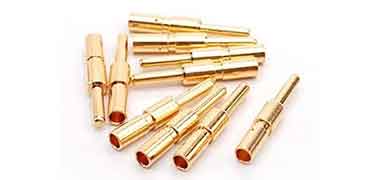
Precision Turned Brass Contact Pins
For circular connectors, terminal blocks, sockets, sensors, switches, panels, test equipment, and electrical assemblies. Contact diameter, nose, length, shoulder, groove, flange, retention, chamfer, and concentricity are controlled in C36000, H59/H62, CW617N, or approved grades with bare or plated zones.
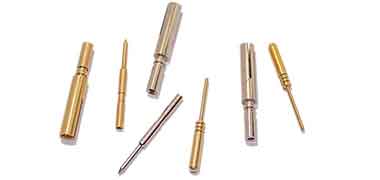
Brass Connector Contact Pins
Male, signal, pilot, and control contacts for connectors, cables, sensors, instrumentation, and electronics. Noses, shoulders, grooves, threads, flanges, spring interfaces, and insulator seats are reviewed for mating force, contact length, cycles, plating, and burr control.
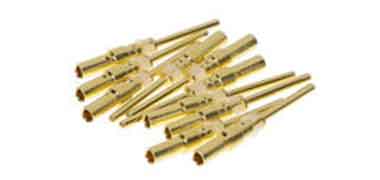
Brass Crimp Contact Pins
Machined crimp barrels, conductor stops, insulation supports, wire entries, sleeves, and retention features. We review wire and insulation size, barrel dimensions, tooling, crimp height, pull-out force, bellmouth, plating, burrs, and mating fit. Tin, nickel, silver, or gold can be specified.
Industries & Applications
Conductive connector components for OEMs that need repeatable mating, solderable or crimpable terminals, low burrs, selective plating, corrosion protection, and traceability.

Automotive
IATF 16949 pins for vehicle sensors, harnesses, battery systems, ECUs, charging connectors, terminals, and power modules. Programmes can include PPAP Level 3, crimp data, plating and dimensional records, bar-coded packaging, scheduled delivery, and lead-free or plated configurations.

Aerospace
Precision contacts for aerospace connectors, avionics, panels, communications, navigation, power distribution, and sensors. Materials and finishes are selected for conductivity, corrosion, vibration, and service life, with tight dimensions, plating verification, traceability, compliance, and controlled packaging.

Semiconductor
Brass contacts for semiconductor equipment, test sockets, probe assemblies, wafer handling, cleanroom automation, sensors, power modules, and instruments. Conductivity, contact stability, plating, burr control, cleanliness, repeatability, assembly access, and packaging are reviewed for reliable manufacturing and test use.
Materials
Materials for
Brass Contact Pins
Free-machining, Chinese and European, lead-free, and special conductive alloys selected for conductivity, contact force, cycles, heat, wear, corrosion, plating, crimp performance, and volume.
C36000 Free-Machining Brass
The standard high-volume material, combining efficient machining, clean geometry, stable dimensions, conductivity, and economical plating. It suits connector, crimp, signal, terminal, solder, and grounding contacts with Swiss CNC and feature inspection.
H59 / H62 Brass
For cost-sensitive projects specifying Chinese standards, including general terminals, signal pins, hardware, and non-critical contacts. XRF verifies the alloy; C36000 or lead-free brass is recommended when machining, conductivity, compliance, or performance requires it.
CW617N / CW614N Brass
European EN brass grades for connector, terminal, valve, instrument, and electrical programmes. Alloy designation, conductivity, wear, plating, solderability, crimpability, and documentation are reviewed; nickel, tin, silver, gold, bare, and anti-tarnish finishes are available.
C69300 Lead-Free Brass
Low-lead brass for customer restrictions, RoHS, compliance-sensitive, consumer, and water-adjacent applications. Conductivity, wear, machining, plating, solderability, crimp performance, declarations, and availability are checked before production.
Phosphor Bronze and Copper Alloys
For applications needing more spring performance, conductivity, strength, wear resistance, or mating life than brass. Hardness, contact force, conductivity, plating, crimpability, corrosion, safety, and cost determine the route.
Plated Brass Contact Pins
Nickel protects, tin supports solderability, silver increases conductivity, gold supports signals, and anti-tarnish protects storage and appearance. Thickness, masking, resistance, wear, solder or crimp areas, and post-plate inspection are controlled.
Surface Treatments for
Brass Contact Pins
Treatments are selected for contact resistance, conductivity, solderability, crimp performance, cycles, corrosion, wear, appearance, and cleanliness. We define thickness, masking, allowance, protection, cleaning, and post-finish inspection before production.
Nickel Plating for Barrier and Corrosion Protection
Nickel provides a barrier layer, corrosion protection, wear resistance, and a stable finish base. Thickness, contact resistance, mating wear, solder or crimp areas, masking, diameter growth, and inspection are reviewed. It can be applied selectively for separate electrical and mechanical zones.
Tin Plating for Solderable and Low-Resistance Terminals
Tin supports solderable contacts, wire terminals, crimp tails, PCB contacts, and selected low-resistance interfaces. We review thickness, solderability, wear, wire or crimp interface, masking, allowance, storage, and post-plate fit.
Silver Plating for High-Conductivity Brass Pins
Silver plating suits high-conductivity contacts, power contacts, busbar interfaces, and specialised terminals. Thickness, resistance, wear, anti-tarnish protection, masking, mating material, and packaging are reviewed; conductivity or resistance records are available when specified.
Gold Plating for Signal and Low-Level Brass Contacts
Gold plating supports signal pins, pilot contacts, instrumentation, circular connectors, and stable low-level interfaces. Gold thickness, nickel underlayer, contact force, cycles, selective plating, solder or crimp zones, and allowance are defined before production.
Low-Burr Deburring and Contact-Zone Cleaning
Brass contacts need controlled edges, clean noses, burr-free crimp tails, and debris-free grooves. Precision deburring, brushing, washing, ultrasonic cleaning, drying, and visual inspection are tailored to the connector; contact, solder, spring, and insulator areas stay protected.
Laser Marking and Clean Contact Packaging
Part numbers, lot codes, orientation marks, clean trays, tubes, reels, sealed bags, and compartment packs protect contact surfaces and prevent mixed lots. Marking, contrast, protection, cleanliness, traceability, and labels are reviewed for manual or automated assembly.
DFM covers nickel, tin, silver, gold, selective plating, masking, deburring, cleaning, marking, resistance records, post-plate inspection, and clean packaging.
IATF 16949 & AS9100D Quality System for
Brass Contact Pins
Our quality system controls four production risks: brass-alloy identity, contact and crimp geometry, plating and cleanliness, and document traceability from prototype through repeat production.
Brass Alloy, Wire, and Contact DFM
Incoming brass and copper-alloy lots are checked against certificates and can receive XRF verification. DFM confirms function, conductivity, wire gauge, crimp barrel, mating zone, spring interface, plating, temperature, corrosion, insulation, assembly sequence, and inspection plan.
- XRF and certificate review for every brass grade
- Force, cycles, wire size, tooling, plating, masking, and insulation reviewed
- Resistance or conductivity records and post-plate gauges defined when specified
Swiss CNC and CNC Turning Contact Geometry Control
Swiss CNC, lathes, and mill-turn centres are selected for contact diameter, length, alloy, mating profile, crimp tail, features, quantity, and tolerance. Small pins receive close support; larger terminals use stable datums. Targets include ±0.005mm diameter, ±0.010mm concentricity, controlled tips, and repeatable crimp barrels.
- Swiss CNC support for miniature connector, signal, and crimp contacts
- Turning and mill-turn for power contacts and complex features
- First-piece optical, CMM, pin-gauge, crimp, and finish inspection
100% Critical Contact and Post-Plating Inspection
Brass contacts are inspected to the drawing for diameter, length, nose, shoulders, grooves, crimp barrel, wire stop, holes, retention, threads, concentricity, burrs, and finish. Plated parts receive checks for thickness, contact area, appearance, diameter, masking, and mating fit; solderability, cleanliness, and packaging are reviewed before shipment.
- 100% inspection of specified critical dimensions
- Post-plating diameter and contact-zone review where specified
- Crimp, contact, insulation, burr, cleanliness, solderability, and finish checks
Documentation — Dimensional Report, Alloy Cert, Plating Cert, PPAP, and FAIR
Available records include dimensions, XRF alloy data, material, plating and thickness, pull-out or contact resistance, solderability, finish, compliance, and conformance documents, plus PPAP Level 3 and AS9102 FAIR where required. Lot traceability links material, machining, plating, inspection, cleaning, and packaging.
- Dimensional, contact-geometry, XRF, plating, and conformance records
- PPAP Level 3 for automotive, EV, connector, cable, and volume terminal programmes
- AS9102 FAIR for aerospace, medical, test, and precision programmes
Brass Contact Pins FAQ
Key answers on quote inputs, brass grades, plating, electrical performance, lead times, and production quotes.
Send a 2D drawing or STEP file with brass grade, function, diameter, length, mating socket or spring, force, key features, wire and insulation data for crimp contacts, plating, solderability, cleanliness, quantity, and packaging. Without a drawing, samples or photos plus mating data, electrical requirements, and annual usage are enough to begin.
C36000 is the usual turned-contact default for machining, stability, conductivity, and economical plating. H59/H62 suits cost-sensitive China-standard work; CW617N/CW614N supports European specifications; C69300 addresses low-lead needs. Phosphor bronze, tellurium copper, or beryllium copper can add spring performance, conductivity, or strength. DFM confirms the choice against function.
Plating depends on conductivity, resistance, cycles, corrosion, wear, solderability, crimp performance, and appearance. Nickel forms a barrier; tin supports solderable or low-resistance terminals; silver suits high conductivity; and gold supports signals or low-level interfaces. We review masking, thickness, allowance, cleaning, inspection, and electrical or solderability records where required.
Simple turned contacts typically take 3–6 business days after drawing confirmation and material availability. Crimp barrels, socket slots, selective or precious-metal plating, spring interfaces, clean packs, or documentation-heavy programmes commonly take 6–12 days. Volume timing depends on stock, CNC cycle, plating, inspection, cleaning, packaging, and quantity. Quotes return in 24 hours; DFM in 48.
Request a Brass Contact Pins Quote
Upload a drawing or CAD model with mating socket or spring data, wire and crimp tooling, material, current or signal, plating, solderability, cleanliness, quantity, or annual usage. Receive a quote within 24 hours and DFM feedback within 48.