
CNCPioneer manufactures precision medical device components on Swiss CNC lathes — from bone screws and dental implants to surgical instrument shafts and catheter components, with full material traceability, CMM documentation, and biocompatible material compliance.
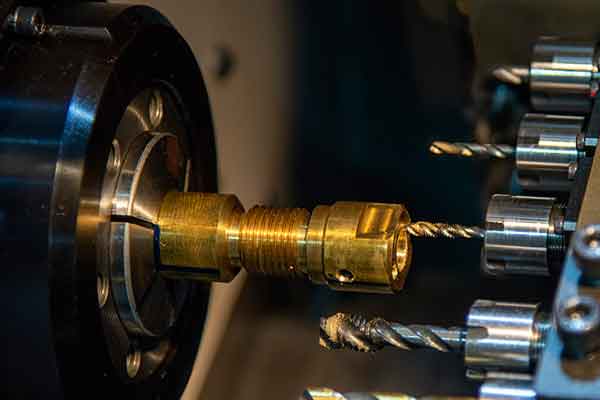
Medical swiss machining is the production of precision medical device components on Swiss-type CNC lathes, where the workpiece is supported through a guide bushing immediately at the cutting zone. This eliminates deflection on long, slender medical parts — bone screws, cannulas, implant bodies, surgical instrument shafts — where maintaining dimensional accuracy is essential for clinical performance and patient safety.
Swiss machining is the preferred process for medical components combining small diameters, complex geometries, tight tolerances, and biocompatible materials. Completing all features in a single setup eliminates re-fixturing steps that introduce dimensional variation — a critical advantage when every dimension must be verified and traceable to FDA 21 CFR Part 820 and ISO 13485 requirements.
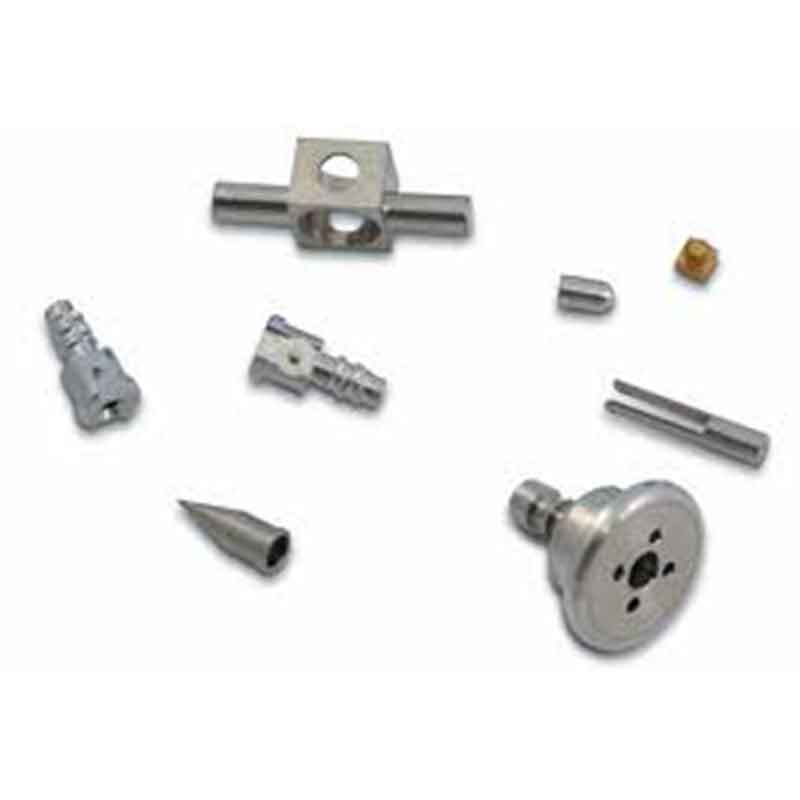
Medical device components demand a combination of manufacturing capabilities that Swiss machining uniquely delivers. Small diameters, high length-to-diameter ratios, complex multi-feature geometries, biocompatible materials, and absolute dimensional consistency across production runs are requirements that align precisely with Swiss machining's process strengths.
The guide bushing supports bone screws, implant posts, and instrument shafts at the cutting zone, preventing deflection on slender medical geometries impossible to hold to tolerance on conventional lathes.
Multi-axis Swiss lathes complete all features of complex medical components in one setup, eliminating re-fixturing errors that affect dimensional relationships between critical features on implants and instruments.
Swiss machining handles titanium Grade 2, Grade 5, and Grade 23, stainless 316L and 17-4PH, cobalt-chrome, PEEK, and Nitinol with dedicated tooling and process protocols for each material.
Swiss lathes machine medical components down to Ø0.3mm diameter, covering the full size range from miniature endoscope articulation components to orthopedic implant bodies.
Achieves Ra 0.4μm and finer on implant surfaces and instrument contact areas, essential for biocompatibility, osseointegration, and sterilization effectiveness.
Swiss machining delivers identical dimensional output across production runs, supporting the process validation and statistical process control requirements of medical device quality systems.
CNCPioneer manufactures precision medical components across the full spectrum of medical device categories, from single-use disposable components to complex reusable surgical instruments and implantable devices.

Cortical, cancellous, and locking bone screws in titanium Grade 5, Grade 23, and 316L stainless. Thread form accuracy, head geometry, and driver recess dimensions verified by CMM and thread gauging. Full material traceability for 510(k) device records.

Titanium Grade 4 and Grade 5 implant bodies, abutments, and prosthetic connection components. Implant body thread geometry and internal Morse taper precision are critical for osseointegration and prosthetic stability. SLA surface treatment available.

Precision shafts, handles, and body components for laparoscopic instruments, endoscopic tools, and biopsy forceps in 316L and 17-4PH stainless steel. Passivation and electropolishing available for sterilization compatibility.
CNCPioneer specializes in high-precision Swiss machining for the medical application, supporting medical device OEMs, contract manufacturers, and surgical system providers from early-stage prototyping through validated production.

recision-machined implant components designed for strength, fatigue resistance, and long-term performance.

Ultra-precision Swiss-turned components with complex internal geometries and superior surface requirements.

High-precision, small-diameter components for advanced surgical tools and assemblies.
CNCPioneer's manufacturing facility in Shenzhen operates with dedicated medical device production protocols, segregated inspection procedures, and full AS9100D quality system compliance. Our capability envelope covers the complete range of medical device component sizes, from miniature endoscope components to orthopedic implant bodies.
78+ Star, Citizen, and Tsugami Swiss CNC lathes. Bar capacity Ø1mm–Ø32mm covering the full range from miniature endoscope components (Ø0.3mm features) to orthopedic implant bodies. Dedicated tooling protocols for each biocompatible material.
Critical dimension tolerance ±0.005mm · Implant connection concentricity ±0.003mm · Thread form per ISO 5835 · Surface finish Ra 0.4μm standard; Ra 0.05μm achievable via mirror polishing for joint articulating surfaces.
Feature dimensions from Ø0.3mm (miniature endoscope and catheter components) through Ø32mm (implant bodies and instrument handles). Long, slender components with L/D ratios up to 20:1 machined without deflection.
Prototype quantities from 1 piece for design verification through full production runs. 100% inspection for implantable components. AQL sampling for non-implantable instrument components. Rush 5–7 day prototypes for standard materials.
Electropolishing (ASTM B912) · Passivation (ASTM A967) · Titanium anodizing (color coding) · SLA surface treatment (osseointegration) · Mirror polishing Ra 0.05μm · Ultrasonic cleaning to validated protocols.
Full material traceability mill cert to finished component · CMM reports (Mitutoyo ±0.001mm) · Surface finish records · Certificate of Conformance · Special process certifications supporting FDA 21 CFR Part 820 and ISO 13485.
Material selection for medical swiss machining components is governed by biocompatibility requirements, mechanical performance, sterilization compatibility, and regulatory compliance. CNCPioneer machines all primary medical device materials with dedicated process protocols and full material traceability.
Superior fracture toughness · Implantable grade · Load-bearing implants · Spinal components · Preferred for highest-demand implantable devices
High strength · Biocompatible · Excellent fatigue life · Orthopedic implants · Surgical fasteners · Most widely specified implant titanium
Fully biocompatible · Excellent corrosion resistance · Osseointegration · Dental implants · Cardiovascular components
Higher strength than Grade 2 · Dental implant bodies · Excellent biocompatibility and osseointegration properties
Excellent corrosion resistance · Biocompatible · Surgical instruments · Non-implantable devices · Standard material for reusable instrument components
High strength · Good corrosion resistance · Surgical instrument shafts · Reusable instruments requiring high strength and fatigue resistance
AMS 5662 · High-strength turbine fasteners · Oil & gas fittings · Age-hardenable
Good machinability · Non-implantable device bodies · Instrument handles · Non-critical medical device components
Excellent wear resistance · Biocompatible · Orthopedic joint components · Dental prosthetics · Articulating surfaces requiring mirror polish Ra 0.05μm
Radiolucent · Biocompatible · High strength · Spinal implants · Instrument handles · Lightweight non-metallic medical device components
Lightweight · Anodizable · Instrument handles · Non-contact device bodies · Weight-critical non-implantable components
Shape memory · Superelastic · Guidewires · Stents · Orthodontic components · Specialized machining protocols preserve transformation properties
Excellent machinability · Good conductivity · Non-implantable instrument components · Prototype and non-critical device hardware
Drug delivery system components · Fluid pathway hardware · Validated biocompatibility for body fluid contact applications
Surface treatment selection for medical swiss machining components is governed by biocompatibility requirements, sterilization method compatibility, osseointegration objectives, and applicable ISO 10993 biological evaluation requirements.
The preferred surface treatment for implantable stainless steel and nickel alloy medical components. EP removes the machined surface layer, enhances the chromium oxide passive layer for superior corrosion resistance and biocompatibility, and creates surfaces that are easier to clean and sterilize. Available to ASTM B912 and custom medical device specifications.
ASTM A967 and AMS 2700 compliant passivation for stainless steel medical instrument and device components. Removes free iron and surface contaminants, enhances the natural passive layer, and improves corrosion resistance in body fluid and sterilization chemical environments. Standard for 316L and 17-4PH stainless surgical instruments.
Type II anodizing produces colored titanium oxide layers used for part identification, lot tracking, and size coding in orthopedic and spinal implant systems. Different anodize colors correspond to different implant sizes, providing quick visual identification in the operating room. Available in a full color range to custom medical device specifications.
MIL-A-8625 compliant standard and hard coat anodizing for aluminum medical device components requiring surface hardness. Type III hard coat provides corrosion protection and wear resistance for non-implantable actuation components.
AMS 2403 compliant electroless and electrolytic nickel for medical device components. TiN and TiCN PVD coatings for surgical cutting instruments requiring extreme wear resistance on and bearing components.
MIL-DTL-5541 compliant chromate conversion coating (Alodine) for aluminum, maintaining electrical conductivity for avionics. Bead blasting provides uniform matte finishes for medical instrument handles and non-implantable device bodies.
Medical device surface treatment certifications — including anodizing, passivation, and electropolishing certifications — are provided with everyg certifications — are provided with every medical device shipment as part of our quality documentation package.
CNCPioneer's AS9100D certification is not a documentation exercise — it is the operational framework that governs every medical device component we produce, from contract review through final shipment.
Engineering review of drawing requirements, tolerance specifications, material certifications, and special process approvals before order acceptance. AMS compliance confirmed at intake.
SII X-ray fluorescence analysis confirms alloy composition against AMS specifications. Hardness testing, dimensional verification of bar stock, and mill test reports are retained.
Complete dimensional verification of the first production part against drawing requirements, documented in AS9102 FAIR format with balloon drawing, CMM results, and material certifications.
Real-time dimensional monitoring with Mitutoyo gauging, tool life management to prevent out-of-tolerance production, and CCD automatic sorting for critical dimensions.
Mitutoyo CMM (±0.001mm) full dimensional report, surface roughness verification, thread gauge verification, and visual inspection for surface integrity on every medical device shipment.
Certificate of conformance, CMM report, material certifications, FAIR report, and special process certifications packaged with every medical device shipment. Records retained for full device lifecycle per FDA and ISO 13485 requirements.
Medical device manufacturing demands a quality system that goes beyond dimensional inspection to address biocompatibility, sterilization compatibility, material traceability, and full product lifecycle documentation requirements. CNCPioneer applies dedicated medical device quality protocols to every medical swiss machining order.
First Article Inspection Reports provided for all new medical device part numbers — balloon drawings, CMM dimensional results, material certifications, and special process certifications.
XRF composition verification confirms alloy against AMS specs. Mill test reports, heat numbers, and lot numbers linked to work orders — unbroken traceability from raw material to finished part.
Mitutoyo CMM (±0.001mm) full dimensional report against drawing requirements. Surface roughness verification, thread gauge check, and visual inspection for every medical device shipment.
Material certificates with full lot traceability, CMM inspection reports, surface finish records, special process certifications, and Certificate of Conformance. Ultrasonic cleaning to validated protocols. Cleanroom-compatible packaging available for sterile device components.
Common questions from medical device OEMs, orthopedic manufacturers, and surgical instrument companies about our precision medical swiss machining service.
CNCPioneer machines titanium Grade 2, Grade 5 (Ti-6Al-4V), and Grade 23 (Ti-6Al-4V ELI) for implantable applications; stainless steel 316L, 17-4PH, and 440C for surgical instruments and non-implantable devices; cobalt-chrome CoCrMo for orthopedic articulating surfaces; Nitinol for superelastic and shape memory applications; and PEEK for radiolucent spinal implants and instrument handles. All materials are sourced with mill certificates confirming compliance with ASTM, ISO, and applicable biocompatibility standards.
Both grades are Ti-6Al-4V alloy, but Grade 23 is the Extra Low Interstitials (ELI) version with reduced maximum limits for oxygen, nitrogen, carbon, and iron content. These tighter compositional limits give Grade 23 superior fracture toughness and fatigue crack growth resistance compared to standard Grade 5, making it the preferred choice for load-bearing implantable devices where fracture resistance is the primary safety requirement. For non-load-bearing implants and dental applications where osseointegration is the primary requirement, Grade 5 is commonly specified.
We achieve thread form tolerances compliant with ISO 5835 (bone screw threads) and proprietary implant connection specifications. Major diameter, minor diameter, and pitch diameter tolerances are verified by calibrated thread gauges and CMM. For implant internal connection geometry — Morse tapers, hex connections, and anti-rotation features — we achieve concentricity of ±0.003mm and taper angle accuracy of ±0.01° verified by CMM, ensuring reliable prosthetic component seating and connection stability in clinical use.
Yes. Full material traceability from mill certificate to finished implant component is standard for all implantable medical device orders. Our traceability system records the material heat number, lot number, XRF composition verification result, and hardness test result for each batch, linked to the production work order and inspection records for each shipment. Traceability documentation supports design history file and device master record requirements under FDA 21 CFR Part 820 and ISO 13485.
For dental implant bodies requiring osseointegration, we offer SLA (sandblasted, large-grit, acid-etched) surface treatment that produces the controlled micro-rough surface profile (Ra 1.0–2.0μm) clinically associated with reliable bone cell attachment and osseointegration. Titanium anodizing is available for color-coded size identification of implant components. For prosthetic connection surfaces requiring smooth, precise geometry, electropolishing and mirror polishing are available.
Yes. CNCPioneer machines Nitinol (nickel-titanium) for cardiovascular device components, orthodontic hardware, and minimally invasive surgical components requiring superelastic or shape memory properties. Nitinol machining requires specialized tooling and cutting parameters to avoid work hardening and preserve the material's transformation temperature characteristics. Our process protocols maintain strict cutting parameter controls to ensure finished Nitinol components retain their functional superelastic or shape memory properties.
For prototype quantities using in-stock titanium Grade 5 or stainless steel 316L, we deliver first article samples in 5–7 days. Grade 23 ELI titanium prototypes are available in 7–10 days. Production quantities are completed in 3–5 weeks depending on component complexity, material, surface finishing requirements, and order volume. Rush options are available for repeat orders with existing qualified part numbers and validated processes.
Upload your shaft drawing or CAD file and receive a free DFM review and competitive quote within 24 hours. CNCPioneer's engineering team will review your component design for manufacturability, confirm biocompatible material compliance, recommend appropriate surface treatments for your clinical application, and provide a complete quotation including material traceability and inspection documentation requirements.