
CNCPioneer manufactures certified medical machining parts and medical machined components for surgical, orthopedic, diagnostic and drug-delivery devices. Swiss CNC and MAZAK mill-turn production supports ±0.005mm tolerances, traceable titanium, 316L, Nitinol and PEEK materials, and documentation compatible with FDA, ISO 13485 and EU MDR supplier requirements.
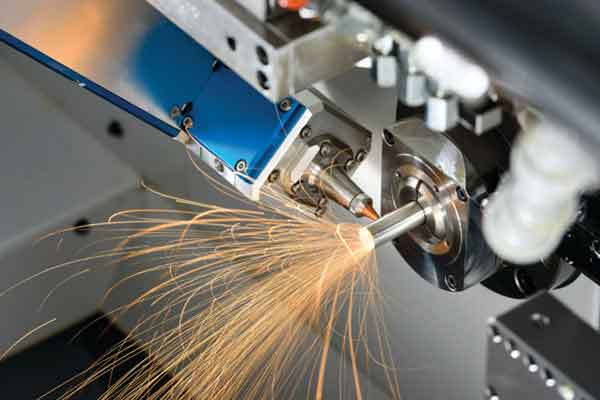
Medical machining parts are precision medical components manufactured by Swiss turning, MAZAK mill-turn machining, multi-axis milling and precision boring for medical devices, surgical instruments, diagnostic equipment, dental systems and implantable devices. CNCPioneer controls dimensions, surface finish, material traceability and inspection records for regulated medical component programs.
Medical device suppliers need repeatable geometry, biocompatible materials, controlled finishing and documentation that can support design verification and supplier audits. CNCPioneer's Swiss CNC lathes, MAZAK mill-turn centers and Mitutoyo CMM verification cover medical machined component geometries from miniature implant screws to complex instrument bodies.

CNCPioneer's Swiss machining centers deliver the dimensional stability, surface integrity, and material versatility that medical device manufacturers demand — from single-use disposables to long-term implantables.
The sliding headstock and guide bushing support the workpiece at the cutting zone, reducing deflection and supporting tolerances to ±0.005mm on bone screws, implant bodies and catheter components after engineering review.
Surgical shafts, pedicle screws, and dental implant bodies share a high length-to-diameter ratio that causes chatter on conventional lathes. Swiss machining's near-zero overhang principle maintains roundness and straightness across the full part length without additional supports.
Medical implant surfaces require Ra ≤ 0.4 µm to minimize bacterial adhesion and tissue irritation. Swiss machines routinely achieve Ra 0.2–0.4 µm in a single setup, reducing post-machining polishing steps and the contamination risk they introduce.
Live tooling, sub-spindle, and back-working capability allow Swiss centers to mill, drill, thread, and groove in a continuous cycle. Eliminating re-fixturing removes inter-operation error stack-up — critical for implant concentricity and surgical instrument assembly fit.
Titanium Grade 23 ELI, 316L stainless, 17-4PH, Nitinol, and PEEK all present chip-control and work-hardening challenges. Swiss machining's rigid setup and optimized coolant delivery suppress heat buildup, preserving the biocompatibility and mechanical properties regulators require.
Bar-fed Swiss automation runs lights-out with part-to-part variation held within statistical process control limits. Cpk ≥ 1.67 across production runs supports FDA 21 CFR Part 820 process validation requirements and traceability documentation for every medical machined component.
CNCPioneer produces medical machining parts and medical machined components across medical device categories, from single-use disposable parts to reusable surgical instruments and long-term implantable devices.

Bone screws, cortical screws, cancellous screws, locking screws, and pedicle screws in titanium Grade 5 and Grade 23 ELI for fracture fixation, spinal fusion, and joint reconstruction — threaded to ISO 5835 accuracy.

Titanium Grade 4 and Grade 5 dental implant bodies, healing abutments, and prosthetic abutments — internal connection concentricity of ±0.003mm and taper angle accuracy of ±0.01° for reliable prosthetic seating.

Precision shafts, jaw components, handle bodies, and linkage hardware for laparoscopic, endoscopic, biopsy, and hand instruments in 316L and 17-4PH stainless — compatible with autoclave sterilization and reprocessing cycles.

Titanium and PEEK spinal fusion components — pedicle screws, tulip heads, rod connectors, cross-links, and interbody fusion cages — with complex multi-start locking threads and anti-rotation features verified by CMM.

Nitinol and titanium medical machined components for cardiovascular devices — stent delivery system components, heart valve elements, and catheter tip components — with specialized Nitinol machining protocols preserving superelastic properties.

Metering components, valve bodies, dose counter mechanisms, and fluid pathway hardware for auto-injectors, infusion pumps, and pen injectors — tight tolerances on metering orifice geometry and valve seat dimensions govern dose accuracy.
CNCPioneer supplies precision medical machined components to surgical instrument manufacturers, medical device OEMs, implant companies, and diagnostic equipment suppliers worldwide since 2011.

Bone screws, spinal implant hardware, and joint reconstruction components in titanium Grade 5 and Grade 23 ELI — ISO 5835 thread accuracy, full CMM documentation, and material traceability supporting 510(k) design verification records.

Precision shafts, jaw components, and linkage hardware for laparoscopic, endoscopic, and hand instruments in 316L and 17-4PH stainless — compatible with autoclave sterilization and reprocessing cycle requirements.

Titanium Grade 4 and Grade 5 dental implant bodies, abutments, and prosthetic components — SLA surface treatment for osseointegration and electropolishing for prosthetic connection surfaces available from our precision factory.

Nitinol and titanium medical machined components for stent delivery systems, heart valve elements, and vascular access hardware — specialized machining protocols preserving Nitinol superelastic and shape memory properties.

Precision housings, probe bodies, and mechanical interface hardware for imaging equipment, laboratory analyzers, point-of-care diagnostic devices, and patient monitoring systems in aluminum, stainless steel, and engineering plastics.

Metering components, valve bodies, and fluid pathway hardware for auto-injectors, infusion pumps, and pen injectors — wholesale medical machining parts supply with blanket order scheduling for high-volume device programs.
CNCPioneer's Shenzhen facility operates 78+ Swiss CNC lathes and 66+ MAZAK mill-turn centers in a 15,000+ m² facility, covering medical machining components from miniature implant screws to complex multi-feature surgical instrument bodies.
78+ Swiss CNC lathes (Star, Citizen, Tsugami) for small-diameter medical components down to Ø0.3mm. 66+ MAZAK mill-turn centers for complex multi-feature medical device bodies and instrument assemblies.
Standard ±0.01mm · High-precision ±0.005mm · Concentricity ±0.003mm for implant connection interfaces · Taper angle ±0.01° for dental abutments · Surface finish Ra 0.05μm for articulating surfaces.
Titanium Grade 2 / 5 / 23 ELI · Stainless 316L / 17-4PH / 440C · Cobalt-chrome CoCrMo · Nitinol · PEEK (unfilled & CF) · Aluminum 6061 · Brass C3604 · PTFE · Acetal (POM) — all sourced with mill certificates.
Single prototype pieces through multi-million piece annual medical machining parts wholesale programs. First article samples in 3–10 pieces with full CMM documentation. Blanket order scheduling for volume device programs.
Mitutoyo CMM (±0.001mm) · 2.5D measuring systems · SII XRF composition verification · 100% CCD automatic sorting for critical implant dimensions · Surface roughness measurement · Thread gauging per ISO 5835.
Material certificates with full lot traceability · CMM inspection reports · Surface treatment certifications · Certificate of Conformance · Records formatted for FDA 21 CFR Part 820, ISO 13485, and EU MDR 2017/745.
Material selection for medical machining parts is governed by biocompatibility per ISO 10993, mechanical performance, sterilization compatibility, and regulatory classification. CNCPioneer sources all medical-grade bar stock with mill certificates and XRF composition verification.
ISO 10993 compliant · Highest corrosion resistance · Dental implants · Cardiovascular fittings · Soft tissue contact
ISO 10993 compliant · High strength · Orthopedic screws · Spinal implants · Most-used implant titanium
Superior fracture toughness · Extra-low interstitials · Load-bearing orthopedic implants · Fatigue-critical applications
ISO 10993 compliant · Surgical instruments · Non-implantable parts · Excellent sterilization resistance
High strength · Reusable instrument shafts · Instrument mechanism components · Corrosion-resistant
High hardness · Surgical cutting blades · Maximum edge retention · Wear-resistant instrument components
Excellent wear resistance · Orthopedic joint surfaces · Dental prosthetics · Long-term implant articulating surfaces
Superelastic · Shape memory · Guidewires · Stent delivery components · Specialized machining protocols preserve Ttr
Non-implantable · Instrument mechanism components · Device enclosures · Diagnostic equipment hardware
Radiolucent · Biocompatible · Spinal cages · Instrument handles · Radiolucency required for intraoperative imaging
Carbon fiber reinforced · Enhanced stiffness · High-load spinal implants · Structural instrument handles
PTFE: chemical-resistant seals, bushings, low-friction elements · Acetal: trial implants, mechanism components · Medical grade
Medical machining parts require surface treatments that meet biocompatibility, cleanability, sterilization resistance, and device-specific functional requirements. CNCPioneer provides a comprehensive range of medical-qualified finishing options for all device types and base materials.
Preferred surface treatment for implantable stainless steel medical machining parts. Removes surface contamination, enhances passive layer, and improves biocompatibility and cleanability. Available to ASTM B912 specification.
ASTM A967 compliant passivation for stainless steel surgical instrument components. Removes free iron and enhances corrosion resistance in body fluid and sterilization chemical environments.
Color-coded size identification for orthopedic and spinal implant components. Full color spectrum available to custom device manufacturer specifications — no dimensional change, biocompatible surface.
Sandblasted, large-grit, acid-etched surface for bone-contact titanium dental and orthopedic implant surfaces. Controlled micro-rough profile promotes osseointegration and bone ingrowth at implant interfaces.
Ra 0.05μm and below mirror polishing on cobalt-chrome orthopedic joint articulating surfaces and stainless instrument contact surfaces. TiN and TiCN PVD coatings for surgical cutting instrument components requiring maximum edge hardness and wear resistance.
Validated ultrasonic cleaning processes for particle-free, contamination-free surfaces — cleaning validation records available for device manufacturer quality system documentation. Bead blasting for controlled matte surface texture on surgical instrument handles and pre-anodize preparation.
Medical machining parts surface finishing certifications — including electropolishing, passivation, titanium anodizing, and SLA treatment certifications — are provided with every shipment as part of our quality documentation package supporting device manufacturer design history file requirements.
CNCPioneer applies documented quality protocols to every medical machined component order, covering incoming material, in-process inspection, final verification and regulatory-compatible documentation.
Engineering review of device drawing requirements, biocompatible material specifications, ISO 10993 requirements, surface finish callouts, and special process requirements before order acceptance.
SII XRF composition verification confirms biocompatible alloy grade; hardness testing; Grade 23 ELI titanium verified against interstitial content specifications; full lot traceability from mill certificate to finished medical machined component.
Complete CMM dimensional verification of all critical device dimensions; surface finish measurement; thread gauging for implant thread forms; full dimensional report with balloon drawing for design history file inclusion and design verification testing support.
100% CCD automatic sorting of critical implant dimensions; Mitutoyo dimensional checks at defined production intervals; tool life management to prevent dimensional drift on implant thread forms and sealing surfaces.
Mitutoyo CMM (±0.001mm) full dimensional report; surface roughness verification; visual inspection under magnification for surface defects and machining damage; 100% for all implantable medical machined components.
Ultrasonic cleaning to validated protocols; cleanroom-compatible packaging with lot identification labeling; material certificates, CMM reports, surface treatment certifications, and Certificate of Conformance with every shipment.
CNCPioneer's quality system documentation is compatible with ISO 13485 medical device supplier audit requirements and FDA 21 CFR Part 820 device history record requirements. We welcome on-site supplier qualification audits from medical device OEM quality teams.
Complete CMM dimensional report with balloon drawing referencing every drawing dimension — material certification, surface treatment certification, and thread gauge verification included. Documentation formatted for design history file inclusion.
XRF composition verification confirms biocompatible alloy grade against ISO 10993 requirements. Mill test reports, heat numbers, and lot numbers linked to work orders — unbroken traceability from mill certificate to finished medical machined component.
100% CMM verification for all implantable medical machined components; 100% CCD automatic sorting of critical implant dimensions; AQL sampling for non-implantable instrument parts. Zero tolerance for non-conforming implant components.
Material certificates with full lot traceability, CMM inspection reports, surface treatment certifications, and Certificate of Conformance — formatted to support FDA 21 CFR Part 820, ISO 13485, and EU MDR 2017/745 device manufacturer records.
Common questions from medical device OEMs, surgical instrument manufacturers and implant companies comparing medical machining parts suppliers.
CNCPioneer combines three capabilities that few China medical machining parts manufacturers offer simultaneously: a certified quality system with full medical device regulatory documentation compatibility; Swiss CNC lathe capability for small-diameter medical machined components down to Ø0.3mm; and MAZAK mill-turn capability for complex multi-feature medical device bodies. Most China medical machining parts suppliers specialize in either Swiss turning or milling — CNCPioneer's dual capability covers the complete range of medical machined component geometries in a single supply relationship, simplifying procurement and quality system management for device OEMs.
CNCPioneer holds AS9100D, IATF 16949:2016, and ISO 10012:2003 certifications. Our quality system documentation is compatible with ISO 13485 medical device supplier audit requirements and FDA 21 CFR Part 820 device history record requirements. We welcome on-site supplier qualification audits from medical device OEM quality teams.
CNCPioneer's China medical machining parts price is typically 30–60% lower than equivalent medical machined components from US, European, or Japanese precision machining suppliers for standard titanium and stainless steel device components. The price advantage varies by part complexity, material, surface finishing requirements, and documentation package. We provide detailed quotations enabling direct comparison with existing supplier pricing on an equivalent specification basis.
Yes. CNCPioneer specializes in medical machining parts customized to customer-specific device drawings, including proprietary implant geometries, instrument mechanisms, and specialty device components not covered by standard catalog designs. All custom medical machined component designs are protected by NDA and managed under our IP protection protocols. DFM review, prototype production, first article inspection documentation, and production qualification are provided as standard services.
Prototype quantities of standard titanium Grade 5 or stainless steel 316L: 5–7 days. Grade 23 ELI titanium prototypes: 7–10 days. Cobalt-chrome and Nitinol prototypes: 10–14 days. Production quantities: 3–5 weeks depending on material, complexity, surface finishing, and volume. Medical machining parts wholesale programs with blanket orders and scheduled delivery are available for device manufacturers requiring supply chain stability.
CNCPioneer accepts orders from single prototype pieces through multi-million piece annual medical machining parts wholesale programs. For first article and design verification quantities, we produce as few as 3–10 pieces with full CMM documentation. For medical machining parts wholesale supply to device manufacturers with high-volume production programs, we support annual volumes of millions of pieces with dedicated production capacity and blanket order scheduling.
CNCPioneer operates under strict confidentiality protocols for customer drawings, device designs, and proprietary specifications. Non-disclosure agreements are executed before DFM review, and customer IP is managed under documented information security procedures. Our quality system includes controls on who can access customer technical information and how it is stored, transmitted, and disposed of.
CNCPioneer provides material certifications with full lot traceability, CMM inspection reports, surface treatment certifications, ultrasonic cleaning validation records, and Certificate of Conformance — all formatted to support FDA 21 CFR Part 820, ISO 13485, and EU MDR 2017/745 device manufacturer quality system and technical file requirements. Cleanroom-compatible packaging with lot identification labeling is available for sterile device component traceability.
Upload your medical device component drawing or CAD file for a 24-hour DFM and quote review. CNCPioneer's engineering team will review manufacturability, biocompatible material selection, surface treatments, traceability and inspection documentation requirements before returning a complete quotation.