
Precision Dental Implant
Manufacturing & Supply
CNCPioneer is a precision dental implant manufacturing company delivering titanium dental implant components with tolerances as tight as ±0.003mm — equipped with 78+ Swiss CNC lathes and 66+ MAZAK mill-turn centers for complete implant system production.
What Is
Dental Implant Manufacturing?
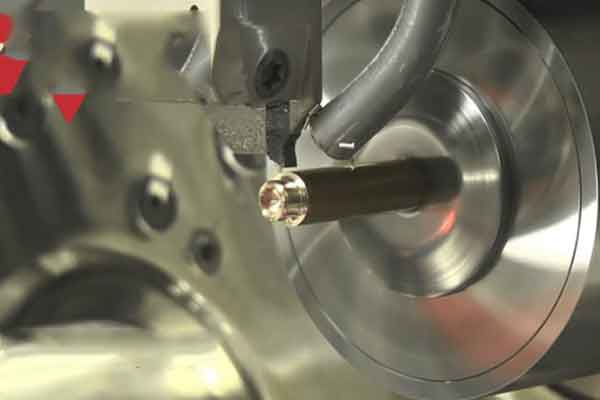
Dental implant manufacturing is the precision production of titanium and zirconia components that replace missing tooth roots and support implant-supported restorations including prosthetic crowns, bridges, and overdentures in the human oral environment. A complete dental implant system comprises three primary manufactured components — the implant body (fixture) that integrates with jawbone through osseointegration, the abutment that connects the implant to the prosthetic restoration, and the prosthetic connection hardware that secures the final crown or bridge.
Dental implant manufacturing encompasses two primary implant configurations. Bone level implants position the implant platform at or below the crestal bone, allowing soft tissue to grow over the implant during healing. Tissue level implants position the implant shoulder at the soft tissue level, eliminating the need for a separate abutment in many single-tooth restoration cases. Within these categories, tapered implants and straight implants offer different primary stability characteristics for varying bone density conditions.
-
Osseointegration precision Thread form accuracy governs primary stability at surgical placement and long-term osseointegration success — verified by CMM and thread gauges.
-
Internal connection geometry Morse taper, internal hex, conical connection, or tri-channel — concentricity within microns ensures reliable prosthetic component seating across decades of cyclic loading.
-
SLA surface topography Sandblasted, large-grit, acid-etched surface treatment produces Sa 1.0–2.0μm roughness for predictable bone-implant contact and osseointegration outcomes.
-
Full material traceability XRF composition verification on all incoming titanium bar stock — mill certificates and heat numbers linked to every finished implant component.

Why Choose CNCPioneer for
Dental Implant Manufacturing?
Among dental implant manufacturing companies globally, CNCPioneer offers a combination of precision machining capability, biocompatible material expertise, and regulatory documentation that makes us a preferred OEM and ODM partner.
Dedicated Implant Manufacturing Machines
Our Swiss CNC lathe fleet and MAZAK mill-turn centers are configured with dental implant-specific tooling, fixtures, and process parameters developed over years of component production.
Titanium Machining Expertise
We machine titanium Grade 4, Grade 5 (Ti-6Al-4V), and Grade 23 (Ti-6Al-4V ELI) with dedicated protocols for each grade, delivering surface integrity and dimensional accuracy for thread forms and internal connections.
Internal Connection Precision
Morse taper concentricity of ±0.003mm, internal hex positional accuracy of ±0.005mm, and conical connection taper angle accuracy of ±0.01° verified by Mitutoyo CMM on every first article.
Complete Surface Treatment Capability
SLA surface treatment for bone-contact surfaces, electropolishing for prosthetic connections, titanium anodizing for color-coded size identification, and laser marking for traceability.
OEM & ODM Programs
Full OEM manufacturing to customer designs and ODM development from performance specifications, including white label packaging, regulatory documentation, and wholesale pricing.
Competitive Pricing & Fast Prototypes
China-based cost structure delivers 40–60% cost advantage over European or North American suppliers. First article components available in 5–7 days.
Dental Implant Components
We Manufacture
CNCPioneer manufactures the complete range of dental implant system components — from implant bodies and abutments to prosthetic screws, healing components, and laboratory analogs.

One-Piece & Two-Piece Implants
One-piece implants combine fixture and abutment in a single component for immediate loading. Two-piece implants provide maximum prosthetic flexibility through interchangeable abutment selection on a standardized body platform.

Bone Level & Tissue Level Implants
Bone level implants position the platform at or below the crestal bone for maximum prosthetic flexibility. Tissue level implants position the shoulder at soft tissue level, eliminating the need for a separate abutment in many cases.

Tapered & Straight Implants
Tapered implants provide higher primary stability and insertion torque in soft bone (Type III and IV). Straight implants offer predictable torque control in dense cortical bone (Type I and Type II) with maximum bone-implant contact.

Mini Dental Implants & Healing Abutments
Narrow-diameter implants (Ø2.0mm – Ø3.0mm) for bone-deficient ridges and overdenture retention. Titanium and PEEK healing abutments in standard and platform-switched configurations for soft tissue management.

Prosthetic, Multi-Unit & Custom Abutments
Straight and angled titanium abutments from 0° to 30°. Multi-unit abutments for All-on-4/All-on-6 protocols. CAD/CAM milling blanks and pre-milled abutment blanks for patient-specific restorations.

Prosthetic Screws, Copings & Laboratory Components
Abutment screws, cover screws, impression copings, scan bodies, and implant analogs. Precise replication of internal connection geometry ensures accurate prosthetic fabrication and fit verification.
Dental Implant Manufacturing
Machine Capabilities
CNCPioneer's Shenzhen facility operates 78+ Swiss CNC lathes and 66+ MAZAK mill-turn centers for dental implant production, with dedicated quality protocols governing internal connection geometry, thread form accuracy, and surface treatment consistency.
Implant Bodies & Small Abutments
78+ Swiss CNC lathes (Star SR-32J, Citizen A20/A16, Tsugami B206, Nomura). Bar stock Ø3mm – Ø32mm. Up to 9-axis simultaneous machining with positional accuracy ±0.002mm and repeatability ±0.001mm.
Complex Implant Components
66+ MAZAK mill-turn centers (Integrex, Quick Turn series). Part diameter Ø10mm – Ø300mm. 5-axis simultaneous machining with integrated precision turning and milling in single setup for multi-unit abutments and bar frameworks.
Precision Measurement Equipment
Mitutoyo CMM (±0.001mm) for internal connection geometry. 2.5D measuring systems for thread form. Confocal microscopy for Sa surface roughness. XRF analyzer for material composition verification.
Thread Design & Machining
V-thread, buttress thread, reverse buttress, and proprietary hybrid thread designs. Micro-threading at the implant collar for crestal bone preservation. Self-tapping tip geometry for predictable osteotomy quality.
Internal Connection Machining
Morse taper bore (±0.01° angle, Ra 0.4μm, ±0.003mm concentricity). Internal hex (±0.005mm positional, ±0.003mm across-flats). Conical connection and tri-channel to customer specifications with full CMM verification.
Complete Regulatory Package
Material certifications with full lot traceability. CMM inspection reports. Surface roughness records. Surface treatment process records. Sterilization validation with SAL 10⁻⁶ documentation. Certificate of Conformance.
Materials for Dental Implant Manufacturing
Dental implant material selection is governed by biocompatibility, mechanical performance, and osseointegration requirements. CNCPioneer machines all primary dental implant materials with dedicated tooling and ISO 5832 compliant sourcing.
Grade 4 — ASTM F67
Most widely used material for standard implant bodies. Excellent osseointegration, proven long-term biocompatibility, adequate strength for most clinical loading scenarios.
Ti-6Al-4V Grade 5 — ASTM F136
High strength for narrow platform and mini implants in high-load applications. Higher yield strength than Grade 4 for fatigue resistance under cyclic occlusal loading.
Ti-6Al-4V ELI Grade 23 — ASTM F136 ELI
Highest fracture toughness and fatigue crack resistance. Premium implant lines where maximum mechanical performance is the primary material selection criterion.
Medical Grade PEEK
Biocompatible, radiolucent healing abutments and temporary prosthetic components. ISO 10993 compliant with excellent soft tissue compatibility.
316L — ASTM F138
ISO 10993 compliant implant analogs and laboratory components. Precise replication of internal connection geometry for prosthetic fit verification.
CoCrMo — ASTM F75
High-load overdenture bar frameworks and prosthetic components. ISO 10993 compliant for applications requiring maximum structural rigidity.
Y-TZP — ISO 13356
Metal-free, biocompatible ceramic abutments and implant bodies for patients with titanium sensitivity or esthetic requirements requiring natural tooth color matching.
SLA Surface — Sa 1.0–2.0μm
Sandblasted large-grit alumina or TiO₂ followed by acid etching. Produces documented bone-implant contact rates of 60–80% at 12 weeks post-placement.
Electropolishing & Passivation
Internal connection surfaces electropolished to Ra 0.4μm. Final passivation restores pristine titanium oxide passive layer for long-term corrosion resistance in the oral environment.
Surface Treatment for
Dental Implant Manufacturing
Dental implant surface treatment transforms the as-machined titanium surface into an implant surface optimized for osseointegration and clinical performance. CNCPioneer's process parameters are controlled and documented to produce consistent surface topography within validated Sa ranges on every production lot.
SLA — Sandblasted, Large-Grit, Acid-Etched
Large-grit alumina or TiO₂ sandblasting creates macro-rough texture (Sa 1.0–2.0μm), followed by acid etching for sub-micron micro-roughness. Documented BIC rates of 60–80% at 12 weeks. Supports immediate and early loading protocols.
Learn more →Electropolishing — Ra 0.4μm
Internal connection surfaces and coronal platform geometry are electropolished to Ra 0.4μm and below, providing smooth, contamination-resistant surfaces at the prosthetic interface where precision fit and cleanability are critical.
Learn more →Titanium Anodizing — Size Identification
Color-coded anodizing follows customer-specific color coding schemes for different implant diameters and lengths, enabling quick visual identification in the operating room without dimensional impact on critical connection geometry.
Learn more →Passivation — Pristine Oxide Layer
Final passivation restores the pristine titanium oxide passive layer, removing surface contaminants introduced during machining and surface treatment. Supports biocompatibility testing per ISO 10993 and governs long-term corrosion resistance.
Learn more →Laser Marking & Traceability
Lot number, implant diameter, implant length, and manufacturer identification applied by laser marking in a location that does not contact bone or soft tissue. Permanent, sterilization-resistant traceability supporting device history record requirements.
Learn more →Sterilization Validation — EO & SAL 10⁻⁶
EO sterilization cycle validation, sterility assurance level (SAL) of 10⁻⁶ documentation, and bioburden testing. Sterilization validation records support FDA 510(k) and EU MDR CE marking submissions for sterile dental implant products.
Learn more →Surface treatment certifications — including SLA roughness measurement, electropolishing verification, anodizing thickness, and passivation records — are provided with every implant shipment as part of our ISO 13485 compatible quality documentation package.
Dental Implant Manufacturing
Process at CNCPioneer
CNCPioneer's dental implant manufacturing process covers the complete production sequence from raw material incoming inspection through finished component packaging, with quality verification and documentation at every stage.
Raw Material Qualification
XRF analysis confirming ASTM F136/F67 or ISO 5832 compliance. Hardness testing verifies heat treatment condition. Full lot traceability established from mill certificate heat number to every finished component.
Precision Turning & CNC Machining
Swiss CNC lathe precision turning for implant body thread forms and small-diameter abutments. MAZAK mill-turn capability for complex multi-feature implant bodies and prosthetic connection hardware.
Surface Treatment
SLA surface treatment for bone-contact surfaces, electropolishing for prosthetic connections, titanium anodizing for color-coded size identification, and passivation to restore the pristine titanium oxide layer.
Dimensional Inspection
Mitutoyo CMM verifies all critical dimensions — implant body diameter, thread major and minor diameter, internal connection geometry, platform diameter and flatness, and apex geometry. Calibrated thread gauge verification.
Cleaning & Packaging
Validated ultrasonic cleaning removes machining residue and particulate contamination. ISO Class 7 cleanroom packaging in blister packs or vials with tamper-evident sealing, lot number, expiry date, and size identification.
Regulatory Documentation
Complete documentation package — material certifications, CMM inspection reports, surface roughness records, surface treatment process records, sterilization records, bioburden test records, and Certificate of Conformance.
Dental Implant OEM & ODM Programs
CNCPioneer provides complete dental implant OEM and ODM manufacturing programs for dental implant brands, wholesalers, exporters, and suppliers at every stage of market development.
OEM Manufacturing
Customer-designed dental implant systems manufactured to customer specifications and branded under private or white label packaging. Precision titanium machining, surface treatment, inspection, and complete regulatory documentation.
- Manufacturing to customer CAD drawings
- White label packaging with brand identity
- Full regulatory documentation for 510(k) and CE
ODM Development
Implant system design from customer performance specifications — thread design, internal connection type, implant body geometry, surface treatment protocol — providing a complete proprietary implant system.
- Thread design optimization for target bone density
- Internal connection design for compatibility
- Prototype production and verification testing
Component Supply
Individual dental implant components supplied to established implant system manufacturers. Matched internal connection geometry verification ensuring interchangeability with existing implant inventory.
- Matched internal connection verification
- Interchangeability with existing inventory
- Flexible delivery scheduling
Wholesale Programs
Competitive per-unit pricing for high-volume dental implant component procurement. Blanket order scheduling, consistent lot-to-lot quality with full traceability, and flexible delivery aligned with distributor inventory management.
- Blanket order scheduling
- Consistent lot-to-lot quality
- Distributor inventory alignment
Regulatory Compliance &
Quality Assurance
CNCPioneer's dental implant manufacturing process documentation supports device history record requirements for FDA-regulated products, ISO 13485 supplier audits, and EU MDR CE marking technical file requirements.
FAQs — Dental Implant Manufacturing
Common questions from dental implant OEMs, wholesalers, and exporters about our precision dental implant manufacturing service, materials, lead times, and regulatory documentation.
Titanium Grade 4 (ASTM F67) is the most widely used material for standard dental implant bodies due to its excellent osseointegration performance, proven long-term biocompatibility, and adequate strength for most clinical loading scenarios. Titanium Grade 5 (Ti-6Al-4V, ASTM F136) is specified for narrow platform implants and mini dental implants in high-load applications where Grade 4's lower yield strength risks fatigue failure under cyclic occlusal loading. Grade 23 (Ti-6Al-4V ELI) offers the highest fracture toughness and fatigue crack resistance for premium implant lines where maximum mechanical performance is the primary material selection criterion.
The internal connection geometry is the most dimensionally critical feature in dental implant manufacturing. Morse taper angle accuracy, internal hex across-flats dimension, or conical connection geometry governs fit, stability, microgap formation at the implant-abutment interface, and long-term fatigue resistance. A Morse taper angle error of 0.05° can double the microgap, increasing bacterial microleakage and peri-implant tissue inflammation risk. The cold welding effect — the mechanical interlocking between Morse taper surfaces under occlusal loading that creates a near-hermetic implant-abutment seal — is entirely dependent on taper angle accuracy and surface finish consistency. CNCPioneer verifies internal connection geometry by Mitutoyo CMM on every first article and at defined production intervals.
The SLA surface treatment applied in CNCPioneer's dental implant manufacturing process produces surface topography consistent with osseointegration literature documentation spanning over three decades. Bone-implant contact (BIC) rates of 60–80% at 12 weeks post-placement have been documented for SLA surface implants in controlled clinical studies. The SLA surface promotes fibronectin and vitronectin protein adsorption, osteoblast attachment, and bone matrix mineralization, supporting both primary stability at placement and secondary stability through biological osseointegration during healing. ISQ values consistent with immediate and early loading protocols are achievable with SLA surface implants in appropriate bone density cases. CNCPioneer's SLA process parameters are controlled to produce consistent Sa roughness within the validated 1.0–2.0μm range on every production lot.
Dental implant OEM manufacturing means CNCPioneer produces dental implant components to the customer's own design specifications and drawings, branded under the customer's private label or white label dental implant packaging. The customer owns the implant design and provides all engineering specifications. Dental implant ODM manufacturing means CNCPioneer develops the implant design from the customer's performance requirements — thread design, internal connection type, implant body geometry, surface treatment protocol — providing a complete proprietary implant system. ODM programs include prototype development, biocompatibility testing documentation, ISO 14801 fatigue test specimen preparation, and CE marking and 510(k) regulatory documentation.
Platform switching refers to the use of a narrower-diameter abutment on a wider-diameter implant platform, shifting the implant-abutment interface inward from the implant margin. This design strategy has been associated with reduced marginal bone loss and improved crestal bone preservation in clinical studies, attributed to the displacement of the bacterial-colonized implant-abutment microgap away from the crestal bone surface. Platform switching dimensional accuracy — specifically the difference between implant platform diameter and abutment connection diameter — must be controlled to ±0.05mm to achieve consistent soft tissue management outcomes. CNCPioneer machines platform switching offsets to customer-specified dimensions with CMM verification on every first article.
First article dental implant bodies in titanium Grade 4 or Grade 5 are available in 5–7 business days using in-stock biocompatible titanium bar stock. Grade 23 ELI titanium prototypes require 7–10 days. Complete dental implant sets including implant body, healing abutment, and abutment screw in matching internal connection geometry are available in 10–14 days. SLA surface-treated prototypes require an additional 3–5 days for surface treatment processing and Sa roughness verification. Production quantities are completed in 4–6 weeks depending on implant system complexity, component count, surface treatment requirements, and volume.
Yes. CNCPioneer manufactures complete dental implant system component sets including implant bodies in bone level, tissue level, tapered, straight, one-piece, two-piece, and mini dental implant configurations; healing abutments; straight and angled prosthetic abutments; multi-unit abutments; impression copings; scan bodies; abutment screws; cover screws; and implant analogs. Complete system manufacturing from a single dental implant supplier simplifies OEM supply chain management, ensures consistent internal connection geometry across all prosthetic components, and provides a single documentation source for the device manufacturer's quality system and regulatory records.
CNCPioneer provides a complete regulatory documentation package including: material certifications confirming ASTM F136/F67 or ISO 5832 compliance with full lot traceability; CMM dimensional inspection reports for all critical implant dimensions; Sa surface roughness measurement records for SLA-treated surfaces; surface treatment process records; laser marking verification records; ultrasonic cleaning validation records; sterilization validation records with SAL 10⁻⁶ documentation; bioburden test records; RoHS compliance certificates; Certificate of Conformance; and FAIR documentation per AS9102 format. All documentation is formatted to support FDA 510(k) design verification records, ISO 13485 device history records, and EU MDR CE marking technical file requirements.
Get a Quote for Dental Implant Manufacturing
Upload your dental implant component drawings or CAD files and receive a free DFM review and competitive OEM dental implant manufacturing price quotation within 24 hours. CNCPioneer's dental implant engineering team will review your implant system design for manufacturability, confirm biocompatible material compliance with ASTM F136/F67 and ISO 5832 standards, recommend surface treatment protocols for your osseointegration and soft tissue management objectives, and provide a complete OEM or ODM program quotation covering prototype, qualification, and volume production.