
Satellite Arm
Precision Machining
CNCPioneer machines satellite robotic arm, deployable boom and on-orbit servicing components with AS9100D controls, bearing-seat precision, space-compatible materials, surface treatment records and FAIR documentation per AS9102.

What Is a
Satellite Arm?
A satellite arm is a deployable or robotic appendage that lets a spacecraft inspect, handle, capture, service, assemble or deploy objects beyond the satellite bus.
Some arms deploy once, such as booms and antenna mechanisms. Others operate throughout the mission as multi-axis robotic systems, where joint accuracy, bearing alignment, dry lubrication and material stability directly affect positioning and mission reliability.
-
Joint and harmonic drive precision Wave generator roundness to ±0.002mm and bearing seat concentricity to ±0.003mm help control torque ripple, friction and positioning error.
-
Space tribology preparation Machined surfaces can be prepared for MoS2 solid film lubrication, soft gold, DLC, Vespel SP-3, PTFE and other dry-running vacuum interfaces.
-
Robotics and mechanism experience Precision robotics component work supports the process discipline needed for joint shafts, housings, gear elements, links and end-effector hardware.
-
Cost-effective flight hardware supply China-based precision machining helps reduce prototype and production cost while keeping AS9100D documentation and inspection evidence in place.

Why CNCPioneer for
Satellite Arm Components?
Satellite arm components combine robotics-level precision with space environment constraints: vacuum, thermal cycling, radiation exposure, mass limits and no in-service maintenance. The manufacturing process needs to control both geometry and the evidence package.
Harmonic Drive Joint Precision
Wave generator journals, flexspline interfaces and output shafts can be machined with roundness and concentricity controls needed for smooth robotic-arm motion.
Bearing Seat Alignment
Bearing seat concentricity to ±0.003mm helps reduce parasitic loads, friction torque and bearing fatigue in vacuum-lubricated joint assemblies.
Space Tribology Support
Ra 0.2-0.4µm bearing surfaces can support solid film lubrication, soft precious-metal contact surfaces, DLC coatings and dry-bearing polymer components.
Swiss CNC for Slender Shafts
Swiss CNC guide-bushing support helps hold concentricity and finish on long, small-diameter wave generator shafts, encoder shafts and deployment mechanism parts.
Space-Grade Documentation
FAIR, material traceability, surface treatment records, mass measurement and outgassing references can be prepared for flight hardware release.
China Cost Advantage
CNCPioneer offers cost-effective satellite arm component machining for prototypes and production lots while preserving inspection and configuration-control discipline.
Satellite Arm Components We Manufacture
CNCPioneer machines components for robotic arm joints, harmonic drives, link structures, end-effectors, deployable booms and on-orbit servicing tools.

Harmonic Drive Joint Components
Wave generator shafts, flexspline output parts and circular spline elements with tight bearing journals, roundness, tooth geometry and surface finish requirements.

Joint Bearing Housings & Shafts
Main bearing bores, inner race journals, input-output bearing seats, torque sensor housings, encoder brackets and motor stator mounting components.

Arm Link Structure Components
CFRP tube metallic end fittings, shoulder, elbow and wrist link elements, interface bores and bolted joint patterns for robotic arm kinematic accuracy.

End-Effector Capture Components
Gripper fingers, ORU capture sockets, docking probe tips, refueling nozzle hardware, inspection camera brackets and LIDAR mounting features.

Deployable Boom & Hinge Hardware
Boom hinges, latch bodies, spring housings, guide bearings, pivot pins, solar array deployment hardware and instrument boom mechanisms.

On-Orbit Servicing Components
Arm base interfaces, capture tool bodies, servicing tool mounts, propellant-transfer coupler hardware and grapple fixture or snare mechanism elements.
Industries & Applications
Satellite arm machining supports programs in servicing, station maintenance, inspection, debris removal, in-space assembly, CubeSat deployment and exploration hardware.
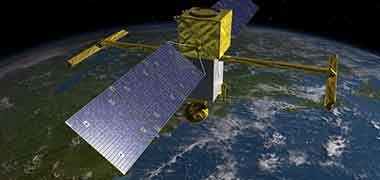
On-Orbit Servicing Vehicles
Robotic arm joints, capture mechanisms and servicing tool components for GEO life extension, refueling, inspection and component replacement missions.

Space Station Systems
Joint housings, bearing hardware, ORU handling elements and EVA-support mechanism parts for space station robotic maintenance systems.
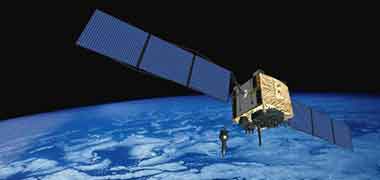
Small Satellite Inspection Platforms
Deployable booms, sensor mounts and inspection arm structures for proximity operations, health monitoring and situational awareness spacecraft.
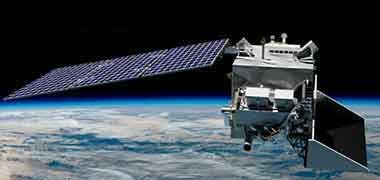
Active Debris Removal Spacecraft
Capture mechanism bodies, net deployment boom hardware, tether attachment tools and gripper components for debris-removal missions.
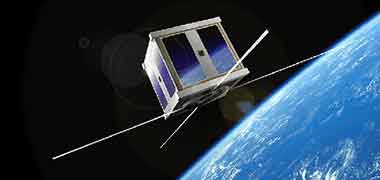
In-Space Assembly Systems
Large-structure assembly joint components, module grasping hardware and positioning tool elements for telescopes, habitats and power platforms.

CubeSat Deployables & Exploration
CubeSat hinge parts, antenna booms, drag sail mechanisms, instrument booms and planetary probe sample-arm hardware.
Satellite Arm Precision Machining Capabilities
Our equipment mix covers small shaft and bearing features as well as larger joint housings, link fittings and multi-feature mechanism parts.
Joint Shaft and Miniature Mechanism Parts
78+ Swiss CNC lathes for wave generator journals, encoder shafts, bearing seats, end-effector details and miniature deployment hardware.
Joint Housing and Structural Fittings
66+ MAZAK mill-turn centers for joint housings, boom fittings, arm link structures and single-setup multi-feature mechanism bodies.
Space Tribology Surface Preparation
Ra 0.2-0.4µm bearing surfaces for solid film lubrication, gold, DLC, PTFE, Vespel and other dry-running vacuum interfaces.
Satellite Arm Materials
Ti-6Al-4V, 17-4PH, 316L, 440C, 7075-T6, 6061-T6, Invar 36, Inconel 718, C17200, PEEK, PTFE and Vespel SP-3.
Satellite Arm Inspection
Mitutoyo CMM, air gauges, roundness testing, profilometry, XRF alloy verification, mass measurement and CCD sorting for critical dimensions.
FAIR and Space Records
FAIR per AS9102, ballooned CMM reports, material certs, surface treatment records, mass records, outgassing references and C of C.
Materials for Satellite Arm Machining
Material selection is driven by mass, stiffness, thermal expansion, vacuum compatibility, tribology, radiation tolerance and interface requirements with CFRP, bearings, sensors and electronics.
Ti-6Al-4V Grade 5
High specific strength and CFRP-friendly thermal expansion for joint housings, interface fittings and high-load structural parts.
Ti-6Al-4V Grade 23 ELI
Improved fracture toughness for high-reliability mechanisms and joint components with demanding load cases.
7075-T6 / 6061-T6
Lightweight, machinable alloys for joint casings, deployment parts, brackets and secondary structural hardware.
17-4PH H900
High-strength stainless for shafts and load-bearing joint components when reduced diameter and high stiffness are needed.
316L
Non-magnetic and corrosion-resistant for sensor-adjacent brackets, camera mounts and inspection hardware.
440C
High-hardness stainless option for bearing races and wear surfaces in dry-lubricated vacuum contact conditions.
Invar 36
Ultra-low CTE material for encoder mounts, optical-adjacent structures and thermal-stability-critical base plates.
Inconel 718
High-load, high-temperature alloy for deployment hardware and mechanisms exposed to demanding launch or thermal environments.
C17200 AT
Spring and electrical-contact material for slip rings, pass-through contacts and flexible joint electrical hardware.
PTFE Space Grade
Low-friction material for bushings, thrust washers and bearing cage elements when the specified grade has outgassing data.
Vespel SP-3
MoS2-filled polyimide for dry-bearing cages and thrust washers in vacuum and radiation-sensitive environments.
PEEK Space Grade
Radiation-tolerant insulating material for electrical isolation, bushings and non-metallic joint pass-through features.
Surface Treatments for Satellite Arms
Satellite arm finishes are selected for outgassing, tribology, grounding, corrosion resistance, cleanliness and contact life in vacuum. CNCPioneer coordinates machining surfaces and records for these process routes.
Hard Anodizing
Type III hard anodize for aluminum joint casings, deployment parts and structural surfaces that need wear resistance and cleanroom-compatible corrosion protection.
Chemical Film
Aluminum conversion coating for parts that require electrical bonding, grounding continuity or corrosion protection without anodize thickness buildup.
Passivation
Stainless and titanium passivation to remove surface contamination and improve corrosion resistance before clean handling and integration.
Tribological Gold Plating
Soft gold for selected bearing journals, contact zones, slip rings and connector interfaces that need stable contact behavior in vacuum.
Vacuum Bake-Out
Optional bake-out for components near optics, detectors or sensitive payload surfaces where residual volatile reduction is important.
DLC Coating
Diamond-like carbon coating for high-cycle bearing or contact surfaces requiring high hardness and low friction in vacuum tribology conditions.
Surface treatment records can include process certificates, thickness or finish records, ASTM E595 references, cleanliness notes and vacuum bake-out records where specified.
Quality Assurance Process
Satellite arm components need clear configuration control and traceable inspection evidence. The process below keeps critical geometry, material, finish and cleanliness requirements visible from review to shipment.
Contract & Drawing Review
Engineering reviews drawing notes, key characteristics, space material requirements, surface treatments, cleanliness needs and FAIR requirements before production.
Material Incoming Inspection
Mill certificates, heat numbers, alloy verification, temper, hardness and outgassing references are checked and linked to the production lot.
First Article Inspection
CMM, roundness, surface finish, mass and material records are compiled into FAIR documentation per AS9102 when required.
In-Process Statistical Control
Critical bearing seats, journals, bores, patterns and mating surfaces are monitored with defined inspection points and process controls.
Final Inspection & Cleanliness Review
Final CMM inspection, profilometry, visual checks, mass verification and cleanliness review are completed before release.
Shipment Documentation
Documentation can include C of C, material certs, CMM reports, FAIR, surface treatment records, outgassing references, mass records and cleanliness notes.
AS9100D Quality System Support
For satellite arm hardware, quality is not a final inspection event. It is the link between material, process, geometry, finish, cleanliness and configuration records.
FAIR Documentation per AS9102
First article reports can include ballooned drawings, full dimensional results, material certs, treatment records and mass measurements.
- AS9102 FAIR support
- Balloon drawing
- CMM results
Material Traceability
Heat numbers, mill certificates, XRF alloy checks and approved material sources support traceability and counterfeit-material prevention.
- Mill cert linkage
- XRF verification
- Heat number traceability
Outgassing Compliance Review
ASTM E595 references can be documented for specified materials and non-metallic grades, with bake-out records added when required.
- TML / CVCM references
- Non-metallic grade review
- Vacuum bake-out option
Key Characteristic Control
SPC, 100% checks or dedicated gauging can be applied to bearing seats, journal diameters, concentricity and other mission-critical dimensions.
- SPC on key features
- CCD sorting where needed
- Certificate of Conformance
Satellite Arm Precision Machining FAQ
Short answers to the questions teams usually ask before sending satellite arm, deployable boom or mechanism drawings.
Satellite arm parts must hold robotics-level geometry while meeting space constraints such as outgassing, thermal cycling, dry lubrication, mass limits and no maintenance after launch. Bearing seat alignment, wave generator roundness and surface finish are often more important than general profile tolerance.
ASTM E595 is commonly used to screen materials by total mass loss and collected volatile condensable materials. Metals are typically low risk after proper cleaning; non-metallic materials, coatings and adhesives need grade-specific evidence.
Ti-6Al-4V is common for high-load interfaces and CFRP-compatible structures. 7075-T6 and 6061-T6 are useful for lightweight housings and brackets. Invar 36 is used when thermal stability is more important than mass.
For appropriate geometries, bearing seats can be held to ±0.003mm and roundness to ±0.002mm. Final tolerance depends on material, feature size, wall thickness, datum scheme and inspection method.
Yes. Simple aluminum CubeSat mechanism parts can often move quickly when material and surface treatment requirements are clear. Titanium, tight bearing features, coatings or full FAIR packages add schedule.
Machining supports launch survivability by controlling joint interfaces, preload surfaces, thread features, bearing alignment and material traceability. Qualification testing is normally performed by the customer or a qualified test facility.
Simple aluminum or titanium prototypes can often be produced in 5-12 business days before special treatments. Complex parts with tight GD&T, coatings, cleaning or full documentation commonly require a longer schedule.
Get a Quote for Satellite Arm Components
Upload your satellite arm, deployable boom, joint housing, end-effector or mechanism drawing. CNCPioneer will review manufacturability, material, outgassing, surface treatment, inspection and documentation needs, then return DFM feedback and a quote within 24 hours.