
Satellite Bracket
Manufacturing & Machining
CNCPioneer machines custom satellite brackets, spacecraft mounting hardware and flight-ready structural interfaces with AS9100D controls, tight mounting geometry, mass verification, space-compatible materials and FAIR documentation per AS9102.
What Is a
Satellite Bracket?
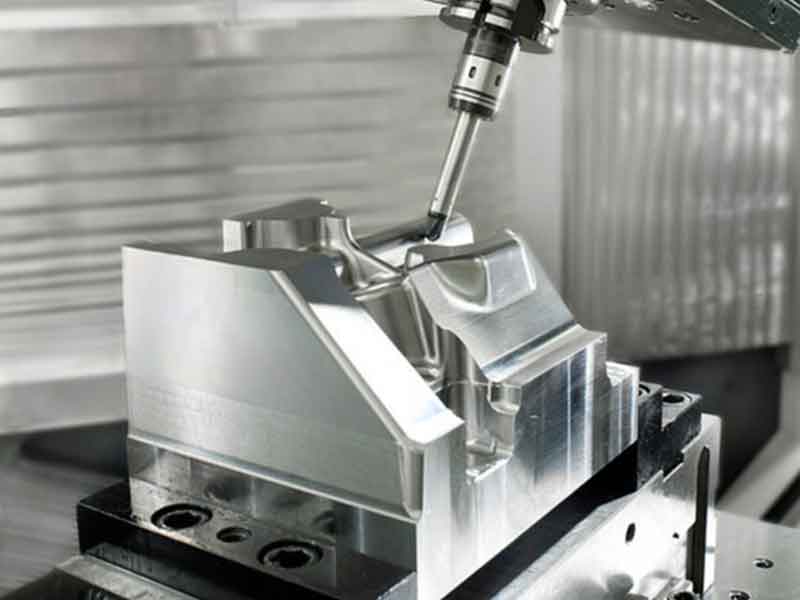
A satellite bracket is a precision structural interface that attaches electronics, sensors, actuators, propulsion hardware, thermal hardware or payload instruments to the spacecraft bus.
The part may look simple, but the requirements are not. A flight bracket must hold alignment, distribute bolt preload, survive launch vibration, stay within mass budget and provide the documentation needed for satellite configuration control.
-
Mounting face flatness to 0.005mm Flat mounting faces help distribute bolt preload and reduce joint stiffness variation under launch vibration and thermal cycling.
-
Hole position to ±0.02mm Controlled bolt patterns reduce stack-up issues between bracket, panel inserts and mounted equipment during spacecraft assembly.
-
Mass verification for flight hardware First articles can be weighed on calibrated balances and documented in the FAIR package to support satellite mass budget control.
-
Space-compatible material and finish review DFM review can cover ASTM E595 references, material selection, coating impact, clean handling and release documentation needs.

Why CNCPioneer as Your
Satellite Bracket Manufacturer?
Satellite bracket machining is about more than cutting aluminum or titanium. The supplier must control interface geometry, mass, material evidence, surface treatment impact and AS9100D documentation from the first review.
Mounting Face Flatness
Flatness to 0.005mm helps keep bolt preload distribution consistent on equipment, sensor, payload and structural mounting interfaces.
Hole Position Accuracy
Hole position to ±0.02mm supports multi-bolt installation and reduces assembly issues caused by bracket-to-panel stack-up error.
Mass Compliance Verification
First article mass can be measured and recorded, while DFM feedback can identify pocketing, rib and wall-thickness changes before machining.
24-Hour DFM Review
Each inquiry can be reviewed for tolerance feasibility, material suitability, surface treatment impact, mass reduction and manufacturability risk.
MAZAK and Swiss CNC Coverage
MAZAK mill-turn centers handle complex bracket bodies and pocketed structures, while Swiss CNC supports standoffs, pins and precision interface fittings.
Cost-Effective Space Hardware Supply
China-based machining economics help reduce bracket prototype and production cost while preserving inspection, traceability and FAIR discipline.
Satellite Bracket Types We Manufacture
CNCPioneer produces custom spacecraft brackets for equipment mounting, thermal control, payload alignment, mechanisms, CubeSat hardware and ground support fixtures.

Equipment Mounting Brackets
OBC, PCDU, transponder, battery, reaction wheel, thruster and attitude sensor brackets with controlled flatness, hole position and alignment features.

Thermal Control Brackets
Heat pipe saddles, thermal strap interfaces, radiator hinge elements and MLI blanket attachment hardware with contact surfaces matched to the thermal design.

Payload Instrument Brackets
Optical, SAR, science instrument, camera and detector support brackets in aluminum, titanium, Invar or stainless steel according to alignment and thermal needs.

Mechanism & Drive Mounting Brackets
SADA brackets, deployment mechanism supports, gimbal mounts, antenna pointing hardware and bearing or actuator support structures.

CubeSat & SmallSat Brackets
Reaction wheel brackets, propulsion module mounts, board supports, sensor brackets, payload adapters and rideshare interface fittings for small satellite programs.

GSE & Test Fixture Brackets
Handling fixture interfaces, vibration test brackets, thermal vacuum support hardware and launch integration brackets that replicate flight interfaces.
Industries & Applications
We support satellite OEMs, commercial space companies, government programs, integrators and university teams that need flight-quality custom brackets without unnecessary copy-heavy procurement friction.
Commercial Earth Observation
Camera mounts, reaction wheel supports, sensor brackets and solar array drive hardware for imaging satellite platforms and constellations.

Communications Satellites
Transponder chassis brackets, antenna pointing supports, PCDU mounts and battery installation hardware for LEO and GEO communications spacecraft.
Scientific Research Satellites
Optical instrument brackets, telescope support elements, detector mounts and magnetometer boom attachment hardware with low-outgassing material review.
Military & Intelligence Satellites
Structural mounting brackets, payload support hardware and bus interface fittings with traceable AS9100D documentation packages.
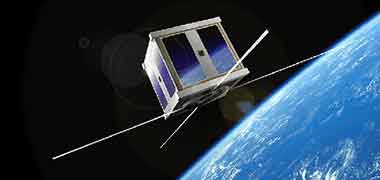
Small Satellites & CubeSats
Internal component brackets, external sensor supports, radio/computer board mounts and smallsat interface fittings, including single prototype quantities.
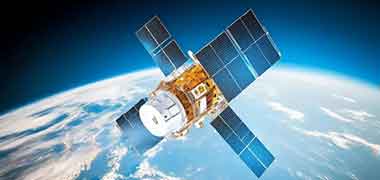
On-Orbit Servicing & Exploration
Robotic arm base brackets, servicing tool attachments, lunar orbiter instrument mounts, Mars mission camera brackets and deep-space probe interfaces.
Satellite Bracket Machining Capabilities
The process moves from drawing review to prototype, FAIR and production release with explicit controls for flatness, hole position, mass, material and finish.
DFM Review & Quotation
24-hour review for tolerance feasibility, material choice, ASTM E595 references, surface treatment impact, pocket geometry and mass optimization.
Prototype Production
MAZAK mill-turn centers for complex bracket bodies and Swiss CNC lathes for standoffs, pivot pins and precision interface fittings.
FAIR Documentation per AS9102
Ballooned CMM report, flatness and hole-position results, mass measurement, material certs and surface treatment records for first article approval.
Production Qualification
Control plans, inspection frequency, Cpk reporting on key characteristics and engineering change management for repeat flight hardware.
Bracket Design Guidance
Feedback on minimum wall thickness, pocket floor thickness, corner radius, rib layout, bolt clearance holes, dowel pin fits and tool access.
AS9100D Quality Records
Material traceability, XRF alloy checks, CMM reports, FAIR, surface treatment certificates, mass records and Certificate of Conformance.
Materials for Satellite Bracket Machining
Material choice depends on mass, stiffness, load path, thermal expansion, magnetic sensitivity, electrical isolation, surface treatment and outgassing evidence.
Ti-6Al-4V Grade 5
High specific strength and better CTE match with CFRP panels for structural interface brackets and high-load fittings.
Ti-6Al-4V Grade 23 ELI
Higher fracture toughness for mechanism interfaces and high-reliability brackets with demanding load cases.
7075-T6 / 6061-T6
Common bracket materials for lightweight equipment mounts, CubeSat rails, panel hardware and pocketed structural brackets.
17-4PH H900
High-strength stainless for compact high-load brackets, actuator mounts and reaction wheel support elements.
316L
Non-magnetic and corrosion-resistant option for science instruments, sensors, MLI hardware and magnetometer-adjacent brackets.
440C
High-hardness stainless for wear surfaces, bearing-adjacent bracket features and precision mechanical interface parts.
Invar 36
Ultra-low CTE material for optical instrument brackets, telescope supports and thermally sensitive payload interfaces.
Inconel 718
High-temperature, high-strength option for propulsion-adjacent brackets and demanding deployment mechanism mounts.
C17200 AT
Spring and conductivity material for bonding contacts, spring elements and electrical interface features.
PTFE Space Grade
Low-friction material for bushings and pivot features when the specified grade has acceptable outgassing data.
Vespel SP-3
MoS2-filled polyimide for dry-bearing and bushing features in vacuum and radiation-sensitive mechanism brackets.
PEEK Space Grade
Electrical isolation material for inserts, standoffs and non-metallic bracket features when flight-grade data is available.
Surface Treatments for Satellite Brackets
Surface treatment selection affects corrosion protection, electrical bonding, thermal behavior, coating thickness and outgassing risk. CNCPioneer reviews the finish during DFM so dimensional impact is considered before machining.
Hard Anodizing
Type II or Type III anodize for aluminum satellite brackets where corrosion protection, wear resistance or thermal surface behavior is required.
Chemical Film
Alodine or equivalent conversion coating for aluminum brackets requiring electrical bonding, grounding continuity or ESD control.
Passivation
Passivation for stainless steel and titanium brackets to remove machining contamination and support cleanroom-compatible corrosion resistance.
Gold Plating
Gold plating for selected bonding, RF grounding, electrical contact or connector-adjacent bracket features requiring stable low-resistance contact.
Vacuum Bake-Out
Optional bake-out for bracket hardware near optical, detector or contamination-sensitive payload surfaces.
Black Anodize for Thermal Control
Black anodize for aluminum bracket surfaces that need high absorptivity or defined thermal behavior in spacecraft thermal design.
Surface treatment records can include process certificates, coating notes, XRF or thickness records where applicable, ASTM E595 references and dimensional impact review.
Quality Assurance Process
Satellite bracket quality focuses on the evidence that proves the interface will assemble correctly: material, geometry, mass, finish, cleanliness and configuration records.
Contract & Drawing Review
Engineering reviews drawing notes, key characteristics, material, finish, mass target, cleanliness and FAIR requirements before production release.
Material Incoming Inspection
Mill certificates, heat numbers, alloy verification, temper or hardness and outgassing references are checked and tied to the production lot.
First Article Inspection
CMM inspection verifies flatness, hole position, pocket geometry, wall thickness, datum features and critical interface dimensions.
In-Process Control
Defined inspection points monitor thin walls, pockets, threaded features, dowel bores and interface faces during machining.
Final Inspection & Mass Check
Final CMM, visual inspection, mass measurement, surface finish checks and treatment verification are completed before shipment.
Shipment Documentation
Release packages can include C of C, CMM report, material certs, FAIR, surface treatment records, mass records and cleanliness notes.
AS9100D Quality System Support
A satellite bracket supplier needs more than machining capacity. The release package must connect the drawing, material, process, inspection and configuration record.
FAIR Documentation per AS9102
First article packages can include ballooned drawings, CMM results, material certificates, surface treatment records and mass measurements.
- AS9102 FAIR support
- Balloon drawing
- Customer approval path
Material Traceability
Heat numbers, mill certificates, XRF alloy verification and approved material sources support traceability and counterfeit-material prevention.
- XRF alloy verification
- Mill cert linkage
- Heat number tracking
Outgassing Compliance Review
ASTM E595 references can be documented for specified materials, coatings and non-metallic grades, with bake-out records added when required.
- TML / CVCM references
- Non-metallic grade review
- Vacuum bake-out option
Key Characteristic Control
Cpk reporting, 100% checks or dedicated gauging can be applied to flatness, hole position, dowel bores and other critical interface features.
- Cpk reporting where required
- Critical feature checks
- Certificate of Conformance
Satellite Bracket Machining FAQ
Short answers to the questions teams usually ask before sending custom satellite bracket drawings.
For most satellite brackets, the key dimensions are mounting face flatness, bolt pattern position and wall thickness. Together they affect preload, alignment, assembly fit and mass compliance.
6061-T6 is usually best for standard equipment brackets where machinability and cost matter. 7075-T6 is better for higher-load brackets where extra strength can reduce section size and mass.
Mass control starts in DFM with pocket, rib and wall-thickness review. During first article release, the bracket can be weighed on a calibrated balance and the result recorded in the FAIR package.
Chemical film is common when electrical bonding or grounding matters. Anodize is used when wear resistance, corrosion protection or thermal optical behavior is more important. The drawing should define the required function.
Simple aluminum brackets can often be prototyped in 5-10 business days depending on finish and documentation. Titanium, Invar, complex pockets or full FAIR packages add time.
Yes. Single engineering-model and first-article quantities can be supported, with material certificates, inspection reports and FAIR documentation when required.
Good starting points are generous internal radii, accessible pockets, balanced rib thickness, adequate floor thickness and datum features that can be inspected repeatably. CNCPioneer can review the exact geometry during DFM.
Get a Quote for Satellite Bracket Machining
Upload your satellite bracket drawing or CAD file. CNCPioneer will review manufacturability, material, mass, surface treatment, inspection and documentation needs, then return DFM feedback and a custom satellite bracket quote within 24 hours.