
Satellite Housing
Manufacturing
CNCPioneer is a precision satellite housing manufacturer and certified satellite housing China machining specialist delivering space-grade spacecraft enclosure components with tolerances as tight as ±0.005mm. AS9100D certified with 78+ Swiss CNC lathes and 66+ MAZAK mill-turn centers for satellite OEMs, commercial space developers, and CubeSat programs worldwide.
What Is a Satellite
Housing?
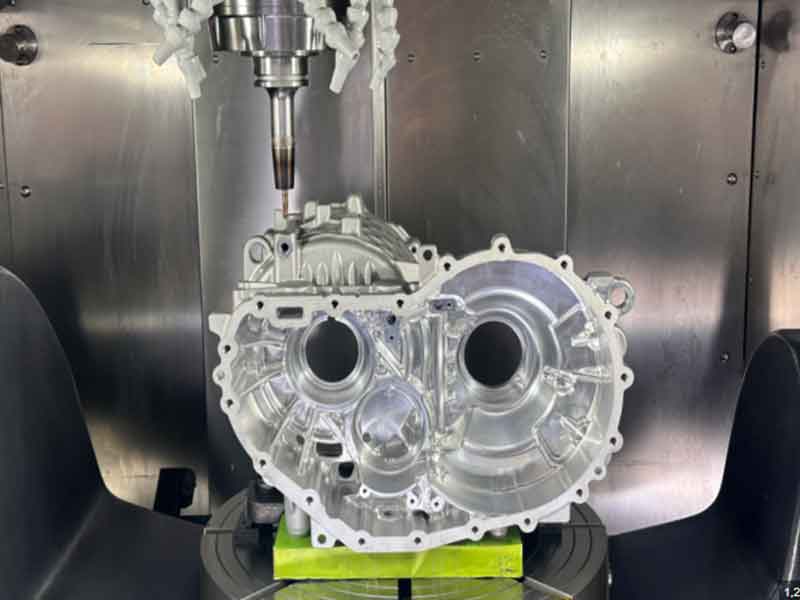
A satellite housing is a precision-machined structural enclosure that houses, protects, and provides the mechanical interface for satellite electronic units, sensor assemblies, payload instruments, propulsion components, attitude control actuators, and communication system hardware. Satellite housings serve three simultaneous functions in spacecraft design: they provide the structural containment that protects internal electronic and mechanical components from launch vibration, acoustic loading, and pyrotechnic shock environments; they establish the precise dimensional reference geometry for mounting the internal components in their correct operating positions relative to the spacecraft coordinate reference frame; and they provide the external interface surfaces through which the satellite housing connects to the satellite bus structure, transmits thermal loads to the spacecraft thermal control system, and interfaces with external electrical connectors, RF feedthroughs, and fluid connection ports.
Satellite housing design and manufacture is governed by a set of technical requirements uniquely characteristic of the space environment. A satellite housing must be mass-minimized — every gram of satellite housing mass contributes directly to launch cost at $3,000–$20,000 per kilogram depending on orbital altitude, making mass optimization through thin-wall pocket geometry, rib stiffening, and lightweight alloy selection the dominant design constraint in all satellite housing programs. A satellite housing must survive without degradation the combined launch environment of random vibration at 20–150 grms, sine sweep acceleration at 20–60g, and pyrotechnic shock at 1,000–5,000g. A satellite housing must meet ASTM E595 outgassing requirements — TML ≤ 1.0% and CVCM ≤ 0.1% — because satellite housing materials that outgas volatile compounds in orbital vacuum contaminate sensitive payload optical surfaces, solar cell junctions, and detector elements. And a satellite housing must function reliably without any maintenance or repair for 5–25 year satellite operational lifetimes across orbital thermal cycling from –180°C to +150°C.
-
Structural containment & protection Precision-machined satellite housing enclosures protect internal electronic and mechanical components from launch vibration (20–150 grms), acoustic loading, and pyrotechnic shock (1,000–5,000g) — the foundational mechanical requirement of every satellite housing design.
-
Mass minimization through pocket geometry Thin-wall pocket geometry, rib stiffening, and lightweight alloy selection achieve 30–50% mass reduction compared to solid satellite housing designs at equivalent structural stiffness — every gram saved reduces launch cost at $3,000–$20,000 per kilogram.
-
ASTM E595 outgassing compliance Total mass loss (TML) ≤ 1.0% and collected volatile condensable materials (CVCM) ≤ 0.1% for all satellite housing materials — preventing vacuum-environment contamination of sensitive payload optical surfaces, solar cell junctions, and detector elements.
-
EMI shielding & thermal interface geometry EMI gasket groove geometry, connector cutout precision (±0.05mm), and thermal contact surface flatness (0.005mm) machined into satellite housing mating flanges for electromagnetic shielding effectiveness and thermal management compliance.

Why CNCPioneer as Your
Satellite Housing Manufacturer?
Among satellite housing manufacturers globally, CNCPioneer offers a combination of advanced CNC machining capability, space-grade material expertise, outgassing-compatible process controls, engineering design support, and China manufacturing cost efficiency that makes us the preferred manufacturing partner for satellite housing programs across all satellite types and mission categories.
Complete Satellite Housing Engineering Support — DFM in 24 Hours
Satellite housing manufacturing begins with engineering, not machining. CNCPioneer's DFM review provides dimensional feasibility analysis, material selection guidance for orbital thermal environment, outgassing compatibility review, EMI shielding geometry assessment, thermal interface surface specification advice, and mass optimization recommendations — all within 24 hours of drawing or CAD file submission. This reduces satellite housing development iteration cycles and eliminates dimensional non-conformances before prototype production.
AS9100D Certified Satellite Housing Manufacturer Quality
Our AS9100D certification confirms that CNCPioneer's quality management system meets the specific requirements of satellite housing program procurement including risk management, configuration control, first article inspection per AS9102, key characteristics management, and counterfeit part prevention. Independent audit provides satellite program managers with documented assurance that satellite housings are manufactured within an aerospace quality framework.
MAZAK Mill-Turn Satellite Housing Machining Capability
Satellite housing bodies are characteristically complex multi-feature components requiring simultaneous turning and multi-axis milling. CNCPioneer's MAZAK mill-turn satellite housing machining produces complete satellite housing body geometry in single-setup operations that eliminate the re-fixturing errors affecting geometric relationships between critical satellite housing features — pocket geometry, connector cutout positions, mounting hole patterns, and interface flange geometry.
Lightweight Satellite Housing Machining Expertise
Satellite housing mass minimization through pocket geometry optimization is the defining satellite housing machining challenge. CNCPioneer's satellite housing machining achieves wall thickness of 1.5mm minimum, pocket corner radius of 1.5mm minimum for end mill access, and rib-and-pocket stiffening geometry that provides 30–50% mass reduction compared to solid satellite housing designs at equivalent structural stiffness.
China Satellite Housing Manufacturer Cost Advantage
CNCPioneer's satellite housing China manufacturing delivers 30–50% cost reduction compared to equivalent satellite housing machining from US, European, and Japanese aerospace precision machining facilities. Satellite housing China manufacturing at CNCPioneer does not compromise AS9100D documentation, outgassing material compliance, or dimensional accuracy — the cost advantage reflects China manufacturing economics not reduced quality standards.
Rapid Satellite Housing Prototype Delivery
First article satellite housing components in aluminum 5–7 business days and titanium 7–12 business days, supporting compressed satellite development program engineering model and qualification model production timelines. For urgent engineering model delivery requirements, aluminum satellite housing prototype delivery can be expedited to 3–4 business days with premium scheduling.
Types of Satellite Housings
We Manufacture
CNCPioneer's satellite housing machining covers the complete range of spacecraft housing types across all satellite system domains — electronic units, sensors and instruments, propulsion systems, RF and communications, attitude control, and thermal control for small satellites and CubeSats.

Electronic Unit Satellite Housings
Onboard computer (OBC) chassis, power conditioning and distribution unit (PCDU) housings, AOCS electronics enclosures, transponder and modem housings, GPS receiver enclosures, and payload data processor chassis. EMI shielding mating flange geometry (flatness 0.005mm), precise connector cutout positions (±0.05mm), and thermal interface surface flatness (0.01mm) for conduction cooling. Material: aluminum 6061-T6 or 7075-T6 hard anodized per MIL-A-8625 Type III.

Sensor & Instrument Satellite Housings
Star tracker optical head housings with black anodized baffle interior surfaces for stray light rejection, sun sensor housings with slit assembly mounting cavity geometry (±0.002mm), earth sensor optical housings, magnetometer housings in non-magnetic 316L stainless steel, gyroscope and IMU housings with precise mounting cavity geometry for correct input axis alignment (±0.01° angular accuracy).

Propulsion System Satellite Housings
Propulsion electronics housings with material compatibility for satellite propellant environment, pressure transducer and sensor housings in titanium Ti-6Al-4V or Inconel 625 for hydrazine and MON oxidizer service, flow control valve housings with dimensional accuracy on valve seat geometry (surface finish Ra 0.2μm, roundness ±0.002mm) for bubble-tight shut-off, and electric propulsion control housings.

RF & Communications Satellite Housings
Waveguide filter and multiplexer housings with dimensional accuracy on microwave cavity internal geometry (±0.01mm) governing filter resonant frequency at Ku-band (10.7–18 GHz) and Ka-band (26.5–40 GHz), TWTA housings with high-voltage connector feedthrough mounting geometry, SSPA housings with precise heat sink fin geometry (fin width ±0.1mm, fin height ±0.05mm), and antenna control electronics housings.

Attitude Control System Satellite Housings
Reaction wheel assembly housings with precision bearing cavity geometry (bore diameter ±0.003mm, roundness ±0.002mm) for correct bearing preload and minimum micro-vibration generation, control moment gyroscope housings with gimbal bearing housing concentricity (±0.003mm), magnetorquer housings in non-magnetic aluminum, and rate gyroscope / MEMS IMU housings with vibration-isolated mounting interfaces.

Thermal Control & CubeSat Housings
Thermal control electronics housings, loop heat pipe (LHP) compensation chamber housings, phase change material (PCM) thermal storage containers with internal volume accuracy (±2%), CubeSat electronic stack housings within 1U–12U CDS Rev. 14 dimensional constraints, CubeSat sensor head housings, and SmallSat modular electronics housings for commercial small satellite bus platforms.
Applications
CNCPioneer supplies satellite housing machining components to satellite OEMs, commercial space program developers, government space agencies, and university research programs across all mission types and orbital regimes worldwide.

Commercial Earth Observation
Satellite housing machining for earth observation satellite camera electronics housing bodies, image processor chassis elements, attitude control system electronics enclosures, and communication modem housing components for high-resolution commercial remote sensing satellite constellation programs.

Communications Satellites
Satellite housing machining for GEO and LEO communications satellite transponder chassis elements, waveguide filter and multiplexer housing bodies, TWTA and SSPA module enclosures, and antenna control electronics housing components for commercial satellite communications infrastructure programs.

Scientific Research Satellites
Satellite housing machining for science satellite spectrometer detector housing bodies, magnetometer sensor enclosure elements, X-ray telescope electronics housing components, and cryogenic instrument control electronics chassis for astronomy, heliophysics, and Earth science research satellite programs requiring minimum satellite housing outgassing.

Military & Intelligence Satellites
Satellite housing machining for military reconnaissance satellite electronics enclosure components, signals intelligence payload housing bodies, and strategic communications satellite transponder chassis elements with AS9100D quality documentation supporting classified satellite program configuration management.

Navigation Satellites
Satellite housing machining for GPS, Galileo, GLONASS, and BeiDou navigation satellite atomic clock housing elements, navigation processor chassis components, and antenna electronics enclosure bodies for global navigation satellite system infrastructure programs.

Small Satellites & CubeSats
Satellite housing China manufacturing for commercial small satellite constellation operators, university CubeSat programs, and government technology demonstration missions requiring rapid-delivery custom satellite housing hardware at competitive pricing. CubeSat electronic stack housing machining within 1U–12U CDS Rev. 14 dimensional constraints.
Satellite Housing Machining
Capabilities at CNCPioneer
CNCPioneer's Shenzhen facility combines MAZAK mill-turn capability for complex multi-feature satellite housing body components with Swiss CNC lathe precision for miniature satellite sensor housing bodies and precision interface fitting components — covering the complete satellite housing machining size and complexity range.
MAZAK Mill-Turn Satellite Housing Machining
66+ MAZAK mill-turn centers · Single-setup machining of complete satellite housing body geometry · Pocket geometry, connector cutouts, mounting hole patterns, interface flange geometry · 5-axis simultaneous machining · Eliminates re-fixturing errors between critical satellite housing features · Wall thickness down to 1.5mm minimum.
Swiss CNC Lathe Precision
78+ Swiss CNC lathes · Miniature satellite sensor housing bodies, propulsion component housing elements, precision interface fitting components · Diameter tolerance ±0.003mm · Roundness ±0.002mm · Surface finish Ra 0.2μm · Bearing cavity precision for reaction wheel and attitude control mechanism housings.
Thin-Wall Pocket Geometry Expertise
Pocket floor wall thickness 1.5mm minimum for aluminum satellite housings · Rib width 2.0–3.0mm for stiffening · Pocket corner radius 1.5mm minimum for end mill access · Pocket depth-to-width ratio maximum 3:1 · Rib-and-pocket optimization achieving 30–50% mass reduction versus solid designs at equivalent structural stiffness.
EMI Shielding & Thermal Interface Machining
EMI gasket groove geometry (width = gasket diameter × 0.9, depth = gasket diameter × 0.7) · Mating flange flatness 0.005mm and surface finish Ra 0.8μm · Connector cutout position ±0.05mm · Thermal contact surface flatness 0.005–0.01mm · Vent hole patterns sized per waveguide-below-cutoff EMI aperture theory.
Outgassing Control & Mass Verification
ASTM E595 TML ≤ 1.0% and CVCM ≤ 0.1% compliance for all satellite housing materials · Low-residue cutting fluids with inter-operation cleaning · Post-machining ultrasonic cleaning in aqueous solution · Vacuum bake-out at 100–125°C in ≤ 7×10⁻³ Pa for 24–48 hours where required · Precision balance mass measurement: ±5g standard, ±1g mass-critical.
AS9100D & FAIR Documentation
AS9100D certified satellite housing machining quality system · FAIR per AS9102 for every new satellite housing part number · Complete CMM dimensional verification with balloon drawing · Material certifications with mill heat number and full lot traceability · Surface treatment certifications · Mass measurement records · 20-year record retention.
Materials for Satellite Housing Machining
Satellite housing machining material selection must balance specific strength for mass-critical applications, thermal conductivity for heat rejection, outgassing compliance for vacuum environment, CTE compatibility for thermal stability, and non-magnetic requirements for attitude sensors. CNCPioneer machines all primary space-grade alloys with full AMS specification compliance and mill traceability.
6061-T6
Standard electronic unit satellite housings, sensor housings, CubeSat housings · TML <0.1% · Density 2.70 g/cm³ · CTE 23.6 ppm/°C · Excellent machinability enabling complex pocket geometry at low cost · Thermal conductivity 167 W/m·K · Standard: hard anodize Type III.
7075-T6
High-load satellite housings, mass-critical structural enclosures, reaction wheel casings · TML <0.1% · Density 2.80 g/cm³ · CTE 23.4 ppm/°C · Yield strength 503 MPa vs 6061-T6's 276 MPa · Preferred where structural load concentration requires higher strength-to-mass ratio.
2024-T351
High-cycle mechanism satellite housings, fatigue-critical structural elements, vibration-isolated instrument enclosures · TML <0.1% · CTE 23.2 ppm/°C · Superior fatigue resistance for deployable mechanism and vibration-critical satellite housing applications.
Ti-6Al-4V Grade 5
CFRP interface satellite housings, propulsion system housings, high-load structural enclosures · TML <0.05% · Density 4.43 g/cm³ · CTE 8.6 ppm/°C · 40% lighter than steel · Excellent fatigue resistance and propellant compatibility for satellite propulsion environments.
316L
Non-magnetic sensor satellite housings, magnetometer enclosures, attitude determination instrument housings · TML <0.1% · CTE 16.0 ppm/°C · Austenitic microstructure: magnetic permeability below 1.02μr · Mandated for magnetometer and magnetic cleanliness satellite applications.
17-4PH H900
High-load compact satellite housings, structural electronics enclosures, valve seat housings · TML <0.1% · CTE 10.8 ppm/°C · Tensile 1,310 MPa · Maximum yield strength in compact cross-sections for satellite mechanism and structural applications.
Inconel 625 / 718
Propulsion valve satellite housings, high-pressure service enclosures, deployment mechanism springs · TML <0.1% · CTE 12.8–13.0 ppm/°C · Creep and stress rupture resistant for high-temperature satellite propulsion system housings and hot section components.
Invar 36
Optical instrument satellite housings, telescope structure enclosures, precision reference housings · CTE 1.3 ppm/°C · TML <0.1% · Dimensional stability across orbital thermal cycling that earth observation and science satellite optical system performance budgets require.
Kovar ASTM F15
Hermetic satellite housings, glass-to-metal seal enclosures, RF feedthrough housings · CTE 5.5 ppm/°C matched with glass and ceramics · TML <0.1% · Hermetic seal compatibility for pressurized and sealed satellite system interfaces.
Magnesium AZ91D
Ultra-lightweight satellite housings where minimum density is critical · TML <0.1% · Density 1.81 g/cm³ · CTE 26.0 ppm/°C · 33% lighter than aluminum 6061-T6 · Used for mass-critical non-structural satellite housing applications with appropriate corrosion protection.
PEEK Space Grade
Electrically isolating satellite housings, lightweight non-structural enclosures, high-temperature component housings · Verified <1% TML · CTE 47 ppm/°C · High temperature capability and mechanical strength for elevated temperature satellite environments.
Surface Treatments for
Satellite Housing Machining
Surface treatment on satellite housing machining components serves critical functions — corrosion protection for orbital service life, EMI shielding electrical conductivity, thermal control optical property management, and outgassing compliance for vacuum environment. CNCPioneer coordinates all surface treatments with qualified partners per MIL, ASTM, and ECSS space standards.
Hard Anodizing — MIL-A-8625 Type III
The universal standard surface treatment for aluminum satellite housing machining structural components. Hard anodize provides HV 400+ surface hardness for wear resistance at connector insertion interfaces and lid mating surfaces. Inherent ASTM E595 outgassing compliance. Standard coating thickness 25–50μm. Black hard anodize for satellite housing external surfaces requiring high solar absorptivity (α > 0.95) for satellite thermal balance.
Type II Anodizing — MIL-A-8625 Type II
Standard corrosion protection anodize for aluminum satellite housing internal surfaces and non-wear-surface external features. Thinner coating (5–25μm) produces lower dimensional change than Type III — preferred for satellite housing precision features including connector cutout edges and EMI gasket groove geometry where coating thickness dimensional impact must be minimized.
Chemical Film — MIL-DTL-5541
Alodine chromate conversion coating for aluminum satellite housing hardware requiring electrical conductivity for satellite structure grounding, RF shielding continuity, and ESD protection. Class 1A for maximum satellite housing corrosion protection; Class 3 for low-contact-resistance electrical bonding at satellite housing mating interfaces. Standard on EMI enclosure surfaces.
Passivation — ASTM A967
Nitric or citric acid passivation for stainless steel and titanium satellite housing components — propulsion valve housings, sensor body elements, and instrument housing hardware. Removes free iron and machining surface contamination, enhances passive layer for outgassing compatibility and corrosion resistance in satellite propellant and clean room processing environments.
Gold Plating — MIL-G-45204
Hard gold plating for satellite housing electrical contact surfaces — RF connector contacts, electrical connector pins, slip ring interfaces, and grounding contact hardware. Gold's negligible vacuum vapor pressure and complete oxidation resistance provide lifetime electrical connection reliability for satellite housing electrical interfaces across 20-year satellite operational lifetimes.
Silver Plating for RF Satellite Housings
Silver plating on satellite housing RF cavity interior surfaces — waveguide filter bodies, multiplexer housing cavities, and amplifier module housings — providing maximum electrical conductivity (6.30×10⁷ S/m) for minimum RF insertion loss in satellite communications payload hardware cavity surfaces at microwave operating frequencies.
All satellite housing machining surface treatments — anodizing, chemical film, passivation, gold plating, silver plating — are verified by XRF thickness measurement, adhesion testing, and optical property verification on every production lot. Surface treatment certifications, process parameters, and inspection records are included in the shipment documentation package for every satellite housing machining program.
Quality Assurance for
Satellite Housing Machining
Satellite housing machining quality assurance at CNCPioneer is the operational framework governing every stage of design review, material qualification, production monitoring, and documentation — ensuring flight-qualified satellite housings are delivered with complete and accurate quality records supporting 20-year satellite program configuration management.
Contract & Drawing Review
Complete engineering review of satellite housing machining drawing requirements, applicable ECSS, NASA GSFC, MIL, and customer OEM specifications, outgassing material requirements, EMI shielding specifications, surface treatment callouts, mass specifications, and FAIR requirements per AS9102 before order acceptance.
Material Qualification & Traceability
SII XRF composition verification confirms alloy compliance for every satellite housing machining material lot. Hardness testing verifies heat treatment condition. ASTM E595 outgassing data documentation for non-metallic satellite housing materials. Full lot traceability from mill certificate heat number through finished satellite housing shipment. Counterfeit material prevention by approved supplier management.
First Article Inspection (FAIR per AS9102)
Complete CMM dimensional verification of all drawing-dimensioned satellite housing features on the first production article. FAIR documented in AS9102 balloon drawing format with full measurement results, material certification, surface treatment certification, and mass measurement. FAIR approval by customer required before production quantity release.
In-Process Statistical Control
Real-time dimensional monitoring during satellite housing machining production. 100% CCD automatic sorting for safety-critical satellite housing dimensions. Statistical process control with Cpk ≥ 1.33 for all flight satellite housing components. Dedicated process travelers with mandatory inspection sign-off for satellite housing-specific critical features including wall thickness, connector cutout positions, mating flange flatness, and RF cavity dimensions.
Final Inspection & Mass Verification
Mitutoyo CMM (±0.001mm) full satellite housing dimensional report. Surface roughness verification on all specified satellite housing surfaces. Thread gauge verification for all satellite housing threaded features. Mass measurement from precision balance against satellite housing mass specification — ±5g standard, ±1g mass-critical. Visual inspection under clean room lighting for surface defects and contamination.
Documentation Package
Certificate of Conformance, CMM dimensional report, material certifications with full traceability, FAIR per AS9102, surface treatment certifications, mass measurement record, outgassing compliance documentation, and program-specific documentation. All satellite housing quality records retained minimum 20 years for satellite program configuration management and airworthiness directive compliance.
AS9100D Quality System for
Satellite Housing Machining
CNCPioneer's AS9100D certification for satellite housing machining manufacturing provides the structured quality framework demanded by satellite program procurement for commercial, defense, scientific, and CubeSat missions across all orbital regimes.
AS9100D & FAIR per AS9102
AS9100D certified satellite housing machining manufacturing with FAIR documentation per AS9102 for every new satellite housing part number and design revision. Complete CMM dimensional verification with balloon drawing, material certifications with mill heat number, surface treatment certifications, mass measurement records, and Certificate of Conformance.
- FAIR per AS9102 documentation
- Full balloon drawing included
- Material certification records
Material Traceability & XRF Verification
Heat number traceability from mill test report through finished satellite housing retained for minimum 20 years per AS9100D record retention. XRF material composition verification on incoming bar stock. Mechanical test coupon processed with each heat treat lot. Full material and process traceability chain for satellite program configuration management and accident investigation compliance.
- 20+ year record retention
- XRF composition verification
- Full traceability chain
In-Process Statistical Control
Real-time dimensional monitoring during satellite housing machining production. 100% CCD automatic sorting for safety-critical satellite housing dimensions. Statistical process control with Cpk ≥ 1.33 compliance confirmed before production quantity release. Dedicated process travelers with mandatory inspection sign-off for satellite housing-specific critical features.
- Cpk ≥ 1.33 confirmed
- 100% CCD sorting
- Dedicated process travelers
Outgassing Compliance & Cleanliness
ASTM E595 outgassing compliance verification for all satellite housing machining materials and processes. Post-machining ultrasonic cleaning in aqueous solution followed by deionized water rinse. Vacuum bake-out coordination at 100–125°C in ≤ 7×10⁻³ Pa for 24–48 hours where required. Particle count verification for contamination-controlled delivery to satellite integration facilities.
- ASTM E595 TML ≤ 1.0%
- Vacuum bake-out available
- Particle count verification
Satellite Housing Machining FAQ
Common questions from satellite OEMs, commercial space program developers, government space agencies, and university research programs about CNCPioneer's satellite housing machining and satellite housing manufacturer capabilities.
Pocket geometry optimization is the most important design parameter in satellite housing machining for mass minimization. A solid-machined aluminum satellite housing carries significant structural material that is not needed for load-bearing capacity — structural analysis typically shows that only the outer walls, mounting flanges, connector areas, and load path ribs require full material cross-section for strength compliance. Internal pocket geometry removes non-structural material while maintaining satellite housing structural stiffness through the rib-and-pocket design approach. CNCPioneer's satellite housing machining experience shows that rib-and-pocket optimization typically achieves 30–50% satellite housing mass reduction compared to solid-machined alternatives at equivalent structural stiffness and launch vibration survival margin. The key satellite housing machining pocket geometry parameters are pocket corner radius (1.5mm minimum for standard end mill access), pocket floor wall thickness (1.5mm minimum for structural compliance), and rib width (2.0–3.0mm for rib stiffening effectiveness) — parameters that must be balanced against satellite housing machining cost and cycle time in the mass-cost optimization for each satellite housing program.
For aluminum satellite electronic unit housings requiring both EMI shielding and corrosion protection, we recommend a two-surface-treatment approach: MIL-DTL-5541 Class 3 chemical film (Alodine) on the satellite housing mating flanges, lid interface surfaces, and connector flange contact areas where electrical conductivity for EMI shielding continuity is required, combined with MIL-A-8625 Type III hard anodize on the satellite housing external walls, pocket surfaces, and non-mating faces where maximum corrosion protection and surface hardness are the primary requirements. This combination provides EMI shielding conductivity at the satellite housing critical electrical bonding interfaces while hard anodize provides wear resistance on the satellite housing surfaces subject to mechanical contact during assembly and launch environments. For satellite housings where uniform surface treatment is required (either all Alodine or all anodize), we recommend hard anodize Type III (unsealed, Class 3) for satellite housings where some electrical conductivity through the anodize layer is acceptable — unsealed hard anodize provides higher conductivity than sealed anodize while maintaining the surface hardness advantage.
CNCPioneer ensures outgassing compliance for satellite housing machining through four systematic controls. Material qualification — all satellite housing machining materials are reviewed against ASTM E595 database entries during DFM review, with non-metallic materials requiring confirmed TML ≤ 1.0% and CVCM ≤ 0.1% data before acceptance; standard aluminum, titanium, and stainless steel satellite housing materials are inherently ASTM E595 compliant when properly cleaned. Process control — satellite housing machining uses low-residue cutting fluids compatible with complete post-machining removal, inter-operation cleaning removes cutting fluid residue between satellite housing machining stages, and post-machining ultrasonic cleaning in aqueous solution followed by deionized water rinse removes surface contamination before surface treatment. Surface treatment verification — all specified surface treatments for satellite housing machining are verified for space environment outgassing compatibility, with anodizing, chemical film, passivation, and gold plating confirmed as inherently low-outgassing treatments. Vacuum bake-out — for satellite housing components requiring minimum residual outgassing in proximity to sensitive payload optical or detector surfaces, post-machining vacuum bake-out at 100–125°C in ≤ 7×10⁻³ Pa vacuum for 24–48 hours with mass loss monitoring documentation is coordinated at qualified facilities.
CNCPioneer's satellite housing machining approach for EMI shielding compliance focuses on four geometric features that govern satellite housing EMI effectiveness. First, mating flange geometry — satellite housing body-to-lid mating flanges are machined to flatness 0.005mm and surface finish Ra 0.8μm for reliable EMI gasket compression across the complete mating interface perimeter, ensuring continuous conductive contact that prevents EMI leakage at the satellite housing seam. Second, connector cutout positions — connector cutout positions are machined to ±0.05mm accuracy for correct connector flange footprint engagement, enabling reliable connector flange-to-satellite-housing electrical bonding through the connector mounting bolts. Third, surface conductivity treatment — satellite housing mating surfaces and connector flange contact areas are treated with MIL-DTL-5541 Class 3 Alodine for low electrical resistance EMI bonding paths. Fourth, vent hole patterns — where satellite housing thermal vent holes are required for equipment cooling airflow or pressure equalization, vent hole patterns are positioned and sized based on highest-frequency EMI requirement waveguide-below-cutoff aperture sizing for adequate EMI attenuation at the satellite housing vent apertures.
CNCPioneer's satellite housing machining prototype lead times: standard aluminum 6061-T6 or 7075-T6 satellite housing without surface treatment 5–7 business days; aluminum satellite housing with hard anodize Type III 7–10 business days; aluminum satellite housing with chemical film (Alodine) 6–8 business days; titanium Ti-6Al-4V satellite housing 7–12 business days; Invar 36 satellite housing for optical instrument applications 10–14 business days; stainless steel 316L or 17-4PH satellite housing 7–10 business days. FAIR documentation per AS9102 preparation adds 2–3 business days to the prototype delivery lead time. For satellite housing programs with urgent engineering model delivery requirements, aluminum satellite housing prototype delivery can be expedited to 3–4 business days with premium scheduling. Production quantity lead times for standard complexity satellite housings: 4–6 weeks. Complex satellite housings with extensive pocket geometry, RF cavity features, and multiple surface treatment steps: 6–8 weeks.
Yes. CNCPioneer's satellite housing China manufacturing meets the same AS9100D quality management system requirements, ASTM E595 outgassing material compliance, dimensional tolerance capability, and FAIR documentation standards as established US and European satellite housing manufacturers. The critical quality enablers — Swiss CNC lathe dimensional accuracy of ±0.003mm, MAZAK mill-turn dimensional capability of ±0.005mm, Mitutoyo CMM verification at ±0.001mm, SII XRF material composition verification, and AS9100D certified quality system with FAIR per AS9102 — are identical at CNCPioneer's satellite housing China manufacturing facility to those at Western aerospace satellite housing manufacturing facilities. The satellite housing China manufacturing cost advantage of 30–50% compared to US and European satellite housing manufacturers reflects China's lower labor cost, competitive material supply chain, and manufacturing efficiency — not reduced quality system capability. Satellite program managers evaluating satellite housing China manufacturing from CNCPioneer can request our AS9100D certification scope, request FAIR documentation samples from previous satellite housing programs, and conduct supplier qualification audits of our satellite housing machining facility to verify quality system compliance independently.
Get a Quote for Satellite Housing Machining
Upload your satellite housing drawing or CAD file and receive a free DFM review and competitive satellite housing manufacturer quotation within 24 hours. CNCPioneer's engineering team will review your satellite housing design for machining feasibility, confirm outgassing material compliance with ASTM E595, assess EMI shielding surface treatment requirements, verify mass compliance with your satellite budget allocation, identify critical satellite housing machining dimensions requiring special inspection controls, and provide a complete satellite housing quotation including FAIR documentation per AS9102 and AS9100D quality system requirements for your satellite program.