
Satellite Component
Precision CNC Milling
CNCPioneer mills flight-ready satellite components for structures, RF systems, attitude control, propulsion, payloads and CubeSat platforms with AS9100D controls, 24-hour DFM review, CMM inspection and FAIR documentation per AS9102.
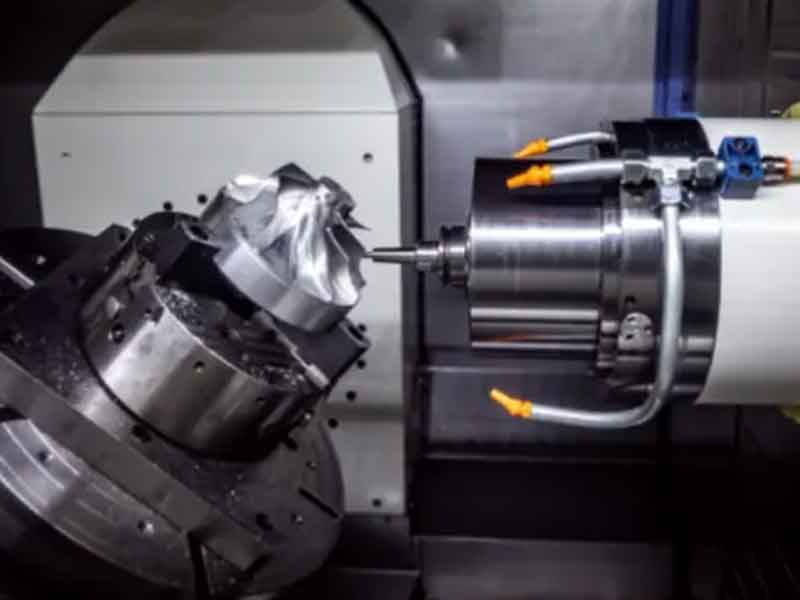
What Is
Satellite Component Milling?
Satellite component milling is the CNC process used to create the pockets, cavities, bores, mounting faces, ribs and hole patterns that make spacecraft hardware function.
For flight parts, the machining challenge is not only dimensional accuracy. The part also needs low mass, clean material evidence, controlled surface finish, stable geometry and documentation that supports program release.
-
Space-grade milling across subsystems Structural fittings, waveguide bodies, reaction wheel casings, optical bench plates, thermal hardware and CubeSat rails can be produced from one qualified source.
-
Mass-efficient pocket geometry Pockets, ribs and thin-wall features help reduce mass while keeping interface stiffness, mounting accuracy and inspection access under control.
-
MAZAK mill-turn and Swiss CNC coverage Mill-turn centers handle complex bodies and housings, while Swiss CNC supports small precision fittings, shafts and slender geometry.
-
Competitive China machining cost China-based aerospace machining economics can reduce prototype and production cost while preserving inspection, traceability and release records.

Why CNCPioneer for
Satellite Component Milling?
Good satellite milling connects geometry, material, finish and inspection into one controlled process. CNCPioneer reviews these risks before machining and documents them through first article and production release.
AS9100D Quality Framework
AS9100D controls support drawing review, configuration management, material traceability, FAIR documentation and key characteristic inspection.
Single-Setup Mill-Turn Machining
MAZAK mill-turn centers reduce re-fixturing error on parts that combine milled pockets, turned bores, bolt patterns and connector features.
5-Axis Milling Support
5-axis machining supports compound-angle faces, undercut pockets, angled holes and complex cavity features that are difficult in 3-axis setups.
Outgassing-Aware Process
DFM can include material, finish, cleaning and ASTM E595 evidence needs so contamination-sensitive programs are planned correctly from the start.
Rapid Prototype Support
Aluminum, titanium, stainless and Invar prototypes can move from review to first article with focused inspection and release documentation.
Cost-Effective Flight Hardware
Competitive production cost helps commercial satellite and CubeSat teams source precision hardware without dropping aerospace documentation.
Satellite Components
We Mill
CNCPioneer mills spacecraft components for structures, attitude control, RF payloads, propulsion, instruments, thermal hardware and power systems.

Structural & Bus Component Milling
Interface ring fittings, panel inserts, bus frame nodes, CubeSat rails, separation hardware and lightweight structural fittings with controlled hole patterns and flatness.

Attitude Control Component Milling
Reaction wheel casings, gimbal housings, star tracker baffle parts, fine pointing mechanism platforms and sensor mounting plates.

RF & Communications Component Milling
Waveguide filter bodies, RF cavities, feed horn elements, multiplexer bodies, transponder chassis and phased-array mounting plates.

Propulsion Component Milling
Valve bodies, tank boss fittings, thruster mounting plates, PPU housings and propulsion-adjacent structural parts in titanium, stainless or Inconel.

Payload Instrument Component Milling
Optical bench plates, mirror cell hardware, focal plane supports, SAR antenna frames and instrument bodies where flatness and thermal stability matter.

Thermal & Power Component Milling
Heat sinks, heat-pipe saddles, thermal strap brackets, solar array drive structures, battery module mounts and PCDU chassis bodies.
Industries & Applications
We support satellite OEMs, payload integrators, commercial space companies, government programs and university teams that need precise milled hardware with usable documentation.

Commercial Earth Observation
Camera mounts, optical bench plates, SAR antenna frames, star tracker hardware and attitude control brackets for remote-sensing satellites.

LEO Communications Constellations
Flat-panel bus fittings, phased-array plates, Hall thruster mounts and repeatable structural hardware for constellation production.

GEO Communications Satellites
Waveguide filters, multiplexer bodies, TWTA chassis and antenna pointing mechanism components for larger communications payloads.

Scientific Research Satellites
Invar optical benches, telescope supports, spectrometer bodies and clean instrument hardware for science and Earth research missions.

Small Satellites & CubeSats
CubeSat rails, SmallSat frame fittings, sensor mounts and compact propulsion module housings for fast development programs.

Military, Intelligence & Space Exploration
Mission-critical structural fittings, payload mounting plates, transponder chassis and exploration spacecraft hardware with controlled records.
Satellite Component Milling
Capabilities & Process
The process moves from DFM to prototype, first article and production with clear controls for geometry, material, finish, mass and documentation.
24-Hour DFM Review
Review of pocket geometry, wall thickness, internal radii, tool access, datum strategy, material selection, surface treatment and inspection scope.
Prototype Milling
MAZAK mill-turn and 5-axis machining for housings, RF bodies and structural parts, plus Swiss CNC for smaller turned-milled components.
First Article Inspection & FAIR
CMM inspection, surface roughness checks, thread verification, mass measurement and ballooned FAIR package preparation for customer approval.
Production & Statistical Control
Production controls can include fixture strategy, key characteristic checks, Cpk reporting, process travelers and drawing revision management.
Satellite Component Materials
Aluminum, titanium, stainless, Invar, Kovar, Inconel, beryllium copper, PEEK and other program-specified materials with traceability.
AS9100D Quality Documentation
Release packages can include material certs, XRF checks, CMM reports, FAIR, finish certs, mass records and Certificate of Conformance.
Materials for Satellite Component
CNC Milling
Material choice depends on mass, stiffness, CTE, machinability, surface finish, corrosion resistance, outgassing evidence and the function of the milled feature.
6061-T6
Practical default for bus fittings, brackets, enclosures and pocketed structures where machinability and cost matter.
7075-T6
Higher-strength aluminum for load-path fittings, interface rings and compact structural parts where lower mass is needed.
2024-T351
Fatigue-resistant aluminum option for dynamic mechanism components and structural details exposed to repeated load cycles.
Ti-6Al-4V Grade 5
High specific strength and CFRP-friendly CTE for propulsion hardware, interface fittings and compact loaded structures.
17-4PH H900
High-strength stainless for mechanism hardware, shafts, compact fittings and separation system components.
316L
Corrosion-resistant and low-magnetic option for sensor housings, clean payload hardware and magnetometer-adjacent parts.
Invar 36
Ultra-low CTE material for optical bench plates, telescope support structures and instrument reference frames.
Kovar ASTM F15
Matched-expansion alloy for hermetic RF packages, ceramic-adjacent structures and glass-to-metal seal interfaces.
Inconel 625 / 718
Nickel alloy option for propulsion valve bodies, hot structures and high-load mechanism components.
Beryllium Copper C17200
Spring and conductivity material for electrical contact hardware, RF switch elements and precision mechanism features.
PEEK Space Grade
Electrical isolation material for non-metallic enclosures, standoffs and grounded-zone separation features.
440C Stainless
High-hardness stainless for bearing races, wear-resistant mechanism parts and precision bore features.
Surface Treatments for
Satellite Component Milling Parts
Surface treatment affects corrosion protection, electrical bonding, RF conductivity, thermal behavior, coating thickness and contamination risk. Finish review is included during DFM.
Hard Anodizing - MIL-A-8625 Type III
Hard anodize for aluminum housings, brackets and structural parts where wear resistance, corrosion protection or black thermal surfaces are required.
Chemical Film - MIL-DTL-5541
Alodine or equivalent conversion coating for aluminum parts that require electrical bonding, RF shielding continuity or ESD control.
Passivation - ASTM A967
Passivation for stainless steel, titanium and nickel alloy parts to remove free iron and support clean corrosion resistance.
Gold Plating - MIL-G-45204
Gold plating for RF contact surfaces, electrical bonding areas, connector-adjacent features and low-resistance contact interfaces.
Silver Plating for RF Cavities
Silver plating for waveguide cavities, multiplexer housings and amplifier surfaces where high conductivity reduces RF insertion loss.
Electroless Nickel - AMS 2404
Uniform coating option for complex cavities, bores and flow passages where consistent thickness is important.
Surface treatment records can include process certificates, coating notes, thickness records where applicable, ASTM E595 references and dimensional impact review.
AS9100D Quality Assurance for
Satellite Component Milling
Quality planning keeps drawing requirements, material evidence, machining controls, inspection results and release records connected from order review to shipment.
Contract & Drawing Review
Engineering and quality teams review drawing revision, material, finish, critical dimensions, mass targets, inspection scope and FAIR requirements before release.
Material Qualification & Traceability
Material certs, heat numbers, approved sources, XRF alloy checks and outgassing evidence are linked to each production lot where required.
First Article Inspection (FAIR) per AS9102
First article packages can include ballooned drawings, CMM results, material certificates, surface treatment records and mass measurement.
In-Process Statistical Control
Key features such as bores, pocket floors, hole patterns, RF cavities and mounting faces are checked at defined process points.
Final Inspection & Mass Verification
CMM, surface roughness, thread gauge, mass and visual checks confirm the finished part against drawing and purchase order requirements.
Shipment Documentation Package
Release packages can include C of C, CMM report, material certs, FAIR, finish certs, mass records and program-specific documentation.
AS9100D Quality System for
Satellite Component CNC Milling
Satellite programs need evidence that the machined geometry, material, finish and inspection record are controlled. CNCPioneer's AS9100D system supports that release path.
FAIR Documentation per AS9102
New part numbers can receive AS9102-style first article packages with drawing-linked dimensions and supporting records.
- Ballooned drawing support
- CMM results included
- Customer approval path
Material Traceability & Authentication
Heat number traceability, mill certificate review, XRF alloy verification and approved supplier control help reduce material risk.
- XRF alloy verification
- Mill cert linkage
- Lot traceability
Outgassing Compliance Verification
ASTM E595 references can be documented for specified materials, coatings and non-metallic grades, with cleaning records added where required.
- ASTM E595 references
- TML / CVCM review
- Post-machining cleaning
Cpk ≥ 1.33 Process Capability
Process capability reporting can be applied to key dimensions such as bearing bores, RF cavities, hole patterns and pocket floor thickness.
- Cpk reporting where required
- Critical feature controls
- Certificate of Conformance
Satellite Component Milling FAQ
Short answers to common questions about satellite CNC milling, tolerances, RF cavities, outgassing controls and prototype timing.
Milling creates pockets, flats, slots, holes and complex 3D features. Turning creates cylindrical features. Many satellite parts need both, which is why mill-turn machining helps preserve feature relationships in one setup.
Bearing bore roundness, mounting face flatness, bolt pattern position and flexure web thickness are especially important because they affect vibration, alignment, stiffness and pointing stability.
RF cavity requirements depend on frequency, bandwidth and finish. CNCPioneer can review cavity dimensions, surface finish, plating and inspection needs during DFM before quoting.
Thin-wall pocket machining is often the hardest part. Tool pressure, clamping, heat and residual stress can move walls or floors enough to affect both dimension and mass targets.
Typical controls include material selection, low-residue processing, cleaning between operations, post-machining cleaning, finish review and ASTM E595 references for non-metallic materials or coatings.
Simple aluminum prototypes can often be completed in 5-10 business days depending on finish and documentation. Titanium, Invar, Inconel, RF cavities and full FAIR packages add time.
Get a Quote for Satellite Component Milling
Upload your satellite component drawing or CAD file. CNCPioneer will review milling feasibility, material, finish, inspection and documentation needs, then return DFM feedback and a custom quote within 24 hours.