
Motor Housing Precision Machining
Precision CNC motor housings for EV, servo, industrial, and BLDC applications. MAZAK mill-turn and Swiss CNC capacity supports stator bores to ±0.002mm roundness, from prototypes through production. IATF 16949 and AS9100D documentation are available; quotes arrive within 24 hours.

What Is
Motor Housing Machining?
Motor housing machining turns cast or billet stock into the motor enclosure that locates the stator, rotor, bearings, seals, cooling features, and mounting interfaces. Operations combine facing, milling, boring, drilling, reaming, and threading for a complete, ready-to-assemble part.
The stator bore, bearing bores, cooling geometry, and mounting faces must hold their relationship in one controlled process. Typical critical targets include ±0.005mm bore size, ±0.002mm roundness, and ±0.005mm/100mm cylindricity to protect air-gap consistency and motor performance.
-
Single-source motor housing production PMI, roughing, finish boring, cooling-feature machining, finishing, and CMM inspection are coordinated in one production plan for clearer ownership and traceability.
-
Single-setup MAZAK mill-turn machining Stator bores, bearing seats, cooling geometry, flanges, and terminal features can be completed in controlled setups to protect stator-to-bearing concentricity.
-
EV-ready cooling, sealing, and PPAP support EV housings combine water-jacket machining, O-ring grooves, coolant ports, ±0.002mm stator-bore roundness, and 100% pressure-decay testing.
-
Competitive production economics Qualified material supply and efficient machining can reduce cost by 40–60% versus comparable Western sources without changing the defined tolerance or documentation scope.

Why CNCPioneer for
Motor Housing Machining?
Machining capability, material selection, inspection, and documentation are aligned for EV, industrial, servo, drone, and appliance motor programmes.
IATF 16949 Quality Planning
IATF 16949 applies the APQP, FMEA, PPAP, SPC, and MSA framework required for automotive supply. Critical bores can use 100% CCD sorting, Cpk ≥ 1.67 targets, and Level 3 PPAP documentation.
Single-Setup Stator-to-Bearing Alignment
MAZAK mill-turn machining maintains stator-bore and bearing-housing concentricity by producing bores, cooling features, flanges, and terminal interfaces in controlled setups.
EV Traction Motor Housing Specialist
EV programmes combine water-jacket machining, O-ring grooves, coolant ports, and 100% pressure-decay testing with ±0.002mm stator-bore roundness and ±0.003mm bearing alignment for NVH-sensitive systems.
PCD Boring for Precision Roundness
Aluminium bores use PCD (polycrystalline diamond) boring tools to limit built-up edge and maintain Ra 0.8µm finishes with ±0.002mm roundness, verified by a 0.0001mm-resolution roundness tester.
IEC 63–450 & NEMA 42–449 Frame Coverage
Coverage includes IEC 60072-1 frames IEC 63 to IEC 450 for B3/B5/B14 mounting and NEMA MG1 frames NEMA 42 to NEMA 449. Standard machining supports h6 registers (±0.008mm) and ±0.02mm bolt circles.
Competitive China Production Cost
Programmes may achieve 40–60% cost reduction versus comparable Western sources while retaining MAZAK machining, PCD boring, CMM and roundness verification, and IATF 16949 PPAP Level 3 documentation. Quotes are returned within 24 hours.
Types of Motor Housings
We Machine
From IEC 63–450 industrial motors to liquid-cooled EV, precision servo, BLDC drone, and miniature housings, each programme can include CMM and roundness verification.

Industrial AC Motor Housing Machining
TEFC, ODP, Ex d, and IE3/IE4 housings for IEC 63–450 frames. H7 stator bores, ±0.02mm B3/B5/B14 bolt circles, and ±0.3mm fins support standard builds; ADC12/AlSi9Cu3 suits smaller frames and GG-25 larger frames.

EV Traction Motor Housing Machining
Liquid-cooled EV, e-axle, hybrid-generator, and hub-motor housings with water jackets, O-ring grooves, coolant ports, and 100% leak testing. Targets include H7 ±0.008mm stator bores, ±0.002mm roundness, and ±0.003mm bearing alignment; PPAP Level 3 is available.

Servo & Spindle Motor Housing Machining
Servo, spindle, torque, and stepper housings for machine axes, robots, and positioning systems. Precision builds can reach ±0.002mm stator and bearing alignment; high-speed spindles support H5 ±0.006mm bearing bores and ±0.001mm roundness.

BLDC & Drone Motor Housing Machining
Lightweight 7075-T6 or 6061-T6 housings for BLDC propulsion, gimbals, servo drives, and robotic joints. Typical targets include 1.5mm walls, ±0.005mm stator bores, and ±0.02mm mounting patterns; Swiss CNC supports 20–60mm gimbal bodies.

Miniature, Appliance & Medical Motor Housing Machining
High-volume die-cast housings for appliances and power tools, plus 316L or anodised aluminium enclosures for medical equipment. Instrument housings can reach ±0.003mm stator bores and ±0.001mm body roundness, with documentation and packaging matched to the application.

Wind Energy, Marine & Aerospace Motor Housing
Cast or ductile iron housings support wind-drive loads; marine-grade aluminium and 316L resist seawater exposure. Aerospace actuator and fuel-pump housings can use 7075-T6 with AS9100D and AS9102 FAIR support.
Industries & Applications
Motor-housing programmes support automotive, automation, UAV, appliance, medical, wind, marine, and aerospace equipment with scalable production and application-specific documentation.
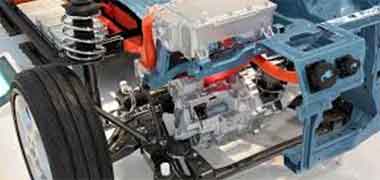
Electric Vehicle & Automotive
Traction, hybrid-generator, e-axle, HVAC, and cooling-fan housings for OEM and Tier 1 programmes. Liquid-cooled parts receive 100% leak testing; IATF 16949 and PPAP Level 3 support are available.
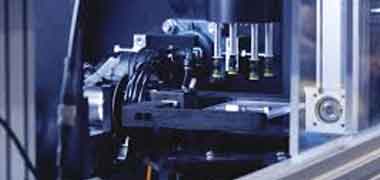
Industrial Automation & Robotics
Servo, spindle, robot-actuator, and linear-motor housings for automation equipment. High-speed spindle builds support H5 ±0.006mm bearing bores, while servo systems can use ±0.002mm bore roundness and ±0.003mm alignment.
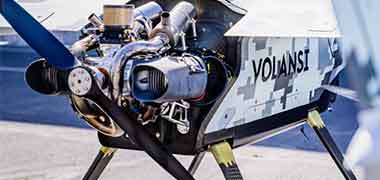
Drone & UAV Systems
7075-T6 and 6061-T6 housings for multirotor, fixed-wing, and gimbal motors. Lightweight designs can combine 1.5mm walls with ±0.005mm stator bores and controlled roundness.

Consumer Electronics & Appliances
High-volume die-cast housings for washing machines, vacuum cleaners, power tools, and kitchen appliances, with 100% CCD sorting and IATF 16949 documentation options.

Medical Devices & Pharmaceutical
316L and anodised aluminium housings for surgical tools, infusion systems, and imaging equipment. ISO 13485 documentation, electropolished Ra ≤ 0.4µm surfaces, biocompatible materials, and cleanroom-compatible packaging are available.
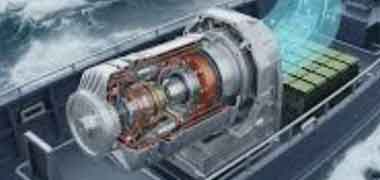
Wind Energy, Marine & Aerospace
Cast and ductile iron housings for wind drives, corrosion-resistant aluminium and stainless for marine systems, and 7075-T6 or titanium for aerospace actuation. AS9100D and AS9102 FAIR support is available for flight-critical work.
Electric Motor Housing Manufacturing
Process & Capabilities
A controlled process takes cast or forged blanks through incoming inspection, machining, finish boring, surface treatment, and final verification, with PPAP or FAIR records as required.
Incoming Material Inspection
XRF verifies each blank lot; hardness targets include AlSi9Cu3 at 85–95 HBW, GGG-40 at 140–200 HBW, and 316L at ≤200 HBW. Casting surfaces and machining allowance, including 2.5mm minimum stock on critical bores and faces, are checked before release.
Rough & Semi-Finish Machining
Rough machining establishes the datum, faces the ends, opens the stator and bearing bores, and forms cooling profiles. Semi-finishing leaves 0.1–0.2mm on critical surfaces for stable finish cuts.
Stator Bore & Bearing Housing Finish Boring
PCD finish boring supports H7 ±0.010mm standard or ±0.005mm precision stator bores, ±0.003mm or ±0.002mm roundness, and Ra 1.6µm or Ra 0.8µm. Bearing bores, IEC register diameters, bolt circles, and flange faces are finished to the drawing requirement.
Cooling System & Surface Treatment
TEFC fins hold ±0.3mm consistency. EV water jackets use ±0.1mm channels, ±0.05mm / ±0.02mm O-ring grooves, and controlled coolant-port threads. Treatment options include hard anodise, epoxy-polyurethane paint, passivation, and electropolishing to Ra ≤ 0.4µm.
Motor Housing Materials
Materials include AlSi9Cu3, AlSi10Mg, and AlSi7Mg castings; 6061-T6 and 7075-T6 billet; GG-25 and GGG-40 irons; and 304 or 316L stainless. Selection balances heat rejection, structural load, corrosion resistance, weight, and volume.
IATF 16949 / AS9100D Documentation
Automotive programmes can include PPAP Level 3, APQP, FMEA, MSA, and Cpk ≥ 1.67 studies. Aerospace and drone work can include AS9102 FAIR; critical bores receive CMM and roundness records, and liquid-cooled parts receive leak-test records. Records are retained for at least 15 years.
Materials for Motor Housing
Machining
Select materials for heat transfer, structural load, cooling-geometry complexity, weight, corrosion exposure, and machining response. Cast aluminium suits many EV and servo designs; cast iron remains a strong choice for heavy industrial drives.
AlSi9Cu3 / ASTM A380
The standard high-volume die-cast alloy for EV, servo, and appliance housings. It combines complex-casting capability, 96 W/m·K thermal conductivity, 320 MPa tensile strength, and 85–95 HBW hardness.
AlSi10Mg / ASTM A360
Offers 130 W/m·K conductivity, about 35% above AlSi9Cu3, for high-power-density EV systems. A good choice for sand or permanent-mould casting where die-cast tooling is not justified; T6 tensile strength is 310 MPa.
AlSi7Mg / ASTM A356-T6
A low-porosity cast alloy for aerospace, precision-servo, and instrument housings. In T6 condition it provides 280 MPa tensile strength and 8% elongation for thermal cycling and vibration exposure.
6061-T6
A 167 W/m·K billet material for prototypes, spindle housings, and aerospace actuators when casting porosity is unacceptable. Zero-porosity bores support reliable press fits; typical first articles are available in 5–7 business days.
7075-T6
At 503 MPa tensile strength, this is the high-strength option for weight-critical drone and aerospace housings. It enables thinner sections where 6061-T6 would require additional wall thickness.
2024-T351
A fatigue-resistant option for high-cycle spindle and dynamic housings exposed to vibration and thermal loading.
GG-25 / ASTM A48 Class 30
A cost-effective 180–230 HBW material for IEC 160–450 industrial motors. Its vibration damping is 4–6× aluminium at comparable section thickness, making it well suited to pumps, fans, compressors, and conveyors.
GGG-40 / ASTM A536
A 12 J minimum Charpy-impact option for wind pitch and yaw drives, crushers, mining equipment, and agricultural machinery where shock resistance and damping outweigh the mass penalty.
4140 / 4340 Alloy Steel
Heat-treated strength of 900–1,200 MPa supports high-load construction, actuator, and defence housings beyond ductile-iron capability. Machined from forgings or bar for maximum integrity.
316L Stainless
A non-magnetic, corrosion-resistant choice for wash-down food, pharmaceutical, and marine systems. Electropolishing to Ra ≤ 0.4µm supports CIP/SIP cleaning requirements.
304 / 304L Stainless
A lower-cost stainless option for indoor instruments, laboratory equipment, and moderate chemical exposure. 304L suits welded enclosure assemblies.
Magnesium AZ91D
At 1.81 g/cm³, this alloy is about 35% lighter than aluminium for aerospace and premium drone designs where each gram affects payload or gimbal-torque requirements.
Surface Treatments for
Motor Housing Components
Select finishing for corrosion exposure, thermal emissivity, electrical bonding, wear, and dimensional impact on critical bores and sealing features.
Hard Anodize — MIL-A-8625 Type III (Aluminum)
Hard anodise provides HV 400+ surface hardness, corrosion resistance, and wear protection for aluminium exteriors. Black finishes raise emissivity from 0.05 to 0.8–0.9 for better fin heat rejection; drawings allow for 25–50µm coating thickness.
Chemical Film — MIL-DTL-5541 (Aluminum)
Chemical film supports conductive grounding and EMC bonding on aluminium interfaces, including EV and servo housings. Class 3 offers low-resistance contact with negligible dimensional impact on precision bores and flange faces.
Epoxy Primer + Polyurethane Topcoat (Cast Iron)
Epoxy primer and polyurethane topcoat protect cast iron in outdoor pump, conveyor, and wind applications. Critical bores are masked to preserve H7 dimensions and Ra 1.6µm finishes; RAL 7031 and RAL 5015 are standard colour options.
Passivation — ASTM A967 (Stainless Steel)
Passivation removes free iron and restores the chromium-oxide layer for wash-down, chemical, and seawater service. It has negligible dimensional effect on H7 bores and supports FDA cGMP documentation for pharmaceutical programmes.
Electropolishing (Stainless Steel Motor Housing)
Electropolishing brings stainless surfaces to Ra ≤ 0.4µm for food and pharmaceutical equipment. The smoother finish reduces biofilm adhesion and supports CIP/SIP cleaning and FDA 21 CFR Part 117 programmes.
Nickel Plating & Zinc Coating (Specialty)
Electroless nickel adds wear resistance at bearing and seal interfaces. Zinc coatings protect outdoor steel and iron housings at lower cost than stainless; critical stator and bearing bores remain masked.
Where needed, stator and bearing bores are masked to preserve H7 tolerances and surface finish after treatment. Finish certificates and treatment selection are included in the DFM review and shipment documentation.
IATF 16949 Quality Assurance for
Motor Housing Manufacturing
IATF 16949 controls automotive programmes and AS9100D supports aerospace and drone work, with inspection focused on bores, alignment, mounting features, and coolant sealing.
Contract & Drawing Review
Engineering confirms drawing requirements, IEC/NEMA or customer standards, bore tolerances, cooling geometry, finishing, and PPAP or FAIR scope before production release.
Material Incoming Inspection
XRF, hardness, blank allowance, and casting-quality checks confirm the material before release. Lots remain traceable from casting heat through shipment.
PPAP Level 3 & FAIR per AS9102
Automotive PPAP Level 3 can include ballooned CMM and roundness reports, MSA Gage R&R, and Cpk ≥ 1.67 studies on special characteristics. Aerospace and drone programmes can include AS9102 FAIR; both proceed to volume after approval.
In-Process Statistical Control
Air gauges, CCD sorting, SPC charts, and operation sign-offs control critical bores. Liquid-cooled EV parts receive 100% pressure-decay tests, with records included in the documentation package.
Final Inspection
A Mitutoyo CMM (±0.001mm), 0.0001mm-resolution roundness tester, profilometry, thread gauges, and visual inspection verify drawing-critical geometry and burr-free seating surfaces.
Shipment Documentation Package
Shipments can include CoC, material traceability, CMM and roundness reports, PPAP or FAIR, finish certificates, EV leak-test results, and programme-specific records. Automotive records are retained for at least 15 years.
IATF 16949 & AS9100D Quality System for
Motor Housing Machining
IATF 16949:2016 and AS9100D provide independently audited quality frameworks for automotive, industrial, aerospace, and drone motor-housing programmes.
PPAP Level 3 (Automotive EV Motor Housing)
New automotive EV part numbers can receive PPAP Level 3 with APQP, FMEA, MSA Gage R&R, and Cpk ≥ 1.67 studies on stator bores, roundness, bearing alignment, and flange registers. Customer approval precedes volume release.
- PPAP Level 3 for every new EV motor P/N
- MSA for stator bore air gauge + roundness tester
- Records retained minimum 15 years
Stator Bore Roundness — 0.0001mm Resolution Measurement
A 0.0001mm-resolution Mitutoyo roundness tester verifies stator and bearing bores for air-gap uniformity and NVH control. Reports support PPAP and FAIR; CCD sorting and SPC sampling follow the control plan.
- Roundness tester: 0.0001mm resolution
- Stator bore roundness: ±0.002mm EV/servo
- Bearing-to-stator concentricity: ±0.003mm
100% Leak Testing — EV Liquid-Cooled Motor Housing
Every liquid-cooled EV housing receives a pressure-decay test before shipment to confirm water-jacket, O-ring, and coolant-port sealing under operating pressure and thermal cycling. Pass/fail records travel with the shipment.
- 100% pressure decay leak test
- O-ring groove: width ±0.05mm / depth ±0.02mm
- Coolant port thread: ±0.005mm pitch diameter
Cpk ≥ 1.67 / Air Gauge 100% Stator Bore Sorting
SPC targets Cpk ≥ 1.67 on designated special characteristics. High-volume EV and appliance programmes can use 100% CCD sorting and interval air-gauge checks to detect stator-bore drift.
- Cpk ≥ 1.67 on all special characteristics
- 100% CCD sorting on critical bore dims
- Air gauge in-process monitoring
Motor Housing Machining FAQ
Key questions on motor-housing tolerances, EV cooling, material selection, frame coverage, lead time, and quality control.
Stator-bore roundness is critical because it sets air-gap uniformity between the stator and rotor. A 0.01mm roundness error on a 0.3mm air gap can create about ±3.3% variation, increasing torque ripple, vibration, and noise. Standard industrial work targets ±0.003mm; NVH-sensitive EV and servo programmes can target ±0.002mm using PCD boring and 0.0001mm-resolution roundness verification.
AlSi9Cu3 (ASTM A380) is the usual high-volume die-cast choice: it handles complex water jackets, offers 320 MPa tensile strength, and conducts 96 W/m·K. For higher heat flux, AlSi10Mg (ASTM A360) reaches 130 W/m·K. For low-volume prototypes, 6061-T6 billet avoids casting-tooling lead time and can deliver first articles in 5–7 business days.
Liquid-cooled EV housings add water jackets located from the stator-bore datum, O-ring grooves held to ±0.05mm width and ±0.02mm depth, coolant ports, and 100% pressure-decay testing. They often require Ra 0.8µm stator bores for thermal-interface bonding; standard TEFC housings focus on external fins and typically use Ra 1.6µm bores.
Coverage includes IEC 60072-1 frames IEC 63–450 in B3, B5, and B14 configurations, plus NEMA MG1 frames NEMA 42–449. IEC register diameters can hold h6 (±0.008mm) with ±0.02mm bolt circles. Custom mounting geometry uses the same MAZAK machining and CMM verification approach.
Quotes arrive within 24 hours. Typical prototypes take 5–7 business days for untreated 6061-T6, 8–12 days with hard anodise, and 7–10 days for supplied cast-iron blanks or stainless parts. New die-cast tooling takes 4–6 weeks, while standard production runs take 3–5 weeks; first EV PPAP programmes generally take 5–7 weeks.
Quality control combines MAZAK machining to ±0.005mm standard accuracy, PCD-bored aluminium stators to ±0.002mm roundness, ±0.001mm CMM verification, 0.0001mm roundness testing, XRF PMI, air-gauge sorting, and EV leak testing. IATF 16949, PPAP samples, traceable reports, and site audits provide verification; the cost advantage reflects manufacturing economics rather than reduced inspection scope.
Request a Motor Housing Quote
Upload a drawing or CAD file for a free DFM review and a quote within 24 hours. The engineering review covers machining feasibility, bore and alignment targets, EV cooling geometry, material selection, special inspection controls, and PPAP or FAIR requirements.