
Battery Housing
Manufacturing
Precision housings for EV traction packs, ESS, drones, consumer electronics, medical devices, and aerospace systems. MAZAK mill-turn and Swiss CNC capacity supports ±0.02mm O-ring grooves, ±0.1mm cooling channels, and 100% pressure-decay testing for liquid-cooled systems.

What Is
Battery Housing Manufacturing?
Battery housing manufacturing produces the body, lid, base plate, walls, interfaces, and cooling hardware that protect cell arrays, BMS electronics, thermal-management components, and electrical connections in rechargeable battery packs.
Unlike general housings, battery enclosures must coordinate cell fit, IP67/IP68 sealing, cooling geometry, and EMC continuity. Typical targets include ±0.05–0.1mm cell compartments, ±0.02mm O-ring grooves, ±0.1mm cooling channels, and controlled mating-face flatness.
-
Single-setup MAZAK machining Cell compartments, cooling channels, O-ring grooves, connector interfaces, bolt patterns, and cover faces are produced in controlled setups to protect their relationship.
-
IP67/IP68 O-ring control ±0.02mm groove width and depth support a 20–25% O-ring compression target, with CMM verification and 100% CCD sorting available for automotive production.
-
100% liquid-cooled leak testing Every liquid-cooled housing can be pressure-decay tested at 1.5x rated coolant pressure before shipment, with test records included in the documentation package.
-
Competitive production economics Qualified supply and efficient machining can reduce cost by 40–60% versus comparable Western sources without changing the planned sealing, cooling, or documentation scope.

Why CNCPioneer for
Battery Housing Manufacturing?
Machining, battery-specific sealing and cooling features, inspection, and documentation are aligned for EV, ESS, drone, consumer, medical, and aerospace programmes.
IATF 16949 Quality Planning
IATF 16949 applies the APQP, FMEA, PPAP Level 3, SPC, and MSA framework needed for automotive supply. Critical sealing features can use 100% CCD sorting, Cpk ≥ 1.67 targets, and Level 3 PPAP documentation.
Single-Setup Sealing and Cooling Geometry
MAZAK mill-turn machining maintains the relationship between sealing grooves and cooling channels while forming cell compartments, connector flanges, and mounting patterns in controlled setups.
IP67/IP68 O-Ring Groove Control
O-ring grooves hold ±0.02mm width and depth to govern the 20–25% O-ring compression ratio required for reliable IP67/IP68 sealing. This precision is applied across rated programmes.
Battery-Specific Milling Expertise
Process controls address built-up edge in high-silicon casting alloys, 1.0mm thin walls, ±0.02mm O-ring grooves, and ±0.1mm cooling channels.
100% Liquid-Cooled Leak Testing
Every liquid-cooled housing can be tested at 1.5x rated coolant pressure (0.45–0.75 MPa) for a minimum 30-second hold. Test records confirm coolant-circuit integrity before shipment.
Prototype to Production
Supply scales from individual prototypes to millions of units annually. Billet first articles can arrive in 5–7 business days before production progresses to PPAP Level 3 and CCD-sorted volume supply.
Battery Housing Manufacturing
Product Categories
Manufacturing covers EV packs and modules, ESS enclosures, drone and consumer parts, medical and aerospace housings, cooling plates, and industrial or marine systems.

EV Traction Battery Housing Manufacturing
Large-format pack enclosures to 2,500 x 1,500 x 300mm, with ±0.05mm cell pitch, ±0.02mm IP67 cooling grooves, 0.01mm mounting-face flatness, and 100% leak testing. CTM, CTP, bus, and truck housings can include PPAP Level 3.

Energy Storage System Battery Housing
Residential 5–20 kWh ESS enclosures, commercial and grid-scale 100 kWh–100 MWh racks and cabinets, plus IP65/IP66 telecom backup and UPS housings. Designs can suit LFP or NMC cell geometry and indoor or outdoor service.

Drone & Consumer Electronics Battery Housing
7075-T6 and 6061-T6 drone housings support 1.0mm walls, ±2g mass control, ±0.05mm connector interfaces, and Type III anodise. Consumer parts range from 0.3–0.8mm phone or tablet shells to wearables, laptops, and durable power-tool enclosures.

Medical, Aerospace & Defence Housing
Titanium Grade 23 ELI housings for implants can use 0.1–0.3mm walls, ±0.01mm weld seams, Ra 0.2µm electropolishing, and ISO 13485 documentation. Medical portable, aircraft emergency-power, satellite, and MIL-STD-810 systems can include AS9100D, AS9102 FAIR, or ASTM E595 support.

Battery Cooling Housing
Bottom-plate, side-wall, immersion, and air-cooled designs are available. Cooling channels hold ±0.1mm width and depth; 0.05mm/500mm base flatness, ±0.02mm O-ring grooves, controlled coolant threads, and 1.5x-pressure leak tests support liquid systems.

Industrial, Marine & Specialty Battery Housing
UPS, AGV, forklift, marine, diagnostic, food, and pharmaceutical housings in 5052-H32, 316L, aluminium, or non-magnetic stainless. Marine versions support IP67/IP69K; wash-down systems can use 316L interiors electropolished to Ra ≤ 0.4µm.
Industries & Applications
Battery-housing programmes support automotive, energy storage, consumer, UAV, medical, aerospace, marine, and industrial power systems.

Electric Vehicles
Pack, module, and e-axle housings for passenger vehicles, buses, trucks, and two-wheel EVs. IATF 16949, PPAP Level 3, Cpk ≥ 1.67, leak testing, and RoHS documentation are available.

Energy Storage Systems
Residential 5–20 kWh enclosures, commercial BESS racks, and grid-scale 100 kWh to 100 MWh cabinet structures for solar storage, frequency regulation, and peak-demand applications.
Consumer Electronics
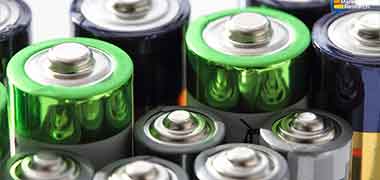
Housings for phones, laptops, tablets, wearables, power banks, and other high-volume consumer battery packs, with machining and documentation tailored to the OEM programme.

Drones & UAV Systems
Lightweight aluminium housings for multirotor, agricultural, fixed-wing, and inspection UAVs. 7075-T6 designs can use 1.0mm walls and ±2g mass control; agricultural systems can include IP67 sealing.
Medical Devices
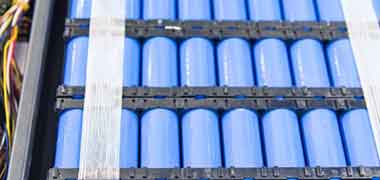
Titanium Grade 23 ELI housings for implants, medical stainless or aluminium portable packs, and non-magnetic diagnostic housings. ISO 10993, ISO 13485, Ra 0.2µm electrofinish, and cleanroom-compatible packaging are available where required.

Aerospace, Defense & Industrial
Aircraft emergency-power, satellite, defence, UPS, forklift, AGV, and marine housings. AS9100D, AS9102 FAIR, ASTM E595, MIL-STD-810, and IP67/IP69K configurations are available as applicable.
Battery Housing Manufacturing
Process & Capabilities
A controlled process runs from incoming material verification through milling, cooling and sealing features, finishing, leak testing, and final inspection, with PPAP or FAIR records available.
Incoming Material Inspection
XRF verifies alloy lots; hardness checks include AlSi9Cu3 at 85–95 HBW and 6061-T6 at 60–65 HRB. RoHS, PMI, blank allowance, and mill-to-shipment traceability are confirmed before release.
Rough & Finish Milling
MAZAK mill-turn machines handle bodies to 600 x 400 x 300mm with ±0.003mm positioning; Swiss CNC covers 0.5–32mm components at ±0.002mm. Cell compartments can hold ±0.05mm pitch and 0.1mm floor flatness.
Cooling Channel & Sealing Geometry Machining
Cooling channels hold ±0.1mm width and depth with Ra 1.6µm finishes. O-ring grooves reach ±0.02mm for IP68, lid faces hold 0.01mm or 0.005mm flatness, and coolant threads maintain ±0.005mm pitch diameter.
Surface Treatment
Aluminium uses Type III hard anodise, Class 3 chemical film, or Type II anodise; stainless uses ASTM A967 passivation and can be electropolished to Ra ≤ 0.4µm. Implantable titanium can reach Ra 0.2µm, while drone latches use Type III wear protection.
Battery Housing Materials
Material options include AlSi9Cu3, AlSi10Mg, 6061-T6, 7075-T6, 5052-H32, 316L, titanium Grades 23 and 5, PEEK, and PC-ABS. Selection balances heat transfer, weight, corrosion, sealing, compliance, and volume.
IATF 16949 / AS9100D Documentation
Automotive programmes can include PPAP Level 3, APQP, FMEA, MSA Gage R&R, Cpk ≥ 1.67 studies, and 100% sealing-feature inspection. Aerospace work can include AS9102 FAIR; CMM, liquid-cooled leak-test, RoHS, and retention records are supplied as required.
Materials for Battery Housing
Manufacturing
Select materials for cell chemistry, heat transfer, mass, sealing, temperature, regulatory requirements, and volume. Cast aluminium suits many EV packs, 6061-T6 suits precision prototypes, and Grade 23 ELI titanium supports implants.
AlSi9Cu3 / ASTM A380
The standard high-volume EV die-cast alloy for complex cooling geometry, with 96 W/m·K conductivity, 320 MPa tensile strength, and 85–95 HBW hardness.
AlSi10Mg / ASTM A360
Offers 130 W/m·K conductivity, about 35% above AlSi9Cu3, for high-power-density EV modules. It suits sand or permanent-mould builds where die-cast tooling is not justified and can be welded for ESS repair.
AlSi7Mg / ASTM A356-T6
A low-porosity cast alloy for aerospace, high-performance drone, and precision ESS systems. In T6 condition it provides 280 MPa tensile strength and 8% elongation for vibration and thermal cycling.
6061-T6
A 167 W/m·K billet alloy for prototypes, aerospace, and precision ESS housings where zero-porosity cell compartments matter. It machines complex cooling features, supports laser welding, and can deliver first articles in 5–7 business days.
7075-T6
At 503 MPa tensile strength, this is the high-strength option for weight-critical drone and aerospace housings. It enables 1.0mm wall sections where 6061-T6 would require more mass.
5052-H32
A saltwater-resistant, formable aluminium for electric-vessel, offshore-emergency, and marine-hybrid housings, with better seawater performance than 6061-T6.
316L
A non-magnetic, corrosion-resistant option for food, pharmaceutical, marine, and medical systems. Electropolishing to Ra ≤ 0.4µm supports CIP/SIP cleaning; ISO 13485 documentation is available.
304 / 304L
A general-purpose corrosion-resistant option for indoor UPS, commercial ESS, and laboratory housings, often 15–25% lower in material cost than 316L when molybdenum is unnecessary.
Grade 23 ELI
ISO 10993 biocompatible, non-magnetic (mu r <1.001), and laser-hermetic-weldable for implantable devices. It supports 0.1–0.3mm walls, ±0.01mm seams, Ra 0.2µm electropolishing, and ISO 13485 traceability.
Ti-6Al-4V Grade 5
A high-specific-strength, corrosion-resistant choice for aerospace emergency power, military portable systems, and impact-resistant drone housings. AS9100D, AMS 4928, and MIL-STD-810 support are available.
PEEK
A chemical-resistant dielectric for aggressive process environments, electrically isolated housings, and non-metallic food-contact designs where aluminium is unsuitable.
PC-ABS / UL94 V-0
An impact-resistant, UL94 V-0 polymer for phone, laptop, and tablet pack housings that need flame retardancy, drop performance, and production-volume efficiency.
Surface Treatments for
Battery Housing Manufacturing
Select finishes for corrosion exposure, thermal emissivity, EMC continuity, O-ring and coolant compatibility, regulatory requirements, and dimensional impact on sealing surfaces.
Hard Anodize — MIL-A-8625 Type III (Aluminum)
Hard anodise gives aluminium exteriors HV 400+ wear resistance at latches and mounts. Black finishes raise emissivity from 0.05 to 0.8–0.9 for improved heat rejection; drawings allow for 25–50µm coating thickness.
Chemical Film — MIL-DTL-5541 (Aluminum)
Chemical film supports conductive EMC bonding at aluminium mating faces and cover interfaces. Class 3 offers low-resistance contact with negligible effect on O-ring dimensions, where programme RoHS requirements permit its use.
Passivation — ASTM A967 (Stainless Steel)
Passivation removes free iron and reinforces the chromium-oxide layer for wash-down, chemical, and seawater service. It has negligible effect on sealing geometry and supports FDA cGMP and ISO 13485 programmes.
Electropolishing (Stainless Steel & Titanium)
Electropolishing takes stainless interiors to Ra ≤ 0.4µm for CIP/SIP cleaning and lower biofilm adhesion. Grade 23 ELI titanium can reach Ra 0.2µm for implantable-device biocompatibility.
Clear Anodize Type II (Aluminum)
Type II anodise is a thinner 5–25µm corrosion finish for indoor ESS, consumer, and UPS housings where Type III wear resistance is unnecessary and feature allowance must remain minimal.
Coolant-Compatible Anodize & Specialty Coatings
Type III anodise and chemical film are compatible with standard ethylene-glycol coolant. Immersion cooling can use bare aluminium at Ra 0.8µm for wetting control; nickel plating is available for more aggressive corrosion exposure.
O-ring grooves, sealing faces, and precision interfaces are masked where needed to preserve tolerance after finishing. Finish certificates, coolant-compatibility review, and selection guidance are available in the DFM and shipment documentation.
IATF 16949 Quality Assurance for
Battery Housing Manufacturing
IATF 16949 controls automotive programmes and AS9100D supports aerospace and medical work, with inspection focused on cell fit, sealing features, cooling geometry, and leak integrity.
Contract & Drawing Review
Engineering confirms drawing and OEM requirements, cell chemistry, IP-rated O-ring grooves, cooling geometry, finishing, and PPAP or FAIR scope before release.
Material Incoming Inspection
XRF, hardness, RoHS, PMI, and blank-allowance checks confirm material before release. Each lot remains traceable from mill certificate through shipment.
PPAP Level 3 & FAIR per AS9102
Automotive PPAP Level 3 can include ballooned CMM results, MSA Gage R&R, FMEA, Cpk ≥ 1.67 studies, and 100% O-ring-groove inspection. Aerospace programmes can include AS9102 FAIR.
In-Process Statistical Control
In-process monitoring, CCD sorting, SPC charts, and operation sign-offs control cell compartments, sealing surfaces, O-ring grooves, and cooling channels. Thin-wall drone and consumer parts also receive wall-thickness checks.
100% Pressure Decay Leak Testing
Every liquid-cooled housing receives a pressure-decay test at 1.5x rated coolant pressure, typically 0.45–0.75 MPa, for at least 30 seconds. Pass/fail records confirm IP67 coolant sealing before release.
Final Inspection & Documentation Package
A Mitutoyo CMM (±0.001mm), surface checks, thread gauges, and mass measurement for drone or aerospace parts verify drawing-critical requirements. Shipments can include CoC, material, PPAP, leak-test, finish, and RoHS records retained for at least 15 years.
IATF 16949 & AS9100D Quality System for
Battery Housing Manufacturing
IATF 16949:2016 and AS9100D provide independently audited quality frameworks for automotive, aerospace, and defence battery-housing programmes.
PPAP Level 3 (Automotive EV Battery Housing)
New automotive EV part numbers can receive PPAP Level 3 with APQP, FMEA, MSA Gage R&R, Cpk ≥ 1.67 studies, and 100% O-ring-groove inspection. Customer approval precedes volume release.
- PPAP Level 3 for every new EV battery P/N
- MSA for CMM and leak test equipment
- Records retained minimum 15 years
O-Ring Groove Dimensional Control — ±0.02mm
CMM and 100% CCD sorting control O-ring groove width and depth to ±0.02mm for a 20–25% compression target. Lid sealing faces are verified at 0.01mm standard or 0.005mm precision flatness.
- O-ring groove: ±0.02mm width and depth
- 100% CCD sorting on sealing dimensions
- Lid face flatness: 0.010mm confirmed
100% Pressure Decay Leak Test (Liquid-Cooled)
Every liquid-cooled housing is tested at 1.5x rated coolant pressure, typically 0.45–0.75 MPa, for at least 30 seconds before shipment. Test pressure, duration, and pass/fail status are retained; no part is released without a pass.
- 100% pressure decay at 1.5× rated pressure
- 30-second minimum pressure hold
- Test records in every shipment package
Cpk ≥ 1.67 / Mass Compliance (Drone & Aerospace)
SPC targets Cpk ≥ 1.67 on O-ring, cell-compartment, and sealing-face characteristics. Drone and aerospace parts can receive ±2g mass checks and 1.0mm-wall monitoring.
- Cpk ≥ 1.67 on O-ring groove & cell compartment
- Mass compliance ±2g for drone programs
- Wall thickness monitoring: 1.0mm minimum
Battery Housing Manufacturing FAQ
Key answers on sealing, material selection, liquid cooling, lead time, quality documentation, and scaling from prototype to production.
O-ring groove width and depth are the most critical IP67/IP68 dimensions because they set compression and sealing contact stress. Typical IP67 designs target 20–25% compression with ±0.02mm groove width and depth. A 0.05mm error can move compression from 22% toward 19% or 17%, so first articles use CMM verification and automotive production can use 100% CCD inspection.
AlSi9Cu3 (A380) is the normal high-volume die-cast option, combining 320 MPa tensile strength with 96 W/m·K thermal conductivity. AlSi10Mg provides 130 W/m·K, about 35% more, for high heat flux. For low-volume prototypes, 6061-T6 billet avoids casting-tooling lead time and can deliver first articles in 5–7 business days.
Liquid-cooled housings add ±0.1mm water channels, coordinated cell, coolant-port, O-ring, and lid sealing features, and coolant-compatible finishing for typical glycol-water circuits. Every liquid-cooled part receives a 100% pressure-decay test before shipment; standard housings usually do not.
Typical 6061-T6 prototypes take 5–7 business days, or 8–12 days with hard anodise. New die-cast tooling takes 4–6 weeks plus 5–7 days for the first article; liquid cooling and documentation add 3–5 days. Standard production runs take 3–5 weeks, while first EV PPAP programmes take 6–8 weeks.
IATF 16949:2016 is the core automotive qualification, supporting APQP, FMEA, PPAP Level 3, SPC with Cpk ≥ 1.67, and MSA. AS9100D supports aerospace work with AS9102 FAIR, configuration control, and counterfeit-material prevention. Certificate scope, PPAP samples, SPC data, and liquid-cooled leak-test records provide programme evidence.
Yes. Supply begins at one prototype with CMM documentation and can progress from billet machining to die casting as volumes justify tooling. Inspection scales from first-article results to SPC and CCD sorting; automotive programmes can progress to PPAP Level 3 while keeping the same dimensional and material knowledge through launch.
Request a Battery Housing Quote
Upload a drawing or CAD file for a free DFM review and a quote within 24 hours. Engineering will assess machining feasibility, IP-rated O-ring features, cooling channels, cell format, material, special inspection controls, leak testing, and PPAP or FAIR scope.