
EV Housing
CNC Machining Factory
CNCPioneer is an IATF 16949 certified EV housing CNC machining factory delivering precision electric vehicle enclosure components — 78+ Swiss CNC lathes and 66+ MAZAK mill-turn centers for EV motor housing, automotive battery housing, EV battery charger housing, EV wallbox housing, EV power module housing, and EV chargers for sustainable housing installation hardware for EV traction motor manufacturers, automotive battery OEMs, and EV charging infrastructure producers worldwide since 2011.
What Is EV Housing
CNC Machining?
EV housing CNC machining is the precision computer numerical control manufacturing of structural enclosure components for electric vehicle powertrains, energy storage systems, charging infrastructure, and power electronics — the housing bodies, base plates, lid elements, cooling system hardware, connector interface flanges, and structural fittings that contain, protect, and thermally manage the high-voltage electronics, electrochemical cells, and electromagnetic components that define modern EV drivetrain and charging system performance.
EV housing CNC machining must simultaneously achieve five performance dimensions: dimensional accuracy governing electromagnetic compatibility (stator bore roundness ±0.002mm for NVH compliance); thermal management geometry precision (cooling channel width ±0.1mm governing cell temperature uniformity); IP-rated sealing geometry (O-ring groove ±0.02mm for IP67/IP68 ingress protection preventing moisture from entering high-voltage enclosures); mass minimization through thin-wall CNC machining (1.5mm minimum wall); and high-voltage safety geometry (connector cutout positions, busbar routing channels, service disconnect access per IEC 62196, UN ECE R100, and ISO 6469).
-
IATF 16949 certified EV housing CNC machining quality IATF 16949 certification provides the APQP, FMEA, PPAP, SPC, and MSA framework that automotive EV housing supply chain qualification requires. 100% CCD automatic sorting on critical stator bore diameters and O-ring groove dimensions, Cpk ≥ 1.67 on special characteristics, and Level 3 PPAP documentation capability for automotive EV housing CNC machining OEM programs serving BYD, Tesla, Volkswagen, BMW, Toyota, and global EV platform programs.
-
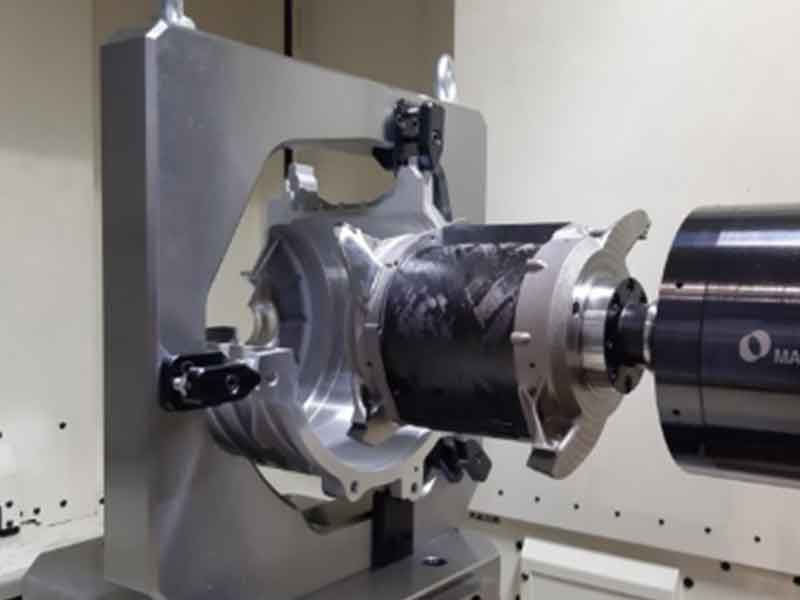
MAZAK mill-turn single-setup EV housing CNC machining EV motor housing, EV battery housing, and EV power module housing require simultaneous turning and multi-axis milling to produce stator bores, cooling channels, connector flanges, lid sealing grooves, and mounting patterns in single-setup operations. CNCPioneer's MAZAK mill-turn EV housing CNC machining eliminates re-fixturing errors that compromise stator bore-to-bearing concentricity and O-ring groove position relative to cooling channel geometry.
-
100% leak testing on all liquid-cooled EV housing Every liquid-cooled EV motor housing, EV battery housing, EV battery charger housing, and EV power module housing undergoes 100% pressure decay leak testing at 1.5× rated operating pressure before shipment — confirming cooling circuit integrity before EV housing integration into vehicle assembly where coolant leakage into high-voltage systems creates shock hazard. Leak test records included in every liquid-cooled EV housing shipment documentation package.
-
40–60% China EV housing CNC machining factory cost advantage CNCPioneer's EV housing CNC machining factory cost structure delivers 40–60% cost reduction compared to equivalent EV housing machining from European and North American automotive machining facilities — enabling EV OEMs and Tier 1 EV component suppliers to achieve competitive EV housing procurement cost without compromising dimensional accuracy, leak test compliance, or IATF 16949 PPAP Level 3 documentation quality.

Why CNCPioneer for
EV Housing CNC Machining?
CNCPioneer's EV housing CNC machining factory combines advanced multi-axis CNC machining capability, EV-specific material expertise, thermal management system machining experience, and China manufacturing cost efficiency — serving EV traction motor manufacturers, automotive battery OEMs, EV charging infrastructure producers, power electronics system integrators, and EV component suppliers globally.
EV Motor Housing Stator Bore ±0.002mm for NVH
EV motors must achieve stator bore roundness of ±0.002mm for NVH compliance — without ICE masking noise, any electromagnetic torque ripple from air gap non-uniformity becomes directly audible in the EV passenger compartment as tonal NVH. CNCPioneer's EV motor housing CNC machining uses PCD boring bars with 0.0001mm roundness tester verification on every production component, achieving consistent ±0.002mm stator bore roundness for EV NVH performance compliance.
MAZAK Mill-Turn — Single-Setup EV Housing Geometry
CNCPioneer's MAZAK mill-turn EV housing CNC machining eliminates re-fixturing errors that compromise stator bore-to-bearing concentricity and O-ring groove position relative to cooling channel geometry. Stator bore, bearing housings, water jacket channels, connector cutouts, mounting flanges, and lid sealing grooves produced in single-setup operations preserving all geometric interdependencies critical to EV housing functional performance.
O-Ring Groove ±0.02mm for IP67/IP68 EV Housing
O-ring groove width ±0.02mm and depth ±0.02mm governing the 20–25% O-ring compression ratio required for IP67 coolant sealing in liquid-cooled EV motor housing, EV battery housing, and EV power module housing — verified by Mitutoyo CMM on 100% of production O-ring groove features. A groove 0.05mm shallower reduces compression from 25% to 20%, approaching the IP67 sealing reliability boundary for high-voltage EV enclosures.
IGBT Mounting Surface Flatness 0.003mm
EV inverter and charger housing CNC machining achieves IGBT/SiC power module mounting surface flatness of 0.003mm — the critical specification governing thermal interface compound contact that minimizes junction-to-case thermal resistance in EV power electronics. EMC shielding mating flange flatness 0.005mm with Alodine Class 3 surface treatment provides reliable RF bonding continuity above 60 dB EMC shielding effectiveness at 100 kHz–1 GHz switching noise spectrum.
Complete EV Housing CNC Machining Single-Source Supply
CNCPioneer's EV housing CNC machining factory covers the complete production sequence — incoming material XRF verification, rough machining, finish boring, cooling channel machining, sealing feature finishing, surface treatment, 100% leak testing, and CMM dimensional inspection — eliminating multi-supplier coordination. Single-source EV housing CNC machining for EV motor housing, EV battery housing, EV battery charger housing, EV wallbox housing, and EV power module housing programs.
40–60% China EV Housing CNC Machining Cost Advantage
CNCPioneer's EV housing CNC machining factory delivers 40–60% cost reduction compared to European and North American automotive machining facilities — with equivalent MAZAK mill-turn stator bore accuracy, PCD boring ±0.002mm roundness, Mitutoyo CMM ±0.001mm, Mitutoyo roundness tester 0.0001mm, 100% leak testing, and IATF 16949 PPAP Level 3 documentation quality. 24-hour DFM and quotation turnaround.
EV Housing CNC Machining
Product Categories
CNCPioneer's EV housing CNC machining factory covers the complete range of electric vehicle enclosure types across all EV powertrain, energy storage, and charging system domains — from EV motor housing and automotive battery housing through EV battery charger housing, EV wallbox housing, EV power module housing, and EV chargers for sustainable housing integration hardware — with IATF 16949 PPAP Level 3 and 100% leak testing for every program.

EV Motor Housing CNC Machining
EV traction motor housing machining — stator bore H7 ±0.008mm with 100% CCD sorting; stator bore roundness ±0.002mm (NVH compliance); bearing housing concentricity ±0.003mm; water jacket channel ±0.1mm; O-ring groove ±0.02mm; mounting flange register h6 ±0.008mm; bolt circle ±0.02mm; 100% pressure decay leak testing; IATF 16949 PPAP Level 3. Integrated e-axle housing CNC machining (simultaneous motor stator bore + gearbox bearing bore in single coordinated machining sequence). Hub motor housing machining (large-diameter stator bore + wheel bearing housing). Material: AlSi9Cu3 HPDC or AlSi10Mg for production; 6061-T6 for prototypes (5–7 business days).

EV Battery Housing CNC Machining
Automotive battery housing machining (up to 2,500×1,500×300mm; prismatic cell compartment ±0.05mm; cylindrical cell bore ±0.05mm for 18650/21700/4680 formats; cooling circuit O-ring groove ±0.02mm IP67; HV connector cutouts; busbar routing channels per UN ECE R100 and GB/T 31467; 100% pressure decay leak test at 1.5× rated pressure; IATF 16949 PPAP Level 3). EV battery module housing CNC machining for CTM architectures. Cell-to-pack (CTP) EV battery housing CNC machining. EV battery housing thermal management: bottom-plate serpentine/parallel channels ±0.1mm; surface flatness 0.05mm/500mm; coolant port thread ±0.005mm. Material: AlSi10Mg HPDC or 6061-T6 wrought.

EV Battery Charger Housing CNC Machining
EV OBC (onboard charger) housing CNC machining for 3.7 kW, 7.2 kW, and 22 kW EV battery charger applications — integrated heat sink fin arrays (fin width ±0.05mm, fin height ±0.05mm) or liquid cooling channels for power semiconductor thermal management; EMC shielding mating flange flatness 0.005mm with Alodine Class 3 for RF bonding continuity; HV AC input and DC output connector cutout position ±0.05mm; liquid cooling O-ring groove ±0.02mm; housing dimensions typically 250–400mm × 150–250mm × 60–120mm. Material: 6061-T6 or AlSi9Cu3 die cast. Surface: hard anodize Type III exterior + Alodine Class 3 on EMC mating flanges. IATF 16949 PPAP documentation.

EV Wallbox Housing CNC Machining
Residential EV wallbox housing CNC machining for 7.2 kW single-phase and 11 kW three-phase home charging units (250×180×100mm; IP55 O-ring groove ±0.03mm; cable entry gland PG16/PG21/M25 ±0.005mm pitch diameter; IEC 62196-2 Type 2 connector socket recess; mounting hole ±0.2mm; powder coat for UV resistance; AlSi9Cu3 or AlSi10Mg die cast). Commercial EV wallbox housing CNC machining for 22 kW three-phase applications (IP65; RFID reader cutouts; metering hardware bay; network connectivity module apertures). Smart EV wallbox housing for OCPP-connected, V2G bidirectional, and solar PV-integrated charging units. EV chargers for sustainable housing integration: bidirectional connector interface; solar DC input cable entry; energy management display window aperture; green building aesthetic compatibility.

EV Power Module Housing CNC Machining
EV traction inverter housing CNC machining (IGBT/SiC module mounting surface flatness 0.003mm; HV busbar routing channel ±0.5mm; phase output terminal ±0.1mm; coolant O-ring groove ±0.02mm; HV connector cutout ±0.05mm; EMC shielding flange flatness 0.005mm ≥60 dB effectiveness 100 kHz–1 GHz; micro-channel cooling as narrow as 0.5mm channel width). DC-DC converter housing CNC machining (12V/48V supply from 400/800V traction battery). EV PDU housing CNC machining (multi-aperture HV junction box; contactor access panels; fuse installation; MSD interface). Integrated EV power unit (IPU) housing CNC machining combining inverter + OBC + DC-DC converter in single enclosure. 100% pressure decay leak testing at 0.5 MPa for all liquid-cooled EV power module housing programs.

EV Charging Infrastructure Housing
DC fast charger housing CNC machining for 50–350 kW public EV charging station power conversion module housings (IP54/IP55 outdoor rating; CCS/CHAdeMO/GB/T cable management geometry; heat exchanger mounting hardware; liquid-cooled module thermal management enclosures). EV fleet charging depot structural hardware for electric bus, truck, and logistics vehicle depot charging systems (modular mounting geometry for scalable power expansion; maintenance-accessible design). EV charging pile housing components for outdoor parking lot Level 2 posts (post mounting interface hardware; display window aperture frames; payment terminal mounting geometry; cable management channel components). EV marine and aviation electric propulsion housing in lightweight aluminum and titanium for weight-critical electric propulsion applications.
Applications
CNCPioneer's EV housing CNC machining factory serves EV traction motor manufacturers, automotive battery OEMs, EV charging infrastructure producers, power electronics system integrators, commercial electric vehicle manufacturers, micro-mobility EV producers, marine and aviation electric propulsion developers, and industrial electrification equipment makers worldwide through IATF 16949 certified EV housing CNC machining with 24-hour DFM and quote turnaround.

Electric Passenger Vehicles
EV housing CNC machining for passenger car EV motor housing, EV battery housing, EV battery charger housing (OBC), and EV power module housing (inverter, PDU) with IATF 16949 certification and PPAP documentation for automotive OEM supply chains serving BYD, Tesla, Volkswagen, BMW, Toyota, Hyundai, and global EV platform programs. 100% leak testing and roundness verification on all EV motor housing production programs.

Commercial Electric Vehicles
EV housing CNC machining for electric bus traction motor housing, electric truck battery housing, EV delivery vehicle power module housing, and commercial EV charging infrastructure housing components. Commercial EV housing CNC machining emphasizes durability, IP69K protection, and high-current handling capacity for heavy-duty commercial vehicle EV systems operating in demanding logistics and transit environments.

EV Charging Infrastructure
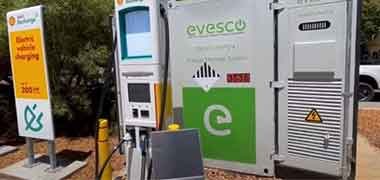
EV wallbox housing CNC machining for residential home charging units, commercial workplace chargers, and EV chargers for sustainable housing green building integration — weatherproof IP65 enclosures for Level 2 AC charging from 3.7 kW single-phase to 22 kW three-phase. EV housing CNC machining for 50–350 kW DC fast charging station power conversion module housings and EV charging pile structural hardware for public charging network operators.

Two-Wheel & Micro-Mobility EVs
EV housing CNC machining for electric motorcycle motor housing, e-scooter battery housing, electric bicycle mid-drive motor housing, and micro-mobility EV power module housing — compact EV housing CNC machining programs requiring mass optimization at small enclosure dimensions for consumer micro-mobility applications. China EV housing CNC machining factory pricing competitive with micro-mobility product economics.

Marine, Aviation & Industrial EVs
EV housing CNC machining for electric boat motor housing, eVTOL air taxi motor housing, electric aircraft power module housing, and hybrid electric aviation battery housing in lightweight aluminum and titanium for weight-critical electric propulsion applications. Industrial EV housing CNC machining for electric forklift traction motor housing, AGV EV power module housing, and construction equipment electric drive housing components.
Energy Storage Systems
EV housing CNC machining component technologies applied to stationary energy storage — residential BESS battery housing, commercial energy storage power module housing, and grid-scale battery energy storage cabinet structural components sharing EV housing CNC machining material and process technologies with automotive EV programs. EV chargers for sustainable housing ESS integration hardware for solar + storage + EV charging green building systems.
EV Housing CNC Machining Factory
Capabilities & Process
CNCPioneer's EV housing CNC machining factory combines MAZAK mill-turn capability for complete EV housing body machining — stator bores, water jacket cooling channels, connector cutouts, mounting bolt patterns, and lid sealing grooves in single-setup operations — with Swiss CNC lathe EV housing machining for precision sensor fittings, coolant port elements, and miniature EV housing connector components. 24-hour DFM and quotation turnaround.
MAZAK Mill-Turn — Complete EV Housing Machining
66+ MAZAK mill-turn centers for EV motor housing, EV battery housing, EV battery charger housing, EV power module housing, and EV wallbox housing body machining · 5-axis simultaneous machining for complex EV housing geometry · Stator bore diameter Ø50mm–Ø600mm; bearing housing concentricity ±0.003mm; water jacket channel ±0.1mm; O-ring groove ±0.02mm; IGBT mounting surface flatness 0.003mm; EMC shielding flange flatness 0.005mm · Single-setup EV housing CNC machining preserving all critical geometric interdependencies — stator bore-to-bearing concentricity, O-ring groove position relative to cooling channel, connector cutout-to-mounting pattern.
PCD Boring — ±0.002mm Stator Bore Roundness
Polycrystalline diamond (PCD) boring bar tooling for EV motor housing stator bore finish machining — PCD's extreme hardness (HV 7,000+) eliminates built-up edge formation on aluminum stator bore surfaces that degrades roundness and surface finish. Dedicated PCD boring achieves Ra 0.8μm bore finish and ±0.002mm roundness consistently across EV motor housing production quantities. Mitutoyo roundness tester (0.0001mm resolution) stator bore and bearing housing roundness verification on every EV motor housing production component.
Liquid Cooling System EV Housing Machining
Serpentine/parallel cooling channels: ±0.1mm width and depth; surface finish Ra 1.6μm for laminar flow · Micro-channel EV power module housing cooling: as narrow as 0.5mm channel width, ±0.05mm tolerance for SiC power module heat flux >200 W/cm² · IGBT cold plate surface flatness 0.003mm for minimum thermal contact resistance · Coolant port thread ±0.005mm pitch diameter for leak-free connections · O-ring groove ±0.02mm width and depth for 20–25% compression achieving IP67 coolant sealing · 100% pressure decay leak testing at 1.5× rated operating pressure (EV battery housing/motor housing) and 0.5 MPa (EV power module housing) — zero exceptions.
EV Wallbox Housing CNC Machining
Residential (7.2 kW), commercial (22 kW), and smart EV wallbox housing CNC machining · IP55/IP65 O-ring groove ±0.03mm; sealing face flatness 0.008mm · Cable entry gland thread PG16/PG21/M25 ±0.005mm pitch diameter for weatherproof cable entry · IEC 62196-2 Type 2 connector socket recess geometry per standard · Heat sink fin geometry (fin width ±0.1mm, fin height ±0.1mm) for passive thermal management · EV chargers for sustainable housing: V2G bidirectional connector interface; solar DC input cable entry ±0.5mm; energy management display window aperture · Powder coat finish for UV resistance and outdoor aesthetic quality · Die cast AlSi9Cu3 or AlSi10Mg for high-volume EV wallbox housing production.
EV Housing CNC Machining Materials
AlSi9Cu3 / ASTM A380 (96 W/m·K; dominant EV motor housing HPDC; automotive battery housing) · AlSi10Mg / ASTM A360 (130 W/m·K; high-heat-flux EV motor housing and EV battery charger housing; 35% higher thermal conductivity than AlSi9Cu3) · 6061-T6 (167 W/m·K; prototype EV housing 5–7 business days; EV wallbox housing; highest aluminum thermal conductivity) · 7075-T6 (503 MPa yield; weight-critical EV housing structural elements) · 6082-T6 (European EV programs; 170 W/m·K) · 316L/304 stainless (EV charging infrastructure outdoor hardware; marine EV) · Ti-6Al-4V (military EV vehicle; aerospace EV power module) · PEEK (EV housing HV isolation elements; RF-transparent sensor window apertures).
IATF 16949 PPAP Level 3 Documentation
PPAP Level 3 for every automotive EV housing CNC machining OEM program: APQP, FMEA with critical EV housing manufacturing process risks, MSA Gage R&R for stator bore air gauge, roundness tester, O-ring groove CMM, and leak test equipment; process capability Cpk ≥ 1.67 on stator bore diameter/roundness, O-ring groove dimensions, IGBT mounting flatness, and bearing housing concentricity · 100% CMM + roundness tester for EV motor housing stator bore · 100% pressure decay leak test records · RoHS compliance certificates · All EV housing CNC machining quality records retained minimum 15 years for automotive programs.
Materials for EV Housing
CNC Machining
EV housing CNC machining material selection is governed by thermal conductivity for heat management (the primary material performance differentiator in EV housing), specific strength for EV mass minimization, EMC shielding effectiveness, IP-rated sealing compatibility, and automotive regulatory compliance (RoHS, REACH). Aluminum AlSi10Mg dominates high-performance EV motor housing and EV battery charger housing; AlSi9Cu3 dominates high-volume automotive EV battery housing die casting; 6061-T6 wrought billet serves EV wallbox housing and EV housing prototypes.
AlSi9Cu3 / ASTM A380
Thermal conductivity 96 W/m·K · Density 2.71 g/cm³ · Dominant EV motor housing HPDC material for high-volume automotive production — excellent die casting characteristics for complex water jacket geometry, mechanical properties (tensile strength 320 MPa) adequate for EV motor housing structural loads. Standard high-volume automotive battery housing CNC machining die cast alloy. Primary EV power module housing material for automotive volume production programs.
AlSi10Mg / ASTM A360
Thermal conductivity 130 W/m·K (35% higher than AlSi9Cu3) · Recommended for high-performance EV motor housing and EV battery charger housing die casting where maximum stator and power module heat extraction is the primary thermal design objective — directly improving EV motor continuous power rating and EV charger peak charging current capability within the same EV housing geometry. Preferred for DC fast charge and high-power-density EV inverter housing applications.
AlSi7Mg / ASTM A356-T6
Premium cast EV housing alloy for aerospace-grade EV motor housing, eVTOL electric air taxi motor housing, and precision EV power module housing applications requiring maximum structural integrity with minimum casting porosity. T6 condition: tensile strength 280 MPa with excellent elongation (8%) for EV housing applications subject to thermal cycling and mechanical vibration loading in aviation and marine electric propulsion environments.
6061-T6
Thermal conductivity 167 W/m·K (highest of any common aluminum EV housing alloy) · Standard EV housing CNC machining billet material for prototype programs (5–7 business day delivery), EV wallbox housing production, and precision EV power module housing applications requiring zero-porosity surfaces. Excellent machinability enabling complex cooling channel geometry at minimum EV housing CNC machining cycle time. RoHS compliant for automotive EV housing regulatory requirements.
7075-T6
Tensile strength 503 MPa · Thermal conductivity 130 W/m·K · Highest-strength aluminum EV housing material for weight-critical EV motor housing structural elements, aerospace EV power module housing, and military electric vehicle housing where 6061-T6's lower yield strength requires larger EV housing wall sections exceeding vehicle mass budget constraints. eVTOL and electric aircraft EV motor housing structural elements.
6082-T6
Thermal conductivity 170 W/m·K (highest of any common wrought aluminum EV housing alloy) · European standard alloy (EN AW-6082) specified for European automotive EV programs requiring EN-standard material documentation — BMW, Volkswagen, Mercedes, Stellantis EV housing programs specifying EN material certifications. Excellent machinability equivalent to 6061-T6 with thermal conductivity advantage for European EV housing CNC machining programs.
316L
Thermal conductivity 16 W/m·K · Corrosion resistant · Non-magnetic · EV charging infrastructure outdoor hardware — DC fast charging station enclosure structural elements, EV fleet charging depot hardware, and EV charging pile mounting components in outdoor installation environments where aluminum anodize corrosion resistance is insufficient for coastal, industrial, or high-humidity EV charging site locations. Marine electric propulsion EV motor housing components in permanent seawater service.
304
General corrosion-resistant EV housing hardware at lower cost than 316L · EV wallbox mounting brackets and hardware elements for indoor and sheltered outdoor EV charger installation environments where 316L's molybdenum content is not required for adequate service lifetime corrosion resistance. EV charging infrastructure general hardware, fastening elements, and non-primary structural EV wallbox housing components.
Ti-6Al-4V
Thermal conductivity 7 W/m·K · Density 4.43 g/cm³ · High specific strength · Non-magnetic · Military EV vehicle housing and aerospace EV power module housing where titanium's specific strength advantage enables minimum mass EV housing at required structural loading, and where titanium's non-magnetic properties are required for electric power measurement and sensor applications within the EV housing assembly.
C11000 ETP Copper
Thermal conductivity 391 W/m·K (highest engineering material) · Electrical conductivity 100% IACS · EV power module housing busbar elements, HV connection hardware, and thermal management components where maximum thermal or electrical conductivity is the primary material property requirement. Precision machined EV inverter housing HV busbar mounting features and DC output terminal blocks for EV battery charger housing assembly.
PEEK
Thermal conductivity 0.25 W/m·K · Density 1.32 g/cm³ · Chemical resistant · RF transparent · Low dielectric loss · EV housing HV isolation components preventing creepage and clearance violations between HV conductors and EV housing metallic walls, RF-transparent sensor window apertures in EV wallbox housing for wireless communication module antenna integration, and high-voltage isolation mounting hardware in EV battery housing and EV power module housing assemblies.
Alodine MIL-DTL-5541 Class 3
Contact resistance <5 mΩ/cm² · Zero dimensional impact · The critical EV housing CNC machining surface treatment for EMC shielding — Alodine Class 3 on all EV motor housing and EV battery charger housing mating flanges, lid interfaces, and connector flange contact areas ensures reliable RF bonding continuity achieving >60 dB EMC shielding effectiveness against EV inverter PWM switching noise at 10–100 kHz fundamental frequency and harmonics through 1 GHz.
Surface Treatments for
EV Housing CNC Machining
EV housing CNC machining surface treatment selection is governed by EMC shielding electrical conductivity (Alodine for EV motor housing and EV battery charger housing mating flanges), thermal emissivity for heat dissipation, corrosion resistance for EV charging infrastructure outdoor installation environments, IP-rated sealing surface compatibility with O-ring materials and coolant chemistry, and dimensional impact on precision stator bore and O-ring groove dimensions from coating thickness.
Hard Anodize — MIL-A-8625 Type III (Aluminum EV Housing)
Standard surface treatment for aluminum EV housing exterior surfaces — HV 400+ surface hardness for corrosion resistance and wear protection at EV housing assembly interfaces. Note that anodize layers (thermal conductivity 0.5–2.0 W/m·K) increase thermal resistance at thermal interface surfaces — thermal contact areas on EV motor housing stator bore and EV power module housing IGBT mounting surfaces are intentionally left bare (non-anodized) to minimize thermal contact resistance. Black hard anodize on EV housing exterior surfaces increases thermal emissivity from 0.05 to 0.8–0.9 for improved passive heat dissipation in EV wallbox housing and EV charger housing outdoor installations.
Chemical Film — MIL-DTL-5541 (Alodine) for EMC Shielding
The most critical EV housing CNC machining surface treatment for electromagnetic compatibility — Alodine Class 3 chromate conversion coating on all EV motor housing and EV battery charger housing mating flanges, lid interfaces, and connector flange contact areas providing contact resistance below 5 mΩ/cm² for reliable RF bonding continuity. Alodine achieves >60 dB EMC shielding effectiveness against EV inverter PWM switching noise (10–100 kHz fundamental through 1 GHz harmonics) while adding zero dimensional impact on precision O-ring groove and stator bore dimensions.
Passivation — ASTM A967 (Stainless EV Housing)
ASTM A967 passivation for stainless steel EV housing components — EV charging infrastructure outdoor hardware, marine electric propulsion EV motor housing components, and EV wallbox mounting hardware in coastal and high-humidity environments where aluminum EV housing corrosion resistance is insufficient. Removes free iron and machining contamination, enhances chromium oxide passive layer for maximum stainless steel EV housing corrosion resistance in permanent outdoor EV charging site installation.
Electropolishing (Stainless EV Housing)
Electrochemical surface smoothing to Ra ≤ 0.4μm for stainless steel EV charging infrastructure hardware in food court, hospital, and pharmaceutical building EV charging installations requiring hygienic surface finish. Electropolished stainless EV charging infrastructure hardware minimizes contamination adhesion in sensitive indoor EV charging environments. Also applied to EV wallbox housing stainless hardware elements in premium residential and commercial sustainable housing EV charger installations requiring premium aesthetic surface finish.
Powder Coat (EV Wallbox Housing Outdoor)
Powder coat finish for EV wallbox housing exterior surfaces providing UV resistance, chemical resistance to automotive fluids and cleaning products, and aesthetic quality for visible residential and commercial EV charger outdoor installation environments. Powder coat color options matching EV charging network brand standards (white, grey, black, and custom RAL colors) for residential and commercial EV wallbox housing aesthetic requirements. Superior UV resistance versus liquid paint for 10–15 year EV wallbox housing outdoor service lifetime. Applied over hard anodize for maximum EV wallbox housing surface protection system.
Bare Aluminum Thermal Interface (EV Housing)
Strategic bare aluminum surface retention — intentionally leaving thermal interface contact areas on EV motor housing stator bore and EV power module housing IGBT mounting surfaces without anodize or chemical film coating. Bare aluminum's thermal conductivity of 96–167 W/m·K (depending on alloy) versus anodize layer conductivity of 0.5–2.0 W/m·K makes bare aluminum thermal interfaces the optimal choice for minimum thermal contact resistance between EV power electronics and EV housing cooling surfaces. Bare thermal interface areas are precisely defined in EV housing CNC machining surface treatment drawings with adjacent areas Alodine-treated for EMC bonding.
All EV housing CNC machining surface treatments — hard anodize MIL-A-8625 Type III, Alodine MIL-DTL-5541 Class 3, passivation ASTM A967, electropolishing, powder coat, and bare aluminum thermal interface — are applied with the combined Alodine-on-mating-surfaces and hard-anodize-on-external-surfaces approach established as industry standard in automotive EV housing production at BMW, Volkswagen, BYD, and CATL EV housing programs. Surface treatment certifications are included in every EV housing CNC machining shipment documentation package. Surface treatment recommendation is included in CNCPioneer's 24-hour EV housing CNC machining DFM review service.
IATF 16949 Quality Assurance for
EV Housing CNC Machining
CNCPioneer's EV housing CNC machining quality system applies IATF 16949 statistical process control protocols to every automotive EV housing program — ensuring stator bore roundness, bearing housing concentricity, O-ring groove geometry, IGBT mounting flatness, and coolant circuit leak integrity across all EV housing CNC machining production.
Contract & Drawing Review
Engineering review of EV housing CNC machining drawing requirements, applicable IEC 62196, UN ECE R100, ISO 26262, GB/T 31467, and customer automotive EV OEM specifications, cooling system geometry assessment, IP-rated sealing compliance review, EMC shielding geometry evaluation, and PPAP requirements before EV housing CNC machining order acceptance. All stator bore tolerance, O-ring groove, and IGBT mounting flatness specification questions resolved before production release.
Material Incoming Inspection
XRF composition verification confirms aluminum alloy grade compliance for every EV housing CNC machining material lot. Hardness testing verifies heat treatment condition. RoHS restricted substance verification for all EV housing CNC machining automotive materials. Dimensional verification of casting blank machining allowances on stator bore boss, cooling channel zones, and IGBT mounting surface areas. Full material lot traceability from mill certificate through finished EV housing shipment.
First Article Inspection (FAIR) per AS9102
Complete CMM dimensional verification of all critical EV housing features with balloon drawing. MSA Gage R&R studies for stator bore air gauge, roundness tester, O-ring groove CMM, and leak test equipment measurement systems. Process capability study confirming Cpk ≥ 1.67 on stator bore diameter, stator bore roundness, O-ring groove dimensions, bearing housing concentricity, and IGBT mounting flatness special characteristics. IATF 16949 PPAP Level 3 for automotive EV housing CNC machining OEM programs. Customer approval required before production quantity release.
In-Process Statistical Control
Real-time stator bore diameter monitoring by air gauge at defined production intervals. 100% CCD automatic sorting for critical EV motor housing stator bore and EV battery housing O-ring groove dimensions. SPC control charts with Cpk ≥ 1.67 on all IATF special characteristics. Mandatory sign-off at stator bore finish boring, cooling channel milling, O-ring groove milling, and IGBT mounting surface machining operations. 100% pressure decay leak testing on all liquid-cooled EV motor housing, EV battery housing, EV battery charger housing, and EV power module housing before shipment.
Final Inspection & Cleanliness Verification
Mitutoyo CMM (±0.001mm) full dimensional report covering stator bore diameter and roundness, bearing housing concentricity, O-ring groove geometry, connector cutout positions, mounting bolt patterns, IGBT mounting surface flatness, cooling channel geometry, and wall thickness. Mitutoyo roundness tester (0.0001mm resolution) stator bore and bearing housing roundness verification on every EV motor housing production component. Surface roughness measurement on thermal interface and sealing surfaces. 100% pressure decay leak testing at 1.5× rated operating pressure with zero exceptions before EV housing shipment.
Shipment Documentation
Certificate of Conformance, CMM dimensional report, roundness measurement records, material certifications with full lot traceability, PPAP Level 3 documentation package, surface treatment certifications, 100% leak test records, RoHS compliance certificates, and program-specific EV housing documentation. All EV housing CNC machining quality records retained minimum 15 years for automotive EV housing programs.
IATF 16949 & AS9100D Quality System for
EV Housing CNC Machining Factory
CNCPioneer holds IATF 16949:2016 certification for automotive EV housing CNC machining OEM supply programs and AS9100D certification for aerospace-grade EV motor housing programs — providing the independently audited quality framework that automotive EV OEM procurement and Tier 1 EV component supplier qualification require across all EV housing CNC machining categories.
PPAP Level 3 for Automotive EV Housing Programs
Complete IATF 16949 PPAP Level 3 documentation for every new automotive EV housing CNC machining part number — APQP, FMEA with critical EV housing manufacturing process risks identified, MSA Gage R&R studies for stator bore air gauge, roundness tester, O-ring groove CMM, and leak test measurement systems, process capability study confirming Cpk ≥ 1.67 on stator bore diameter/roundness, O-ring groove, bearing concentricity, and IGBT mounting flatness. Customer approval required before automotive EV housing production quantity release.
- PPAP Level 3 for every new EV housing P/N
- Cpk ≥ 1.67 on stator bore, O-ring groove, IGBT flatness
- Records retained minimum 15 years
Stator Bore Roundness — 0.0001mm Resolution Measurement
Mitutoyo roundness tester with 0.0001mm resolution measures every production EV motor housing stator bore roundness — confirming ±0.002mm NVH compliance that cannot be verified by CMM alone. Results documented in roundness measurement report included in PPAP Level 3 documentation package. 100% CCD automatic sorting on stator bore diameter; roundness tester verification on defined statistical samples per SPC control plan for EV motor housing NVH performance compliance.
- Roundness tester: 0.0001mm resolution
- Stator bore roundness: ±0.002mm NVH compliance
- 100% CCD sorting on stator bore diameter
100% Pressure Decay Leak Testing — All Liquid-Cooled EV Housing
Every liquid-cooled EV motor housing, EV battery housing, EV battery charger housing, and EV power module housing undergoes 100% pressure decay leak testing at 1.5× rated coolant operating pressure (typically 0.3–0.5 MPa for EV battery and motor cooling systems; 0.5 MPa for EV power module housing) before shipment. 30-second minimum pressure hold confirming zero pressure decay. Leak test pass/fail records documented in every EV housing CNC machining shipment documentation package. Zero liquid-cooled EV housing released without leak test pass confirmation — the most distinctive quality control step in EV housing CNC machining manufacturing.
- 100% pressure decay at 1.5× rated pressure
- 30-second minimum pressure hold
- Leak test records in every EV housing shipment
IGBT Mounting Flatness 0.003mm & EMC Shielding
EV inverter housing and EV battery charger housing IGBT/SiC power module mounting surface flatness verified to 0.003mm by Mitutoyo CMM — the critical specification governing thermal interface compound contact minimizing junction-to-case thermal resistance in EV power electronics. EMC shielding mating flange flatness 0.005mm verified by CMM; Alodine Class 3 surface treatment documented per MIL-DTL-5541 for >60 dB EMC shielding effectiveness at EV inverter PWM switching frequencies 10 kHz–1 GHz.
- IGBT mounting flatness: 0.003mm CMM verified
- EMC flange flatness: 0.005mm with Alodine Class 3
- >60 dB EMC shielding effectiveness confirmed
EV Housing CNC Machining FAQ
Common questions from EV traction motor manufacturers, automotive battery OEMs, EV charging infrastructure producers, power electronics system integrators, and EV component suppliers about CNCPioneer's EV housing CNC machining factory capabilities, material selection, stator bore NVH compliance, EV wallbox housing requirements, and China EV housing CNC machining quality.
EV motor housing CNC machining differs from standard industrial motor housing machining in five fundamental areas. First, NVH compliance — EV motors must achieve stator bore roundness of ±0.002mm versus ±0.003–0.005mm for industrial motors, because without ICE masking noise, any electromagnetic torque ripple from air gap non-uniformity becomes directly audible as tonal NVH in the EV passenger compartment. Second, integrated cooling — EV motor housing CNC machining integrates liquid cooling water jacket geometry directly into the motor housing body in dimensional relationship with the stator bore, versus standard industrial TEFC motors using external fin cooling. Third, speed range — EV motors at 10,000–20,000 RPM require bearing housing bore accuracy of H6 (±0.008mm) versus H7 standard for industrial motors. Fourth, EMC requirements — EV inverter PWM switching at 10–100 kHz requires EV motor housing CNC machining mating face flatness of 0.005mm and Alodine chemical film for reliable EMC shielding, versus industrial motors with no EMC shielding requirements.
An EV wallbox housing is the precision-machined or die-cast aluminum enclosure for a Level 2 AC electric vehicle charging unit — the outdoor-installed home or commercial EV charger providing 3.7 kW to 22 kW charging. EV wallbox housing CNC machining must satisfy outdoor IP65 sealing (O-ring groove width ±0.03mm, sealing face flatness 0.008mm), cable entry gland thread form accuracy (PG16, PG21, or M25 ±0.005mm pitch diameter), EV charging connector socket recess geometry to IEC 62196-2 Type 2 dimensional standard, and mounting hole pattern accuracy (±0.2mm) for wall mounting installation. Heat sink fin geometry (fin width ±0.1mm, fin height ±0.1mm) on the EV wallbox housing rear or side wall provides passive thermal management of contactor, electronics, and metering hardware during continuous charging. CNCPioneer's EV housing CNC machining factory produces residential EV wallbox housing (7.2 kW single-phase), commercial EV wallbox housing (22 kW three-phase), and EV chargers for sustainable housing with V2G bidirectional capability and solar PV integration hardware.
IP67 liquid-cooled EV housing CNC machining O-ring groove specifications must achieve the 20–25% O-ring compression ratio governing reliable coolant containment at EV cooling system operating pressures of 0.2–0.4 MPa. For a standard AS568-210 O-ring (cross-section diameter 3.53mm) used in EV motor housing and EV battery housing cooling circuit sealing, the required groove depth is 2.65mm ±0.02mm and groove width is 4.75mm ±0.02mm — producing 25% O-ring compression at the housing mating face. The ±0.02mm tolerance is the most critical single specification in liquid-cooled EV housing CNC machining: a groove 0.05mm shallower reduces compression from 25% to 20%, approaching the lower IP67 sealing reliability boundary; a groove 0.05mm deeper reduces compression to 17%, insufficient for IP67 coolant sealing at EV cooling operating pressure. CNCPioneer's EV housing CNC machining factory achieves O-ring groove width and depth tolerance of ±0.02mm through MAZAK mill-turn precision milling with Mitutoyo CMM verification on 100% of production EV housing O-ring groove features.
EV battery charger housing (OBC enclosure) and EV battery housing (battery pack enclosure) both require IP67 sealing and liquid cooling, but differ in three critical EV housing CNC machining respects. First, power electronics mounting geometry — EV battery charger housing requires IGBT and SiC power module mounting surface flatness of 0.003mm for reliable thermal interface compound contact, whereas EV battery housing requires cell array compartment geometry (±0.05mm) for cell positioning. Second, EMC shielding — EV battery charger housing CNC machining emphasizes EMC mating face geometry for OBC high-frequency switching noise containment (flatness 0.005mm, Alodine Class 3 for RF bonding), whereas EV battery housing EMC requirements are less stringent. Third, housing scale — EV battery housing is typically 10–50× larger than EV battery charger housing in primary dimensions, requiring different CNC machining strategies: large-format MAZAK mill-turn for complete EV battery housing body machining, while EV battery charger housing precision features are achievable on standard MAZAK platforms.
CNCPioneer's EV housing CNC machining factory prototype lead times: aluminum 6061-T6 EV motor housing or EV power module housing without surface treatment — 5–7 business days; aluminum EV battery charger housing or EV wallbox housing with hard anodize — 8–12 business days; die cast aluminum EV motor housing or automotive battery housing requiring new casting tooling — 4–6 weeks casting tooling plus 5–7 business days first article machining; liquid-cooled EV housing with integrated cooling channels and 100% leak testing — add 3–5 business days for leak testing and PPAP documentation. EV motor housing requiring stator bore roundness verification: add 1–2 business days. Production quantity lead times: standard aluminum EV housing — 3–5 weeks; EV motor housing with IATF 16949 PPAP Level 3 first article qualification — 6–8 weeks; reorder production quantities under established blanket order programs — 3–4 weeks. Emergency expedite programs for EV development vehicle prototype EV housing available with 48-hour premium delivery.
For EV motor housing and EV battery charger housing requiring simultaneous EMC shielding and thermal management, we recommend a two-surface-treatment approach combining MIL-DTL-5541 Class 3 Alodine on all EV housing mating flanges, lid interface surfaces, and connector flange contact areas with MIL-A-8625 Type III hard anodize on EV housing external walls and non-mating faces. Alodine Class 3 provides contact resistance below 5 mΩ/cm² for reliable RF bonding continuity in EV motor housing and EV battery charger housing EMC shielding assemblies — while hard anodize Type III provides surface hardness and corrosion protection on EV housing external surfaces. For EV housing thermal management, bare aluminum anodize-free surfaces on thermal interface contact areas — EV motor housing stator bore surface, EV power module housing IGBT mounting base — provide lowest thermal contact resistance, as anodize layers (0.5–2.0 W/m·K) increase thermal resistance versus bare aluminum (167 W/m·K). This combined Alodine-on-mating-surfaces and hard-anodize-on-external-surfaces approach is the established industry standard in automotive EV housing production at BMW, Volkswagen, BYD, and CATL EV housing programs.
Get a Quote for EV Housing CNC Machining
Upload your EV housing drawing or CAD file and receive a free DFM review and competitive EV housing CNC machining factory quotation within 24 hours. CNCPioneer's engineering team will review your EV housing design for machining feasibility, confirm stator bore tolerance and roundness specifications for EV NVH compliance, assess cooling channel geometry for thermal management performance, verify O-ring groove dimensions for IP67 sealing compliance, recommend aluminum alloy material for your EV housing thermal and mass requirements, identify critical EV housing CNC machining dimensions requiring special process controls and 100% leak testing, and provide a complete EV housing CNC machining quotation including PPAP Level 3 documentation for automotive EV motor housing, EV battery housing, and EV power module housing programs.