
High Volume
Robotic Machining
CNCPioneer is an IATF 16949 and AS9100D certified high volume robotic machining manufacturer delivering consistent, scalable robotic component production with tolerances as tight as ±0.003mm across quantities from 10,000 to 10,000,000 units annually — 78+ Swiss CNC lathes and 66+ MAZAK mill-turn centers with robot-assisted automation for harmonic drive components, robot joint bearing housings, AMR drive system elements, cobot structural components, and the complete range of precision robotic components at Cpk ≥1.67 with 100% CCD sorting and PPAP Level 3 documentation worldwide since 2011.

What Is High Production
Robotic Machining?
High production robotic machining is the large-scale precision CNC manufacturing of robotic system components — harmonic drive elements, bearing housings, structural arm fittings, end-effector hardware, drive system components, and sensor mounting elements — at production volumes and rates that standard prototype or small-batch precision machining operations cannot economically or consistently sustain. The distinction between high production robotic machining and standard robotic precision machining is not fundamentally about the dimensional tolerances achieved — ±0.003mm bearing journal diameter and ±0.002mm roundness are achievable in both contexts. The distinction lies in how consistently those tolerances are maintained across quantities measured in hundreds of thousands of units, across dozens of production runs spanning months or years, and across the normal variation sources visible only in high production: tool wear accumulation, raw material batch variation, thermal drift, operator changeovers, and the statistical reality that Cpk ≥1.67 measured on 30-piece first articles must be sustained across 300,000-piece annual production volumes.
High volume robotic machining therefore demands manufacturing system investments that prototype machining does not require: statistical process control (SPC) with real-time monitoring and adaptive correction; 100% CCD automatic sorting on critical bore and diameter features; Cpk ≥1.67 confirmed across full production runs; Gage R&R MSA confirming measurement uncertainty does not consume tolerance; and lot-level traceability from finished components back to specific material heat, production shift, machine tool, and cutting tool. High volume robotic machining China at CNCPioneer delivers all of these quality infrastructure requirements within China's manufacturing cost structure — at 40–60% below equivalent Japanese and European high production robotic machining costs.
-
Cpk ≥1.67 — designed in, not inspected in High production robotic machining quality at CNCPioneer is built into the manufacturing process through SPC real-time control charts on all critical bearing journal diameters, bore concentricity, and thread pitch diameters throughout every high volume production run. Cpk ≥1.67 means 99.9997% conformance with six-sigma margin between process mean and specification limit — statistical assurance that does not rely on sorting to catch defects. Adaptive air gauge feedback maintains wave generator bearing journal diameter within ±0.003mm across production runs of 10,000–50,000 components between tool change interventions.
-
100% CCD sorting — eliminates sampling escapes in high production Every bearing housing bore diameter, harmonic drive journal diameter, and threaded shaft diameter passes through 100% CCD automatic sorting in 0.3–0.8 seconds per component — automatically segregating any out-of-specification component before shipment. Statistical sampling inspection on a 1-in-50 plan has 98% probability of accepting a lot containing one non-conforming part per 100; 100% CCD sorting eliminates this escape risk by design. Complete lot dimensional distribution data from 100% sorting enables real-time Cpk calculation on the entire production quantity.
-
High volume robotic machining capacity — 10,000 to 10,000,000 units/year 78+ Swiss CNC lathes (5,000,000–15,000,000 small-diameter components annually on Swiss platform) and 66+ MAZAK mill-turn centers (500,000–3,000,000 medium/large components annually) operating with robot-assisted automation at 20–22 hours daily — providing dedicated high volume robotic machining production capacity at 2–3 week blanket order delivery lead times for uninterrupted robot OEM assembly line supply. Annual capacity: 200,000–500,000 wave generator shafts; 500,000–2,000,000 bearing housings; 500,000–5,000,000 AMR drive hubs.
-
IATF 16949 PPAP Level 3 — automotive robot supply chain qualified IATF 16949 certified high volume robotic machining with complete PPAP Level 3 documentation — PFMEA, control plan, MSA Gage R&R, initial Cpk ≥1.67 capability study, dimensional report, material certifications, and PSW — qualifying CNCPioneer's high production robotic machining for FANUC, KUKA, ABB, and Yaskawa robot OEM supply chains serving BMW, Volkswagen, Toyota, and GM automotive manufacturing facilities. FAIR per AS9102 for aerospace high production robotic machining programs.

Why CNCPioneer — High Volume
Robotic Machining Manufacturer
CNCPioneer's high volume robotic machining manufacturer position combines production scale (10,000–10,000,000 units/year), automated quality infrastructure (Cpk ≥1.67, 100% CCD sorting, 100% roundness tester), IATF 16949 PPAP Level 3 capability, robot-assisted automation in our own facility, and China manufacturing cost efficiency delivering 40–60% below Japanese and European high production robotic machining manufacturers.
Production Scale — 10,000 to 10,000,000 Units/Year
78+ Swiss CNC lathes (Star SR-32J, Citizen A20/A16, Tsugami B206) operating at 20–22 hours daily in robot-assisted tending mode provide 5,000,000–15,000,000 small-diameter component annual capacity on the Swiss platform. 66+ MAZAK mill-turn centers provide 500,000–3,000,000 medium/large component annual capacity on the MAZAK platform. Dedicated production capacity reservation for blanket order programs ensures monthly release orders are never delayed by competing production priorities — 2–3 week committed delivery lead times for uninterrupted robot OEM assembly line supply at any volume tier.
Cpk ≥1.67 SPC — Real-Time Adaptive Correction
CNCPioneer's high production robotic machining SPC system monitors all critical robotic component dimensions in real-time during production. In-process air gauge measurement after each finish boring operation transmits data to X-bar and R control charts with ±3σ warning and ±3.5σ action limits. Adaptive tool offset correction triggered automatically when control chart pattern indicates wear trend — maintaining bearing journal diameter within ±0.003mm across 10,000–50,000-piece production runs between tool change interventions. Documented Cpk values from active programs: wave generator journal diameter Cpk 1.70–2.10; bearing housing bore Cpk 1.68–1.95; AMR encoder bore Cpk 1.72–2.05.
100% CCD Sorting + 100% Roundness Tester
Every critical bore and shaft diameter in high volume robotic machining passes through 100% CCD automatic sorting at 0.3–0.8 seconds per component — eliminating the 98% lot-acceptance-of-one-defect-per-100 sampling escape risk. For harmonic drive wave generator components, 100% Mitutoyo roundness tester at 0.0001mm resolution on every component provides complete roundness profile documentation: one non-round wave generator journal that escapes sampling inspection creates a harmonic drive transmission error appearing as robot tool center point positioning error measurable by laser interferometer in the assembled robot. No sampling exceptions on high volume robotic machining wave generator production.
IATF 16949 PPAP Level 3 — Automotive Robot OEM Supply
CNCPioneer's IATF 16949 certification and complete PPAP Level 3 capability qualifies our high volume robotic machining services for FANUC, KUKA, ABB, and Yaskawa automotive robot OEM supply chains. Full PPAP package: PFMEA identifying all high production failure modes (tool wear, material hardness variation, thermal drift, fixture wear); production control plan specifying 100% inspection features, SPC-monitored features, and sampling features; MSA Gage R&R confirming gauge variation consumes <10% of tolerance; initial Cpk ≥1.67 capability study on minimum 30-piece production sample; PSW. FAIR per AS9102 for aerospace high production robotic machining programs.
PCD Tooling — ±0.002mm Roundness Across 10,000+ Cycles
Dedicated PCD (polycrystalline diamond) boring bar tooling for bearing journal finish operations in high volume wave generator shaft machining — PCD's HV 7,000+ hardness maintains cutting edge geometry across 10,000+ consecutive machining cycles, preventing the progressive edge wear that degrades bearing journal roundness in high volume carbide-tooled production. Dedicated Swiss CNC lathe guide bushings sized to wave generator shaft diameter families (Ø14/17/20/25/32mm) eliminate guide bushing changeovers that interrupt high volume production continuity. Combined: bearing journal roundness ±0.002mm standard / ±0.001mm precision maintained across high production runs with documented Cpk 1.70–2.10.
40–60% High Volume Robotic Machining China Cost Advantage
CNCPioneer's high volume robotic machining China cost structure delivers 40–60% below Japanese and European high production robotic machining manufacturers at equivalent Cpk ≥1.67, 100% CCD sorting, 100% roundness tester, and IATF 16949/AS9100D documentation quality. Five structural cost drivers: 17-4PH H900 and 7075-T6 material 20–35% below Western procurement; CNC machining labor 60–75% below Western Europe and North America; 85%+ machine utilization amortizing equipment cost; Shenzhen industrial electricity 60% of US rates; and in-house surface treatment coordination eliminating inter-supplier logistics cost.
High Volume Robotic Machining Services
— Complete Component Programs
CNCPioneer's high volume robotic machining services cover all seven primary robotic component categories at production scale — from harmonic drive components (100,000–500,000 units/year per diameter series) through AMR drive system elements (500,000–5,000,000 units/year) to end-effector hardware (500,000–5,000,000 units/year) — all producible from a single high volume robotic machining China supply relationship with unified PPAP Level 3 documentation.

High Volume Harmonic Drive Component Machining
Wave generator shaft: bearing journal ±0.002mm roundness / ±0.003mm diameter across 10,000–500,000 units annually in 17-4PH H900 stainless; dedicated Swiss CNC guide bushings per diameter family (Ø14/17/20/25/32mm) for CSF/CSD/SHD/SHG series; PCD boring bar tooling maintaining roundness across 10,000+ consecutive cycles; in-process air gauge SPC every 25th component; 100% roundness tester every component; Cpk 1.70–2.10 on journal diameter. Annual capacity: 200,000–500,000 wave generator shafts. Every six-axis articulated robot contains 6 harmonic drive assemblies — with global robot installation rates exceeding 500,000 units annually, high volume wave generator machining is one of the most strategically important precision machining markets in the global robotics supply chain. Flexspline thin-wall cup: wall thickness uniformity ±0.020mm across circumference in 17-4PH H900; 100% wall thickness measurement at 8 positions per component; SPC Cpk ≥1.33; capacity 100,000–300,000 units/year. Circular spline: internal tooth pitch diameter ±0.005mm; housing bore ±0.003mm with 100% air gauge; capacity 200,000–500,000 units/year.

High Volume Robot Joint Bearing Housing Machining
Robot joint bearing housing high production robotic machining on MAZAK mill-turn centers achieving single-setup production of all bearing bore positions, housing faces, mounting flanges, and pocket geometry — single-setup preserves input-to-output concentricity that multi-setup machining accumulates as fixture re-positioning error. Bearing bore diameter ±0.003mm Cpk ≥1.67 via 100% CCD air gauge sorting; roundness ±0.002mm 100% roundness tester; input-to-output concentricity ±0.003mm CMM sampling every 50th; housing face flatness 0.005mm; pocket geometry mass compliance ±2g precision balance sampling. Aluminum 7075-T6 dominant; titanium Ti-6Al-4V for weight-critical programs. Custom color hard anodize for cobot brand identification (white/silver/black/blue/custom RAL). Annual capacity: 500,000–2,000,000 bearing housing components across all robot frame sizes. Cpk 1.68–1.95 documented across active programs. Monthly blanket release, 2–3 week lead time.

High Volume AMR & AGV Drive System Machining
AMR differential drive wheel hub (Amazon Robotics, Geek+, Mujin, global warehouse automation platforms): encoder disc mounting bore ±0.003mm 100% CCD sorting (Cpk 1.72–2.05 — the dimension linking high production quality to AMR navigation accuracy); drive motor interface bore ±0.005mm 100% CCD; hub mass balance residual imbalance ≤0.1g·mm precision balance sampling; aluminum 6061-T6 hard anodized; capacity 500,000–2,000,000 units/year. AMR chassis structural plates: bolt pattern ±0.020mm 100% CMM sampling; wall thickness ±0.080mm adaptive CNC control; mass-optimized pocket geometry; capacity 200,000–1,000,000 units/year. Mecanum/omnidirectional wheel hubs (360° AMR mobility): roller mounting bore array ±0.050mm angular; central motor bore ±0.005mm 100% CCD; capacity 500,000–3,000,000 units/year. AMR/AGV deployments for warehouse automation are measured in hundreds of thousands of units annually — each requiring multiple precision-machined drive components making AMR high volume robotic machining one of the highest-volume categories in the global robotics supply chain.

High Volume Collaborative Robot Component Machining
Cobot joint housing (UR, ABB GoFa, FANUC CRX, KUKA LBR, Chinese domestic cobot brands — fastest-growing high volume robotic machining segment): bearing bore ±0.003mm Cpk ≥1.67 100% CCD (Cpk 1.68–1.90 documented); roundness ±0.002mm 100% roundness tester; mounting face flatness 0.005mm CMM; housing mass ±2g precision balance for ISO/TS 15066 inertia compliance; aesthetic exterior Ra 0.8μm; aluminum 7075-T6 custom color anodize for cobot brand identity; capacity 200,000–1,000,000 housing components/year. Cobot torque sensor body (ISO/TS 15066 contact force compliance): elastic beam thickness ±0.010mm 100% CMM; beam symmetry ±0.005mm; 17-4PH H900; capacity 100,000–500,000/year. Cobot arm structural panel (ISO/TS 15066 inertia compliance): thin-wall 1.5–2.0mm high production protocol; hole pattern ±0.020mm 100% CMM sampling; mass ±1g per component precision balance; aluminum 7075-T6 hard anodize; capacity 200,000+ panels/year. Custom cobot color anodize programs (white/silver/black/blue/custom RAL) for brand-differentiated high production programs.

High Volume Industrial Robot Structural Components
CFRP-interface arm end fittings in titanium Ti-6Al-4V Grade 5 (CTE compatibility 8.6 ppm/°C vs. aluminum 23.6 ppm/°C preventing thermal fatigue in cyclic robot operation): CFRP tube insertion bore ±0.050mm 100% CCD sorting for adhesive bond thickness control; joint attachment bore ±0.005mm 100% CCD; bolt pattern ±0.020mm CMM sampling; capacity 50,000–200,000 titanium arm end fittings/year. Robot base flange mounting components (floor-mount, ceiling-mount, wall-mount industrial robot installation hardware): mounting bolt circle ±0.020mm 100% CMM; base contact face flatness 0.005mm; steel 4140 Q&T or aluminum 7075-T6 per OEM specification; capacity 100,000–500,000 base mounting components/year. Gripper jaw components (parallel and angular gripper assemblies for automotive assembly, electronics manufacturing, and food processing robot applications): jaw guide bore ±0.005mm 100% CCD; contact surface ±0.050mm CMM; aluminum 6061-T6 standard/316L stainless washdown/PEEK ESD; capacity 500,000–5,000,000/year. ISO 9283 tool flange components (Series 31.5, 50, 63): bolt circle ±0.020mm 100% CMM; register spigot h6 ±0.008mm 100% CCD; face runout ≤0.010mm CMM 100% first 50 then sampling; capacity 200,000–1,000,000/year.

High Volume Robotic Machining Quality Infrastructure
Verification capacity at CNCPioneer's high volume robotic machining China facility: 3 Mitutoyo CMM units (±0.001mm; 2,000–3,000 dimensional reports/week); 2 Mitutoyo roundness testers (0.0001mm; 500–800 roundness verifications/day); 12 CCD air gauge sorting stations (50,000–80,000 components/day combined sorting capacity); 4 precision balances (±0.1g; mass verification for all weight-specified programs); 1 SII XRF analyzer (all incoming material lots before high production release). Production traceability: each high volume production lot assigned unique number traceable to material heat, production date, machine tool, and shift — lot traveler through all machining/inspection/surface treatment/packaging operations. Documentation retention: 10 years industrial; 15 years automotive; 20 years aerospace and medical high production programs. PPAP submission warrant (PSW) certifying all customer drawing and specification requirements met. Online quality documentation portal access for established high volume robotic machining OEM programs providing real-time access to SPC records, CCD sorting data, CMM reports, and material certifications.
Applications
CNCPioneer's high volume robotic machining manufacturer programs serve automotive robot OEM supply chains (IATF 16949 PPAP Level 3), collaborative robot manufacturers (fastest-growing high production robotic machining segment), warehouse and logistics automation producers (highest individual component volume category), SCARA and delta robot manufacturers, electronics assembly automation producers, medical and surgical robot programs, and defense and security robotics suppliers worldwide.
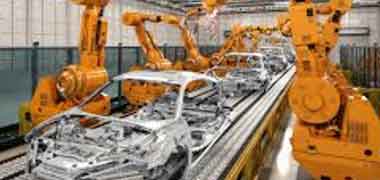
Automotive Robot OEM Supply Chains
High volume robotic machining services for six-axis industrial robot joint drive components, arm structural fittings, and end-effector hardware in FANUC, KUKA, ABB, Yaskawa, and Chinese domestic robot OEM production programs. IATF 16949 certified high production robotic machining with PPAP Level 3, Cpk ≥1.67, and 100% CCD sorting for automotive robot supply chain qualification. VDA 6.3 process audit capable for European automotive supply chain qualification.
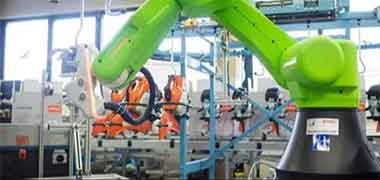
Collaborative Robot Manufacturing
High volume robotic machining manufacturer programs for UR, ABB GoFa, FANUC CRX, KUKA LBR, and domestic Chinese cobot OEMs requiring consistent production quality on joint housing bodies (Cpk 1.68–1.90), torque sensor elements (elastic beam ±0.010mm 100% CMM), arm structural panels, and ISO 9283 tool flange hardware across annual production volumes of 100,000–1,000,000 cobot joint components. Custom cobot color anodize programs (white, silver, black, blue, custom RAL).

Warehouse & Logistics Automation
High volume robotic machining China for AMR and AGV drive system components — differential drive wheel hubs (encoder bore Cpk 1.72–2.05), Mecanum wheel hubs (roller bore ±0.050mm angular), and chassis structural plates for Amazon Robotics, Geek+, HAI Robotics, and global warehouse automation platform producers at production volumes of 500,000–5,000,000 units annually. AMR navigation accuracy is directly traceable to encoder bore Cpk in high production robotic machining.

SCARA, Delta & Electronics Assembly Robots
High production robotic machining for SCARA robot arm structural components, SCARA Z-axis linear stage elements, delta robot arm link fittings, and delta robot platform structural components for PCB handling, electronics assembly, and food packaging robot OEM programs. ESD-safe PEEK and aluminum materials with cleanroom-compatible surface treatments for semiconductor wafer transfer robot arm structural elements and PCB handling robot end-effector hardware.

Medical & Surgical Robotics
High volume robotic machining manufacturer programs for surgical robot instrument housing bodies, rehabilitation robot joint components, and medical imaging robot structural elements in biocompatible 316L stainless and titanium Grade 23 ELI. Electropolished surfaces Ra ≤0.4μm for medical device regulatory compliance. ISO 13485 compatible documentation with full lot material traceability supporting surgical robot supply chain qualification and regulatory submissions.
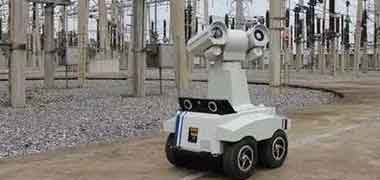
Defense, Security & Specialty Robotics
AS9100D certified high production robotic machining for defense UGV structural components, EOD robot joint hardware, border patrol robot chassis elements, and security surveillance robot drive system components with MIL-specification surface treatments, full lot material traceability, and FAIR documentation per AS9102. Mobile robot navigation hardware high volume programs: lidar mounting brackets, depth camera mounts, and sensor array structural elements in annual volumes of 100,000–1,000,000 units.
High Volume Robotic Machining
Capabilities & Quality Infrastructure
CNCPioneer's high production robotic machining quality infrastructure is specifically designed for the statistical demands of high volume production — PPAP Level 3 qualification before production release, real-time SPC adaptive correction throughout production, 100% CCD sorting on all critical diameters, 100% roundness tester on harmonic drive components, and lot-level traceability from finished parts back to specific material heat and production shift.
Swiss CNC Platform — Small-Diameter High Volume Production
78+ Swiss CNC lathes (Star SR-32J, Citizen A20/A16, Tsugami B206, Nomura series) · Ø0.5–Ø32mm high volume robotic machining diameter range · 5,000,000–15,000,000 annual small-diameter component capacity · Robot-assisted machine tending: 20–22 hours/day vs. 14–16 hours manual · Dedicated guide bushings per diameter family (Ø14/17/20/25/32mm wave generator series) — no changeover interrupting high production continuity · PCD boring bar tooling: HV 7,000+ maintaining cutting edge geometry across 10,000+ consecutive cycles · Minimum 3-piece setup verification before high volume production release · In-process air gauge measurement every 25th component with adaptive SPC correction · Bearing journal roundness ±0.001mm precision on high volume wave generator programs
MAZAK Mill-Turn Platform — Medium/Large High Volume Production
66+ MAZAK mill-turn centers (Integrex, Quick Turn, VARIAXIS series) · Ø10–Ø300mm high volume robotic machining diameter range · 500,000–3,000,000 annual medium/large component capacity · 5-axis simultaneous machining for complex robotic housing geometry in single setups — single-setup preserves input-to-output bearing concentricity ±0.003mm that multi-setup accumulates as fixture re-positioning error · High volume bearing housing production: 500,000–2,000,000 units/year; single-setup achieves all bearing bore positions, housing faces, mounting flanges, and pocket geometry simultaneously · 5-axis single-setup for CFRP-interface titanium arm end fittings: CFRP bore + joint attachment bore + bolt pattern + face flatness in one operation
PPAP Level 3 — Full Qualification Before High Production Release
Every new high volume robotic machining program requires PPAP Level 3 before production release: Process flow diagram (raw material receipt through finished part shipment); PFMEA (tool wear, material hardness variation, thermal drift, fixture wear failure modes identified with severity-occurrence-detectability ratings and current controls); control plan (distinguishing 100% CCD features, SPC-monitored features, and sampling features); MSA Gage R&R (<10% gauge variation of total tolerance on all critical dimensions; CCD gauge linearity and bias study for 100% sorting gauges); initial process capability study (minimum 30-piece, Cpk ≥1.67 on IATF SC dimensions, Cpk ≥1.33 on product characteristics); PSW. PPAP timeline: 6–8 weeks prototype through PSW approval; 2–3 weeks first production release after PPAP.
Real-Time SPC + 100% CCD + 100% Roundness Tester
Real-time air gauge SPC: in-process bearing journal diameter measurement every 25th component; X-bar and R charts with ±3σ warning / ±3.5σ action limits; adaptive tool offset correction triggered automatically before approaching specification limits; Cpk ≥1.67 maintained across 10,000–50,000-piece runs between tool change interventions. 100% CCD sorting: 12 stations, 50,000–80,000 components/day combined capacity; 0.3–0.8 second per component; automatic segregation to rejection bin; complete lot Cpk from 100% distribution data. 100% Mitutoyo roundness tester: 2 units, 500–800 verifications/day; 0.0001mm resolution; 100% of harmonic drive wave generator and bearing journal components; archived with lot ID for complete dimensional history traceability. CMM sampling: every 50th component for bearing housing concentricity; every 25th for ISO 9283 flange face runout per control plan.
High Volume Robotic Machining Materials
17-4PH H900 (dominant high volume harmonic drive, joint shaft, torque sensor material — lot-by-lot XRF + 388–444 HBW hardness; 17-4PH H900 composition: Cr 15–17.5%, Ni 3–5%, Cu 3–5%, Nb 0.15–0.45%) · 7075-T6 aluminum (dominant structural arm, joint casing, cobot panel material — 503 MPa, excellent machinability; 87 HRB incoming hardness verified) · 6061-T6 aluminum (AMR chassis, sensor mounts, gripper jaws, tool flange plates) · 2024-T351 (high-cycle robot mechanism, rotating components — high fatigue) · Ti-6Al-4V Grade 5 (CFRP-interface fittings, weight-critical programs) · Ti Grade 23 ELI (surgical robot, medical robot biocompatible) · 316L stainless (food robot, washdown robot, medical) · Inconel 718 (high-temp industrial robot joints) · PEEK (food robot, cleanroom robot, MRI-compatible) · Magnesium AZ91D 1.81 g/cm³ (ultra-lightweight high volume programs) · Brass C3604 (connector bodies, pneumatic fittings, small hardware)
Lot-Level Material Traceability & Documentation
Complete lot-level traceability from every finished robotic component back to: specific raw material heat; XRF composition certificate; Brinell hardness record (17-4PH H900: 388–444 HBW; 7075-T6: 87 HRB); production date; machine tool serial number; production shift; cutting tool lot. Unique lot number assigned at material receipt — lot traveler accompanies all machining, inspection, surface treatment, and packaging operations. Every high volume robotic machining shipment documentation: Certificate of Conformance; lot material certification; SPC production control charts (complete run); CCD sorting data with Cpk calculation; roundness tester records; CMM sampling report; surface treatment lot certification; PPAP documentation package. Documentation retention: 10 years industrial; 15 years automotive; 20 years aerospace/medical. Online quality documentation portal for established high volume programs.
Materials for High Volume
Robotic Machining
High volume robotic machining material selection at CNCPioneer is validated through incoming XRF composition verification and hardness testing on every production lot before high production release. 17-4PH H900 stainless steel (1,310 MPa) dominates high volume harmonic drive and precision joint drive programs. Aluminum 7075-T6 (503 MPa) dominates high volume structural arm and cobot housing programs. Every high volume material lot receives SII XRF composition verification confirming alloy specification compliance before high production release.
7075-T6
Density 2.80 g/cm³ · Yield strength 503 MPa · Hardness 87 HRB (incoming verified) · Excellent machinability · Dominant high volume structural arm, joint casing, and cobot housing material — highest specific strength of aluminum alloys at production economics enabling complex joint housing geometry at competitive cycle times. Custom color hard anodize available for cobot brand identification programs (white, silver, black, blue, custom RAL) in high production cobot OEM supply. High volume annual capacity on 7075-T6 platform: joint casings 200,000–1,000,000 units; arm structural fittings 50,000–500,000 units; cobot panels 200,000+ units.
6061-T6 & 2024-T351
6061-T6: Density 2.70 g/cm³ · Excellent machinability and anodizability · AMR wheel hub chassis structural plates, sensor mounts, gripper jaw bodies, ISO 9283 tool flange plates, and mobile robot navigation hardware — high volume programs 500,000–5,000,000 units/year on Swiss CNC and MAZAK platforms. Hard anodize Type III standard. 2024-T351: High fatigue strength · High-cycle rotating robot mechanism components and high-frequency robot arm link elements where 7075-T6 fatigue life at equivalent wall section is insufficient — high volume programs for SCARA Z-axis and delta robot arm high-cycle linkage components.
Magnesium AZ91D & Brass C3604
Magnesium AZ91D: Density 1.81 g/cm³ — lowest density structural metal · Ultra-lightweight high volume robotic components where mass minimization directly enables cobot ISO/TS 15066 safety inertia compliance at reduced arm cross-section; drone robot payload extension; exoskeleton metabolic cost reduction. Brass C3604: Excellent machinability · High volume connector body machining, pneumatic fitting production, and small robot hardware components on Swiss CNC platform — high production connector bodies 1,000,000–5,000,000 units/year at maximum Swiss platform throughput.
17-4PH H900
Density 7.78 g/cm³ · Yield strength 1,310 MPa · Hardness 388–444 HBW (verified every high volume lot) · Composition: Cr 15–17.5%, Ni 3–5%, Cu 3–5%, Nb 0.15–0.45% (XRF verified) · AMS 5643 · Dominant high volume harmonic drive wave generator, flexspline, joint shaft, and torque sensor material — pre-aged soft condition enables ±0.001mm roundness machining before H900 precipitation hardening at minimal distortion. 17-4PH lot-by-lot hardness verification mandatory — H900 property variation from heat treatment affects machined roundness; out-of-specification H900 hardness compromises Cpk achievement on high volume wave generator programs.
316L & 303
316L: Non-magnetic · Corrosion resistant · FDA compliant · High volume food robot end-effector gripper jaws (washdown programs: passivation ASTM A967 standard); high volume surgical robot instrument components in biocompatible stainless (electropolished Ra ≤0.4µm); washdown collaborative robot arm structural elements for food and beverage assembly automation. 303: Good machinability · High volume general robot mechanism components, connector housing bodies, and standard robot hardware where 316L's molybdenum content and higher cost are not justified — cost-optimized high production programs at equivalent corrosion resistance for non-food-contact industrial robot applications.
Inconel 718
Density 8.19 g/cm³ · High-temperature strength retention · High-cycle fatigue resistance · High volume industrial robot joint harmonic drive flexspline components in hot forging press, foundry, and paint spray robot applications where combined thermal loading and high-cycle fatigue exceed 17-4PH H900 material capability. Inconel 718 high volume robotic machining requires reduced cutting speeds, dedicated coolant protocols, and PCD tooling to maintain ±0.003mm dimensional accuracy at acceptable tool life in high production programs. Available in CNCPioneer's high volume robotic machining services for programs requiring >10,000 Inconel 718 flexspline components annually.
Ti-6Al-4V Grade 5
Density 4.43 g/cm³ · Specific strength 199 MPa·cm³/g · Non-magnetic · CFRP CTE 8.6 ppm/°C · AMS 4928 · High volume CFRP-interface arm end fitting programs (50,000–200,000 units/year) for carbon fiber tube robot arm assemblies — titanium CTE compatibility with CFRP preventing thermal fatigue at adhesive bond lines across robot operational temperature cycles. High volume aerospace robot and weight-critical cobot structural component programs where 7075-T6 specific strength is insufficient. 100% CCD sorting on CFRP tube insertion bore and joint attachment bore in all high volume titanium arm end fitting programs.
Ti Grade 23 ELI
Density 4.43 g/cm³ · Superior toughness vs. Grade 5 · Biocompatible · High volume surgical robot instrument housing and medical robot structural component programs requiring biocompatibility plus maximum fatigue resistance for repeated autoclave sterilization cycles and high-cycle surgical robot joint operation. Full material traceability from certified mill certificate supporting ISO 13485 surgical robot regulatory documentation. High volume electropolishing program producing Ra ≤0.4µm on all Ti Grade 23 ELI high production surgical robot machining lots, with validated bath chemistry maintaining surface quality across production volumes.
PEEK
Density 1.32 g/cm³ · Chemical resistant · Non-magnetic · Biocompatible · ESD-safe · High volume food robot gripper jaw programs for direct food contact where metallic grippers create metal detection interference in automated food safety programs; cleanroom semiconductor robot arm structural elements (100,000–500,000 units/year) where particle generation from metallic sliding surfaces is prohibited by cleanroom protocol; MRI-compatible surgical robot structural elements. PEEK high volume programs achieve excellent machinability on Swiss CNC platform at competitive cycle times for gripper jaw and structural element geometries.
Hard Anodize Type III — Robot-Loaded High Production
Robot-loaded anodizing process for high volume robotic machining programs achieving ±0.5µm coating thickness uniformity versus ±2.0µm for manually-loaded equivalent processing — directly governing post-anodize dimensional compliance on precision bore and bearing surfaces where anodize thickness adds to machined dimensions. HV 400+ hardness standard. Custom color anodize for cobot brand identification programs: white, silver, black, blue, and custom RAL colors with color-to-color consistency maintained across high production lot sequences by automated bath management. Black anodize for machine vision guided robot applications: consistent low-reflectance appearance across all high volume lot sequences.
Chemical Film, Passivation & Electropolishing
Chemical film MIL-DTL-5541 (Alodine): high production batch processing for aluminum high volume robotic machining components requiring EMC shielding conductivity in robot controller enclosures; automated bath management maintaining consistent Class 3 minimum contact resistance across high volume lot sequences. Passivation ASTM A967: mandatory for all stainless steel high volume programs; automated bath management for consistent passive layer quality across 17-4PH H900 harmonic drive and 316L food robot component lots. Electropolishing: validated bath chemistry for surgical and medical robot high volume programs requiring Ra ≤0.4µm biocompatible surface finish; bath chemistry monitoring maintaining consistent electropolishing quality across production volumes.
Gold Plating & Zinc Phosphate
Gold plating MIL-G-45204: hard gold for high volume robotic machining electrical connector contact components — stable low contact resistance across robot operational service life; XRF plating thickness verification on every high production plating lot confirming coating specification compliance before shipment. Zinc phosphate: break-in lubrication for high volume robotic machining mechanism components — automated phosphating for consistent high production coating application on harmonic drive and joint mechanism components requiring initial lubrication retention for smooth first-start operation in assembled robot joint programs.
Surface Treatments for High Volume
Robotic Machining
High volume robotic machining surface treatment selection is governed by coating thickness uniformity (robot-loaded anodizing achieving ±0.5µm versus ±2.0µm manual), custom cobot color identity programs, biocompatibility for surgical and food robot high production programs, EMC shielding conductivity for robot controller housing components, and automated bath management maintaining consistent surface treatment quality across high volume production lot sequences.
Hard Anodize Type III — Robot-Loaded High Production
Standard for all aluminum high volume robotic machining components. Robot-loaded anodizing achieves ±0.5μm coating thickness uniformity versus ±2.0μm manual — directly governing post-anodize dimensional compliance on precision bore surfaces. HV 400+ hardness. Custom color anodize programs for cobot brand identification: white, silver, black, blue, and custom RAL colors with automated bath management maintaining color consistency across high production lot sequences. Black anodize for machine vision guided robot high volume applications.
Chemical Film & Passivation ASTM A967
Chemical film MIL-DTL-5541 (Alodine) for aluminum high volume robotic machining components requiring EMC shielding conductivity in robot controller enclosures — automated batch processing maintaining consistent Class 3 minimum contact resistance across high volume lot sequences. Passivation ASTM A967: mandatory for all stainless steel high volume programs — automated bath management maintaining consistent passive layer quality across 17-4PH H900 harmonic drive lots and 316L food robot component high production programs.
Electropolishing & Black Anodize
Electropolishing for surgical and medical robot high volume stainless steel programs requiring Ra ≤0.4μm biocompatible surface finish. Validated bath chemistry maintaining surface quality across production volumes of surgical robot instrument housing and Ti Grade 23 ELI medical robot structural components. Black anodize for machine vision guided robot high volume programs — consistent low-reflectance appearance across AMR navigation sensor mounting, vision system structural components, and assembly robot programs at 100,000–1,000,000 units/year.
Gold Plating MIL-G-45204 & Zinc Phosphate
Hard gold plating per MIL-G-45204 for high volume robotic machining electrical connector contact components — robot joint encoder contacts, power distribution contacts, and sensor interface spring contacts requiring stable low contact resistance. XRF plating thickness verification on every high production plating lot. Zinc phosphate for high volume robot mechanism component break-in lubrication retention — automated phosphating for consistent coating application on harmonic drive and joint mechanism components.
PTFE Dry Lube & Automated Surface Treatment Integration
PTFE dry lube coating for high volume robot mechanism sliding surface components in cleanroom and food processing robot programs where liquid lubricants are prohibited — friction coefficient below 0.05. Automated surface treatment integration: CNCPioneer coordinates qualified local hard anodizing, chemical film, passivation, and plating specialists within Shenzhen manufacturing cluster — eliminating the inter-supplier logistics cost that high volume robotic machining programs incur when surface treatment requires geographically separate subcontractor management.
High Volume Surface Treatment Dimensional Management
Surface treatment dimensional impact management is mandatory in high volume robotic machining programs where coating thickness adds to machined bore dimensions. Hard anodize Type III adds 12–25μm per side (0.024–0.050mm on bore diameter) — machined bore dimensions offset to achieve drawing specification after anodize growth. Robot-loaded anodizing achieving ±0.5μm uniformity reduces post-anodize dimensional scatter, directly maintaining Cpk ≥1.67 compliance on precision bore dimensions in high volume cobot housing and robot joint housing programs.
All high volume robotic machining surface treatments — hard anodize MIL-A-8625 Type III (clear, black, and custom cobot colors), chemical film MIL-DTL-5541, passivation ASTM A967, electropolishing, PTFE dry lube, gold plating MIL-G-45204, and zinc phosphate — are applied with high production lot consistency assurance through automated bath management, robot-loaded processing, and bath chemistry verification. Surface treatment certifications and lot records are included in every high volume robotic machining shipment documentation package.
Quality Assurance for High Volume
Robotic Machining Services
CNCPioneer's high volume robotic machining quality system applies IATF 16949 PPAP Level 3 protocols, real-time SPC adaptive correction, 100% CCD automatic sorting, 100% roundness tester on harmonic drive components, and complete lot-level traceability — the full manufacturing quality infrastructure that high production robotic machining requires to sustain Cpk ≥1.67 across annual volumes of 10,000–10,000,000 robotic components.
Contract & Drawing Review
Engineering review of high volume robotic machining drawing requirements, applicable ISO 9283, IATF 16949, AS9100D, and customer robot OEM specifications before high production program launch. DFMEA review of robot component design for high volume machining robustness. Process FMEA development identifying all high production failure modes (tool wear, material hardness variation, thermal drift, fixture wear) with severity-occurrence-detectability ratings and current process controls. PPAP scope determination including MSA Gage R&R plan, SPC monitoring features, and 100% CCD sorting feature list.
Material Incoming Inspection
SII XRF composition verification on every high volume robotic machining raw material lot — confirming 17-4PH H900 composition (Cr 15–17.5%, Ni 3–5%, Cu 3–5%), aluminum 7075-T6 composition, and all other high production alloys against specification requirements. 17-4PH H900 hardness verification (388–444 HBW) every high volume production lot — H900 property variation from heat treatment affects machined roundness through differential material response to cutting forces, directly impacting Cpk achievement on high production wave generator programs. Aluminum 7075-T6 hardness (87 HRB) verified every lot. Full lot traceability from mill heat certificate through finished high volume robotic component shipment. Unique production lot number assigned at material receipt traceable to specific material heat, production date, machine tool, and shift.
First Article Inspection (FAIR) per AS9102
Complete PPAP Level 3 qualification before high production robotic machining release: PFMEA, process flow, control plan, MSA Gage R&R (<10% gauge variation of tolerance on all critical dimensions), initial process capability study (Cpk ≥1.67 on IATF SC dimensions on minimum 30-piece production sample), dimensional report, material certifications, and Part Submission Warrant (PSW). PPAP timeline: 6–8 weeks prototype through PSW approval. FAIR per AS9102 for aerospace high production robotic machining programs. Customer approval required before high volume production authorization.
In-Process Statistical Control
Real-time SPC on all critical dimensions throughout high volume production. In-process air gauge bearing journal diameter measurement every 25th component; X-bar and R charts with ±3σ warning and ±3.5σ action limits; adaptive tool offset correction triggered automatically maintaining journal diameter within ±0.003mm across 10,000–50,000-piece runs between tool change interventions. Out-of-control action plan (OCAP) specifying defined corrective responses to all control chart signals before production continues.
- Air gauge SPC every 25th component — adaptive correction
- X-bar & R charts: ±3σ warning / ±3.5σ action limits
- OCAP: mandatory corrective action before production resumes
100% CCD Automatic Sorting
Every critical bore and shaft diameter passes through 100% CCD automatic sorting at 0.3–0.8 seconds per component across 12 stations (50,000–80,000 components/day combined capacity) — automatically segregating any out-of-specification component before packaging or shipment. CMM geometric dimension verification at defined control plan intervals (every 50th for bearing housing concentricity; every 25th for ISO 9283 flange face runout). Complete lot Cpk calculated from 100% distribution data — real-time capability visible across the full production quantity.
- 100% CCD: 12 stations, 50,000–80,000 components/day
- CMM geometric verification at control plan frequency
- Lot Cpk from 100% distribution — no sampling gaps
100% Roundness Tester & Shipment Documentation
100% Mitutoyo roundness tester at 0.0001mm resolution on every harmonic drive wave generator bearing journal component — complete roundness profile archived with lot ID for full dimensional history traceability. Every high volume robotic machining shipment includes: Certificate of Conformance; lot material certifications (XRF + hardness); complete SPC production control charts; CCD sorting data with Cpk calculation; Mitutoyo roundness records; CMM sampling reports; surface treatment lot certification; and full PPAP Level 3 documentation package.
- 100% roundness tester: 0.0001mm resolution, all wave generators
- Complete shipment documentation package per IATF 16949
- PPAP documentation archive — 10–20 years retention
High Volume Robotic Machining FAQ
Common questions from robot OEMs, collaborative robot manufacturers, AMR/AGV producers, automotive robot supply chains, and robotic component wholesale distributors about CNCPioneer's high volume robotic machining services capabilities, production volumes, Cpk documentation, 100% CCD sorting approach, PPAP qualification timeline, high volume robotic machining China quality vs. Japanese suppliers, and component categories covered.
CNCPioneer's high volume robotic machining services programs begin at annual volumes of 5,000 units per part number — the threshold at which dedicated production capacity reservation, PPAP Level 3 qualification investment, and SPC system deployment become economically justified by the per-unit cost reduction and quality consistency improvement they deliver. The practical high volume robotic machining services tiers at CNCPioneer are: 5,000–20,000 units annually for entry-volume high production programs with standard PPAP and SPC; 20,000–100,000 units for mid-volume high production with dedicated capacity and monthly blanket delivery (3–4 week lead time); 100,000–500,000 units for mass production with automated cell integration and maximum discount pricing (2–3 week lead time); and 500,000+ units for full high volume robotic machining China programs with complete production automation, inventory stocking, and committed supply chain partnership terms. Robot OEMs scaling from prototype through commercial launch through mass market success can remain with CNCPioneer's high volume robotic machining services through all growth stages without supplier transition costs.
CNCPioneer achieves Cpk ≥1.67 on all IATF 16949 designated special characteristics in high volume robotic machining production programs — confirmed by initial process capability studies on minimum 30-piece production samples in PPAP qualification and maintained through real-time SPC adaptive correction throughout high production runs. The specific Cpk values documented in CNCPioneer's active high volume robotic machining programs: harmonic drive wave generator bearing journal diameter Cpk 1.70–2.10 (adaptive air gauge correction maintaining process center within ±0.001mm of nominal); bearing housing bore diameter Cpk 1.68–1.95 (100% CCD sorting providing complete distribution data); AMR wheel hub encoder bore Cpk 1.72–2.05; and cobot joint housing bearing bore Cpk 1.68–1.90. These Cpk values represent actual production capability documented across active programs — not theoretical specifications. For high production programs where customer specifications require Cpk ≥2.00 on safety-critical dimensions, CNCPioneer can achieve this through tighter SPC control limits, higher sampling frequency, and dedicated tooling programs — with capability confirmation documented in the PPAP qualification package before high volume production release.
CNCPioneer's 100% CCD automatic sorting uses charge-coupled device optical gauging systems that measure each component's critical bore diameter, shaft journal diameter, or thread pitch diameter in 0.3–0.8 seconds as components exit the CNC machining operation — automatically segregating any out-of-specification component to a rejection bin before packaging or shipment. 100% CCD sorting is superior to statistical sampling for three reasons especially important for robot joint components. First, statistical sampling misses individual non-conforming components — a 1-in-50 sampling plan has 98% probability of accepting a lot containing one non-conforming part per 100; 100% CCD sorting detects every non-conforming component. Second, 100% CCD provides complete lot dimensional distribution data — enabling real-time Cpk calculation on 100% of production rather than only the sampled subset, providing immediate detection of process drift. Third, for harmonic drive components where a single out-of-round journal can degrade robot positioning repeatability in the assembled robot, the consequence of a single escape through sampling inspection is a customer quality escape traceable to CNCPioneer's high volume lot — a consequence that 100% CCD sorting eliminates by design.
CNCPioneer's high volume robotic machining China programs have no absolute minimum order quantity — we accept prototype orders from single pieces for design validation before high volume commitment. The high volume pricing tiers begin at 5,000 annual units where PPAP qualification investment is cost-justified. Lead times: initial PPAP qualification program (prototype through PSW approval) — 6–8 weeks total from drawing submission; first production release after PPAP approval — 2–3 weeks; ongoing production releases under established blanket order — 2–3 weeks per monthly release. For high volume programs above 100,000 units per part number, CNCPioneer offers dedicated production capacity reservation — a committed machine tool capacity block ensuring monthly release orders are never delayed by competing production priorities. For high production programs requiring inventory stocking at CNCPioneer's Shenzhen facility for just-in-time delivery, safety stock levels of 4–8 weeks equivalent are maintained against annual volume forecast, enabling same-day or next-day high volume robotic machining China shipment on release orders within the agreed stocking program.
CNCPioneer's high volume robotic machining China quality produces harmonic drive wave generator bearing journal roundness, joint bearing housing concentricity, encoder hub face runout, and IATF 16949 PPAP Level 3 documentation quality equivalent to established Japanese high volume robotic machining manufacturers including Harmonic Drive Systems, Nabtesco, and THK precision component supply chains. The quality enablers at CNCPioneer's high volume robotic machining China factory — PCD boring bar tooling for ±0.002mm bore roundness; Mitutoyo roundness tester verification at 0.0001mm resolution on 100% of wave generator components; 100% CCD automatic sorting on all bearing bore and shaft diameters; adaptive SPC with in-process air gauge feedback maintaining Cpk ≥1.67 across high production runs; and IATF 16949 certified quality system with PPAP Level 3 documentation — are functionally equivalent to those at Japanese high volume robotic machining manufacturers. Robot OEMs evaluating CNCPioneer's high volume robotic machining China quality can verify through: IATF 16949 certificate; PPAP Level 3 sample packages with documented Cpk ≥1.67; 100% CCD sorting data distributions; roundness measurement records from production lots; and on-site factory qualification audits. The 40–60% cost advantage reflects China's manufacturing economic structure — not reduced quality system rigor, dimensional capability, or documentation completeness.
CNCPioneer's high volume robotic machining services capability covers seven primary robotic component categories at production scale. Harmonic drive components: wave generator shafts, flexsplines, and circular splines for all standard harmonic drive series (CSF, CSD, SHD, SHG) in annual volumes of 100,000–500,000 units per diameter series. Robot joint bearing housings: aluminum and titanium bearing housing bodies for six-axis industrial robots, cobots, SCARA robots, and delta robots in annual volumes of 200,000–2,000,000 units. AMR and AGV drive system components: differential drive wheel hubs, Mecanum wheel hubs, and chassis structural elements for warehouse automation platforms in annual volumes of 500,000–5,000,000 units. Collaborative robot components: cobot joint housings, torque sensor bodies, and arm structural panels for UR, ABB GoFa, FANUC CRX, and Chinese domestic cobot OEMs in annual volumes of 100,000–1,000,000 units. Industrial robot structural fittings: CFRP-interface arm end fittings, base mounting flanges, and central hub plates in annual volumes of 50,000–500,000 units. End-effector and tool changer components: gripper jaw sets, ISO 9283 tool flanges, and quick-change interface elements in annual volumes of 500,000–5,000,000 units. Mobile robot navigation hardware: lidar mounting brackets, depth camera mounts, and sensor array structural elements in annual volumes of 100,000–1,000,000 units. All seven categories are producible from a single CNCPioneer high volume robotic machining China supply relationship with unified PPAP Level 3 documentation across the complete robotic component portfolio.
Get a Quote for High Volume Robotic Machining Services
Upload your robotic component drawing or CAD file and receive a free DFM review and competitive high volume robotic machining services quotation within 24 hours. CNCPioneer's engineering team will review your robot component for high volume machining process capability, confirm harmonic drive journal roundness for robot positioning repeatability, assess bearing housing concentricity for joint performance, identify critical high volume robotic machining dimensions requiring SPC monitoring and 100% CCD sorting, develop PPAP qualification scope and timeline, and provide complete pricing at prototype through annual volume high production tiers.