
Liquid Cooling Plate Machining
CNCPioneer is an IATF 16949 and AS9100D certified liquid cooling factory with CNC machining delivering high-reliability thermal management components — precision CNC machined water cold plates, microchannel assemblies, serpentine flow path cold plates, manifold-integrated cooling bodies, and EV battery cooling plates — with base surface flatness as tight as 0.003mm, O-ring groove accuracy ±0.020mm, and 100% pressure decay leak testing on every unit shipped. 78+ Swiss CNC lathes and 66+ MAZAK mill-turn centers serving AI accelerator server OEMs, EV powertrain manufacturers, industrial power electronics producers, 5G GaN amplifier developers, and medical device integrators worldwide since 2011.
What Is Liquid Cooling
Plate Machining?
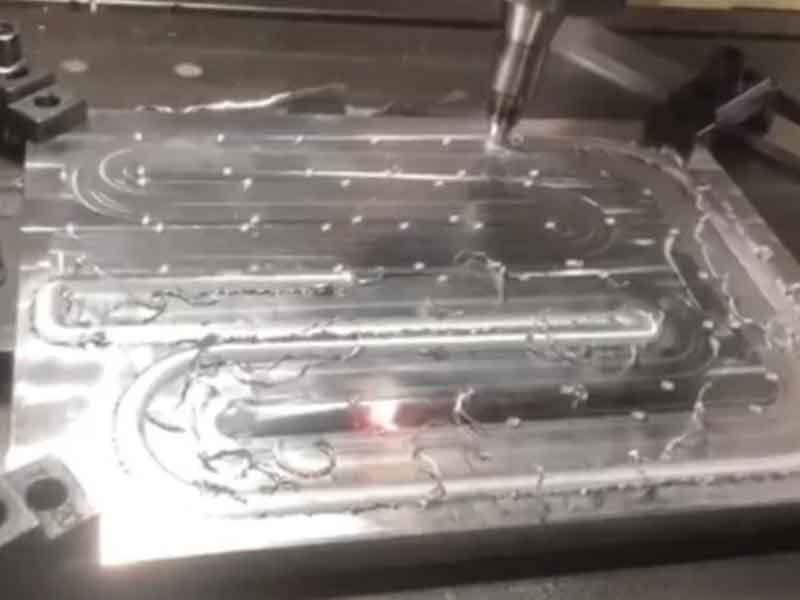
Liquid cooling plate machining is the precision CNC manufacturing of internal-flow thermal management components — cold plate bodies, manifold distribution blocks, channel cover plates, inlet and outlet port fittings, and complete liquid-cooled assembly structural elements that extract heat from high-power electronic components by circulating a liquid coolant through precision-machined internal flow passages in direct or near-direct thermal contact with the heat-generating surface. The thermal performance of a precision CNC machined water cold plate is a direct function of its machined geometry: channel width and depth govern convective heat transfer coefficient; base surface flatness governs TIM layer thickness and contact thermal resistance; O-ring groove dimensional accuracy governs IP-rated sealing reliability at operating pressure.
Three converging technology trends are driving heat flux densities beyond air cooling capability: AI accelerator server hardware generates 300–1,000 W per compute unit requiring direct GPU cold plate liquid contact; EV traction inverters dissipate 5–30 kW from SiC and IGBT power module arrays whose junction-to-coolant resistance is governed by cold plate machining precision; and 5G GaN power amplifiers at base stations exceed 300 W/cm² heat flux requiring liquid cooling plate machining solutions. CNCPioneer's cold plate factory with CNC machining operates CNC milled cold plates with vacuum-brazed covers, friction stir welded cold plates, extruded profile cold plates with CNC finish machining, and 5-axis microchannel cold plates — all achieving 0.003mm base flatness and ±0.020mm O-ring groove dimensional accuracy.
-
0.003mm base surface flatness — thermal performance foundation At GPU and GaN heat flux densities of 150–600 W/cm², every 0.001mm increase in TIM layer thickness increases contact thermal resistance by 0.001–0.003°C·cm²/W — directly elevating junction temperature above design specification and triggering thermal throttling. CNCPioneer's high precision liquid cooling plate machining achieves 0.003mm base surface flatness verified by Mitutoyo CMM on every first article, providing the dimensional foundation that ensures designed thermal resistance values are achieved in assembled systems.
-
100% pressure decay leak testing — zero-defect shipment standard Every precision CNC machined water cold plate shipped from CNCPioneer's liquid cooling factory undergoes 100% pressure decay leak testing at 1.5× rated operating pressure before packaging. A leaked cold plate installed in an AI server rack or EV traction inverter creates catastrophic field failure — coolant leakage in a high-voltage environment creates electrical short-circuit and fire risk that no statistical sampling program adequately mitigates. 100% leak testing is a non-negotiable production standard, not an optional quality upgrade.
-
5-axis microchannel machining capability MAZAK VARIAXIS 5-axis machining enables microchannel channel widths of 0.3mm at ±0.030mm tolerance — producing convective heat transfer coefficients of 20,000–50,000 W/m²·K, 5–10× higher than standard channel cold plates, enabling junction-to-coolant thermal resistance below 0.01°C·cm²/W for the highest heat flux GPU, GaN, and SiC applications where standard channel geometry is insufficient.
-
40–60% CNC milled liquid cooling plate China cost advantage IATF 16949 and AS9100D dual-certified CNC milled liquid cooling plate China production at 40–60% lower cost than equivalent precision CNC machined water cold plate production from US, European, and Japanese thermal management machining suppliers — DFM review, thermal resistance calculation, PPAP/FAIR documentation, and RoHS compliance included in China cold plate factory pricing.

Why CNCPioneer — Liquid Cooling
Factory with CNC Machining
High precision liquid cooling plate machining is distinguished from standard precision machining by the simultaneous requirement for multiple interdependent dimensional specifications — base flatness, channel geometry, sealing groove accuracy, port thread form, and mounting hole pattern — that must all be achieved together in controlled geometric relationships if the assembled precision CNC machined water cold plate is to achieve its designed thermal resistance, pressure rating, and mechanical installation accuracy.
0.003mm Base Surface Flatness — Thermal Performance Foundation
The single most consequential dimension in any cold plate. At GPU heat flux of 400 W: a cold plate with 0.010mm flatness produces TIM thickness 50–100% above target — elevating GPU junction temperature 5–12°C above design specification and triggering thermal throttling. CNCPioneer achieves 0.003mm base surface flatness verified by Mitutoyo CMM on every first article and at defined production intervals.
100% Pressure Decay Leak Testing — Zero-Defect Standard
Every precision CNC machined water cold plate undergoes 100% pressure decay leak testing at 1.5× rated operating pressure before packaging. Zero tolerance for shipped cold plates with coolant circuit leaks — coolant leakage in a high-voltage AI server or EV traction inverter creates electrical short circuit and fire hazard. 100% leak testing is a non-negotiable production standard applied as a standard production step, not an optional quality upgrade.
Multi-Material Liquid Cooling Plate Machining
Aluminum 6061-T6 for lightweight CNC milled liquid cooling plate China server and EV programs · Copper C11000 ETP for maximum thermal conductivity in high-flux GaN and SiC applications exceeding 200 W/cm² · Stainless steel 316L for corrosive coolant and medical device liquid cooling programs — all processed through material-specific protocols maintaining dimensional accuracy across different machining challenges.
5-Axis Microchannel Machining
MAZAK VARIAXIS 5-axis simultaneous machining enables microchannel geometries with channel width as narrow as 0.3mm at ±0.030mm tolerance, depth-to-width ratios above 10:1, and inter-channel fin thickness of 0.3mm — achieving convective heat transfer coefficient h = 20,000–50,000 W/m²·K that enables junction-to-coolant thermal resistance below 0.01°C·cm²/W for the highest heat flux applications.
IATF 16949 & AS9100D Dual Certification
CNCPioneer's cold plate factory with CNC machining is qualified for both automotive EV powertrain cold plate programs (IATF 16949 with PPAP Level 3) and aerospace thermal management programs (AS9100D with FAIR per AS9102) — the broadest quality certification coverage available from any single CNC milled liquid cooling plate China supplier. Cpk ≥1.67 on O-ring groove and base flatness special characteristics for IATF 16949 programs.
40–60% CNC Milled Liquid Cooling Plate China Cost
CNCPioneer's China-based liquid cooling factory with CNC machining delivers 40–60% cost reduction versus equivalent precision CNC machined water cold plate production from US, European, and Japanese thermal management machining suppliers — DFM review, thermal resistance calculation, PPAP/FAIR documentation, and RoHS compliance verification included in CNC milled liquid cooling plate China program pricing without surcharges.
Precision CNC Machined Water Cold
Plates We Produce
CNCPioneer's liquid cooling plate machining programs cover every cold plate configuration across AI server, EV powertrain, industrial power electronics, telecommunications RF, medical device, and optical system thermal management applications — from single prototype cold plates through high-volume annual supply with IATF 16949 PPAP or AS9100D FAIR documentation.

AI Accelerator & GPU Server Cold Plates
Direct-attach GPU cold plates for NVIDIA H100/H200/B100 and AMD MI300X (GPU contact flatness 0.003mm; microchannel 0.4–0.8mm under die zone; DRAM thermal pad position ±0.1mm; O-ring groove ±0.020mm; G1/4 BSP port ±0.005mm; 100% leak test at 0.6 MPa), CPU server cold plates for Intel LGA4677 and AMD EPYC SP5 (mounting hole pattern ±0.050mm; die contact zone 0.003mm), and complete HGX H100/H200 baseboard cold plate manifold assemblies (cold plate array position ±0.1mm; blind-mate quick-disconnect ±0.05mm). Material: aluminum 6061-T6 with optional copper C11000 ETP base insert.

EV Traction Inverter & SiC/IGBT Cold Plates
IATF 16949 certified precision CNC machined water cold plates for EV traction inverter power module thermal management — SiC DBC substrate contact flatness 0.003mm for phase-change TIM compliance; multi-module array position ±0.050mm; integrated coolant flow manifold ±0.1mm for <10% flow variation; O-ring groove ±0.020mm for automotive cooling system 0.15–0.35 MPa; vibration resistance mounting boss ±0.050mm per IEC 60068-2-6; 100% pressure decay leak test at 0.5 MPa; PPAP Level 3 documentation; RoHS and REACH compliance for European automotive market. Material: aluminum 6061-T6; optional copper C11000 ETP base for premium thermal resistance programs.

EV Battery Pack & OBC Cold Plates
Large-format cell array liquid cooling plates for prismatic, 4680 cylindrical, and pouch cell battery pack thermal management (cell contact flatness 0.050mm per 500mm for uniform TIF pad compression; serpentine channel ±0.1mm; G3/8 or G1/2 BSP port ±0.005mm; O-ring groove ±0.020mm; 100% leak testing). On-board charger (OBC) and DC-DC converter cold plates for EV charging system power electronics (power semiconductor contact 0.003mm; compact package geometry ±0.2mm installation envelope). IATF 16949 production documentation throughout. Material: aluminum 6061-T6 and 6063-T5 for maximum battery cooling plate thermal conductivity.

Industrial Power Electronics Cold Plates
Solar inverter IGBT cold plates (module mounting flatness 0.003mm; integrated DC bus capacitor cooling shelf; IP65 O-ring groove ±0.020mm for outdoor weatherproof installations; hard anodized interior for propylene glycol compatibility), motor drive VFD cold plates (multi-IGBT array ±0.050mm; ethylene glycol-water channel geometry), welding machine and industrial laser cold plates (diode bar direct contact zone 0.003mm; flow velocity optimization against aluminum erosion; electroless nickel or hard anodize interior), and uninterruptible power supply IGBT thermal management assemblies. Material: aluminum 6061-T6; copper C11000 ETP for diode bar contact zones.

Telecommunications, RF & Aerospace Cold Plates
5G base station GaN power amplifier direct-contact cold plates (transistor flange contact 0.003mm; copper C11000 ETP with electroless nickel for soldered GaN flange; compact OEM 5G RU chassis form factor ±0.1mm; coolant velocity 0.5–2.0 m/s for turbulent heat transfer), satellite and airborne radar RF cold plates with AS9100D certification (ASTM E595 outgassing-compatible materials; titanium or Invar options for orbital thermal cycling stability; FAIR per AS9102), and optical transport power amplifier cooling assemblies. Material: copper C11000 ETP contact zone; aluminum 6061-T6 manifold for mass reduction.

Medical, Scientific & Laser Cold Plates
MRI gradient amplifier cold plates in non-magnetic aluminum 6061-T6 or 316L stainless (electropolished interior for pharmaceutical-grade coolant; ISO 10993 biocompatible material declarations), laser diode bar array direct-cooled cold plates (diode bar mounting flatness 0.003mm; 0.5mm microchannel array under diode contact; copper C11000 ETP with electroless nickel for AuSn solder compatibility; gold plating MIL-G-45204 on contact zones), solid-state laser crystal cooling assemblies, high-power LED array direct-attach cold plates, and CT scanner X-ray tube cooling cold plates. All programs with complete biocompatible material documentation.
Industries & Applications
CNCPioneer's liquid cooling plate machining serves AI accelerator server OEMs, EV powertrain manufacturers, industrial motor drive producers, solar inverter builders, telecom power amplifier developers, medical imaging system integrators, and defense electronics operators requiring CNC milled liquid cooling plate China production at competitive thermal management BOM cost worldwide.

AI & Cloud Data Centers
High precision liquid cooling plate machining for GPU AI accelerator direct-attach cold plates (NVIDIA H100/H200/B100, AMD MI300X), HGX baseboard cold plate manifold assemblies, CPU liquid cold plates for Intel Xeon and AMD EPYC server platforms, and rack-level coolant distribution manifold structural hardware. CNC milled liquid cooling plate China production at hyperscale data center equipment procurement volumes with complete RoHS documentation.
Electric Vehicles & EV Charging
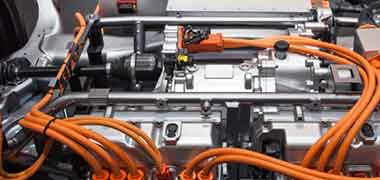
IATF 16949 certified precision CNC machined water cold plate production for EV traction inverter SiC/IGBT module cold plates, EV battery pack thermal management cooling plates, on-board charger power electronics cold plates, and DC fast charger power module cooling assemblies. PPAP Level 3 documentation for automotive Tier 1 cold plate supply chain qualification. RoHS and REACH compliance for European automotive market.
Industrial Power Electronics
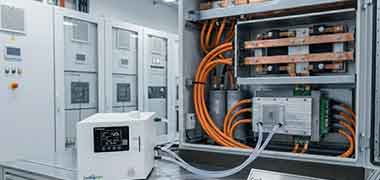
Liquid cooling plate machining for solar string and central inverter IGBT cold plates (IP65-rated for outdoor installation), variable frequency drive power module cooling assemblies, welding machine and plasma cutter power stage cold plates, uninterruptible power supply IGBT cold plates, and high-power DC power supply thermal management assemblies. Aluminum 6061-T6 with hard anodize interior for propylene and ethylene glycol coolant compatibility.

Telecommunications & RF Infrastructure
Cold plate factory with CNC machining programs for 5G Massive MIMO GaN power amplifier direct-contact cold plates (copper C11000 ETP with electroless nickel for soldered GaN flanges; 0.003mm contact flatness for 150–200°C junction temperature compliance), optical transport equipment power module cooling assemblies, high-power DC-DC converter cold plates, and telecom baseband processing unit cooling hardware.

Defense & Aerospace Electronics
AS9100D certified liquid cooling plate machining for radar processing system cold plates, airborne electronic warfare cold frame assemblies, satellite payload power electronics cold plates, and shipborne power electronics cooling systems. ASTM E595 outgassing-compatible materials for spacecraft applications. Titanium Ti-6Al-4V and Invar 36 cold plate options for orbital thermal cycling stability. FAIR documentation per AS9102 on every first article.
Medical Devices & Scientific Equipment
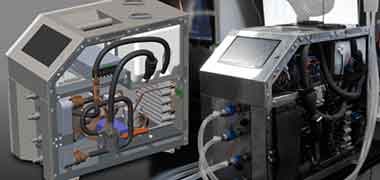
Precision CNC machined water cold plate production for MRI gradient amplifier cooling assemblies (non-magnetic aluminum or 316L stainless; electropolished interior for pharmaceutical-grade coolant), CT scanner X-ray tube cooling cold plates, medical laser thermal management systems, and scientific instrument power electronics cold plates. ISO 10993 relevant material declarations; biocompatible material documentation for all medical device cold plate programs.
Liquid Cooling Plate Machining
Processes & Capabilities
CNCPioneer's cold plate factory with CNC machining operates four distinct manufacturing processes covering the complete range of precision CNC machined water cold plate geometries — from simple serpentine single-pass cold plates through complex microchannel parallel-flow manifold assemblies — with 24-hour DFM and thermal resistance calculation review before every program commitment.
CNC Milled Cold Plate with Vacuum Brazed Cover
Dominant process for complex internal geometries. Channels CNC milled from solid aluminum or copper billet on MAZAK mill-turn centers — serpentine, parallel, pin fin, or microchannel arrays — then sealed by vacuum brazing a flat cover plate at 580–620°C. Braze joint shear strength 80–100 MPa. Post-braze precision face milling restores base flatness to 0.003mm (removes 0.005–0.020mm braze-induced distortion). O-ring groove, port threads, and mounting features machined in final setup. 100% pressure decay leak testing before shipment.
5-Axis Microchannel Cold Plate Machining
Ultra-high-performance microchannel cold plates for GaN RF amplifier, SiC power module, and AI chip cooling — MAZAK VARIAXIS 5-axis simultaneous machining producing channel widths 0.3–0.8mm at ±0.030mm, depth-to-width ratios above 10:1, inter-channel fin thickness 0.3mm at ±0.020mm. Convective heat transfer coefficient h = 20,000–50,000 W/m²·K at design flow rate — 5–10× higher than standard channel cold plates. Junction-to-coolant thermal resistance below 0.01°C·cm²/W for highest heat flux applications.
Friction Stir Welded Cold Plate
Channels CNC milled into cold plate body, cover plate FSW welded — creating solid-state metallurgical joints without melting, eliminating vacuum braze alloys and adhesives from the coolant circuit. Specifiedfor: semiconductor process equipment (no braze alloy contamination), medical device cold plates (FDA material purity), and aerospace cold plates (vacuum braze dimensional distortion unacceptable). Post-weld CNC base surface precision face milling restores 0.003mm flatness. O-ring groove and port features machined post-weld.
Extruded Profile Cold Plate with CNC Precision Machining
Extruded aluminum 6063-T5 profiles with designed channel cross-sections — CNC precision machining completes base surface (0.003mm flatness removing extrusion bow and die wear variation), end cap machining, port drilling and threading, and O-ring groove milling. Lower unit cost for standard straight parallel-channel configurations including battery pack thermal management, high-power laser cooling bars, linear motor cooling plates, and bus bar thermal management elements. Complete cold plate pressure tested and CMM inspected.
Liquid Cooling Plate Machining Materials
Al 6061-T6 (167 W/m·K; dominant material ~70% of programs) · Al 6063-T5 (200 W/m·K; maximum conductivity battery cooling) · Copper C11000 ETP (391 W/m·K; mandatory for >200 W/cm² heat flux) · Copper C10100 OFE (high-purity semiconductor and vacuum cold plates) · Stainless 316L (corrosive coolant, medical) · Stainless 304 (general corrosion-resistant programs) · Ti-6Al-4V (aerospace lightweight cold plate) · Invar 36 (thermally stable optical bench cooling inserts) — all SII XRF verified with RoHS compliance documentation.
Quality Documentation
IATF 16949 PPAP Level 3 for automotive EV cold plate programs · AS9102 FAIR for aerospace cold plate programs · 100% Mitutoyo CMM dimensional reports: base flatness, channel geometry, O-ring groove, port threads, mounting holes · 100% automated pressure decay leak test certification records · Material certifications with full lot traceability · Electroless nickel surface treatment certifications · RoHS Declaration of Conformity per IEC 62321 · Thermal resistance calculation report · Certificate of Conformance · All records retained 20 years.
Materials for CNC Milled
Liquid Cooling Plate China Production
Liquid cooling plate machining material selection is governed by thermal conductivity for the heat spreading requirements of the application, corrosion resistance against the coolant chemistry, machinability for complex channel geometry, RoHS compliance, and weight constraints. Aluminum 6061-T6 covers approximately 70% of CNCPioneer's cold plate production volume; copper C11000 ETP is mandatory when component heat flux exceeds 200–300 W/cm² and spreading resistance dominates cold plate thermal resistance.
6061-T6
167 W/m·K · 2.70 g/cm³ · Excellent machinability · RoHS compliant · Dominant liquid cooling plate machining material (~70% of programs). Standard server, EV, and industrial cold plates. Adequate thermal conductivity for all applications where convective resistance dominates total cold plate thermal resistance. Hard anodize and electroless nickel interior compatible for ethylene glycol and propylene glycol coolant formulations.
6063-T5
200 W/m·K · 2.70 g/cm³ · Highest aluminum thermal conductivity · RoHS compliant · Maximum conductivity battery cooling plates, LED cold plates, and extruded profile cold plate programs where 6063-T5's higher thermal conductivity versus 6061-T6 produces measurably lower spreading resistance in large-format cell array cooling plate applications.
7075-T6 & 5052-H32
7075-T6: 130 W/m·K · highest aluminum strength · aerospace weight-critical cold plates. 5052-H32: 138 W/m·K · excellent marine-grade corrosion resistance · outdoor cold plate programs in coastal and industrial salt spray environments where 6061-T6 corrosion resistance is insufficient for 10+ year service. Both RoHS compliant.
C11000 ETP
391 W/m·K · 8.94 g/cm³ · Maximum thermal conductivity · RoHS compliant · Mandatory for GaN amplifier, SiC direct-contact, and laser diode cold plates at heat flux densities exceeding 200–300 W/cm² where spreading resistance from component contact to nearest coolant channel dominates total cold plate thermal resistance. Copper's 2.3× conductivity advantage over aluminum prevents the 15–25°C junction temperature penalty aluminum produces at these heat flux levels.
C10100 OFE
391 W/m·K · 8.94 g/cm³ · Oxygen-free electronic grade · RoHS compliant · High-purity semiconductor process equipment cold plates and vacuum cold plates where C11000 ETP oxygen content could produce trace contamination in ultra-high-purity coolant circuits or vacuum-bonded cold plate assemblies. Electroless nickel plating on all wetted surfaces for corrosion protection against deionized water coolant.
Al-Cu Composite Cold Plates
Aluminum 6061-T6 manifold body with copper C11000 ETP cold plate base insert — combining aluminum's mass and machinability advantages for the manifold and flow distribution body with copper's superior thermal conductivity at the component contact interface. Standard configuration for GPU AI accelerator cold plates and SiC inverter cold plates requiring maximum contact thermal conductance without the mass penalty of an all-copper cold plate.
316L Stainless
16 W/m·K · 7.99 g/cm³ · Excellent corrosion resistance · RoHS compliant · Medical device cold plates (electropolished interior for pharmaceutical-grade coolant; FDA-compatible; non-magnetic for MRI-adjacent applications), corrosive coolant circuits (deionized water, saline solutions), and food processing cold plate programs where aluminum and copper interior surfaces would corrode and generate particulates.
304 Stainless
16 W/m·K · 7.93 g/cm³ · Good corrosion resistance · RoHS compliant · General corrosion-resistant cold plate programs in moderate chemical environments where 316L cost premium is not justified. Industrial cold plates with aqueous coolant formulations, general-purpose liquid cooling hardware in outdoor industrial environments, and cold plate structural elements requiring stainless corrosion resistance at standard cost.
Ti-6Al-4V
7 W/m·K · 4.43 g/cm³ · Excellent corrosion resistance · Non-magnetic · RoHS compliant · Aerospace lightweight cold plate structural elements and airborne cold frame assemblies requiring titanium's specific strength for minimum cold plate mass at rated structural loads. Non-magnetic property required for cold plates in proximity to navigation sensor or MRI magnetic field environments. ASTM E595 outgassing compatible for spacecraft applications.
Invar 36
11 W/m·K · 8.11 g/cm³ · Ultra-low CTE 1.3 ppm/°C · Thermally stable cold plate inserts and optical bench cooling elements in precision instruments and aerospace cold plate programs requiring minimum dimensional change across operating temperature range — laser crystal mounting cold plates, optical bench integrated cooling, and satellite payload cold plate structural elements where CTE matching to adjacent optics governs alignment stability.
Copper for Phase-Change Cold Plates
391 W/m·K · Provides surface energy characteristics for consistent nucleate boiling site density governing two-phase cold plate thermal performance. Specified for two-phase fluorocarbon refrigerant cold plates in high-performance computing cooling infrastructure and specialized laboratory instrument cold plates where phase-change boiling heat transfer achieves heat transfer coefficients above 100,000 W/m²·K at near-zero temperature differential.
Bare Aluminum for Fluorinated Fluids
167 W/m·K · For Novec and 3M Fluorinert dielectric fluid immersion cold plates — fluorinated dielectric fluids are chemically inert and compatible with bare aluminum surfaces. Electroless nickel must be avoided in these applications: some fluorinated fluid formulations gradually dissolve electroless nickel, contaminating the dielectric fluid and degrading cold plate corrosion protection over service life.
Surface Treatments for
Liquid Cooling Plate Machining
Surface treatment selection for precision CNC machined water cold plates is governed by coolant chemistry compatibility on internal surfaces (electroless nickel for glycol coolants, electropolishing for high-purity circuits, bare aluminum for fluorinated dielectrics), corrosion and wear protection on external surfaces (Type III hard anodize, Alodine Class 1A), and specialized contact surface requirements (gold plating for AuSn solder bonding of laser diode bars).
Electroless Nickel — MIL-C-26074 (Primary Internal Surface)
Standard interior surface treatment for aluminum precision CNC machined water cold plates — providing uniform corrosion protection across all internal channel surfaces regardless of channel geometry complexity. 0.010–0.030mm thickness per side incorporated in machining dimensions. Phosphorus content 6–9% for standard cold plate corrosion protection against glycol coolant formulations; 10–12% high-phosphorus for maximum chemical resistance in aggressive coolant circuits. RoHS compliant.
Hard Anodize — MIL-A-8625 Type III (Exterior Surfaces)
Type III hard anodize for aluminum cold plate exterior surfaces providing HV 400+ hardness for wear resistance at mounting surface interfaces, card guide contacts, and assembly contact surfaces. Combined with electroless nickel on internal channel surfaces for complete cold plate corrosion and wear protection in outdoor solar inverter, 5G base station, and edge computing cold plate deployment environments. RoHS compliant.
Passivation — ASTM A967 (Stainless Steel Cold Plates)
Mandatory for all 316L and 304 stainless steel precision CNC machined water cold plates — removing machining free iron and enhancing chromium oxide passive layer for maximum coolant circuit corrosion resistance in medical, semiconductor, and industrial cold plate applications. Post-passivation electropolishing to Ra ≤0.4μm for stainless cold plates in pharmaceutical-grade and semiconductor process equipment coolant circuits requiring minimum particulate generation. RoHS compliant.
Electroless Nickel on Copper (Cold Plate Contact Surface)
Bright electroless nickel plating on copper C11000 cold plate component contact surfaces — preventing copper oxidation that would increase thermal contact resistance over service life, providing solderable surface for GaN transistor flange direct solder attachment, and enabling gold plating adhesion for laser diode bar AuSn solder bonding zones. Uniform electroless nickel maintains copper cold plate channel dimension compliance after plating. RoHS compliant.
Vacuum Bake-Out
Hard gold plating on copper cold plate diode contact surfaces for AuSn (gold-tin) eutectic solder bonding of laser diode bars — providing the gold-compatible bonding surface required for AuSn eutectic solder bonds at diode bar mounting zones while maintaining copper's thermal conductivity for maximum diode bar thermal extraction. XRF plating thickness verification on every cold plate production lot. RoHS compliant.
Chromate Conversion — MIL-DTL-5541 Class 1A (Alodine)
Alodine Class 1A corrosion protection for aluminum cold plate exterior surfaces in outdoor and high-humidity cold plate installation environments — providing maximum aluminum corrosion protection for outdoor solar inverter, 5G base station, and edge computing cold plate programs where hard anodize alone does not provide adequate protection across 10+ year outdoor service lifetimes. RoHS compliant (Class 1A trivalent Cr³⁺ formulation).
All liquid cooling plate machining surface treatments — electroless nickel MIL-C-26074, Type III hard anodize MIL-A-8625, passivation ASTM A967, electropolishing, gold plating MIL-G-45204, and Alodine Class 1A MIL-DTL-5541 — comply with RoHS 2011/65/EU restricted substance requirements. Surface treatment certifications and electroless nickel plating records are included in the documentation package for every precision CNC machined water cold plate program. Surface treatment and coolant compatibility selection is included in CNCPioneer's 24-hour liquid cooling plate machining DFM review service.
Quality Assurance for
Liquid Cooling Plate Machining
CNCPioneer's IATF 16949 and AS9100D certified cold plate factory with CNC machining applies the most rigorous quality controls in the liquid cooling plate machining industry — 100% pressure decay leak testing, 100% base surface flatness CMM verification on high-precision programs, Cpk ≥1.67 on O-ring groove and base flatness special characteristics for automotive cold plate programs, and complete lot traceability from material mill certificate through field-deployed cold plate.
Contract & Engineering Review
Complete engineering review of liquid cooling plate machining drawing requirements, applicable JEDEC thermal resistance standards, IEC 60529 IP rating requirements for sealing groove geometry, automotive IATF 16949 requirements, and customer thermal design specifications. Thermal resistance calculation review confirming that designed channel geometry achieves required junction-to-coolant thermal resistance specification before liquid cooling plate machining production commitment. Channel geometry optimization DFM for hydraulic and thermal performance target achievement.
Material Incoming Inspection
SII XRF composition verification confirms alloy grade (aluminum 6061-T6, copper C11000 ETP, 316L stainless) on every liquid cooling plate machining material lot. Hardness testing confirms heat treatment condition. RoHS restricted substance declaration review on all material certifications. Full lot traceability from mill certificate through finished cold plate shipment. Counterfeit material prevention through approved supplier management.
100% Pressure Decay Leak Testing
Every liquid cooling plate machining unit tested at 1.5× rated operating pressure with dry nitrogen or compressed air. 60-second pressure stabilization period followed by minimum 30-second pressure hold — zero pressure decay acceptance criterion. Automated test equipment records test pressure, stabilization time, hold time, and pass/fail decision for each individual cold plate. Leak test certification with lot traceability number included in every cold plate shipment documentation package. Zero exceptions to 100% leak testing standard.
In-Process & Final CMM Inspection
Real-time base surface flatness monitoring at defined intervals during production runs. Channel width and depth measurement with SPC control charts. 100% O-ring groove CMM verification on IATF 16949 automotive cold plate programs. Final Mitutoyo CMM (±0.001mm) full dimensional verification: base surface flatness; channel width and depth sampling; O-ring groove width and depth; port thread form; mounting hole pattern position; module contact zone position relative to mounting datum; overall cold plate dimensions. Profilometer surface roughness measurement on base contact and sealing face surfaces.
IATF 16949 PPAP & AS9100D FAIR
IATF 16949 PPAP Level 3 documentation for automotive EV cold plate programs — process capability studies demonstrating Cpk ≥1.67 on O-ring groove width and depth and base surface flatness special characteristics, measurement system analysis, sample production run reports, and complete material and performance test packages. AS9102 FAIR for aerospace cold plate programs — all drawing dimensions balloon-measured and recorded with actual values, material certifications, surface treatment certifications, and leak test records. Customer approval required before production release.
Shipment Documentation Package
Certificate of Conformance; CMM dimensional report covering base surface flatness, O-ring groove dimensions, channel geometry, port thread form, and mounting hole pattern; base surface flatness records; material certifications with full lot traceability; 100% leak test certification records; electroless nickel or surface treatment certification; RoHS Declaration of Conformity per IEC 62321; REACH SVHC declaration; PPAP Level 3 for automotive cold plate programs; FAIR per AS9102 for aerospace programs. All liquid cooling plate machining quality records retained 20 years.
IATF 16949 & AS9100D Quality System for
Cold Plate Factory with CNC Machining
CNCPioneer's cold plate factory with CNC machining holds the broadest quality certification available from any single CNC milled liquid cooling plate China supplier — IATF 16949 for automotive EV cold plate supply chains, AS9100D for aerospace thermal management programs, and ISO 10012 measurement management — providing the complete quality framework demanded by AI server OEMs, automotive Tier 1 cold plate suppliers, and defense electronics integrators.
IATF 16949 PPAP & AS9100D FAIR
PPAP Level 3 documentation for automotive EV cold plate programs — Cpk ≥1.67 capability studies on O-ring groove and base flatness special characteristics, measurement system analysis, sample production run reports, and complete material and performance test packages submitted for customer approval before production release. AS9102 FAIR for aerospace cold plate programs — all drawing dimensions balloon-measured and recorded, with material certifications, surface treatment certifications, and 100% leak test records. All records retained 20 years.
- PPAP Level 3 for automotive EV programs
- AS9102 FAIR for aerospace programs
- Customer approval before production
100% Leak Test — Cold Plate Non-Negotiable Standard
Every precision CNC machined water cold plate undergoes 100% automated pressure decay leak testing at 1.5× rated operating pressure — not statistical sampling, not customer-requested option. Zero pressure decay acceptance criterion across minimum 30-second hold after 60-second stabilization. Automated test equipment records test pressure, stabilization time, hold time, and pass/fail decision for each cold plate with lot traceability ID. Complete leak test certification documentation with every liquid cooling plate machining shipment.
- 100% leak testing — every cold plate
- 1.5× rated operating pressure
- Automated test records with lot traceability
Cpk ≥1.67 Base Flatness & O-Ring Groove SPC
Statistical process control with Cpk ≥1.67 on base surface flatness and O-ring groove dimensional special characteristics for IATF 16949 automotive cold plate programs — the tightest SPC requirement of any CNC machining standard. 100% O-ring groove CMM verification on automotive programs. Real-time base surface flatness monitoring at defined production intervals. SPC control charts maintained for all cold plate special characteristics across all active automotive EV programs.
- Cpk ≥1.67 base flatness & O-ring groove
- 100% O-ring CMM on automotive programs
- Real-time in-process flatness monitoring
Material Traceability & RoHS Compliance
Full material traceability from mill certificate through finished cold plate shipment. SII XRF composition verification on every incoming cold plate material lot confirming alloy grade and RoHS 2011/65/EU restricted substance compliance. Signed RoHS Declaration of Conformity per IEC 62321, REACH SVHC substance declaration, and conflict mineral documentation with every CNC milled liquid cooling plate China shipment — supporting AI server OEM and EV automotive supply chain ESG reporting requirements.
- XRF alloy & RoHS verification every lot
- RoHS / REACH declaration every shipment
- Mill cert traceability retained 20 years
Liquid Cooling Plate Machining FAQ
Common questions from AI server OEMs, EV powertrain manufacturers, industrial power electronics producers, and defense electronics integrators about CNCPioneer's liquid cooling plate machining capabilities, base flatness specification selection, pressure testing protocols, and CNC milled liquid cooling plate China quality equivalence.
Base surface flatness specification should be selected based on component heat flux and TIM target thickness. For server CPU liquid cold plates (50–150 W/cm², TIM target 0.025–0.075mm): 0.005mm base flatness maintains TIM thickness within ±10% of target — adequate for server processor applications where ±3–5°C junction temperature variation is within specification. For GPU AI accelerator and GaN RF cold plates (150–600 W/cm², TIM target 0.010–0.040mm): 0.003mm base flatness is the minimum required specification — at these heat flux levels, 0.010mm flatness produces TIM thickness 150–300% above design target, elevating GPU junction temperature 8–20°C above specification and causing thermal throttling reducing AI compute throughput. For IGBT and SiC power module cold plates with phase-change TIM: 0.003mm base flatness is mandatory — phase-change TIM has zero compliance capability and requires flat cold plate surface for uniform compression across the complete module DBC contact footprint. CNCPioneer's high precision liquid cooling plate machining achieves 0.003mm base surface flatness as the standard specification for all GPU, GaN, and SiC programs, verified by Mitutoyo CMM on every first article. The incremental machining cost of 0.003mm versus 0.005mm flatness is negligible compared to the thermal performance insurance it provides.
CNC milled liquid cooling plates are machined from solid aluminum or copper billet — offering complete freedom in channel layout, cross-section geometry, and flow path topology, including serpentine, parallel, pin-fin, microchannel, and custom optimization patterns. CNC milled liquid cooling plates achieve the highest thermal performance for any footprint because the designer chooses channel geometry optimized for the component heat flux distribution. Unit cost is higher because billet machining removes 40–60% of input material as chip waste. Extruded cold plates are produced from aluminum profiles with designed channel cross-sections extruded continuously — CNC precision machining then adds base surface flatness, port features, and end caps. Extruded cold plates achieve lower unit cost for standard straight parallel channel configurations because extrusion efficiently produces the channel cross-section without material waste. However, extruded cold plates are limited to uniform channel cross-sections along the cold plate length and cannot produce optimal channel density variations matching non-uniform component heat flux distributions. Choose CNC milled liquid cooling plate China production for non-standard channel geometries, high heat flux applications, complex footprints with multiple component zones, and programs where thermal performance takes priority. Choose extruded cold plates for standard parallel-channel configurations, large-format battery cooling with uniform heat flux, and high-volume cost-optimized programs.
CNCPioneer's cold plate factory with CNC machining applies 100% pressure decay leak testing to every precision CNC machined water cold plate as a standard production step — not a customer-specified option. The test protocol: each cold plate is pressurized with dry nitrogen or dry compressed air at 1.5× rated operating pressure (0.525 MPa for standard server and EV cold plates at 0.35 MPa rated; 0.75 MPa for high-pressure industrial cold plates at 0.5 MPa) after a 60-second pressure stabilization period, then held at test pressure for minimum 30 seconds. Zero pressure decay is the acceptance criterion — any measurable pressure drop triggers immediate cold plate hold, engineering investigation to identify leak source, rework if repairable, or rejection if not. Automated test equipment records test pressure, stabilization time, hold time, and pass/fail decision for each individual cold plate with lot traceability identification. Complete leak test certification documentation is included with every liquid cooling plate machining shipment. CNCPioneer applies 100% leak testing rather than statistical sampling because a single leaked cold plate installed in an AI server rack or EV traction inverter creates catastrophic field failure risk — coolant leakage in a high-voltage environment creates electrical short circuit and fire hazard that no statistical sampling program adequately mitigates.
CNCPioneer's cold plate factory with CNC machining recommends the following material and surface treatment combinations for the most common coolant types. For ethylene glycol-water or propylene glycol-water (most common server and EV cold plates): aluminum 6061-T6 body with electroless nickel internal surface treatment — electroless nickel provides adequate corrosion protection against glycol chemistry while maintaining aluminum's thermal conductivity and machinability advantages. For deionized water circuits (semiconductor equipment, some data center cold plate loops): copper C11000 ETP body with electroless nickel on all wetted surfaces — copper withstands DI water without pitting corrosion that attacks aluminum, and electroless nickel prevents copper ion contamination of the ultra-high-purity DI water circuit. For saline solutions or aggressive aqueous coolants (marine, some industrial applications): 316L stainless steel with electropolished interior — stainless provides chemical resistance that neither aluminum nor copper achieves in chloride-containing or oxidizing environments. For Novec and 3M Fluorinert dielectric fluids (immersion cooling): aluminum 6061-T6 without electroless nickel — fluorinated dielectric fluids are chemically inert and compatible with bare aluminum; electroless nickel can gradually dissolve in some fluorinated fluid formulations. For phase-change fluorocarbon refrigerants (two-phase cold plates): copper C11000 ETP — provides the surface energy characteristics for consistent nucleate boiling site density governing two-phase cold plate thermal performance.
CNCPioneer's liquid cooling plate machining prototype lead times: aluminum 6061-T6 CNC milled cold plate without surface treatment — 7–10 business days; with electroless nickel interior treatment — 10–14 business days; with electroless nickel and 100% leak testing — 12–16 business days; copper C11000 ETP cold plate without surface treatment — 10–14 business days; copper cold plate with electroless nickel and 100% leak testing — 14–18 business days; 316L stainless cold plate with electropolishing and 100% leak testing — 14–18 business days. For rapid prototype programs requiring first aluminum cold plate within 7 business days — CNCPioneer's rapid prototype program delivers machined and leak-tested prototypes in 7 business days for simple serpentine-channel designs from material in stock, enabling thermal validation testing cycles to proceed without standard lead time delays. Production quantity lead times: aluminum cold plate programs 4–6 weeks; copper cold plate programs 5–7 weeks; IATF 16949 automotive cold plate programs including PPAP qualification 6–8 weeks. High-volume blanket order programs above 5,000 cold plates annually operate at 2–4 week monthly release lead times with dedicated production capacity from our liquid cooling factory with CNC machining.
CNCPioneer's high precision liquid cooling plate machining produces base surface flatness, channel geometry accuracy, O-ring groove dimensional compliance, 100% leak test integrity, and IATF 16949/AS9100D documentation quality equivalent to established precision CNC machined water cold plate manufacturers — including Aavid Thermal, Lytron, Laird Thermal Systems, and Asian cold plate factory with CNC machining specialists serving the AI server and EV market. The quality enablers — MAZAK mill-turn base surface face milling achieving 0.003mm flatness; Mitutoyo CMM verification at ±0.001mm for O-ring groove and base flatness; profilometer surface finish measurement on contact surfaces; 100% automated pressure decay leak testing infrastructure; SII XRF material composition and RoHS verification; and IATF 16949 certified quality system with PPAP Level 3 documentation capability — are functionally equivalent to those at the leading precision cold plate machining manufacturers serving global AI and EV markets. CNC milled liquid cooling plate China customers evaluating CNCPioneer qualification can verify through IATF 16949 certification scope documentation, base surface flatness measurement records showing 0.003mm compliance, 100% leak test certification records, PPAP Level 3 sample packages from current automotive programs, and on-site liquid cooling factory with CNC machining qualification audits. The 40–60% CNC milled liquid cooling plate China cost advantage versus US and European suppliers reflects China manufacturing economics — not reduced dimensional accuracy or thermal performance capability.
Get a Quote for Liquid Cooling Plate Machining
Upload your cold plate drawing or CAD file and receive a free DFM review and competitive liquid cooling plate machining quotation within 24 hours. CNCPioneer's thermal management engineering team will review your precision CNC machined water cold plate design for machining process selection, confirm base surface flatness specification for component thermal resistance compliance, assess channel geometry for hydraulic and thermal performance target achievement, evaluate microchannel feasibility for high heat flux applications, verify O-ring groove specification for IP67 coolant sealing compliance, review coolant port thread standards for installation compatibility, recommend material and surface treatment for your coolant chemistry, confirm vacuum braze or FSW joining process selection, and provide complete pricing for rapid prototype cold plates, standard production programs, IATF 16949 automotive cold plate programs, and high-volume CNC milled liquid cooling plate China blanket order supply programs.