
Rail Machining
CNCPioneer is a precision rail machining specialist and certified CNC cross roller slide rail producer delivering high-reliability linear motion components — CNC slide rails, cross roller slide rail assemblies, linear guide rail structural bodies, rail carriage components, dovetail slide rail elements, and ultra-precision machining process linear rails — with straightness as tight as 1μm/100mm, surface finish Ra 0.05μm on bearing contact surfaces, and parallelism between rail mounting and contact surfaces of 0.003mm.

What Is
Rail Machining?
Rail machining is the precision CNC manufacturing discipline encompassing all turning, milling, grinding, lapping, honing, and finishing operations applied to produce linear motion rail components — the guide rail bodies, carriage structural elements, roller retainer housings, end cap assemblies, and precision bearing surface elements whose dimensional accuracy governs the straightness, parallelism, flatness, and surface finish that linear motion system positioning precision, load capacity, and service life depend upon.
Rail machining encompasses a broad family of precision component types distinguished by their linear motion guidance mechanism. CNC slide rails span from simple flat dovetail slide rails in instrument adjustment mechanisms through complex multi-surface precision ground V-groove and flat guide rail assemblies in coordinate measuring machines. Cross roller slide rails use cylindrical rollers oriented alternately at 90° between precision-ground inner and outer rail contact surfaces, providing rigidity against loads in all three translational directions that recirculating ball guide rails cannot match. Ultra-precision machining process linear rails represent the highest specification tier — produced through grinding, lapping, and surface finishing achieving straightness of 1–3μm/100mm and bearing contact surface finish of Ra 0.025–0.1μm.
-
Ultra-precision machining process linear rails Straightness of 1μm/100mm verified by laser interferometer and autocollimator, bearing surface finish Ra 0.05μm achieved by precision lapping, and parallelism 0.003mm between mounting and contact surfaces — the complete production sequence from roughing through lapping on a single site.
-
CNC cross roller slide rail producer completeness Complete cross roller slide rail units — inner rail, outer rail, crossed roller array, roller retainer, end caps, wipers, and preload adjustment hardware — machined, assembled, preloaded, and accuracy-verified as finished precision linear motion assemblies ready for integration.
-
Multi-configuration CNC slide rail portfolio Flat guide slide rails, V-groove guide slide rails, dovetail slide rails, T-slot slide rails, and precision profile slide rails in aluminum, steel, and stainless materials — single-source CNC slide rail procurement for motion system developers requiring multiple rail configurations.
-
40–60% China rail machining cost advantage China-based rail machining factory delivers 40–60% cost reduction versus equivalent ultra-precision machining process linear rails and CNC cross roller slide rail producer supply from Japanese, German, and US precision motion component manufacturers — with AS9100D documentation included.

Why CNCPioneer — CNC Cross Roller
Slide Rail Producer & Rail Machining Factory?
Among rail machining suppliers and CNC cross roller slide rail producers globally, CNCPioneer offers the combination of ultra-precision machining process linear rails capability, multi-configuration CNC slide rail production, cross roller slide rail assembly expertise, AS9100D quality documentation, and China manufacturing cost efficiency that establishes our rail machining factory as the preferred supplier for precision motion system developers and linear rail component distributors.
Ultra-Precision Machining Process Linear Rails Capability
Achieving straightness of 1μm/100mm on linear rail bearing surfaces requires a complete ultra-precision machining process linear rails production sequence — roughing, stress relief, semi-finish machining, hardening, precision grinding, and surface lapping. CNCPioneer's program applies this complete production sequence, achieving bearing surface straightness verified by autocollimator and laser interferometer measurement that most CNC machining factories cannot approach.
CNC Cross Roller Slide Rail Producer Completeness
As a CNC cross roller slide rail producer, CNCPioneer delivers complete cross roller slide rail units — inner rail, outer rail, crossed roller array, roller retainer, end caps, wipers, and preload adjustment hardware — machined, assembled, preloaded, and accuracy-verified as finished precision linear motion assemblies. This complete CNC cross roller slide rail producer capability eliminates the assembly integration burden that sourcing components from separate suppliers imposes on precision motion system developers.
Multi-Configuration CNC Slide Rail Portfolio
CNCPioneer's rail machining covers the complete CNC slide rail configuration range: flat guide slide rails, V-groove guide slide rails, dovetail slide rails, T-slot slide rails, and precision profile slide rails in aluminum, steel, and stainless materials — enabling single-source CNC slide rail procurement for motion system developers requiring multiple rail configurations across different instrument or equipment axes.
AS9100D Certified Rail Machining Quality
Rail machining for aerospace, defense, and medical equipment programs requires AS9100D certification with FAIR documentation per AS9102, full material lot traceability, and hardness verification on heat-treated steel rail components. CNCPioneer's AS9100D certification provides the quality system framework that precision instrument and aerospace mechanism rail machining programs require from a qualified supplier.
China Rail Machining Cost Advantage
CNCPioneer's China-based rail machining factory delivers 40–60% cost reduction versus equivalent ultra-precision machining process linear rails and CNC cross roller slide rail producer supply from Japanese, German, and US precision motion component manufacturers — enabling precision motion system developers to achieve competitive linear motion system BOM cost without compromising the dimensional accuracy that system positioning performance requires.
24-Hour Rail Machining DFM & Quotation
Every rail machining inquiry receives complete Design for Manufacturability review and competitive quotation within 24 hours — covering bearing surface geometry feasibility, material selection for hardness and corrosion requirements, cross roller slide rail accuracy grade achievability, and complete unit pricing at prototype through production volumes.
CNC Slide Rails & Linear Rail
Components We Produce
CNCPioneer's rail machining programs cover the complete range of linear motion rail configurations across all precision and industrial motion system applications — from single prototype pieces to high-volume OEM production runs, with complete quality documentation and accuracy certification on every program.

Precision Ground Linear Guide Rails
CNC slide rail body precision machining for THK LM Guide-compatible, NSK Linear Guide-compatible, and INA / Bosch Rexroth-compatible linear guide rail form factors. Rail cross-section profile ±0.020mm, ball raceway groove radius ±0.003mm, mounting hole pattern M3–M8 ±0.020mm pitch accuracy, rail body straightness 3–5μm/100mm standard and 1–2μm/100mm for ultra-precision programs. Bearing block carriage body machining with ball return passage ±0.050mm and top mounting surface flatness 0.003mm. Materials: GCr15 bearing steel HRC 62–64; 440C stainless HRC 58–61; aluminum 6061-T6 for lightweight programs.

CNC Cross Roller Slide Rail Assemblies
Complete CNC cross roller slide rail producer units in Grade C5 (±5μm), C3 (±3μm), and C1 (±1μm) travel accuracy verified by laser interferometer. Inner rail body V-groove angle 90° ±5 arc-minutes, surface finish Ra 0.05–0.10μm, straightness 1–2μm/100mm. Outer rail body matched pair machining for correct 4-point roller contact. Roller retainer PEEK cage with pocket angular accuracy ±5 arc-minutes. End cap aluminum machining with wiper seal groove and lubrication port. Preload setting through precision shim selection. Materials: GCr15 HRC 62–64; 440C stainless HRC 58–61 for corrosion-resistant programs.

Dovetail Slide Rail Machining
Dovetail slide rail guide body CNC machining for precision instrument adjustment mechanisms and machine tool compound slide assemblies. Dovetail angle 55° or 60° per application specification ±10 arc-minutes. Dovetail groove width at datum ±0.005mm for correct sliding element fit. Guide surface finish Ra 0.2μm for correct friction and wear characteristics. Mounting flange flatness 0.005mm. Gib adjustment slot geometry ±0.050mm for correct gib element installation and wear compensation. Materials: aluminum 7075-T6 for lightweight instrument dovetail slide rail; 303 stainless for corrosion-resistant programs; cast iron for high-damping machine tool applications.

V-Groove & Knife-Edge Slide Rails
V-groove slide rail body CNC machining and precision grinding for very smooth, low-friction linear guidance in precision optical and measurement systems. V-groove angle 90° ±5 arc-minutes for cylindrical roller contact; 60° ±5 arc-minutes for ball contact configurations. V-groove surface finish Ra 0.05μm for minimum rolling resistance variation. V-groove straightness 1–2μm/100mm for smooth constant-velocity stage motion. Rail pair parallelism 0.005mm/100mm between left and right V-groove rail pair for minimum yaw error. Materials: GCr15 HRC 62–64; hardened 440C stainless; hardened anodized 6061-T6 aluminum for lightweight configurations.

T-Slot & Profile Slide Rails
Aluminum extrusion T-slot profile CNC slide rail precision machining for industrial automation structural programs. T-slot width ±0.050mm for correct T-nut engagement; T-slot depth ±0.050mm for designed pull-out load capacity. Rail cross-section squareness ±0.1° for correct frame assembly alignment; end face squareness ±0.1° for correct frame joint assembly. Mounting hole pattern ±0.050mm for modular component alignment; base surface flatness 0.010mm/100mm. Materials: aluminum 6063-T5 for standard T-slot CNC slide rail programs; 6061-T6 for structural programs requiring higher tensile strength. Steel profile CNC slide rail with hard chromium plating for high-load gantry applications.

Linear Stage Integrated Systems
Complete integrated linear stage systems — CNC slide rail body, carriage assembly, end stops, mounting hardware, and optional drive element mounting brackets — machined and assembled as turnkey linear motion sub-systems. Manual adjustment stage systems with micrometer and differential screw drives providing 1μm or 0.1μm positioning resolution. Motorized precision stage systems with servo or stepper motor drive, ball screw mounting bracket ±0.020mm, linear encoder mounting bracket ±0.020mm, and motor mounting flange ±0.020mm for correct alignment. Materials matched to application environment: aluminum, steel, stainless, or titanium.
Industries & Applications
CNCPioneer's rail machining and CNC cross roller slide rail producer programs supply semiconductor equipment manufacturers, precision measurement system developers, medical imaging equipment producers, aerospace mechanism developers, industrial automation integrators, and optical system builders worldwide.

Semiconductor Equipment Manufacturing
Ultra-precision machining process linear rails and Grade C1 CNC cross roller slide rail producer programs for semiconductor wafer handling robots, photolithography stage linear axes, wafer inspection scanner positioning stages, ion implant tilt mechanism rail elements, and CMP system positioning components. ASTM E595 outgassing compliant rail machining materials for clean room and vacuum semiconductor equipment programs.

Precision Measurement Instrumentation
Rail machining for CMM axis guide systems, surface profilometer precision drive stages, roundness measurement instrument positioning, interferometric length measurement stage rail elements, and AFM precision scan stage CNC cross roller slide rail assemblies. Ultra-precision machining process linear rails with 1μm/100mm straightness for minimum systematic error contribution to measurement instrument accuracy budgets.
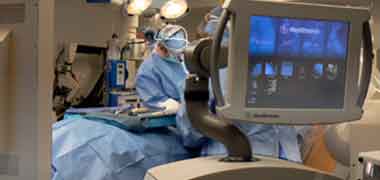
Medical Imaging & Surgical Systems
Non-magnetic CNC slide rail programs for MRI patient table positioning, CT scanner gantry translation, PET/CT imaging system positioning stages, and surgical robot linear axis guidance. 316L stainless and aluminum 6061-T6 CNC cross roller slide rail programs in Grade C3 accuracy for medical imaging system linear axis positioning compliance. ISO 13485 compatible documentation.

Aerospace & Space Mechanisms
AS9100D certified rail machining for satellite deployment mechanism linear stage elements, spacecraft instrument pointing stage rail components, airborne camera system stabilization linear axis hardware, and launch vehicle payload positioning mechanism linear rail elements. Titanium Ti-6Al-4V and Invar 36 ultra-precision linear rail programs with ASTM E595 outgassing compliance and FAIR documentation per AS9102.

Industrial Automation & Robotics
CNC slide rail machining for industrial robot 7th-axis floor track systems, Cartesian gantry robot linear axis guide rail assemblies, pick-and-place machine linear stage rail components, and automated inspection system positioning hardware. T-slot profile CNC slide rail machining for modular automation frame construction and reconfigurable production line architectures.
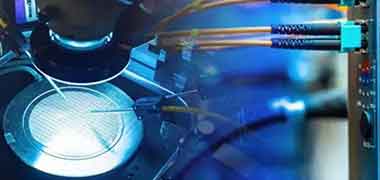
Optical & Photonic Systems
CNC cross roller slide rail producer programs for optical breadboard adjustment stage assemblies, laser beam steering linear axis rail elements, spectrometer wavelength scanning linear drive rail components, astronomical telescope fine adjustment stage hardware, and fiber optic alignment platform CNC cross roller slide rail units in Grade C1 accuracy for sub-micron optical path adjustment.
Rail Machining Process
& Capabilities
CNCPioneer's rail machining capability combines MAZAK mill-turn multi-axis CNC machining for complex rail body geometries with Swiss CNC lathe ultra-precision turning for cylindrical contact surface components and dedicated precision grinding and lapping for ultra-precision machining process linear rails — providing a complete CNC cross roller slide rail producer and precision linear rail machining capability from a single factory.
24-Hour DFM Review & Rail Machining Quote
Rail geometry feasibility — bearing surface approach geometry, wall thickness, pocket corner radius, internal feature access, and surface treatment sequence reviewed. Accuracy grade achievability assessment for cross roller slide rail travel accuracy (Grade C5/C3/C1). Material selection for hardness, corrosion resistance, and outgassing compliance. Complete rail machining quotation covering ultra-precision linear rail prototypes, CNC cross roller slide rail assemblies, and high-volume CNC slide rail production.
Rough CNC Machining & Heat Treatment
MAZAK mill-turn rough machining of rail body geometry from bar stock or billet — establishing all primary features at 0.2–0.5mm stock remaining on precision surfaces. Thermal stress relief at 150–175°C for 4–6 hours stabilizing residual stresses before hardening. Through-hardening for GCr15 bearing steel rails: austenitizing at 830–850°C, oil quench to martensite, temper at 150–175°C achieving HRC 62–64 with distortion managed within grinding stock allowance.
Precision Grinding & Lapping
Precision profile grinding of V-groove and bearing contact surfaces using diamond profile grinding wheels — form accuracy ±0.003mm, surface finish Ra 0.1μm. Cylindrical grinding of shaft-format rails: roundness ±0.001mm, Ra 0.05μm. For ultra-precision programs: precision flat lapping achieving Ra 0.012–0.025μm; cylindrical lapping achieving roundness ±0.0005mm. Straightness verified by autocollimator after each grinding stage confirming progressive error reduction toward 1μm/100mm specification.
CNC Cross Roller Slide Rail Assembly
Cleaning, roller installation in PEEK cage retainer, matched inner and outer rail pair assembly, preload setting through precision shim selection, wiper seal installation, and running-in on linear traverse test stand. Laser interferometer travel accuracy measurement confirming Grade C1 (±1μm), C3 (±3μm), or C5 (±5μm) compliance. Running torque measurement confirming correct preload without excess friction. Smoothness of travel hand-traverse assessment confirming no stick-slip.
Rail Machining Materials
GCr15 (ISO 683-17 100Cr6) bearing steel HRC 62–65 for precision linear rails and cross roller slide rail inner/outer rail bodies — dominant material for maximum contact fatigue life and grindability. 20CrMnTi and 17CrNiMo6 case-hardening steel for tough-core applications. 440C stainless HRC 58–61 and 316L for corrosion-resistant and medical/MRI programs. Aluminum 6061-T6 and 7075-T6 for lightweight CNC slide rail and T-slot profiles. Titanium Ti-6Al-4V, Invar 36, and carbide for specialty aerospace and ultra-precision programs.
Quality Documentation
Certificate of Conformance, laser interferometer travel accuracy records, CMM dimensional report, hardness measurement records, surface finish profilometer records, material certifications with lot traceability, heat treatment certification, FAIR per AS9102 for aerospace programs, PPAP Level 3 for automotive programs, and ASTM E595 outgassing test certificates for semiconductor and space programs. All records retained 20 years.
Materials for Rail
Machining
Rail machining material selection is governed by structural strength for rail body integrity and load capacity, hardness for bearing contact surface wear resistance, machinability and grindability for ultra-precision geometry, corrosion resistance for the deployment environment, thermal stability for precision over temperature variation, non-magnetic requirements for medical and aerospace applications, and RoHS compliance. GCr15 bearing steel dominates precision linear rail and cross roller slide rail programs.
GCr15 (ISO 683-17 100Cr6)
Hardened to HRC 62–65. Maximum contact fatigue life, excellent response to precision grinding producing Ra 0.05μm bearing surfaces, and adequate fracture toughness for linear rail operational loading. Dominant material for rail machining of precision linear rails, cross roller slide rail inner and outer rail bodies, and all components requiring hardened bearing contact surfaces. SII XRF composition verification confirming Cr 1.30–1.65%, C 0.95–1.05%.
20CrMnTi & 17CrNiMo6
20CrMnTi: HRC 60–62 surface with tough core for impact resistance — carriage bodies, rail end elements, and heavy-load linear guide assemblies. 17CrNiMo6: high core toughness, marine industry grade — heavy-duty CNC slide rail carriage and guide body components requiring superior toughness at hardened bearing surfaces. Carburize to 0.8–1.2mm case depth, quench, and temper to surface HRC 60–62 with tough core HRC 32–38.
440C & 17-4PH
440C: HRC 58–62, corrosion resistant, hardened, paramagnetic — cross roller slide rail inner/outer rail bodies in vacuum equipment, food processing automation, and marine environment precision positioning stages. 17-4PH H900: 44–47 HRC, high strength, moderate corrosion resistance — medium-load CNC slide rail structural elements in humid environments where full hardness is not required but yield strength exceeds 304/316L capability.
316L Stainless
Superior corrosion resistance, non-magnetic, biocompatible — medical equipment rail machining in MRI-compatible patient table positioning (paramagnetic, effectively non-magnetic at room temperature), food processing and washdown environment CNC slide rails, and marine electronics precision positioning stages. Passivated per ASTM A967 for maximum corrosion performance. Achieves ASTM E595 TML ≤0.02% after electropolishing for semiconductor vacuum programs.
6061-T6 & 7075-T6
6061-T6: 95 HRB, lightweight, excellent machinability, anodizable — dominant for T-slot CNC slide rail, carriage bodies, stage structures, and automation rail machining where weight reduction governs design. 7075-T6: 87 HRB, highest aluminum strength, lightweight — weight-critical cross roller slide rail end caps, aerospace rail machining, and portable instrument rail programs. Both achieve ASTM E595 TML ≤0.05% with anodize for semiconductor clean room compatibility.
Titanium, Invar & Carbide
Ti-6Al-4V: non-magnetic, lightweight, biocompatible — space mechanism rail machining, MRI stage rail components, and ultra-lightweight programs. Invar 36: CTE 1.3 ppm/°C, ultra-low thermal expansion — thermally stable ultra-precision linear rail programs for precision measurement instruments where temperature variation would distort standard steel rails. Carbide (WC-Co): HV 1,400–1,600, extreme hardness — ultra-precision rail bearing contact surface inserts in highest-load density semiconductor equipment applications.
Surface Treatments for
CNC Slide Rails & Linear Rail Machining
Surface treatment selection for rail machining is governed by wear resistance at bearing and sliding contact surfaces, corrosion protection for the deployment environment, electrical insulation or conductivity requirements, vacuum outgassing compliance for semiconductor and space programs, cosmetic appearance for commercial equipment, and RoHS compliance. CNCPioneer's comprehensive surface treatment programs combine multiple treatments in a single coordinated sequence.
Hard Chromium Plating
Wear and corrosion protection for steel CNC slide rail non-bearing structural surfaces in industrial environments. Hard chrome (HV 850–1,000) extends CNC slide rail surface life in factory floor environments. Applied after precision grinding on non-bearing surfaces only — bearing contact surfaces remain ground-finish without plating to preserve bearing surface geometry. Coating thickness 0.020–0.050mm ±0.005mm.
Electroless Nickel — MIL-C-26074
Corrosion protection for steel and aluminum rail machining components in moderate corrosion environments. Uniform coating across complex CNC slide rail internal geometries — bearing block bores, rail internal channels, and carriage guide surfaces. Phosphorus content 10–12% for maximum corrosion resistance in high-humidity rail machining environments. Maintains dimensional compliance on precision rail machining surfaces.
Type II Anodize
Standard corrosion protection for aluminum CNC slide rail structural components — T-slot profile rails, stage body structures, carriage mounting surfaces, and rail structural elements. 5–15μm coating maintains dimensional compliance on precision aluminum slide rail machining surfaces. Electrically insulating — mask bearing contact and grounding surfaces if electrical continuity is required. Clean cosmetic appearance for commercial instrument rail programs.
Type III Hard Anodize — MIL-A-8625
Wear-resistant surface treatment for aluminum CNC slide rail contact and guide surfaces — guide channel surfaces, T-slot width contact surfaces, and carriage guide surfaces subject to repeated sliding contact. HV 400+ surface hardness approaching hard chromium wear resistance at lower cost for aluminum rail machining programs. 15–50μm coating thickness — dimensional allowance incorporated in rail machining target dimensions. Black hard anodize variant for low-reflectance optical system rail programs.
Black Oxide
Low-reflectance, mild corrosion protection for steel precision rail machining components in cleanroom and optical bench environments where bright metallic surfaces create stray light interference. Black oxide provides ASTM A380 corrosion resistance adequate for climate-controlled precision instrument rail machining environments. Standard for optical breadboard rail machining, laser system slide rail components, and laboratory instrument linear rail programs where surface reflectance affects optical measurement accuracy.
DLC (Diamond-Like Carbon) Coating
Ultra-hard (HV 2,000–5,000), ultra-low friction (μ = 0.05–0.15 dry) coating for the most wear-intensive CNC slide rail contact surfaces — dovetail slide rail bearing surfaces in high-cycle industrial automation, and V-groove CNC slide rail bearing surfaces in dry-lubrication precision instrument applications. DLC coating 1–3μm thickness maintains bearing surface dimensional accuracy after coating on ultra-precision machining process linear rails. Extends service life 5–10× in dry-lubrication precision rail programs.
All rail machining surface treatments — hard chromium plating, electroless nickel MIL-C-26074, Type II and Type III anodize MIL-A-8625, black oxide, DLC coating, and passivation ASTM A967 — comply with RoHS 2011/65/EU restricted substance requirements. Surface treatment selection for vacuum-compatible semiconductor and space rail machining programs is included in CNCPioneer's 24-hour DFM review and rail machining quotes. Surface treatment certifications are included in the documentation package for every rail machining program.
Quality Assurance for Rail
Machining & Cross Roller Assembly
CNCPioneer's IATF 16949 and AS9100D certified quality system applies integrated quality controls to every rail machining program — from incoming material XRF verification and intermediate grinding stage straightness measurement through 100% laser interferometer travel accuracy verification on assembled CNC cross roller slide rail units.
Contract & Drawing Review
Engineering review of rail machining drawing requirements, applicable ISO 12090 (rolling bearing linear guide rails), DIN 645 (linear motion guide systems), JIS B 1192 (linear motion guide units), customer precision instrument and semiconductor equipment specifications, accuracy grade requirements, outgassing compliance requirements for vacuum programs, and FAIR or PPAP requirements before rail machining order acceptance.
Material Incoming Inspection
SII XRF composition verification confirming GCr15 bearing steel composition (Cr 1.30–1.65%, C 0.95–1.05%) for ultra-precision machining process linear rails and CNC cross roller slide rail programs. Hardness verification post-heat treatment: GCr15 target HRC 62–65; 440C target HRC 58–61. Dimensional bar stock diameter and straightness confirmation before ultra-precision machining process linear rails production entry. Full lot traceability from mill certificate through finished rail machining component shipment.
In-Process Precision Machining Verification
Intermediate dimensional verification between ultra-precision machining process stages — post-rough machining, post-grinding, and post-lapping. Straightness measurement by autocollimator after each grinding stage confirming progressive error reduction toward the sub-micron straightness that semiconductor and optical rail machining applications demand. Hardness spot-check after heat treatment before precision grinding investment. CMM verification of cross roller slide rail V-groove geometry after profile grinding before roller retainer assembly.
Precision Measurement Final Inspection
Laser interferometer straightness measurement on ultra-precision machining process linear rails and CNC cross roller slide rail travel accuracy — 0.1μm resolution for ultra-precision machining process linear rails straightness certification. Mitutoyo CMM (±0.001mm) full dimensional report on all rail body, carriage, and end cap features. Autocollimator parallelism measurement between rail mounting surface and bearing contact surface. Profilometer Ra measurement on all bearing contact surfaces verifying Ra 0.025–0.2μm specification compliance.
Cross Roller Assembly Verification
Assembled CNC cross roller slide rail accuracy measurement before shipment as a completed cross roller slide rail producer unit. Travel accuracy by laser interferometer confirming Grade C5 (±5μm), C3 (±3μm), or C1 (±1μm) compliance. Running torque measurement confirming correct preload without excess friction. Smoothness of travel hand-traverse assessment confirming no stick-slip from roller retainer interference. Load and moment rigidity verification on Grade C1 cross roller slide rail programs.
Documentation Package
Certificate of Conformance, laser interferometer travel accuracy records, CMM dimensional report, hardness measurement records, surface finish profilometer records, material certifications with lot traceability, heat treatment certification, FAIR per AS9102 for aerospace programs, PPAP Level 3 for automotive programs, and ASTM E595 outgassing test certificates for semiconductor and space programs. All records retained 20 years.
IATF 16949 & AS9100D Quality System for
Rail Machining & Linear Motion Components
CNCPioneer's IATF 16949 and AS9100D certified rail machining factory delivers the quality management framework demanded by semiconductor equipment OEMs, precision instrument developers, medical imaging system producers, and aerospace mechanism integrators — covering integrated quality controls, PPAP and FAIR documentation capability, RoHS compliance, and single-source accountability for rail machining and linear motion assembly quality.
PPAP Level 3 & FAIR per AS9102
IATF 16949 PPAP Level 3 documentation for high-volume OEM rail machining programs — process capability studies (Cpk ≥ 1.67), measurement system analysis, sample production run report, material and performance test results, and design records. AS9102 FAIR documentation for aerospace and defense rail machining programs — complete CMM balloon drawing with every dimension measured, laser interferometer travel accuracy records, hardness and surface finish records, and material certifications. Customer approval required before production quantity release.
- PPAP Level 3 for OEM programs
- AS9102 FAIR for defense/aerospace
- Records retained 20 years
Laser Interferometer & Precision Measurement
Laser interferometer straightness measurement at 0.1μm resolution on all ultra-precision machining process linear rails and CNC cross roller slide rail travel accuracy verification programs. Mitutoyo CMM (±0.001mm) full dimensional report on all rail body, carriage, and end cap features. Autocollimator parallelism measurement between rail mounting surface and bearing contact surface. Profilometer Ra measurement at 0.001μm resolution on all bearing contact surfaces. Rockwell HRC hardness testing at 5 positions per rail body confirming heat treatment compliance.
- 0.1μm laser interferometer resolution
- 100% CMM on precision programs
- Profilometer Ra 0.001μm resolution
RoHS & Material Traceability
SII XRF composition verification on every incoming rail machining material lot confirming alloy grade and RoHS 2011/65/EU restricted substance compliance. Full material lot traceability chain from mill certificate through finished rail machining component shipment. Signed RoHS Declaration of Conformity and REACH SVHC declaration with every rail machining shipment. ASTM E595 outgassing test certificates from qualified laboratories for semiconductor and space rail machining programs.
- XRF alloy verification every lot
- RoHS declaration with every shipment
- ASTM E595 outgassing certificates
Single-Source Quality Accountability
CNCPioneer's integrated rail machining and CNC cross roller slide rail assembly supply creates single-source quality accountability for both rail dimensional compliance and assembled travel accuracy verification within a single FAIR/PPAP quality record — eliminating the accountability gap between separate rail machining and linear motion assembly suppliers. One Certificate of Conformance covers rail dimensions, laser interferometer travel accuracy records, surface treatment certifications, and RoHS compliance in a single documentation package per rail machining program.
- Single C of C: rail + assembly
- No supplier handoff quality gaps
- On-time delivery: 100%
Rail Machining & CNC Cross Roller
Slide Rail FAQ
Common questions from semiconductor equipment OEMs, precision instrument developers, medical imaging system producers, aerospace mechanism integrators, and industrial automation engineers about CNCPioneer's rail machining capabilities, ultra-precision linear rail production, CNC cross roller slide rail assembly, and 24-hour rail machining quotes.
Ultra-precision machining process linear rails are distinguished from standard precision linear rails by three compounded performance differences. First, straightness specification: ultra-precision machining process linear rails achieve 1–1.5μm/100mm bearing surface straightness versus 3–5μm/100mm for standard precision linear rails — a 3–5× improvement in the geometric error that most directly determines linear motion stage positioning error under load. This requires laser interferometer feedback during precision grinding, post-grinding stress relief thermal stabilization, and precision lapping as a final finishing operation — investments that standard precision linear rail production does not include. Second, surface finish: ultra-precision machining process linear rails achieve bearing contact surface Ra 0.025–0.050μm through precision lapping versus Ra 0.1–0.2μm from grinding alone — reducing rolling friction variation from ±15% of mean friction to ±5%, which directly affects constant-velocity stage motion in precision scanning applications. Third, measurement verification: ultra-precision machining process linear rails are verified by laser interferometer at 0.1μm resolution versus standard precision linear rails verified by CMM at 1μm resolution — because the 1μm straightness specification cannot be meaningfully verified by CMM instruments with equivalent resolution. CNCPioneer's ultra-precision machining process linear rails program applies all three distinguishing elements to produce rails for semiconductor wafer stages, interferometric measurement instruments, and optical alignment systems.
CNC cross roller slide rails are specified over recirculating ball linear guide rails for precision positioning applications based on four performance advantages. First, higher rigidity: each cylindrical roller in a CNC cross roller slide rail contacts its four V-groove surfaces over the full roller length — line contact versus point contact in ball guide rails — providing 2–4× higher rigidity per unit rail size under identical preload force. In positioning terms, a CNC cross roller slide rail under 100N vertical load deflects 0.5–1.0μm versus 2–4μm for an equivalent recirculating ball guide — the difference between sub-micron stage position compliance and multi-micron compliance that determines whether an optical alignment system achieves its specification. Second, non-recirculating smoothness: standard recirculating ball guides introduce periodic force variation at ball recirculation frequency (typically 100–300 Hz during fast traverses) that appears as position error oscillation in precision scanning and imaging applications. CNC cross roller slide rails use non-recirculating retained rollers — eliminating recirculation force variation entirely and enabling constant-velocity stage motion for scanning microscopy, surface measurement profilometry, and photolithography stage applications. Third, moment load capacity: CNC cross roller slide rails provide equivalent rigidity against vertical, horizontal, pitch, yaw, and roll moment loads from the crossed roller geometry — eliminating the directional stiffness asymmetry of ball guide rails. Fourth, compact precision: CNC cross roller slide rail units achieve comparable precision to much larger ball guide rail assemblies, enabling precision motion in miniature instrument and equipment packaging constraints. CNCPioneer as a CNC cross roller slide rail producer provides accuracy grades C5 through C1 (±1μm travel accuracy) covering the complete precision requirement range.
CNCPioneer's CNC cross roller slide rail producer manufacturing process encompasses seven primary stages. Stage 1: Material qualification — GCr15 bearing steel XRF composition verification and hardness test on incoming bar stock confirming conformance before machining investment. Stage 2: Rough CNC machining of inner rail body and outer rail body from GCr15 bar stock on MAZAK mill-turn centers — establishing all profile features at 0.2mm oversize on all precision surfaces for subsequent grinding. Stage 3: Heat treatment — austenitizing at 840°C, oil quench to martensite, temper at 160°C for 3 hours, achieving HRC 62–64 with distortion 0.05–0.10mm on rail cross-section managed within grinding stock. Stage 4: Precision profile grinding of V-groove bearing contact surfaces using diamond profile grinding wheels on CNC profile grinding machines — achieving V-groove form accuracy ±0.003mm, surface finish Ra 0.05μm, with matched inner and outer rail pairs measured as sets for correct roller contact geometry. Stage 5: Roller retainer PEEK cage precision machining — roller pocket angular position ±5 arc-minutes, pocket diameter clearance 0.008mm over roller OD. Stage 6: End cap aluminum machining, wiper seal groove milling, and lubrication port threading. Stage 7: Cleaning, assembly, roller installation in cage, preload setting through precision shim selection, wiper seal installation, running-in on linear traverse test stand, and laser interferometer travel accuracy measurement confirming Grade C1 (±1μm), C3 (±3μm), or C5 (±5μm) compliance before shipment documentation generation. All seven stages are performed under CNCPioneer's AS9100D quality management system with full lot traceability maintained from GCr15 mill certificate through finished CNC cross roller slide rail assembly accuracy verification report.
Semiconductor equipment vacuum environment rail machining material selection is governed by three simultaneous requirements: vacuum compatibility (no outgassing above ASTM E595 TML ≤1.0%, CVCM ≤0.1%), non-magnetic performance (no ferromagnetic materials within magnetic field proximity zones), and corrosion resistance in semiconductor process chemical ambient conditions. For standard semiconductor equipment CNC slide rail programs in clean room environments without vacuum requirement: aluminum 6061-T6 with Type II clear anodize is the dominant specification — aluminum is non-magnetic, machinability at ultra-precision tolerances is excellent, and anodized surfaces achieve ASTM E595 TML ≤0.05% (well within limit) with no detectable CVCM. For vacuum chamber internal CNC cross roller slide rail programs in semiconductor equipment: aluminum 6061-T6 with electropolished finish on all wetted surfaces — electropolishing removes surface hydrated oxide layers that are the primary outgassing mechanism in aluminum vacuum components. For corrosion-resistant semiconductor CNC slide rail programs in HF, H₂SO₄, or oxidizer ambient exposure: 316L stainless steel with electropolishing — 316L provides excellent chemical resistance, is paramagnetic (effectively non-magnetic at room temperature), and achieves ASTM E595 TML ≤0.02% after electropolishing and bake-out. Avoid GCr15 bearing steel for semiconductor vacuum CNC slide rail and cross roller slide rail programs — the chromium oxide passive layer does not provide adequate CVCM suppression without electropolishing, and GCr15 is ferromagnetic. CNCPioneer provides ASTM E595 test certificates from qualified outgassing test laboratories as standard documentation for semiconductor equipment rail machining programs requiring vacuum compatibility verification.
CNCPioneer's rail machining lead times: aluminum CNC slide rail prototype components without surface treatment — 5–7 business days; aluminum precision linear rail prototypes with Type II anodize — 7–10 business days; GCr15 steel precision ground linear rail prototypes including heat treatment and grinding — 14–18 business days; 440C stainless CNC slide rail components — 10–14 business days; Grade C5 CNC cross roller slide rail assembled and accuracy-verified units — 15–20 business days; Grade C3 CNC cross roller slide rail assembled units — 18–24 business days; Grade C1 ultra-precision CNC cross roller slide rail assembled units — 24–30 business days including laser interferometer travel accuracy certification. Ultra-precision machining process linear rails in GCr15 with lapping finish and laser interferometer straightness certification — 21–28 business days. FAIR documentation per AS9102 adds 2–3 business days to any rail machining program. Production quantity lead times: standard aluminum CNC slide rail production — 4–5 weeks; precision steel linear rail production — 5–7 weeks; CNC cross roller slide rail producer production for Grade C3 standard configurations — 6–8 weeks; Grade C1 cross roller slide rail production with full accuracy documentation — 8–10 weeks. High-volume industrial CNC slide rail blanket order programs for T-slot profile rail, dovetail rail, and standard linear guide rail components operate at 2–4 week monthly release lead times with dedicated production capacity.
CNCPioneer verifies straightness on ultra-precision machining process linear rails through a multi-instrument measurement protocol that provides both absolute straightness certification and progressive error tracking through the production sequence. During in-process precision grinding: straightness is measured by autocollimator after each grinding stage — post-rough grinding, post-semi-finish grinding, and post-finish grinding — confirming progressive error reduction toward the 1μm/100mm specification at each stage before committing to the next grinding investment. Autocollimator resolution of 0.1 arc-seconds corresponds to approximately 0.05μm height variation over a 100mm rail segment, providing adequate resolution to guide grinding corrections. For final certification of completed ultra-precision machining process linear rails: laser interferometer straightness measurement is performed using a straightness optic (Wollaston prism or retroreflector pair) mounted on the rail carriage traversing the full rail length — measuring straightness as the deviation of the carriage path from a geometrically straight reference beam at 0.1μm resolution. This laser interferometer measurement provides the absolute straightness certification documented in the shipment quality record. For rail pairs (left and right rails in a stage assembly): matched pair straightness is measured simultaneously on a granite surface plate by differential autocollimator measurement, confirming that the paired rails exhibit complementary straightness errors that cancel in the assembled stage rather than compounding into yaw and pitch errors. All straightness measurement instruments are calibrated traceable to national length standards with calibration certificates included in the rail machining program documentation upon request.
Get Rail Machining & Cross Roller Slide Rail Quotes
Upload your linear rail or CNC cross roller slide rail drawing or CAD file and receive a free DFM review and competitive rail machining quotation within 24 hours. CNCPioneer's precision motion component engineering team will review your rail machining design for ultra-precision machining process linear rails feasibility, confirm bearing surface geometry for cross roller slide rail accuracy grade compliance, assess material selection for application environment and outgassing requirements, evaluate heat treatment specification for bearing contact surface hardness targets, verify CNC cross roller slide rail producer configuration for load and rigidity specification achievement, recommend surface treatment for deployment environment corrosion and wear protection, and provide complete pricing options covering ultra-precision linear rail prototypes, CNC cross roller slide rail producer programs in Grades C5 through C1, and high-volume CNC slide rail production supply.