
Custom Liquid Cooling Connector
CNCPioneer is a precision custom liquid cooling connector specialist and certified liquid cooling connector supplier China factory delivering high-reliability quick-disconnect coupling bodies, blind-mate connector arrays, coolant manifold blocks, and liquid cooling charging connector components — with O-ring groove accuracy of ±0.020mm, valve seat sealing diameter tolerance of ±0.005mm, and 100% pressure decay leak testing on every custom liquid cooling connector assembly shipped.

What Is a
Custom Liquid Cooling Connector?
A custom liquid cooling connector is a precision-machined fluid interface component — a coupling body, valve mechanism, manifold block, or mating pin assembly — that enables liquid coolant to be connected, disconnected, distributed, or charged into a liquid cooling circuit while maintaining the sealing integrity, flow capacity, and electrical isolation that the cooling system's pressure rating, leak-free service requirement, and operating environment demand.
Custom liquid cooling connectors span two technically distinct application domains: stationary liquid cooling circuit connection — quick-disconnect couplings, blind-mate connector arrays, and coolant distribution manifold components — and liquid cooling charging connector technology — precision-machined coolant channel components integrated into high-power EV DC fast charging connectors that circulate coolant through connector pin assemblies to extract Joule heating at currents up to 500A, enabling lighter, more flexible charging cables than air-cooled equivalents.
-
Precision sealing geometry as the foundation O-ring groove width and depth accuracy of ±0.020mm, valve poppet and seat sealing diameter accuracy of ±0.005mm, and 100% pressure decay leak testing at 1.5× rated operating pressure on every custom liquid cooling connector and assembly before shipment.
-
Dual-domain liquid cooling connector expertise Stationary QD couplings and liquid cooling charging connector pin assemblies share precision machining disciplines but differ in materials, dielectric isolation requirements, and mating interface standards — both addressed from a single qualified liquid cooling connector supplier China facility.
-
Complete custom liquid cooling connector assembly Fully assembled, leak-tested, ready-to-install connector units — body, valve mechanism, seal set, locking hardware, and mounting bracket — eliminating the multi-component sourcing and in-house assembly burden of individual component procurement.
-
40–60% China liquid cooling connector supplier cost advantage China-based custom liquid cooling connector factory delivers 40–60% cost reduction versus equivalent custom liquid cooling connector and liquid cooling charging connector machining from US, European, and Japanese precision connector manufacturers.

Why CNCPioneer — Liquid Cooling
Connector Supplier China?
Among custom liquid cooling connector manufacturers globally, CNCPioneer offers the combination of precision sealing geometry machining, dual-domain connector expertise, complete custom liquid cooling connector assembly capability, 100% leak test infrastructure, and China manufacturing cost efficiency that establishes us as the preferred liquid cooling connector supplier China partner for AI server OEMs, data center operators, EV charging infrastructure manufacturers, and EV powertrain integrators.
Precision Sealing Geometry as the Foundation
Coolant leakage at a connector interface in an AI server rack or EV charging cable represents catastrophic field failure risk. CNCPioneer's custom liquid cooling connector machining achieves O-ring groove width and depth accuracy of ±0.020mm (the dimensional foundation of reliable IP67 sealing), valve poppet and seat sealing diameter accuracy of ±0.005mm, and 100% pressure decay leak testing at 1.5× rated operating pressure on every assembly before shipment.
Dual-Domain Liquid Cooling Connector Expertise
Stationary liquid cooling QD couplings and liquid cooling charging connector pin assemblies share precision machining disciplines but differ in materials and dielectric isolation requirements. CNCPioneer's custom liquid cooling connector programs address both domains from a single qualified liquid cooling connector supplier China facility — serving customers whose product portfolios span both server liquid cooling and EV charging infrastructure.
Complete Custom Liquid Cooling Connector Assembly
CNCPioneer's custom liquid cooling connector assembly programs deliver fully assembled, leak-tested connector units — coupling body, spring-loaded poppet valve, O-ring seal set, locking sleeve or ball-detent retention mechanism, and mounting bracket — eliminating the component-level sourcing, in-house valve and seal assembly, and individual leak testing burden that purchasing components separately imposes on thermal system integrators.
Blind-Mate Connector Precision for Hot-Swap Server Liquid Cooling
AI accelerator server liquid cooling architectures increasingly deploy blind-mate coolant connector arrays — multiple coolant supply and return connections that engage automatically when a server sled is inserted. CNCPioneer's custom liquid cooling connector machining for blind-mate arrays achieves ±0.050mm connector position accuracy across multi-port arrays — the precision that ensures every connector engages correctly during automated sled insertion without manual intervention.
Liquid Cooling Charging Connector Dielectric Isolation Precision
Liquid cooling charging connector programs for 350kW+ DC fast charging require precision machining of dielectric isolation features — creepage and clearance distance compliance per IEC 60664, coolant channel routing maintaining separation from high-voltage conductor surfaces, and concentric cooling jacket geometry surrounding each power pin without compromising dielectric withstand rating. CNCPioneer addresses these requirements as standard practice.
China Liquid Cooling Connector Supplier Cost Advantage
CNCPioneer's China-based custom liquid cooling connector factory delivers 40–60% cost reduction versus equivalent custom liquid cooling connector and liquid cooling charging connector machining from US, European, and Japanese precision connector manufacturers — enabling AI server OEMs, data center operators, and EV charging infrastructure manufacturers to achieve competitive thermal management BOM cost without compromising sealing integrity or dielectric isolation.
Custom Liquid Cooling Connectors
We Produce
CNCPioneer's custom liquid cooling connector programs cover the complete range of connector types across stationary liquid cooling and EV charging connector domains — from single prototype pieces to high-volume OEM production runs, with complete quality documentation and 100% leak testing on every program.

UQD Connector
High-performance universal quick disconnect connector designed for fast, reliable fluid transfer in industrial and mobile equipment applications.

UQDB Blind Mate Connector
Robust blind mate quick disconnect connector enabling effortless, tool-free connection in tight spaces for hydraulic and pneumatic systems.

BMQC Blind Mate Quick Connector
Advanced blind mate quick connector offering secure, automatic alignment and leak-free coupling for high-pressure fluid transfer.

LQC Large Flow Quick Disconnect
Heavy-duty large flow quick disconnect coupler engineered for high-volume fluid transfer with minimal pressure drop and fast operation.

MQD Multi Quick Disconnect
Versatile multi quick disconnect system allowing simultaneous connection of multiple fluid or gas lines with one simple motion.

NVQD Quick Connector
Compact non-spill quick disconnect connector providing clean, drip-free disconnection for sensitive fluid systems and precision applications.
Industries & Applications
CNCPioneer's custom liquid cooling connector and liquid cooling connector supplier China programs supply AI server and cloud data center operators, EV charging infrastructure manufacturers, EV powertrain integrators, industrial power electronics producers, telecommunications equipment builders, and medical and scientific instrument developers worldwide.

AI and Cloud Data Centers
High-performance data center servers engineered for maximum uptime, scalability, and efficiency in enterprise cloud and hyperscale computing environments.

EV Charging Infrastructure
Powerful AI cluster and high-performance computing solutions optimized for large-scale AI training, inference, and complex scientific simulations.
Electric Vehicles
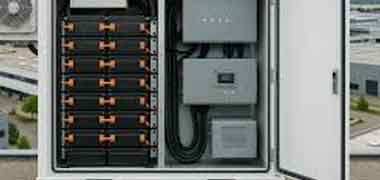
Advanced energy storage systems with intelligent battery thermal management for safe, efficient, and long-lasting performance in renewable and EV applications.
Custom Liquid Cooling Connector
Process & Capabilities
CNCPioneer's custom liquid cooling connector program combines MAZAK mill-turn multi-axis CNC machining for complex coupling body geometries with Swiss CNC lathe ultra-precision turning for cylindrical valve and pin components, dedicated lapping for poppet seat sealing surfaces, and 100% pressure decay leak testing infrastructure — providing a complete liquid cooling connector supplier China capability from a single factory.
24-Hour DFM Review & Connector Quote
Connector sealing geometry feasibility — O-ring groove wall thickness, poppet valve seat approach geometry, blind-mate array position tolerance stack-up, and dielectric isolation barrier machining sequence reviewed. Accuracy grade achievability for blind-mate multi-port arrays. Material selection for coolant chemistry, corrosion resistance, and electrical conductor requirements. Complete custom liquid cooling connector quotation covering prototype components, complete assemblies, and liquid cooling connector supplier China wholesale supply.
Quick-Disconnect Coupling Body Machining
MAZAK mill-turn precision machining of male and female QD coupling bodies from brass, stainless, or aluminum bar stock — establishing all primary features at 0.05–0.1mm stock remaining on precision sealing surfaces for subsequent lapping. Swiss CNC lathe ultra-precision turning of cylindrical valve bores, poppet stems, and cooling jacket sleeves. Thread port machining NPT, BSP, JIC 37°, or push-to-connect tube fitting per specification.
Poppet Valve Precision Machining & Lapping
Poppet valve seat lapping after CNC turning to achieve the surface finish and form accuracy that zero-leak shutoff requires: seat angle 15°–45° lapped to ±15 arc-minutes form accuracy; seat surface finish post-lapping Ra 0.05–0.10μm; seat-to-poppet contact line concentricity ±0.003mm for uniform sealing contact around the complete circumference. 100% spring preload force verification on every assembled poppet-and-spring set.
Blind-Mate Array & Charging Connector Assembly
Cleaning, poppet valve installation with calibrated spring preload, O-ring seal set installation, locking mechanism assembly (ball-detent or sleeve-lock), and mounting bracket attachment. For liquid cooling charging connectors: concentric cooling jacket pin assembly, conductor pin silver or tin plating, coolant manifold block integration, and dielectric isolation barrier installation. 100% pressure decay leak testing at 1.5× rated pressure.
Materials & Dielectric Isolation Engineering
Brass C36000/C37700 for standard QD coupling bodies; 303/316L stainless for corrosion-resistant and high-pressure programs; aluminum 6061-T6 for weight-critical applications; copper C11000/C17200 for liquid cooling charging connector conductor pins; PEEK for dielectric isolation barriers and dielectric fluid-compatible programs; FKM and PTFE for seal and low-friction coating applications. Full SII XRF composition verification and lot traceability.
Quality Verification & Documentation
Certificate of Conformance, CMM dimensional report, O-ring groove and valve seat measurement records, 100% pressure decay leak test records, spring preload force verification logs, material certifications with lot traceability, surface treatment certifications, contact resistance and dielectric test records for liquid cooling charging connector programs, RoHS compliance declaration, PPAP Level 3 for automotive, and FAIR per AS9102 for aerospace. All records retained 20 years.
Materials for Custom
Liquid Cooling Connectors
Custom liquid cooling connector material selection is governed by corrosion resistance against the coolant chemistry, machinability for precision sealing geometry, electrical conductivity for charging connector conductor pins, dielectric isolation requirements for high-voltage charging programs, weight constraints, and RoHS compliance. Brass C36000 dominates standard QD coupling body production; copper alloys are mandatory for liquid cooling charging connector conductor pins.
C36000 & C37700 Brass
C36000: excellent machinability enabling precision poppet seat and O-ring groove geometry at competitive cycle times, adequate corrosion resistance for glycol-water coolant circuits, and compatibility with standard nickel and chrome plating for wear-resistant locking mechanism surfaces — dominant material for standard custom liquid cooling connector QD coupling bodies. C37700 forging brass: higher strength than C36000 for high-pressure QD coupling body applications requiring greater yield strength at the valve seat bore.
303 & 316L Stainless
303 stainless: good machinability, corrosion resistant — standard stainless QD coupling bodies and poppet valves in industrial environments where brass corrosion resistance is inadequate. 316L stainless: superior corrosion resistance, non-magnetic, biocompatible — coolant manifold blocks in liquid cooling charging connector assemblies, QD coupling bodies for aggressive coolant chemistries (HF, H₂SO₄, oxidizers), and marine environment precision positioning connectors. Passivated per ASTM A967.
6061-T6 Aluminum
Lightweight, excellent machinability, anodizable — specified for weight-critical custom liquid cooling connector QD coupling bodies, blind-mate array carrier plates, and portable equipment connector applications where every gram of connector mass is a design constraint. Type II clear anodize for corrosion protection and electrical insulation; Type III hard anodize for wear-resistant locking mechanism surfaces. Achieves ASTM E595 TML ≤0.05% for semiconductor clean room compatibility.
C11000 & C17200 Copper
C11000 ETP: maximum electrical conductivity at lowest cost — standard liquid cooling charging connector conductor pin material for high-current power pins (DC+ and DC−). C17200 beryllium copper: high strength, excellent conductivity, spring properties — specified where the conductor pin must also function as a spring-contact element providing mechanical retention force against the mating receptacle across thousands of charging cycles. Silver or tin plating on mating contact surfaces.
PEEK Engineering Grade
Chemical resistant, electrical insulator, dielectric strength >20 kV/mm — mandatory for liquid cooling charging connector dielectric isolation barriers preventing coolant-to-high-voltage creepage paths between the conductive coolant circuit and high-voltage power conductors. PEEK roller retainers and cage components for precision connector mechanisms. Specified for dielectric fluid-compatible QD body programs and medical/scientific equipment connectors requiring biocompatible, cleanroom-compatible non-metallic construction.
FKM & PTFE
FKM (Viton): coolant-compatible elastomer for O-ring seals in glycol-water and dielectric fluid coolant circuits — standard primary and secondary seal material for custom liquid cooling connector assemblies operating at temperatures up to 200°C. PTFE: chemical inert, low friction — poppet seal inserts for elastomeric sealing configurations, valve seat seal inserts in chemically aggressive coolant environments, and low-friction coating for poppet valve stems and locking sleeve sliding surfaces ensuring smooth, low-force connector mating across the connector's rated mating cycle life.
Surface Treatments for
Custom Liquid Cooling Connectors
Surface treatment selection for custom liquid cooling connectors is governed by corrosion protection for the coolant chemistry and deployment environment, wear resistance at locking and sliding surfaces, electrical conductivity or insulation requirements, dielectric isolation for high-voltage charging programs, and RoHS compliance. CNCPioneer's comprehensive surface treatment programs combine multiple treatments in a single coordinated sequence.
Electroless Nickel — MIL-C-26074
Corrosion protection for brass and copper custom liquid cooling connector bodies and coolant-wetted surfaces. Uniform coating across complex internal poppet bore and coolant channel geometry. Phosphorus content 10–12% for maximum corrosion resistance in high-humidity and glycol-water coolant environments. Maintains dimensional compliance on precision O-ring groove and valve seat surfaces. Standard treatment for brass QD coupling bodies.
Passivation — ASTM A967
Mandatory for all stainless steel custom liquid cooling connector components — 316L coolant manifold blocks, 303/316L poppet valves, and stainless QD coupling bodies. Removes machining free iron and enhances chromium oxide passive layer for maximum corrosion resistance in humid, glycol-water, and aggressive coolant environments. Standard for all stainless steel connector programs before assembly and leak testing.
Type III Hard Anodize — MIL-A-8625
Wear-resistant surface treatment for aluminum custom liquid cooling connector contact and guide surfaces — locking mechanism contact surfaces, blind-mate array carrier plates, and connector bodies subject to repeated mating cycles. HV 400+ surface hardness approaching hard chromium wear resistance at lower cost for aluminum connector programs. 15–50μm coating thickness with dimensional allowance incorporated in machining target dimensions. Black hard anodize variant for low-reflectance optical and server chassis applications.
Silver Plating
Liquid cooling charging connector conductor pin contact surfaces — silver plating provides the lowest contact resistance and highest current-carrying capacity at the pin-to-receptacle mating interface, critical for maintaining contact temperature within specification at 500A continuous charging current. Standard for highest-power Megawatt Charging System and 800V+ DC fast charging liquid cooling charging connector conductor pin programs where minimum contact resistance governs thermal performance.
Tin Plating
Cost-optimized alternative to silver plating for liquid cooling charging connector conductor pins in lower-power applications — adequate contact resistance for continuous currents below 250A with lower plating cost than silver. Tin-plated copper conductor pins provide stable low-resistance contact across the charging connector's rated mating cycle life when mated with tin-plated or silver-plated receptacle contacts per IEC 62196 and GB/T 20234 contact material compatibility standards.
PTFE Coating
Low-friction coating for poppet valve stems and locking sleeve sliding surfaces in custom liquid cooling connector assemblies — ensuring smooth, low-force connector mating and unmating across the connector's rated mating cycle life without lubricant maintenance. Applied selectively to sliding surfaces without impacting O-ring groove sealing geometry or valve seat sealing performance. Standard for high-cycle blind-mate server sled connectors and field-serviceable industrial QD coupling programs.
All custom liquid cooling connector surface treatments — electroless nickel MIL-C-26074, passivation ASTM A967, Type II and Type III anodize MIL-A-8625, silver plating, tin plating, and PTFE coating — comply with RoHS 2011/65/EU restricted substance requirements. Surface treatment selection for dielectric isolation and high-voltage charging connector programs is included in CNCPioneer's 24-hour DFM review and custom liquid cooling connector quotes. Surface treatment certifications are included in the documentation package for every connector program.
Quality Assurance for Custom
Liquid Cooling Connectors
CNCPioneer's IATF 16949 and AS9100D certified quality system applies integrated quality controls to every custom liquid cooling connector program — from incoming material XRF verification and precision sealing geometry dimensional control through 100% pressure decay leak testing and liquid cooling charging connector electrical verification.
Contract & Drawing Review
Engineering review of custom liquid cooling connector drawing requirements, applicable ISO 16028, SAE J2044, IEC 62196, GB/T 20234, IEC 60664 dielectric requirements, customer mating interface specifications, and RoHS material compliance requirements before order acceptance. Blind-mate array position tolerance stack-up and dielectric isolation barrier machining sequence reviewed.
Material Incoming Inspection
SII XRF composition verification on every custom liquid cooling connector material lot — brass, stainless, copper alloy, and PEEK composition confirmation. Full lot traceability from mill certificate through finished custom liquid cooling connector assembly shipment. Signed RoHS Declaration of Conformity and REACH SVHC declaration with every shipment.
Precision Sealing Geometry Verification
100% CMM verification of O-ring groove dimensions and poppet valve seat diameter on every first article. Surface finish profilometry on all poppet seating faces and conductor pin contact surfaces. Valve seat lapping form accuracy verification by optical comparator. Spring preload force verification on 100% of assembled poppet-and-spring sets using calibrated force gauges.
100% Pressure Decay Leak Testing
Every custom liquid cooling connector and custom liquid cooling connector assembly tested at 1.5× rated operating pressure with zero pressure decay acceptance criterion. Automated test records archived with lot traceability. Mating and unmating force verification confirming connector engagement and disconnection forces within specification — critical for blind-mate arrays where excessive mating force can prevent automated tray insertion.
Liquid Cooling Charging Connector Electrical Verification
Contact resistance measurement on every conductor pin assembly confirming compliance with charging standard contact resistance limits. Dielectric withstand testing at rated voltage plus safety margin on every liquid cooling charging connector dielectric isolation barrier. Insulation resistance measurement confirming no coolant-to-conductor leakage path. Mating cycle life sampling with post-cycle leak and contact resistance re-verification.
Documentation Package
Certificate of Conformance, CMM dimensional report, O-ring groove and valve seat measurement records, 100% pressure decay leak test records, spring preload force verification logs, material certifications with lot traceability, surface treatment certifications, contact resistance and dielectric test records for liquid cooling charging connector programs, RoHS compliance declaration, PPAP Level 3 for automotive, and FAIR per AS9102 for aerospace.
IATF 16949 & AS9100D Quality System for
Custom Liquid Cooling Connectors
CNCPioneer's IATF 16949 and AS9100D certified custom liquid cooling connector factory delivers the quality management framework demanded by AI server OEMs, EV charging infrastructure manufacturers, EV powertrain integrators, and industrial thermal system producers — covering integrated quality controls, PPAP and FAIR documentation capability, RoHS compliance, and single-source accountability for connector machining and assembly quality.
PPAP Level 3 & FAIR per AS9102
IATF 16949 PPAP Level 3 documentation for high-volume OEM custom liquid cooling connector programs — process capability studies (Cpk ≥ 1.67), measurement system analysis, sample production run report, material and performance test results, and design records. AS9102 FAIR documentation for aerospace and defense connector programs — complete CMM balloon drawing with every dimension measured, leak test records, and surface treatment certifications. Customer approval required before production quantity release.
- PPAP Level 3 for OEM programs
- AS9102 FAIR for defense/aerospace
- Records retained 20 years
100% Pressure Decay & Poppet Seat Verification
100% pressure decay leak testing at 1.5× rated operating pressure on every custom liquid cooling connector and custom liquid cooling connector assembly with zero-decay acceptance. Mitutoyo CMM (±0.001mm) O-ring groove and poppet valve seat dimensional verification on all high-precision programs. Spring preload force verification on 100% of assembled poppet-and-spring sets. Mating and unmating force verification for blind-mate array engagement compliance.
- 100% leak testing every shipment
- CMM on all sealing geometry
- Spring preload force logs
RoHS & Material Traceability
SII XRF composition verification on every incoming custom liquid cooling connector material lot confirming alloy grade and RoHS 2011/65/EU restricted substance compliance. Full material lot traceability chain from mill certificate through finished custom liquid cooling connector assembly shipment. Signed RoHS Declaration of Conformity and REACH SVHC declaration with every connector shipment. Counterfeit material prevention through approved supplier management.
- XRF alloy verification every lot
- RoHS declaration with every shipment
- Mill cert traceability retained
Single-Source Quality Accountability
CNCPioneer's integrated custom liquid cooling connector machining and assembly supply creates single-source quality accountability for both connector dimensional compliance and leak test verification within a single FAIR/PPAP quality record — eliminating the accountability gap between separate machining and assembly suppliers. One Certificate of Conformance covers connector dimensions, leak test records, surface treatment certifications, and RoHS compliance in a single documentation package per connector program.
- Single C of C: machining + assembly
- No supplier handoff quality gaps
- On-time delivery: 100%
Custom Liquid Cooling Connector
FAQ
Common questions from AI server OEMs, EV charging infrastructure manufacturers, EV powertrain integrators, data center operators, and industrial thermal system engineers about CNCPioneer's custom liquid cooling connector capabilities, assembly programs, liquid cooling charging connector technology, and 24-hour connector quotes.
A custom liquid cooling connector assembly from CNCPioneer is a complete, ready-to-install unit — the precision-machined coupling body (male, female, or matched pair), the spring-loaded poppet valve with calibrated preload, the complete O-ring and elastomer seal set installed, the locking or retention mechanism installed and function-verified, and mounting hardware appropriate to the application. A machined connector body alone is only the structural housing — it requires the customer to separately source poppet valves, springs, seals, and locking hardware, then perform in-house assembly and leak testing before the connector is usable in a liquid cooling circuit. The custom liquid cooling connector assembly approach eliminates this multi-component sourcing and assembly burden: every assembly ships having already passed 100% pressure decay leak testing, mating force verification, and (for liquid cooling charging connector assemblies) contact resistance and dielectric withstand testing — providing the customer with a component that can be installed directly into their liquid cooling system without further qualification work. For customers with existing in-house assembly capability who prefer to source individual components, CNCPioneer also supplies machined connector bodies, poppet valves, and seal sets separately — but the custom liquid cooling connector assembly format is recommended for customers prioritizing supply chain simplification and reduced incoming quality verification burden.
A liquid cooling charging connector is an EV DC fast charging connector — CCS2, ChaoJi, or Megawatt Charging System format — that incorporates precision-machined coolant channel components surrounding its high-current power pins (DC+ and DC−), circulating coolant through the connector and the charging cable to actively remove the Joule heating generated by charging currents up to 500A (and up to 3,000A in Megawatt Charging System applications). A standard (air-cooled) EV charging connector relies on natural convection and conduction through the connector housing and cable jacket to dissipate this heat — limiting practical continuous current to roughly 200–250A before cable diameter and connector housing size become impractically large and heavy for charging station users. The liquid cooling charging connector's defining components are the concentric cooling jacket pin assemblies — each power pin's copper alloy conductor is surrounded by a precision-machined annular coolant channel (typically 0.5–2.0mm radial gap, machined to ±0.050mm) within a cooling jacket sleeve, through which coolant flows in direct thermal contact with the conductor — and the coolant manifold block within the connector housing that distributes coolant flow to and from each pin's cooling jacket from the single coolant supply and return lines running through the charging cable. This active liquid cooling allows the conductor cross-section (and therefore cable diameter and weight) to be reduced by 40–60% at the same current rating compared to air-cooled designs, producing charging cables weighing 3–5 kg instead of 8–12 kg — the difference between a charging cable that meets ergonomic handling standards for charging station users and one that does not. Liquid cooling charging connector technology additionally requires dielectric isolation features — creepage and clearance distance compliance per IEC 60664 between the coolant circuit and the high-voltage conductors — that standard air-cooled connectors do not need to address, because air-cooled connectors have no coolant-wetted surfaces in proximity to high-voltage contacts.
CNCPioneer's qualification as a liquid cooling connector supplier China for AI server and data center programs rests on four capabilities that data center liquid cooling connector procurement programs specifically evaluate. First, sealing geometry precision: O-ring groove accuracy of ±0.020mm and poppet valve seat diameter accuracy of ±0.005mm — the dimensional foundation of non-spill quick-disconnect performance that prevents coolant leakage during server hot-swap operations, where a single leaking connector can cause electrical short circuits in adjacent high-voltage server power infrastructure. Second, 100% pressure decay leak testing — every custom liquid cooling connector unit shipped from CNCPioneer's liquid cooling connector supplier China facility is individually tested at 1.5× rated pressure with zero-decay acceptance, not sampled — because data center liquid cooling connector specifications for AI server deployments at scale (tens of thousands of connector units per hyperscale deployment) cannot tolerate the statistical leak escape probability that sampling inspection permits. Third, blind-mate array precision: ±0.050mm connector position accuracy across multi-port arrays, the tolerance that enables automated server sled insertion to achieve simultaneous multi-connector engagement without manual intervention — a capability that distinguishes liquid cooling connector supplier China manufacturers capable of serving hyperscale blind-mate cooling architectures from suppliers limited to single-connector QD coupling production. Fourth, IATF 16949 certified production quality infrastructure — SPC monitoring, material lot traceability, and RoHS compliance documentation — providing the same production quality framework that automotive supply chains require, applied to the high-volume custom liquid cooling connector production that hyperscale AI server deployments demand. Server OEMs and data center operators evaluating CNCPioneer's liquid cooling connector supplier China qualification can verify through IATF 16949 certification scope documentation, 100% leak test data records, and CMM dimensional reports from current custom liquid cooling connector assembly programs.
Non-spill quick-disconnect custom liquid cooling connector performance is governed by three interdependent sealing specifications. First, the poppet valve seat sealing diameter — machined to ±0.005mm and matched between the poppet sealing face and the valve seat bore — determines whether the poppet achieves zero-leak metal-to-metal or elastomer-to-metal contact when seated. A seat diameter mismatch beyond ±0.005mm produces either insufficient contact pressure (allowing coolant seepage past the seat under static pressure when disconnected) or excessive contact stress concentrated on a partial circumference of the seat (causing localized wear that degrades sealing over the connector's mating cycle life). Second, the poppet seating face surface finish — Ra 0.1–0.4μm depending on precision tier — determines the minimum leak path width at the poppet-to-seat sealing line; surface finish coarser than specification creates micro-channels along the sealing circumference through which coolant can seep under pressure even with correct seat diameter matching. Third, spring preload force calibration — verified on 100% of assembled poppet-and-spring sets — determines whether the poppet maintains sealing contact force adequate to overcome the static coolant pressure pushing against the seat (typically 0.1–0.5 MPa in stationary liquid cooling) without requiring excessive force to compress during connector mating (which would make the connector difficult to engage by hand or by automated blind-mate mechanisms). CNCPioneer's custom liquid cooling connector manufacturing addresses all three specifications through precision CNC turning of matched poppet-and-seat diameter pairs, precision lapping of the poppet seating face to the specified surface finish, and calibrated spring force verification using force gauges on every assembled unit — with 100% pressure decay leak testing as the final confirmation that the combination of all three specifications produces zero-leak non-spill performance in each shipped custom liquid cooling connector.
Liquid cooling charging connector designs use deliberately different materials for the coolant channel components (cooling jacket sleeves and manifold blocks) versus the electrical conductor components (power pins), because these two component categories optimize for different and partially conflicting properties. The electrical conductor pins are machined from copper alloy — C11000 ETP (electrolytic tough pitch copper) for maximum electrical conductivity at lowest cost, or C17200 beryllium copper where the pin must also function as a spring-contact element providing mechanical retention force against the mating receptacle across thousands of charging cycles. These conductor pins receive silver plating (for highest-power MCS and 800V+ applications where minimum contact resistance at maximum current is essential) or tin plating (for cost-optimized lower-power applications) on the mating contact surface. The cooling jacket sleeves surrounding these conductor pins, and the coolant manifold block distributing coolant to multiple pin assemblies, are machined from 316L stainless steel or PEEK — materials selected for corrosion resistance against the glycol-water or dielectric fluid coolant (copper alloys would be susceptible to coolant-side corrosion and potential coolant contamination from copper ion release), and — critically for PEEK — for dielectric isolation properties that prevent the coolant circuit from creating an electrical leakage path to the high-voltage conductor it surrounds. The annular coolant channel geometry between the copper alloy conductor and the stainless steel or PEEK cooling jacket sleeve is precision-machined to ±0.050mm channel width — this dimension governs coolant flow rate and heat transfer coefficient at the conductor surface, directly determining how much Joule heating the liquid cooling charging connector can remove and therefore what continuous current rating the connector achieves. The deliberate material separation — copper alloy for the electrical path, stainless steel or PEEK for the coolant path — reflects the fundamental design principle of liquid cooling charging connector engineering: optimize each material for its specific function rather than compromising both functions with a single material choice.
CNCPioneer's lead times for custom liquid cooling connector programs: brass or stainless QD coupling body machining (uncoated) — 5–7 business days; with electroless nickel or passivation — 7–10 business days; complete custom liquid cooling connector assembly (body, poppet, seals, locking mechanism, leak-tested) — 10–14 business days; blind-mate multi-port array assemblies — 12–16 business days due to array carrier plate machining and multi-port leak test sequencing. For liquid cooling charging connector programs: concentric cooling jacket pin assembly prototypes (conductor pin plus cooling jacket sleeve, unplated) — 10–14 business days; with silver or tin plating on conductor pins — 12–16 business days; complete liquid cooling charging connector pin-and-manifold assembly with dielectric isolation barriers, leak tested and contact-resistance verified — 14–18 business days. Production quantity lead times: standard custom liquid cooling connector assembly — 4–5 weeks; liquid cooling charging connector pin and manifold assemblies — 5–7 weeks including plating turnaround. High-volume blanket order programs above 5,000 units annually for either custom liquid cooling connector or liquid cooling charging connector configurations operate on 2–4 week monthly release lead times with dedicated production capacity. FAIR documentation per AS9102 for aerospace-adjacent programs adds 2–3 business days.
Get Custom Liquid Cooling Connector Quotes
Upload your custom liquid cooling connector or liquid cooling charging connector drawing or CAD file and receive a free DFM review and competitive quotation within 24 hours. CNCPioneer's engineering team will review your connector design for sealing geometry feasibility, confirm poppet valve seat dimensional matching for zero-leak shutoff, assess blind-mate array position accuracy for automated mating compliance, evaluate dielectric isolation geometry for liquid cooling charging connector creepage and clearance compliance per IEC 60664, recommend material selection for coolant chemistry and electrical conductor requirements, and provide complete pricing covering prototype custom liquid cooling connector components, complete custom liquid cooling connector assembly programs, and liquid cooling connector supplier China wholesale supply.