
CNC Metal
Enclosure Manufacturing
CNCPioneer is an AS9100D and IATF 16949 certified CNC metal enclosure manufacturer delivering precision-machined electrical enclosures, instrument housings, junction boxes, EMI/RFI shielded Faraday cages, IP67/IP68 sealed enclosures, ATEX/IECEx flameproof enclosures, and ruggedized transit cases — with 78+ Swiss CNC lathes and 66+ MAZAK mill-turn centers, sealing flange flatness of 0.010mm, and IP sealing verification on every gasketed enclosure shipped worldwide since 2011.
What Is a
CNC Metal Enclosure?
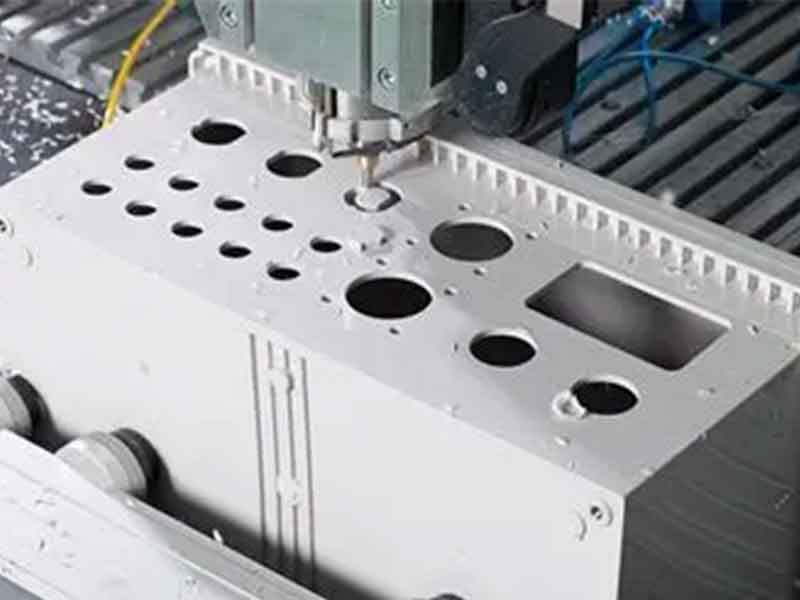
A CNC metal enclosure is a precision-machined protective housing — a body, lid, cover, or multi-piece assembly machined from aluminum, stainless steel, steel, magnesium, or titanium billet, plate, or extrusion stock — that contains, supports, and protects electrical, electronic, optical, or mechanical components from environmental exposure, electromagnetic interference, mechanical impact, and unauthorized access. CNC enclosure machining differs fundamentally from sheet metal fabrication: machining produces enclosure bodies from solid stock through milling, boring, and finishing operations that achieve sealing flange flatness of 0.010mm, gasket groove accuracy of ±0.020mm, and integrated features — gasket grooves, cable gland bosses, hinge bores, EMC bonding flanges — all machined in controlled geometric relationship from a single datum.
CNC metal enclosure programs at CNCPioneer span the complete configuration range: from miniature two-piece IP67 instrument housings machined on Swiss CNC lathes, to large-format multi-piece bolted EMI/RFI shielded cabinet enclosures on MAZAK mill-turn centers, to ATEX/IECEx Ex d flameproof junction boxes with flame path gaps machined to ±0.005mm. CNCPioneer integrates all environmental sealing verification, EMC bonding surface preparation, cable gland thread machining, and surface treatment within a single manufacturing relationship — eliminating multi-supplier coordination risk and delivering documented IP/NEMA sealing conformance on every gasketed enclosure shipped.
-
IP65–IP68 and NEMA 4X/6/6P sealing engineering Gasket groove geometry machined to ±0.020mm (IP68) through ±0.050mm (IP65), sealing flange flatness 0.010mm for O-ring face seals, and cable gland boss thread accuracy ±0.005mm — every gasketed enclosure verified by IP ingress testing before shipment. Pressure equalization vent boss machining for IP67/IP68 enclosures subject to thermal cycling in field deployment.
-
EMI/RFI shielded enclosure machining Continuous EMC bonding flange flatness 0.010mm, EMI gasket channel ±0.030mm, Alodine Class 3 surface treatment (contact resistance ≤5 mΩ/cm²), waveguide-below-cutoff honeycomb vent panel mounting, and connector bulkhead bore ±0.020mm for 80dB+ shielding effectiveness in defense, RF test equipment, and TEMPEST-rated enclosure programs.
-
Complete enclosure configuration range Instrument and handheld device enclosures, industrial junction boxes, control panel and HMI enclosures, free-standing cabinet enclosures, ruggedized transit cases, ATEX/IECEx hazardous area enclosures, marine and offshore enclosures, and outdoor weatherproof cabinets — single-source CNC enclosure manufacturing from miniature instrument housings through large-format multi-piece assemblies.
-
40–60% China CNC enclosure cost advantage AS9100D and IATF 16949 certified CNC metal enclosure manufacturing at 40–60% lower cost versus US, European, and Japanese precision enclosure suppliers — DFM review, IP/NEMA sealing engineering, FAIR/PPAP documentation, and RoHS compliance included. Prototype aluminum enclosures in 5–7 business days; no minimum order quantity.

Why CNCPioneer for Custom
CNC Metal Enclosure Manufacturing?
CNC metal enclosure quality determines whether a system achieves its designed environmental protection rating, EMC shielding effectiveness, and field reliability across its deployment lifetime — making it one of the most consequential precision manufacturing decisions in any hardware development program. CNCPioneer's integrated CNC enclosure machining capability addresses every sealing, shielding, and compliance requirement in a single supply relationship.
Environmental Sealing Engineering for Every Enclosure
Most CNC enclosure suppliers treat IP/NEMA sealing geometry as secondary — CNCPioneer makes it a first-order engineering specification. Sealing flange flatness 0.010mm, O-ring groove accuracy ±0.020mm, and gasket channel depth ±0.040mm as standard production practice. Every gasketed enclosure verified by IEC 60529 IP dust and water ingress testing before shipment — not based on dimensional compliance alone.
MAZAK Mill-Turn Multi-Axis Enclosure Machining
CNC metal enclosure bodies incorporating multiple pocket depths, gasket groove perimeters, cable gland boss arrays, and multi-face connector cutout geometry require 5-axis simultaneous or multi-setup mill-turn machining. CNCPioneer's 66+ MAZAK mill-turn centers machine complete enclosure bodies — sealing flanges, internal mounting bosses, hinge bores, cable entry features — in coordinated setup sequences preserving critical dimensional relationships between all enclosure features.
AS9100D Certified for Defense & Aerospace Enclosures
Defense electronics enclosures, avionics bay housings, and TEMPEST-rated Faraday cage enclosures require AS9100D certified supplier qualification with FAIR documentation per AS9102, full material lot traceability, MIL-A-8625 and MIL-DTL-5541 surface treatment compliance, and MIL-STD-461 shielding effectiveness specification support. CNCPioneer's AS9100D certification qualifies our CNC enclosure machining for defense and aerospace programs.
EMI/RFI Shielded Enclosure Precision
Continuous EMC bonding flange flatness 0.010mm, EMI gasket channel accuracy ±0.030mm, Alodine Class 3 conductive surface treatment providing contact resistance ≤5 mΩ/cm², and waveguide-below-cutoff honeycomb vent panel frame machining — the complete mechanical EMC package for FCC Part 15, CISPR 32, and MIL-STD-461 emissions compliance across RF, defense, and EMC-sensitive electronics enclosure programs.
24-Hour CNC Metal Enclosure DFM & Quote
Every CNC metal enclosure inquiry receives engineering DFM review and competitive quotation within 24 hours — covering wall thickness feasibility, gasket groove geometry for target IP rating, EMC bonding surface specification for shielded programs, ATEX/IECEx flame path assessment for hazardous area programs, cable gland boss layout, material selection, and complete unit pricing at prototype through production volumes. No minimum order quantity.
40–60% China CNC Enclosure Cost Advantage
CNCPioneer's China-based CNC metal enclosure factory delivers 40–60% cost reduction versus equivalent precision enclosure machining from US, European, and Japanese manufacturers — with DFM review, IP sealing engineering, FAIR/PPAP documentation, and RoHS compliance included in China pricing. Prototype aluminum instrument enclosures in 5–7 business days; sealed junction box and shielded enclosures in 7–14 business days.
Custom CNC Metal Enclosures
We Produce
CNCPioneer's CNC enclosure machining programs cover the complete range of enclosure types across industrial, defense, telecommunications, instrumentation, medical, EV power electronics, and outdoor equipment applications — from single prototype pieces to high-volume OEM production, with IP sealing verification and full FAIR/PPAP documentation on every program.

Instrument & Handheld Device Enclosures
Two-piece clamshell instrument enclosures machined from aluminum 6061-T6, magnesium AZ91D, or 316L stainless — O-ring groove ±0.030mm (IP67), display window cutout ±0.050mm, button and connector cutout array ±0.050mm, PCB mounting boss array ±0.050mm, and sealing flange flatness 0.010mm. Wearable and pocket-portable enclosures with curved exterior surfaces via 5-axis machining. IP67/IP68 compression gasket sealing. Material options from general-purpose 6061-T6 to ultra-lightweight magnesium AZ91D for air-transport-critical portable instrument programs.

Junction Boxes & Terminal Enclosures
Field-mounted electrical junction boxes machined to IP65/IP66 or NEMA 4/4X — cable gland boss array ±0.050mm position with thread pitch diameter ±0.005mm (M16–M40 metric or NPT), internal DIN rail mounting boss machining ±0.100mm, grounding stud boss ±0.050mm, external mounting flange ±0.100mm. Aluminum 6061-T6 standard; 316L stainless for NEMA 4X corrosive environment programs. Explosion-proof (ATEX/IECEx Ex d) junction box machining with flame path gap ±0.005mm and certified cable entry thread machining for oil and gas, chemical plant, and hazardous area cable junction applications.

Control Panel & HMI Enclosures
Operator interface panel enclosures and free-standing control cabinet enclosures — HMI display cutout ±0.050mm for touchscreen panel mount bezel fit and IP65 front panel sealing, pushbutton/selector cutout array ±0.030mm, front panel sealing gasket groove ±0.030mm. Large-format multi-piece bolted cabinet enclosures with panel-to-frame mounting flange ±0.100mm, continuous door gasket channel for NEMA 12/IP54 or NEMA 4/IP66 sealing, internal mounting panel standoff bosses, removable cable gland plate, and structural lifting eye boss machining for crane-lift installation.

EMI/RFI Shielded & TEMPEST Enclosures
Faraday cage enclosures for RF equipment, defense electronics, EMC test equipment, and TEMPEST programs requiring 80dB+ shielding effectiveness — continuous EMC bonding flange flatness 0.010mm, EMI gasket channel ±0.030mm, Alodine Class 3 masked surface treatment, waveguide-below-cutoff honeycomb vent panel mounting frames, and connector bulkhead bore ±0.020mm for 360° conductive contact. AS9100D certified with FAIR per AS9102. Defense TEMPEST and commercial EMC test equipment programs served from a single qualified supplier.

Ruggedized Transit & Transit Case Enclosures
Monolithic CNC machined aluminum 6061-T6 or 7075-T6 transit case bodies and lids — continuous perimeter O-ring or gasket groove ±0.020mm for IP67/IP68 sealing under repeated field open/close cycles, latch and hinge mounting bosses ±0.050mm, internal foam insert mounting features, and pressure equalization vent boss for air-transport altitude cycling. Stacking interlocking rib and recess geometry. Material: 6061-T6 standard; 7075-T6 for maximum strength-to-weight; magnesium AZ91D for air-transport weight-critical defense and broadcast field equipment programs.

Outdoor, Marine & Hazardous Area Enclosures
NEMA 4X/IP66–IP68 outdoor enclosures for 5G base station radio units, roadside equipment, and marine deck electronics — 316L stainless or powder-coated aluminum 6061-T6 with continuous gasket sealing, solar shield standoff boss machining, cable entry gland plate, and integral passive cooling fin arrays. Marine electropolished interiors for saltwater corrosion resistance. ATEX/IECEx Ex d flameproof and Ex e increased safety enclosures for oil and gas, chemical plant, and pharmaceutical manufacturing programs — flame path gap ±0.005mm per IEC 60079-1 with full CMM verification documentation.
Industries & Applications
CNCPioneer's CNC metal enclosure manufacturing and sealing engineering serves industrial automation OEMs, defense and aerospace systems integrators, telecommunications equipment manufacturers, medical device developers, EV and renewable energy power electronics producers, marine and offshore equipment builders, instrumentation manufacturers, and broadcast and field service equipment developers worldwide.

Defense & Aerospace Electronics
AS9100D certified CNC enclosure machining for TEMPEST-rated shielded enclosures, ruggedized field equipment transit cases, avionics bay housings, airborne radar enclosures, and naval electronics waterproof housings. Continuous EMC bonding surfaces with 100dB+ shielding effectiveness. MIL-A-8625 and MIL-DTL-5541 surface treatment programs. Full FAIR per AS9102, MIL-STD-461 shielding compliance.

Industrial Automation & Control
CNC enclosure manufacturing for control panel enclosures, HMI operator interface housings, junction boxes, and free-standing control cabinets across factory automation and process control. NEMA 12/IP54 and NEMA 4/IP66 sealing for indoor and washdown industrial environments. Type III hard anodize for industrial surface durability. 316L stainless for food processing and washdown environment enclosure programs.
Telecommunications Infrastructure
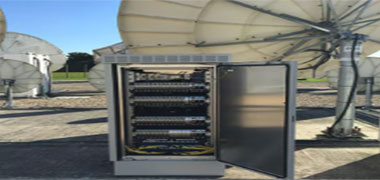
Custom CNC enclosure programs for outdoor 5G radio unit cabinets, fiber distribution enclosures, and roadside equipment cabinets — NEMA 4X/IP66 sealing, integrated passive cooling fin geometry, and corrosion-resistant materials for multi-decade outdoor deployment. IP67-sealed radio enclosures with O-ring groove ±0.020mm. Pressure equalization vent boss machining for sealed outdoor telecom enclosures subject to day/night thermal cycling.

EV & Renewable Energy Power Electronics
IATF 16949 certified CNC enclosure manufacturing for EV charging infrastructure enclosures, battery management system housings, and solar inverter enclosures — PPAP Level 3 documentation, IP65/IP66 sealing, and corrosion-resistant materials for outdoor power electronics deployment. ISO 20653 automotive IP6K/9K rating support. SPC process control with Cpk ≥1.33 for automotive and EV OEM production supply.

Medical Device & Instrumentation
CNC enclosure machining for medical device enclosures, laboratory instrument housings, and diagnostic equipment cabinets — 316L stainless and anodized aluminum with electropolished sanitary interior surfaces, IP-rated sealing for cleaning protocol compliance, and biocompatible material documentation. IEC 60601-1 compliant enclosure geometry. Precision instrument handheld enclosures in magnesium AZ91D for ultra-lightweight portable diagnostic programs.

Marine, Offshore & Hazardous Area
316L stainless steel CNC enclosure manufacturing for shipboard electronics, offshore platform instrumentation, and subsea sensor enclosures — NEMA 4X/IP67–IP68 sealing with electropolished corrosion-resistant interiors and wave-impact water exposure resistance. ATEX/IECEx certified CNC enclosure machining for oil and gas, chemical plants, and grain handling facilities — flameproof (Ex d) and increased safety (Ex e) enclosures with flame path gap ±0.005mm and full CMM verification documentation.
CNC Metal Enclosure
Manufacturing Process
CNCPioneer's CNC enclosure manufacturing program takes custom enclosure requirements from initial inquiry through production-qualified supply — 24-hour DFM review, prototype enclosure (Week 1–2), IP sealing verification and PPAP/FAIR (Week 2–3), production qualification (Week 3–5) — with sealing engineering assessment and materials recommendation delivered within the same 24-hour DFM window.
24-Hour DFM Review & Enclosure Quote
Enclosure geometry feasibility — wall thickness optimization, pocket corner radius, internal feature accessibility, gasket groove depth-to-width ratio · IP/NEMA sealing geometry assessment: O-ring groove dimensions for target IP rating, sealing flange flatness specification, cable gland boss positioning · EMC bonding surface definition for shielded enclosure programs · ATEX/IECEx flame path feasibility for hazardous area programs · Material and surface treatment recommendation for deployment environment · Complete enclosure pricing covering machining, IP sealing verification, surface treatment, and documentation at prototype through production volume.
Prototype CNC Enclosure Machining (Week 1–2)
66+ MAZAK mill-turn centers for complex enclosure bodies — all faces, internal pockets, sealing flanges, gasket grooves, and cable entry features in coordinated setups preserving dimensional relationships. 78+ Swiss CNC lathes for cylindrical pressure housings, viewing window retaining ring threads, and precision enclosure insert elements. CNC thread milling (pitch diameter ±0.005mm) for all cable gland boss threads. Gasket groove machining to IP rating specification. All surface treatment operations coordinated — Alodine masking at EMC bonding surfaces where combined Alodine/anodize program required.
IP Sealing Verification & Quality Inspection
Mitutoyo CMM dimensional verification (±0.001mm) of sealing flange flatness, O-ring and gasket groove width and depth, cable gland boss thread pitch diameter, connector cutout positions, hinge bore diameters, mounting hole patterns, and EMC bonding flange flatness · Surface finish profilometry on all sealing and EMC bonding surfaces (Ra 0.4–0.8μm) · Thread gauge verification on all gland boss and fastener threads · IP ingress testing per IEC 60529 on assembled enclosure samples confirming gasket groove geometry achieves specified IP rating in production configuration · Pressure equalization vent function check for IP67/IP68 programs.
PPAP / FAIR Documentation (Week 2–3)
IATF 16949 PPAP Level 3 for automotive/EV enclosure programs: complete dimensional results, material performance results, process flow diagram, control plan, Cpk ≥1.33 on all special characteristics, and sample production parts · AS9102 FAIR for aerospace and defense enclosure programs: documented dimensional verification of all first article features, material and process certifications, design characteristic verification · SPC control charts on critical enclosure machining dimensions — sealing flange flatness, gasket groove dimensions — with Cpk ≥1.67 maintained for IATF 16949 programs throughout production.
CNC Metal Enclosure Materials
Al 6061-T6 (dominant enclosure material ~65% of volume; excellent machinability and anodize compatibility) · Al 5052-H32 (superior marine corrosion resistance) · Al 7075-T6 (503 MPa yield; ruggedized transit cases) · Al 6063-T5 (200 W/m·K; integral heat sink enclosures) · Mg AZ91D (1.81 g/cm³; ultra-lightweight portable enclosures) · 304 and 316L stainless steel (corrosion-resistant enclosures; NEMA 4X; medical and marine programs) · Cold-rolled steel (heavy-duty structural cabinet enclosures) · Ti-6Al-4V (subsea pressure housings; aerospace programs) — all materials SII XRF verified with full lot traceability.
Quality Documentation
AS9100D FAIR per AS9102 for defense and aerospace enclosure programs · IATF 16949 PPAP Level 3 for automotive/EV programs · 100% CMM dimensional reports · Thread gauge verification on all gland boss and fastener threads · Surface roughness records on sealing and bonding surfaces · IP sealing test records per IEC 60529 · ATEX/IECEx flame path CMM records for Ex d enclosures · RoHS 2011/65/EU and REACH compliance declarations · Certificate of Conformance · All records retained 20 years.
Materials for CNC
Metal Enclosure Manufacturing
CNC metal enclosure material selection is governed by environmental protection requirements (corrosion resistance, UV stability), weight targets for portable programs, electromagnetic compatibility (material conductivity for shielded enclosures), RoHS compliance, surface treatment compatibility, and machinability for complex sealing groove geometry. Aluminum 6061-T6 covers approximately 65% of CNCPioneer's CNC metal enclosure production volume for its optimal balance across all selection criteria.
6061-T6
276 MPa yield · 2.70 g/cm³ · Excellent machinability for gasket groove and boss geometry · Anodize and Alodine compatible · RoHS compliant · Dominant CNC enclosure material (~65% of volume). Instrument housings, junction boxes, control panel enclosures, EMI shielded enclosures, and transit cases. Optimal balance of machinability enabling precise O-ring groove geometry, corrosion protection via Type II/III anodize, and cost efficiency for commercial and industrial enclosure programs.
5052-H32
228 MPa yield · Superior saltwater corrosion resistance · RoHS compliant · Outdoor, marine, and coastal CNC metal enclosure programs where 6061-T6 corrosion resistance is insufficient over 10+ year service life in permanent salt spray atmosphere. Marine deck equipment enclosures, offshore platform instrument housings, and coastal 5G outdoor enclosures. Excellent weldability for large-format enclosure body construction. Anodize compatible.
7075-T6 & 6063-T5
7075-T6: 503 MPa yield; highest aluminum strength · Ruggedized transit case enclosures, weight-critical defense portable housings where maximum structural integrity at minimum wall section governs material selection under MIL-STD-810 impact loading. 6063-T5: 200 W/m·K thermal conductivity · Enclosures with integral heat sink fin arrays for IP66-sealed equipment requiring passive thermal management without penetrating the sealed envelope. Both RoHS compliant.
316L Stainless
Superior corrosion resistance · Non-magnetic · 7.99 g/cm³ · RoHS compliant · NEMA 4X corrosive environment enclosures, marine and offshore electronics housings, sanitary and food processing enclosures requiring washdown resistance, medical instrument housings, and chemical environment junction boxes. Passivated per ASTM A967. Electropolished interior surfaces for medical and marine corrosion-resistant programs. Standard for all CNCPioneer marine and NEMA 4X CNC enclosure programs.
304 Stainless
Good corrosion resistance · 7.93 g/cm³ · RoHS compliant · Cost-effective stainless enclosure material for indoor industrial programs where aluminum corrosion resistance is inadequate but 316L cost premium is not justified by the deployment environment. Indoor industrial control enclosures, food-adjacent equipment housings, and instrument panels in moderate corrosion environments. Passivated per ASTM A967 for all CNC enclosure machining programs.
Cold-Rolled Steel
High stiffness · Low cost · 7.85 g/cm³ · RoHS compliant · Heavy-duty structural cabinet enclosure frames, internal mounting panels, and EMI shielded enclosure frame structures where steel's higher stiffness and lower material cost versus stainless — combined with powder coat or zinc chromate corrosion protection — make it the economical structural choice for large-format control cabinet and free-standing enclosure programs where weight is not a constraint.
Ti-6Al-4V Grade 5
880 MPa yield · 4.43 g/cm³ · Non-magnetic · Corrosion resistant · RoHS compliant · Subsea pressure housing CNC metal enclosures for deep-sea sensor and camera systems requiring maximum strength-to-weight at depth pressure differential — titanium's combination of high yield strength, minimum density, and seawater corrosion resistance without cathodic protection makes it the standard for deep-water enclosure programs below 500m where aluminum depth limits are exceeded.
Magnesium AZ91D
1.81 g/cm³ (35% lighter than aluminum) · Good machinability · RoHS compliant · Ultra-lightweight portable instrument enclosures and air-transport field equipment housings where magnesium's lowest density of all structural metals directly reduces carried weight in man-portable diagnostic, measurement, and broadcast field equipment programs. Standard surface treatment: micro-arc oxidation or chromate conversion for corrosion protection combined with standard enclosure sealing geometry.
C11000 / Beryllium Copper
391 W/m·K (C11000) · High electrical conductivity · RoHS compliant · EMI shielding fingerstock components machined within enclosure seams and EMC gasket contact strips integrated into CNC machined channels. Beryllium copper (BeCu): high-cycle-count contact fatigue resistance for EMI fingerstock at frequently-opened shielded enclosure doors, RF connector interface shims, and precision spring contact elements within Faraday cage enclosure assemblies requiring maintained contact force over service life.
2024-T351
324 MPa yield · Excellent fatigue strength · RoHS compliant · High-cycle access panel enclosures and hinge-mounted door structures subject to repeated operational opening cycles across a 10–20 year field service lifetime. Specified where fatigue life — rather than peak yield strength or corrosion resistance — is the primary enclosure material selection criterion. Standard for high-cycle portable transit case hinge structures and enclosure door panels requiring maintained sealing performance after thousands of opening cycles.
PEEK Engineering Grade
Chemical resistant · Electrical insulator · Temperature resistant · RoHS compliant · Electrically isolated insert components within metal enclosure bodies — cable gland insulation collars, viewing window retaining bushings, and electrical isolation barriers where plastic components within a conductive enclosure wall must withstand sustained chemical exposure or elevated temperature. Specified in power electronics enclosures requiring isolation barriers rated per IEC 62368-1 within an otherwise all-metal sealed enclosure body.
C3604 Brass
Excellent machinability · 115 W/m·K · RoHS compliant · Enclosure cable gland insert components, viewing window retaining ring hardware, and precision enclosure small-part hardware requiring maximum machinability for Swiss CNC lathe production at minimum cycle time. Used in pressure equalization vent boss inserts, threaded cable entry adapter elements, and custom enclosure pillar standoffs requiring tight thread pitch accuracy (±0.003mm) and smooth surface finish for sealing gasket interfaces.
Surface Treatments for
CNC Metal Enclosure Programs
Surface treatment selection for CNC metal enclosures is governed by EMC shielding continuity (Alodine Class 3 on EMC bonding flanges — not anodize, which is electrically insulating), corrosion protection for the deployment environment, wear resistance at hinge and latch contact surfaces, RoHS compliance, and cosmetic appearance for commercial equipment programs. CNCPioneer coordinates combined multi-zone treatment programs — Alodine on EMC zones, anodize on exterior surfaces — in a single integrated operation.
Type II Clear Anodize
Standard corrosion protection and cosmetic finish for aluminum CNC metal enclosure exterior surfaces in commercial and industrial programs — 5–15μm coating, clean silver appearance. Electrically insulating: must be masked or omitted at all EMC bonding flanges, gasket groove sealing surfaces where metal-to-metal contact is specified, and grounding stud boss areas to maintain required electrical continuity and sealing performance. Minimum dimensional impact on precision enclosure features. RoHS compliant.
Type III Hard Anodize — MIL-A-8625
Wear-resistant anodize (HV 400+) for aluminum CNC metal enclosure exterior surfaces, hinge contact zones, latch engagement surfaces, and transit case exterior faces exposed to repeated field handling over 10–20 year service lifetimes. Standard surface treatment for ruggedized portable equipment cases, transit case bodies and lids, and outdoor industrial enclosures in abrasive environments. Black hard anodize for enclosures in machine vision and optical inspection applications requiring non-reflective exterior surfaces. RoHS compliant.
Alodine Class 3 — MIL-DTL-5541
Electrically conductive trivalent chromate (Cr³⁺) conversion coating for aluminum CNC metal enclosure EMC bonding surfaces — contact resistance ≤5 mΩ/cm² for reliable RF shielding continuity at enclosure assembly joints. Applied selectively on all EMC mating flanges, grounding stud bosses, and internal bonding strap contact points — while exterior surfaces receive Type II or Type III anodize for corrosion and cosmetic protection. Alodine Class 1A variant for maximum corrosion protection on non-EMC zones prior to powder coat. Zero dimensional impact on precision enclosure features. RoHS compliant (Cr³⁺ formulation).
Passivation — ASTM A967
Mandatory for all stainless steel CNC metal enclosure programs — 304 stainless instrument housing panels, 316L stainless marine and medical enclosures, and NEMA 4X outdoor enclosures. Removes machining free iron and enhances chromium oxide passive layer for maximum service life in marine, food processing, medical washdown, and chemical exposure environments without rust formation on stainless enclosure sealing surfaces. Maintains enclosure dimensional precision. RoHS compliant.
Electropolishing
Ra ≤0.4μm interior surface finish for sanitary, medical, and marine CNC metal enclosure programs requiring minimal particle and contamination retention and maximum corrosion resistance at interior surfaces — medical instrument housings requiring autoclave cleaning protocol compliance, food processing equipment enclosures requiring chemical sanitizer resistance, and marine offshore enclosures requiring maximum corrosion protection at interior component mounting surfaces. Applied to 316L stainless enclosure programs. RoHS compliant.
Powder Coat & Chromate Conversion
Powder coat: durable branded color appearance and additional corrosion protection for CNC metal enclosure exterior surfaces in commercial and industrial equipment programs — applied over Alodine Class 1A pretreatment on aluminum enclosures for maximum adhesion and corrosion performance. RAL standard colors for OEM product branding. Chromate conversion (zinc/steel): corrosion protection for cold-rolled steel CNC enclosure structural components — cabinet frames, internal mounting panels — prior to powder coat finishing. Both RoHS compliant.
All CNC metal enclosure surface treatments — Type II and Type III anodize MIL-A-8625, Alodine Class 3 and Class 1A MIL-DTL-5541, passivation ASTM A967, electropolishing, powder coat, and chromate conversion — comply with RoHS 2011/65/EU and REACH requirements. Surface treatment certifications are included in the documentation package for every CNC metal enclosure program. Surface treatment selection and Alodine masking zone definition for combined EMC and corrosion protection programs are included in CNCPioneer's 24-hour DFM review and enclosure quotation.
Quality Assurance for CNC Metal
Enclosure Manufacturing
CNCPioneer's AS9100D and IATF 16949 certified quality system applies comprehensive CNC enclosure manufacturing quality controls to every custom CNC metal enclosure program — from incoming material XRF verification and in-process sealing flange flatness monitoring through IP ingress testing on assembled gasketed enclosures and complete documentation package delivery with every shipment.
Contract & Drawing Review
Engineering review of CNC metal enclosure drawing requirements, applicable IEC 60529 IP rating, NEMA 250 rating, IEC 60079 ATEX/IECEx hazardous area requirements, EMC shielding effectiveness specifications, RoHS material compliance, and customer industry-specific standards before CNC enclosure manufacturing order acceptance. 24-hour DFM review identifies all sealing geometry, EMC bonding surface, and cable entry thread adequacy issues before production commitment.
Material Incoming Inspection
SII XRF composition verification on every CNC metal enclosure material lot confirms alloy grade and RoHS compliance. Hardness verification for heat-treated aluminum. RoHS restricted substance declaration review on all material and surface treatment chemistry certifications. Full lot traceability from mill certificate through finished enclosure shipment. Gasket, O-ring, and cable gland hardware lot certification review before integration.
Sealing Verification Testing
IP65/IP67/IP68 dust and water ingress testing per IEC 60529 on representative production samples from every new gasketed CNC metal enclosure program — confirming that machined gasket groove and sealing flange geometry achieves the specified environmental rating in assembled enclosure configuration with production gasket material. NEMA 250 rain, hose-directed water, and submersion test verification for NEMA 4/4X/6 programs. Test records included in documentation package.
First Article Inspection & FAIR / PPAP
Complete Mitutoyo CMM dimensional verification (±0.001mm) on all drawing features for every new CNC metal enclosure part number — sealing flange flatness, O-ring groove width and depth, gasket channel dimensions, cable gland boss thread pitch diameter, connector cutout positions, hinge bore diameters, mounting hole patterns, and EMC bonding flange flatness. Surface finish profilometry on all sealing and bonding surfaces. IATF 16949 PPAP Level 3 for automotive/EV programs. AS9102 FAIR for aerospace and defense programs.
In-Process Statistical Control
SPC process capability Cpk ≥ 1.33 (IATF 16949 programs: Cpk ≥ 1.67) on critical CNC metal enclosure dimensions — sealing flange flatness, O-ring groove width and depth, gasket groove depth, and cable gland boss thread pitch diameters throughout production. 100% sealing flange flatness CMM verification on all IP65+ rated CNC metal enclosure programs. Dedicated process travelers with mandatory inspection sign-off at each production stage.
Shipment Documentation Package
Certificate of Conformance, CMM dimensional report, material certifications with lot traceability, RoHS Declaration of Conformity, REACH SVHC declaration, surface treatment certifications, IP/NEMA sealing test records where applicable, thread gauge verification records on all gland boss and fastener threads, surface roughness records, ATEX/IECEx flame path CMM records for Ex d programs, FAIR per AS9102 for aerospace programs, PPAP Level 3 for IATF 16949 programs — all included with every shipment. Records retained 20 years.
AS9100D & IATF 16949 Quality System for
CNC Metal Enclosure Manufacturing
CNCPioneer's AS9100D and IATF 16949 certified CNC metal enclosure factory delivers the quality management framework demanded by defense electronics integrators, industrial automation OEMs, medical device developers, and EV power electronics producers — covering IP sealing verification, PPAP and FAIR documentation capability, RoHS/REACH compliance, and single-source accountability for all enclosure machining, sealing verification, and surface treatment quality.
PPAP Level 3 & FAIR per AS9102
IATF 16949 PPAP Level 3 documentation for automotive/EV CNC metal enclosure programs — process capability studies (Cpk ≥ 1.67 on all special characteristics), measurement system analysis, sample production run report, material and sealing test results. AS9102 FAIR for aerospace and defense enclosure programs — complete CMM balloon drawing with every dimension measured, IP sealing test records, and surface treatment certifications. Customer approval required before production quantity release.
- PPAP Level 3 for automotive/EV programs
- AS9102 FAIR for defense/aerospace
- Records retained 20 years
IP Sealing Verification Records
IP65/IP67/IP68 dust and water ingress testing per IEC 60529 on representative production samples from every new gasketed CNC metal enclosure program. 100% sealing flange flatness CMM verification on all IP65+ rated enclosure programs. Thread gauge verification on all cable gland boss threads confirming certified gland installation compatibility. Surface roughness profilometry on all sealing surfaces. Sealing test records included in documentation package with every gasketed enclosure shipment.
- IP ingress test on every new program
- 100% sealing flange CMM for IP65+
- Thread gauge all gland boss threads
RoHS & Material Traceability
SII XRF composition verification on every incoming CNC metal enclosure material lot confirming alloy grade and RoHS 2011/65/EU restricted substance compliance. Gasket and O-ring material lot certifications reviewed for chemical compatibility and RoHS compliance. Alodine bath chemistry monitoring for trivalent Cr³⁺ RoHS compliance. Signed RoHS Declaration of Conformity, REACH SVHC declaration, and full material lot traceability chain with every CNC metal enclosure shipment.
- XRF alloy verification every material lot
- RoHS & REACH declaration with every shipment
- Mill cert traceability retained 20 years
Single-Source Quality Accountability
CNCPioneer's integrated CNC metal enclosure machining, IP sealing verification, and surface treatment supply creates single-source quality accountability for dimensional compliance, environmental sealing performance, and surface treatment quality within a single FAIR/PPAP quality record — eliminating the accountability gaps between separate machining, testing, and finishing suppliers. One Certificate of Conformance covers enclosure dimensions, IP sealing test results, and surface treatment certifications per enclosure program.
- Single C of C: machining + sealing + finishing
- No supplier handoff quality gaps
- On-time delivery: 100%
CNC Metal Enclosure
Manufacturing FAQ
Common questions from industrial automation OEMs, defense systems integrators, telecommunications equipment manufacturers, EV power electronics producers, medical device developers, instrumentation manufacturers, and marine equipment builders about CNCPioneer's CNC metal enclosure capabilities, IP sealing engineering, EMI shielding programs, and 24-hour DFM and quote process.
A CNC metal enclosure is machined from solid billet, plate, or extrusion through milling and boring operations, while a sheet metal enclosure is produced by cutting, bending, and welding flat sheet stock into a box structure. Four differences determine which is appropriate. First, dimensional accuracy: CNC enclosure machining achieves sealing flange flatness of 0.010mm and gasket groove accuracy of ±0.020mm from a single datum — sheet metal fabrication accumulates bend tolerance stack-up and weld distortion that makes achieving these specifications impractical without secondary machining. Second, environmental sealing: a CNC metal enclosure can be machined as a monolithic body with no seams except at the gasketed lid interface — sheet metal enclosures have weld seams and corner joints that are potential leak paths requiring additional sealing to achieve IP67/IP68. Third, EMC shielding: CNC machined enclosures provide continuous conductive material at every surface except the designed gasketed seam — sheet metal weld seams can have porosity creating gaps that degrade shielding effectiveness. Fourth, unit cost at volume: sheet metal fabrication has lower material cost and faster cycle time at high volume for simple geometries. Choose CNC metal enclosure when IP67/IP68 sealing, EMC shielding, integrated complex features (gasket grooves, cable gland bosses), or compact form factor with tight tolerances are required. Choose sheet metal fabrication for large simple-geometry enclosures at high volume where IP54/IP65 sealing with applied gaskets is adequate.
IP and NEMA rating specification should be derived from the actual environmental exposure the enclosure will experience in service — not the highest rating available, because each increment increases CNC enclosure machining cost through tighter gasket groove tolerances and additional flatness requirements. For indoor equipment in climate-controlled environments: IP54/NEMA 12 is typically adequate — gasket groove tolerance of ±0.080mm and sealing flange flatness of 0.030mm represent standard specifications achievable without process modification. For outdoor equipment exposed to rain and occasional cleaning: IP65/IP66 or NEMA 4/4X — requiring gasket groove tolerance of ±0.040–0.050mm and sealing flange flatness of 0.015–0.020mm. For portable instruments or EV junction boxes that may experience temporary immersion: IP67/NEMA 6 — requiring O-ring groove tolerance of ±0.030mm and sealing flange flatness of 0.010mm. IP68/NEMA 6P (continuous submersion) should be reserved for genuinely submersible applications — subsea sensors, underwater cameras — because double-sealing and ±0.020mm groove tolerances add meaningful cost unjustified for equipment that will never experience sustained immersion. CNCPioneer's 24-hour DFM review for custom CNC enclosure programs includes IP/NEMA rating recommendation based on described deployment environment — ensuring sealing specifications are matched to actual exposure rather than over-specified by default.
EMI/RFI shielded CNC metal enclosure programs introduce four machining considerations beyond standard enclosure manufacturing. First, continuous bonding surface flatness: every seam in a shielded enclosure requires 0.010mm flatness for continuous EMI gasket compression or metal-to-metal contact — standard sealing enclosures specify 0.015–0.020mm, insufficient for consistent shielding effectiveness across a long seam. Second, surface treatment selection: anodize — the default corrosion protection for aluminum — is electrically insulating and must be masked at every EMC bonding surface; shielded enclosure programs require Alodine Class 3 at bonding flanges and ground stud bosses, adding a masking and dual-surface-treatment step not needed in non-shielded programs. Third, ventilation geometry: standard enclosures can use open ventilation slots; shielded enclosures require waveguide-below-cutoff honeycomb vent panels machined in frames sized to accept honeycomb core with hole geometry below cutoff frequency for the equipment's operating range. Fourth, connector penetration treatment: every penetration through a shielded enclosure wall requires continuous 360° conductive contact between connector shell and enclosure wall — machined bulkhead bores to ±0.020mm with EMI gasket or conductive washer compression, versus simple clearance-hole cutouts adequate in non-shielded programs. CNCPioneer addresses all four as standard practice for shielded enclosure orders, with FAIR documentation per AS9102 for defense programs.
CNCPioneer provides CNC metal enclosure DFM review and quotation within 24 hours of drawing and specification submission — covering enclosure machining unit pricing, IP sealing geometry assessment, material and surface treatment recommendation, and complete unit pricing at prototype through production volume. Prototype lead times: simple instrument enclosure (two-piece, IP54) 5–7 business days. Sealed instrument enclosure (IP65/IP67, O-ring groove, display/connector cutouts) 7–10 business days. Junction box (cable gland bosses, DIN rail mounting, IP65/IP66) 7–10 business days; 316L stainless for NEMA 4X 10–14 business days. Control panel/HMI enclosure with front panel cutouts 8–12 business days. Free-standing cabinet enclosure (multi-piece, large format) 12–18 business days. Rugged transit case (monolithic machined body and lid, O-ring sealed) 10–14 business days aluminum; 14–18 for 7075-T6. EMI/RFI shielded enclosure 12–16 business days. Flameproof (Ex d) with flame path verification 14–20 business days. Production quantity lead times: standard aluminum enclosures 3–5 weeks; stainless steel NEMA 4X programs 4–6 weeks; EMI shielded or hazardous area programs 5–7 weeks.
CNCPioneer accepts custom CNC metal enclosure orders from single prototype pieces with no minimum order requirement. A single prototype enclosure receives the same precision machining, IP sealing verification, and surface treatment quality as production programs, with CMM dimensional documentation and IP sealing test records in the prototype shipment. CNC metal enclosure quotes for single-piece prototype programs are delivered within the standard 24-hour DFM review turnaround. Volume thresholds for pricing tiers: 50 pieces activates small-batch pricing; 500 pieces activates standard production pricing with dedicated capacity; 5,000+ pieces activates high-volume pricing with blanket order scheduling. For IATF 16949 PPAP Level 3 documentation programs, the qualification study requires a minimum 30-piece initial production run, with ongoing production in any quantity thereafter. AS9100D FAIR per AS9102 for aerospace programs requires only a single first article piece — no minimum ongoing production quantity restriction for defense and aerospace CNC metal enclosure programs.
Get a CNC Metal Enclosure Quote
Upload your enclosure drawing or CAD file and receive a free DFM review and competitive CNC metal enclosure quotation within 24 hours. CNCPioneer's engineering team will review your custom enclosure design for wall thickness and machining feasibility, confirm gasket groove and sealing flange geometry for your target IP/NEMA rating, evaluate EMC bonding surface specifications for shielded enclosure programs, assess ATEX/IECEx dimensional requirements for hazardous area programs, recommend material and surface treatment for your deployment environment, identify cable gland, hinge, latch, and connector mounting feature requirements, and provide complete pricing at prototype through volume production tiers for CNC metal enclosure manufacturing.