
Robot Bearing Housings & Seats
Precision Bearing Bore Manufacturer
CNCPioneer is a precision robot bearing housing specialist and certified China Robot Bearing Housings manufacturer delivering cross roller, angular contact, thin-section, and slew bearing housings with bearing bore diameter accuracy of ±0.002mm, bore roundness of ±0.001mm, and OD-to-bore concentricity of ±0.003mm — 66+ MAZAK mill-turn and VARIAXIS 5-axis centers plus 78+ Swiss CNC lathes for humanoid robot OEMs and industrial robot builders worldwide since 2011.

What Are Robot Bearing
Housings & Seats?
Robot bearing housings and precision bearing seats are the precision-machined structural bodies that receive, locate, constrain, and structurally support the rolling element bearings — cross roller, angular contact, thin-section, and slew bearings — that enable every rotating and pivoting joint in a robot to function with the stiffness, accuracy, and service life its performance specification demands.
A robot bearing housing differs from an industrial one in three ways: tolerance class (±0.002mm within H6/J6, versus ±0.010–0.015mm H7 industrial, because robot joint preload is set entirely by the housing fit with no external adjustment); concentricity (±0.003mm OD-to-bore, because the actuator has no internal clearance to absorb misalignment); and integration density (bearing reception, cable routing, seal grooves, and encoder pockets all machined from one datum in one body).
-
Bearing bore as the primary quality discipline 100% air gauge on every precision bore, 100% roundness tester on cross roller outer race seats, and profilometer Ra verification per lot — treating the bore as the primary spec, not a secondary feature.
-
Single-setup bore concentricity preservation OD, bearing bore, face, and secondary features machined from one datum without rechucking — holding OD-to-bore concentricity at ±0.003mm by machine positioning accuracy, not re-registration uncertainty.
-
Complete bearing housing portfolio Cross roller for humanoid joints, angular contact for actuator preload, thin-section for compact wrists, slew for base rotation — one qualified manufacturer across the complete bearing type range.
-
40–60% China manufacturer cost advantage IATF 16949 and AS9100D certified bearing housing machining at 40–60% below equivalent US, European, and Japanese suppliers at identical bore diameter, roundness, and concentricity accuracy.

Why CNCPioneer as Your Robot
Bearing Housing Manufacturer?
A robot joint has no internal clearance to absorb bearing housing error the way industrial machinery does — every micron of bore roundness or concentricity error becomes joint stiffness variation, transmission error, or reduced bearing life. CNCPioneer's approach treats the bearing bore as the primary specification it actually is.
Bearing Bore as the Primary Quality Discipline
100% air gauge verification on all precision bearing bores, 100% roundness tester on cross roller outer race seats, and profilometer Ra verification on every bearing contact surface — the measurement infrastructure that confirms installation quality before the housing ships.
Single-Setup Bore Concentricity Preservation
All critical features — OD, bearing bore, face, secondary features — machined from one datum without rechucking, holding OD-to-bore concentricity at ±0.003mm by machine positioning accuracy rather than the ±0.010–0.030mm re-registration error multi-setup machining introduces.
Complete Robot Bearing Housing Portfolio
Cross roller housings for humanoid joints, angular contact seat assemblies for actuator preload, thin-section housings for compact wrists, and slew bearing housings for base rotation — the complete bearing type range deployed in modern robot mechanism design.
ISO 286 Bearing Fit Class Expertise
Every inquiry receives a bearing fit class recommendation based on bearing type, load direction, speed, and assembly requirement — the technical DFM competency generic precision machining shops don't provide, calculating interference or clearance against your specified bearing OD.
Thin-Wall Bore Quality
Reduced clamping force protocols for bore finishing, free-state roundness verification (not clamped-state) achieving ±0.001mm — the specification that governs bearing race geometry after the housing leaves the chuck, not while it's still held.
40–60% China Manufacturer Cost Advantage
CNCPioneer's cost structure delivers 40–60% reduction versus US, European, and Japanese bearing housing suppliers at identical ±0.002mm bore diameter and ±0.003mm concentricity — without compromising the dimensional accuracy robot joint bearing performance requires.
Robot Bearing Housing Types
We Manufacture
CNCPioneer's precision bearing seat machining covers the complete bearing type range deployed in modern robot mechanisms — from finger-joint cross roller housings through robot base slew bearings.

Cross Roller Bearing Housings
The dominant bearing type in humanoid robot joints — H6 bore ±0.002mm, roundness ±0.001mm, Ra 0.4μm, OD-to-bore concentricity ±0.003mm single-setup. Ø20–150mm standard series with matching inner race journal programs for rotating-inner-ring configurations.

Angular Contact Bearing Seat Assemblies
Paired housings for DB/DF preload arrangements with bore diameter matched ±0.001mm differential between pairs, matched preload spacer sets (height ±0.002mm, parallelism 0.003mm), and shaft-side k5 journals for actuator output preload systems.

Thin-Section Bearing Housings
Ø30–200mm bore, wall 2.5–8.0mm — reduced clamping force protocol achieving ±0.001mm free-state roundness where standard clamping would produce 0.015–0.030mm of masked ovalization. Standard and separable configurations for compact robot wrist mechanisms.

Four-Point Contact & Slew Bearing Housings
Ø150–600mm bore for robot base turntables and torso yaw mechanisms — bore form accuracy ±0.005mm with temperature-controlled machining, mounting face flatness 0.010mm/300mm, Ra 0.2μm bore finish for boundary-lubrication regime friction control.

Pillow Block & Flange-Mount Housings
Field-replaceable pillow block housings (H7 bore, split-housing matched pairs) for linear axes and cable track support; round and square flange-mount housings (locating pilot ±0.003mm, bolt circle ±0.010mm) for direct panel and end-effector attachment.

Cartridge & Insert Bearing Housings
Pre-assembled bearing-in-housing units for press-fit installation into robot structural bores — cartridge OD ±0.003mm k5/m5 class, inner bore referenced to OD as datum for concentricity compliance, seal groove for assembled dust protection.
Industries & Applications
CNCPioneer's robot bearing housings supply humanoid robot OEMs, collaborative robot manufacturers, industrial robot builders, legged robot developers, surgical robot companies, and exoskeleton and research programs worldwide.

Humanoid Robot OEMs
Custom bearing housings for all joint types — cross roller for finger MCP through hip cluster, thin-section for wrist mechanisms, angular contact preload seats, and slew housings for torso yaw — as a single manufacturer relationship covering the complete bearing housing BOM.

Collaborative Robot
IATF 16949 certified cobot joint bearing housing production — H6 class bore accuracy, ±0.001mm roundness, Ra 0.4μm finish, and PPAP Level 3 qualification at 10,000–500,000 units annually with blanket order delivery.

Industrial Robot
Robot base slew bearing housings, flange-mount housings, pillow block housings, and precision bearing seat programs for actuator module bearing positions — matched preload spacer sets and multi-bore concentricity for compact actuator designs at volume.
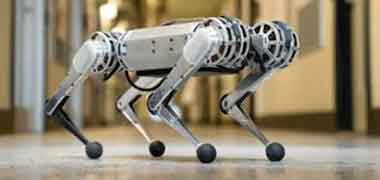
Legged Robot
Heavy-load cross roller and angular contact housings for quadruped and biped hip, knee, and ankle joints — K6 fit class for vibration-loaded seats, Ra 0.2μm bore finish for high-cycle loading, fatigue-rated housing wall geometry.
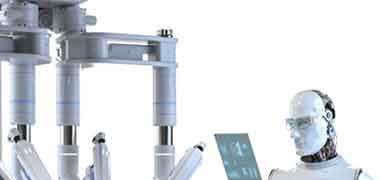
Surgical Robot
316L stainless and Ti-6Al-4V bearing housings for surgical robotic wrist and arm joint bearing seats — non-magnetic materials, Ra 0.4μm bore finish, ASTM A967 passivation, ISO 13485-compatible documentation.
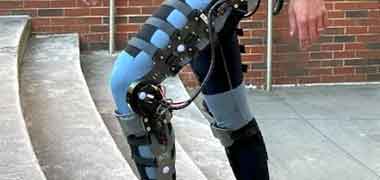
Exoskeleton
Lightweight AZ91D and 7075-T6 housings for exoskeleton joint pivots without tooling investment, plus prototype bearing housings with complete air gauge and roundness tester documentation for university and national laboratory research programs.
Robot Bearing Housing
Process & Capabilities
CNCPioneer's bearing housing process takes bore requirements from ISO 286 fit class specification through PPAP-qualified volume production in four structured phases — 24-hour DFM review, prototype machining (5–14 days), in-process bore control, and production qualification.
Bearing Fit Class DFM Review (24 Hours)
ISO 286 class recommendation for your bearing OD and load/speed conditions · Interference/clearance calculation against bearing manufacturer specification · Bore achievability vs. wall thickness · Anodize allowance and thermal differential analysis for aluminum housings.
Prototype & Standard Series (5–14 Days)
Standard cross roller series Ø20–150mm from stock in 5–7 days; thin-section and angular contact assemblies 7–10 days; titanium and 5-axis compound-bore housings 9–14 days; 3-day expedite available on machining-ready standard configurations.
In-Process Bore Control
First-off air gauge before batch release · Low-force clamping protocol for thin-wall programs, documented in process traveler · Thermal stabilization hold between rough and finish boring · Adaptive boring bar offset correction within ±0.001mm.
Production & Statistical Control
PPAP Level 3 qualification with Cpk ≥1.67 on bearing bore diameter and roundness · 100% CCD automatic sorting above 5,000 annual units · 2–3 week monthly blanket releases with dedicated MAZAK capacity.
Bearing Housing Materials
7075-T6 (65% of programs) · 6061-T6 · 6063-T5 · AZ91D magnesium · Ti-6Al-4V · 316L · 17-4PH H900 · 42CrMo4 · GG-25 cast iron · PEEK — all sourced with full mill certificates and SII XRF composition verification.
IATF 16949 / AS9100D Documentation
CoC, air gauge bore records, roundness tester roundness and concentricity records, CMM dimensional report, profilometer Ra records, anodize thickness records, PPAP Level 3 for volume programs, FAIR per AS9102 for defense programs.
Materials for Robot
Bearing Housings
Bearing housing material selection weighs thermal expansion match to the bearing ring (typically GCr15 steel, CTE 11.8 ppm/°C) alongside strength and weight — aluminum's 23.6 ppm/°C mismatch can erode clearance across a temperature swing, which is why the DFM review checks operating range before finalizing fit class.
7075-T6
2.80 g/cm³ · 503 MPa yield · Anodizable · Standard robot bearing housings — 65% of programs, providing the strength-to-weight that satisfies most joint bore requirements at competitive machining cost
6061-T6
2.70 g/cm³ · Machinability, cosmetic anodize response · Low-load robot bearing housings and flange bodies where structural margin is generous and cost efficiency is the priority
6063-T5
2.70 g/cm³ · Thermal conductivity 200 W/m·K · Heat-dissipating bearing housings with integral cooling features, spreading actuator heat away from the bearing contact zone
AZ91D
1.81 g/cm³ · Lowest density of any bearing housing material · Lightest robot bearing housings for distal arm programs where minimum swing inertia outweighs load-path margin
Ti-6Al-4V
4.43 g/cm³ · Superior fatigue resistance, non-magnetic · High-load joint bearing housings and MRI-compatible programs where thermal expansion matching to steel bearing rings also matters across wide temperature ranges
316L
7.99 g/cm³ · Non-magnetic, biocompatible · Surgical robot bearing housings and corrosion-exposed joints requiring sterilization compatibility and imaging-safe materials
17-4PH H900
7.75 g/cm³ · 1,310 MPa yield · High-stress bearing housing flanges and insert structures at the small-footprint interfaces where stiffness-to-weight governs
42CrMo4
7.85 g/cm³ · Toughness, hardened · Robot base slew bearing housings and high-load programs where large-diameter bore stability under heavy shock loading is the governing requirement
GG-25
7.20 g/cm³ · Damping, dimensional stability · Industrial robot base bearing housings and heavy-load pillow block programs where vibration damping outweighs weight sensitivity
PEEK
1.32 g/cm³ · Electrically isolating · Isolated bearing seat inserts and dielectric programs requiring electrical separation between structural elements at the bearing interface
Surface Treatments for
Robot Bearing Housings
Bearing housing surface treatments each carry a bore dimensional allowance that must be engineered into the machined feature — anodize alone can grow the bore 0.015–0.050mm per side, so the target diameter is calculated backward from the post-treatment fit class, not forward from a nominal drawing dimension.
Type III Hard Anodize — MIL-A-8625
Standard for aluminum robot bearing housings — HV 400+ protecting bore surfaces from fretting wear. Grows 0.015–0.050mm per side on the bore; CNCPioneer machines undersize by the growth allowance so post-anodize bore lands within ±0.003mm of the H6/J6 target.
Type II Clear Anodize
For robot bearing housings where clear cosmetic finish is specified and Type III wear resistance isn't required. Zero dimensional change to bearing bores — machined to H6 target with no anodize allowance needed.
Passivation — ASTM A967
Mandatory for all 316L and 17-4PH H900 stainless robot bearing housings. Zero dimensional change — bearing bores machined to H6 target with no passivation allowance required.
Electroless Nickel — MIL-C-26074
Corrosion protection for AZ91D magnesium and steel robot bearing housings in corrosive environments. Plating allowance incorporated in machined bore dimensions; post-plate bore within ±0.003mm of H6 target.
Hard Chrome — 0.010–0.025mm
Wear-resistant bore surface for robot base slew bearing housings and large-diameter pillow block housings subject to fretting from vibration. Post-chrome precision boring restores H6 target ±0.003mm and Ra 0.4μm after build-up.
DLC Coating — 1–3μm
Ultra-low friction bore surface for oscillating-outer-ring housing designs — increases surface hardness (HV 2,000+) and reduces friction coefficient (μ 0.05–0.15), raising the fretting threshold at the bore-to-race interface.
All robot bearing housing surface treatments — hard anodize, clear anodize, passivation, electroless nickel, hard chrome, and DLC — are applied with bore dimensional allowance engineered against the target fit class. Alodine Class 3 per MIL-DTL-5541 is available for aluminum housings requiring EMC bonding continuity at assembly interfaces. Treatment certifications are included in the shipment documentation package for every program.
IATF 16949 / AS9100D Quality System
for Robot Bearing Housings
A bearing housing bore that passes diameter inspection but carries excess roundness error or OD-to-bore eccentricity still degrades joint stiffness and bearing life. CNCPioneer's quality system verifies all four bore dimensions — diameter, roundness, cylindricity, and concentricity — simultaneously, not sequentially.
Bearing Fit Class DFM Review
ISO 286 class recommendation for the customer's bearing OD and application; interference/clearance calculation; thermal differential analysis for aluminum housings with steel bearings; bore achievability against wall thickness.
Material Incoming Inspection
SII XRF composition verification per lot — 7075-T6, AZ91D, Ti-6Al-4V, 316L, 17-4PH H900. Hardness verification on 17-4PH H900 (44–47 HRC). Full lot traceability.
In-Process Bearing Bore Control
First-off air gauge bore verification before batch release. Low-force clamping protocol activation for thin-wall housings, documented in process traveler — protecting free-state roundness from clamping distortion.
Thermal Stabilization & SPC
Controlled thermal hold between rough and finish boring, documented per process traveler. SPC control charts on bearing bore diameter with Cpk ≥1.67 on IATF special characteristics.
Final Inspection
Air gauge: 100% bearing bore diameter. Roundness tester: bore roundness and cylindricity, OD-to-bore concentricity. Mitutoyo CMM: bolt circle, locating pilot, face perpendicularity. Profilometer: bore Ra per lot.
Documentation
CoC, air gauge bore records, roundness tester charts, CMM dimensional report, profilometer Ra records, anodize thickness records, material certifications, PPAP Level 3 for volume programs, FAIR per AS9102.
IATF 16949 / AS9100D Quality System
Details
CNCPioneer's IATF 16949 and AS9100D certified robot bearing housing factory confirms independent audit compliance with the quality framework demanded by humanoid robot OEMs and industrial robot builders alike.
Bore Dimensional Documentation
Air gauge bore diameter records, roundness tester roundness and cylindricity charts, and CMM OD-to-bore concentricity verification for every production lot — the dimensional evidence that installation quality is confirmed before the housing reaches the assembly line.
- 100% air gauge every lot
- Roundness tester charted
- Records retained long-term
Material Traceability & Authentication
Full material traceability chain from mill certificate heat number through finished bearing housing shipment. SII XRF composition verification on incoming material for every order. Counterfeit material prevention through approved supplier list management.
- XRF alloy verification every order
- Mill cert heat number traced
- Counterfeit part prevention
Cpk ≥ 1.67 Process Capability
PPAP Level 3 qualification with Cpk ≥1.67 on bearing bore diameter and roundness special characteristics; Cpk ≥1.33 on bore-to-OD concentricity. 100% CCD automatic sorting on bore diameter above 5,000 annual units.
- Cpk ≥ 1.67 on key characteristics
- PPAP Level 3 for volume programs
- 100% CCD sorting at scale
Bearing Sleeve Free-State Bore Quality Protocol
CNCPioneer's bearing sleeve low-force clamping protocol verifies that bore roundness (±0.001mm) and concentricity (±0.003mm) measurements reflect free-state sleeve geometry — not chuck-distorted geometry that springs back to non-round dimensions after unclamping.
- Low-force protocol on wall/D ratio <0.15
- Bore roundness ±0.001mm free-state verified
- Concentricity ±0.003mm at reduced clamp force
Robot Bearing Housings & Seats FAQ
Common questions from humanoid robot OEMs, actuator module producers, and industrial robot manufacturers about CNCPioneer's bearing housing machining, ISO 286 fit class selection, and bore precision discipline.
Three things. Tolerance class: industrial housings run H7 at ±0.010–0.015mm, fine when an external adjustment mechanism sets bearing preload — robot joints have no such adjustment, so preload is set entirely by the housing bore fit, requiring ±0.002mm within H6 or J6. Concentricity: industrial housings tolerate 0.010–0.020mm OD-to-bore error because bearing internal clearance absorbs the resulting shaft misalignment — a robot actuator has no clearance to absorb it, so ±0.003mm or better is required, or the mismatch directly offsets the joint's rotation axis from its structural axis. Integration density: a robot bearing housing isn't just a bore in a frame — it integrates bearing reception, cable routing channels, seal grooves, and encoder mounting pockets in one machined body, all in controlled geometric relationship from a single datum.
Cross roller bearings dominate humanoid joint mechanisms generally — their roller-in-V-groove geometry gives simultaneous radial, axial, and moment stiffness from a compact cross-section, covering finger MCP through hip cluster joints. Angular contact bearing seat pairs handle actuator output preload systems, where combined radial and axial load needs directed load capacity — these ship as matched pairs with preload spacer sets. Thin-section bearings solve the compact-envelope problem at wrist mechanisms, where a conventional cross-section would demand more room than the joint has. Four-point contact and slew bearings handle large-diameter, slow-rotation applications — robot base turntables and torso yaw — where bore diameters run Ø150–600mm. Pillow block and flange-mount housings serve linear axes and structural panel attachment rather than joint rotation directly. CNCPioneer's DFM review confirms the right type before committing to bore geometry.
For the standard configuration — stationary outer ring, rotating inner ring — H6 is correct for most torque classes from wrist through shoulder, giving 0 to +13μm clearance at a typical Ø30mm bore and keeping the outer ring in stationary register without fretting-initiating play under vibration. Knee and hip housings see higher vibration amplitude from heel-strike impact, so J6 (near-zero, −5 to +8μm) or K6 (−9 to +4μm interference) positively clamps the outer ring against relative micro-motion. CNCPioneer machines to ±0.002mm within the specified class band — not just anywhere in H6's full ±6.5μm range — so the actual fit against a js6-class bearing outer ring (±6.5μm) lands in the narrow zero-to-5μm clearance zone bearing manufacturers recommend, eliminating batch-to-batch joint stiffness variation.
A bearing outer ring pressed into a bore with ±0.005mm three-lobe roundness conforms to the lobe pattern, distorting by roughly 0.003–0.004mm — which raises peak contact stress at the lobe zones by 25–35%. Because bearing fatigue life scales inversely with load to a high power (roughly load⁻³ for point contact), that stress increase cuts bearing life to about 46% of nominal — potentially requiring field replacement within 2 years instead of a 4-year target. At ±0.001mm bore roundness, ring distortion drops to about 0.0007mm, peak stress rises only about 5%, and life reduction is a modest 14% — within typical design safety factors. That's why CNCPioneer verifies bore roundness by roundness tester as a mandatory production step for every cross roller and thin-section program, not a sampling check.
Single-setup machining — turning the housing OD and finishing the bearing bore in the same chucking, from the same spindle datum, without removing the part between operations — holds concentricity to ±0.001–0.002mm by machine positioning accuracy. Multi-setup machining, rebore in a second chucking, introduces ±0.010–0.030mm of re-registration error that becomes permanent eccentricity. At 0.020mm OD-to-bore error, the bearing's rotation axis sits 0.020mm off the structural bore axis it's pressed into — producing 0.040mm total indicator runout between actual and reference joint rotation. For a shoulder joint 0.6m from the fingertip, that runout can produce roughly 0.6mm of fingertip oscillation per rotation — consuming an entire ±0.5mm manipulation accuracy budget from concentricity error alone. CNCPioneer's ±0.003mm standard, confirmed by roundness tester and CMM per lot, keeps that contribution under 1% of a typical fingertip position budget.
Prototype: standard aluminum single-bore cross roller housing 5–7 business days; thin-section (reduced clamping protocol) 7–10 days; angular contact assembly with matched preload spacers 7–10 days; titanium housing 10–14 days; 5-axis compound-bore multi-bearing housing 9–14 days; steel base slew housing 10–14 days. Pilot production (25–500 units) runs 2–4 weeks per batch with SPC accumulation and 100% air gauge. PPAP Level 3 qualification takes 6–8 weeks from pilot data completeness. Volume production ships on 2–3 week monthly blanket releases, with 500,000+ annual unit capacity across all bore size classes. At representative scale, a standard Ø50mm cross roller housing costing $85 at US prototype pricing runs about $50 at CNCPioneer prototype and $18–22 at 10,000-unit annual volume — across roughly 60 bearing housings per humanoid robot, savings of $1,500–$2,000 per robot BOM at 5,000 annual robots.
Get a Quote for Robot Bearing Housings & Seats
Upload your robot bearing housing drawings or CAD files and receive a free DFM review and competitive quotation within 24 hours — covering ISO 286 fit class recommendation, bore achievability against wall thickness, single-setup concentricity feasibility, thermal differential analysis, anodize allowance specification, and complete pricing from prototype through volume production.