
Robot Motor Housings & End Caps
Precision Stator Housing Manufacturer
CNCPioneer is a precision robot motor housing specialist and certified China robot motor housing manufacturer delivering stator housing cylinders and motor end cap assemblies with stator bore diameter accuracy of ±0.005mm, bore cylindricity of ±0.002mm/50mm, and end cap bearing seat concentricity to stator bore within ±0.005mm — 66+ MAZAK mill-turn and VARIAXIS 5-axis centers plus 78+ Swiss CNC lathes for humanoid robot OEMs and servo motor manufacturers worldwide since 2011.

What Are Robot Motor
Housings & End Caps?
Robot motor housings and motor end caps are the precision-machined structural bodies that contain, align, thermally manage, and mechanically protect the electromagnetic core of every robot actuator. The stator housing bore is simultaneously a precision mechanical seat, a thermal conduction pathway, and — in some configurations — an electromagnetic containment structure. The motor end cap closes each axial end, carrying the bearing seat that locates the rotor shaft, the shaft seal, and the electrical connector exit.
Because the end cap bearing seat and stator housing bore must share a common axis within ±0.005mm for the rotor to spin concentrically and maintain a uniform air gap, that single dimensional relationship is the most consequential specification in robot motor housing manufacturing — it governs cogging torque, and therefore how smoothly and quietly the motor actually runs.
-
Stator bore thermal contact as primary quality Ra 0.8μm bore finish, verified interference class, and cylindricity ±0.002mm/50mm — the three specifications that govern thermal resistance and therefore motor continuous torque rating.
-
End cap concentricity as the air gap foundation Single-setup machining holds end cap bearing seat concentricity to stator bore within ±0.005mm — keeping cogging torque under 3% instead of the 5–8% multi-setup engagement fits produce.
-
Motor end cap as a precision mechanism body Bearing seat, shaft seal, encoder platform, phase lead exit, and thermal break machined to actuator-grade precision — not treated as a simple cover plate.
-
40–60% China manufacturer cost advantage IATF 16949 and AS9100D certified motor housing machining at 40–60% below equivalent US, European, and Japanese suppliers at identical stator bore and concentricity accuracy.

Why CNCPioneer as Your Robot
Motor Housing Manufacturer?
Motor performance lives or dies on two things a generic machine shop rarely treats as primary specifications: stator bore thermal contact and end cap bearing seat concentricity. CNCPioneer's motor-engineering DFM approach treats both as what they actually are — the parameters that set continuous torque rating and cogging torque, not secondary machining details.
Stator Bore Thermal Contact as Primary Quality
Ra 0.8μm bore finish (30–50% lower thermal resistance than Ra 1.6μm), controlled interference within class, and cylindricity ±0.002mm/50mm — verified by profilometer, roundness tester, and air gauge on every lot, because these three specs set continuous torque rating.
End Cap Concentricity as the Air Gap Foundation
Single-setup machining of stator bore and both end cap bearing seats from one datum holds concentricity to ±0.005mm — the level producing under 3% cogging torque, versus 5–8% from the ±0.010–0.020mm engagement-fit error of separately assembled end caps.
Motor End Cap as a Precision Mechanism Body
Front bearing seat ±0.002mm, rear bearing seat ±0.002mm, shaft seal running surface Ra 0.4μm, connector exit ±0.050mm, thermal break insert for encoder protection — every feature at mechanism precision, not cover-plate tolerances.
Complete Stator Housing & End Cap Portfolio
Frameless torque motor housings for humanoid joints, BLDC for mobile robot drives, servo housings for precision axes, stepper housings, and liquid-cooled jacket housings with precision channel geometry — one qualified manufacturer.
Custom Motor Housing DFM Partnership
Every inquiry gets 24-hour DFM covering stator interference class for thermal contact, end cap concentricity feasibility, cooling geometry, and connector routing — the motor-engineering-specific analysis generic shops can't provide.
40–60% China Manufacturer Cost Advantage
CNCPioneer's cost structure delivers 40–60% reduction versus US, European, and Japanese motor housing suppliers at identical stator bore accuracy and end cap concentricity — without compromising thermal or electromagnetic performance.
Robot Motor Housing Types
We Manufacture
CNCPioneer's motor housing machining covers the complete motor type range deployed in modern robots — from frameless torque motors in humanoid joints through liquid-cooled drive motors in high-duty-cycle programs.

Frameless Torque Motor Integration Housings
The dominant motor type in humanoid joints — stator bore ±0.005mm within H7/K6/M6 class, cylindricity ±0.002mm/50mm, Ra 0.8μm standard. Ø12–160mm stator bore range spanning finger motors through hip motors, with thermal break insert protecting the encoder.

BLDC Motor Housing Bodies
For mobile robot drive systems, base rotation, and drone propulsion — K6/M6 press-fit stator bore, integrated end cap bearing seats at ±0.005mm concentricity, Hall sensor mounting ±0.020mm, and optional convective cooling fin integration.

Servo & Stepper Motor Housing Structures
NEMA and IEC standard frame sizes with precision mounting faces ±0.010mm perpendicularity, encoder rear-mount platforms, IP65 shaft seal geometry; two-piece stepper housings with ±0.010mm register OD for front-to-rear concentricity.

Front End Caps
The output-side end cap bearing the highest radial load — bearing seat ±0.002mm, roundness ±0.001mm, concentricity to housing pilot OD ±0.003mm, shaft seal bore ±0.003mm ID, and labyrinth or lip seal running surface Ra 0.4μm.

Rear End Caps
Encoder and electrical connection zone — bearing seat ±0.002mm, encoder platform flatness 0.005mm, encoder disc seat concentricity ±0.003mm TIR, phase lead exit array ±0.030mm, and PEEK thermal break bore ±0.003mm protecting encoder from stator heat.

Liquid-Cooled Motor Jacket Housings
Annular cooling channel ±0.100mm width machined around the stator bore for high-duty-cycle hip and knee actuators — O-ring sealed at ±0.020mm, 100% pressure decay leak tested at 1.5× rated coolant pressure before release.
Industries & Applications
CNCPioneer's robot motor housings supply humanoid robot OEMs, collaborative robot manufacturers, servo motor and actuator module producers, mobile robot and drone manufacturers, surgical robot companies, and research institutions worldwide.

Humanoid Robot OEMs
Custom motor housing and stator housing programs for all joint motor types — frameless torque motor housings from Ø12mm through Ø160mm with end cap sets, thermal break inserts, and liquid cooling jackets for high-duty-cycle joints.

Collaborative Robot Manufacturers
IATF 16949 certified cobot servo and BLDC motor housing production — IP65/IP67 shaft seal geometry, encoder mounting precision, and PPAP Level 3 supply qualification at 10,000–500,000 annual units.

Actuator Module
Stator housing and end cap programs matching motor OEM stator dimensions, concentricity-verified matched sets, and NEMA/IEC frame-size standard housings for servo motor production at 50,000–500,000 annual units.
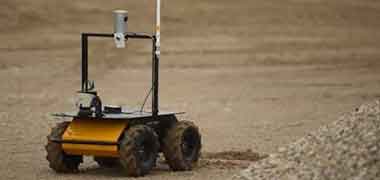
Mobile Robot, AMR
BLDC drive motor housings for wheel drive and base rotation with integrated liquid cooling for high-duty-cycle AMR programs, plus lightweight 7075-T6 and magnesium housings for drone propulsion motors at minimum mass.
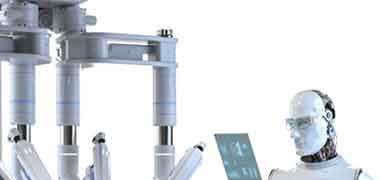
Surgical Robot Companies
316L stainless and Ti-6Al-4V motor housing bodies for surgical robotic joint motors — non-magnetic materials, Ra 0.8μm stator bore finish, ASTM A967 passivation, ISO 13485-compatible documentation.
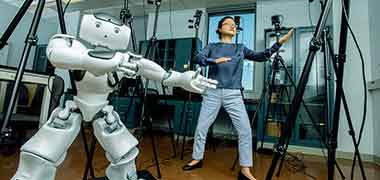
Research Institutions
Prototype custom motor housing and end cap programs with complete concentricity verification documentation — enabling motor integration research with dimensional records establishing air gap uniformity from machining accuracy.
Robot Motor Housing
Process & Capabilities
CNCPioneer's motor housing process takes stator bore and end cap requirements from electromagnetic-thermal specification through PPAP-qualified volume production — 24-hour DFM review, prototype machining (5–14 days), in-process bore control, and production qualification.
Electromagnetic-Thermal DFM (24 Hours)
Air gap eccentricity budget from achievable end cap concentricity · Thermal resistance calculation from bore finish and interference class · Encoder thermal analysis · Deep-bore and thin-wall distortion feasibility review.
Prototype Motor Housing (5–14 Days)
Aluminum frameless motor housing body 5–7 days; matched housing + front + rear end cap set with concentricity verification 10–14 days; liquid-cooled jacket housing with pressure decay test 9–13 days.
Stator Bore & End Cap Verification
Air gauge on stator bore and every bearing seat bore · Roundness tester on bearing seat roundness and stator-bore-to-bearing-seat concentricity · Profilometer Ra on bore and seal surfaces · 100% pressure decay leak test for liquid-cooled programs.
Production & Statistical Control
PPAP Level 3 qualification with Cpk ≥1.67 on stator bore diameter, cylindricity, and end cap concentricity · Adaptive boring offset correction preventing tool-wear drift · 2–3 week monthly blanket releases.
Motor Housing Materials
6063-T5 (200 W/m·K, maximum thermal) · 6061-T6 (55% of programs) · 7075-T6 · 316L · 17-4PH H900 · Ti-6Al-4V · 42CrMo4 · PEEK thermal break · C11000 copper spreader — all with full mill certificates and SII XRF verification.
IATF 16949 / AS9100D Documentation
CoC, air gauge stator bore and bearing seat records, roundness tester concentricity records, profilometer Ra records, pressure decay test records, PPAP Level 3 for volume programs, FAIR per AS9102 for aerospace programs.
Materials for Robot
Motor Housings
Motor housing material selection is a thermal-conductivity decision as much as a structural one — the 20% conductivity gap between 6063-T5 and 6061-T6 alone shifts continuous torque rating by 8–12%, while stainless housings trade a 10× thermal conductivity penalty for non-magnetic and biocompatible properties.
6063-T5
200 W/m·K · 2.70 g/cm³ · Maximum aluminum thermal conductivity · Thermal-priority stator housings — the material choice when continuous torque rating is the binding design constraint, worth 8–12% higher torque at the same winding temperature versus 6061-T6
6061-T6
167 W/m·K · 2.70 g/cm³ · Structural and thermal balance · Standard robot motor housings — roughly 55% of programs, balancing thermal conductivity against machinability and structural margin
7075-T6
130 W/m·K · 2.80 g/cm³ · Maximum structural strength · Impact-loaded end caps and structural motor housing programs at hip and knee joints, often paired with a 6063-T5 stator body for the best of both properties
Ti-6Al-4V
7 W/m·K · 4.43 g/cm³ · Non-magnetic, fatigue-resistant, lightweight · MRI-compatible robot motor housings and aerospace robot motor programs — always paired with motor derating analysis given the low thermal conductivity
42CrMo4
42 W/m·K · 7.85 g/cm³ · Maximum toughness, hardened · Heavy-duty robot drive motor housings where structural rigidity and shock tolerance matter more than thermal conductivity
316L
16 W/m·K · 7.99 g/cm³ · Non-magnetic, corrosion-resistant, biocompatible · Surgical and MRI-compatible robot motor housings — roughly 10× lower thermal conductivity than aluminum, reducing continuous torque rating 30–50% at equivalent geometry
17-4PH H900
18 W/m·K · 7.75 g/cm³ · 1,310 MPa yield · High-stress end caps and precision motor housing flanges at the small-footprint interfaces where stiffness governs over thermal performance
PEEK
0.25 W/m·K · 1.32 g/cm³ · Thermal break, insulating · End cap thermal break inserts — 668× lower thermal conductivity than aluminum, reducing stator-to-encoder heat conduction by 99.85% to keep the encoder near ambient
C11000 ETP
391 W/m·K · 8.94 g/cm³ · Maximum thermal conductivity of any motor housing material · High-flux stator heat spreader insert elements for the most thermally demanding continuous-torque programs
Surface Treatments for
Robot Motor Housings
Motor housing surface treatments require careful bore masking — anodize or plating grown on the stator bore would reduce interference fit below thermal contact specification, so CNCPioneer masks stator bores and bearing seats as standard practice on every aluminum program.
Type II Clear Anodize
Standard corrosion protection for aluminum motor housings — 5–15μm, electrically insulating, important where stator-to-housing isolation prevents current leakage. ASTM E595 TML ≤0.05% available for clean-room programs.
Type III Hard Anodize — MIL-A-8625
Wear-resistant exterior surfaces and end cap bearing face zones, HV 400+, black standard. Stator bore and bearing seats masked during anodize as standard practice — anodize growth there would drop stator interference below thermal contact spec.
Passivation — ASTM A967
Mandatory for all 316L and 17-4PH H900 stainless robot motor housing and end cap components. Zero dimensional change — stator bore and bearing seats machined to spec with no passivation allowance needed.
Electroless Nickel — MIL-C-26074
Corrosion protection for humid or outdoor robot deployments, applied to external surfaces with stator bore masked or post-plate precision-bored to restore compliance. Mandatory on all surfaces for AZ91D magnesium housing variants.
Powder Coat
Cosmetic color and corrosion protection for motor housing exterior, color-matched per robot OEM specification and applied over Alodine pretreatment. Stator bore and bearing seats protected by precision masking.
DLC Coating — 1–3μm
Applied to shaft seal running surfaces in end caps for dry-running or oil-mist lubrication environments — ultra-low friction (μ 0.05–0.15) reduces seal friction and heat generation at the shaft seal contact zone.
All robot motor housing surface treatments — clear anodize, hard anodize, passivation, electroless nickel, powder coat, and DLC — are applied with stator bore and bearing seat masking engineered into the process. Alodine Class 1A per MIL-DTL-5541 and chromate conversion for cold-rolled steel drive housings are available as pretreatment options ahead of paint or powder coat. Treatment certifications are included in the shipment documentation package for every program.
IATF 16949 / AS9100D Quality System
for Robot Motor Housings
A motor housing that passes stator bore diameter inspection but carries excess end cap eccentricity still produces cogging torque the force controller reads as noise. CNCPioneer's quality system verifies stator bore and end cap concentricity together, not as separate checks.
Motor Housing DFM Review
Air gap eccentricity budget from end cap concentricity, thermal resistance calculation from bore finish and interference class, encoder thermal analysis, and thin-wall distortion risk — reviewed within 24 hours of every inquiry.
Material Incoming Inspection
SII XRF composition verification on every lot — 6063-T5, 6061-T6, 7075-T6, 316L, 17-4PH H900. Hardness verification on 17-4PH H900 (44–47 HRC). Full lot traceability.
Stator Bore In-Process Control
First-off air gauge on stator bore diameter before batch release. Profilometer Ra verification after finish boring. Roundness tester cylindricity check on first article and 5% sampling, with SPC charts confirming Cpk ≥1.67.
End Cap Bearing Seat & Concentricity Verification
100% air gauge on all end cap bearing seat bores. Roundness tester for bearing seat roundness and seat-to-stator-bore concentricity per lot. CMM for encoder platform flatness and phase lead exit positions.
Liquid-Cooled Housing Leak Testing
100% pressure decay leak testing on all liquid-cooled motor housing programs at 1.5× rated coolant pressure with 30-second hold and zero-decay acceptance. Test records archived per housing serial number.
Documentation
CoC, air gauge stator bore and bearing seat records, roundness tester concentricity records, profilometer Ra records, pressure decay records, PPAP Level 3 for volume programs, FAIR per AS9102.
IATF 16949 / AS9100D Quality System
Details
CNCPioneer's IATF 16949 and AS9100D certified robot motor housing factory confirms independent audit compliance with the quality framework demanded by humanoid robot OEMs and servo motor manufacturers alike.
Stator Bore & Concentricity Documentation
Air gauge stator bore records, roundness tester concentricity charts between stator bore and both end cap bearing seats, and CMM dimensional reports for every production lot — the evidence that air gap uniformity is confirmed before shipment.
- 100% air gauge every lot
- Concentricity charted per assembly
- Records retained long-term
Material Traceability & Authentication
Full material traceability chain from mill certificate heat number through finished motor housing shipment. SII XRF composition verification on incoming material for every order. Counterfeit material prevention through approved supplier list management.
- XRF alloy verification every order
- Mill cert heat number traced
- Counterfeit part prevention
Cpk ≥ 1.67 & Leak Test Certification
PPAP Level 3 qualification with Cpk ≥1.67 on stator bore diameter, cylindricity, and end cap concentricity special characteristics. 100% pressure decay leak test certification archived per serial number for liquid-cooled programs.
- Cpk ≥ 1.67 on key characteristics
- PPAP Level 3 for volume programs
- 100% leak test, liquid-cooled units
Bearing Sleeve Free-State Bore Quality Protocol
CNCPioneer's bearing sleeve low-force clamping protocol verifies that bore roundness (±0.001mm) and concentricity (±0.003mm) measurements reflect free-state sleeve geometry — not chuck-distorted geometry that springs back to non-round dimensions after unclamping.
- Low-force protocol on wall/D ratio <0.15
- Bore roundness ±0.001mm free-state verified
- Concentricity ±0.003mm at reduced clamp force
Robot Motor Housings & End Caps FAQ
Common questions from humanoid robot OEMs, servo motor manufacturers, and actuator module producers about CNCPioneer's stator bore precision, end cap concentricity, and motor-engineering DFM approach.
The distinction is architectural. A robot actuator housing integrates the complete subsystem — stator bore, gearbox bearing seats, gearbox structural elements, output bearing, encoder pocket, and structural link attachment — in one machined body, with precision spanning all of it. A robot motor housing is the motor subsystem enclosure specifically, with its critical features narrowed to the stator bore (±0.005mm, Ra 0.8μm, cylindricity for thermal contact and electromagnetic centering) and end cap bearing seats (±0.002mm, ±0.005mm concentricity to stator bore for air gap uniformity). Motor housings are the right call when the motor is a distinct subsystem — a purchased frameless motor integrated into a separately machined housing. Actuator housings are the right call when motor and gearbox integration happen in the same body. CNCPioneer produces both, applying the same stator bore and concentricity disciplines to the motor zone either way.
Frameless torque motors ship as a bare stator and rotor without their own housing — the dominant configuration in humanoid joint actuators, where the housing is built specifically to integrate that stator with anti-rotation features, a thermal break to protect the adjacent encoder, and a wiring exit tailored to the joint's cable routing. BLDC and servo motor housings, by contrast, are complete self-contained motor bodies — the housing includes both end caps, Hall sensor or encoder mounting, and a standardized mounting interface (NEMA or IEC frame sizes for servo motors) so the finished motor bolts directly into mobile robot drivetrains, robot base rotation systems, or precision axis drives as a drop-in unit. Frameless housings are specified when a robot OEM buys a bare motor and integrates it themselves; BLDC and servo housings are specified when a complete, standardized motor unit is the deliverable.
The chain runs from eccentricity to air gap non-uniformity to cogging torque to force-control noise. For a motor with 0.3mm nominal air gap, 0.005mm bearing seat eccentricity produces about 1.7% air gap variation and roughly 1–3% cogging torque for typical BLDC pole counts — in a 50 Nm hip joint motor, that's 0.5–1.5 Nm of periodic torque ripple. For humanoid arm manipulation tolerating ±0.5 Nm force resolution, CNCPioneer's standard ±0.005mm concentricity is adequate. For humanoid hands doing delicate assembly work needing ±0.1 Nm resolution, tightening to ±0.003mm cuts cogging to 0.5–1%. For locomotion motors, where gait dynamics tolerate far larger disturbances, ±0.008mm (standard industrial) is often fine. CNCPioneer's DFM review calculates the actual cogging torque from your motor's topology and target concentricity rather than defaulting to the tightest number available.
Surface finish governs thermal contact conductance through the true contact area between stator OD and housing bore. At Ra 1.6μm, true contact area is only about 10–15% of nominal, with the rest filled by low-conductivity air. At Ra 0.8μm, contact area rises to 15–25%; at Ra 0.4μm, 25–40%. For a typical Ø50mm, 40mm-long stator housing, this drops total stator thermal resistance from about 0.23°C/W at Ra 1.6μm to 0.20°C/W at Ra 0.8μm to 0.18°C/W at Ra 0.4μm — roughly a 22% reduction from worst to best, translating directly to 22% higher continuous torque at the same winding temperature. CNCPioneer's standard is Ra 0.8μm, a strong improvement over Ra 1.6μm at modest cost; Ra 0.4μm is available where continuous torque rating is the binding constraint and justifies the finer finishing operation.
Conduction cooling through a well-finished stator bore (Ra 0.8μm or better) into a thermally conductive housing (6063-T5) is adequate for most humanoid joints and standard duty cycles — the housing itself, plus whatever structural contact it has with the robot limb, dissipates enough heat. Liquid cooling becomes necessary where duty cycle and continuous torque demand exceed what conduction and convection can extract: humanoid hip and knee actuators running extended high-torque cycles, high-speed collaborative robot joints, and industrial robot high-cycle welding programs. CNCPioneer's liquid-cooled jacket housings machine an annular channel around the stator bore, sealed with O-rings and 100% pressure-decay leak tested at 1.5× rated pressure before shipment. The DFM review calculates the actual heat extraction capacity from your specified flow rate and inlet temperature against the continuous torque target — so cooling gets specified where it's genuinely needed, not defaulted to on every high-torque program.
Prototype: aluminum frameless motor housing body 5–7 business days; matched housing + front end cap + rear end cap set with concentricity verification 10–14 days; liquid-cooled jacket housing including pressure decay test 9–13 days; stainless 316L housing 8–12 days; Ti-6Al-4V housing 10–14 days. Pilot production (25–500 matched sets) runs 2–4 weeks per batch with SPC accumulation on stator bore and end cap concentricity. PPAP Level 3 qualification takes 6–8 weeks from pilot data completeness. Volume production ships on 2–3 week monthly blanket releases, with 500,000+ annual unit capacity across all stator bore classes. At representative scale, a matched 6061-T6 shoulder motor housing set (Ø60mm stator, 60mm length) costing $185 at US prototype pricing runs about $105 at CNCPioneer prototype and $38–45 at 10,000-unit annual volume — across roughly 28 motor housings per humanoid robot, savings of $1,400–$1,960 per robot BOM at 5,000 annual robots.
Get a Quote for Robot Motor Housings & End Caps
Upload your robot motor housing, stator housing, or motor end cap drawings or CAD files and receive a free motor-engineering DFM review and competitive quotation within 24 hours — covering stator bore interference fit class, end cap concentricity feasibility, air gap eccentricity budget, thermal break specification, liquid cooling geometry review, and complete pricing from prototype through volume production.