
Custom Precision
Electrical Contacts
CNCPioneer is a custom precision electrical contacts manufacturing specialist and certified precision supplier delivering custom engineered electrical contacts — precision machined stationary contact bodies, moving contact arms, sliding contact rings, spring contact pins, relay contact assemblies, contactor bridge contact sets, circuit breaker contact tips, connector contact elements, slip ring contact bodies, brush contact assemblies, rotary switch contact segments, test probe contact bodies, and complete custom electrical contacts packages.
Contact body diameter accuracy of ±0.002mm, contact face flatness of 0.003mm, contact tip profile accuracy of ±0.005mm, spring contact deflection geometry within ±0.010mm, and contact surface finish of Ra 0.1μm for minimum contact resistance from single-setup MAZAK mill-turn and Swiss CNC programs.
What Is Custom Precision
Electrical Contacts Manufacturing?
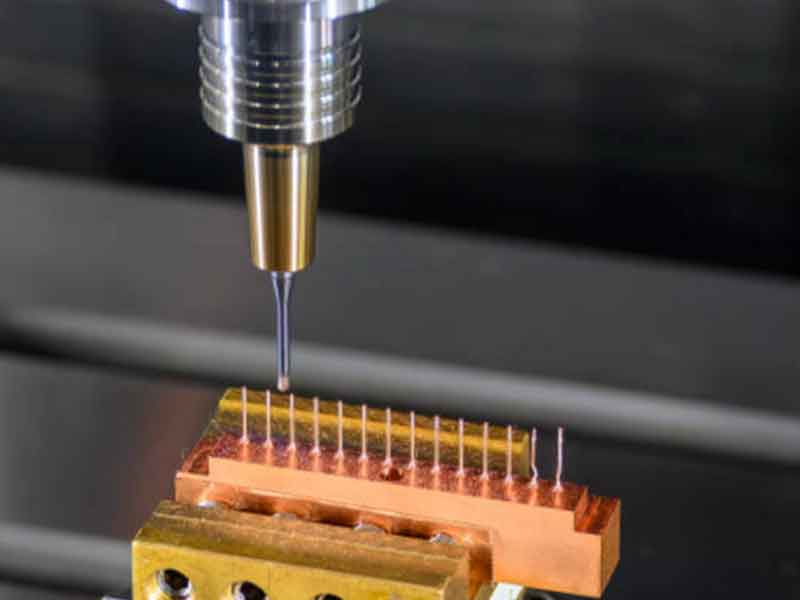
Custom precision electrical contacts manufacturing is the CNC precision machining, material processing, and surface treatment program — executed on Swiss CNC turning platforms, MAZAK mill-turn centers, wire EDM, and grinding systems — that produces the precision-machined metallic contact bodies, contact faces, spring arms, and contact assemblies through which electrical current transfers between circuit elements in switches, relays, contactors, connectors, circuit breakers, slip rings, test probes, and every other electromechanical device that makes, breaks, or maintains an electrical connection.
A precision electrical contact is simultaneously a mechanical component and an electrical component — it must perform correctly in both domains simultaneously, and failure in either domain constitutes device failure. The mechanical domain requirements: contact bodies must be dimensionally accurate to ±0.002–0.005mm for correct assembly alignment; spring contact arms must have the correct geometry (±0.010mm) for the designed contact force at the designed deflection; sliding contact rings must be concentric within ±0.005mm for uniform sliding resistance through rotation. The electrical domain requirements: contact face surface finish (Ra 0.1μm) minimizes contact resistance by maximizing true contact area; contact material selection governs arc erosion resistance, contact resistance stability, and welding resistance; and contact face geometry (flatness 0.003mm, profile ±0.005mm) ensures uniform contact pressure distribution.
-
Contact face geometry as the primary electrical performance discipline Contact resistance R_contact = ρ_material / (2 × a_contact) where a_contact is the Hertz contact radius. Contact face flatness (0.003mm) and surface finish (Ra 0.1μm) — which together govern the true contact area fraction at the nominal contact pressure — are the machining parameters most directly governing assembled device contact resistance. CNCPioneer's contact face machining programs achieve 0.003mm flatness and Ra 0.1μm as production standard.
-
Swiss CNC as the platform for miniature precision contact manufacturing The majority of signal-level custom electrical contacts in relays, connectors, and test probes range from Ø0.8mm to Ø8mm diameter — the size regime where guide bushing support on Swiss CNC is the only process achieving ±0.002mm diameter, ±0.001mm roundness, and Ra 0.1μm contact surface from one guide bushing position without rechucking. CNCPioneer's 78+ Swiss CNC lathes machine miniature electrical contact bodies from precious metal bar stock.
-
Precious and refractory metal machining as a material-specific competency Silver, gold, platinum, palladium, tungsten, and molybdenum are the primary electrical contact materials — all of which machine fundamentally differently from common engineering alloys. Pure silver work-hardens rapidly; tungsten requires EDM or diamond grinding; gold is extremely ductile; beryllium copper requires machining before precipitation hardening. CNCPioneer's custom electrical contacts manufacturing programs apply material-specific cutting parameters, tooling, and processing sequences for each precious and refractory contact material.
-
40–60% electrical contacts manufacturing cost advantage 40–60% below equivalent custom precision electrical contacts manufacturing from US, European, and Japanese contact machining facilities at identical dimensional accuracy, material certification, and IATF 16949 production documentation — the cost advantage enabling relay, contactor, and connector OEMs to achieve product cost targets in competitive electromechanical device markets.

Why CNCPioneer — Custom Precision
Electrical Contacts Precision Supplier
Key advantages establishing CNCPioneer as the preferred custom precision electrical contacts manufacturing partner — from contact face geometry discipline and Swiss CNC miniature manufacturing to precious metal machining competency, custom engineered contact assembly programs, material composition verification, and China cost advantage.
Contact Face Geometry as Primary Electrical Performance Discipline
Contact resistance R_contact = ρ_material / (2 × a_contact) where a_contact is the Hertz contact radius. Contact face flatness (0.003mm) and surface finish (Ra 0.1μm) — which together govern the true contact area fraction at the nominal contact pressure — are the machining parameters most directly governing assembled device contact resistance. CNCPioneer's contact face machining programs achieve 0.003mm flatness and Ra 0.1μm as production standard using precision facing operations with CBN or diamond inserts, verified by CMM flatness measurement and profilometry Ra per lot.
Swiss CNC for Miniature Precision Contact Manufacturing
The majority of signal-level custom electrical contacts in relays, connectors, and test probes range from Ø0.8mm to Ø8mm diameter — the size regime where guide bushing support on Swiss CNC is the only process achieving ±0.002mm diameter, ±0.001mm roundness, and Ra 0.1μm contact surface from one guide bushing position without rechucking. CNCPioneer's 78+ Swiss CNC lathes machine miniature electrical contact bodies from precious metal bar stock (Au, Ag, Pd, Pt) and engineering alloy bar stock (BeCu, phosphor bronze, brass, tungsten).
Precious and Refractory Metal Machining Competency
Silver, gold, platinum, palladium, tungsten, and molybdenum are the primary electrical contact materials — all of which machine fundamentally differently from common engineering alloys. Pure silver work-hardens rapidly; tungsten requires EDM or diamond grinding; gold is extremely ductile; beryllium copper requires machining before precipitation hardening. CNCPioneer's custom electrical contacts manufacturing programs apply material-specific cutting parameters, tooling, and processing sequences for each precious and refractory contact material.
Custom Engineered Contact Assembly Programs — Complete Assembly DFM
Many custom electrical contacts programs require not just the contact body but the complete contact assembly: contact face brazed or welded to spring arm; contact tip press-fitted into carrier body; contact assembly with precious metal plating applied after machining. CNCPioneer's custom engineered contact programs include assembly-level DFM — specifying the correct brazing alloy for contact face-to-arm bonding, the correct press fit interference for contact tip retention, and the correct plating sequence for optimal electrical and mechanical performance.
Material Composition Verification as Quality Foundation
Electrical contact material composition directly governs contact resistance, arc erosion resistance, welding resistance, and service life. Silver-tungsten (AgW) composition variations of ±2% W content change arc erosion rate by ±15%; beryllium copper (CDA 172) Be content of 1.80–2.00% is required for correct age-hardened yield strength. CNCPioneer's SII XRF composition verification on every precious metal and refractory alloy contact material lot confirms alloy composition before any machining investment.
40–60% Electrical Contacts Manufacturing Cost Advantage
CNCPioneer delivers custom precision electrical contacts manufacturing at 40–60% below equivalent custom precision electrical contacts manufacturing from US, European, and Japanese contact machining facilities at identical dimensional accuracy, material certification, and IATF 16949 production documentation — the cost advantage enabling relay, contactor, and connector OEMs to achieve product cost targets in competitive electromechanical device markets.
Machined Electrical Contact Types —
Complete Swiss CNC Product Portfolio
CNCPioneer's Swiss CNC sliding-headstock turning programs produce the complete range of bar-stock machined electrical contacts — male pin contacts, female socket contacts, RF coaxial center contacts, PCB press-fit pins, spring-loaded pogo pins, and high-reliability MIL-spec connector contacts — all from continuous bar feed with lights-out production capability and sub-micron dimensional repeatability.

Machined Male Pin Contacts
Solid-turned male pin contacts for signal, power, and mixed-signal connector systems, cut from precision bar stock on Swiss CNC sliding-headstock lathes. Pin body diameter Ø0.3–6.0mm ±0.005mm; pin tip geometry: chamfered flat, radius dome, or tapered point per mating socket specification; tip diameter ±0.003mm; total pin length ±0.010mm; body-to-tip concentricity ±0.005mm. Retention feature (groove, barb, or shoulder) ±0.005mm diameter and ±0.010mm axial position for connector housing locking engagement. Termination styles: crimp barrel ID ±0.003mm per conductor AWG; solder cup bore ±0.010mm; PCB tail Ø ±0.003mm for through-hole or compliant press-fit board mounting. Contact mating zone Ra 0.4μm; plating gold 0.75–1.27μm hard gold over 1.25–2.5μm electroless nickel underplate. Material: brass C36000 for standard signal contacts; phosphor bronze C51000 for spring-retention pin variants; beryllium copper C17200 for high-cycle stamped-and-turned hybrid pins.

Machined Female Socket Contacts
Spring-finger and collet-type socket contacts turned from bar stock on Swiss CNC, with precision multi-slot spring fingers providing defined insertion force and contact force for mating pin engagement. Socket bore ID ±0.005mm for pin mating interface; spring finger length ±0.050mm; slot geometry (width and count) yielding contact force 0.3–5.0N per finger; outer sleeve OD ±0.005mm; body-to-bore concentricity ±0.005mm. Collet socket (tulip contact): 4–8 split spring fingers screw-machined from solid bar; inner bore Ø0.3–5.0mm ±0.003mm; contact zone wall thickness ±0.010mm for designed spring preload; contact bore surface Ra 0.2μm for minimum wear on mating pin. Retention groove or shoulder ±0.005mm for connector housing insert engagement. Gold plating 0.75–1.27μm hard gold on contact zone; tin or gold on crimp or solder termination zone. Material: beryllium copper C17200 or phosphor bronze C51000 for spring-finger body; brass C36000 for structural body portion.

RF and Coaxial Center Contacts
Precision Swiss CNC-turned center conductors for SMA, SMP, SMPM, MCX, MMCX, N-type, BNC, TNC, and 2.4mm / 2.92mm / 3.5mm RF connector families requiring tight dimensional control for 50Ω or 75Ω impedance geometry. Center contact OD ±0.003mm; pin tip taper angle ±0.3° for air-dielectric impedance transition geometry; concentricity of pin OD to mounting shoulder ±0.002mm for controlled impedance airline; mating face perpendicularity 0.003mm; socket bore ID ±0.002mm. Phase-matched assembly contacts: contact body length ±0.010mm. Captivated solder bead or solder disk form for coaxial cable center conductor attachment; crimp or solder-in termination styles. Gold plating 0.75–1.27μm on mating and mating-zone surfaces for minimum insertion loss; silver plating available for low passive intermodulation (PIM) antenna system applications. Material: brass C36000 for standard RF contacts; OFHC copper C10100 for low-loss high-power contacts; beryllium copper C17200 for contacts with integral spring retention.

PCB Through-Hole and Press-Fit Pin Contacts
Machined PCB pin contacts for through-hole solder mounting and compliant press-fit PCB assembly produced from bar stock on Swiss CNC. Through-hole solder pin: round Ø0.5–1.0mm or square 0.64×0.64mm cross-section ±0.010mm for PTH land engagement; total pin length ±0.050mm; straight or right-angle body form; tin or selective gold plating on solder zone; surface Ra 0.8μm for solder wetting. Compliant press-fit pin (eye-of-needle): eye-zone width 1.5–1.6mm compressing into PCB hole Ø1.0–1.1mm; eye-zone thickness ±0.010mm for designed press-in force 50–120N and retention force ≥80N per IPC/JEDEC J-STD-075; connector mating zone Ø ±0.003mm. Header pin carrier strips: pitch 2.54mm, 2.0mm, 1.27mm, or 1.0mm ±0.020mm cumulative pitch across strip length; strip body flatness 0.10mm over 100mm for automated PCB assembly. Material: brass C36000 or phosphor bronze C51000; plating selective gold on mating zone, tin on solder zone.

Spring-Loaded Pogo Pin Contacts
Swiss CNC-machined barrel, plunger, and tip assemblies for spring-loaded electrical contacts (pogo pins) used in ICT test fixtures, functional test, battery contacts, wireless charging contacts, and board-to-board interim connections. Pogo barrel OD Ø0.7–5.0mm ±0.003mm; barrel ID H6 ±0.003mm for plunger running fit; diametral clearance 0.005–0.015mm; end-curl or crimp retention feature ±0.050mm; PCB through-hole tail pin or SMT solder pad termination geometry ±0.005mm. Pogo plunger OD h6 ±0.003mm; OD surface Ra 0.4μm for smooth barrel sliding; tip geometry: flat, round dome, sharp point, serrated edge, 4-point crown, or 6-point crown per application; crown tip point height uniformity ±0.010mm. Total travel 0.5–5.0mm ±0.050mm; contact force 25–500gf at rated compression ±10%; contact resistance ≤50mΩ at rated compression; cycle life 100,000–1,000,000 cycles per specification. Gold 0.5–1.0μm on tip and contact zone; electroless nickel on barrel OD and ID.

High-Reliability and MIL-Spec Connector Contacts
Precision Swiss CNC-machined contacts for MIL-SPEC circular and rectangular connectors, aerospace wiring harness systems, defense electronics, and medical device connector programs requiring full material and dimensional traceability. MIL-DTL-38999 Series III circular connector contacts per MIL-DTL-39029: sizes 22D, 20, 16, 12, 8 machined to all controlled diameters ±0.005mm; contact zone concentricity to crimp barrel ±0.005mm; retention barb for MIL-38999 insert engagement ±0.003mm; crimp barrel ID and OD per M22520 tool class compliance. MIL-DTL-55302 rectangular contacts: contact pin and socket per applicable slash sheet dimensions and groove geometry. Medical grade contacts per IEC 60601 creepage requirements: biocompatible gold 1.27μm minimum per ASTM B488 Type II Code C; palladium-nickel underplate available for extended wear life. All high-reliability contacts: material certification per AMS 4605 (beryllium copper) or AMS 4507 (phosphor bronze); DFARS-compliant material sourcing; PPAP Level 3 for OEM connector programs and AS9102 FAIR for aerospace and defense programs.
Industries & Applications
CNCPioneer's custom precision electrical contacts manufacturing serves every industry consuming precision electrical contacts at bearing-quality tolerances — from relay and contactor manufacturers to circuit breaker OEMs, connector system producers, automotive switch manufacturers, and medical device contact suppliers.
Relay and Contactor
Custom precision electrical contacts manufacturing for electromagnetic relays, solid-state relay contacts, AC/DC contactors, and motor protection relay contacts — AgSnO₂ and AgW arcing contact bodies; precious metal signal relay contacts in Au-Pd and Ru-plated silver; BeCu spring arm assemblies; and complete contact-and-arm subassembly programs delivered matched and tested.

Circuit Breaker
Arcing contact bodies in AgW and WCu for molded case circuit breakers (MCCBs) and air circuit breakers (ACBs) — contact tip machining from sintered billet by wire EDM and diamond grinding; contact face flatness 0.005mm; arcing horn geometry from MAZAK mill-turn; and complete moving and stationary contact set programs.

Connector System
Custom engineered precision contact pins for circular connectors, rectangular multi-pin connectors, RF connectors, and power connectors — Au-plated BeCu or phosphor bronze spring contact bodies; precision contact pin OD ±0.003mm for shell and insert registration; Swiss CNC from Ø0.5mm signal contact pins through Ø12mm power contact pins.

Automotive Switch
IATF 16949 certified contact programs for automotive switches — turn signal, horn, window, seat, and door switch contacts in AgNi and AgSnO₂; BeCu spring contacts; 100% contact resistance testing; and PPAP Level 3 production documentation for Tier 1 automotive switch supplier approval programs.

Industrial Control Equipment
Motor control center (MCC) and industrial panel switch contacts — heavy-duty stationary and moving contact sets for industrial contactors; precision machined contact bridge arms; and contact tip replacement kits for existing relay and contactor maintenance programs.

Medical Device Contact
Precision electrical contacts for medical implants, surgical instruments, and medical monitoring equipment — platinum, palladium, and gold alloy contacts for biocompatible, non-magnetic, corrosion-resistant signal contact programs; ISO 13485-compatible documentation; and ASTM F136 or ISO 5832-1 structural element programs.
CNC Machining Processes for
Custom Electrical Contacts
CNCPioneer's custom precision electrical contacts manufacturing process runs on 78+ Swiss CNC lathes, 66+ MAZAK mill-turn centers, MAZAK VARIAXIS 5-axis platforms, and dedicated wire EDM machining centers — with material-specific cutting parameters and processing sequences for each precious and refractory contact material.
Swiss CNC — Miniature Contact Manufacturing (Ø0.8–30mm)
Swiss CNC is the primary platform for miniature custom electrical contacts — guide bushing support enables ±0.002mm dimensional accuracy at the contact face while maintaining contact body roundness ±0.001mm. Sequence for pogo pin plunger (Ø1.5mm × 8mm, brass C36000): bar stock feeding through guide bushing → rough turn to +0.050mm stock → PCD turning of contact tip profile at v_c = 250 m/min, f = 0.02mm/rev producing Ra 0.1μm → finish OD to h6 ±0.003mm → retaining groove ±0.020mm → drill internal spring cavity → part-off. Contact face surface finish by material: pure silver Ra 0.1μm with PCD; gold alloy Ra 0.1μm PCD mandatory; phosphor bronze Ra 0.1μm with PCD; tungsten EDM + diamond grind Ra 0.2μm.
MAZAK Mill-Turn — Medium to Large Contact Bodies (Ø20–150mm)
For medium and large stationary contact bodies in contactors, circuit breakers, and industrial switch assemblies: contact body OD and bore from single chuck with concentricity ±0.003mm; contact face flatness 0.003mm from MAZAK precision facing with thermal stabilization; C-axis mounting hole pattern bolt holes ±0.010mm from contact face datum; all contact body features in one setup — no rechucking error. Standard for AgSnO₂ contactor contact bodies Ø20–80mm, relay bridge contact bars, and circuit breaker arcing contact assemblies.
Wire EDM — Tungsten and Refractory Contact Machining
Tungsten (HV 3,000) and molybdenum (HV 1,500) contacts cannot be machined by conventional cutting — wire EDM is the primary shaping process. Sequence: rough profile cut oversize 0.1mm → skim pass 1 ±0.010mm profile, Ra 0.8μm → skim pass 2 ±0.005mm, Ra 0.4μm → diamond grinding for flattest faces Ra 0.1μm and 0.003mm flatness. Recast layer management: two skim EDM passes reducing recast to ≤3μm; final diamond lapping removes residual recast at contact face; metallographic section verification per lot. Critical for circuit breaker arcing contacts, spark plug contacts, and vacuum interrupter contacts.
Precision Grinding — Contact Face Flatness
For contact face flatness specifications below 0.005mm, precision surface grinding or cylindrical grinding is the enabling process. Surface grinding for contact face flatness 0.003mm: CBN or aluminum oxide grinding wheel for silver and copper alloys; diamond for tungsten and ceramic-metal composites; water-soluble coolant for non-precious metals; DI water for precious metal contacts (preventing contamination). Stock removal 0.020–0.050mm per side final grind. Flatness verification: CMM scan 25-point grid; or optical flat interferometry for 0.001mm flatness programs.
In-Process Control & Final Inspection
Swiss CNC: first-off laser micrometer contact body OD before batch release; in-process OD monitoring every 50 pieces. MAZAK: first-off CMM contact face flatness before batch release. Wire EDM tungsten: recast layer metallographic section per EDM lot; contact face Ra profilometry after diamond lapping. BeCu programs: pre-age and post-age dimensional measurement confirming spring geometry within ±0.010mm after age hardening distortion. Plating verification: XRF plating thickness 100% measurement on precious metal plated contact programs; tape adhesion test per MIL-STD-202; Ferroxyl test for nickel undercoat porosity.
IATF 16949 / AS9100D Documentation
Certificate of Conformance · CMM dimensional report: all contact body dimensions, contact face flatness, tip geometry · Profilometry: contact face Ra; sliding surface Ra · Material certificate: precious metal or alloy composition from SII XRF · Plating thickness certificate: XRF plating thickness measurement per plating lot · Contact resistance measurement: 4-wire milliohmmeter per contact at specified contact force · Spring force measurement at rated deflection per spring contact program · PPAP Level 3 for OEM programs · FAIR per AS9102 for aerospace and defense programs · All records retained 20 years.
Materials for Custom Precision
Electrical Contacts
Custom precision electrical contacts material selection is governed by electrical resistivity, arc erosion resistance, welding resistance, hardness, spring force requirements, and corrosion stability. Pure silver (Ag 99.9%) is the default low-current signal contact material — lowest electrical resistivity of all metals at 1.59×10⁻⁸ Ω·m.
Pure Silver (Ag 99.9%)
Electrical resistivity: 1.59×10⁻⁸ Ω·m — the lowest of all metals (minimum contact resistance). Hardness: HV 25–30 (annealed) — soft, prone to welding under high current. Applications: signal-level contacts below 5A; low-force spring contacts; communication relay contacts. Machining: PCD tooling for Ra 0.1μm; work-hardening management with sharp tools and flood coolant. Standard for signal relay contacts, connector pins, and low-current switch contacts where minimum contact resistance is the primary design requirement.
Gold (Au 99.99%)
Electrical resistivity: 2.44×10⁻⁸ Ω·m; completely stable contact resistance (no surface oxide). Applications: dry-circuit signal contacts below 100mA; instrumentation relay contacts; connectors. Contact resistance: <10 mΩ consistently maintained over >10⁷ contact cycles. Machining: PCD tooling mandatory; chip evacuation critical for ductile gold. The standard contact material for precision signal relays, telecommunications connectors, and medical device contacts where atmospheric corrosion would degrade silver or copper contacts.
Gold Alloys (AuAg, AuPd, AuPt)
Au-Ag alloys: reduced cost; similar corrosion stability to pure Au; harder than pure Au. Au-Pd alloys: best combination of corrosion stability, hardness, and contact resistance for precision relay contacts; HV 150–200. Applications: precision relay contacts; medical device signal contacts; telecommunications switch contacts. Machined in annealed condition before age hardening; PCD tooling for Ra 0.1μm contact face finish. The preferred material for high-cycle precision relays where pure gold's softness would produce excessive wear.
Palladium (Pd) and Palladium Alloys
Pd-Ag (60/40): standard connector contact material for crimped and stamped contacts; excellent corrosion resistance at lower cost than pure Pd. Pd-Ni: superior hardness for sliding contact applications; HV 200–250. Applications: precision connector contacts; sliding contacts; encoder contacts. Machinable with carbide tooling at moderate cutting speeds; PCD for Ra 0.1μm contact face programs. The cost-effective alternative to gold for connector contacts in moderate-duty applications.
Platinum (Pt) and Platinum Alloys
Highest corrosion stability of all contact metals. Applications: precision measurement contacts; medical implant contacts; high-temperature contacts. Machining: PCD tooling mandatory due to platinum's work-hardening tendency; reduced cutting speeds versus gold. The material of choice for medical implant electrodes and high-temperature instrument contacts where no other metal provides adequate corrosion resistance and biocompatibility.
Silver-Tin Oxide (AgSnO₂ 88/12)
Composite powder metallurgy material: 88% Ag matrix with 12% SnO₂ particles. Arc erosion resistance: 3–5× better than pure Ag. RoHS compliant — the replacement for AgCdO in motor contactors. Applications: AC motor contactors 20–100A; lighting contactors; relay contacts in arcing duty. Machining: sintered billet; carbide tooling at reduced speed; Ra 0.4μm achievable; composition verified by SII XRF: Ag content ±1%; Sn content ±0.5%. The dominant arcing contact material for new RoHS-compliant AC contactor designs.
Silver-Tungsten (AgW 50/50, 60/40, 72/28)
Tungsten particle reinforcement: maximum arc erosion resistance in silver matrix. Contact resistance: higher than pure Ag but acceptable for power applications. Applications: circuit breaker contacts; high-voltage AC contactors; severe arcing duty. Machining: sintered billet; wire EDM for complex geometries; diamond grinding for contact face flatness 0.003mm. The standard material for molded case circuit breaker (MCCB) and air circuit breaker (ACB) arcing contacts.
Silver-Nickel (AgNi 90/10)
Improved hardness and arc erosion versus pure Ag; lower contact resistance than AgW. Applications: 10–50A general switching; automotive switch contacts; moderate arc duty. Machining: sintered billet; carbide tooling; Ra 0.4μm standard; PCD for Ra 0.1μm precision programs. The practical compromise between pure silver's low contact resistance and AgW's maximum arc resistance for moderate-duty switching applications.
Silver-Copper Alloy (AgCu 72-28, eutectic)
Improved hardness HV 60–80 versus pure Ag. Good brazing alloy — commonly used as contact face bonding material as well as contact material. Applications: medium-duty contacts 5–20A; contacts requiring better mechanical strength than pure Ag. Machinable with carbide tooling; PCD for Ra 0.1μm contact face programs. The standard brazing filler material for attaching precious metal contact tips to copper or brass carrier arms.
Beryllium Copper CDA 172 (BeCu)
Composition: Cu 97.9%; Be 1.80–2.00%; Co 0.20–0.35%. Properties after precipitation hardening (H900): yield strength 1,100–1,380 MPa; HV 350–400. Spring contact force per unit deflection: 5–10× higher than phosphor bronze. Key machining discipline: machine in annealed condition (A condition) to ±0.010mm spring geometry, THEN age harden (315°C × 3 hours) — aging produces ±0.003–0.008mm dimensional change. CNCPioneer BeCu program: machine in A condition ±0.020mm; verify post-age ±0.010mm. Applications: spring contact pins, test probe contacts, connector spring contacts, high-reliability relay spring contacts.
Phosphor Bronze CDA 510
Composition: Cu 94.8%; Sn 5.0%; P 0.2%. Properties: yield strength 510 MPa (H08 condition); HV 150. Cost-effective spring contact material for moderate force applications. Applications: standard connector spring contacts; switch spring contacts where BeCu spring force not required. Machinable with carbide tooling; PCD for Ra 0.1μm contact face programs. The economical alternative to BeCu for connector and switch spring contacts in moderate-duty applications.
Brass C36000 (Free-Machining Brass)
The most machinable copper alloy — 100% machinability rating. Applications: contact body structural elements; pogo pin barrels; contact carrier bodies; connector pin structural elements (with precious metal plating applied). Plating: nickel undercoat 1.5–3.0μm + gold topcoat 0.3–3.0μm for connector contact programs. Machinable with standard carbide tooling at high cutting speeds; PCD for Ra 0.1μm contact face programs. The standard structural material for plated connector contacts and pogo pin housings.
Tungsten (W, pure)
HV 3,000; melting point 3,422°C; lowest vapor pressure of all metals. Maximum arc erosion resistance. Wire EDM primary machining process; diamond finish grinding for contact face. Applications: circuit breaker arcing contacts; spark plug contacts; vacuum interrupter contacts. Recast layer management: two skim EDM passes reducing recast to ≤3μm; final diamond lapping removes residual recast at contact face; metallographic section verification per lot. The ultimate arcing contact material for extreme current interruption duty.
Molybdenum (Mo, pure)
HV 1,500; excellent arc resistance; good thermal conductivity. Applications: vacuum interrupter moving contacts; high-energy arcing contacts. Surface finish Ra 0.2μm from diamond grinding; flatness 0.003mm from precision lapping. The preferred material for vacuum interrupter contacts where tungsten's extreme hardness would produce excessive mating contact wear.
Tungsten-Rhenium Alloy (W-Re 3%)
Hardness HV 500+ and minimum tip wear during silicon scrub. Applications: semiconductor wafer probing cantilever probe tips; fine-pitch test probe contacts. Machining: precision wire EDM + centerless grinding to ±0.002mm diameter; tip radius grinding to ±5μm. The standard tip material for semiconductor parametric test probes where tip wear resistance and scrub consistency determine test accuracy.
Surface Treatments for
Custom Electrical Contacts
Custom precision electrical contacts surface treatment selection addresses contact resistance stability, arc erosion resistance, corrosion protection, wear resistance, and solderability — with plating thickness controlled to ±0.1μm and masking of non-contact zones to prevent unintended plating deposition.
Gold (Au) Plating — Electrodeposited
The standard contact surface finish for low-level signal contacts in relays, connectors, and switches. Hard gold: Au-Co alloy (0.1–0.3% Co); HV 130–200; most common for connector contacts and relay contacts; ASTM B488 Type II, Grade C (0.75μm minimum for class 1 connectors; 1.27μm for class 2). Soft gold: pure Au (99.9%); HV 60–80; for wire bonding pads and connector contacts requiring maximum conductivity. Flash gold: 0.05–0.25μm thin gold on nickel undercoat — for press-fit contacts and tarnish protection. Nickel undercoat: 1.5–5.0μm electroless or electrolytic nickel under all gold plating — provides diffusion barrier preventing copper substrate migration to gold surface over time.
Palladium-Nickel (PdNi) Plating
The best balance of cost, hardness, and corrosion stability for connector contacts that cannot use gold due to cost. PdNi 80/20 composition; HV 450–550 — harder than gold, providing superior wear resistance for sliding and wiping connector contacts. Tarnish resistance: excellent — Pd does not form stable tarnish films like Ag. Applications: automotive connector contacts, telecommunications connector contacts, consumer electronics connector contacts. XRF plating thickness verification 100% per lot; ±0.1μm thickness control.
Rhodium (Rh) Plating
For maximum hardness (HV 800–900) and minimum wear in sliding contact applications. Rhodium on gold or nickel undercoat; 0.1–0.5μm rhodium topcoat. Applications: reed relay contact tips (>10⁷ operation cycle life requirement); precision potentiometer wiper tips; optical encoder contact wipers. XRF plating thickness 100% verification; tape adhesion test per MIL-STD-202. The hardest precious metal plating for maximum wear resistance in high-cycle sliding contacts.
Ruthenium (Ru) Plating
For dry-circuit relay contacts with minimum contact resistance and maximum cycle life. Ruthenium 0.2–0.5μm; HV 700–900; minimum oxide formation. Applications: telecommunications relay contacts operating in dry circuit (below 50mV, 1mA) where even thin oxide films cause contact resistance exceedance. XRF plating thickness 100% verification; contact resistance measurement confirms ≤20 mΩ at rated force after plating.
Electroless Nickel
Corrosion protection and diffusion barrier undercoat for all precious metal plated contact bodies. Ni-P (10–12% P): HV 500 (as-deposited); 900+ (heat-treated). Uniform coating on complex geometry — ±0.003mm thickness on orifice and groove features. Plating allowance in machined OD incorporated as standard. Mandatory undercoat for all gold, palladium, and rhodium plating programs on copper and brass substrates — prevents copper migration to the precious metal surface over time.
Tin (Sn) Plating — SAC305 Solderable
For low-cost, solderable contact surfaces in PCB-mounted contact assemblies. Matte tin 3–10μm; bright tin 3–7μm. Whisker risk: matte tin preferred for semiconductor and aerospace programs (tin whisker mitigation). SAC305 solder compatibility for lead-free assembly programs. XRF plating thickness verification; solderability test per IPC-J-STD-002. The standard solderable finish for PCB connector contacts and press-fit pin applications.
All surface treatments on custom precision electrical contacts programs — gold hard/soft (ASTM B488), palladium-nickel, rhodium, ruthenium, silver, electroless nickel, and tin/SAC305 — are documented with treatment certifications and plating thickness verification in the shipment package. Plating thickness is controlled to ±0.1μm and verified by XRF 100% on precious metal programs; masking of non-contact zones prevents unintended plating deposition.
Quality Assurance for
Custom Precision Electrical Contacts
CNCPioneer's custom precision electrical contacts quality assurance addresses the dual mechanical and electrical performance requirements of precision contacts — with material composition verification, dimensional accuracy control, electrical performance testing, and plating integrity verification at every process stage.
Material Composition Verification
SII XRF spectrometer: precious metal composition (Ag purity ≥99.9% for pure Ag programs; Au-Pd alloy composition ±0.5% per element; AgSnO₂ Ag content ±1%, Sn content ±0.5%); beryllium copper Be content 1.80–2.00% confirmed; phosphor bronze Sn content 4.8–5.2%. Material certificates cross-referenced to contact lot number. Beryllium content verification — BeCu declared; handling protocol activated for all BeCu programs. Tungsten and molybdenum purity verification for refractory contact programs.
Dimensional In-Process Control
Swiss CNC: first-off laser micrometer contact body OD before batch release; in-process OD monitoring every 50 pieces. MAZAK: first-off CMM contact face flatness before batch release. Wire EDM tungsten: recast layer metallographic section per EDM lot; contact face Ra profilometry after diamond lapping. BeCu programs: pre-age and post-age dimensional measurement confirming spring geometry within ±0.010mm after age hardening distortion. Contact tip profile: optical comparator verification at ±0.010mm.
Electrical Performance Verification
Contact resistance 4-wire milliohmmeter: 100% on precision signal contact programs (≤20 mΩ specification); sampling on power contact programs. Spring force measurement: at rated deflection per spring contact program specification; records per lot. Contact resistance stability: cycling test on first article (1,000 cycles at rated current and voltage); resistance recorded at 100, 500, and 1,000 cycles — confirming stability within ±20% of initial value. Pogo pin assembly: working travel ±0.050mm; contact force ±10%; contact resistance ≤50 mΩ.
Plating Verification
XRF plating thickness: 100% measurement on precious metal plated contact programs (Au, Pd, Rh, Ag); plating thickness records per lot. Adhesion test: tape adhesion test per MIL-STD-202 for all plated contact programs. Porosity: Ferroxyl test for nickel undercoat porosity on gold-plated contacts. Plating mask verification: visual inspection confirming no plating on non-contact zones where masking was specified. Plating thickness controlled to ±0.1μm on all precious metal programs.
Final Inspection
CMM (±0.001mm): contact body dimensions, face flatness, shank OD/bore, mounting hole positions. Profilometry: contact face Ra; sliding surface Ra. Roundness tester: slip ring OD roundness and concentricity. Optical comparator: contact tip profile geometry. Thread gauge: all threaded contact features. Visual under 10×: no burrs, no machining marks on contact face, no plating holidays. 100% contact resistance verification on signal contact programs.
Documentation Package
Certificate of Conformance · CMM dimensional report · Profilometry records · Material certificates with lot traceability · Plating thickness certificate per lot · Contact resistance measurement records · Spring force verification records · Visual inspection records · PPAP Level 3 for OEM programs · FAIR per AS9102 for aerospace and defense programs · All records retained 20 years.
Dimensional Specifications & Industry Standards
CNCPioneer's custom precision electrical contacts dimensional specifications and industry standards compliance establish the documented precision and electrical performance that electromechanical device OEMs require for reliable contact operation through the designed service life.
Dimensional Specifications
Contact body OD ±0.003mm (high precision) via CMM / laser micrometer. Contact body OD roundness ±0.001mm via roundness tester. Contact face diameter ±0.005mm via CMM / optical. Contact face flatness 0.003mm via CMM / optical flat. Contact face surface finish Ra 0.1μm via profilometry. Contact tip radius (convex) ±0.020mm via CMM / shadow projection. Shank OD (rivet/press fit) ±0.005mm via CMM / air gauge. Mounting bore ±0.003mm via CMM / air gauge. Spring arm thickness ±0.010mm via CMM / micrometer. Pogo pin barrel ID ±0.003mm via CMM / air gauge.
- Contact body OD ±0.003mm
- Contact face flatness 0.003mm
- Contact face Ra 0.1μm
Electrical Performance Standards
Contact resistance ≤20 mΩ (precision signal contacts) via 4-wire milliohmmeter. Contact resistance ≤100 mΩ (power contacts) via 4-wire milliohmmeter. Spring force ±10% of design at rated deflection. Contact resistance stability ±20% after 1,000 cycles. Pogo pin contact resistance ≤50 mΩ at rated compression. Plating thickness ±0.1μm on precious metal programs via XRF. ASTM B488 — Gold plating for electrical contacts. MIL-STD-202 — Adhesion and environmental testing. IPC-J-STD-002 — Solderability testing for tin-plated contacts.
- Contact resistance ≤20 mΩ
- Spring force ±10%
- Plating thickness ±0.1μm
Quality Management Certifications
IATF 16949:2016 — Automotive-grade quality management for automotive switch and connector contact OEM production programs. AS9100D — Aerospace quality for defense-related aerospace and defense switch contact programs. ISO 10012:2003 — Measurement management certified. All quality systems audited and maintained at CNCPioneer's Shenzhen facility. PPAP Level 3 for OEM contact programs with Cpk ≥1.67 on contact face flatness and body OD. FAIR per AS9102 for aerospace and defense first article inspection.
- IATF 16949:2016 Certified
- AS9100D Certified
- ISO 10012:2003 Certified
Production Programs & Lead Times
Prototype: Swiss CNC silver or brass contact rivet Ø3–15mm — 3–5 business days; Swiss CNC gold alloy signal contact pin Ø1–5mm — 3–5 days; MAZAK mill-turn AgSnO₂ contactor contact body Ø20–80mm — 5–7 days; BeCu spring contact arm (machine + age harden) — 5–7 days; wire EDM tungsten contact tip — 5–8 days; pogo pin barrel and plunger set — 4–6 days; precious metal plating coordination — add 3–5 days. Volume: 500–5,000 units −35–50%; 5,001–25,000 units −50–62%; 25,001–100,000 units −62–70%; 100,001–500,000 units −70–75%; 500,000+ units maximum discount.
- Prototype: 3–12 business days
- PPAP Level 3: 6–8 weeks
- Volume: 2-week monthly releases
Custom Precision Electrical Contacts Manufacturing FAQ
Common questions from relay and contactor manufacturers, circuit breaker OEMs, connector system producers, automotive switch manufacturers, and medical device contact suppliers about CNCPioneer's custom precision electrical contacts manufacturing capability, material selection, surface finish, and beryllium copper processing.
Low-current dry-circuit signal relay contacts — operating below 100mA at voltages below 28V — present the most demanding material selection challenge in custom electrical contacts manufacturing because at these current levels, the electrical arc that self-cleans contact surfaces during switching is absent. High-current contacts (above 5A) benefit from arc energy that periodically evaporates surface oxide and organic films from the contact face, maintaining a metallic contact surface regardless of the contact material's tendency to form surface films. Below 100mA and 28V, no arc occurs on contact opening — every contact film that forms on the contact face (silver oxide Ag₂O; silver sulfide Ag₂S; organic condensates from atmosphere) remains on the surface permanently and adds series resistance to the contact's baseline metallic resistance. After 10,000 contact cycles without arc cleaning, a silver contact in a standard industrial atmosphere accumulates 0.5–2.0 nm of Ag₂S tarnish that raises contact resistance from an initial 20 mΩ to 500 mΩ–2,000 mΩ — sufficient to cause logic circuit false-output from the contact's excessive voltage drop. The correct material for dry-circuit signal relay contacts: gold (pure or alloy) or palladium alloy. Pure gold (Au 99.99%) forms no stable oxide under any atmospheric condition — contact resistance remains within 10 mΩ of initial value through 10⁷+ contact cycles in normal industrial atmosphere. Gold-palladium alloys (Au-Pd 60/40 or 70/30) add palladium hardness (HV 150–200 versus HV 60–80 for pure gold) for improved wear resistance in high-cycle contacts while maintaining gold's corrosion stability. Ruthenium (Ru) plating on silver or gold is used for extremely high-cycle applications (>10⁷ cycles) — Ru's HV 700–900 hardness provides maximum wear resistance with adequate corrosion stability for dry-circuit use. CNCPioneer's DFM review for every custom electrical contacts program includes this current-level-based material selection analysis — recommending the correct precious metal alloy for the customer's operating current, voltage, cycle life, and atmospheric exposure conditions.
Ra 0.1μm on silver and gold contact faces is achieved by single-pass PCD (polycrystalline diamond) turning at optimized cutting parameters: v_c = 300–500 m/min for silver (10–20× higher than standard carbide cutting speed); feed rate f = 0.02–0.03mm/rev (below the nose radius-governed Ra threshold for the 0.2mm nose radius PCD insert used); depth of cut 0.020–0.050mm (single finish pass, no re-entry roughness artifact). At these parameters, the tool-workpiece contact is in the hydrodynamic cutting regime where the chip separates cleanly from the substrate without the built-up edge and stick-slip mechanisms that produce Ra 0.4–0.8μm from standard carbide tooling. The critical importance of Ra 0.1μm for contact resistance: contact resistance R = ρ/(2a) depends on the true contact area through the effective contact radius a. Two contacting surfaces with Ra 0.4μm asperities develop approximately 200 asperity contact spots per mm² at 1N contact force, with effective contact radius a_total ≈ 15μm. At Ra 0.1μm, 800 asperity contacts per mm² develop at the same 1N force, with a_total ≈ 30μm — the smoother surface produces 2× larger effective contact radius and 2× lower constriction resistance (R = ρ/(2a) halves when a doubles). For a silver contact: R at Ra 0.4μm ≈ 530 mΩ; R at Ra 0.1μm ≈ 265 mΩ — a 2× contact resistance reduction purely from surface finish improvement at constant contact force. For precision signal relay contacts where target contact resistance is ≤25 mΩ (achieved by gold plating providing oxide-free contact), the substrate surface finish under the gold plating must be Ra ≤0.2μm to ensure the gold plating deposits conformally rather than following asperity peaks — non-conformal gold plating on rough substrates has gold thickness variation that exposes substrate copper or nickel at asperity peaks faster than on a smooth substrate, reducing service life.
Beryllium copper (CDA 172, 1.9% Be) spring contacts achieve their high spring force through precipitation hardening — the metallurgical transformation from annealed (solution treated, A condition: yield strength ≈ 200 MPa) to aged (H900 condition: yield strength ≈ 1,100–1,380 MPa) that converts the initially soft, ductile alloy into a high-strength spring material. The processing sequence that CNCPioneer's BeCu spring contact programs follow is: machine in A (annealed) condition → age harden → verify post-age dimensions and spring force → plate. This sequence is mandatory because age hardening (3 hours at 315°C / 600°F) produces predictable dimensional changes — typically 0.003–0.008mm shrinkage on machined OD features from the precipitation-induced lattice contraction — that can be pre-compensated in the machining program. If machining were attempted after age hardening, the material's HV 350–400 hardness would require carbide at HSM parameters, and the achievable surface finish would degrade to Ra 0.8–1.6μm versus Ra 0.4μm from annealed BeCu — unacceptable for spring contact surface programs. The pre-age machining dimensions are adjusted for predicted age hardening distortion: for a spring arm 0.500mm thick with expected 0.005mm shrinkage in the thickness direction, CNCPioneer machines to 0.505mm in A condition — after aging, the arm thickness shrinks to 0.500mm ±0.003mm. Post-age dimensional verification confirms that every BeCu spring contact is within ±0.010mm of final drawing specification before plating investment. The age hardening is performed at qualified heat treatment facilities with furnace temperature uniformity ±5°C, documented furnace charts, and hardness verification (Rockwell C 38–44 for H900 CDA 172) on every BeCu contact lot — the metallurgical quality documentation that ensures the designed spring force is achieved in every assembled contact.
Get a Quote for Custom Precision Electrical Contacts Manufacturing
Submit your custom electrical contacts drawings, specifications, or application data and receive a free DFM review and competitive quotation within 24 hours — covering material selection from the application current level, voltage, switching duty cycle, atmospheric exposure, and cycle life requirement; contact face geometry specification for your target contact resistance; spring contact force analysis from your spring geometry and material; plating sequence recommendation for your electrical and environmental requirements; BeCu age hardening distortion management for your spring geometry; EDM approach for tungsten contacts; assembly process for your contact-to-carrier program; and complete pricing from prototype through volume OEM supply.