
5-Axis CNC Machining
for Mechanical Parts
CNCPioneer provides 5-axis CNC machining for mechanical parts that require complex geometry, accurate datums, controlled fits, bearing seats, mounting interfaces, load-bearing features, and repeatable assembly. We machine mechanical housings, brackets, shafts, flanges, gear carriers, actuator bodies, manifolds, pump components, fixtures, jigs, and custom multi-sided components from aluminium, stainless steel, alloy steel, tool steel, brass, bronze, titanium, engineering plastics, and customer-specified materials. Our platform combines 5-axis machining, CNC milling, CNC turning, mill-turn machining, drilling, tapping, boring, grinding, heat treatment, surface finishing, laser marking, and dimensional inspection. Qualified features can reach ±0.005mm, with 24-hour quotes and 48-hour DFM feedback for drawings and STEP files.
What Is 5-Axis CNC Machining
for Mechanical Parts?
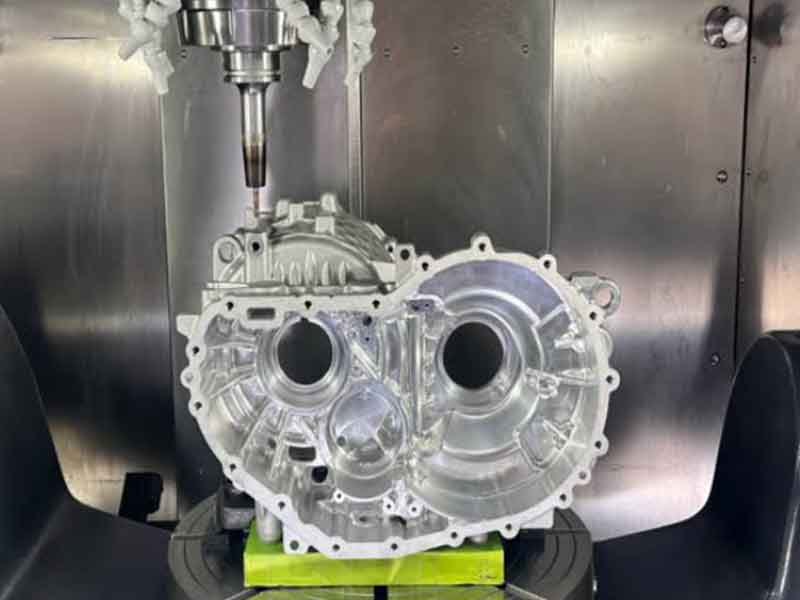
5-axis CNC machining for mechanical parts is used when components require multi-sided access, angled faces, deep pockets, bearing seats, bores, shafts, flanges, mounting bosses, ribs, cross holes, sealing faces, and accurate datum relationships. Typical parts include mechanical housings, brackets, actuator bodies, gear carriers, pump components, manifolds, rotary interfaces, fixture plates, and custom machine components.
Compared with standard 3-axis machining, 5-axis machining reduces repeated setups and helps maintain positional accuracy between related features. For mechanical parts, process planning must control load paths, wall thickness, stiffness, runout, flatness, concentricity, surface finish, burrs, heat-treatment change, coating allowance, and assembly fit.
-
DFM for mechanical datums, load paths, and interfaces We review mounting faces, pilot diameters, bearing seats, bolt circles, hole positions, shafts, bores, flatness, perpendicularity, wall thickness, load direction, and assembly method before machining.
-
5-axis machining for multi-sided mechanical geometry Five-axis access supports angled faces, pockets, ribs, bosses, cross holes, bearing features, rotary interfaces, sealing surfaces, and complex datum relationships in fewer setups.
-
Material and finish selection for mechanical duty Aluminium, stainless steel, alloy steel, tool steel, brass, bronze, titanium, plastics, and customer-specified materials are selected according to strength, wear, stiffness, corrosion, temperature, weight, and finishing requirements.
-
24-hour 5-axis CNC machining quotes Upload a drawing or STEP file with material, tolerance, critical datums, load requirements, finish, quantity, and application notes. CNCPioneer returns pricing within 24 hours and DFM feedback within 48.

Why CNCPioneer for
5-Axis CNC Machining for Mechanical Parts?
CNCPioneer combines 5-axis machining, CNC turning, mill-turn machining, boring, grinding, mechanical-part DFM, heat-treatment support, surface finishing, critical-feature inspection, and traceable documentation for complex mechanical components.
Mechanical Datum and Interface Control
Mechanical performance depends on flatness, bore position, pilot fit, perpendicularity, concentricity, runout, bolt-circle accuracy, and surface finish. CNCPioneer reviews how each machined face, hole, shaft, and mounting point connects to the full assembly before defining the machining route.
5-Axis Accuracy for Complex Multi-Sided Parts
Housings, actuator bodies, gear carriers, fixture plates, manifolds, and machine frames often include features on several sides. Five-axis machining reduces setup changes and helps maintain positional accuracy across bores, pockets, mounting faces, sealing areas, and angled holes.
Bores, Shafts, Bearing Seats, and Rotary Interfaces
Mechanical parts often require controlled bore size, shaft diameter, bearing seat finish, shoulder height, runout, concentricity, and thread quality. CNC turning, mill-turn machining, boring, reaming, and grinding can be combined with 5-axis milling when the drawing requires tighter fits.
Material and Hardness Matched to Load and Wear
Aluminium supports lightweight structures, stainless steel supports corrosion resistance, alloy steel supports high-load components, tool steel supports wear areas, brass and bronze support bushings or low-friction interfaces, and titanium supports selected high strength-to-weight applications.
Heat Treatment, Coating, and Post-Finish Inspection
Mechanical parts may require hardening, stress relief, anodising, passivation, black oxide, zinc, electroless nickel, polishing, bead blasting, or protective coating. CNCPioneer reviews coating thickness, masking, finishing allowance, post-treatment fit, and inspection points before production.
OEM Documentation and Traceability
Available documentation includes material certificates, dimensional reports, hardness records, heat-treatment records, surface-finish records, coating certificates, COC, RoHS/REACH documentation, PPAP Level 3, AS9102 FAIR when required, and lot traceability.
5-Axis CNC Machining for Mechanical Parts
Product Portfolio
We machine mechanical components that require controlled load paths, accurate datums, bearing fits, mounting interfaces, threaded features, deep pockets, and repeatable assembly performance.
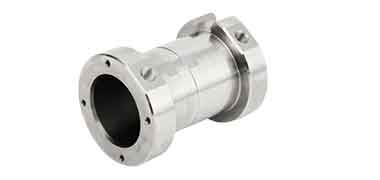
Mechanical Housings and Bearing Carriers
5-axis machined housings, bearing carriers, gearbox covers, actuator bodies, motor supports, and mounting plates for mechanical assemblies. CNCPioneer controls bore position, bearing seats, wall thickness, flatness, hole locations, sealing faces, datum surfaces, and assembly fit.
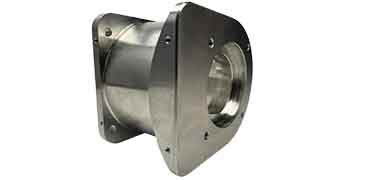
Shafts, Flanges, and Rotary Interfaces
Precision shafts, flanges, collars, rotary interfaces, pilots, and coupling components with controlled diameters, bearing seats, shoulders, threads, bolt circles, keyways, and mating faces. Runout, concentricity, perpendicularity, and surface finish can be inspected according to the drawing.

Gear Carriers, Actuator Bodies, and Linkages
Gear carriers, actuator bodies, linkage components, yokes, pivot blocks, motion-transfer parts, and mechanical supports requiring accurate bores, gear interfaces, lightening pockets, mounting bosses, and load-bearing datums. CNCPioneer reviews torque, bending load, vibration, lubrication, and assembly access before production.
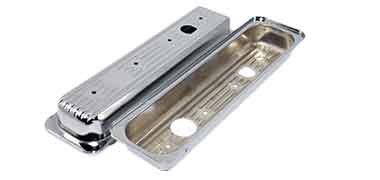
Ribbed Covers and Thin-Wall Mechanical Components
Ribbed covers, machine covers, lightened plates, structural panels, and thin-wall mechanical parts with pockets, ribs, bosses, threaded holes, cable windows, sealing lands, and protective edges. We control distortion, burrs, wall thickness, flatness, and post-finish appearance.
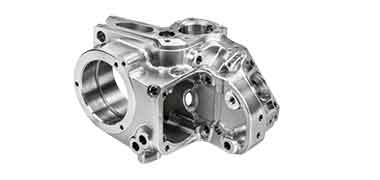
Manifolds, Pump Parts, and Complex Interfaces
Mechanical manifolds, pump components, fluid plates, adapter blocks, sealing parts, and complex interface components with ports, channels, sealing faces, deep pockets, threads, and mounting datums. CNCPioneer reviews leak-sensitive features, thread class, flatness, surface finish, coating, and mating fit during DFM.
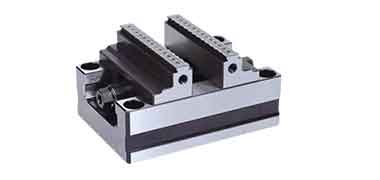
Fixtures, Jigs, and Custom Machine Components
5-axis machined fixtures, jigs, nests, inspection bases, alignment blocks, machine components, tooling plates, and custom mechanical parts from drawings or STEP files. We control datum strategy, repeatable positioning, threaded inserts, hardened contact areas, marking, protective packaging, and replacement consistency.
Mechanical Parts Machining Applications
Our 5-axis CNC machining for mechanical parts supports equipment and systems that need accurate movement, controlled load transfer, stable mounting, bearing alignment, wear resistance, and repeatable assembly.

Automation
Mechanical housings, fixture plates, actuator components, sensor mounts, alignment bases, gripper parts, and machine interfaces for automated equipment. CNCPioneer reviews repeatable positioning, datum strategy, wear surfaces, inserts, threaded holes, surface finish, and replacement consistency.

Robotics
Actuator bodies, linkages, pivot blocks, bearing housings, rotary interfaces, yokes, brackets, and compact mechanism components for robotics and motion systems. We review movement, load, vibration, lubrication, bearing fit, runout, cycle life, and assembly repeatability.

Semiconductor
Gearbox housings, pump parts, bearing carriers, shafts, flanges, manifolds, guards, mounting blocks, machine frames, and replacement components for industrial machinery. CNCPioneer supports hardened surfaces, corrosion-resistant coatings, threaded features, large or complex geometry, and traceable packaging.

Automotive
Mechanical brackets, motor covers, inverter housings, battery fixtures, sensor mounts, actuator parts, test fixtures, and precision assemblies for automotive and EV programmes. IATF 16949 support can include PPAP Level 3, Cpk studies, dimensional records, coating certificates, and traceable packaging.

Aerospace
Lightweight brackets, actuator components, housings, instrument frames, mounting interfaces, test components, and precision mechanical parts for aerospace and measurement equipment. AS9102 FAIR, material certificates, dimensional reports, COC, and lot traceability are available when required.

Medical
Miniature housings, instrument frames, brackets, optical components, laboratory automation parts, fixture bases, and compact mechanical mechanisms. Requirements may include clean surfaces, burr-free edges, controlled fit, passivation or anodising, laser marking, and compartment packaging.
Mechanical Materials
Materials for 5-Axis CNC Machining
of Mechanical Parts
Material selection affects strength, stiffness, wear resistance, corrosion protection, weight, thermal behaviour, hardness, finish, and machining sequence.
Aluminium Alloys
6061, 6082, 7075, and customer-specified aluminium alloys support lightweight housings, brackets, frames, covers, fixtures, and structural components. CNCPioneer reviews thin-wall distortion, anodising allowance, flatness, threaded inserts, and surface finish before production.
Stainless Steel
303, 304, 316L, 17-4 PH, and related stainless grades support corrosion-resistant housings, shafts, brackets, instrument parts, and mechanical interfaces. Passivation, polishing, brushing, and surface-finish control are available when specified.
Alloy Steel and Tool Steel
4140, 4340, tool steel, and hardened steel support shafts, gear carriers, wear blocks, bearing interfaces, tooling components, and high-load mechanical parts. We review heat treatment, hardness, distortion, grinding allowance, coating, and final fit.
Brass and Bronze
Brass and bronze support bushings, sleeves, spacers, wear interfaces, threaded fittings, and conductive or low-friction mechanical components. CNCPioneer reviews bore size, surface finish, lubrication, plating, wear allowance, and inspection requirements.
Titanium
Titanium is selected for mechanical parts requiring high strength-to-weight ratio, corrosion resistance, and premium performance. It can support brackets, instrument components, aerospace parts, medical-adjacent mechanisms, and compact structural parts.
Engineering Plastics
POM, PEEK, nylon, PTFE, and other engineering plastics can support lightweight, low-friction, insulating, or chemical-resistant mechanical components. We review clamping, burrs, thermal expansion, moisture behaviour, and final inspection needs.
Mechanical Parts Finishing Options
Finishing is selected according to corrosion resistance, wear resistance, hardness, appearance, friction, sealing performance, dimensional fit, and inspection requirements.
Anodising and Hard Anodising
Anodising improves corrosion resistance, appearance, and surface protection for aluminium housings, covers, brackets, and fixture parts. Hard anodising supports improved wear resistance where coating thickness and fit allowance are properly controlled.
Passivation and Stainless Finishing
Passivation supports corrosion resistance for stainless steel mechanical components. Polishing, brushing, and controlled surface finishing can improve appearance, cleanability, friction behaviour, and surface consistency.
Black Oxide, Zinc, and Electroless Nickel
Black oxide, zinc, electroless nickel, and related coatings can improve corrosion resistance, wear resistance, appearance, or oil retention for alloy steel and mechanical interface parts. We review coating thickness, masking, thread fit, and post-treatment inspection.
Heat Treatment and Stress Relief
Heat treatment, hardening, tempering, nitriding, and stress relief can improve load capacity, wear resistance, or dimensional stability. CNCPioneer reviews hardness target, distortion risk, machining sequence, grinding allowance, and final fit before production.
Grinding and Precision Surface Control
Grinding is used when bores, shafts, pilots, bearing seats, or sealing faces need tighter diameter, roundness, runout, flatness, or surface finish than machining alone can provide. We plan allowance, datum protection, and final inspection before production.
Laser Marking and Protective Packaging
Laser marking supports part numbers, lot codes, orientation marks, and traceability. Finished mechanical parts can be packed in trays, VCI bags, custom fixtures, compartment boxes, or receiving packs to protect datums, bearing seats, sealing faces, and cosmetic areas.
Quality Control for
5-Axis CNC Machining for Mechanical Parts
Our inspection process focuses on material identity, multi-axis datum accuracy, mechanical fit, load-critical features, surface condition, finishing results, and documentation traceability.
Material, Load, and Interface Review
Incoming materials are checked against certificates and drawing requirements. DFM confirms material grade, hardness, wall thickness, load path, mounting interfaces, bore and shaft requirements, finish notes, and inspection plan before machining.
- Aluminium, stainless steel, alloy steel, tool steel, brass, bronze, titanium, engineering plastics, and customer-specified materials
- Load path, fit, wall thickness, flatness, bore, shaft, thread, and assembly method reviewed in DFM
- Heat treatment, coating allowance, surface finish, burr control, and final gauge plan documented
5-Axis Machining and Datum Control
5-axis machining, CNC turning, mill-turn machining, boring, drilling, tapping, reaming, and grinding are selected according to geometry, feature orientation, material, tolerance, finish, and volume. Critical datums, pockets, bores, mounting faces, sealing faces, threads, and bearing seats are controlled according to the drawing.
- Multi-sided machining for angled faces, pockets, ribs, channels, bosses, and cross holes
- Datum strategy, workholding, and machining sequence reviewed before production
- Critical features can reach ±0.005mm on qualified programmes
Mechanical Fit and Post-Treatment Inspection
Machined, heat-treated, coated, ground, polished, anodised, passivated, or marked mechanical components are inspected for functional and cosmetic requirements. Burrs, edge condition, bearing seats, sealing faces, threaded areas, flatness, runout, wall thickness, and critical interfaces are checked before shipment.
- Bore size, shaft diameter, runout, concentricity, flatness, thread fit, profile, and surface finish inspection
- Post-heat-treatment, post-coating, post-grinding, and post-polishing review when specified
- Cleaning and packaging checked against receiving requirements
Documentation and Traceability
Available documentation includes dimensional reports, material certificates, hardness records, heat-treatment records, surface-finish records, coating certificates, thread-gauge records, RoHS/REACH documentation, COC, PPAP Level 3, AS9102 FAIR when required, and lot traceability.
- Dimensional reports and critical-feature records available
- Material certificate, hardness record, treatment certificate, and coating certificate support
- Lot traceability from material to machining, finishing, inspection, and packaging
5-Axis CNC Machining for Mechanical Parts FAQ
Common questions from OEM buyers and engineers about mechanical part design, 5-axis machining, bores, shafts, bearing seats, material selection, heat treatment, surface finish, lead times, and quotes.
Send a 2D drawing or STEP file with material, hardness or heat-treatment condition, critical dimensions, datum requirements, bore and shaft tolerances, mounting-hole positions, bolt circles, flatness, surface finish, coating, quantity, inspection requirements, and packaging notes. If the design is still being developed, CNCPioneer can review the load path, stiffness, mating interfaces, speed, lubrication, corrosion exposure, and annual usage for DFM feedback.
5-axis machining is useful when mechanical parts have angled faces, multiple datum surfaces, deep pockets, cross holes, bearing seats, sealing faces, ribs, bosses, undercuts, or features on several sides. It can reduce setups, improve positional accuracy, and improve tool access on complex mechanical components.
Bores and shafts should define diameter tolerance, roundness, runout, surface finish, bearing fit, shoulder geometry, and inspection method. Mounting interfaces should define flatness, perpendicularity, hole position, bolt-circle accuracy, pilot fit, and datum references. CNCPioneer reviews the full mechanical assembly instead of applying a generic tolerance.
Grinding is considered when bores, shafts, pilots, bearing seats, or sealing faces need tighter diameter, flatness, roundness, runout, or surface finish than machining alone can provide. Heat treatment is considered when the part must resist load, impact, indentation, or wear. CNCPioneer reviews material, hardness, distortion, grinding allowance, coating thickness, and final fit before defining the sequence.
Simple turned or milled mechanical parts typically take 3–6 business days after drawing confirmation and material availability. Complex 5-axis, thin-wall, pocketed, heat-treated, ground, coated, or documentation-heavy parts commonly take 6–12 business days. Volume lead time depends on material, machining cycle, treatment or finishing schedule, inspection, packaging, and quantity.
Get a Quote for 5-Axis CNC Machining for Mechanical Parts
Upload your mechanical part drawing, STEP file, material grade, bore and shaft specifications, mounting-interface requirements, load and speed data, finish notes, coating requirements, quantity, or annual usage. Receive a quote within 24 hours and DFM feedback within 48 hours.