
CNCPioneer manufactures AS9100D certified aerospace precision shafts for flight-critical rotating assemblies — from slender instrument shafts to complex splined drive shafts, with full FAIR documentation, AMS material compliance and geometric tolerance verification.
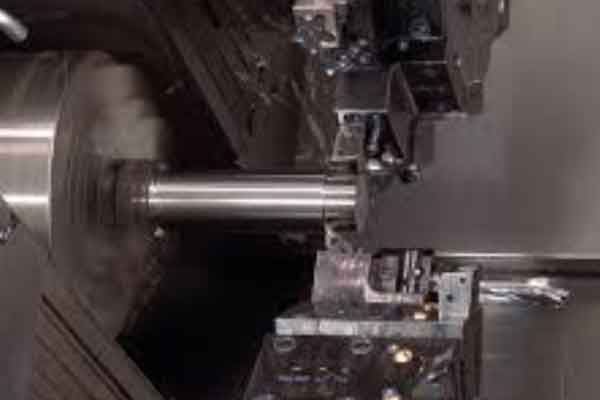
Aerospace precision shafts are flight-critical rotational components that transmit torque, carry radial and axial loads, and maintain precise positional relationships between rotating assemblies in aircraft engines, actuation systems, flight control mechanisms, landing gear systems, and auxiliary power units.
Swiss CNC machining and MAZAK mill-turn machining are the primary manufacturing processes. Swiss machining excels at long, slender shafts where the guide bushing eliminates deflection and maintains concentricity. MAZAK mill-turn centers handle larger diameter and complex shaft geometries requiring simultaneous turning and multi-axis milling in a single setup.

Aerospace precision shafts operate under loading conditions that demand manufacturing precision far beyond commercial standards. The consequences of dimensional non-conformance in a flight-critical shaft range from bearing failure and excessive vibration to catastrophic structural failure in engine and actuation systems.
Journal diameters must be concentric within microns to ensure correct bearing preload and prevent vibration-induced fatigue. CNCPioneer achieves concentricity of ±0.003mm on aerospace shaft journal diameters.
Long aerospace shafts must maintain straightness of 0.01mm per 100mm or finer to prevent bearing edge loading and bending fatigue under combined torsional and bending loads.
Achieves Ra 0.4μm and finer on bearing journals and seal contact diameters — required for correct bearing race seating, oil film formation, and seal lip contact geometry.
Bearing journal diameters toleranced to h5 or h6 fits — ±0.004mm to ±0.008mm depending on shaft size — ensuring correct bearing interference or clearance fits.
Machines 17-4PH stainless, Ti-6Al-4V, Inconel 718, alloy steels 4340/4130, and Waspaloy with dedicated tooling and process protocols for each aerospace shaft alloy.
Surface integrity after machining — freedom from tensile residual stress, burns, and metallurgical damage — is critical to achieving the fatigue life required for aerospace shaft certification.
CNCPioneer manufactures the complete range of aerospace precision shaft types, from simple stepped shafts to complex multi-feature shaft assemblies with integrated gear elements, splines, and precision bores.

Multi-diameter shafts with precision bearing journal diameters, shoulder faces perpendicular to the shaft axis, and relief undercuts at diameter transitions. Used in gearboxes, actuators, and instrument mechanisms.

Shafts with involute or straight-sided spline forms for torque transmission between rotating components. Spline geometry verified by gear measuring equipment. Used in gearboxes, drive systems, and control surface actuation.

Precision lead screw and ball screw shaft elements for linear actuation systems in flight control surfaces, landing gear, and thrust reverser mechanisms. Thread lead accuracy is critical for actuator positional accuracy.

Thin-wall tubular shafts for weight-critical aerospace applications where torsional stiffness must be achieved at minimum weight. Bore concentricity with the outer diameter and wall thickness uniformity verified by CMM.

High-speed rotating shafts for turbine engines, APUs, and ECS compressors. Actuator shafts for hydraulic and electromechanical actuators. Extreme dimensional accuracy, surface integrity, and material compliance required.

High-precision sensor shafts in stainless steel and titanium deliver stability, wear resistance, and reliability for demanding aerospace sensing applications.
CNCPioneer supplies AS9100D certified aerospace swiss machined components to OEMs, Tier 1 suppliers, and defense contractors across the full aerospace and defense supply chain.

Precision shafts for aircraft gearboxes, actuation systems, flight control mechanisms, and landing gear systems — avionics connector hardware for Boeing, Airbus, and Tier 1 supply chains.

High-strength titanium and Inconel components for military aircraft, helicopter systems, UAVs, and missile guidance hardware with full material traceability.

Ultra-precision swiss machined components for satellite structures, propulsion fittings, deployment mechanisms, and instrumentation housings with outgassing-compatible finishes.

High-reliability shafts for military aircraft drive systems, helicopter rotor mechanisms, UAV propulsion, and mission-critical rotating assemblies requiring balanced material properties and fatigue life certification.

Precision shafts for cockpit instrumentation mechanisms, fuel control valves, and landing gear actuator hardware, and structural fasteners for general aviation OEM supply chains.
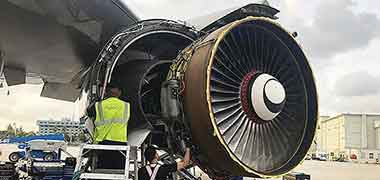
Replacement aerospace components for MRO applications with full documentation, certificate of conformance, and AS9100D quality system compliance.
CNCPioneer's manufacturing facility in Shenzhen operates with dedicated aerospace shaft production protocols, segregated inspection procedures, and full AS9100D quality system compliance. Our capability envelope covers the complete range of aerospace precision shaft sizes, from slender instrument shafts to large engine rotor components.
78+ Swiss CNC lathes (Star, Citizen, Tsugami) for slender shafts Ø1–32mm. 66+ MAZAK Integrex and Quick Turn mill-turn centers for complex shafts up to Ø300mm with 5-axis simultaneous milling capability.
Diameter tolerance ±0.005mm (h5/h6 fits) · Concentricity ±0.003mm · Roundness ±0.002mm · Straightness 0.01mm per 100mm · Surface finish Ra 0.4μm standard; Ra 0.2μm achievable.
Swiss machining: Ø1mm–Ø32mm, L/D ratios up to 20:1. MAZAK mill-turn: Ø10mm–Ø300mm with deep bore capability via gun drilling. Full size range from miniature instrument shafts to large engine rotor shafts.
Prototype quantities from 1 piece through full-rate production programs. Dedicated machine capacity available for long-term supply agreements. Rush 5–7 day prototypes for standard materials.
Hard chrome plating (AMS 2406) · Electroless nickel (AMS 2404) · Shot peening (AMS 2430) · Passivation (AMS 2700) · Sunnen honing · Centerless grinding coordination for bearing journal finishing.
Full FAIR per AS9102 · Certificate of Conformance · CMM reports (Mitutoyo ±0.001mm) · Material & heat treatment records · Special process certifications · Barkhausen noise analysis available.
Aerospace precision shaft material selection is governed by the operating load, temperature, corrosion environment, fatigue life requirement, and weight budget of each application. CNCPioneer machines all primary aerospace shaft materials with dedicated tooling and process protocols.
Most frequently requested aerospace shaft material · High strength UTS 1310 MPa · Excellent corrosion resistance · Good machinability
Precipitation hardened · Good fracture toughness · Actuator shafts · Valve stems · Gearbox shafts
High hardness after heat treatment · Wear resistant · Bearing shafts · High-wear rotational components
Good corrosion resistance · Instrument shafts · Non-structural rotational components · MIL-spec applications
AMS 4928 · High strength-to-weight ratio · Excellent fatigue life · Weight-critical structural aerospace drive shafts
AMS 4930 · Superior fracture toughness · Weight-critical shaft applications requiring maximum fatigue performance
AMS 5662 · High-strength turbine fasteners · Oil & gas fittings · Age-hardenable
AMS 5596 · Outstanding corrosion resistance · Good strength · Corrosion-resistant shaft applications
High toughness · Excellent fatigue life · Heat-treatable · High-load gearbox shafts · Landing gear components
Good toughness · Weldable · Normalized and heat-treated conditions · Structural shafts and drive components
Case-hardening grades · Excellent wear resistance · Gear shafts · Bearing shafts · High-wear rotating applications
AMS 5704 · High-temperature strength · Oxidation resistant · High-temperature turbine shaft applications up to 870°C
Lightweight · Good strength · Weight-critical instrument shafts · UAV drive components · Avionics mechanism shafts
High fatigue resistance · Weight-critical structural shaft applications · MIL-spec aerospace programs
Aerospace precision shafts require surface treatments that meet specific performance, corrosion resistance, wear resistance, and fatigue life requirements. Surface treatment selection is governed by the shaft's operating environment, material, and applicable aerospace specifications.
ASTM A967 and AMS 2700 compliant passivation for stainless steel aerospace shafts. Removes free iron and enhances the natural chromium oxide passive layer for maximum corrosion resistance in fuel, hydraulic fluid, and atmospheric moisture environments.
Thick, hard chromium deposit for maximum wear resistance on shaft journal surfaces and seal contact diameters subject to abrasive wear. AMS 2406 compliant. Provides hardness up to HRC 70 and excellent oil retention for lubricated journal applications.
Uniform hardness coating on complex shaft geometries including splines, threads, and undercuts. AMS 2404 compliant. Provides corrosion resistance and moderate wear resistance with excellent dimensional uniformity across complex features.
MIL-A-8625 compliant standard and hard coat anodizing for aluminum aerospace parts. Type III hard coat provides enhanced wear resistance for structural and actuation components.
AMS 2403 compliant electroless and electrolytic nickel for aerospace connectors. TiN and TiAlN PVD coatings for extreme wear resistance on actuation and bearing components.
MIL-DTL-5541 compliant chromate conversion coating (Alodine) for aluminum, maintaining electrical conductivity for avionics. Bead blasting provides uniform non-reflective aerospace structural finishes.
Aerospace surface finishing certifications — including anodizing, passivation, and plating certifications — are provided with every aerospace shipment as part of our AS9100D quality documentation package.
CNCPioneer's AS9100D certification is not a documentation exercise — it is the operational framework that governs every aerospace precision shaft we produce, from contract review through final shipment.
Engineering review of drawing requirements, tolerance specifications, material certifications, and special process approvals before order acceptance. AMS compliance confirmed at intake.
SII X-ray fluorescence analysis confirms alloy composition against AMS specifications. Hardness testing, dimensional verification of bar stock, and mill test reports are retained.
Complete dimensional verification of the first production part against drawing requirements, documented in AS9102 FAIR format with balloon drawing, CMM results, and material certifications.
Real-time dimensional monitoring with Mitutoyo gauging, tool life management to prevent out-of-tolerance production, and CCD automatic sorting for critical dimensions.
Mitutoyo CMM (±0.001mm) full dimensional report, surface roughness verification, thread gauge verification, and visual inspection for surface integrity on every aerospace shipment.
Certificate of conformance, CMM report, material certifications, FAIR report, and special process certifications packaged with every aerospace shipment. Records retained 10+ years.
Aerospace precision shafts are among the most dimensionally and metallurgically demanding components in aircraft systems. CNCPioneer's AS9100D quality system applies dedicated inspection protocols specific to shaft geometry verification and surface integrity requirements.
First Article Inspection Reports provided for all new aerospace part numbers — balloon drawings, CMM dimensional results, material certifications, and special process certifications.
XRF composition verification confirms alloy against AMS specs. Mill test reports, heat numbers, and lot numbers linked to work orders — unbroken traceability from raw material to finished part.
Mitutoyo CMM (±0.001mm) full dimensional report against drawing requirements. Surface roughness verification, thread gauge check, and visual inspection for every aerospace shipment.
Certificate of Conformance, CMM dimensional report, material test report with lot traceability, FAIR per AS9102, heat treatment records, and special process certifications with every aerospace shaft shipment.
Common questions from aerospace OEMs, engine manufacturers, and defense contractors about our AS9100D certified aerospace precision shaft manufacturing service.
CNCPioneer achieves bearing journal diameter tolerances of ±0.005mm (h5 fit), concentricity between journal diameters of ±0.003mm, roundness of ±0.002mm, and straightness of 0.01mm per 100mm shaft length. Surface finish on bearing journals reaches Ra 0.4μm in the as-machined condition, with Ra 0.2μm achievable through coordinated grinding operations. All geometric tolerances are verified by Mitutoyo CMM and reported in the FAIR documentation package.
Swiss machining is the preferred process for long, slender aerospace shafts with diameter-to-length ratios up to 20:1, where the guide bushing eliminates deflection and maintains concentricity throughout the cut. It excels at instrument shafts, actuator stems, and small-diameter drive shafts in the Ø1mm to Ø32mm range. MAZAK mill-turn machining handles larger diameter shafts with complex milled features — keyways, flats, cross-holes, splines, and integral gear forms — where 5-axis simultaneous machining in a single setup eliminates fixturing errors. CNCPioneer's engineering team recommends the optimal process for each shaft design during DFM review.
17-4PH stainless steel in H900 condition is our most frequently machined aerospace shaft material, combining high strength (UTS 1310 MPa minimum), excellent corrosion resistance, and good machinability. Ti-6Al-4V is specified for weight-critical shaft applications where titanium's density advantage justifies the higher material and machining cost. Inconel 718 is used for high-temperature turbine and engine shaft applications. Alloy steels 4340 and 4130 are specified for high-toughness gearbox and landing gear shaft applications.
Yes. CNCPioneer machines integrated spline and gear forms on aerospace shafts using our MAZAK mill-turn centers with gear hobbing and milling capabilities. Involute spline geometry is verified by gear measuring equipment. For shaft applications requiring higher gear form accuracy than mill-turn machining can achieve, we coordinate with qualified aerospace gear grinding suppliers to finish the gear form after turning and milling operations are complete.
In the as-machined condition from our Swiss and MAZAK machines, we achieve Ra 0.4μm on bearing journal diameters. For applications requiring finer surface finishes, we coordinate with cylindrical grinding suppliers to achieve Ra 0.2μm and below on bearing journal surfaces. Superfinishing processes can achieve Ra 0.05μm for the highest-speed turbomachinery shaft applications. Our engineering team specifies the appropriate finishing sequence during DFM review based on your bearing type, speed, and load requirements.
Yes. Shot peening per AMS 2430 is available for flight-critical aerospace shafts requiring improved fatigue life through compressive residual stress introduction. Shot peening intensity is verified by Almen strip calibration, and coverage is verified by fluorescent tracer or visual inspection per the applicable process specification. Shot peening certifications are included in the shipment documentation package.
For prototype quantities using in-stock stainless steel or alloy steel bar stock, we deliver first article samples in 5–7 days. Titanium and Inconel prototype lead times are 7–10 days due to longer machining cycle times. Production quantities are completed in 3–5 weeks depending on shaft complexity, material, surface finishing requirements, and order volume. Rush options are available for repeat orders with existing qualified part numbers.
Upload your shaft drawing or CAD file and receive a free DFM review and competitive quote within 24 hours. CNCPioneer's aerospace engineering team will review your shaft geometry, confirm AMS material compliance, identify critical geometric tolerances requiring special process controls, and provide a complete quotation including FAIR and qualification documentation requirements.