
CNC Machining
Drone parts
CNCPioneer is a China drone parts manufacturer producing precision aluminum and titanium UAV components for airframes, motor mounts, landing gear, gimbals, propulsion, and payload systems. Swiss CNC turning and 5-axis machining support balance-critical parts to ±0.01 g·mm where specified, with AS9100D documentation and 24-hour DFM review.
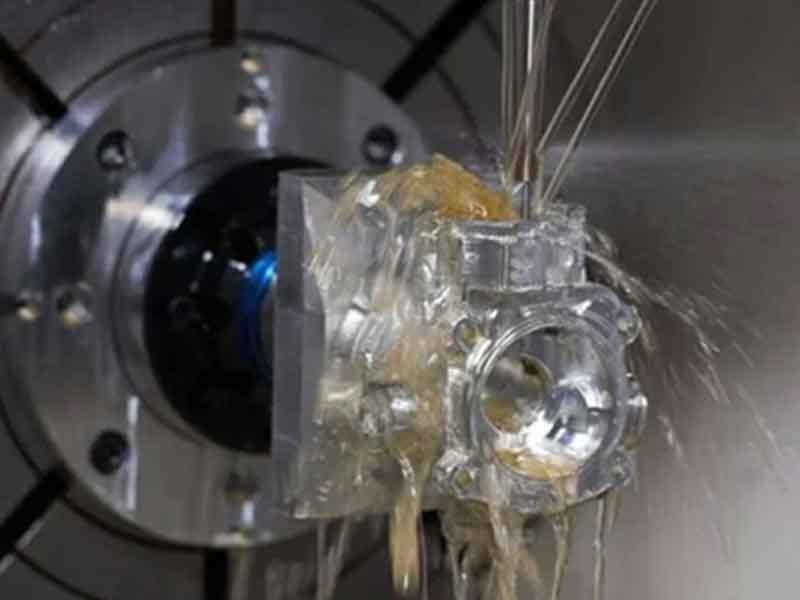
CNC Machining for
Drone Parts
CNCPioneer machines structural, propulsion, landing gear, gimbal, payload, and replacement components for commercial drones, industrial UAVs, agricultural platforms, inspection systems, and defense programs. Swiss CNC turning, mill-turn machining, 5-axis milling, precision boring, and finishing are matched to the drawing and flight application.
Drone components must balance low mass with stiffness, alignment, vibration resistance, and repeatable fit. We support lightweight pocketed geometry, thin walls, high-strength aluminum and titanium, balance-critical rotating parts, and production documentation from prototype through repeat orders.
-
Lightweight structural geometry Thin-wall machining, pocketed airframe parts, and high-strength aluminum or titanium help reduce mass while preserving the stiffness and interfaces required by the drawing.
-
AS9100D documented production AS9100D supports risk management, configuration control, first article inspection, material traceability, and documentation for qualified aerospace and defense UAV programs.
-
Prototype to replacement-part supply Move from first articles to repeat production and replacement parts with stable drawings, inspection plans, and documented process control for fleet maintenance or OEM supply.
-
China manufacturing cost control Swiss CNC capacity, local material sourcing, and repeatable process documentation support competitive pricing. Final cost depends on material, complexity, surface treatment, inspection, and volume.

Why CNCPioneer for
CNC Drone Parts?
CNCPioneer combines lightweight-material machining, balance and alignment control, aerospace documentation, and China production capacity for commercial, industrial, agricultural, inspection, racing, and defense UAV programs.
Thin-Wall Drone Parts Machining
Dedicated fixturing, controlled finish passes, climb milling, and in-process measurement support 1.0mm walls in 7075-T6 aluminum and 0.8mm in Ti-6Al-4V where the drawing and geometry allow it.
Mass & Balance Verification
Mass-specified parts are measured on a precision balance with ±0.1g calibration. Propeller hubs, motor parts, and other rotating components can be checked to a drawing-defined balance tolerance such as ±0.01 g·mm.
AS9100D for Qualified UAV Programs
AS9100D supports risk management, configuration control, FAIR per AS9102, key-characteristic management, and material traceability for military and aerospace UAV programs. AMS material and MIL-spec finishing records are available when specified.
Motor Mount Alignment
Single-setup machining preserves the relationship between motor mount face and arm interface bore. Standard perpendicularity is 0.010mm/30mm, with 0.005mm/30mm high-precision available for qualified designs and verified by CMM on first articles.
Replacement Parts Supply
We support repeat orders for motor mounts, landing gear components, arm-to-hub fittings, gimbal pins, propeller hubs, and other catalog parts. Blanket-order scheduling and expedited repair-part reviews are available according to part status and capacity.
China Drone Parts Manufacturing
Swiss CNC and mill-turn capacity support competitive pricing for aluminum, titanium, stainless steel, and engineering-plastic UAV parts. Quote timing and prototype lead time depend on the drawing, material, finishing, inspection, and quantity.
CNC Machined Drone Parts
Product Range
From airframe and motor-mount components to landing gear, gimbals, payload hardware, agricultural fittings, and replacement parts, CNCPioneer supports custom drone part programs from prototype through production.

Airframe & Structural Drone Parts
Frame arms, central hubs, spider plates, motor mounts, fixed-wing fittings, bulkheads, longeron hardware, firewall parts, and ESC plates in 7075-T6, 6061-T6, titanium, or customer-specified materials. Pocketing, mounting patterns, flatness, perpendicularity, and mass are inspected to the drawing.

Landing Gear Drone Parts Machining
Fixed and retractable landing gear legs, pivot housings, actuator mounts, gear latches, skid stanchions, vibration-damping pockets, and carbon-fiber tube interfaces. Aluminum, 7075-T6, 17-4PH, and other specified materials are machined to bearing, mounting, and stop-geometry requirements.

Propulsion System Drone Parts Machining
Motor bell housings, motor shafts, propeller hubs, gearbox housings, standoffs, mounting plates, and isolation spacers. Swiss CNC turning supports bearing journals, threads, roundness, and straightness. Balance inspection such as ±0.01 g·mm can be defined for rotating parts.

Gimbal & Payload Drone Parts Machining
Three-axis gimbal frames, arms, pivot pins, camera trays, sensor mounts, flight-controller enclosures, LiDAR pods, and non-magnetic GPS housings. We control bearing fits, optical-axis alignment, flatness, connector cutouts, shielding interfaces, and mass symmetry to the application requirements.

Agricultural & Racing Drone Parts Machining
Agricultural spray fittings, valve seats, flow passages, tank cradles, pump mounts, racing frames, lightweight motor mounts, and FPV camera tilt mounts. 316L, PEEK, and 7075-T6 options support chemical exposure, low mass, pocketed geometry, motor patterns, and camera-angle requirements.

Military UAV & Inspection Drone Parts
Military UAV airframe fittings, sensor pods, wing structures, inspection-drone vibration mounts, survey equipment mounts, and tether hardware. AS9100D, FAIR, AMS material, surface-treatment, non-magnetic, and lot-traceability requirements are reviewed per program.
Applications
We supply custom and replacement parts to commercial drone OEMs, military UAV developers, agricultural and inspection-drone manufacturers, cinema and racing builders, search-and-rescue operators, and fleet maintenance teams. DFM and quotation responses are available within 24 hours.
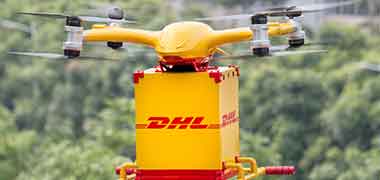
Commercial Delivery Drones
Airframe structures, motor mounts, landing gear, and cargo-bay hardware for delivery UAVs. Lightweight pocketing and repeatable replacement-part supply support payload efficiency and fleet maintenance.
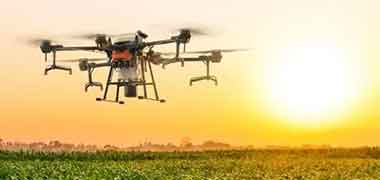
Agricultural Drones
Structural frames, tank fittings, pump mounts, nozzle bodies, and chemical-contact components in 316L, PEEK, aluminum, and other specified materials. Surface treatment and material selection are matched to spray exposure.

Inspection & Survey Drones
Airframe parts, gimbal hardware, LiDAR pods, vibration-isolation mounts, and mapping-instrument brackets for inspection and survey UAVs. Boresight alignment and mounting geometry can be inspected to customer requirements.
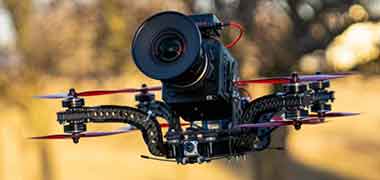
Cinema, Photography & Racing Drones
Gimbal frames, camera mounts, stabilization hardware, racing frames, motor mounts, and FPV camera tilt brackets. 7075-T6 pocketed parts and color anodizing support low mass and platform-specific fit.
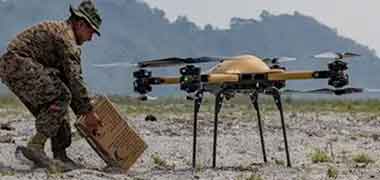
Military & Defense UAVs
Reconnaissance airframe fittings, propulsion components, sensor housings, and defense UAV structures with AS9100D, FAIR, AMS material, MIL-spec finish, and traceability requirements reviewed per program.
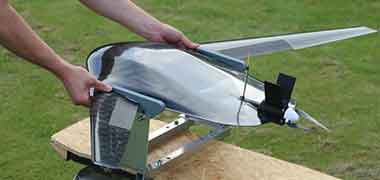
SAR, Marine & Specialty Drones
Public-safety payload hardware, medical-bay structures, supply-drop mechanisms, marine drone fittings, waterproof enclosures, tether connectors, and drum mounts in corrosion-resistant materials.
CNC Machining Drone Parts
Process & Capabilities
MAZAK mill-turn machining handles complex bodies and structural interfaces. Swiss CNC turning handles motor shafts, propeller-hub inserts, gimbal pins, fittings, and other small-diameter parts. Every program starts with drawing review, material confirmation, inspection planning, and a clear quotation.
Swiss CNC — Miniature UAV Parts Machining
78+ Swiss CNC lathes for Ø0.5–Ø32mm parts, including motor shafts, propeller-hub inserts, gimbal pins, fittings, and connector bodies. Guide-bushing support helps control slender shafts, bearing journals, roundness, threads, and balance-critical rotating features.
MAZAK Mill-Turn — Complex Drone Body Parts
66+ MAZAK mill-turn centers for motor arms, landing-gear hubs, central plates, payload structures, enclosures, and spray manifolds. 5-axis and single-setup machining preserve mounting relationships, bolt patterns, pocket geometry, and perpendicularity.
Thin-Wall Drone Parts Machining
Thin-wall capability includes 1.0mm in 7075-T6, 1.2mm in 6061-T6, 0.8mm in Ti-6Al-4V, and 1.5mm in 316L where geometry and fixturing allow. Controlled finish passes and in-process wall measurement support lightweight pocketed structures.
Mass Optimization & Verification
Mass is estimated from CAD, monitored where required, and verified on a precision balance with ±0.1g calibration. Rotating components can include a drawing-defined residual-balance requirement such as ±0.01 g·mm.
Drone Parts Machining Materials
7075-T6 and 6061-T6 aluminum, 2024-T351, Ti-6Al-4V, 303 and 316L stainless steel, 17-4PH, magnesium AZ91D, PEEK, and CFRP-interface components. Material choice is based on strength, mass, corrosion, chemical exposure, conductivity, and machinability.
AS9100D / FAIR per AS9102
Documentation can include FAIR per AS9102, material and surface-treatment certificates, mass and balance records, CMM reports, PPAP for qualified automotive-grade programs, and 100% CMM on defined flight-critical geometry. Records are retained according to program requirements.
Materials for CNC Machined
Drone Parts
Material choice depends on strength-to-weight ratio, fatigue, corrosion, chemical exposure, conductivity, stiffness, and machining risk. Common options include 7075-T6, 6061-T6, titanium, stainless steel, magnesium, PEEK, and CFRP-interface components.
7075-T6
Specific strength 179 MPa·cm³/g · Density 2.80 g/cm³ · Yield strength 503 MPa · Dominant structural drone parts machining material — optimal combination of highest aluminum alloy yield strength, good machinability enabling complex pocket geometry and 1.0mm thin-wall drone structures, and low density. Motor mounts, central hub plates, landing gear structural elements, arm-to-hub junction fittings, and all primary flight-load-bearing drone structural parts. Standard material for racing drone frame arms (50%+ pocket removal achievable).
6061-T6
Excellent machinability · Weldable · Anodizable · Density 2.70 g/cm³ · Yield strength 276 MPa · Standard material for general drone structural parts, electronics enclosures (flight controller housing, GPS module body), payload mounts, battery tray components, and non-primary-load drone structural hardware where 6061-T6's superior weldability and machinability provides lower machining cost than 7075-T6 at adequate structural performance.
2024-T351
High fatigue strength · Density 2.78 g/cm³ · High-cycle drone mechanism parts and rotating drone structural components — retractable landing gear actuator levers, hinge mechanism elements, and drone parts subject to high-cycle vibration loading during drone flight operations. 2024-T351's superior fatigue resistance versus 7075-T6 justifies its use in mechanism parts experiencing millions of load cycles across drone operational lifetime.
Ti-6Al-4V Grade 5
Specific strength 199 MPa·cm³/g · Density 4.43 g/cm³ · Yield strength 880 MPa · Non-magnetic · CTE 8.6 ppm/°C (CFRP-compatible) · Specified for military UAV structural fittings and the most weight-critical commercial drone parts where part count prevents geometry optimization — at highly loaded cross-sections titanium enables thinner walls than 7075-T6 achieving equivalent or lower component mass. CFRP-interface drone structural fittings: titanium's CTE matches CFRP (0–2 ppm/°C) preventing thermal fatigue at bonded drone structural interfaces.
Ti-6Al-4V Grade 23 ELI
Superior fracture toughness vs. Grade 5 · High-reliability drone mechanism components where fracture toughness is a primary design criterion — retractable landing gear pivot structural elements, high-reliability military drone mechanism fittings, and drone structural components where crack propagation resistance governs the service life design requirement.
AZ91D
Density 1.81 g/cm³ (35% lower than aluminum) · Ultra-lightweight drone parts where minimum density is the paramount design criterion — drone platforms where absolute mass minimization exceeds all other design objectives. Magnesium drone parts machining requires mandatory corrosion protection surface treatment for outdoor drone operating environments: hard anodize or conversion coating with topcoat paint system.
316L
Non-magnetic · Excellent corrosion resistance · Agricultural drone spray system fittings, pump housings, and nozzle body components in direct contact with pesticide, herbicide, and fertilizer chemical sprays where aluminum and carbon steel corrode rapidly. Marine drone corrosion-resistant structural hardware in permanent seawater environments. Drone pivot pin components where non-magnetic compliance is required for magnetometer compass sensor applications.
303
Good machinability · Non-magnetic · Gimbal pivot pin machining and drone motor shaft shaft components where non-magnetic compliance is required for magnetometer compass accuracy in proximity to the drone's navigation sensor suite. 303's improved machinability versus 316L provides shorter cycle time and lower machining cost for high-volume gimbal and mechanism pivot pin drone parts production programs.
17-4PH H900
Tensile strength 1,310 MPa · High-load drone mechanism shaft elements, retractable landing gear pivot pin structural components, and high-stress drone mechanism hardware subject to combined bending and torsion loading in drone deployment mechanism service. 17-4PH H900 enables minimum cross-section drone mechanism shaft components at required structural load rating versus standard austenitic stainless alternatives.
PEEK
Chemical resistant to agricultural pesticides, herbicides, and fertilizers · RF transparent for GPS module housing where metallic housing materials attenuate GPS signal · Low density (1.32 g/cm³) for minimum mass drone parts · High temperature rating · Agricultural drone chemical-contact components, GPS compass module housing requiring RF transparency and non-magnetic compliance, and electrically isolating drone parts where metallic housing materials would create avionics interference.
Delrin (POM) / Nylon PA12
Low friction · Good machinability · Chemical resistance · Delrin drone gear elements, slide mechanism components (battery tray slide runners, payload door components), and light-duty bracket elements requiring low friction for smooth field operation. Nylon PA12 (density 1.01 g/cm³ — lightest engineering polymer) for non-structural drone housing parts, non-load-bearing bracket elements, and food-grade drone parts in agricultural produce handling drone applications.
Beryllium Copper C17200 AT
Non-sparking · Non-magnetic · High spring strength · Military drone connector contact elements and precision spring drone components for applications requiring non-sparking material compliance per military ordnance safety specifications — loitering munition structural hardware adjacent to energetic material interfaces, military drone ammunition interface fittings, and high-cycle spring contact elements in drone electrical connector assemblies.
Surface Treatments for
Drone Parts
Surface treatment is selected for corrosion, wear, electrical bonding, chemical exposure, appearance, and mass impact. Available options include hard anodize, chemical film, passivation, bead blast, PTFE, electroless nickel, and customer-specified finishes.
Hard Anodize — MIL-A-8625 Type III & Type II
Dominant surface treatment for aluminum CNC machining drone parts. Type III hard anodize provides HV 400+ surface hardness for wear resistance at drone assembly interfaces — motor mount faces, arm-to-hub joints, landing gear attachment points, and battery rail contact surfaces. Standard coating 15–30μm; minimal dimensional impact on precision drone parts machining features. Custom color anodize for racing drone team livery and commercial drone brand identification. Type II clear anodize (5–15μm) for general drone parts corrosion protection where Type III wear resistance is not required.
Chemical Film — MIL-DTL-5541 (Alodine)
Alodine chromate conversion coating for aluminum drone parts machining components requiring electrical conductivity for drone avionics EMC shielding and airframe grounding. Class 3 for minimum-resistance EMC bonding on flight controller housing and radar sensor housing drone parts — ensuring reliable EMC shield continuity for the drone avionics electronics. Zero dimensional impact on precision drone parts machining features. Standard treatment for military UAV structural parts machining requiring MIL-DTL-5541 compliance per defense program specification.
Passivation — ASTM A967 (Stainless & Titanium)
ASTM A967 passivation for stainless steel drone parts machining components — gimbal pivot pins, motor shaft elements, agricultural drone spray system fittings, and stainless structural hardware exposed to agricultural chemical spray in agricultural drone applications. Passivation removes free iron and machining contamination, enhancing passive layer for maximum corrosion resistance in outdoor drone operating environments including salt spray for marine drones and agricultural chemical exposure for spray drones.
Bead Blast & Sandblasting
Bead blast finish for aluminum drone parts machining components requiring uniform matte surface appearance for commercial drone professional aesthetics — Ra 1.5–3.0μm bead blast texture on drone frame and housing exterior surfaces provides non-reflective professional finish compatible with subsequent primer and paint topcoat for branded commercial drone livery applications. Sandblasting for surface preparation before epoxy primer on agricultural drone structural parts requiring additional paint-over-anodize chemical resistance system for pesticide spray environments.
PTFE / Electroless Nickel
PTFE coating for aluminum drone mechanism parts machining — drone slide mechanisms (payload door runners, battery tray slide elements) requiring low friction for smooth field operation without lubrication in outdoor drone field conditions. Friction coefficient below 0.05 for reliable low-force mechanism operation. Electroless nickel for drone parts machining components subject to wear at repeated contact interfaces — drone quick-release latch mechanisms, battery connector body elements, and drone landing gear contact surfaces requiring wear resistance beyond aluminum's inherent surface hardness.
PTFE Coating & Electroless Nickel (continued)
See above — PTFE and electroless nickel surface treatment options cover drone mechanism slide surfaces requiring low-friction operation and high-wear contact drone parts requiring wear protection beyond aluminum's inherent surface hardness. Both treatments applied with negligible mass impact on drone mass-budget-critical components.
Hard anodize, chemical film, passivation, bead blast, PTFE, electroless nickel, and customer-specified finishes are reviewed for dimensional impact, mass, environment, and interface function. Certifications and finish records can be included in the shipment package by program.
AS9100D Quality Assurance for
Drone Parts
Quality planning covers bearing bores, motor-mount alignment, bolt patterns, wall thickness, mass, balance, materials, finishes, and the documentation required by the drawing and UAV program.
Contract & Drawing Review
Engineering reviews the drawing, AS9100D or MIL requirements, mass budget, outgassing needs, surface treatment, thin-wall geometry, and FAIR requirements before production release.
Material Incoming Inspection
XRF composition checks, hardness or temper verification, outgassing documentation, mill certificates, lot traceability, and approved-supplier controls are available for materials used near sensors, avionics, or flight-critical structures.
First Article Inspection (FAIR) per AS9102
First-article inspection can include full CMM dimensional results, material and surface-treatment certificates, mass and balance records, and FAIR per AS9102 for qualified UAV programs before production release.
In-Process Statistical Control
In-process control can include automatic sorting, tool-life management, SPC, bearing-bore monitoring, motor-mount alignment checks, wall-thickness measurement, and mass monitoring at defined intervals.
Final Inspection & Cleanliness Verification
Final inspection can cover bore diameter, motor-mount perpendicularity, bolt patterns, mounting-face flatness, wall thickness, threads, surface roughness, mass, balance, burrs, and assembly interfaces.
Shipment Documentation
Shipment documentation can include a Certificate of Conformance, CMM report, mass and balance records, material traceability, surface-treatment certificates, FAIR per AS9102, and other program-specific records.
AS9100D Quality System for
UAV Parts Programs
AS9100D supports qualified military, aerospace, and commercial UAV programs. IATF 16949 can support automotive-grade commercial drone components. The applicable system, inspection plan, and documentation are confirmed during program review.
FAIR per AS9102 — Military UAV Parts
FAIR per AS9102 can include ballooned drawing dimensions, measurement results, material and surface-treatment certificates, and mass records for new military or aerospace UAV part numbers. Customer approval is completed before production release when required.
- FAIR per AS9102 for every new UAV P/N
- Customer approval before production
- Records retained minimum 15 years
XRF Material Verification & Lot Traceability
XRF alloy verification, AMS material compliance, heat-number traceability, and approved-supplier controls support aluminum, titanium, stainless, and other specified UAV materials.
- XRF alloy verification every drone parts lot
- AMS specification compliance for UAV parts
- Mill cert heat number traced to shipment
Mass Compliance Verification ±0.5g
Mass-specified parts are measured on a precision balance with ±0.1g calibration. CAD estimates, in-process checks, and final results can be documented against the flight mass budget and any defined balance tolerance.
- Mass verified ±0.5g on all mass-specified parts
- In-process mass monitoring during machining
- Mass records in every drone parts CoC
Motor Mount Perpendicularity 0.005mm/30mm
Single-setup machining preserves the relationship between motor mount face and arm interface bore. Standard perpendicularity is 0.010mm/30mm, with 0.005mm/30mm high-precision available for qualified designs and verified by Mitutoyo CMM on first articles.
- Perpendicularity: 0.005mm/30mm high-precision
- Single-setup machining — no re-fixturing error
- 100% CMM verification on flight-critical geometry
CNC Machining Drone Parts FAQ
Answers for UAV engineers, drone OEMs, fleet operators, and sourcing teams comparing materials, balance control, thin-wall machining, alignment, inspection, and replacement-part supply.
7075-T6 is a common choice for lightweight structural parts because it combines strength, density, and machinability. Ti-6Al-4V suits higher-load or fatigue-critical parts where its higher cost is justified. 6061-T6 is easier to machine for general structures and enclosures. Magnesium and PEEK can be considered when density or chemical resistance is the primary requirement, with corrosion and operating environment reviewed during DFM.
Typical capability is 1.0mm in 7075-T6, 1.2mm in 6061-T6, 0.8mm in Ti-6Al-4V, and 1.5mm in 316L when the geometry, support, tool access, and tolerance allow it. Thin-wall designs should be reviewed from the CAD model because pocket depth, unsupported length, corner radius, and material temper affect the stable minimum.
Motor mount face and arm interface bores are machined in one setup where possible to preserve their relationship. Standard perpendicularity is 0.010mm/30mm, with 0.005mm/30mm high-precision available for qualified designs. First articles can be verified by Mitutoyo CMM.
We can review single replacement parts, prototype batches, and recurring blanket-order supply for motor mounts, landing gear, arm-to-hub fittings, gimbal pins, propeller hubs, and other catalog parts. Quantity, lead time, and expedite options depend on the drawing, material, finishing, and current capacity.
For direct chemical contact, PEEK or 316L may be appropriate depending on pressure, temperature, thread strength, and chemical concentration. For aluminum structural parts exposed to diluted spray, hard anodize or a specified coating can improve corrosion resistance. The final choice should be confirmed against the chemical and cleaning schedule.
Yes. Prototype parts can start from 6061-T6 or 7075-T6 billet with first-article inspection, then scale to repeat production with defined tooling, process controls, and inspection plans. Qualified aerospace or defense programs can add FAIR per AS9102, while other programs can use the documentation and quality controls defined in the quotation.
Get a Quote for CNC Machined Drone Parts
Upload your drone part drawing or CAD file for a 24-hour DFM response. CNCPioneer's engineering team will review material, mass and balance targets, thin-wall geometry, critical fits, surface treatment, inspection, lead time, and production volume, then return a clear quotation for prototype, production, or replacement parts.