
CNC Prototyping
for Humanoid Robot Parts
CNCPioneer is an IATF 16949 and AS9100D certified CNC prototyping for humanoid robot parts specialist delivering humanoid robot prototype parts — actuator housing first articles, harmonic drive component sets, joint mechanism iteration kits, limb structural prototypes, dexterous hand prototype packages, and complete single-robot machined part programs — in 5–7 business days for aluminum components, at production-intent accuracy (±0.002mm Swiss CNC, ±0.003mm mill-turn), with full CMM documentation on every lot including single pieces, since 2011.
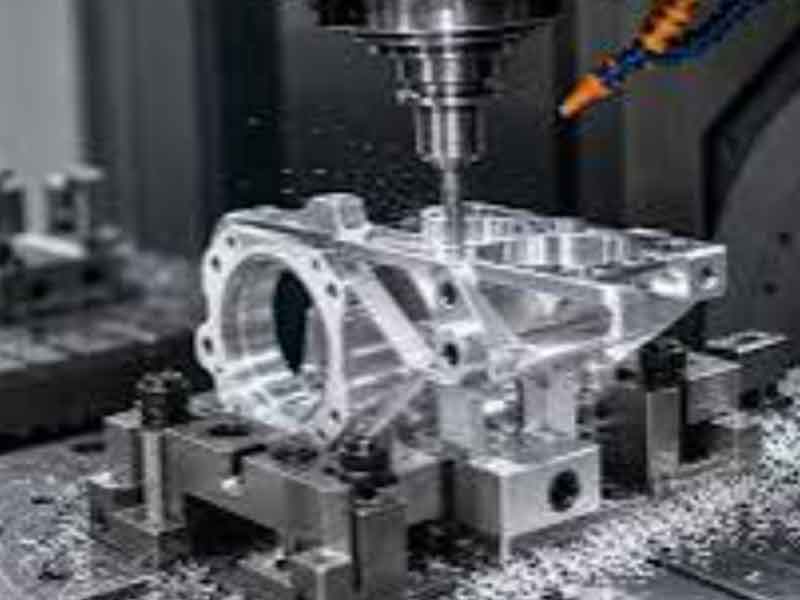
What Is CNC Prototyping
for Humanoid Robot Parts?
CNC prototyping for humanoid robot parts is the rapid precision manufacturing discipline that converts humanoid robot component designs — actuator housings, harmonic drive elements, joint structures, limb segments, hand mechanism components, and sensor integration hardware — into physical, testable, production-accurate metal parts within days rather than weeks, enabling the design-build-test iteration cycles through which humanoid robot programs converge on hardware that walks, balances, manipulates, and survives the mechanical realities that simulation cannot fully predict.
CNC prototyping occupies an irreplaceable position in humanoid robot development that neither 3D printing nor production tooling can fill. Against additive manufacturing, CNC humanoid robot prototype parts deliver true material properties — wrought 7075-T6 at 503 MPa yield, Ti-6Al-4V fatigue performance, GCr15 bearing hardness — that structural and mechanism testing requires. Against production tooling, CNC prototyping requires zero tooling investment — a design revision released Monday morning becomes a machined part the following week, at per-part costs that make five design iterations affordable where molded tooling economics would force premature design freeze. Critically, CNCPioneer's prototypes are machined on the same platforms — to the same ±0.002–0.003mm accuracy — that will produce volume parts if the program scales, eliminating the prototype-to-production translation risk that plagues programs whose prototype shop and production supplier are different factories.
-
Speed matched to humanoid iteration cadence Aluminum humanoid robot prototype parts in 5–7 business days, Swiss CNC miniature components in 5–7 days, titanium in 8–12 days, 5-axis complex housings in 7–12 days — with 3-day expedite on machining-ready designs. Failure replacements for parts broken in robot testing re-enter at priority queue for 3–5 day turnaround, keeping test robots operational across continuous iteration cycles.
-
Production-intent accuracy from part one Humanoid robot prototype parts at CNCPioneer are machined to production tolerances — bearing seats ±0.002mm, wave generator profiles ±0.003mm, linkage bores ±0.005mm — because a prototype that masks tolerance problems with hand-fitting produces test results production parts won't replicate. Every prototype lot ships with full Mitutoyo CMM documentation, making prototype test data production-predictive.
-
Low volume CNC economics without tooling investment CNCPioneer's low volume CNC programs price 1–500 unit quantities on setup-efficient economics: programming cost amortized across the design's iteration life, zero-point fixture strategies eliminating per-batch setup labor, and multi-part nesting on shared setups — delivering 25–60% per-unit cost reduction from single-piece to 100-piece quantities without any tooling investment or minimum order commitment.
-
Seamless prototype-to-production continuity Because prototypes are machined production-intent on production platforms, programs that scale proceed directly to PPAP Level 3 qualification on already-proven processes — no supplier transition, no requalification discontinuity, no dimensional drift between the parts that passed robot testing and the parts that ship in products. The prototype that validates a knee actuator in testing is dimensionally identical to the ten-thousandth housing from volume production.

Why CNCPioneer for
Humanoid Robot Prototype Parts?
Among rapid prototyping robotics suppliers globally, CNCPioneer's iteration-matched speed, production-grade accuracy, complete robot kit coordination, and low volume CNC economics establish our factory as the preferred CNC prototyping for humanoid robot parts partner across the full development-to-production continuum.
Speed Matched to Humanoid Iteration Cadence
Humanoid robot hardware teams iterate on 1–3 week cycles; a prototype supplier whose lead time exceeds the iteration cycle becomes the program's critical path. CNCPioneer delivers aluminum humanoid robot prototype parts in 5–7 business days, Swiss CNC miniature components in 5–7 days, titanium in 8–12 days, and 5-axis complex housings in 7–12 days — with 3-day expedite on machining-ready designs and 3–5 day failure-replacement turnaround keeping test robots operational.
Production Accuracy on Prototype Quantities
Humanoid robot prototype parts at CNCPioneer are machined to production tolerances: bearing seats ±0.002mm, wave generator profiles ±0.003mm, linkage bores ±0.005mm — because a prototype actuator that masks tolerance problems with hand-fitting generates test results production parts won't replicate. Every prototype lot — including single pieces — ships with full Mitutoyo CMM documentation, making prototype test data production-predictive evidence.
Same-Day DFM Accelerating Design Convergence
Every CNC prototyping for humanoid robot parts inquiry receives engineering DFM within 24 hours — active development customers receive same-day feedback on design revisions — covering machinability, tolerance feasibility, thin-wall risk, mass-target achievability, and cost-driving features, so design problems surface in CAD review rather than in failed first articles. Iteration-aware programming reuses unchanged geometry across revisions, compressing lead time on Rev C updates to minutes rather than hours.
Complete Robot Kit Coordination
A humanoid robot build consumes 200–500 unique machined components across Swiss CNC pins, mill-turn housings, and 5-axis structures. CNCPioneer's rapid prototyping robotics programs coordinate complete robot part kits across all platforms with synchronized delivery — the full machined bill of materials arriving as a build-ready package rather than trickling in from multiple suppliers on uncoordinated schedules that hold up robot assembly.
Low Volume CNC Without Tooling Investment
CNCPioneer's low volume CNC programs price 1–500 unit quantities on setup-efficient economics: zero-point fixture strategies, multi-part nesting, and programming reuse deliver –20–35% per unit at 6–25 pieces, –35–50% at 26–100, and –50–60% at 101–500 — versus single-piece pricing — without any tooling investment, without minimum order commitments, and with full design-revision freedom at every tier.
Seamless Prototype-to-Production Continuity
Because CNC prototyping for humanoid robot parts at CNCPioneer is production-intent from part one, scaling proceeds directly to PPAP Level 3 qualification on already-proven processes — no supplier transition, no requalification discontinuity, no dimensional drift between validated prototypes and production parts. Pilot-quantity low volume CNC batches accumulate SPC capability data that pre-builds the statistical foundation for eventual PPAP in 6–8 weeks.
Humanoid Robot Prototype Parts
We Deliver
CNCPioneer's CNC prototyping for humanoid robot parts covers the complete kinematic and mechanism architecture of bipedal humanoid robots — from actuator prototype component sets and joint mechanism iteration kits through complete single-robot machined part packages delivered build-synchronized for robot assembly, all at production-intent accuracy with full CMM documentation on every lot.

Harmonic Drive & Actuator Prototype Sets
The highest-frequency CNC prototyping for humanoid robot parts category — because actuator iteration drives humanoid performance development. Harmonic drive prototype sets (wave generator elliptical cams ±0.003mm form, circular splines, output flanges, flexspline support machining); planetary/QDD sets (planet carriers ±0.003mm pin bore position, sun gear shafts, ring gear housings); frameless motor housing prototypes (stator seats ±0.005mm, coaxial bearing seats 0.005mm, encoder pockets at compound exit angles); and torque sensor integration structures machined to drawing for calibration transfer validity.

Joint Mechanism & Locomotion Structure Prototypes
Hip/knee/ankle joint prototype structures — compound-angle joint forks and cluster housings including 5-axis single-setup prototypes preserving the multi-bore relationships joint testing evaluates. Limb segment prototypes (thigh/shin/forearm structural members with mass verification ±0.5g) validating mass-stiffness tradeoffs topology optimization proposes. Torso frame prototype members (spine and pelvis structural nodes, hip-shoulder interface networks ±0.02mm/±0.02°). Foot force-sensor mounting platforms (flatness 0.010mm) and heel strike structures for locomotion testing iteration.

Dexterous Hand Mechanism Iteration Kits
Rapid prototyping robotics at its finest scale — hand mechanism iteration sets machined on Swiss CNC platforms: finger phalanx iteration sets (8–30mm links at ±0.010mm across design variants for grasp testing comparison); pivot pins Ø0.8–4.0mm at ±0.002mm with Ra 0.1μm; tendon pulleys with polished groove profiles (±0.005mm); palm plate prototypes (15–25 precision interfaces ±0.010mm). Complete hand prototype kits (60–150 parts per hand) delivered build-synchronized. Swiss CNC miniature components standard 5–7 day delivery.

Sensor & Integration Prototype Components
Camera and depth sensor mounting prototypes with optical alignment features ±0.010mm and ±0.05° for calibrated multi-camera perception rigs. IMU mounting platform prototypes (flatness 0.005mm, orientation reference features ±0.02° — IMU mounting accuracy directly enters robot state estimation quality). Compute module thermal interface pedestal prototypes (flatness 0.010mm). Battery enclosure and retention frame prototypes. Absolute encoder mount prototypes (±0.005mm) and encoder disc hub components (±0.003mm concentricity).

Complete Single-Robot Machined Part Packages
Full 200–500 component machined bills of materials for complete humanoid robot builds — coordinated across Swiss CNC (pins, shafts, pulleys), MAZAK mill-turn (housings, carriers, structural bodies), and 5-axis VARIAXIS (complex joint housings, topology-optimized structures) with synchronized delivery as a build-ready package. 3–5 week coordinated delivery for full robot part kits. Kit-complete scheduling per build slot eliminates the piecemeal delivery from multiple suppliers that delays robot assembly programs.

Low Volume CNC Pilot Fleet Production
For humanoid pilot fleets (25–100 robots), CNCPioneer's low volume CNC operates as genuine production with production disciplines scaled to pilot quantities: batch-level SPC data collection pre-building PPAP capability history; 100% CMM on critical actuator components; lot traceability from material certificate through robot serial number assignment; left/right mirrored component pairs machined from mirrored programs with matched mass ±0.5g; and kit-complete delivery per robot build slot synchronized to assembly schedules at –50–60% per-unit versus single-piece pricing.
Industries & Applications
CNCPioneer's CNC prototyping for humanoid robot parts and low volume CNC programs serve every organization developing humanoid robot hardware — from general-purpose OEM programs and venture-backed AI hardware startups through specialized actuator developers, dexterous hand researchers, exoskeleton producers, and university robotics laboratories.

Humanoid Robot OEMs
Iteration prototype supply and pilot fleet low volume CNC for scaling humanoid platforms — complete robot part kit delivery synchronized to build schedules, prototype-to-production continuity eliminating supplier transition at volume commitment, and PPAP Level 3 bridge qualification on already-proven processes. Capacity reservation agreements available for OEMs in intensive build phases requiring guaranteed weekly prototype slot allocations.

Embodied AI & Robotics Startups
Rapid prototyping robotics matched to venture-timeline hardware milestones and demo deadlines — same-day DFM on design revisions, 5–7 day aluminum first articles, 3-day expedite on machining-ready designs, and failure-replacement priority turnaround keeping demo robots operational. Iteration-aware programming compresses Rev B/C/D costs by reusing unchanged geometry across revisions, so iteration-heavy early development stays within seed and Series A hardware budgets.

Robot Actuator Manufacturers
Harmonic drive and QDD actuator component prototype iteration programs — wave generator cam geometry iteration sets (±0.003mm form, multiple ellipse variants for torque-ripple optimization), circular spline and flexspline support machining prototypes, motor housing first articles with stator seat and bearing seat coaxiality validation, and torque sensor integration structure prototypes enabling calibration transfer verification from prototype to production geometry.

Legged & Quadruped Robot Developers
Structural prototype packages for quadruped and multi-legged platforms sharing humanoid actuator and joint architecture — QDD housing prototype iteration, leg structural fork prototypes (compound-angle bore systems, compound-angle geometry), foot force-torque sensor integration platform prototypes (flatness 0.010mm), and low volume CNC batch production for pilot quadruped fleets at the same economics as humanoid programs.

Dexterous Hand & Manipulation Developers
Swiss CNC hand mechanism iteration kits for manipulation research and commercial dexterous end effector programs — full phalanx iteration sets in multiple design variants for comparative grasp testing, pivot pin diameter iteration programs (Ø0.8–4.0mm at ±0.002mm), tendon pulley groove geometry optimization prototypes, and complete hand prototype kits (60–150 parts per hand) delivered build-synchronized from a single CNC prototyping for humanoid robot parts supplier.

University & National Laboratory Programs
Single-robot research platform machining with full production-depth CMM documentation for research reproducibility — humanoid robot prototype parts for university and national laboratory humanoid programs with the dimensional verification records that peer-reviewed publication and inter-institution hardware comparison require. No minimum order; single-piece first articles accepted. AS9100D documented rapid prototyping robotics programs supporting grant-funded research timelines at 40–60% China cost advantage.
CNC Prototyping for Humanoid Robot Parts
Process & Workflow
CNCPioneer's rapid prototyping robotics workflow takes humanoid robot component designs from CAD submission through build-ready machined parts in four structured phases — same-day DFM (Day 0–1), first article machining (Day 1–7 for aluminum), test-iterate-rebuild support (continuous), and low volume CNC scale-up as programs advance — with production-intent accuracy and documentation at every stage.
DFM Review & Process Routing (Same Day)
Every CNC prototyping for humanoid robot parts inquiry: machinability and tolerance feasibility per feature vs. Swiss CNC (±0.002mm), mill-turn (±0.003mm), and 5-axis capability · Cost-driver identification — unnecessary tight tolerances, deep narrow pockets, non-standard threads flagged with cost-neutral alternatives · Mass-target pre-check from CAD volume before machining · Process routing per component: Swiss CNC (pins/shafts/pulleys), mill-turn (housings/carriers), 5-axis (compound-geometry structures) · Iteration-aware programming strategy: Rev C parts reuse Rev B programs where geometry is unchanged.
First Article Machining Lead Times
Al 7075-T6/6061-T6 structural and housing prototypes: 5–7 business days · Swiss CNC miniature components (pins Ø0.8mm+, shafts, pulleys): 5–7 days · PEEK prototypes: 5–7 days · Magnesium AZ91D lightweight prototypes: 7–10 days including corrosion protection · Titanium Ti-6Al-4V: 8–12 days · 5-axis complex housings: 7–12 days · Steel/stainless 17-4PH, GCr15: 8–12 days including heat treatment · Expedite program: 3-day aluminum turnaround for machining-ready designs on reserved capacity.
Test-Iterate-Rebuild Support
Failure-replacement priority: components that fail during robot testing re-enter machining at priority queue — replacement parts in 3–5 days keeping test robots operational · Revision tracking: revision-controlled program libraries per customer part number; mixed-revision orders (Rev B spares alongside Rev C iterations) handled without confusion · Build notes: machinist observations (burr-prone edges, fit observations, distortion-sensitive features) delivered with parts as practical machinability intelligence feeding back into customer design iteration · Capacity reservation agreements: guaranteed weekly prototype slot allocations for intensive build phases.
Low Volume CNC Pricing Tiers (1–500 Units)
1–5 units: First-article pricing; programming amortized forward · 6–25 units: Setup amortization across batch; –20–35% per unit · 26–100 units: Zero-point fixturing; nested multi-part setups; –35–50% · 101–500 units: Semi-dedicated scheduling; optional soft fixtures; –50–60% · 500+ units: Transition to volume programs with PPAP Level 3 (6–8 weeks) → blanket releases · Zero tooling investment at any tier; design revision freedom preserved throughout low volume CNC range.
Prototype Materials & Lead Times
Al 7075-T6 (5–7 days) · Al 6061-T6 (5–7 days) · PEEK (5–7 days) · Mg AZ91D (7–10 days + EN) · Ti-6Al-4V (8–12 days) · 17-4PH H900 (8–12 days incl. HT) · GCr15 bearing steel (10–14 days incl. HT + grind) · Surface treatments on prototype schedules: Type II/III anodize +2–3 days; black anodize +2–3 days; electroless nickel +3–4 days; DLC +4–5 days; passivation +2 days · All materials SII XRF-verified per lot from certified stock.
Production-Depth Prototype Documentation
Full Mitutoyo CMM dimensional report on every prototype lot — including single pieces · Mass verification records (±0.1g or ±0.5g per component) · Material certifications with heat lot traceability · Surface treatment certifications · Build notes with manufacturing observations · Revision-controlled delivery records per customer part number · Pilot-batch SPC data accumulation building PPAP pre-qualification statistical foundation · All prototype quality records retained 20 years.
Materials for CNC Prototyping
for Humanoid Robot Parts
CNCPioneer's CNC prototyping for humanoid robot parts covers the full humanoid robot material set with prototype-specific lead times per alloy — aluminum in 5–7 days, magnesium and titanium in 7–14 days, bearing and gear steels in 10–14 days including heat treatment. All prototype materials are sourced from the same certified stock as volume production, SII XRF-verified every lot.
Aluminum 7075-T6
503 MPa yield · 2.80 g/cm³ · 60% of CNC prototyping for humanoid robot parts programs. The default structural and housing prototype material — actuator housings, joint forks, torso frame nodes, limb structural members. Prototype machining programs for 7075-T6 structural components are written to production-intent standards from first article, enabling direct use as production programs on volume commitment. Hard anodize Type III +2–3 days.
Aluminum 6061-T6
276 MPa yield · 2.70 g/cm³ · Secondary prototype material for brackets, covers, access panels, and iteration-heavy components where design churn is high and lower material cost reduces per-revision spend. Preferred for early-iteration design stages where geometry is still changing frequently — its lower cost versus 7075-T6 makes multiple concurrent design variants more economical. Standard and black anodize +2–3 days.
Magnesium AZ91D
1.81 g/cm³ · 35% lighter than aluminum · For mass-critical distal prototypes — forearm shells, hand structural cores, head enclosures — where the prototype must validate the machined mass target (±0.5g on limb segments) in the actual operating material, not an aluminum proxy. Prototype machining under CNCPioneer's dedicated fire-safety protocol; electroless nickel corrosion protection included in 7–10 day lead time.
Titanium Ti-6Al-4V
880 MPa yield · 4.43 g/cm³ · High-load joint and premium hand skeleton prototypes — hip forks at maximum payload, ankle differential housings at peak ground-reaction loading, and finger skeleton elements in high-dexterity hand designs. Titanium prototype lead time reflects additional programming and tooling setup for titanium-specific feeds, speeds, and coolant strategy; subsequent batches from proven programs run faster. Passivation ASTM A967 +2 days.
Steel 17-4PH H900
1,310 MPa yield · 7.75 g/cm³ · Gear blank, output shaft, and high-stress insert prototypes — the highest-strength stainless steel in the humanoid actuator material set. H900 condition precipitation hardening included in 8–12 day lead time. Prototype gear blanks machined to final profile with CMM verification before heat treatment (to confirm geometry) and after (to confirm distortion remains within tolerance), giving complete dimensional characterization of heat treatment effects at prototype stage.
Bearing Steel GCr15
HRC 62–65 (through hardened) · 7.80 g/cm³ · Bearing race and cam prototype components requiring integrated precision hardened surfaces — wave generator cam profiles, custom bearing race elements for non-standard actuator bore configurations, and wear-critical mechanism components at dimensions not available from catalog bearings. GCr15 through hardening and precision grinding to ±0.003mm included in 10–14 day lead time; Ra 0.05–0.1μm bearing contact surface as standard.
Steel 42CrMo4
950 MPa yield (HT) · 7.85 g/cm³ · Planet carrier and high-torque output shaft prototypes where 17-4PH H900's stainless corrosion resistance is secondary to cost-per-torque efficiency. 42CrMo4 through hardening (HRC 28–34 standard, or HRC 45+ surface induction on request) included in prototype lead time. Prototype planet carriers machined after heat treatment to verify final pin bore position ±0.003mm is maintained post-hardening — a critical dimensional check before committing to volume.
PEEK Engineering Grade
1.32 g/cm³ · Lowest lead time in the humanoid robot prototype parts material set alongside aluminum. PEEK prototype components — tendon routing guides, isolation spacers, dielectric inserts in actuator housings — machine quickly and cleanly on standard CNC platforms without the fire-safety provisions magnesium requires or the heat treatment sequencing steel demands. PEEK prototypes at CNCPioneer carry production-intent surface finish (Ra 0.2μm on tendon-contact channels) to validate friction performance from the first article.
Surface Treatments on
Prototype Schedules
CNCPioneer coordinates all standard humanoid robot component surface treatments on prototype timelines — anodize, electroless nickel, DLC, and passivation applied to humanoid robot prototype parts at the same specification as production, with treatment certifications included in the prototype documentation package. Treatment selection is reviewed in DFM at no additional cost.
Type III Hard Anodize — MIL-A-8625 (+2–3 Days)
Standard wear-resistance treatment for aluminum 7075-T6 and 6061-T6 humanoid robot prototype parts. HV 400+ at 15–25μm thickness. Applied on prototype schedules at +2–3 business days after machining completion. Prototype bearing seat bores are machined with post-anodize allowance built in; post-treatment CMM confirms final bore diameter within drawing tolerance — validating the anodize-and-bore sequence before committing it to production. Black hard anodize available at same +2–3 day lead time for camera-adjacent structural prototypes.
Electroless Nickel — MIL-C-26074 (+3–4 Days, AZ91D Required)
Mandatory corrosion protection on all magnesium AZ91D humanoid robot prototype parts — included in the 7–10 day AZ91D prototype lead time. Mid-phosphorus electroless nickel (8–10% P) after zincate activation provides uniform coverage on complex machined geometry including internal pockets and rib undercuts. Applying electroless nickel on prototype AZ91D parts validates the treatment process and confirms final part dimensions (nickel adds ~20–25μm per surface) before committing to production — a dimensional validation step that cannot be skipped.
DLC Coating (+4–5 Days)
Diamond-like carbon (μ 0.05–0.15, 2–5μm) for wear-critical bore and cam surfaces in integrated actuator housing prototypes and hand mechanism pivot pin prototypes. The +4–5 day DLC addition to prototype lead time validates the coating thickness, adhesion, and friction coefficient on the actual machined geometry — critical for tendon pulley and cam prototype testing where friction performance determines whether the mechanism design is viable before committing to production tooling or volume machined quantities.
Passivation ASTM A967 (+2 Days)
Mandatory treatment for all 17-4PH H900, 42CrMo4, GCr15, and titanium Ti-6Al-4V humanoid robot prototype parts. Removes free iron and machining surface contamination at +2 days on prototype schedules. On steel and bearing steel prototypes, passivation is applied after heat treatment and final grinding — meaning the prototype CMM report covers the part in its complete final condition, confirming that heat treatment and grinding distortion did not cause dimensional escape before testing.
Type II Anodize — Standard Protection (+2–3 Days)
Standard corrosion and cosmetic protection for aluminum structural prototype components — covers, brackets, access panels, and secondary structural elements where Type III hard anodize wear performance is not required. 5–25μm thickness at lower dimensional impact than Type III, appropriate for prototype elements where anodize geometry effect is being characterized for the first time. Natural, black, blue, or custom color available on prototype schedules at +2–3 days, letting teams validate cosmetic finish requirements alongside structural and dimensional testing.
Micro-blast + Anodize — Cosmetic Prototype Validation (+2–3 Days)
Micro-bead blasting followed by Type II anodize for humanoid robot prototype parts requiring cosmetic finish validation alongside structural testing — exposed monocoque shell prototypes, head structural element prototypes, and shoulder yoke housing outer surfaces where product visual appearance is a specification requiring prototype-stage confirmation. Prototype cosmetic finish validation eliminates cosmetic design iterations after volume production commitment, making the +2–3 day treatment lead time on prototypes a schedule investment that pays back at production release.
All surface treatments on CNC prototyping for humanoid robot parts programs — hard anodize MIL-A-8625, electroless nickel MIL-C-26074, DLC coating, passivation ASTM A967, Type II anodize, and micro-blast + anodize — are applied to prototype specification (identical to production specification) with treatment certifications included in the prototype documentation package. Treatment schedule additions are incorporated into prototype delivery commitment at order confirmation; no hidden extension charges. Treatment DFM — which treatment, what thickness, dimensional impact management — is included in CNCPioneer's same-day DFM review.
Quality Assurance for
Rapid Prototyping Robotics
CNCPioneer's rapid prototyping robotics quality system applies production-depth inspection discipline to every prototype lot — full Mitutoyo CMM on every delivery including single pieces, XRF material verification on every lot, revision-controlled program libraries, and build notes delivering manufacturing intelligence back into the customer's design iteration loop.
Same-Day DFM & Engineering Review
Every CNC prototyping for humanoid robot parts inquiry enters engineering review within 24 hours; active development customers receive same-day feedback on design revisions. DFM covers: machinability and tolerance feasibility per feature; cost-driver identification with cost-neutral alternatives; mass-target pre-check from CAD volume; process routing (Swiss CNC / mill-turn / 5-axis); iteration-aware programming strategy. Problems caught in DFM cost nothing; problems found in scrapped first articles cost time and money that prototype budgets cannot absorb.
Material Verification (XRF Every Lot)
SII XRF composition confirmation on every material lot — prototype parts machined from certified stock, never unverified material. Hardness verification on heat-treated steel prototypes (17-4PH H900 condition verification, GCr15 HRC after hardening). Full mill-certificate-to-shipment lot traceability on all humanoid robot prototype parts — prototype materials sourced from the same certified supply chain as production batches, ensuring prototype test data reflects production material properties.
Full CMM on Every Prototype Lot
Mitutoyo CMM (±0.001mm) full dimensional report on every prototype delivery — including single pieces. Every drawing dimension measured, recorded, and reported: bearing seats, bore coaxiality, compound-angle bore positions, interface network positions, flange flatness, thread pitch diameters. Laser micrometer on Swiss CNC pins and shafts. Profilometer on bearing and pivot contact surfaces. Precision balance mass verification (±0.1g hand/wrist, ±0.5g limb segments) on weight-critical components. Prototype test data is production-predictive because prototype documentation is production-depth.
Revision Control & Program Libraries
Revision-controlled machining program libraries maintained per customer part number from first prototype forward — engineering change discipline applied from part one. Mixed-revision orders (Rev B spares alongside Rev C iterations) handled without confusion using revision-labeled program routing. Rev C parts with one modified bore reprogrammed in minutes by reusing unchanged Rev B geometry — iteration-aware programming that keeps rapid prototyping robotics supply inside the customer's weekly design cycle rather than gating it.
Build Notes & Failure-Replacement Support
Manufacturing observations delivered with parts as build notes feeding practical machinability intelligence back into customer design iterations — burr-prone edges, distortion-sensitive features, fit observations at assembly. Failure-replacement priority: components that fail during robot testing re-enter machining at priority queue position for 3–5 day turnaround. Failure analysis support: machining record review to determine whether a failed prototype part had any dimensional deviation from drawing before test — distinguishing design failures from manufacturing escapes without delay.
Pilot-Batch SPC & PPAP Pre-Building
Capability data accumulated across low volume CNC batches from the same machining programs used in prototype — Cpk history building toward PPAP Level 3 qualification without a separate qualification run. When volume commitment arrives, PPAP Level 3 (capability studies, MSA Gage R&R, PFMEA, control plans) executes in 6–8 weeks on already-proven processes. The statistical foundation is pre-built from prototype and pilot production data; the transition to volume is an administrative progression, not a manufacturing restart.
CNC Prototyping Quality System
for Humanoid Robot Programs
CNCPioneer's IATF 16949 and AS9100D certified CNC prototyping for humanoid robot parts quality system is built around four structural commitments that make prototype test data production-predictive: production-intent accuracy from part one, CMM documentation on every lot, seamless prototype-to-production continuity, and iteration support that keeps test robots operational through continuous development cycles.
Production-Intent Accuracy from Part One
Humanoid robot prototype parts at CNCPioneer are machined on the same Swiss CNC, MAZAK mill-turn, and 5-axis VARIAXIS platforms — to the same ±0.002–0.003mm tolerances — that will produce volume parts if the program scales. Prototype machining programs are written to production-intent standards: the NC program, workholding strategy, and process sequence used for the first prototype are the same that will run in volume production. This means prototype test results are mechanically valid predictions of production part performance — not optimistic approximations from a quick-turn shop operating outside production capability.
- Same platforms: prototype = volume
- Same tolerances: ±0.002mm from part one
- Programs written production-intent
Full CMM Documentation on Every Lot
Full Mitutoyo CMM dimensional documentation on every humanoid robot prototype parts delivery — including single pieces — eliminates the ambiguity about whether a failed robot test reflects a design problem or a prototype manufacturing escape. CMM reports cover every drawing dimension: bearing seats, bore coaxiality, interface network positions, thread pitch diameters, and flange flatness. Mass verification (±0.1g or ±0.5g) on weight-critical components. Profilometer on bearing and pivot surfaces. The documentation package on a single prototype part equals the documentation on a volume production lot.
- Full CMM on every lot incl. single pieces
- Mass verification on weight-critical parts
- Profilometer on bearing/pivot surfaces
Iteration Support & Failure Replacement
Failure-replacement priority turnaround of 3–5 business days keeps test robots operational through continuous iteration cycles — the primary economic argument for prototype iteration speed is that a robot grounded for 2 weeks waiting for replacement parts loses 2 weeks of test data that cannot be recovered. Revision-controlled program libraries let Rev C parts with one modified bore reprogramme in minutes by reusing unchanged Rev B geometry. Build notes accompanying deliveries feed machinist observations (burr patterns, distortion-prone features, fit characteristics) back into customer design CAD before the next revision is released.
- 3–5 day failure replacement turnaround
- Revision-controlled program reuse
- Build notes with every delivery
Prototype-to-Production Continuity
Low volume CNC pilot batches accumulate SPC capability data on the proven prototype machining programs. When volume commitment arrives, PPAP Level 3 qualification (capability studies, MSA Gage R&R, PFMEA, control plans) executes in 6–8 weeks on the already-validated processes — without a supplier transition, without requalification, and without dimensional discontinuity between the parts that passed pilot fleet validation and the parts shipping in commercial products. The prototype-to-production continuum eliminates the 3–6 month requalification delay that supplier transitions impose at exactly the moment commercial momentum matters most.
- PPAP Level 3 in 6–8 weeks at volume
- No supplier transition; no requalification
- SPC pre-built from prototype batches
CNC Prototyping for Humanoid Robot Parts FAQ
Common questions from humanoid robot OEMs, embodied AI startups, actuator manufacturers, dexterous hand developers, and university robotics programs about CNC prototyping for humanoid robot parts, rapid prototyping robotics speed, low volume CNC economics, and prototype-to-production continuity.
The two processes answer different development questions, and mature rapid prototyping robotics programs use both deliberately. 3D printing answers form-and-fit questions — envelope checks, cable routing mockups — faster and cheaper than machining. CNC prototyping answers the questions that determine whether a humanoid robot design actually works: mechanism performance (does the harmonic drive transmit torque smoothly? — only real wave-generator geometry at ±0.003mm in real steel reveals transmission ripple), structural truth (does the hip fork survive gait loading? — wrought 7075-T6 fatigue behavior differs from as-printed material by 30–60% at humanoid cycle counts, and printed surface defects seed cracks that machined Ra 0.8μm surfaces don't), bearing and fit reality (printed bores can't hold ±0.002mm seats; hand-fitted prototypes generate test data production parts won't reproduce), and mass truth (a printed "lightweight structure" tells you nothing about whether the machined 7075-T6 part meets its ±0.5g target). The practical rule CNCPioneer recommends: print for the first form iteration, machine for every iteration whose test results you intend to trust — and machine anything in the actuator torque path from the first article, because actuator development on printed parts is development against fiction.
Standard delivery: aluminum structural and housing prototypes 5–7 business days; Swiss CNC miniature components 5–7 days; 5-axis complex housings 7–12 days; titanium 8–12 days; expedited aluminum on machining-ready designs 3 days on reserved capacity. Failure replacements for parts broken in robot testing re-enter at priority position for 3–5 day turnaround. The speed is sustainable — not heroic — because of four structural mechanisms: iteration-aware programming that reuses unchanged geometry across revisions (a Rev C part with one modified bore reprograms in minutes, not hours); revision-controlled program libraries eliminating re-engineering on reorders and spares; 144+ machine platform depth absorbing prototype jobs into capacity without queuing behind production runs; and same-day DFM on revisions catching manufacturability problems in CAD rather than in scrapped first articles. For active humanoid development customers, CNCPioneer additionally offers capacity reservation agreements — guaranteed weekly prototype slot allocations that make 5-day delivery contractual during intensive build phases.
Low volume CNC pricing at CNCPioneer follows setup-amortization economics: relative to single-piece cost, expect roughly –20–35% per unit at 6–25 pieces, –35–50% at 26–100, and –50–60% at 101–500 — driven by programming reuse, zero-point fixturing that collapses setup time, and multi-part nesting, with zero tooling investment at any tier. The volume-tooling transition question should be evaluated against three thresholds: quantity (tooling amortization rarely beats low volume CNC below 1,000–5,000 units per part number annually, depending on complexity); design stability (tooling freezes geometry — committing tooling to a still-iterating humanoid design converts every future improvement into a tooling write-off; low volume CNC keeps design freedom open through pilot learning); and property requirements (many humanoid components — bearing seats, gear elements, precision interfaces — require finish machining even from cast or forged blanks, narrowing tooling's cost advantage to the roughing content only). CNCPioneer's practical guidance: run low volume CNC through pilot fleets and first commercial deployments, let field learning stabilize designs, and evaluate tooling per-component only when stable annual demand exceeds tooling breakeven.
Without discontinuity — by design. Because CNC prototyping for humanoid robot parts at CNCPioneer is production-intent from the first article (production platforms, production tolerances, production CMM documentation, revision-controlled programs), scaling is an administrative and statistical progression rather than a manufacturing restart. The pathway: pilot-quantity low volume CNC batches accumulate SPC capability data on the already-proven processes; when volume commitment arrives, PPAP Level 3 qualification (capability studies to Cpk ≥1.67 on special characteristics, MSA Gage R&R, PFMEA, control plans) executes on those same processes in 6–8 weeks; volume production then proceeds under blanket orders with monthly releases, 100% CCD sorting on critical actuator components, and dedicated capacity — machining the same geometry, on the same platforms, from the same programs that produced the prototypes your robots validated. The alternative — prototyping at a quick-turn shop and transitioning to a separate volume supplier — forces requalification of every part, introduces dimensional deltas between validated prototypes and production parts, and typically costs humanoid programs 3–6 months at exactly the moment commercial momentum matters most.
Get a Quote for CNC Prototyping for Humanoid Robot Parts
Upload your humanoid robot component drawings or CAD files and receive a free DFM review and competitive quotation within 24 hours — covering prototype lead time per component, process routing across Swiss CNC, mill-turn, and 5-axis platforms, cost-driver analysis with iteration-friendly alternatives, mass-target pre-verification, low volume CNC pricing tiers from 1 to 500 units, and the prototype-to-production pathway for your program's scaling trajectory.