
Custom Stainless Steel
Pipe Flange Manufacturer
CNCPioneer is an IATF 16949 and AS9100D certified China custom flange pipe factory delivering custom stainless steel pipe flanges in 316L, 304/304L, 316Ti, 321, duplex 2205, super duplex 2507, and 6Mo; carbon steel flanges in ASTM A105, A182 F11, F22, F5, F9, and F91; weld neck, slip-on, blind, socket weld, threaded, lap joint, orifice, reducing, expander, and non-standard configurations with bore accuracy plus or minus 0.005mm, raised face height plus or minus 0.050mm, sealing face Ra 3.2-6.3um, and bolt circle true position plus or minus 0.010mm CMM verified.
66+ MAZAK mill-turn centers and MAZAK VARIAXIS 5-axis platforms serving oil and gas operators, petrochemical plant builders, power generation equipment manufacturers, water and wastewater treatment companies, chemical processing OEMs, and shipbuilding and offshore equipment producers since 2011.

What Is a
Custom Pipe Flange?
A custom pipe flange is a precision-machined or forged-and-machined ring, disk, or hub-and-ring component that provides a bolted mechanical joint between two sections of pipe, between a pipe and a vessel nozzle, or between a pipe and equipment inlet or outlet. It enables leak-resistant sealed connection at design pressure and temperature while allowing the piping system to be disassembled for inspection, maintenance, and process reconfiguration without cutting the pipe.
Custom pipe flanges are required when the application imposes requirements that standard catalog supply cannot meet: a bore diameter intermediate between standard nominal pipe sizes; a material grade specified for corrosion resistance not stocked in the required configuration; a dimensional standard combination not available in any catalog product; a tight dimensional tolerance beyond the plus or minus 0.8mm ASME B16.5 standard allowance; non-standard pressure class; or material certification documentation such as EN 10204 3.2, NACE MR0175, or PED 2014/68/EU required by the regulatory specification governing the piping system installation.
-
Bore accuracy plus or minus 0.005mm from single-setup CNC turning MAZAK mill-turn programs machine bore, hub, and sealing face from one spindle datum without rechucking, holding bore-to-face perpendicularity and Ra 3.2-6.3um spiral serrated finish simultaneously for metering and instrument service flanges.
-
Complete pipe flange type coverage from one certified supplier Weld neck, slip-on, blind, socket weld, threaded, lap joint, orifice, reducing, expander, and spectacle blind in ASME B16.5, EN 1092-1, DIN, and JIS B2220 dimensional standards with EN 10204 3.1 certification standard from one IATF 16949 certified factory.
-
Forged blank or bar stock per application pressure class Bar stock for Class 150/300 austenitic stainless and A105 carbon steel; forged blank supply-and-machine for Class 600 and above, and for all A182 F11/F22/F91 alloy steel grades requiring grain flow continuity per ASME BPVC and B16.5.
-
40 to 60 percent China cost advantage at identical precision CNCPioneer delivers 40-60 percent below US, European, and Japanese pipe flange manufacturers at identical bore accuracy, raised face compliance, sealing face finish, and EN 10204 documentation. Prototype 3 to 12 days; blanket order OEM at 2-week monthly releases; 500,000+ annual unit capacity.

Why CNCPioneer for
Custom Stainless Steel Pipe Flanges?
Among custom stainless steel pipe flange manufacturers globally, CNCPioneer's material grade depth, EN 10204 3.1/3.2 certification as standard scope, forged blank and bar stock fabrication, multi-standard ASME/EN/DIN/JIS production, PPAP Level 3 OEM infrastructure, and 40-60 percent China cost advantage establish our factory as the preferred custom flange pipe supplier for oil and gas, petrochemical, power generation, and offshore programs worldwide.
Material Grade Depth Across Stainless and Carbon Steel
A custom stainless steel pipe flange manufacturer stocking only 316L and A105 cannot serve the complete piping specification landscape. CNCPioneer machines flanges in all 9 primary stainless grades including 316L, 304/304L, 316Ti, 321, 317L, duplex 2205, super duplex 2507, 6Mo/254SMO, and 904L; and all 6 primary carbon and alloy steel grades including A105, A182 F11, F22, F5, F9, and F91 - from utility A105 through F91 Grade P91 chromium-moly for supercritical steam service.
EN 10204 3.1 and 3.2 Material Certification as Standard Scope
Every custom stainless steel pipe flange ships with EN 10204 3.1 mill certification as standard - manufacturer-issued test certificate with traceability to specific heat and lot. EN 10204 3.2 certification - where an independent third-party inspector witnesses material testing at the mill - is available for pressure equipment, nuclear, and offshore pipeline programs where client or regulatory specifications require independent inspection authority with 5-7 business days additional lead time.
Fabrication from Forged Blank or Bar Stock per Pressure Class
CNCPioneer supplies: bar stock machined flanges for Class 150 and Class 300 where grain direction requirements are satisfied; forged blank supply-and-machine for Class 600 through Class 2500 where ASME BPVC requires forged material for hub grain-direction continuity at the hub-to-flange transition; and custom forged ring supply-and-machine for large-bore above NPS 16 / DN 400 where bar stock procurement at required diameter is impractical.
ASME B16.5, EN 1092-1, DIN, and JIS from One Factory
Most piping projects combine ASME (North American) and EN/DIN/JIS (European and Asian) dimensional standards at the same plant. CNCPioneer's CNC programs maintain ASME B16.5, EN 1092-1, DIN 2573/2576/2627-2629/2631-2634/2637-2638, and JIS B2220 5K-63K as standard references, producing flanges to any standard in one facility without subcontracting to different fabricators for different standards.
China Cost Advantage at Certified Quality Level
CNCPioneer delivers 40-60 percent below equivalent US, European, and Japanese pipe flange manufacturers at equivalent dimensional accuracy, material grade, and EN 10204 certification. The price advantage reflects Chinese manufacturing economics - not reduced inspection frequency, not non-certified material, not missing documentation. Every shipment includes EN 10204 3.1 certificate, CMM report, profilometry sealing face verification, and IATF 16949/AS9100D quality system backing.
Single-Piece to Blanket Order OEM Capability
From a single prototype carbon steel flange for a pressure test rig to a 100,000-unit annual blanket order for a process equipment manufacturer's production line - CNCPioneer's china custom flange pipe factory serves the complete quantity range without minimum order requirements, tooling investment, or re-qualification between quantity tiers. Dedicated MAZAK capacity, 4-6 week safety stock programs, and 2-week monthly blanket releases at volume.
Custom Pipe Flange Types
We Manufacture
CNCPioneer's custom pipe flange manufacturing covers the complete type portfolio from weld neck flanges for high-pressure cyclic service through specialty orifice and expander configurations not available from catalog suppliers. All types available in stainless steel, carbon steel, alloy steel, titanium, and nickel alloy grades with EN 10204 3.1 certification standard and ASME B16.5, EN 1092-1, DIN, or JIS B2220 dimensional standards.

Weld Neck Custom Pipe Flanges
The highest-integrity pipe flange type - tapered hub transmits stress from flange into pipe wall for high-pressure, high-temperature, and cyclic-loading service. Bore plus or minus 0.005mm for metering and instrument service; hub taper plus or minus 0.5 degrees per ASME B16.25; raised face height plus or minus 0.050mm (vs. plus or minus 0.4mm ASME standard); sealing face Ra 3.2-6.3um spiral serrated or Ra 0.8um smooth; bolt circle plus or minus 0.010mm CMM. ASME Class 150-2500; EN 1092-1 PN6-PN400; DIN 2631-2638; JIS B2220 5K-63K. Materials: A105, A182 F304L/F316L/F321/F51/F53/F11/F22/F91, Inconel 625, Hastelloy C-276.

Slip-On and Blind Custom Pipe Flanges
Slip-on flanges: bore = nominal pipe OD + 1.6mm per ASME B16.5 class-size table; short hub 13-25mm projection for double-weld access; lower cost than weld neck from shorter machining time with 3-5 day prototype lead time. Not recommended for high-cycle or high-pressure service without engineering justification. Blind flanges: solid-face closure flanges for pipe terminations, vessel nozzles, or equipment connections; raised face, flat face, or RTJ groove per mating flange specification; integral stiffening boss or DFM minimum thickness adequacy calculation for large-bore blind flanges above DN 400 under high-pressure service.

Socket Weld and Threaded Custom Pipe Flanges
Socket weld flanges for small-bore NPS 2 and below at high pressure: socket counterbore OD = nominal pipe OD + 0.8mm socket clearance; socket depth per ASME B16.5 Table 1; 1.6mm shoulder gap for weld contraction. 316L standard for chemical service; A182 F304L for utility service. Threaded flanges: internally threaded for screwed pipe assembly without welding; NPT (ASME B1.20.1), BSPT (ISO 7), or metric (ISO 261) internal thread per specification; thread pitch diameter plus or minus 0.005mm; suitable for utility service, small-bore instrument connections, and service-accessible connections where welding is not permitted.

Orifice and Reducing Custom Pipe Flanges
Orifice flanges: paired flanges with pressure tapping holes (1/2 inch NPT or 3/4 inch NPT) for differential pressure flow measurement across an orifice plate; pressure tap position plus or minus 0.5mm from flange face per ASME MFC-3M for metering accuracy; tap bore diameter plus or minus 0.050mm; Ra 1.6um finish through tapping bore; jack screw holes 3/8 inch NPT per ASME standard position; same material grade as adjacent line flanges. Reducing flanges: bore diameter smaller than the flange OD schedule - coupling large-bore piping to smaller-bore equipment connections; step bore geometry with transition taper angle plus or minus 0.5 degrees for minimum pressure drop; alternative to reducing spool piece saving axial space in congested piping areas.

Lap Joint and Expander Custom Pipe Flanges
Lap joint flanges: rotating flange used with stub end for bolt hole alignment flexibility; running clearance bore slips over stub end OD plus or minus 0.5mm for free rotation; back face radius matching stub end back radius plus or minus 0.5mm; used in systems requiring frequent disassembly or with high bolt hole alignment difficulty. Expander flanges: bore larger than standard line pipe schedule - coupling smaller upstream pipe to larger downstream equipment connections without a separate reducing spool; reverse taper hub from smaller OD at pipe weld to larger OD at flange face bore. For large-bore service where spectacle blank weight makes handling impractical: paddle blind disc OD = flange raised face OD + 6mm for gasket engagement with companion gaskets on both faces.

Non-Standard and Specialty Custom Pipe Flanges
Non-standard bore: any bore diameter from Ø10mm through Ø600mm, intermediate between schedule sizes for metering, dosing, and instrument connection. Non-standard hub: reduced wall for lightweight; reinforced hub for high-cycle fatigue; extended hub for insulated pipe systems. Non-standard face: tongue-and-groove pair for confined gasket sealing; male-and-female pair for raised/recessed gasket retention; ring type joint (RTJ) groove for metal ring gasket. Long-neck weld neck (LWN): extended hub for insulation, offshore design, or fire protection. ASME B16.5 bolt circle combined with DIN face geometry; any non-standard combination that catalog suppliers cannot supply. Every non-standard configuration includes 24-hour DFM - STEP, IGES, DXF, PDF accepted.
Industries and Applications
CNCPioneer's custom stainless steel pipe flange manufacturer programs serve every industry requiring precision pipe flange fabrication beyond catalog supply - from oil and gas operators needing F91 supercritical steam flanges with EN 10204 3.2 certification through pharmaceutical facility builders requiring 316L electropolished flanges per EHEDG sanitary standards.

Oil and Gas - Upstream, Midstream, and Downstream
Custom stainless steel pipe flange and custom carbon steel flange supply for wellhead, gathering, processing, and refinery piping - A105 and F22 custom carbon steel flanges for hydrocarbon process streams; duplex 2205 for produced water and corrosion-inhibited systems; F91 for steam reformer and high-temperature hydrocracker piping. EN 10204 3.1 material certification and NACE MR0175 hardness compliance standard for H2S-service programs.

Petrochemical Plants
Custom stainless steel flange programs for ethylene, propylene, methanol, ammonia, and aromatics plant piping - 316L standard for most process streams; 317L and 6Mo for HCl and H2SO4 service; duplex and super duplex for amine treating and seawater cooling systems. Full piping material class (PMC) flange kits for complete project custom pipe flange fabrication supply to EPC contractors and plant builders.

Power Generation
Custom carbon steel flange fabrication for steam turbine, boiler, and balance-of-plant piping - A105 for lower-temperature auxiliary systems; F11 and F22 for main steam and hot reheat piping to 595 degrees C; F91 for supercritical and ultra-supercritical steam systems to 625 degrees C. EN 10204 3.2 inspector-witnessed material certification for main steam flanges in nuclear and utility power programs requiring independent inspection authority.

Chemical Processing
Custom stainless steel pipe flange manufacturer supply for specialty chemical, fine chemical, pharmaceutical API, and fertilizer plant piping - 316L and 317L for most chemical service; 6Mo and Hastelloy C-276 adapter flanges for HCl and mixed acid service; PTFE-lined custom stainless steel flanges for ultra-pure chemical delivery systems. FDA 21 CFR materials documentation for pharmaceutical API process piping programs.
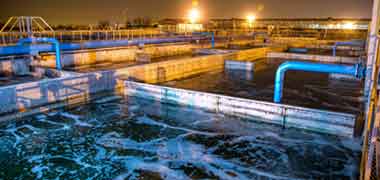
Water, Wastewater, and Desalination
Custom stainless steel flange and custom carbon steel flange supply for municipal water treatment, desalination (SWRO, MED, MSF), and industrial wastewater - duplex 2205 and super duplex 2507 custom stainless steel pipe flanges for seawater intake and brine discharge piping; A105 carbon steel for raw water piping with external coating protection; 316L for treated water distribution. PREN calculation documented in material test reports for seawater service certification.
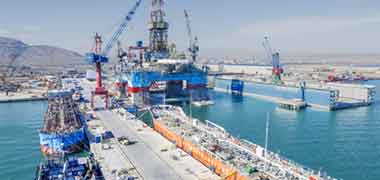
Offshore, Shipbuilding, and Food and Pharma
Offshore and shipbuilding: duplex 2205 and super duplex 2507 for seawater service; 316L for HVAC, sanitary, and general utility; DNV, ABS, Lloyd's Register, and Bureau Veritas classification society documentation available. Food, beverage, and pharmaceutical: 316L electropolished Ra 0.4um wetted surfaces; EHEDG-compliant crevice-free geometry; 3A dairy standard compliance; FDA 21 CFR and EU 10/2011 food contact compliance letters. HVAC and utilities: A105 and 316L for building services steam, chilled water, and pure utility systems.
Custom Pipe Flange Fabrication
Process and Capabilities
CNCPioneer's custom pipe flange fabrication runs on 66+ MAZAK mill-turn centers for standard and precision pipe flanges NPS 1/2 through NPS 24; MAZAK VARIAXIS 5-axis platforms for compound-geometry and non-standard flange configurations; and vertical turning centers with horizontal boring mills for large-bore flanges NPS 26 through NPS 60 per ASME B16.47.
24-Hour Custom Pipe Flange DFM and Engineering Review
Material grade selection for corrosion environment, temperature, and NACE/PED certification requirement. Forged blank vs. bar stock routing per pressure class and ASME BPVC requirements. Sealing face specification per gasket type: spiral serrated Ra 3.2-6.3um for spiral wound gasket; smooth Ra 0.8um for elastomeric; Ra 0.4um for metal gasket. Hub geometry review for weld neck bevel compliance per ASME B16.25. Raised face height confirmation per pressure class. Dimensional standard selection (ASME, EN, DIN, or JIS). EN 10204 3.1 or 3.2 routing. Surface treatment recommendation and allowance incorporation. Complete pricing from single prototype custom pipe flange through blanket order custom flange pipe OEM supply.
Standard Pipe Flanges - ASME B16.5 NPS 1/2 Through NPS 24
MAZAK mill-turn single-setup program for ASME B16.5, EN 1092-1, DIN, and JIS pipe flanges - bore, hub, face, and C-axis bolt holes from one spindle datum. Bore plus or minus 0.005mm for precision metering service; plus or minus 0.030mm for standard service. Raised face height plus or minus 0.050mm confirmed by CMM per lot. Sealing face Ra 3.2-6.3um spiral serrated from controlled feed turning; profilometry verification per lot. Bolt circle plus or minus 0.010mm CMM with true position network verified (all holes simultaneously). Class 150 through Class 2500 in all standard stainless and carbon/alloy steel grades. Weld neck, slip-on, blind, socket weld, threaded, and lap joint standard configurations.
Multi-Standard - ASME, EN 1092-1, DIN, JIS from One Facility
CNCPioneer's CNC programs maintain ASME B16.5 (Class 150-2500, NPS 1/2-NPS 24), EN 1092-1 (PN6-PN400, DN10-DN600), DIN 2573/2576/2627/2628/2629/2631-2634/2637/2638, and JIS B2220 (5K-63K) dimensional tables as standard references. Non-standard size combinations including NPS 7, NPS 9, and ASME bolt circle with DIN face geometry that catalog suppliers cannot supply are standard production capability. Mixed-standard project piping material requisitions (PMRs) with flanges to multiple simultaneous standards fulfilled from one custom flange pipe factory without subcontracting to separate fabricators.
Forged Blank Supply-and-Machine Programs
Forged blank procurement from qualified Chinese forging facilities supplying ASTM-grade forgings with EN 10204 3.1 forging certificates documenting heat number, chemistry, heat treatment, and mechanical test results. Rough machined blank arriving at CNCPioneer pre-machined to +3-5mm stock on all surfaces; bore pre-drilled to +5mm stock. Finish machining on MAZAK mill-turn to final drawing specification. Required for: ASME Class 600 through Class 2500 (all grades); A182 F11/F22/F91 alloy steel flanges in all pressure classes per ASME B16.5 Annex; large-bore above NPS 16 where bar stock procurement at required diameter is impractical. EN 10204 3.2 with third-party inspector at forging mill and CNCPioneer machining facility for PED and offshore programs.
9 Stainless Grades and 6 Carbon/Alloy Steel Grades
Stainless: 316L / 304/304L / 316Ti / 321 / 317L / Duplex 2205 (A182 F51) / Super Duplex 2507 (A182 F53) / 6Mo-254SMO / 904L - SII XRF-verified every lot, NACE MR0175 hardness documented (austenitic 200 HB max; duplex 28 HRC max). Carbon and alloy steel: ASTM A105 (utility, 187 HB max NACE) / A182 F11 (1-1/4Cr-1/2Mo, to 595 degrees C) / A182 F22 (2-1/4Cr-1Mo, to 650 degrees C) / A182 F5 (5Cr-1/2Mo, sulfidic service) / A182 F9 (9Cr-1Mo) / A182 F91 (9Cr-1Mo-V, supercritical, HB 187-248 verified incoming). EN 10204 3.1 standard; 3.2 available. Titanium B381 Grade 5, Inconel 625, Hastelloy C-276 also available.
EN 10204 3.1/3.2, NACE MR0175, PPAP Level 3 Documentation
Certificate of Conformance per lot. CMM dimensional report: bore diameter, raised face height (multiple points), face flatness, bolt circle true position (all holes simultaneously), face-to-bore perpendicularity, hub OD, flange OD, RTJ groove geometry. EN 10204 3.1 material certificate with heat number traceability from mill through CNCPioneer lot to individual flange serial number. Profilometry sealing face Ra records per lot. Hardness verification records (Brinell on A105/F22/F91). NACE MR0175 hardness compliance statement where applicable. Surface treatment certifications (passivation ASTM A967, zinc plate ASTM B633, galvanize ASTM A153). PPAP Level 3 Cpk greater than or equal to 1.67 for custom flange pipe OEM programs. Records retained 20 years.
Materials for
Custom Stainless Steel Pipe Flanges
Custom pipe flange material selection is governed by corrosion environment, operating temperature, pressure class, NACE MR0175 or PED compliance, and EN 10204 certification requirement. 316L dominates chemical and pharmaceutical process piping; duplex 2205 and super duplex 2507 address offshore and high-chloride service; A105 and A182 alloy steel grades cover ambient through supercritical steam temperature ranges.
316L - ASTM A182 F316L
C max 0.030%; Cr 16-18%; Ni 10-14%; Mo 2-3%. PREN approximately 24.3. Low carbon prevents sensitization during welding. NACE MR0175 compliance at 200 HB maximum. Temperature range -196 degrees C through +870 degrees C. The standard custom stainless steel pipe flange grade for chemical processing, pharmaceutical, food processing, and offshore piping. Weldability excellent - standard choice for site-welded pipe flange joints. CNCPioneer: carbide tooling, through-coolant, sealing face Ra 3.2-6.3um directly from turning; passivation ASTM A967 standard.
304/304L - ASTM A182 F304/F304L
C max 0.030%; Cr 18-20%; Ni 8-12%; no molybdenum. PREN approximately 18 - lower chloride resistance than 316L; not recommended for seawater or high-chloride service. Lower cost than 316L (no molybdenum content). Suitable for water, steam, non-halide acid, and mildly corrosive service. Common in utility cooling water systems, food processing ambient temperature service, and pharmaceutical WFI systems where 316L is not mandated. EN 10204 3.1 material certification standard; NACE MR0175 compliance at 200 HB maximum hardness.
317L and 316Ti/321 - Stabilized and High-Mo Grades
317L: Mo 3-4% (vs. 2-3% in 316L); PREN approximately 31.6 - significantly higher pitting resistance than 316L. For sulphur dioxide scrubbers, phosphoric acid systems, and pulp and paper bleaching. 316Ti: titanium stabilizer prevents sensitization at high temperature for service above 425 degrees C where L-grade sensitization range applies. 321: Ti stabilization 5x(C+N) minimum for sustained 425-900 degrees C service; higher creep resistance than 316Ti at elevated temperature. Applications: heat exchanger inlet/outlet flanges; furnace atmosphere piping; chemical reactor systems above 400 degrees C. EN 10204 3.1 standard on all grades.
Duplex 2205 - ASTM A182 F51 (UNS S31803/S32205)
50% austenite plus 50% ferrite dual-phase microstructure. Yield strength 450 MPa minimum (vs. 170 MPa for 316L). PREN approximately 35.4 - substantially higher pitting resistance than 316L (PREN 24); compliant for seawater splash zone and intermittent immersion. Far superior stress corrosion cracking resistance versus austenitic stainless in chloride environments - the dominant reason to specify duplex over 316L for offshore and desalination service. NACE MR0175 hardness max 28 HRC in solution-annealed condition. CNCPioneer: dedicated duplex machining parameters; pickling-and-passivation treatment standard; ferrite content per ASTM E562 available.
Super Duplex 2507 - ASTM A182 F53 (UNS S32750)
25Cr / 7Ni / 4Mo / 0.28N composition. PREN 42 or above - the threshold for pitting resistance in seawater at ambient temperature; continuous seawater immersion service compliant. Yield strength 550 MPa minimum - highest of any standard austenitic or duplex stainless specification. Applications: offshore topside piping, subsea flowline flanges, seawater injection systems, produced water separation. Machining: difficult - CNCPioneer applies dedicated tool management protocols and controlled cutting parameters for super duplex programs. EN 10204 3.1 with PREN calculation documentation standard; 3.2 available for offshore programs requiring independent inspector witness.
6Mo / 254SMO (1.4547)
20Cr / 18Ni / 6Mo / 0.20N. PREN = 43 - equivalent to super duplex in pitting resistance but superior in reducing acid environments due to higher nickel content. Applications: chlor-alkali plants, hydrochloric acid service, concentrated sulfuric acid service, FGD scrubbers, and mixed acid environments where duplex alloys are insufficient. Machined from bar or forged blank with pickling-and-passivation treatment restoring passive layer after machining. EN 10204 3.2 with independent chemical analysis required for pressure-class programs. PREN calculation and chloride limit documentation included with material test report.
ASTM A105 - Standard Carbon Steel Pipe Flange
C max 0.35%; Mn 0.60-1.05%; yield strength 250 MPa minimum; temperature range -29 degrees C through +425 degrees C per ASME B31.3. Hardness max 187 HB - NACE MR0175 sulfide stress cracking compliance for H2S service. Default custom carbon steel flange specification for utility piping, hydrocarbon process piping, steam systems to 425 degrees C, and non-corrosive industrial service. Corrosion protection required: zinc electroplate ASTM B633, hot-dip galvanize ASTM A153, or epoxy/polyurethane coating. CNCPioneer: normalized material from certified bar or forged blank; XRF verification incoming; hardness verification per lot; CMM dimensional report with every shipment.
ASTM A182 F11 and F22 - Chrome-Moly Alloy Steel
F11 (1-1/4Cr-1/2Mo): to 595 degrees C; for steam generation piping, heat exchanger flanges, fired heater piping. F22 (2-1/4Cr-1Mo): Cr 2.00-2.50%; Mo 0.87-1.13%; to 650 degrees C; the workhorse alloy for steam turbine main steam piping, hydrocracker and hydrotreater piping, crude unit atmospheric and vacuum tower piping. Hardness max 200 HB NACE compliance. Both grades: normalized plus tempered; PWHT required per ASME B31.3 when welded; preheat 175-260 degrees C for F22. F22 PWHT at 690-750 degrees C - distortion management in tight-tolerance programs accounted for in CNCPioneer fabrication process planning to maintain sealing face flatness.
ASTM A182 F91 - 9Cr-1Mo-V Alloy Steel
Cr 8.00-9.50%; Mo 0.85-1.05%; V 0.18-0.25%; Nb 0.06-0.10%. To 650 degrees C with substantially higher allowable stress than F22 - the specification for supercritical and ultra-supercritical power plant steam piping at temperatures up to 625 degrees C. Normalized 1040-1080 degrees C plus tempered 730-800 degrees C - the specific cycle developing martensitic microstructure for high-temperature creep strength. Hardness 187-248 HB narrow window verified by incoming Brinell per lot. Delta ferrite formation risk from incorrect heat treatment drastically reduces creep life - CNCPioneer incoming Brinell verification confirms heat treatment compliance before machining. No heat treatment permitted after machining - F91 flanges machined to final dimension in specified heat treatment condition.
Hastelloy C-276 and Inconel 625
Hastelloy C-276 (UNS N10276): outstanding resistance to strong oxidizing and reducing acids, wet chlorine, and mixed acid environments - for chemical reactor flanges, chlorine service piping, and flue gas desulfurization equipment. Inconel 625 (UNS N06625): 965 MPa yield; excellent fatigue and oxidation resistance to 982 degrees C - for gas turbine exhaust flanges, petrochemical high-temperature process flanges, and reactor vessel nozzle flanges. Both grades machined from bar or forged blank per ASTM B564 (Hastelloy) and ASTM B446 (Inconel 625) with pickling-and-passivation treatment. EN 10204 3.2 with independent chemical analysis required for pressure-class programs in these alloys.
Surface Treatments for
Custom Pipe Flanges
Custom pipe flange surface treatments serve four engineering functions: passive layer restoration on stainless steel flanges (passivation, pickling-and-passivation for duplex grades), ultra-smooth finish for sanitary and pharmaceutical service (electropolish), external corrosion protection on carbon steel pipe flanges (zinc electroplate, hot-dip galvanize, epoxy/polyurethane coating), and chemical inertness for severe chemical service (PTFE bore-and-face lining). Treatment allowances are incorporated in machined dimensions at DFM stage.
Passivation - ASTM A967 (All Stainless Flanges)
Mandatory for all 316L, 304L, 316Ti, 321, 317L, duplex 2205, and super duplex 2507 custom stainless steel pipe flanges. ASTM A967 nitric acid or citric acid passivation per Method A or C restores the chromium oxide passive layer at all machined surfaces. Zero dimensional change - bore, sealing face, and bolt holes machined to final dimension; passivation does not alter dimensions. Combined pickling-and-passivation (HNO3/HF acid pickle plus passivation) for duplex 2205 and super duplex 2507 flanges removes ferrous contamination from machined surfaces and heat tint from machined OD surfaces that would initiate crevice corrosion at contamination sites. Critical for offshore and chemical service duplex flanges where maximum pitting resistance is required. ISO 13485-compatible passivation documentation for pharmaceutical flange programs.
Electropolish - Sanitary and Pharmaceutical Flanges
Electropolish to Ra 0.4um or less on wetted surfaces (bore, flange face, internal features) for pharmaceutical WFI system flanges, food processing sanitary pipe flanges per EHEDG and 3A standards, and clean steam flanges. Electropolishing removes the thin deformed machining surface layer, improving corrosion resistance beyond passivation alone, reducing bacterial adhesion on sanitary flanges, and eliminating particle traps on cleanroom and clean steam flanges. Applied after ASTM A967 passivation: passivate plus electropolish sequence standard for pharmaceutical programs. Dimensional allowance for electropolish metal removal (0.003-0.010mm per surface) incorporated in machined bore dimensions before treatment. FDA 21 CFR and EU 10/2011 food contact compliance documentation available. Ra measured by contact profilometer post-treatment with records shipped with every lot.
Zinc Electroplate - ASTM B633 (Carbon Steel Flanges)
Standard corrosion protection for ASTM A105 and A182 alloy steel custom carbon steel flange programs in exposed industrial environments. SC3 (8um) standard for industrial environments; SC4 (13um) for outdoor and chemical splash exposure. Yellow chromate conversion over zinc for enhanced corrosion resistance and salt spray performance. Bolt hole threads masked before zinc plating to preserve thread class engagement. Sealing faces masked to maintain Ra 3.2-6.3um spiral serrated finish in coated condition. EN 10204 3.1 plus zinc plating batch certification with every shipment. For F11 and F22 alloy steel flanges where elevated temperature service precludes zinc plating: hot spray aluminum or ceramic coating systems available per customer specification. Hot-dip galvanize ASTM A153 (85-330um) for heavy-duty outdoor and buried carbon steel flanges; bolt holes tapped after galvanizing to restore thread form.
NACE MR0175 Hardness Compliance - H2S Sour Service
NACE MR0175/ISO 15156 hardness compliance documentation for custom pipe flanges in H2S-containing hydrocarbon service - the most common material compliance requirement for oil and gas upstream and midstream flange programs. ASTM A105 carbon steel: Brinell hardness max 187 HB per lot verified before machining and documented in shipment package. ASTM A182 F316L austenitic stainless: Brinell max 200 HB - standard condition for mill-supplied bar. Duplex 2205: Rockwell max 28 HRC in solution-annealed condition - CNCPioneer verifies and documents hardness per lot. A182 F22: Brinell max 200 HB in normalized plus tempered condition. F91: HB 187-248 narrow window verified by incoming Brinell per lot. NACE MR0175 hardness compliance statement issued with every applicable lot shipment - cross-referenced to EN 10204 3.1 material certificate heat number.
Hot-Dip Galvanize and Epoxy Coating Systems
Hot-dip galvanize ASTM A153 (85-330um zinc coating) for heavy-duty corrosion protection on structural and outdoor service custom carbon steel pipe flanges. Sealing faces and raised face surfaces masked or post-galvanize machined to maintain dimensional compliance and Ra 3.2-6.3um sealing face finish. Bolt holes tapped after galvanizing to restore thread form. Most suitable for ASTM A105 structural and utility service flanges in outdoor, buried, or marine atmospheric environments. Epoxy/polyurethane coating system for buried, immersed, or aggressive atmospheric service: surface preparation SSPC-SP10 Near-White Blast; primer plus topcoat per client specification (Hempel, Jotun, Sherwin-Williams, International Paint systems available). Project-specific coating systems per client piping material specification available with topcoat color and DFT per specification.
PTFE Lining - Severe Chemical Service
For custom stainless steel pipe flanges and custom carbon steel flanges in severe chemical service where metal corrosion resistance is insufficient - PTFE-lined bore and face providing chemical inertness across the gasket and bore contact zones. Bore machined 3-4mm oversize to accommodate PTFE liner; liner bonded and machined to final bore dimension within plus or minus 0.050mm. Face PTFE sheet applied with compression seal groove to maintain gasket seating integrity. Applications: hydrofluoric acid (HF) service piping; concentrated HCl systems; highly oxidizing acid mixtures; ultrapure chemical delivery systems where metallic contamination into the process fluid is unacceptable. PTFE liner chemical compatibility verification against specific process fluid temperature and concentration documented with every lined flange shipment. Available in PTFE, PVDF, and PFA lining materials per service requirements.
All surface treatments on custom pipe flange programs - passivation ASTM A967, pickling-and-passivation, electropolish Ra 0.4um, zinc electroplate ASTM B633, hot-dip galvanize ASTM A153, epoxy/polyurethane coating system, NACE MR0175 hardness compliance, and PTFE bore-and-face lining - are documented with treatment certifications and post-treatment dimensional verification. Surface treatment allowances are incorporated into machined bore and face dimensions at DFM stage and confirmed post-treatment by CMM to ensure final delivered dimensions meet specification.
Quality Assurance for
Custom Pipe Flange Fabrication
Custom pipe flange quality assurance addresses the dimensional relationships specific to flanged pipe connections: bore accuracy for flow continuity and metering service, raised face height compliance for gasket seating, sealing face finish for gasket seal integrity, and bolt circle true position for simultaneous multi-bolt engagement - all verified by Mitutoyo CMM and contact profilometry on every precision custom pipe flange lot.
Engineering DFM Review and Pipe Flange Configuration Review
24-hour DFM on every custom pipe flange inquiry: bore fit class for metering or process service; material grade selection for corrosion environment; forged blank vs. bar stock routing per pressure class; sealing face specification per gasket type (spiral serrated Ra 3.2-6.3um for spiral wound; smooth Ra 0.8-1.6um for elastomeric or metal gasket); raised face height per ASME pressure class; dimensional standard selection (ASME B16.5, EN 1092-1, DIN, or JIS); hub taper geometry for weld neck programs per ASME B16.25 bevel compliance; EN 10204 3.1 or 3.2 routing per regulatory requirement; surface treatment recommendation; cost optimization identifying integration opportunities. All drawing ambiguities resolved before machining - sealing face geometry and raised face height errors require scrapping fully-machined flanges.
Material Incoming - XRF Composition and Hardness Verification
SII XRF composition verification on every custom pipe flange material lot - 16 elements measured simultaneously, confirming alloy grade compliance, heat number traceability to EN 10204 3.1 mill certificate, and required composition range before machining release. Hardness verification per lot: Brinell on A105 (max 187 HB), F22 (max 200 HB), F91 (HB 187-248 narrow window); Rockwell on heat-treated alloy grades and duplex stainless (max 28 HRC). Billet and forged blank flatness incoming for large-flange programs. Duplex 2205 ferrite content measurement per ASTM A923 before machining. F91 incoming Brinell confirming normalized plus tempered heat treatment compliance before machining - delta ferrite from incorrect heat treatment produces loss of creep strength not detectable by external dimensional inspection.
In-Process Quality Control - First-Off CMM and SPC
First-off CMM on bore diameter, raised face height, sealing face flatness, and bolt circle true position before releasing batch machining - specifically the first machined flange in the program. Air gauge bore verification on precision bore programs at 0.1um resolution confirming bore diameter within plus or minus 0.002mm before each flange exits the MAZAK. SPC control charts on bore diameter and bolt circle with Cpk greater than or equal to 1.67 on IATF special characteristics for OEM programs. Adaptive CNC offset correction preventing bore diameter drift from tool wear - bore diameter drift detected and offset within plus or minus 0.001mm of nominal across tool life. Sealing face feed rate control maintaining spiral pitch 0.20-0.35mm per ASME B16.5 paragraph 6.4 specification throughout the production batch.
Final Inspection - CMM and Full Dimensional Verification
Mitutoyo CMM (plus or minus 0.001mm) on every precision program: bore diameter and bore roundness, raised face height at multiple points across face, face flatness (full scan on large flanges), face-to-bore perpendicularity, hub OD and hub taper angle for weld neck programs, bolt circle diameter, bolt hole true position (all holes simultaneously in one CMM program - not individual hole positions that miss the angular network), bolt hole diameter, RTJ groove geometry, O-ring groove dimensions. Thread gauges (GO/NO-GO) on all NPT, BSPT, and metric threaded features. Contact profilometry on sealing faces: Ra measurement confirming 3.2-6.3um spiral serrated (ASME B16.5 gasket face) or Ra 0.8-1.6um smooth (elastomeric/metal gasket face) per specification. Spiral pitch measurement (0.20-0.35mm per ASME B16.5) verified by profilometry alongside Ra - both parameters govern gasket performance at design bolt load.
Sealing Face Profilometry and Surface Treatment Verification
Contact profilometry on sealing face of every custom stainless steel pipe flange and custom carbon steel flange lot - Ra measurement confirming compliance with specified finish class. Profilometry records shipped with every lot provide the gasket manufacturer and piping engineer sealing face finish documentation required for gasket selection compliance. Post-treatment verification: passivation - water immersion, copper sulfate, or potassium ferricyanide test per ASTM A967 confirming free iron removal; pickling-and-passivation on duplex and super duplex - ferroxyl or copper sulfate test confirming contamination removal; zinc plate - bore diameter check confirming plating allowance consumed within tolerance; electropolish - Ra re-measurement confirming Ra 0.4um or less achieved. All treatment records cross-referenced to CMM lot records in the final documentation package.
Documentation Package
Certificate of Conformance per lot. Mitutoyo CMM dimensional report (bore diameter, raised face height, face flatness, bolt circle true position all holes simultaneously, face-to-bore perpendicularity, hub OD, RTJ groove, O-ring groove, flange thickness). EN 10204 3.1 material certificate with mill heat number to CNCPioneer machining lot to individual serial number traceability. Profilometry sealing face Ra records per lot. Hardness verification records archived against material heat number. NACE MR0175 hardness compliance statement where applicable. Surface treatment batch records and certifications (passivation ASTM A967 test results; zinc plate per ASTM B633; galvanize per ASTM A153). Thread gauge records (all GO/NO-GO results per thread per lot). PPAP Level 3 documentation for custom flange pipe OEM programs. Records retained 20 years.
IATF 16949 Quality System for
Custom Pipe Flange Programs
CNCPioneer's IATF 16949 and AS9100D certified quality system addresses four quality disciplines specific to precision pipe flanges: XRF material composition verification on every lot eliminating material mix-up, 100% CMM dimensional verification on precision bore programs, sealing face profilometry on every lot for gasket seal integrity confirmation, and PPAP Level 3 qualification bridging from first article through blanket order OEM volume supply.
XRF Composition Verification - Every Lot
SII XRF spectrometer composition verification on every custom pipe flange material lot before machining - confirming alloy grade (16 elements measured simultaneously), heat number traceability to EN 10204 3.1 mill certificate, and compliance with specified composition range for the grade. Critical for stainless pipe flange programs where 316L, 304L, 316Ti, and 317L bar stock can appear visually identical but differ in molybdenum, titanium, and nitrogen content governing corrosion resistance, sensitization behavior, and PREN value. XRF verification is an IATF 16949 structural requirement on all custom pipe flange lots - not a selective check on suspect material - preventing material mix-up that only emerges as service failures in aggressive corrosion environments.
- XRF on every lot before machining - structural requirement
- 16 elements simultaneously - covers all flange-relevant alloys
- Heat number cross-referenced to EN 10204 3.1 mill certificate
100% CMM Dimensional Verification
Every precision custom pipe flange - every metering service bore, every precision weld neck hub, every raised face height program - receives 100% CMM verification on bore diameter, raised face height, face flatness, and bolt circle true position (all holes simultaneously). 100% CMM rather than sampling eliminates the escape probability that sample-based inspection cannot eliminate when the specification bandwidth is plus or minus 0.005mm bore or plus or minus 0.050mm raised face height. The CMM program measures all features simultaneously in one fixturing - providing the complete dimensional picture (bore diameter, raised face height, face flatness, bolt circle position, face-to-bore perpendicularity) that sequential gauge checks cannot substitute for in precision sealing applications.
- 100% CMM on precision bore and raised face programs
- All features in one CMM fixturing - simultaneous verification
- Air gauge on bore diameter at 0.1um resolution for OEM volume
Sealing Face Profilometry - Every Lot
Contact profilometry on sealing face of every custom stainless steel pipe flange and custom carbon steel flange lot - Ra measurement confirming Ra 3.2-6.3um spiral serrated per ASME B16.5 paragraph 6.4 for standard spiral wound or graphite gasket service, or Ra 0.8-1.6um smooth finish for elastomeric or metal gasket face programs. Profilometry records shipped with every lot provide the gasket manufacturer and piping engineer the sealing face finish documentation required for gasket selection compliance. Spiral pitch measurement (0.20-0.35mm per ASME B16.5) verified by profilometry alongside Ra - both parameters govern gasket performance at design bolt load. Profilometry on raised face and flat face; ConFlat knife edge Ra 0.1um verified by contact profilometer on vacuum flange programs.
- Profilometry on sealing face of every lot - not sampled
- Ra and spiral pitch both verified per ASME B16.5 requirements
- Profilometry records shipped with every flange lot
EN 10204 3.1/3.2 Certification and PPAP Level 3 OEM Supply
EN 10204 3.1 mill certificate with heat number traceability from steel mill through CNCPioneer machining lot to individual flange serial number is standard with every custom pipe flange shipment. EN 10204 3.2 - independent third-party inspector witnessing material testing at the mill and co-signing the certificate - available with 5-7 business days additional lead time for inspector scheduling for PED 2014/68/EU Category III/IV, nuclear class, and offshore subsea programs. PPAP Level 3 qualification for custom flange pipe OEM programs: design records, process flow (including forged blank or bar stock routing and surface treatment sequence), PFMEA, control plan, MSA Gage R&R on CMM and profilometer, initial capability studies (Cpk greater than or equal to 1.67 on bore diameter and bolt circle true position IATF special characteristics), and part submission warrant. On-time delivery rate: 100%. Qualification rate (first-pass CMM compliance without rework): 99%.
- EN 10204 3.1 standard with every shipment; 3.2 on request
- PPAP Level 3 Cpk 1.67 or above for pipe flange OEM programs
- 99% qualification rate - 100% on-time delivery
Custom Stainless Steel Pipe Flange FAQ
Common questions from oil and gas operators, petrochemical plant builders, EPC contractors, and equipment OEMs about custom stainless steel pipe flange grade selection, EN 10204 certification, forged blank versus bar stock fabrication, and China custom flange pipe factory production economics and lead times.
316L is insufficient for continuous seawater immersion because its PREN (pitting resistance equivalent number) of approximately 24 falls below the threshold of 32-35 required for reliable resistance to crevice corrosion and pitting attack in stagnant or low-velocity seawater at ambient temperature. Seawater's chloride concentration (approximately 19,000 ppm Cl-) creates local chloride concentrations at crevice zones (under gaskets, at bolt holes) well above bulk levels, lowering the crevice corrosion initiation potential below 316L's pitting potential. Within weeks of seawater immersion, 316L custom stainless steel pipe flanges at crevice zones initiate corrosion pits that grow autocatalytically - the local chemistry inside the pit acidifies, accelerating dissolution, producing perforation of even thick-wall flanges within 1-2 years. The correct specification: duplex 2205 (PREN 35 or above) for seawater splash zone and intermittent immersion - its PREN exceeds the threshold and higher yield strength reduces flange weight on topside piping. Super duplex 2507 (PREN 42 or above) for continuous seawater immersion, high-velocity seawater cooling water, and chlorinated seawater - its PREN well exceeds the immersion threshold, and 550 MPa yield strength further reduces flange weight. CNCPioneer's custom stainless steel pipe flange programs produce duplex 2205 and super duplex 2507 custom flanges from certified A182 F51 and F53 material with EN 10204 3.1 certificates and PREN calculation documented in the material test report.
EN 10204 defines the types of inspection documents that metal product manufacturers can issue to certify that their material complies with the specified standard. Type 3.1 certificate is a manufacturer-issued document: the steel mill's authorized inspection representative validates that the material test results (chemical composition and mechanical properties) comply with the specification requirements, and issues the certificate under the mill's authority. The 3.1 certificate is the standard requirement for most industrial piping - ASME B31.3 standard process piping, EN 13480 metallic industrial piping, and most oil and gas, chemical, and power generation custom pipe flange programs. Type 3.2 adds an independent layer: an independent third-party inspector (approved by the purchaser) also validates the test results - witnessing the actual testing at the mill, comparing results to specification requirements, and co-signing the certificate under the inspector's independent authority. EN 10204 3.2 is required when the piping system is governed by a regulatory framework requiring independent inspection authority: PED 2014/68/EU for European pressure equipment Category III and IV; nuclear class piping under ASME BPVC Section III or RCC-M; offshore subsea flowlines under DNV-OS-F101; and client specifications for high-consequence piping systems where the customer does not rely on supplier quality systems alone. CNCPioneer provides EN 10204 3.1 certification as standard with every custom stainless steel pipe flange and custom carbon steel flange shipment. EN 10204 3.2 is available with 5-7 business days additional lead time for inspector scheduling and material test witness at the steel supplier's facility.
The technical difference is the starting material's grain flow direction relative to the flange geometry. In bar stock, the grain flow (the directional microstructure produced by rolling or drawing) runs parallel to the bar axis - when a weld neck flange is machined from bar stock, the grain flow at the hub runs perpendicular to the hub taper surface, creating a cross-grain plane where the grain direction transitions abruptly from hub to flange body. This cross-grain plane is weaker in fatigue than forged grain flow, which follows the hub contour because the forging die shapes the material while maintaining grain flow continuity through the geometric transitions. ASME B16.5 and ASME B31.3 acknowledge this difference: for Class 600 and above custom pipe flanges, and for all flanges in A182 F11, F22, F91, and similar alloy steel grades, forging is either required or strongly recommended. For Class 150 and Class 300 custom stainless steel pipe flanges in austenitic grades (316L, 304L, duplex 2205), bar stock machining is generally accepted by ASME B16.5 because austenitic stainless fatigue is less directionally dependent than ferritic and martensitic carbon and alloy steels. CNCPioneer's DFM review for every custom pipe flange fabrication inquiry identifies whether the application pressure class, material grade, and service conditions require forged material - advising customers when bar stock is technically adequate and more economical, versus when forging is required for code compliance or engineering adequacy.
At 5,000 units annually of a 316L NPS 4 Class 150 custom stainless steel pipe flange, CNCPioneer's china custom flange pipe factory operates as follows. Prototype first article: 4-5 business days from 316L bar stock; CMM report and EN 10204 3.1 material certificate with first article. After first article approval: pilot production 25-50 pieces at minus 35-45 percent below prototype unit price, 2-3 week lead time, SPC accumulation beginning on bore diameter and bolt circle. At 5,000 units annually with monthly blanket releases: 417 units per release, 2-week lead time with dedicated MAZAK capacity reservation; safety stock 4-6 weeks finished goods maintained; per-unit cost minus 60-65 percent below prototype price. At this volume, CNCPioneer's china custom flange pipe pricing for a 316L NPS 4 Class 150 custom stainless steel pipe flange (machined raised face, ASME B16.5 bolt circle, passivated) runs approximately $28-$38 per piece depending on current 316L material cost. An equivalent custom stainless steel pipe flange manufacturer in the US or Europe at similar quality level typically prices the same piece at $65-$90 per piece at 5,000 annual volume - a $30-$55 per-unit saving producing $150,000-$275,000 annual cost reduction across 5,000 pieces, a structural procurement benefit that makes CNCPioneer's china custom flange pipe supplier program a meaningful contribution to process equipment OEM margin improvement.
Get a Quote for Custom Pipe Flange Fabrication
Upload your custom stainless steel pipe flange, custom carbon steel flange, or custom flange pipe drawings - or provide nominal pipe size, pressure class, material grade, face type, and annual quantity - and receive a free DFM review and competitive quotation within 24 hours covering material grade selection and EN 10204 certification routing, forged versus bar stock fabrication recommendation for your pressure class and service, sealing face finish specification per gasket type, dimensional standard selection (ASME, EN, DIN, or JIS), corrosion service grade adequacy analysis, surface treatment recommendation, and complete pricing from first-article prototype custom pipe flange through blanket order custom flange pipe OEM supply.