
High-Voltage Connector Pins
& Terminals for 800V eVTOL
CNCPioneer is an AS9100D and IATF 16949:2016 certified eVTOL HV connector pin and terminal machining specialist delivering 800V main power connector pins, BMS signal pin arrays, motor drive AC pins, MCS megawatt charging contact terminals, inter-module connector pins, and bus bar terminal bodies — with pin OD accuracy of ±0.002mm, contact surface finish of Ra 0.1μm, gold plating thickness ±0.2μm by XRF, and contact resistance ≤1 mΩ at 200A rated current across 78+ Swiss CNC lathes and 66+ MAZAK mill-turn centers since 2011.
What Is eVTOL HV Connector Pin
& Terminal Machining?
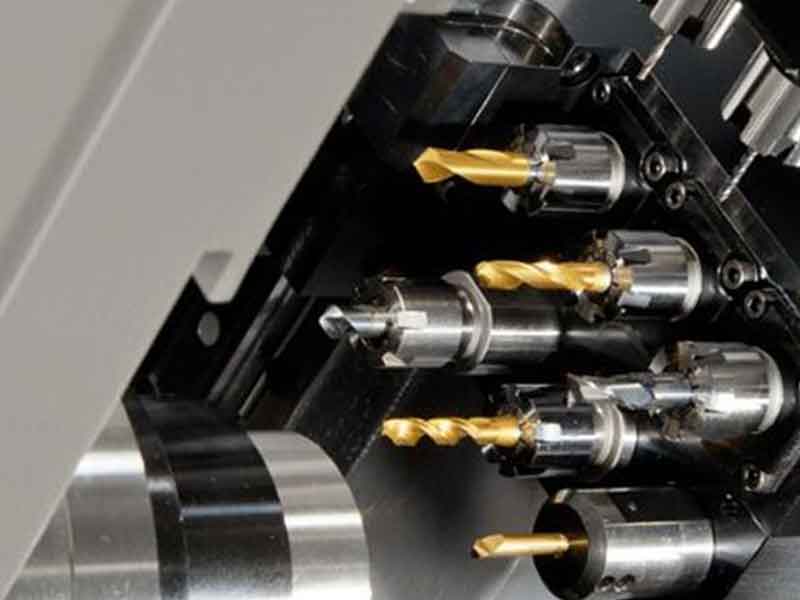
eVTOL high-voltage connector pin and terminal machining is the precision Swiss CNC turning, MAZAK mill-turn, cylindrical grinding, and coordinated precious metal plating process — executed on 78+ Swiss CNC lathes with guide bushing support — that produces the current-carrying contact pins, terminal bodies, bus bar connection lugs, signal contact arrays, and HV interface components of the electrical power distribution and battery management systems of 800V electric vertical takeoff and landing aircraft.
The 800V eVTOL battery platform is not an incremental evolution of 400V automotive EV architecture — it is the electrical engineering decision that defines the power density, charging speed, and thermal management architecture of commercial-generation eVTOL aircraft. At constant power P = V × I, doubling battery voltage from 400V to 800V halves the current I, reducing I²R losses by 75% and the thermal load on every connector contact pair — the architectural rationale that drives four simultaneous connector pin precision requirements CNCPioneer's programs uniquely address.
-
Swiss CNC guide bushing as dimensional accuracy foundation eVTOL connector pins from Ø0.8mm BMS signal pins to Ø20mm main power pins all require ±0.002mm OD accuracy across L/D ratios of 5:1 to 20:1. Guide bushing support positions the cutting point within 0.5–2.0mm of the bushing face regardless of pin length — eliminating deflection-induced taper that workpiece overhang produces in standard turning. CNCPioneer's 78+ Swiss CNC lathes provide dedicated capacity for all eVTOL connector pin programs.
-
Contact resistance engineering at ≤1 mΩ verified specification Contact resistance at the HV connector mating interface is governed by pin OD accuracy (determines contact force = spring-loaded force → constriction resistance) and surface finish (Ra 0.1μm from CBN grinding delivers uniform plating base → stable ≤1 mΩ). CNCPioneer verifies contact resistance by 4-wire milliohmmeter at rated current on every production plating lot — confirming the machining parameters as the manufacturing controls that maintain this electrical specification.
-
CuCrZr C18150 H02 aging condition as the material quality gate CuCrZr C18150 achieves 82% IACS conductivity and 550 MPa UTS only in the H02 peak-aged condition. Un-aged CuCrZr has 55% IACS — a 45% higher resistivity producing thermal runaway at the contact spot. CNCPioneer verifies H02 aging by both eddy current conductivity meter (≥82% IACS) and Vickers hardness (HV ≥160) on every incoming CuCrZr lot — the quality gate that prevents un-aged material from reaching eVTOL connector pin programs.
-
Coordinated plating as integrated machining + surface supply Precision-machined connector pins without coordinated plating are not deliverable products for eVTOL battery OEMs. CNCPioneer coordinates gold (ASTM B488 Class 1) and silver (ASTM B700) plating through AS9100D-qualified partners with XRF thickness verification at ±0.2μm, salt spray per ASTM B117, and contact resistance verification per plating lot — complete supply from one certified source eliminating the dimensional risk between pre- and post-plate OD.

Why CNCPioneer for eVTOL
HV Connector Pin Machining?
Among precision connector pin machining factories globally, CNCPioneer's Swiss CNC guide bushing accuracy, CuCrZr C18150 H02 material engineering, contact resistance verification, coordinated plating programs, eVTOL battery system engineering knowledge, and China cost advantage establish our facility as the preferred eVTOL battery connector pin partner from prototype first article through 5M+ annual unit production.
Swiss CNC Guide Bushing Dimensional Accuracy
eVTOL HV connector pins span Ø0.8mm signal pins through Ø20mm power pins — a 25:1 diameter range all requiring ±0.002mm OD accuracy at L/D ratios of 5:1 to 20:1. Swiss CNC guide bushing support positions the cutting point within 0.5–2.0mm of the bushing face regardless of pin length, producing ±0.002mm OD without the deflection-induced taper that standard CNC turning produces at high L/D. CNCPioneer's 78+ Swiss CNC lathes provide dedicated capacity from 1,000-piece prototype first articles through 5,000,000-piece annual volume.
CuCrZr C18150 H02 Machining Competency
CuCrZr C18150 (82% IACS, 550 MPa UTS, 500°C softening temperature) is the dominant material for 800V eVTOL power connector pins — and requires specific machining parameters. CNCPioneer applies PCD tooling at 600–800 m/min, controlled chip-load for work-hardened CuCrZr chip, and dimensional stabilization between aging and precision finish pass — delivering pins that achieve designed contact resistance and service life from correct material state + machining sequence. H02 aging condition verified by eddy current (≥82% IACS) per incoming lot.
Contact Resistance Engineering
Contact resistance at 800V eVTOL HV connector interfaces is governed by pin OD accuracy (±0.002mm determines contact force = constriction resistance) and surface finish (Ra 0.1μm from CBN grinding = uniform plating base). CNCPioneer's ≤1 mΩ contact resistance specification is verified by 4-wire milliohmmeter at 200A on every production plating lot — confirming machining parameters (±0.002mm OD, Ra 0.1μm) as the manufacturing controls that maintain this electrical specification in eVTOL battery production supply.
Coordinated Gold, Silver & SnAg Plating Supply
CNCPioneer coordinates hard gold 0.3–3.0μm (ASTM B488 Class 1), fine silver 5–25μm (ASTM B700), and Sn-3%Ag SnAg 3–8μm plating through AS9100D-qualified plating partners with 2–4 day transit time, XRF plating thickness verification per lot at ±0.2μm (gold) / ±0.3μm (silver), and ASTM B117 salt spray records — complete machining + plating supply from one AS9100D source eliminating the dimensional interface risk between machined pin OD and post-plate OD.
eVTOL Battery System Engineering Knowledge
CNCPioneer's 48-hour DFM for eVTOL HV connector pins covers battery architecture context general connector shops cannot assess: CuCrZr H02 aging condition verification from customer drawings; current derating at sealed battery pack ambient temperature; IEC 60664-1 creepage and clearance distance adequacy at 400V or 800V; gold plating thickness calculation from mating cycle life requirement at rated contact force — and contact resistance prediction from pin OD tolerance and plating surface finish specification before machining commitment.
40–60% China Cost Advantage
CNCPioneer delivers AS9100D eVTOL battery connector pin machining at 40–60% below US and European precision connector machining suppliers (Amphenol, TE Connectivity, Molex precision contact programs). At 50,000 battery packs/year, the connector pin kit saving versus Western suppliers reaches $65M–$140M annually — matching the magnitude of cell chemistry cost reduction, making eVTOL connector pin China manufacturing as commercially important as battery cell cost reduction for eVTOL program economics.
eVTOL HV Connector Pins & Terminals
We Manufacture
CNCPioneer's eVTOL battery connector pin and terminal machining programs cover the complete HV connector pin portfolio — from Ø0.8mm BMS cell voltage monitoring signal pins through Ø40mm+ MCS megawatt charging contact terminal bodies, in CuCrZr C18150, C11000 ETP copper, C26000 brass, and specialty alloys, with gold, silver, or SnAg plating coordinated from one AS9100D source.

800V Main Power HV Connector Pins (Battery +/−)
The highest-consequence connector pins in the eVTOL battery system — positive and negative pins connecting the 800V battery pack to the aircraft HV bus. CuCrZr C18150 H02 (82% IACS, 500°C softening temperature); Ø10–20mm contact OD ±0.002mm; concentricity ±0.003mm; Ra 0.1μm pre-plate from CBN cylindrical grinding; contact resistance ≤1 mΩ at 200A 4-wire verified; gold 0.8–1.5μm hard gold per ASTM B488 Class 1 over nickel 3μm; or silver 10–25μm per ASTM B700. Crimp barrel bore, retention snap ring groove, anti-rotation flat, and keying features all machined in single Swiss CNC setup. AS9100D traceability from CuCrZr C18150 H02 material lot through plating lot to per-aircraft connector kit serial number.

BMS Cell Voltage Monitoring Signal Pin Arrays (200+ Pins)
800V eVTOL battery packs require 219 cells in series — each cell requiring one voltage monitoring pin in the BMS signal connector array. C26000 cartridge brass; Ø0.8–2.0mm; OD ±0.003mm from Swiss CNC guide bushing; hard gold 0.3–0.5μm per ASTM B488 for 2,000-cycle mating life; contact resistance ≤50 mΩ; array pitch ±0.020mm from 100-pin CMM fixture verification before release to plating. At 219 pins × 5,000 packs/year: 1,095,000 BMS signal pins annually from one aircraft program — high-volume Swiss CNC programs at 1,200–2,000 pins/hour with 100% laser micrometer OD integrated at machine output.

Motor Drive 3-Phase AC Connector Pins (800V SiC Inverter)
HV connector pins connecting the 800V SiC motor drive inverter to the PMSM motor — three pins per motor at 800V peak line-to-line (565V RMS). CuCrZr C18150 H02; Ø8–14mm; OD ±0.002mm; silver plating 10μm per ASTM B700 (preferred over gold for motor drive applications — silver's 1.59×10⁻⁸ Ω·m resistivity is 53% lower than gold's 2.44×10⁻⁸ Ω·m, critical at 800V SiC switching frequencies of 50–200 kHz where skin effect concentrates current in the outer 67μm of the contact surface). Phase keying feature ±0.020° from pin axis; contact resistance ≤2 mΩ; 36-pin sets per 12-motor aircraft.

MCS Megawatt Charging Contact Terminal Bodies
SAE/IEC MCS standard targets 1,000V/1,000A (1 MW) per charging outlet — the power level that recharges a 150 kWh eVTOL battery in 5–9 minutes. C11000 ETP copper (100% IACS — chosen over CuCrZr because liquid cooling maintains body temperature below the 200°C ETP softening threshold); Ø40–80mm MAZAK mill-turn; liquid cooling channel bore ±0.050mm; O-ring groove ±0.020mm; 100% pressure test; silver 10–25μm per ASTM B700 (53% lower resistivity than gold; 429 W/m·K thermal conductivity for heat extraction from contact face); contact resistance ≤0.5 mΩ at 1,000A; contact face area ≥1,000 mm² (1 mm²/A minimum).

Inter-Module Battery Connector Pins (SnAg Fretting Resistance)
eVTOL battery packs are assembled from multiple cell modules connected in series — inter-module connectors transfer current between adjacent modules while experiencing micro-slip from differential thermal expansion (20–40°C temperature swings producing 0.02–0.10mm module displacement). Sn-3%Ag tin-silver alloy plating (3–5× lower fretting corrosion rate than pure tin; HV 40–60 versus HV 5–10 for tin); 3–8μm on 2μm nickel per ASTM B545; XRF per lot; O-ring groove ±0.020mm for IP67 electrolyte vapor protection inside battery enclosure. CuCrZr C18150 or C26000 brass per current rating; OD ±0.002–0.005mm from Swiss CNC.

Bus Bar Terminal Bodies & Contactor Lug Programs
C11000 ETP copper bus bar terminal bodies connecting battery main bus to motor drive inverter HV input: bus bar bore/slot ±0.050mm; bolt pattern ±0.010mm true position; terminal face flatness 0.010mm; silver 15–25μm per ASTM B700; O-ring groove for IP67 sealing inside battery pack; 100% pressure test for coolant-integrated designs. Battery disconnect contactor terminal lugs: bore ±0.010mm for contactor stud OD; lug-to-bus bar connection face flatness 0.005mm; silver 20μm for stable resistance through 100,000 contactor cycles; bolt hole countersink 100° ±0.25°. Material C11000 ETP copper or CuCrZr C18150 for high-temperature contactor locations.
Industries & Applications
CNCPioneer's eVTOL battery connector pin and terminal machining serves every organization producing, integrating, or certifying 800V eVTOL aircraft electrical systems — from aircraft manufacturers coordinating complete per-aircraft connector kit programs to certification engineering partners requiring contact resistance and plating thickness data for DO-311A battery airworthiness substantiation.

eVTOL Aircraft
Complete per-aircraft HV connector pin and terminal kit programs — 800V main power connector pins, BMS signal pin arrays, motor drive AC connector pins, charging inlet contact terminals, inter-module connector pins, and thermal management connector pins for all battery system and HV power distribution connector positions. Per-aircraft kit documentation per build serial number; plating lot records per pin type; 847-pin+ kit programs for commercial air taxi aircraft.
eVTOL Battery Pack
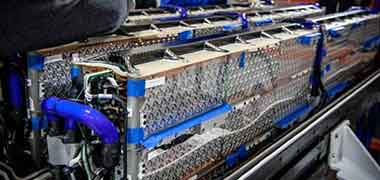
Battery pack-specific connector pin supply programs — main power disconnect connector pins; BMS 200+ signal pin arrays; inter-module connector pins; cell balancing signal pins; temperature sensor connector pins; and contactor terminal lug bodies. Volume blanket programs from 1,000 to 5,000,000+ pins annually with dedicated Swiss CNC cell allocation, CuCrZr C18150 H02 bar stock safety stock at 3-month forward inventory, and weekly releases against 6-month blanket orders.
Urban Air Mobility Powertrain
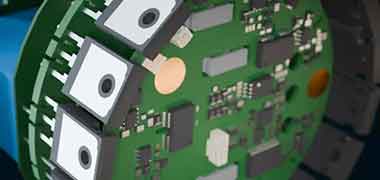
Motor drive inverter-to-motor HV connector pin programs for 800V/400V eVTOL motor drive interfaces; inverter power module connector terminal bodies; DC link capacitor connection terminal machining; SiC gate driver signal connector pin arrays; and motor controller housing HV busbar terminal programs. Silver plating programs for 800V SiC switching frequency compatibility verified by CNCPioneer's DFM for skin-effect current density at 50–200 kHz.

eVTOL Charging
MCS megawatt charging system contact terminal bodies for eVTOL vertiport charging equipment; silver-plated high-current contact terminal programs; liquid-cooled charging contact terminal bodies with coolant channel integration and 100% pressure test; charging station vehicle-side inlet contact pins; and MCS charging inlet retention mechanism structural pin programs. SAE J3068 / IEC 61851-3 MCS contact geometry per program specification.

eVTOL Battery Management System
High-density BMS signal connector pin production programs — 200+ pin arrays per connector body; ±0.020mm pitch accuracy verified by CMM on 100-pin array fixture; gold-plated 0.3–0.5μm per ASTM B488; matched lot plating for consistent contact resistance across complete 219-pin BMS signal array; per-aircraft kit tracking from pin production lot through battery build serial number. High-volume at 1,200–2,000 BMS signal pins/hour per Swiss CNC machine.

eVTOL Certification Engineering
Contact resistance and plating thickness data packages supporting DO-311A battery airworthiness substantiation; material traceability records for HV connector pin safety-critical classification; 4-wire contact resistance certification per pin lot at rated current; ASTM B117 salt spray corrosion test records per plating lot; and AS9102 FAIR on all new connector pin part numbers for eVTOL type certification programs. Dimensional data retrievable per lot for airworthiness review.
eVTOL Connector Pin Machining
Process & Capabilities
CNCPioneer's eVTOL battery connector pin and terminal machining process runs on 78+ Swiss CNC lathes with guide bushing support, 66+ MAZAK mill-turn centers, and precision CBN cylindrical grinding systems — executing the complete CuCrZr C18150 H02 Swiss CNC turning sequence from bar receiving inspection through post-plate XRF verification and 4-wire contact resistance certification.
48-Hour eVTOL Connector Pin DFM
CuCrZr C18150 H02 aging condition review from customer drawing specification · Current derating calculation at rated sealed battery pack ambient temperature · IEC 60664-1 creepage and clearance adequacy for 400V or 800V platform voltage · Gold plating thickness calculation from mating cycle life at rated contact force · Contact resistance prediction from pin OD tolerance and plating surface finish specification · Silver vs gold selection for motor drive high-frequency SiC applications · Cost-driver identification for pin body geometry and plating specification.
Swiss CNC HV Connector Pin Machining
CuCrZr C18150 H02 Swiss CNC sequence: bar receiving inspection (SII XRF composition + eddy current conductivity ≥82% IACS + HV ≥160 hardness) → rough turning at PCD 450 m/min → crimp barrel bore gun drill → semi-finish OD ±0.005mm → retention groove and keying flat machining → thermal stabilization at 20°C ± 0.5°C → finish OD at PCD 800 m/min CBN Ra 0.1μm ±0.002mm · concentricity ±0.003mm → part-off ±0.020mm length → 100% laser micrometer OD + CMM lot → plating dispatch in cleanroom PE bags per plating specification.
MAZAK Mill-Turn Bus Bar Terminal Programs
Large-format MCS contact terminal bodies, bus bar terminal bodies, and contactor terminal lug programs on 66+ MAZAK mill-turn centers and MAZAK VARIAXIS 5-axis platforms: C11000 ETP copper Ø30–80mm terminal bodies; liquid cooling channel bore ±0.050mm; O-ring groove ±0.020mm; bus bar slot or bore engagement ±0.020mm; terminal face flatness 0.005mm; bolt pattern ±0.010mm true position; 100% pressure test at 1.5× operating pressure before silver plating dispatch; plating lot XRF and contact resistance verification.
In-Process Controls
100% laser micrometer OD measurement at Swiss CNC output at 1,200+ pins/hour with automatic NC offset correction for thermal drift · BMS signal pin array pitch CMM verification on 100-pin fixture before every lot release · Roundness tester on every 100th power connector pin (any lot showing concentricity >0.004mm triggers 100% inspection until cause corrected) · Pre-plate visual inspection under 10× for machining oil residue or surface damage · Thermal stabilization 15 min at 20°C ±0.5°C before precision finish pass on all CuCrZr C18150 power connector pins.
eVTOL Connector Pin Materials
CuCrZr C18150 H02 (82% IACS eddy current verified per lot — 800V main power pins, motor drive pins, charging inlet pins) · C11000 ETP copper (100% IACS — MCS contact terminal bodies, bus bar terminal bodies, cooled static connections) · C10100 OFC (101% IACS, ultra-low outgassing — enclosed battery pack sealed contacts) · C26000 cartridge brass (BMS signal pins, temperature sensor pins, low-current connectors) · C19400 Cu-Fe-P (formed-contact and bent-contact heater pins) · C17200 BeCu AT (spring contact elements) · Ti-6Al-4V (MSD shear pins, structural retention) · 17-4PH H900 (structural connector housing elements).
AS9100D / AS9102 FAIR Documentation
AS9102 FAIR on all new eVTOL connector pin part numbers: all drawing dimensions measured at measurement uncertainty ≤10% tolerance per characteristic · SII XRF composition data per lot · Eddy current conductivity ≥82% IACS (CuCrZr) per lot · Vickers hardness HV ≥160 per lot · XRF plating thickness at ±0.2μm (gold) / ±0.3μm (silver) per plating lot · 4-wire contact resistance lot record at rated current · ASTM B117 salt spray per lot · ASTM B571 adhesion per lot · Cpk ≥1.67 on pin OD and plating thickness · AS9100D traceability from material lot through plating lot to per-aircraft kit serial number. Records retained 20 years.
Materials for eVTOL HV Connector
Pins & Terminals
eVTOL HV connector pin material selection is governed by electrical conductivity at rated current density, softening temperature for current pulse thermal resistance, tensile strength for crimping performance, and aging condition verification — CuCrZr C18150 H02 dominates 800V main power connector pins for its unique combination of 82% IACS, 550 MPa UTS, and 500°C softening temperature that no competing alloy matches.
CuCrZr C18150 H02
82% IACS · 550 MPa UTS · 500°C softening · The dominant material for 800V eVTOL main power and motor drive connector pins — the copper alloy whose combination of 82% IACS electrical conductivity, 550 MPa UTS, and 500°C continuous service temperature satisfies simultaneous 800V eVTOL power connector demands without competing alloy. H02 peak-aged condition mandatory: solution anneal 950–1,050°C, water quench, age 475–500°C × 2–4h. CNCPioneer verifies H02 aging by eddy current conductivity (≥82% IACS) + Vickers hardness (HV ≥160) per incoming lot — rejecting un-aged material (55% IACS) before any machining.
C11000 ETP Copper
100% IACS · 220 MPa UTS · 200°C softening · Chosen over CuCrZr for MCS megawatt charging contact terminal bodies and bus bar terminal bodies where: (1) liquid cooling maintains body temperature below 200°C softening threshold, removing the need for CuCrZr's thermal resistance; (2) 100% IACS (versus 82% IACS for CuCrZr) provides maximum conductivity at the largest-current interface in the eVTOL electrical system; (3) superior formability and machinability for large-diameter MAZAK mill-turn programs. XRF verified Cu ≥99.90% per lot.
C10100 Oxygen-Free Copper
101% IACS · Ultra-low outgassing · C10100 oxygen-free copper for enclosed battery pack contact bodies where trace oxygen in C11000 ETP copper can produce outgassing in sealed battery enclosures at elevated temperature. 101% IACS (marginally higher than ETP copper from reduced oxide inclusion content); identical strength and machinability to C11000. Preferred for sealed battery module internal contact terminals where electrolyte vapor accumulation and outgassing product reactions require ultra-clean copper chemistry.
C26000 Cartridge Brass
28% IACS · 525 MPa UTS · Standard material for BMS cell voltage monitoring signal pins, temperature sensor connector pins, HV interlock loop pins, and all low-current eVTOL connector pins where signal voltage measurement — not current carrying — determines electrical performance requirements. Contact resistance ≤50 mΩ adequate for millivolt-level BMS cell voltage signal (50 mΩ × (0.005A)² = 0.00000125W negligible heat generation). Excellent machinability for high-volume Swiss CNC BMS pin array programs at 1,200–2,500 pins/hour and ±0.003mm OD accuracy.
C19400 Cu-Fe-P
65% IACS · 450 MPa UTS · 300°C softening · Copper-iron-phosphorus alloy for formed-contact connector pins and bent-contact heater connector pins requiring higher formability than CuCrZr provides during connector pin body bending operations. 65% IACS (versus 82% IACS for CuCrZr — acceptable for lower-current thermal management connector pins at 20–80A heater circuits). Machined on MAZAK VARIAXIS 5-axis platforms for bent-pin connector body geometries with contact bend ±0.020mm. Preferred over CuCrZr in connector designs requiring post-machining forming operations.
C17200 BeCu AT
22% IACS · 1,380 MPa UTS · 400°C softening · Beryllium copper in the peak-aged AT condition for spring contact elements, contact force springs inside connector housing, and self-retaining spring clips at HV connector mating interfaces. BeCu AT's 1,380 MPa UTS and elastic recovery behavior produce spring force that is stable across 10,000+ mating cycles and through the −20°C to +60°C operating temperature range of eVTOL battery packs. Note: BeCu machining requires Be dust control protocols (OSHA-compliant); limited to machining operations where substitute spring alloys (C17500 BeCu-Co) cannot meet the force specification.
Ti-6Al-4V AMS 4928
950 MPa UTS · Structural only · Ti-6Al-4V for Manual Service Disconnect (MSD) shear pins and structural connector retention hardware in eVTOL battery HV bus isolation systems. The MSD shear pin is NOT a current-carrying element — it is a structural element that breaks at a designed shear force when struck by a maintenance tool, providing positive open-circuit HV bus isolation with visual confirmation. Shear section diameter ±0.050mm governing consistent shear force per design specification. Ti-6Al-4V chosen for its specific shear energy absorption behavior — not its conductivity. Non-magnetic (μᵣ ≈ 1.0005).
Plating Programs for
eVTOL Battery Connector Pins
eVTOL HV connector pin plating selection addresses application-specific contact resistance stability, mating cycle life, operating current density, and corrosion resistance in sealed battery enclosures — hard gold for standard HV connector pins, fine silver for MCS-scale and motor drive contacts, and Sn-3%Ag for inter-module connectors requiring fretting corrosion resistance.
Hard Gold — Primary eVTOL HV Connector Standard
Hard gold (cobalt-hardened Au-Co 0.1–0.3% Co) per ASTM B488 Class 1 Type I is the primary plating for eVTOL battery main power connector pins, BMS signal pin arrays, and charging inlet contacts. Gold's zero tarnish (negative oxide formation energy), metallic contact resistance stability across aviation temperature and humidity environments, and proven eVTOL battery enclosure corrosion immunity make it the standard specification. Thickness programs: 0.3–0.5μm for BMS signal pins (2,000-cycle mating life); 0.8–1.5μm for 800V main power connector pins (3,000–5,000-cycle life); 1.5–3.0μm for charging inlet contacts (10,000-cycle daily charging life). All programs on 3–5μm nickel-phosphorus undercoat per MIL-C-26074. XRF thickness verification at 3 positions per pin, ±0.2μm acceptance criterion, every plating lot.
Fine Silver — MCS & Motor Drive Contacts
Fine silver per ASTM B700 is specified for MCS megawatt charging contact terminal bodies and motor drive connector pins where silver's superior properties over gold are decisive: (1) resistivity — silver 1.59×10⁻⁸ Ω·m is 53% lower than gold's 2.44×10⁻⁸ Ω·m, directly reducing skin-effect surface resistance at 800V SiC switching frequencies of 50–200 kHz; (2) thermal conductivity — silver 429 W/m·K versus gold 317 W/m·K provides better heat extraction at MCS-scale contact current densities (1,000A per contact pair); (3) cost — 60% less per μm than gold plating for the large surface areas of MCS terminal bodies. Thickness: 5–10μm for motor drive pins; 10–25μm for MCS contact terminal bodies. Anti-tarnish treatment per ASTM B809 for sealed storage. Contact resistance ≤0.5 mΩ at 1,000A (MCS) and ≤2 mΩ at 90A per phase (motor drive). All programs on 3–5μm electrolytic nickel undercoat per MIL-C-14538.
Sn-3%Ag Tin-Silver — Inter-Module Fretting Resistance
Sn-3%Ag tin-silver alloy plating (97% Sn, 3% Ag) for inter-module battery connector pins that experience fretting from differential thermal expansion between adjacent cell modules. Battery cell temperatures swing 20–40°C during charge/discharge cycling, producing module-to-module differential displacement of 0.02–0.10mm — creating micro-slip at the connector interface that causes fretting corrosion on standard tin plating. SnAg advantages over pure tin: 3–5× lower fretting corrosion rate at ±50μm oscillating contact amplitude from higher alloy hardness (HV 40–60 versus HV 5–10 for tin); fretting corrosion product (SnO₂ + Ag₂O) contact resistance 3–5× lower than pure tin oxide product. Thickness: 3–8μm SnAg on 2μm nickel undercoat per ASTM B545. XRF thickness verification per plating lot. Contact resistance ≤10 mΩ for 50A inter-module connector current.
All eVTOL battery connector pin plating programs include: XRF plating thickness verification at 3 positions per pin (10 pins per production lot; 100% for prototype programs); ASTM B571 adhesion tape test per lot sample; 4-wire contact resistance milliohmmeter verification at rated contact force per plating lot; ASTM B117 salt spray (96h minimum gold; 500h for main power pins; 1,000h for enhanced qualification); visual inspection under 10× for pinholes, edge burning, and coverage at pin body-to-retention-feature transitions.
Quality Assurance
AS9100D Quality System for
eVTOL Battery Connector Pins
eVTOL battery connector pins are primary electrical safety components — their failure produces loss of power to propulsion with potentially catastrophic aircraft-level consequences. CNCPioneer's AS9100D quality system provides the material traceability, in-process control, post-plate verification, and airworthiness documentation that flight-critical HV connector pin programs require.
Material Verification
SII XRF composition verification on every lot: CuCrZr (Cr 0.5–1.5%; Zr 0.03–0.30%; Cu balance); C11000 (Cu ≥99.90%); C26000 (Cu 68.5–71.5%). Eddy current conductivity meter: CuCrZr H02 ≥82% IACS per lot — the most critical quality gate; un-aged material (55–65% IACS) rejected before machining. Vickers hardness: CuCrZr H02 HV ≥160. EN 10204 3.1 certificate archived per lot with traceability to pin production lot and per-aircraft kit serial number.
- SII XRF composition per lot
- Eddy current conductivity ≥82% IACS (CuCrZr)
- Vickers hardness HV ≥160 per lot
- EN 10204 3.1 certificate archived
In-Process Controls
100% laser micrometer OD at Swiss CNC output at 1,200+ pins/hour with automatic NC offset correction for thermal drift (spindle warming produces 0.002–0.005mm OD drift over 2-hour runs if uncompensated). BMS signal pin array pitch CMM on 100-pin fixture before each lot release (±0.020mm). Concentricity roundness tester every 100th power pin; any lot >0.004mm triggers 100% inspection. Thermal stabilization 15 min at 20°C ±0.5°C before precision finish pass.
- 100% laser micrometer OD at machine output
- Automatic NC offset correction for thermal drift
- BMS array pitch CMM (±0.020mm) per lot
- Concentricity roundness tester per 100th power pin
Post-Plate Verification
XRF plating thickness: 3 positions per sample, 10 pins per production lot, 100% for prototypes; gold ±0.2μm; silver ±0.3μm. 4-wire milliohmmeter contact resistance at rated force: power pins ≤1 mΩ; signal pins ≤50 mΩ; 10 pins per plating lot. ASTM B571 tape adhesion on 5 pins per lot. ASTM B117 salt spray: 96h minimum (gold); 500h for main power pins. Visual under 10×: no pinholes, no edge burning, uniform coverage at body-to-retention-feature transitions.
- XRF thickness ±0.2μm (Au) / ±0.3μm (Ag) per lot
- 4-wire contact resistance ≤1 mΩ at 200A per lot
- ASTM B117 salt spray 96–1,000h per application
- ASTM B571 adhesion per lot
FAIR & AS9100D Documentation
AS9102 FAIR on all new eVTOL connector pin part numbers: all drawing dimensions measured at measurement uncertainty ≤10% per characteristic. Material certification (SII XRF data, conductivity, hardness). Plating lot certificate (XRF thickness, adhesion, salt spray). Contact resistance lot record. Traceability from material lot → production lot → plating lot → per-aircraft kit serial number. Records retained 20 years. Cpk ≥1.67 on pin OD and plating thickness for all eVTOL battery connector production programs.
- AS9102 FAIR on all new part numbers
- Cpk ≥1.67 on pin OD and plating thickness
- AS9100D traceability: material → kit serial number
- Records retained 20 years for airworthiness review
eVTOL Battery Connector Pin & Terminal Machining FAQ
Common questions from eVTOL aircraft manufacturers, battery pack OEMs, urban air mobility powertrain integrators, MCS charging infrastructure developers, and eVTOL certification engineering partners about CNCPioneer's 800V eVTOL battery connector pin machining capability, CuCrZr material engineering, plating programs, and volume supply economics.
The convergence on 800V battery architecture reflects the compounded advantage of higher voltage across four competing engineering constraints that define commercial air taxi economics: charging time, power density, wiring mass, and thermal management complexity. The most fundamental driver is charging time: commercial eVTOL economics require 8–12 flights per day at typical 20-minute air taxi missions, necessitating 5-minute or less battery recharging at the vertiport. For a 150 kWh battery pack to recharge to 80% SOC in 5 minutes: charge power = 1,440 kW. At 400V nominal, charge current = 3,600A — exceeding any practical connector technology. At 800V: 1,800A — achievable with MCS liquid-cooled contact technology. Secondary drivers: wiring mass halves from voltage doubling (I²R constant; cross-section quartered at same loss); 800V SiC inverters achieve 98–99% versus 97–98% for 400V silicon IGBTs; and BMS cell count doubles (800V/3.65V per cell = 219 series cells versus 110 for 400V), requiring 219+ BMS signal pins per battery pack connector array — the high pin-count BMS array programs unknown in automotive EV applications. Connector pin machining implications of 800V versus 400V: identical pin OD and current-carrying capacity per motor (current, not voltage, governs pin contact area); however, IEC 60664-1 creepage and clearance distances increase (0.8mm clearance at 800V versus 0.4mm at 400V) requiring larger insulator land geometry on 800V pin bodies; and 800V SiC high switching frequency (50–200 kHz) makes silver plating preferred over gold for motor drive connector pins from skin-effect current density considerations — the motor drive application-specific plating switch that CNCPioneer's 48-hour DFM identifies for every 800V SiC inverter connector pin program.
The required aging condition for CuCrZr C18150 in 800V eVTOL main power connector pins is the H02 peak-aged condition: solution anneal at 950–1,050°C, water quench, followed by precipitation aging at 450–500°C for 1–4 hours. H02-aged CuCrZr has Cr₂ and ZrO₂ precipitates dispersed uniformly through the copper matrix — simultaneously increasing hardness (HV 160–180 from H02 versus HV 100–110 from solution-annealed) and restoring electrical conductivity to 82% IACS (versus 55% IACS from solution-annealed, where Cr and Zr atoms held in supersaturated solution scatter conduction electrons). The failure mode from un-aged CuCrZr is contact spot thermal runaway: un-aged CuCrZr at 55% IACS has 45% higher electrical resistivity, producing 45% higher I²R heating per unit volume at rated current. At the contact surface where current density is extremely high (Hertz contact stress concentrates current in contact spots of 0.1 mm² area), the local current density reaches 2,000,000 A/m² — local power density ρ × J² = 13% higher for un-aged than H02-aged. The contact spot temperature rise is 13% higher, pushing the contact spot toward the un-aged CuCrZr's 200°C softening temperature (versus 500°C for H02-aged). Once contact spot temperature reaches the softening threshold, the contact spot plastically deforms, reducing contact force, increasing contact resistance (higher R → more heat → more softening → lower force → higher R) — a positive feedback thermal runaway that produces permanently elevated contact resistance and loss of battery pack HV bus connection. CNCPioneer verifies H02 aging condition by eddy current conductivity meter (≥82% IACS) and Vickers hardness (HV ≥160) on every incoming CuCrZr C18150 lot before any eVTOL connector pin machining — the quality gate preventing un-aged material from reaching flight-critical battery connector programs.
Gold plating thickness for eVTOL connector pins is determined by the mating cycle life requirement for each connector's maintenance and operational cycling context, following the empirical correlation N_cycles ≈ k × (t_gold)^1.3 × (F_contact)^0.7 where t_gold is plating thickness and F_contact is contact normal force. Application-specific calculations: BMS signal pins (removed only at battery major maintenance — 500 mating cycles over 10-year battery life; contact force 0.5N): minimum t_gold = 0.138μm; specification 0.3μm provides 2.2× safety factor for BMS signal pins. Main power battery disconnect connector (removed at each battery pack replacement — 3,000 cycles over commercial aircraft battery replacement schedule; contact force 5N): minimum t_gold = 0.174μm; CNCPioneer specifies 0.8μm as standard, providing 4.6× safety factor appropriate for the flight-safety consequence of battery main power disconnection failure. Charging inlet connector (daily charge cycling — 10,000 mating cycles; contact force 2N): minimum t_gold = 0.781μm; specification 1.5μm provides 1.9× safety factor appropriate for the external environment exposure of charging inlet contacts versus sealed interior battery contacts. The progression 0.3μm → 0.8μm → 1.5μm across BMS signal → main power → charging inlet reflects the combined effect of increasing mating cycle count, increasing contact force (higher force reduces required thickness from better contact area), and increasing consequence of plating wear-through. CNCPioneer's 48-hour DFM calculates the required gold plating thickness for every new eVTOL connector pin program from the customer's stated mating cycle specification and connector contact force, confirming the plating specification before machining commitment — the calculation the customer's own drawing specification may not have completed if inherited from automotive EV connector specifications designed for 400V/100-cycle-life automotive programs.
Lead times at CNCPioneer for eVTOL battery connector pin programs: CuCrZr C18150 H02 main power HV connector pin (Ø12mm, gold-plated, 25-piece prototype kit) — 5–7 business days including coordinated plating; C11000 ETP copper MCS contact terminal body (liquid-cooled, silver-plated, 10-piece) — 7–10 business days; BMS signal pin array (219-pin set, gold-plated, pitch-verified) — 5–8 business days; motor drive 3-phase connector pin set (36-pin per aircraft, silver-plated) — 5–7 days; complete per-aircraft connector kit (all 847 pins + terminals, coordinated gold/silver/SnAg plating) — 10–14 business days. Volume economics: CuCrZr main power HV connector pin (Ø14mm, gold): prototype $55/pin → 100,000/year $8.50–$10/pin → 2M+/year $4.60–$6.80/pin. BMS signal pin (Ø1.2mm, gold): prototype $4.50/pin → 5M/year $0.65–$0.95/pin → 50M+/year $0.38–$0.52/pin. Complete 847-pin kit: prototype approximately $12,500/kit → 2,000 packs/year approximately $3,200/kit → 50,000 packs/year approximately $1,850/kit. Battery pack BOM context: a 150 kWh / 800V eVTOL battery pack at commercial production has approximate BOM: cells at $85–$120/kWh = $12,750–$18,000; battery management electronics $800–$1,500; thermal management $600–$1,200; structural enclosure $400–$800; machined connector pins and terminals = $1,850–$2,370. Connector pin kit at $2,000 = 8–12% of total battery pack BOM. The 40–60% cost reduction from CNCPioneer versus US/European precision connector machining ($3,300–$4,800 per kit at equivalent volume) represents $1,300–$2,800 per pack savings — at 50,000 packs/year, $65M–$140M annual connector pin cost reduction matching the magnitude of cell chemistry cost improvements.
A 4-passenger commercial eVTOL with six 60kW motors and one 150kWh battery pack requires approximately 847 machined connector pins and terminals per battery pack: 12 main power HV connector pins (Ø14mm, gold-plated, 800V/200A) + 438 BMS signal pins (219 × 2 packs, gold-plated) + 36 motor drive AC connector pins (3-phase × 12 motors, silver-plated) + 219 inter-module connector pins (SnAg-plated) + 120 thermal management connector pins (temperature sensor and heater) + 22 miscellaneous (interlock, emergency disconnect, MSD shear pins) + bus bar terminals and MCS contact bodies. CNCPioneer coordinates all pin types across simultaneous gold, silver, and SnAg plating programs in a single coordinated plating schedule, delivering the complete 847-pin kit with all plating types in 10–14 business days for prototype and weekly releases for volume programs. Kit documentation per build serial number includes: per-pin-type laser micrometer OD records; XRF plating thickness lot records by plating type; 4-wire contact resistance lot records per plating lot; material lot certificates with SII XRF composition and eddy current conductivity data; AS9100D traceability from material lot through plating lot to per-aircraft kit serial number; CoC covering all 847 pins and terminals per kit. Pins sorted and packaged in identified sub-bags per connector assembly, enabling the battery pack assembler to verify kit completeness before assembly start. For volume programs, kit packing provides pre-counted, per-aircraft quantities ready for assembly line consumption without additional counting or sorting.
Get a Quote for eVTOL Battery Connector Pin & Terminal Machining
Upload your eVTOL battery connector pin drawings, HV connector specifications, or battery pack electrical architecture documentation and receive a competitive quotation within 24 hours and a complete 48-hour DFM review — covering CuCrZr C18150 H02 aging condition specification, gold vs silver plating selection, plating thickness from mating cycle life calculation, contact resistance prediction, IEC 60664-1 creepage and clearance adequacy, Swiss CNC capacity planning for your annual pin volume, and coordinated gold, silver, or SnAg plating through AS9100D qualified partners with XRF and ASTM B117 records.