
eVTOL Battery Thermal
Management Fittings & Valve Cores
CNCPioneer is an AS9100D and IATF 16949 certified eVTOL battery thermal management fitting and valve core machining specialist delivering coolant distribution manifold bodies, ball valve cores, quick-disconnect coupling bodies, needle valve cores, check valve bodies, PEEK inter-module jumper bodies, and bypass valve housings — with valve core OD ±0.003mm, flow-balancing orifice bore ±0.005mm, valve seat bore ±0.005mm, O-ring groove ±0.010mm depth (Kalrez) / ±0.015mm (EPDM), and Ra ≤0.4μm coolant wetted surfaces on 66+ MAZAK mill-turn centers and 78+ Swiss CNC lathes since 2011.
What Is eVTOL Battery Thermal
Management Fitting Machining?
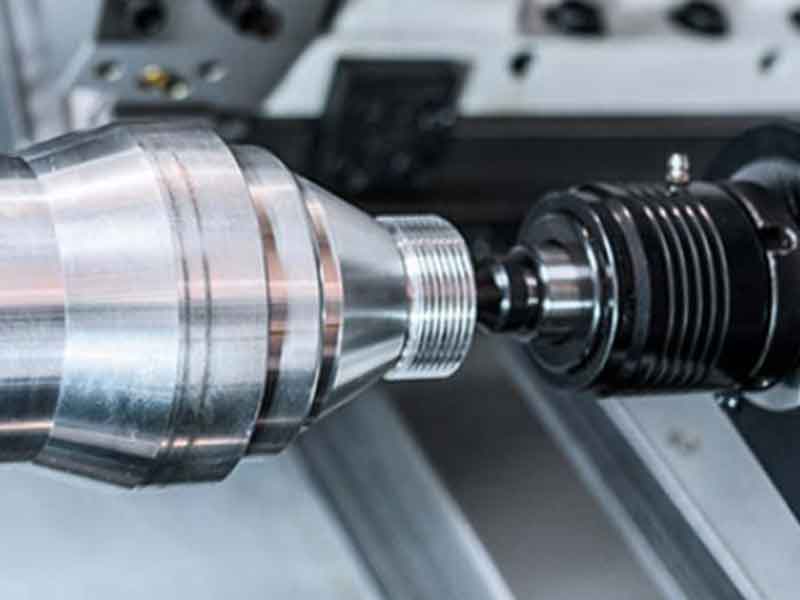
eVTOL battery thermal management fitting and valve core machining is the precision CNC manufacturing process — executed on MAZAK mill-turn centers, Swiss CNC turning systems, MAZAK VARIAXIS 5-axis platforms, and cylindrical grinding equipment — that produces the fluid connection bodies, flow control elements, manifold distribution bodies, and thermal circuit management components of the liquid cooling systems that maintain eVTOL battery packs within the narrow temperature window governing battery life, safety, and performance.
Commercial eVTOL battery packs must satisfy four simultaneous thermal requirements that create the most demanding battery thermal management specification in any transportation application: operating temperature 20–40°C for optimal lithium-ion cell chemistry; cell temperature uniformity ΔT ≤2°C between hottest and coldest cell at peak discharge; rapid charge thermal management at 1,800–2,500A charge currents during 5-minute vertiport turn-around charging (generating up to 473 kW total pack heat load); and thermal runaway containment capability. The machined fittings and valve cores — manifold bodies, quick-disconnect couplings, ball valve cores, check valves, and flow distribution fittings — are the precision components that determine whether the cooling system achieves designed flow distribution, pressure rating, thermal resistance, and leak-free operation across the full eVTOL battery service life.
-
Flow-balancing orifice precision governs ΔT ≤2°C Manifold body orifice bore accuracy ±0.005mm limits branch flow variation to ±0.4% per orifice via Q ∝ D⁴ — contributing only ±0.09°C to cell temperature non-uniformity from machining variation alone, leaving 95% of the 2°C budget for thermal and hydraulic design factors.
-
100% pressure decay leak test on every manifold body A leaking coolant fitting in an 800V eVTOL battery pack is a safety-critical failure — coolant reaching HV bus bars can produce arc faults with energy release from a 150+ kWh battery. CNCPioneer's 100% pressure decay protocol (1.5× rated coolant pressure, 30-second hold, zero decay acceptance) ensures no leaking component ships to battery pack OEM.
-
48-hour eVTOL thermal DFM on every inquiry Every cooling fitting inquiry receives a thermal requirements DFM covering coolant flow rate adequacy, temperature uniformity from parallel flow path resistance matching, thermal runaway containment flow analysis, and coolant material compatibility verification — positioning CNCPioneer as a thermal management engineering partner, not merely a drawing-to-part shop.
-
40–60% China eVTOL cooling fitting cost advantage 40–60% below US and European precision fluid component manufacturers at equivalent material compliance, leak test documentation, and dimensional accuracy — the structural cost reduction enabling eVTOL battery pack OEMs to achieve cooling system BOM targets for commercial air taxi economics at $5,335 per-pack thermal fitting kit versus $11,000–$14,500 from comparable Western suppliers.

Why CNCPioneer for eVTOL Battery
Thermal Management Fittings?
Among eVTOL battery thermal management fitting and valve core machining suppliers globally, CNCPioneer's eVTOL-specific thermal engineering DFM, 100% pressure decay leak testing, coolant compatibility expertise, valve core precision, quick-disconnect coupling programs, and China cost advantage establish our factory as the preferred thermal management fitting partner across the full eVTOL battery supply chain.
eVTOL Thermal Requirements Engineering as Standard DFM
Every cooling fitting inquiry receives a 48-hour thermal requirements DFM assessment covering: coolant flow rate adequacy from manifold passage diameter and battery pack peak heat load (cell resistance × discharge current² × cell count); temperature uniformity analysis from parallel flow path resistance matching (all cell module cold plates must receive equal coolant flow for ΔT ≤2°C — requiring manifold flow balancing orifice specification); thermal runaway containment assessment from coolant flow rate versus thermal runaway power output (a single 50 Ah NMC cell in runaway releases approximately 100 kJ in 60–120 seconds); and coolant compatibility verification for every proposed material.
100% Pressure Decay Leak Testing — Safety Standard
CNCPioneer's 100% pressure decay test protocol (every manifold body, every valve housing body, every QD coupling body tested at 1.5× rated coolant pressure for 30 seconds with zero decay acceptance) represents the minimum leak test standard for eVTOL battery cooling hardware. 100% testing — not sampling — ensures no leaking component ships to the battery pack OEM. Leak test records per serial number are archived in CNCPioneer's AS9100D quality system for traceability in the event of field coolant leak investigation. NIST-traceable pressure transducer ±0.005 bar on every test fixture.
Coolant Compatibility Material Selection
eVTOL battery thermal management systems use DI water (18 MΩ·cm), propylene glycol-water (PGW), Galden PFPE, and Novec fluids — each imposing specific material, surface treatment, and sealing requirements. DI water requires 316L electropolished stainless (C ≤0.030% XRF verified) or 6061-T6 with 10–12% P electroless Ni-P; Galden requires FFKM (Kalrez) O-rings and makes standard NBR/EPDM/silicone incompatible; PGW at pH 8–10 attacks unprotected aluminum. CNCPioneer's 48-hour DFM maps every proposed material against the customer's specified coolant chemistry — preventing the material compatibility failures that destroy cooling systems after months of operation.
Valve Core Precision for Thermal Control Accuracy
Ball valve cores and needle valve cores in eVTOL battery thermal management circuits control coolant flow to individual cell module cold plates, bypass circuits, and heater circuits for cold-weather battery preconditioning. Valve core OD accuracy ±0.003mm governs the sealing contact force between ball or needle and its seat — undersized valve core reduces contact stress below the minimum for leak-free sealing; oversized core binds in valve body bore under thermal expansion at high coolant temperature, preventing valve actuation during rapid charge. CNCPioneer's Swiss CNC valve core programs achieve ±0.003mm OD from guide bushing support across L/D >5:1 valve core lengths.
Quick-Disconnect Coupling Body Programs
Commercial eVTOL battery packs will be removed and replaced at vertiports during aircraft line maintenance — the rapid-swap battery service model enabling 5-minute vertiport turn-around. The QD coupling must mate and de-mate in under 10 seconds without tools, seal immediately upon mating, and withstand 500+ mate-unmate cycles at rated coolant pressure. CNCPioneer's QD coupling body programs machine poppet housing, poppet seat, poppet guide bore, and locking ring engagement geometry to seat bore ±0.005mm; poppet OD ±0.003mm; Kalrez groove ±0.010mm depth — the dimensional accuracy achieving designed coupling force, sealing performance, and cycle life.
China eVTOL Cooling Fitting Cost Advantage
Precision battery thermal management fittings and valve cores from US and European precision fluid component manufacturers cost 40–60% more than CNCPioneer's AS9100D-equivalent programs at identical material compliance, leak test documentation, and dimensional accuracy. At 2,000 packs/year: complete per-pack thermal management fitting kit at $5,335/pack versus $11,000–$14,500 from US/European suppliers — a $14,830,000+ annual procurement cost reduction for eVTOL battery pack OEMs on their third-largest BOM category after cells and BMS electronics. 24-hour quotation on all eVTOL battery thermal management fitting inquiries.
eVTOL Thermal Management
Components We Manufacture
CNCPioneer's eVTOL battery thermal management fitting and valve core programs cover the complete cooling circuit hardware portfolio — from 316L electropolished manifold bodies with ±0.050mm internal passage accuracy and 100% pressure decay leak test certification through TC4 ball valve cores at ±0.003mm OD with Ra ≤0.4μm dynamic seal surface — for DI water, Galden PFPE, Novec, and PGW cooling circuits.

Coolant Distribution Manifold Bodies
Cell module distribution manifold bodies delivering equal coolant flow to all parallel cold plate circuits — the most hydraulically critical component in the eVTOL battery thermal management system. Header bore ±0.050mm; flow-balancing orifice bores ±0.005mm from C-axis indexed program (all orifices from one program, inter-orifice consistency ±0.003mm); branch port O-ring groove ±0.020mm width/±0.010mm depth (EPDM) or ±0.010mm/±0.008mm (Kalrez for Galden programs); port thread ±0.005mm BSP/NPT/SAE-AN; Ra ≤0.4μm all wetted surfaces. Materials: 316L EP stainless (DI water); 6061-T6 + Ni-P (DI water/PGW); 6061-T6 anodize (Galden/PGW); PEEK (dielectric programs). 100% pressure decay test per serial number.

TC4 Ball Valve Cores
Spherical TC4 AMS 4928 ball valve cores for eVTOL battery thermal management bypass circuits, cell module isolation, heater/cooler switching, and flow control. Ball OD ±0.003mm; sphericity ±0.003mm verified at 12 measurement positions on roundness tester (3 meridians × 4 latitudes); Ra ≤0.2μm on ball OD from CBN grinding for clean sealing interface with PTFE or Kalrez seat; port bore ±0.100mm with 0.3×30° chamfer (no sharp edge cutting PTFE seat during rotation); stem flat angular position ±0.010° from port bore axis. DLC coat 1–2μm optional for maximum seating surface hardness and wear resistance at high cycle count programs. 25–10,000 piece programs.

Quick-Disconnect Coupling Bodies
Poppet-style QD coupling body pairs for battery pack-to-aircraft coolant circuit connection supporting 5-minute vertiport turn-around battery swap — mate/de-mate in under 10 seconds without tools, 500+ mate-unmate cycle life at rated coolant pressure. Poppet valve bore ±0.003mm H7; poppet seat frustum cone ±0.25° included angle, Ra ≤0.4μm; poppet OD (guide section) ±0.003mm h6, Ra 0.2μm; Kalrez O-ring groove ±0.010mm width/±0.010mm depth; locking ring groove ±0.020mm width; bayonet locking geometry ±0.020mm. 5-axis machining for compound vent path geometry in break-before-make coupling bodies. Material: TC4 AMS 4928. 100% pressure decay test per coupling pair.

Needle Valve Cores & Check Valve Bodies
Needle valve cores for variable flow rate control in cell module cold plate balancing, heater bypass circuits, and prototype thermal management programs: cone half-angle ±0.25°; guide OD ±0.003mm h6, Ra 0.2μm; cone Ra ≤0.2μm, no runout between tip and guide OD axes ±0.003mm; stem thread pitch diameter ±0.005mm. Check valve bodies (316L stainless for DI water/PGW; PEEK for fully dielectric programs) for anti-backflow protection in cooling circuits: ball check seat angle ±0.25°, Ra ≤0.4μm; spring seat flatness 0.010mm; cracking pressure spring seat position ±0.100mm. 100% pressure decay test on all valve bodies.

PEEK Inter-Module Coolant Jumper Bodies
High-volume PEEK inter-module coolant jumper bodies connecting adjacent cell module cold plates within the battery pack — the highest-quantity fitting type per pack (220+ pieces per 1,314-cell pack). PEEK Victrex 450G (FTIR virgin grade confirmed; zero metallic ion contribution to DI water; fully dielectric; compatible with all eVTOL coolants). Body OD ±0.020mm for push-fit O-ring seal; bore Ra ≤0.4μm; sealing face flatness 0.020mm; wall FEA verified at 3.5 bar rated × 4× safety factor. High-volume Swiss CNC program: 800–1,200 parts/hour at Ø12mm jumper; automated OD verification integrated with output; 100% pressure test per body. 220-piece per-pack kit supply with cleanroom packaging and particle cleanliness verification.

Bypass Valve Housings & System Fittings
Three-way bypass valve housing bodies for heater/cooler mode switching (port A–B–C bore network inter-port positions ±0.050mm from single MAZAK program; disc valve seat 45° ±0.25°; actuator interface ±0.010mm); thermostat valve housing bodies (thermostat element bore ±0.050mm); pressure relief valve bodies; coolant filter housing bodies. Battery pack inlet/outlet fitting bodies (ORFS face seal flatness ±0.010mm; BSP/NPT/SAE-AN thread ±0.005mm); fill/drain/bleed port fittings; thermal expansion compensation fitting end bodies; TC4 thermal runaway emergency bypass manifolds (TC4 for 500°C service temperature resistance). All fitting bodies 100% pressure decay tested; FAIR per AS9102.
Industries & Applications
CNCPioneer's eVTOL battery thermal management fitting and valve core programs serve every organization developing, manufacturing, certifying, or operating eVTOL aircraft and battery systems — from aircraft-level thermal management design through vertiport ground support infrastructure and DO-311A certification substantiation.
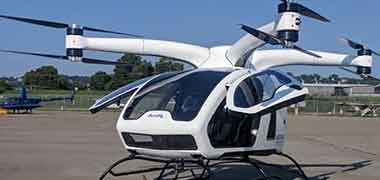
eVTOL Aircraft
Complete battery thermal management fitting and valve programs for aircraft-level cooling system design — battery pack-to-aircraft QD coupling programs; three-way bypass valve housing programs for heater/cooler switching; emergency thermal runaway bypass manifold programs in TC4 for 500°C thermal resistance; and complete per-aircraft thermal management fitting kit supply under AS9100D documentation and DO-311A-compatible test records.
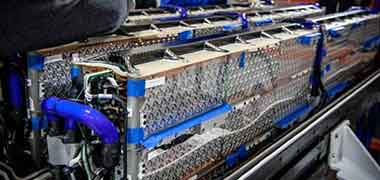
eVTOL Battery Pack
Pack-level thermal management hardware supply for eVTOL battery pack manufacturing — cell module distribution manifold bodies with flow-balanced orifices; PEEK inter-module coolant jumper bodies (220+ per pack); pack inlet/outlet fitting bodies; ball valve cores; check valve bodies; thermal expansion compensation fitting bodies; fill/drain/bleed fittings; and per-pack complete thermal fitting kit supply with pressure test records per serial number and particle cleanliness certification.

Urban Air Mobility Thermal
Thermal management system integrators designing cooling architectures for eVTOL powertrains — manifold body precision boring programs for custom flow distribution architectures; valve core programs for thermal bypass and mode switching; combined battery-motor-inverter thermal management manifold programs integrating multiple heat rejection loads in one machined body. Custom multi-directional port manifold bodies from 5-axis MAZAK VARIAXIS programs in one setup.

Electric Air Taxi Battery System
Battery system engineering teams developing eVTOL battery packs for multiple aircraft platforms — CNCPioneer's 48-hour DFM service supporting thermal management design iteration across platforms: flow balance analysis for manifold port geometry, pressure rating FEA for PEEK component wall specification, Kalrez O-ring groove tolerance for Galden programs, valve core OD and sphericity specification for body bore and seating pressure, and complete per-pack fitting BOM thermal and mechanical analysis.

eVTOL Vertiport Ground Support
Vertiport charging and battery swap infrastructure builders — MCS ground charging station coolant circuit fitting programs for liquid-cooled charging cable connectors; battery swap station coolant supply manifold programs; vertiport cooling fluid management valve programs; and ground-side QD coupling body programs mating to aircraft-side QD couplings for battery pack rapid swap service. Ground support equipment fitting programs under IATF 16949 documentation.

eVTOL Certification Engineering
Certification support firms providing thermal management substantiation for DO-311A battery airworthiness — CNCPioneer provides pressure test certification records per serial number; orifice diameter production Cpk data supporting flow balance temperature uniformity calculation; material compliance documentation (316L C content, Ni-P phosphorus content, PEEK FTIR virgin confirmation); and ASTM E595 outgassing compliance chain for enclosed battery pack thermal management hardware.
eVTOL Cooling Fitting Machining
Process & Capabilities
CNCPioneer's eVTOL battery thermal management fitting and valve core machining runs on 66+ MAZAK mill-turn centers, MAZAK VARIAXIS 5-axis simultaneous machining platforms, 78+ Swiss CNC lathes, and precision cylindrical grinding systems — with 316L solution-annealed bar and TC4 AMS 4928 safety stock, electropolish coordination integrated in 316L manifold supply chains, and dedicated capacity for monthly blanket order releases.
48-Hour Thermal Engineering DFM
Coolant flow balance analysis for manifold port geometry (orifice diameter calculation for ΔT ≤2°C cell temperature uniformity at rated coolant flow and peak charge rate) · Coolant material compatibility verification for every fitting material against DI water / Galden / Novec / PGW · O-ring material and groove dimension specification for Kalrez (Galden) or EPDM/PTFE-encapsulated (DI water/PGW) · Valve core OD and sphericity specification for valve body bore tolerance and seating pressure · QD coupling poppet geometry analysis for target mate-unmate force and cycle life · Pressure rating wall thickness FEA for PEEK and aluminum fitting bodies · Particle cleanliness specification (SEMI F57 adapted for eVTOL battery DI water cooling) · ASTM E595 TML compliance pathway for enclosed battery pack programs.
MAZAK Mill-Turn Manifold Body Programs
316L manifold machining sequence: SII XRF material verification → rough bore (main header bore, carbide, 50-bar through-spindle coolant) → thermal stabilization 20 min at 20°C ±1°C → header bore finish (±0.050mm, Ra ≤0.4μm, wiper insert) → branch port finish bores and flow-balancing orifices (C-axis indexed, ±0.005mm, CMM after first and last orifice) → O-ring groove machining (±0.020mm width/±0.010mm depth for EPDM; ±0.010mm/±0.008mm for Kalrez) → port thread machining (±0.005mm) → 100% pressure decay test (1.5× rated, 30s, zero decay, NIST-traceable transducer) → electropolish coordination (DI water programs: Ra ≤0.25μm; ASTM E595 TML ≤0.010%) → particle cleanliness verification (≤50 @0.2μm per liter for DI water manifold lots).
Swiss CNC Ball Valve Core & Poppet Programs
TC4 ball valve core sequence: SII XRF + hardness verification → Swiss CNC rough turning (PVD carbide, v_c = 60 m/min, guide bushing at L/D = 3:1) → port bore rough → thermal stabilization 15 min → ball OD rough grinding (CBN, between centers, +0.050mm stock, Ra 0.8μm) → port bore finish (±0.100mm, Ra ≤0.4μm, 0.3×30° chamfer) → ball OD precision grinding (CBN plunge, 0.001mm/pass ×20 passes; OD ±0.003mm; Ra 0.2μm; sphericity ±0.003mm at 12 positions on roundness tester) → stem flat C-axis milling (±0.010° from port bore axis) → DLC coat option (1–2μm PVD, pre-DLC OD target, post-DLC air gauge) → CMM full inspection + mass ±0.1g. Needle valve cores and QD poppets on same Swiss CNC lines.
5-Axis Complex Manifold & Compact Housing Programs
MAZAK VARIAXIS 5-axis simultaneous machining for: multi-directional port manifold bodies (all port bores from one manifold datum regardless of port orientation; inter-port position ±0.030mm from one setup versus ±0.200mm from multi-setup rechucking) · integrated thermal-structural manifold bodies (coolant distribution + structural load — structural pocket geometry + precision coolant port network from single 5-axis program maintaining ±0.050mm feature-to-port position accuracy) · compact multi-function manifold bodies in constrained pack volumes · break-before-make QD coupling bodies with compound vent path geometry ±0.020° · TC4 thermal runaway emergency bypass manifold bodies.
Coolant-Compatible Material Programs
316L solution-annealed stainless (C ≤0.030% XRF verified; EN 10204 3.1; EP Ra ≤0.25μm; ASTM E595 TML ≤0.010% — DI water circuits and all coolants) · 6061-T6 + electroless Ni-P 5–8μm 10–12%P high-phosphorus (DI water circuits; Ni-P composition wet chemistry verified per plating bath) · 6061-T6 Type II anodize (Galden/PGW/Novec) · PEEK Victrex 450G (FTIR virgin confirmed; all coolants; fully dielectric; zero metallic ion contribution) · TC4 AMS 4928 (all coolants; non-magnetic; valve cores, poppets, thermal runaway manifolds; DLC coat option) · PTFE virgin (bellows; soft seat material; fully compatible all eVTOL coolants) · Hastelloy C-276 (aggressive chemistry specialty programs).
AS9100D & AS9102 Documentation Package
Certificate of Conformance · 100% pressure decay test record per serial number (date, pressure, hold time, result, operator in AS9100D quality database) · CMM report (orifice diameters, O-ring groove dimensions, port thread positions, valve seat bore and angle, manifold external datums, ball valve OD at 12 positions, QD coupling bore and groove) · Profilometry Ra on manifold bores, valve seats, ball valve OD · Roundness tester on ball valve core sphericity · Thread gauge records · SII XRF material lot report · EP lot certificate with ASTM E595 TML (316L programs) or Ni-P wet chemistry P content (6061-T6 programs) or PEEK FTIR (PEEK programs) · Particle cleanliness lot records (DI water fittings) · AS9102 FAIR on all new part numbers · PPAP Level 3 for volume eVTOL battery supply chains · PSW signed by quality manager.
Materials for eVTOL Battery
Thermal Management Fittings
eVTOL battery thermal management fitting material selection is governed by coolant chemical compatibility, operating temperature range, ion leaching into DI water cooling circuits, magnetic permeability for installations adjacent to battery system sensors, and mechanical properties for pressure containment. Material-coolant compatibility failure is the most common root cause of cooling system degradation in the first year of eVTOL battery operation.
316L Electropolished Stainless
C ≤0.030% XRF verified; solution-annealed; EN 10204 3.1 · EP Ra ≤0.25μm on all wetted surfaces; ASTM E595 TML ≤0.010% for enclosed battery pack programs · The primary material for DI water eVTOL battery cooling manifold bodies and valve housings — 316L's 2–3% molybdenum provides superior corrosion resistance to DI water's aggressive oxidizing chemistry; L-grade carbon keeps carbon below sensitization threshold maintaining both DI water corrosion resistance and non-magnetic status for installations adjacent to Hall-effect current sensors and magnetometers. Pre-purchased solution-annealed safety stock: 3-month forward at CNCPioneer for production release lead time elimination.
6061-T6 + Electroless Ni-P
Ni-P 5–8μm; 10–12% P high-phosphorus (maximum corrosion resistance; non-magnetic; confirmed by wet chemical analysis per plating bath) · 6061-T6 aluminum with high-phosphorus electroless Ni-P coating provides a cost-effective DI water compatible manifold body and fitting body material — the Ni-P barrier prevents aluminum ion leaching into the cooling circuit that would reduce DI water resistivity below the 1 MΩ·cm operational minimum. Low-phosphorus Ni-P (<8% P) is NOT acceptable for DI water programs — it has ferromagnetic properties from nickel-phosphide precipitate structure that can affect battery system current sensors. 6061-T6 without Ni-P acceptable for Galden, Novec, and inhibited PGW programs.
PEEK Victrex 450G
FTIR virgin grade confirmed (no fiber filler that would alter chemical compatibility) · Fully chemically compatible with DI water, Galden, Novec, and PGW · Fully dielectric — zero metallic ion contribution to cooling circuit; zero galvanic corrosion potential · For programs where the fitting or manifold must have zero metallic wetted surface contact with DI water (resistivity-critical programs) or where metallic manifold bodies must be avoided for electrical isolation reasons. PEEK inter-module coolant jumper bodies: high-volume Swiss CNC program 800–1,200 parts/hour; wall FEA at 3.5 bar rated × 4× safety factor. PEEK manifold bodies: PCD tooling; bore ±0.050mm; Ra ≤0.4μm; pressure rating confirmed by Lamé wall thickness analysis.
TC4 Titanium AMS 4928
Non-magnetic; compatible with all eVTOL cooling fluids (DI water, Galden, Novec, PGW) without surface treatment · TC4 AMS 4928 is the preferred material for ball valve cores (±0.003mm OD, Ra 0.2μm CBN ground, DLC coat option), QD coupling poppets (±0.003mm OD h6, Ra 0.2μm), and thermal runaway emergency bypass manifold bodies (TC4's 500°C service temperature versus 6061-T6's 200°C softening temperature makes TC4 mandatory for thermal runaway adjacent manifold components in safety-critical programs). Pre-purchased TC4 AMS 4928 safety stock for valve core programs. Swiss CNC guide bushing support for L/D >5:1 valve core geometries maintaining ±0.003mm OD throughout full length.
PTFE & FFKM (Kalrez)
PTFE virgin: ball valve soft seat material (fully compatible all eVTOL coolants; compresses against TC4 ball OD for 360° sealing); PTFE bellows for thermal expansion compensation fittings (DI water and Galden); PTFE-encapsulated O-rings for highest purity DI water programs. Kalrez 6375 (FFKM perfluoroelastomer): the ONLY O-ring material with full Galden PFPE chemical compatibility — fully fluorinated backbone, <0.5% volume change in Galden at 100°C for 10,000 hours; hardness change <3 Shore A. O-ring groove dimensions for Kalrez: ±0.010mm width, ±0.008mm depth (required because Kalrez compression modulus ~4× stiffer than EPDM — standard EPDM grooves produce insufficient Kalrez compression for leak-free sealing). EPDM 70 Shore A standard for DI water and PGW O-ring programs.
Hastelloy C-276
Compatible with DI water, Galden, Novec, PGW — all eVTOL cooling fluids · −200°C to 1,040°C service temperature range · Hastelloy C-276 for specialty eVTOL cooling programs requiring maximum corrosion resistance beyond 316L's capability — high-chloride-contaminated DI water circuits, aggressive pH environment, or programs where 316L's corrosion resistance margin against DI water chemistry upsets is considered insufficient for the battery pack's 10-year service life target without scheduled DI water quality maintenance. Also applicable for fitting bodies in cooling circuits where accidental contamination with aircraft hydraulic fluid or cleaning chemistry must not corrode the fitting within a single exposure event.
Surface Treatments for eVTOL
Cooling Fitting Wetted Surfaces
eVTOL battery cooling fitting surface treatments are specified by coolant chemistry and particle generation requirements — not by general corrosion resistance criteria. Ra ≤0.4μm on all coolant wetted surfaces minimizes particle generation and ion adsorption sites that would reduce DI water resistivity below the 1 MΩ·cm operational minimum in closed battery cooling circuits.
Electropolish — 316L DI Water Programs
316L stainless electropolish (10–20μm material removal per side) for all DI water circuit manifold bodies and fittings: Ra ≤0.25μm on all wetted surfaces; ASTM E595 TML ≤0.010% for enclosed battery pack outgassing compliance; enhanced Cr₂O₃ passive layer for superior DI water corrosion resistance versus mechanical polish. EP batch coordinated monthly — single ASTM E595 TML certificate per lot covering complete production release quantity. Pre-EP pressure test (every manifold tested before EP dispatch) prevents investing EP cost on leaking bodies. Post-EP bore diameter verified ±0.030mm (EP removes 10–20μm per side; incorporated in pre-EP machined bore target).
Electroless Ni-P — 6061-T6 DI Water Programs
High-phosphorus electroless Ni-P (10–12% P; 5–8μm thickness) for 6061-T6 aluminum fitting bodies and manifold bodies in DI water cooling circuits — the Ni-P barrier prevents aluminum ion leaching (Al³⁺) into the DI water circuit that would deposit on cold plate surfaces, reduce DI water resistivity, and enable galvanic corrosion. Phosphorus content must specify 10–12% P (high-phosphorus for maximum corrosion resistance and non-magnetic properties); low-P Ni-P (<8% P) rejected for DI water programs (ferromagnetic from nickel-phosphide precipitate structure — affects battery BMS Hall-effect current sensors and pack magnetometer sensors). Phosphorus content confirmed by wet chemical analysis per plating bath at CNCPioneer's qualified Ni-P partner.
DLC Coat — TC4 Ball Valve Core High-Cycle Programs
Diamond-like carbon (DLC) PVD coating 1–2μm on TC4 AMS 4928 ball valve cores for maximum seating surface hardness and wear resistance against PTFE or Kalrez seats at high valve cycle count programs (battery pack thermal management bypass circuits cycling 100,000+ times over battery service life). DLC hardness HV 2,000+ (versus TC4 base HV 350) dramatically reduces abrasive wear rate of ball seating surface contacting PTFE seat, extending ball-seat contact life beyond the battery pack's 3,000-cycle commercial service target. DLC applied after precision grinding — pre-DLC ground OD target incorporates 1–2μm coating thickness; OD verified post-DLC by air gauge to confirm dimensional compliance with valve body bore in coated condition.
All surface treatments on eVTOL battery thermal management fitting programs — electropolish (ASTM E595 TML certification), electroless Ni-P (P content wet chemistry certification), DLC coat (thickness and hardness verification), Type II anodize (Galden programs), and passivation (ASTM A967) — are documented with treatment certifications and post-treatment dimensional verification in the shipment package. Treatment coordinate planning and dimensional allowance calculation are included in CNCPioneer's 48-hour DFM review at no additional cost.
Quality Assurance for
eVTOL Battery Thermal Management Fittings
eVTOL battery thermal management fitting quality assurance addresses four safety-critical dimensions: 100% pressure decay leak testing (not sampling) on every manifold body, valve housing, and QD coupling; orifice diameter Cpk ≥1.67 governing cell temperature uniformity ΔT ≤2°C; O-ring groove CMM verification with ±0.008mm resolution for Kalrez compression ratio compliance; and particle cleanliness certification for DI water cooling circuit resistivity preservation.
48-Hour DFM & Thermal Engineering Review
Coolant flow balance analysis for manifold port geometry — orifice diameter calculation for ΔT ≤2°C at rated coolant flow and peak charge rate (6C rapid charging at 473 kW total pack heat load) · Coolant material compatibility verification for every material against DI water / Galden / Novec / PGW chemistry · O-ring material and groove dimension specification for Kalrez versus EPDM/PTFE-encapsulated · Pressure rating wall thickness FEA for PEEK and aluminum fitting bodies at rated coolant pressure × 4× safety factor · ASTM E595 TML compliance pathway for enclosed battery pack programs · Thermal runaway containment flow analysis for emergency bypass manifold sizing · All DFM findings documented in 48-hour DFM report with action items and drawing revision recommendations.
Material Verification — Composition & Traceability
SII XRF composition verification on every incoming material lot: 316L (C ≤0.030%; Cr 16.0–18.0%; Mo 2.0–3.0%); 6061-T6 (Mg 0.80–1.20%; Si 0.40–0.80%); TC4 (Al 5.5–6.75%; V 3.5–4.5%); PEEK (FTIR virgin grade confirmation — no fiber filler). EN 10204 3.1 certificates archived per material lot with traceability chain from material lot through machined serial number through per-pack kit serial number in AS9100D quality database. Ni-P phosphorus content: wet chemical analysis per plating bath confirming 10–12% P high-phosphorus (low-P <8% P rejected for DI water programs). 316L solution-annealed bar safety stock (3-month forward) and TC4 AMS 4928 safety stock pre-purchased eliminating material lead time from monthly production releases.
In-Process Controls — Orifice Bore & O-Ring Groove
Flow-balancing orifice bore: dedicated precision boring operation after main bore completion; CMM verification of orifice diameter per first and last orifice in C-axis series before batch continuation; inter-orifice diameter variation ±0.002mm confirmed. O-ring groove: CMM groove dimension after machining (±0.020mm width / ±0.010mm depth for EPDM; ±0.010mm / ±0.008mm for Kalrez); 100% visual inspection under 5× magnification of groove path continuity — any pit, scratch, or interruption >0.020mm depth in groove path = immediate rejection before O-ring installation. Pre-EP pressure test: every 316L manifold pressure-tested before electropolish dispatch — prevents investing EP cost on leaking manifolds. Ultrasonic cleaning 15 min at 45°C DI water after all machining and before EP dispatch.
100% Pressure Decay Leak Test — Per Serial Number
Every manifold body, valve housing, and QD coupling body: pressure decay test with clean dry air at 1.5× rated coolant operating pressure (for 3.5 bar rated DI water circuit: test at 5.25 bar); NIST-traceable pressure transducer ±0.005 bar; 30-second hold; zero pressure decay = PASS; test date, test pressure, hold duration, result, and operator recorded per serial number in AS9100D quality database. Failed components: immediate quarantine and tag; root cause investigation (CMM for dimensional analysis; dye penetrant for micro-crack); batch hold until cause identified and corrected. PEEK jumper bodies tested on 10-body fixture simultaneously. QD coupling bodies tested as mated pairs.
Particle Cleanliness Verification — DI Water Programs
Particle cleanliness verification per SEMI F57 method adapted for eVTOL battery DI water cooling fittings: 1L DI water flush at 1L/min through manifold or fitting; liquid particle counter; ≤50 particles @0.2μm per liter acceptance for DI water circuit manifolds (≤200 particles for non-DI water manifolds); records per lot archived in AS9100D quality system. Manifolds exceeding particle count undergo repeat ultrasonic clean (15 min at 45°C DI water) and re-test before shipment. Cleanroom packaging with N₂ purge; port plugs installed immediately after particle cleanliness verification. Particle cleanliness lot records linked to manifold serial numbers in per-pack kit documentation for traceability to battery pack build serial number.
Final Inspection & Documentation Package
CMM: orifice diameters; O-ring groove dimensions; port thread positions; manifold external datums; valve seat bore and angle; ball valve OD at 12 positions (sphericity); QD coupling bore and groove dimensions. Profilometry: wetted surface Ra on manifold bores and valve seats; ball valve OD Ra. Thread gauge (GO/NO-GO): all port threads. Roundness tester: ball valve core sphericity. Mass: calibrated balance ±0.1g. ASTM E595 TML: material supplier or EP lot certificate for enclosed battery programs. Documentation shipped: AS9102 FAIR (all new part numbers); material certification; EP or Ni-P certificate; 100% pressure test records per serial number; particle cleanliness lot records; O-ring groove CMM; orifice diameter CMM per lot; PSW signed by quality manager. Records retained 20 years.
AS9100D Quality System for
eVTOL Battery Thermal Management Fittings
CNCPioneer's AS9100D and IATF 16949 certified eVTOL battery thermal management fitting quality system addresses four safety-critical dimensions: 100% pressure decay leak testing as a structural guarantee; orifice bore Cpk ≥1.67 governing the ΔT ≤2°C cell temperature uniformity specification; Kalrez O-ring groove CMM with ±0.005mm probe uncertainty; and PPAP Level 3 supply chain qualification compressing eVTOL battery supplier qualification programs from 6–9 months to 3–4 months.
100% Pressure Decay Leak Test — Structural Safety Guarantee
100% pressure decay testing is a structural guarantee — not a quality aspiration — for eVTOL battery cooling fittings because a single leaking fitting reaching an 800V battery HV bus can trigger an arc fault releasing energy from a 150+ kWh battery capable of igniting the battery pack structure. CNCPioneer's protocol (every manifold body, valve housing, and QD coupling body; 1.5× rated coolant pressure; 30-second hold; zero decay acceptance; NIST-traceable transducer ±0.005 bar; result per serial number in AS9100D database) provides the documentation infrastructure that eVTOL battery OEM supplier qualification programs require under DO-311A battery airworthiness verification.
- 100% pressure decay — every manifold, valve, QD body
- 1.5× rated coolant pressure / 30s / zero decay
- Records per serial number in AS9100D database
Orifice Bore Cpk ≥1.67 Governing ΔT ≤2°C
Flow-balancing orifice diameter is the single most critical manufacturing parameter for eVTOL battery cell temperature uniformity — the ±0.005mm orifice bore specification limits each branch's flow variation to ±0.4% (from Q ∝ D⁴), contributing ±0.09°C to cell temperature non-uniformity from machining variation alone. At production Cpk ≥1.67 on orifice diameter (demonstrated in the case study: process mean −0.0008mm; σ = 0.0007mm; Cpk = 2.00 across 1,600 orifice measurements from 200 production manifolds), the orifice manufacturing contribution to cell temperature non-uniformity is 4.5% of the 2°C budget — leaving 95.5% for thermal and hydraulic design factors. Dedicated CMM stylus ±0.003mm measurement uncertainty on orifice bore — not achievable with standard mechanical gauges.
- Orifice bore Cpk ≥1.67 in production (demonstrated 2.00)
- Dedicated CMM ±0.003mm stylus per orifice lot
- Inter-orifice diameter variation ±0.002mm per manifold
Kalrez O-Ring Groove CMM — Sealing Reliability
Kalrez (FFKM) O-ring grooves for Galden PFPE cooling circuits require ±0.008mm groove depth control — beyond standard mechanical depth gauge capability (±0.020mm uncertainty). CNCPioneer's dedicated CMM stylus measurement of O-ring groove depth (±0.003mm CMM uncertainty) and width (±0.005mm) ensures correct Kalrez compression ratio (15–20% target) on every manifold and valve housing body. The consequence of groove depth out of specification: Kalrez groove depth deviation of 0.012mm (2× nominal tolerance) caused the only pressure decay failures in the 200-pack pilot production — corrective action (dedicated CMM stylus replacing standard mechanical gauge) achieved 0% pressure decay failure rate on subsequent 800 manifolds. 100% O-ring groove CMM on all sealed fitting programs with Kalrez specification.
- CMM ±0.003mm stylus — groove depth per fitting
- Kalrez groove: ±0.010mm width / ±0.008mm depth
- 100% groove visual inspection under 5× magnification
PPAP Level 3 & eVTOL Supplier Qualification
PPAP Level 3 for eVTOL battery thermal management fitting supply chains: design records, process flow (C-axis indexed orifice boring sequence documentation), PFMEA (covering orifice diameter drift, O-ring groove depth deviation, EP material removal variation, particle cleanliness failure modes), control plan, MSA Gage R&R on CMM orifice measurement and pressure transducer measurement systems (≤10% R&R), initial capability studies (Cpk ≥1.67 on orifice diameter, O-ring groove depth, valve core OD as IATF special characteristics), and PSW. CNCPioneer's AS9100D infrastructure, PPAP capability, and eVTOL thermal management engineering competency compress eVTOL battery supplier qualification from the typical 6–9 months to 3–4 months — because qualification infrastructure is already in place rather than being built during the qualification program.
- PPAP Level 3 for eVTOL battery OEM supply chains
- Cpk ≥1.67 orifice bore / O-ring groove / valve core OD
- MSA Gage R&R on CMM + pressure transducer
eVTOL Battery Thermal Management Fitting FAQ
Common questions from eVTOL aircraft manufacturers, eVTOL battery pack OEMs, urban air mobility thermal management integrators, electric air taxi battery system developers, and eVTOL certification engineering partners about CNCPioneer's eVTOL battery thermal management fitting and valve core machining capability, coolant compatibility, flow balance analysis, O-ring specification, and volume program economics.
The ΔT ≤2°C cell temperature uniformity specification requires a manifold design delivering equal coolant flow to every parallel cell module cold plate, regardless of position relative to the manifold coolant inlet. Without flow balancing, the "manifold effect" — progressive dynamic pressure recovery as header velocity decreases toward the far end — produces 15–40% higher flow to the last branch versus the first at typical header velocities, translating to 2–6°C temperature difference. The engineering solution is flow-balancing orifices: precision-drilled bores at each branch port whose diameter equalizes total hydraulic resistance across all branches. For a branch at distance x_n from manifold inlet, the required orifice diameter is D_orifice(n) = ((8 × Q_branch² × ρ) / (π² × ΔP_orifice(n) × C_d²))^0.25 — giving a unique diameter for each port (first branch nearest inlet has largest resistance orifice; last branch has smallest or none). CNCPioneer's production specification: ±0.005mm orifice diameter. From Q ∝ D⁴: ΔQ/Q = 4 × ΔD/D. For D = 5.0mm, ΔD = 0.005mm: ΔQ/Q = 0.4% per orifice; ΔT_contribution across 8 parallel branches = √8 × 0.032°C = 0.09°C RSS — consuming only 4.5% of the 2°C budget. Cpk ≥1.67 on orifice diameter in production demonstrated in our 150 kWh / 800V battery pack program: process mean −0.0008mm from nominal; σ = 0.0007mm; Cpk = 2.00 across 1,600 orifice measurements from 200 production manifolds. Flow balance verification on assembled manifold: ΔT_max between hottest and coldest cell at 6C charge rate improved from 4.5°C (unbalanced equal-diameter ports) to 1.7°C (orifice-balanced) — confirming ΔT ≤2.0°C specification compliance.
The O-ring material for Galden PFPE cooling circuits must be Kalrez (FFKM, specifically Kalrez 6375 grade for Galden service) — EPDM, NBR, and silicone are NOT compatible with Galden PFPE. The EPDM failure mechanism: Galden is a perfluoropolyether with fully fluorinated backbone chemically aggressive to all non-fluorinated elastomers through fluorine-induced polymer chain degradation. EPDM in Galden service: (1) immediate volume swell 8–15% within 100 hours, changing O-ring cross-section and reducing sealing contact stress below minimum for leak-free sealing at rated pressure; (2) progressive elastomer chain scission from fluorine radical attack — EPDM tensile strength from 10 MPa initial to <3 MPa after 1,000 hours; (3) hardness from 70 Shore A to <40 Shore A — soft EPDM extrudes into groove clearance gap under pressure, permanently deforming the seal. Practical failure timeline: first coolant leakage at 200–500 hours from volume swell; catastrophic seal failure at 500–1,500 hours. For a 3,000-cycle / 10-year commercial eVTOL battery pack service target: EPDM failure occurs in the first year. Kalrez 6375 shows <0.5% volume change in Galden at 100°C for 10,000 hours; hardness change <3 Shore A; no detected mechanical property degradation. O-ring groove tolerance implications: Kalrez compression modulus is 4× stiffer than EPDM — the same groove geometry that compresses EPDM to 20% compression produces only 12% Kalrez compression (below the 15–20% minimum). CNCPioneer Galden groove specification: depth ±0.008mm (versus ±0.015mm for EPDM); width ±0.010mm (versus ±0.020mm for EPDM). The ±0.008mm depth specification requires dedicated CMM stylus with ±0.003mm measurement uncertainty — standard mechanical depth gauges (±0.020mm uncertainty) are incapable of verifying Kalrez groove compliance. For DI water circuits: EPDM 70 Shore A (best DI water compatibility; chemical resistance to oxidizing species) or PTFE-encapsulated O-rings for highest purity programs; groove depth ±0.015mm; width ±0.020mm.
eVTOL battery supplier qualification for thermal management hardware sits at the intersection of aerospace (AS9100D) and automotive (IATF 16949) quality system requirements, reflecting the eVTOL industry's dual origin from both supply chains. The dominant battery pack OEM qualification requirements CNCPioneer encounters: AS9100D (mandatory for any manned aircraft propulsion battery — primary quality system requirement established in the battery system's Type Certificate basis); DO-311A compliance for airborne battery equipment (which specifies thermal management system leak test requirements that CNCPioneer's 100% pressure decay protocol satisfies); PPAP Level 3 (carried over from automotive EV battery into eVTOL programs by battery OEMs with automotive heritage — requiring dimensional capability studies with Cpk ≥1.33 minimum on critical characteristics including orifice diameter and O-ring groove dimensions); and supplier-specific Quality Agreements specifying 100% traceability per serial number, particle cleanliness certification per lot, and material compliance documentation (316L C content, Ni-P P content, PEEK FTIR vendor qualification). CNCPioneer supports eVTOL battery OEM supplier qualification through: AS9100D certification from Bureau Veritas with annual surveillance audit; PPAP Level 3 submission capability (30-piece production pilot dimensional data, MSA Gage R&R ≤10% on CMM orifice measurement and pressure transducer, PFMEA and Control Plan, Process Flow Diagram from bar stock receipt through particle cleanliness verification); 100% pressure decay test records per serial number in electronic archive; material compliance package (SII XRF per material lot; Ni-P wet chemistry P content per plating bath; PEEK FTIR virgin confirmation per resin lot). Practical benefit: eVTOL battery OEM supplier qualification programs typically requiring 6–9 months for a new thermal management fitting supplier have been completed in 3–4 months for CNCPioneer programs — because AS9100D infrastructure, PPAP capability, and eVTOL thermal management DFM competency are already in place.
Prototype lead times: 316L EP stainless 6-port DI water distribution manifold (flow-balanced orifices, 100% pressure test, particle cleanliness, EP coordinated, FAIR) — 8–12 business days; 6061-T6 + Ni-P 8-port manifold (PGW/Galden circuit, 100% pressure test, FAIR) — 7–10 days; TC4 ball valve core set of 25 (Galden circuit, Ra 0.2μm sphericity verified, DLC option, FAIR) — 5–7 days; TC4 QD coupling body pairs (poppet valve design, Kalrez grooves ±0.010mm, 100% pressure test, FAIR) — 8–12 days; PEEK inter-module jumper body 220-piece set (one pack equivalent, 100% pressure test, particle cleanliness, FAIR) — 5–8 days; complete per-pack thermal management fitting kit (847 components all types) — 12–16 business days. Volume economics: 316L 6-port manifold: prototype $1,180; 2,000/year $540–$780; 25,000+/year $165–$250. TC4 ball valve core set/10: prototype $580; 2,000/year $265–$380; 25,000+/year $82–$120. PEEK jumper 220-piece pack: prototype $1,050; 2,000/year $470–$680; 25,000+/year $145–$215. Per-battery-pack thermal management fitting kit at 2,000 packs/year: 316L main manifold pair ($660) + 6061-T6 sub-manifolds × 4 ($1,200) + TC4 ball valve core sets ($450) + TC4 QD coupling bodies × 12 ($1,560) + PEEK inter-module jumpers × 220 ($575) + bypass valve housings + miscellaneous fittings ($890) = $5,335 total per-pack thermal management fitting kit. Versus equivalent US precision fluid component manufacturers: $11,000–$14,500 per pack — $14,830,000+ annual procurement cost reduction at 2,000 packs/year. Within the complete battery pack BOM where thermal management hardware represents 15–18% of total pack BOM (third-largest category after cells and BMS electronics), CNCPioneer's 40–60% thermal management hardware cost reduction addresses this priority BOM category proportionally toward the $80–$120/kWh total pack cost target for commercial air taxi economics.
Get a Quote for eVTOL Battery Thermal Management Fitting and Valve Core Machining
Upload your eVTOL battery thermal management fitting drawings, cooling system manifold designs, valve body specifications, or battery pack thermal architecture documentation and receive a competitive quotation within 24 hours and a complete engineering DFM within 48 hours — covering coolant flow balance analysis (orifice diameter calculation for ΔT ≤2°C at your rated coolant flow and peak charge rate), coolant material compatibility verification for every fitting material against your specified coolant type (DI water / Galden / Novec / PGW), O-ring material and groove dimension specification (Kalrez for Galden; EPDM/PTFE for DI water/PGW), valve core OD and sphericity specification, QD coupling poppet geometry analysis for target mate-unmate force and cycle life, pressure rating wall FEA for PEEK and aluminum fitting bodies, particle cleanliness specification, ASTM E595 TML compliance pathway, and per-pack thermal management fitting kit BOM cost analysis at your annual production volume.