
Humanoid Robot Arm Components
Precision Robot Arm CNC Parts Manufacturer
CNCPioneer is a precision humanoid robot arm components specialist and certified China humanoid robot arm components manufacturer delivering link brackets, forearm shells, wrist hardware, and end-effector mounting flanges with structural interface accuracy of ±0.010mm and mass verification to ±0.5g — 66+ MAZAK mill-turn and VARIAXIS 5-axis centers plus 78+ Swiss CNC lathes for humanoid robot OEMs and embodied AI hardware developers worldwide since 2011.
What Are Humanoid
Robot Arm Components?
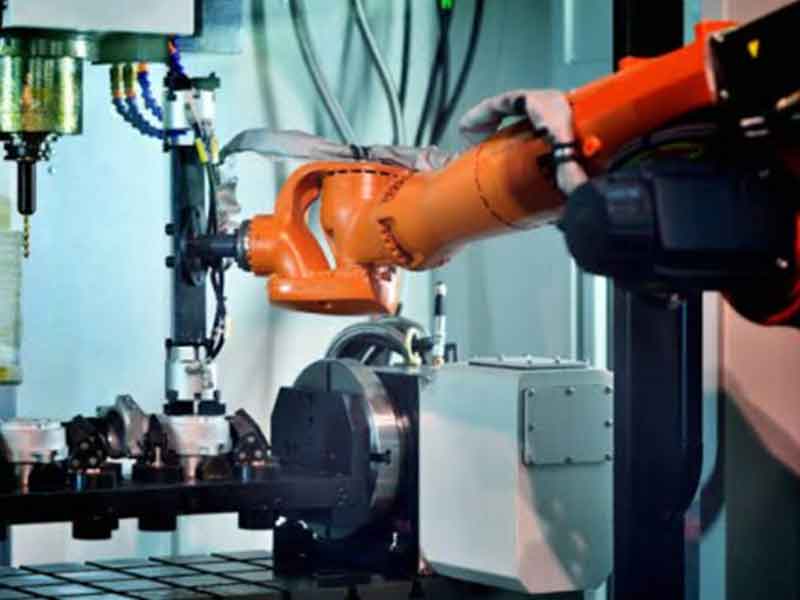
Humanoid robot arm components are the ensemble of precision-machined structural, kinematic, and integration parts that together constitute the humanoid robot's upper extremity — the assembly spanning from the shoulder joint cluster through the upper arm, elbow, forearm, wrist, and hand mounting interface that enables the robot to reach, position, orient, and apply force across a human-scale workspace.
The humanoid arm compresses 7 actuated degrees of freedom — 3 shoulder, 1 elbow, 3 wrist — plus the passive structural elements connecting them into an envelope roughly the size of a human arm. Every gram added to the forearm or hand increases shoulder peak torque by a factor equal to the arm length, so link brackets and shells are mass-engineered to ±0.5g and mass-verified before shipment — a discipline that distinguishes humanoid arm components from conventional robot structure fabrication.
-
Arm-system scope, not component-scope CNCPioneer designs and verifies the complete arm structural datum network — shoulder, elbow, and wrist interface positions in the geometric relationships the kinematic model assumes — rather than individually-toleranced parts that collectively create reach error calibration can't absorb.
-
Link bracket precision engineering Pivot bore center distances held to ±0.005mm, bore perpendicularity to ±0.02°, left/right symmetry to ±0.010mm — the geometric relationships that determine whether the assembled arm matches the controller's kinematic model.
-
Mass-verified lightweight components Every arm structural component verified to ±0.5g (±0.1g distal) against customer mass targets, with left/right matched pairs shipped at ≤0.5g differential — preventing the inertia asymmetry that degrades bilateral coordination.
-
40–60% China manufacturer cost advantage IATF 16949 and AS9100D certified arm component machining at 40–60% below equivalent US, European, and Japanese suppliers at identical dimensional accuracy and mass verification discipline — DFM review included without surcharge.

Why CNCPioneer as Your Humanoid
Robot Arm Components Manufacturer?
A humanoid arm's accuracy is measured at the fingertip, 200–300mm beyond the wrist — amplifying every upstream bracket error by the hand's lever arm. CNCPioneer's arm-system approach addresses the disciplines that separate reliable humanoid arm hardware from brackets that pass individual inspection but produce systematic reach error once assembled: kinematic chain tolerance stack, mass distribution, and left/right symmetry.
Arm-System Scope, Not Component-Scope
The complete arm structural datum network — shoulder, elbow, and wrist interfaces — is verified in the correct geometric relationship the kinematic model assumes, not quoted as individually-toleranced parts that accumulate into uncalibratable reach error.
Link Bracket as a Precision Discipline
Pivot bore center distances to ±0.005mm, bore perpendicularity to ±0.02°, left/right symmetry to ±0.010mm — treated as primary quality specifications, not secondary manufacturing considerations that get discovered wrong at arm assembly.
Mass-Verified Lightweight Structures
Every upper arm segment, forearm shell, elbow body, and wrist plate verified against target to ±0.5g (±0.1g distal), with left/right matched pairs shipped at ≤0.5g differential — preventing asymmetric arm inertia in bilateral tasks.
Thin-Wall Arm Shell Machining
5-axis MAZAK VARIAXIS programs machine forearm shells and upper arm covers at 1.0–2.5mm wall, ±0.050mm uniformity, Ra 1.6μm cosmetic exterior — competitive with die-cast on quality and injection-molded shells on structural performance.
Swiss CNC, MAZAK, 5-Axis & Wire EDM Under One Roof
Miniature mechanism pins on Swiss CNC; actuator interface brackets on MAZAK mill-turn; compound-geometry shoulder brackets and forearm shells on 5-axis; hardened link bracket splines on wire EDM — one qualified relationship, no inter-supplier tolerance stack-up.
40–60% China Manufacturer Cost Advantage
CNCPioneer's cost structure delivers 40–60% reduction versus US, European, and Japanese arm component suppliers at identical dimensional accuracy and mass discipline — the BOM economics that make commercial humanoid pricing viable across 40–80 unique part numbers per arm.
Humanoid Robot Arm Components
We Manufacture
CNCPioneer's robot arm CNC parts machining covers the complete 7-DOF arm kinematic chain — shoulder interface through end-effector mounting — organized as a coordinated mechanical system rather than isolated component quotes.

Shoulder Interface Components
Shoulder-to-upper-arm transition brackets (actuator flange bolt circle ±0.010mm, register OD ±0.005mm, face perpendicularity 0.005mm) and shoulder structural cross-members (bilateral joint interface bores ±0.005mm center-to-center) — the highest-load bracket zone in the arm, carrying full arm weight and manipulation force.

Upper Arm Structural Components
Hollow structural tubes and shells with precision end faces (perpendicularity ±0.02° to tube axis), IMU mounting bosses, internal cable routing channels, panel and cover components, and cable guide brackets — wall 2.0–4.0mm at ±0.050mm, mass verified ±0.5g.

Elbow Joint Link Brackets
Primary elbow pivot brackets (actuator-to-forearm center distance ±0.005mm), four-bar elbow linkage sets, and dual-axis flexion/pronation brackets — the link bracket category most directly governing end-effector position accuracy, machined 5-axis single-setup for compound bore orientations.
Industries & Applications
CNCPioneer's humanoid robot arm components supply humanoid robot OEMs, embodied AI hardware developers, collaborative robot manufacturers, exoskeleton developers, surgical robot companies, and research institutions worldwide.

Humanoid Robot OEMs
Complete custom arm components supply — link brackets, structural members, forearm shells, wrist hardware, and end-effector interfaces — as a single manufacturer relationship with arm-level kinematic DFM review, mass-verified delivery, and left/right matched pairs.

Embodied AI Hardware Developers
Rapid robot arm CNC parts iteration for venture-backed humanoid programs — complete arm component prototype kits in 14–20 days, same-day DFM feedback on bracket revisions, and flexible pilot quantities enabling bi-weekly hardware iteration.

Collaborative Robot Manufacturers
IATF 16949 certified cobot arm structural component production — link brackets, elbow pivot structures, forearm shells, and end-effector flanges at 10,000–500,000 units annually with PPAP Level 3 qualification and blanket order delivery.
Exoskeleton Developers
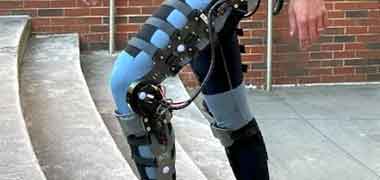
Body-conforming forearm shells, compliant link brackets for force transmission measurement, and pilot device quantities without tooling investment for clinical evaluation programs.
Surgical Robot Companies
316L stainless and Ti-6Al-4V robot arm CNC parts for surgical robotic arm structures — non-magnetic materials, Ra 0.8μm structural surfaces, ASTM A967 passivation, and ISO 13485-compatible documentation.
Research Institutions
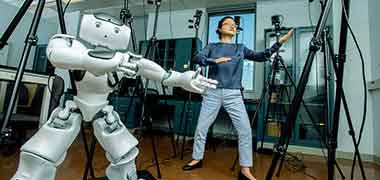
Single-arm robot arm CNC parts prototype kits with full CMM and mass documentation for university and national laboratory humanoid research programs — dimensional records supporting cross-lab arm kinematic reproducibility.
Humanoid Robot Arm Component
Process & Capabilities
CNCPioneer's arm component process takes robot arm CNC parts from CAD BOM through PPAP-qualified volume production in four structured phases — 24-hour arm-system DFM review, prototype kit delivery (5–20 days), dimensional and mass verification, and production qualification — with kinematic tolerance stack analyzed at arm level, not per part.
Arm-System DFM Review (24 Hours)
Center distance tolerance allocation across the complete kinematic chain · Bending stiffness for cantilevered brackets · CAD mass vs. target per component · 3-axis vs. 5-axis routing determination · Four-bar mechanism coupler curve verification for elbow linkages.
Prototype Arm Component Kit (5–20 Days)
Simple link brackets 5–7 days; compound-angle 5-axis brackets 8–12 days; forearm monocoque shells 9–14 days; complete single-arm kit coordinated across Swiss CNC, MAZAK, and 5-axis platforms — 14–20 days.
Kinematic & Mass Verification
Mitutoyo CMM (±0.001mm) on every link bracket center distance, bore diameter, and interface position · Precision balance mass verification ±0.5g (±0.1g distal) · Left/right pair matching to ≤0.5g differential before shipment.
Production & Statistical Control
PPAP Level 3 qualification with Cpk ≥1.67 on link bracket center distances and bore diameters · Up to 70% per-unit reduction at 10,000+ annual units · Monthly blanket releases with dedicated capacity for humanoid arm assembly line supply.
Arm Component Materials
7075-T6 (65% of programs) · 6061-T6 · 6063-T5 · AZ91D magnesium · Ti-6Al-4V · 17-4PH H900 · 316L · 42CrMo4 · GCr15 · PEEK — all sourced with full mill certificates and SII XRF composition verification.
IATF 16949 / AS9100D Documentation
CoC per component, CMM reports, mass verification records with left/right differential, material certifications with lot traceability, anodize batch records, PPAP Level 3 for volume programs, FAIR per AS9102 for defense and aerospace programs.
Materials for Humanoid
Robot Arm Components
Arm component material selection is governed by strength-to-weight for shoulder torque budget, machinability for thin-wall link brackets and shells, and application-specific needs — non-magnetic for surgical and MRI-adjacent programs, electrical isolation for cable hardware. 7075-T6 dominates at roughly 65% of programs.
7075-T6
2.80 g/cm³ · 503 MPa yield · Best aluminum strength-to-weight ratio · Link brackets, elbow bodies, and shoulder brackets — roughly 65% of humanoid robot arm components programs, enabling 2.0–4.0mm wall brackets within arm mass budgets
6061-T6
2.70 g/cm³ · Excellent machinability, cosmetic anodize response · Covers, non-structural brackets, and cable guide hardware where structural load is secondary to fit, finish, and cost
6063-T5
2.70 g/cm³ · Thermal conductivity 200 W/m·K · Heat-dissipating structural arm members positioned to spread actuator or driver electronics heat along the arm structure
AZ91D
1.81 g/cm³ · Lowest density of any structural arm material · Forearm shells, upper arm covers, and distal brackets, where a 35% density reduction versus aluminum produces the largest dynamic benefit per gram invested
Ti-6Al-4V
4.43 g/cm³ · Superior fatigue life, non-magnetic · High-load shoulder brackets under repeated manipulation cycling, and MRI-compatible arm parts for medical and research robot programs
17-4PH H900
7.75 g/cm³ · 1,310 MPa yield · End-effector mounting flanges and high-stress insert components where maximum stiffness-to-weight at a small interface footprint is the governing requirement
316L
7.99 g/cm³ · Non-magnetic, biocompatible · Surgical robot arm components and corrosion-exposed hardware where sterilization compatibility and imaging-safe materials are required
42CrMo4
7.85 g/cm³ · Toughness, through-hardened · Heavy-duty elbow link bracket inserts at the highest-cycle, highest-load pivot interfaces in the arm chain
GCr15
7.80 g/cm³ · HRC 62–65 · Precision pivot pin seats within link brackets subject to sustained rolling contact load across millions of joint cycles
PEEK
1.32 g/cm³ · Electrically isolating, low friction · Cable guide brackets and isolation spacers requiring electrical isolation between structural zones plus low-friction cable contact surfaces
Surface Treatments for
Robot Arm CNC Parts
Robot arm CNC parts surface treatment selection is governed by cosmetic requirements at externally-visible shells and covers, wear resistance at link bracket pivot bores, and corrosion protection for magnesium and steel components — with dimensional allowance built into every machined feature.
Black Hard Anodize — MIL-A-8625 Type III
Standard for humanoid robot arm components in commercial platforms — black color provides visual continuity with robot body aesthetics; HV 400+ hardness protects link bracket contact surfaces during assembly and service. Anodize growth allowance of 0.015–0.050mm per side built into pivot bore dimensions before anodizing.
Type II Clear Anodize
Cosmetic and corrosion protection for aluminum robot arm CNC parts in collaborative robot programs where black Type III conflicts with robot color system. ASTM E595 TML ≤0.05% available for cleanroom and vacuum-environment arm component programs.
Powder Coat
Branded color and additional corrosion protection for forearm shells and upper arm covers in commercial humanoid robot programs — color-matched per robot OEM specification across production batches, applied over Alodine Class 1A pretreatment for maximum adhesion.
Electroless Nickel — MIL-C-26074
Mandatory corrosion protection for AZ91D magnesium forearm shells and bracket components — uniform coating across complex geometry including internal cable channels. Plating allowance incorporated in machined dimensions; post-plate within ±0.003mm of target.
Passivation — ASTM A967
Mandatory for all 17-4PH H900 and 316L stainless robot arm CNC parts — end-effector flanges, wrist insert components, and surgical robot arm hardware, restoring the passive chromium oxide layer for maximum corrosion resistance.
DLC Coating — 1–3μm
Ultra-low friction (μ 0.05–0.15) for link bracket pivot bore surfaces in high-cycle elbow mechanisms and cable guide bracket interior channels — reducing cable-to-guide friction and extending cable insulation life.
All robot arm CNC parts surface treatments — black hard anodize, clear anodize, powder coat, electroless nickel, passivation, and DLC — are applied with dimensional allowance built into the machined feature. Alodine Class 3 per MIL-DTL-5541 is available where EMC bonding continuity is required for FCC/CE electromagnetic emission certification at arm-level assembly interfaces. Treatment certifications are included in the shipment documentation package for every program.
IATF 16949 / AS9100D Quality System
for Humanoid Robot Arm Components
A link bracket that passes individual bore inspection but sits outside the arm's kinematic tolerance stack produces reach error no control algorithm can fully correct. CNCPioneer's quality system is built around arm-level verification, not just part-level inspection.
Arm-System DFM Review
Center distance tolerance allocation across the complete 7-DOF kinematic chain, cable routing feasibility through all arm poses, and structural analysis for worst-case manipulation pose — reviewed before any machining commitment.
Material Incoming Inspection
SII XRF composition verification on every lot — 7075-T6, AZ91D, 17-4PH H900, Ti-6Al-4V. Hardness verification post-aging on 17-4PH programs. Full material certificate-to-robot-serial-number lot traceability.
Link Bracket Kinematic Verification
Every link bracket undergoes CMM verification of center distance, bore perpendicularity, and actuator interface positions — the dimensional triplet governing kinematic chain accuracy — before batch release.
In-Process Statistical Control
SPC control charts on center distance and bore diameter with Cpk ≥1.67 tracked continuously through production, catching tool deflection and workpiece-settling errors before a batch completes.
Final Inspection
Mitutoyo CMM (±0.001mm): center distances, bore diameters, interface positions, face perpendicularity, bolt circles. Ultrasonic wall mapping on thin-wall forearm shells. Precision balance: mass per component and left/right pair differential.
Documentation & Shipment
CoC per component, CMM reports, mass verification records with left/right differential, material certifications with lot traceability, and PPAP Level 3 for volume programs.
IATF 16949 / AS9100D Quality System
Details
CNCPioneer's IATF 16949 and AS9100D certified humanoid robot arm components factory confirms independent audit compliance with the quality framework demanded by humanoid robot OEMs and embodied AI hardware programs alike.
Kinematic Chain Documentation
Complete CMM records of link bracket center distance, bore perpendicularity, and interface positions across the arm's full kinematic chain — the dimensional evidence that assembled arm geometry matches the controller's model.
- CMM report every lot
- Center distance charted
- Records retained long-term
Material Traceability & Authentication
Full material traceability chain from mill certificate heat number through finished arm component shipment. SII XRF composition verification on incoming material for every order. Counterfeit material prevention through approved supplier list management.
- XRF alloy verification every order
- Mill cert heat number traced
- Counterfeit part prevention
Mass Verification & Cpk ≥ 1.67
100% mass verification per component to ±0.5g (±0.1g distal) with left/right pair matching ≤0.5g differential. PPAP Level 3 qualification with Cpk ≥1.67 on link bracket center distances and bore diameters for volume programs.
- 100% mass verification
- Left/right pairs ≤0.5g
- Cpk ≥ 1.67 on key dimensions
Humanoid Robot Arm Components FAQ
Common questions from humanoid robot OEMs, embodied AI hardware developers, and research institutions about CNCPioneer's arm component machining, link bracket kinematics, and mass verification discipline.
A link bracket is the precision-machined structural coupling that transfers torque and force between adjacent actuators and structural segments throughout the arm — every interface in the 7-DOF chain contains one or more. A single bracket must simultaneously satisfy five requirements: actuator output interface accuracy (bolt circle ±0.010mm, face perpendicularity 0.005mm), structural link attachment accuracy, pivot bore geometry (center distance ±0.005mm, bore-to-bore perpendicularity ±0.02° where applicable), cable routing features that avoid stress concentration, and a mass target as tight as ±0.2g. It's the most critical component because it's also the most frequently under-specified — treated as a generic bracket when it's really the geometric element that determines whether the assembled arm matches the kinematic model the controller relies on.
Center distance tolerance derives from the arm-level end-effector accuracy requirement, divided across the kinematic chain. For a humanoid arm targeting ±2mm end-effector accuracy at 0.6m reach, the error budget allocates roughly ±0.1mm total from structural link geometry — divided across 6 link bracket center distances by root-sum-square, yielding approximately ±0.005mm per bracket. CNCPioneer achieves this in production through single-setup MAZAK mill-turn machining of both pivot bores from one datum, in-process CMM verification before part release, and SPC control charts confirming Cpk ≥1.67 — with 100% CMM on center distance for programs above 500 units annually.
Mass verification serves two purposes. First, per-component compliance: each part is machined to a design mass target derived from the robot's dynamic simulation — the mass the controller assumes when computing joint torques. A forearm shell that arrives heavier than the simulation assumed produces systematic tracking error at every arm velocity. CNCPioneer verifies every component to ±0.5g (±0.1g distal) and ships mass records per lot. Second, bilateral symmetry: humanoid robots performing two-handed tasks need matched left and right arm inertia — a 10g asymmetry produces a detectable force imbalance the whole-body controller must compensate for. CNCPioneer pairs left and right components by precision balance measurement, shipping matched pairs at ≤0.5g differential rather than leaving the match to tolerance stack chance.
Three differences drive the need for a specialized supplier. First, kinematic chain depth: a humanoid arm's accuracy is evaluated at the fingertip, 200–300mm beyond the wrist, amplifying wrist-level errors by the hand's lever arm — a depth of chain that demands arm-system-level tolerance stack verification most cobot arm suppliers don't perform. Second, mass engineering depth: cobots aren't mass-sensitive at the component level, while humanoid arms are mass-sensitive to 0.5g because dynamic performance is evaluated at millisecond control bandwidth with 1–5kg payload capability. Third, cosmetic integration: humanoid forearm shells and covers are visible robot surfaces requiring Ra 0.8–1.6μm finish and visual continuity with body aesthetics — requirements standard industrial arm fabricators don't design for. CNCPioneer addresses all three as standard scope.
Monocoque shells — a two-piece shell with precision mating flanges (±0.010mm) that functions as structural member, cable enclosure, and cosmetic panel simultaneously — are the right choice for commercial humanoid platforms where component accessibility is secondary to a finished appearance; they run 1.2–2.5mm wall at ±0.050mm uniformity in 7075-T6 or AZ91D, 5-axis contour machined to follow ergonomic forearm profile. Open exoskeleton-style frames — parallel structural rails at ±0.100mm center-to-center with cross-member stiffening — suit research platforms where actuators and wiring need to stay accessible for iteration, trading cosmetic finish for serviceability. CNCPioneer machines both from the same DFM review, so the choice is a program decision rather than a manufacturing constraint.
Prototype: simple aluminum link brackets 5–7 business days; compound-angle 5-axis elbow brackets 8–12 days; forearm monocoque shells 9–14 days; a complete single-arm component kit 14–20 days coordinated across platforms. Pilot production (25–200 arm sets) runs 3–5 weeks per batch including mass pairing; PPAP Level 3 qualification takes 6–8 weeks from pilot data completeness. Volume production ships on 2–3 week monthly blanket releases, with up to 70% per-unit reduction from prototype pricing at 10,000+ annual units. At representative scale, a compound elbow bracket costing $95 at US prototype runs $55 at CNCPioneer prototype and $18–22 at 5,000-unit annual volume — across an arm's 40–80 unique part numbers, savings of roughly $1,500–$3,000 per arm versus domestic sourcing at that scale.
Get a Quote for Humanoid Robot Arm Components
Upload your robot arm CNC parts drawings, assembly models, or arm BOM and receive a free arm-level DFM review and competitive quotation within 24 hours — covering link bracket center distance kinematic stack analysis, compound-bore angle feasibility, forearm shell wall thickness and mass target verification, left/right pair mass matching, and complete pricing from prototype through volume production.