
Humanoid Robot
Joint Components
CNCPioneer is an IATF 16949 and AS9100D certified custom humanoid robot joint components manufacturer and robot joints supplier delivering complete joint-level machined part packages — actuator housings, bearing seats, output flanges, joint structural forks, cross roller housings, preload spacers, encoder mounting structures, gear and spline components, pivot pins, and all precision-machined joint parts from finger to hip — with bearing seat accuracy ±0.002mm, angular relationship ±0.02°, mass verification ±0.1g, and build-synchronized kit delivery since 2011.

What Are
Humanoid Robot Joint Components?
Humanoid robot joint components are the ensemble of precision-machined structural, rotational, sensing, and sealing parts that together constitute one actuated degree of freedom — the complete set of machined joint parts whose collective dimensional accuracy determines whether the assembled joint achieves its designed torque capacity, kinematic precision, backlash budget, friction coefficient, positional repeatability, service life, and environmental sealing. A humanoid robot joint is not a single component: every actuated degree of freedom contains 15–45 precision-machined joint parts whose dimensional relationships govern every performance metric the joint exhibits.
The actuator housing provides the structural envelope while establishing the kinematic axis. The joint structural fork transfers output torque to the next limb segment at the angular accuracy that controls the whole-robot kinematic model. Bearing seats locate the cross roller or angular contact bearings at preload accuracy governing joint stiffness. Preload spacers control the axial preload determining whether the joint feels stiff and precise or compliant to the force controller. The encoder mounting feature positions the angle sensor relative to the joint axis with the runout accuracy that determines position sensing fidelity. All of these joint parts are precision-machined components whose dimensional deviations propagate through mechanism assembly into degraded joint performance that the control system must either compensate for or accept as reduced robot capability.
-
Joint-level scope, not component-level scope Most precision machining suppliers quote individual joint parts in isolation. CNCPioneer quotes complete joint component packages — every machined part constituting one joint type — enabling robot OEMs to place a single robot joints supplier order covering the complete machined BOM for one or all joint types, rather than coordinating 15–30 individual part-number purchase orders per joint. One purchase order, one supplier relationship, one synchronized delivery per build slot.
-
Multi-process capability under one quality system Humanoid robot joint components span four distinct precision manufacturing processes: Swiss CNC for pins and miniature shafts (Ø0.5–32mm at ±0.002mm); MAZAK mill-turn for housings, flanges, and structural members (Ø10–400mm at ±0.003mm); 5-axis simultaneous for compound-geometry joint intersection structures (±0.02° angular relationships); and wire EDM for hardened splines and gear profiles (±0.003mm tooth form). CNCPioneer operates all four processes under one IATF 16949/AS9100D quality system.
-
Joint-level dimensional relationship control The critical dimensions in humanoid robot joint components are inter-part geometric relationships — bearing seat coaxiality between housing ends (0.005mm), actuator-to-structural-link angular relationship (±0.02°), encoder seat concentricity to output axis (±0.002mm), preload spacer height matched-set accuracy (±0.002mm). CNCPioneer's single-supplier joint kit programs control these relationships through machining datum networks and matched-set verification — producing joint part assemblies whose dimensional relationships are documented, not assumed from independent tolerance stack-up.
-
40–60% China robot joints supplier cost advantage 40–60% below US, European, and Japanese robot joints supplier alternatives at equivalent joint parts dimensional accuracy and IATF 16949/AS9100D documentation — decisive economics for humanoid programs whose joint hardware BOM is the largest single cost category per robot. The robot joints supplier relationship also eliminates the hidden cost of multi-supplier coordination: engineering time managing 30–80 purchase orders per robot build and incoming inspection of 400–800 part numbers per robot.

Why CNCPioneer —
Robot Joints Supplier
Among humanoid robot joint components factories globally, CNCPioneer's joint-level scope, multi-process capability under one quality system, inter-part dimensional relationship control, build-synchronized kit delivery, and China cost advantage establish our factory as the preferred robot joints supplier for humanoid robot programs from first prototype joint kits through volume production.
Joint-Level Scope, Not Component-Level Scope
CNCPioneer quotes complete joint component packages — every machined part constituting one joint type — enabling robot OEMs to place a single robot joints supplier order covering the complete machined BOM for one joint type or all joint types across the robot. One purchase order per joint type replaces 15–30 individual part-number orders. One synchronized delivery per build slot replaces three-week partial-kit windows from fragmented multi-supplier sourcing. Joint parts from all four manufacturing platforms arrive together as one complete kit.
Multi-Process Capability Under One Quality System
Humanoid robot joint components span four distinct manufacturing processes. Swiss CNC (78+ lathes) for pins and miniature shafts at ±0.002mm. MAZAK mill-turn (66+ centers) for housings, shafts, flanges, and bearing sleeves. MAZAK VARIAXIS 5-axis for hip cluster housings and wrist differential bodies at ±0.02° angular relationships. Wire EDM for circular splines, ring gears, and internal splines in hardened materials. All four under one IATF 16949/AS9100D quality system — eliminating inter-supplier tolerance stack-up.
Inter-Part Dimensional Relationship Control
When CNCPioneer machines the actuator housing bearing seats, output flange face, and encoder mounting pocket in a single MAZAK mill-turn setup, every feature's mutual relationship is governed by machine positioning accuracy (±0.003mm) — not the ±0.010–0.030mm that sequential re-fixturing between separate suppliers accumulates. Matched-set preload spacers verified as sets (±0.002mm total height vs ±0.010mm individual tolerance stack-up). Left/right limb structural members mass-matched within ±0.5g — asymmetric limb mass degrades gait symmetry no control algorithm fully compensates.
Build-Synchronized Kit Delivery
CNCPioneer releases individual joint part programs to their respective platforms in reverse lead time order — wire EDM circular splines (10–12 days) and heat-treated steel components (12–14 days) start Day 1; MAZAK mill-turn housings (7–10 days) start Day 4–5; Swiss CNC pins (5–7 days) start Day 8–10 — all converging to a single packing date per build slot. Before shipment, every joint kit verified against the robot joints supplier kit manifest. Joint parts for each robot serial number labeled and packaged per build slot.
Prototype-to-Volume Continuity
CNCPioneer serves the same joint component programs from first prototype through volume production on the same platforms with the same machining programs — the dimensional continuity that makes production robot joints identical to the prototype joints that passed qualification testing. PPAP Level 3 qualification in 6–8 weeks from prototype approval; volume blanket orders at 2–3 week monthly release cadence with dedicated capacity reservation for scaling humanoid OEM programs above 20 robot builds per month.
China Robot Joints Supplier Cost Advantage
40–60% below US, European, and Japanese robot joints supplier alternatives at equivalent joint parts dimensional accuracy and IATF 16949 documentation. Four precision manufacturing platforms under one roof eliminating inter-supplier markup across joint part manufacturing steps. The robot joints supplier relationship also eliminates the hidden cost of multi-supplier coordination — engineering time managing 30–80 purchase orders per robot build and incoming inspection of 400–800 part numbers per robot — costs that are real but don't appear in individual component unit prices.
Humanoid Robot Joint Components
We Manufacture
CNCPioneer produces and coordinates all machined joint parts for every joint type across the humanoid robot's complete joint architecture — from the dexterous hand's 20+ DOF miniature joint parts through the hip's 3-DOF cluster housings at the highest dynamic loads in the robot. Every joint type ships as a complete kit synchronized to robot build schedules.

Hip Joint Components — 3-DOF Cluster
The highest-load, most kinematically complex joint cluster — three actuated DOF (yaw, roll, pitch) intersecting within a space-constrained structural envelope carrying full robot body weight through dynamic gait loading. Hip cluster housing: 5-axis single-setup machining with three actuator mounting interface angular relationships ±0.02°; three bearing bore systems coaxiality 0.005mm per axis pair; internal cable routing channels. Material 7075-T6 or Ti-6Al-4V for high-payload programs; mass verified ±2g. Plus: ×3 actuator housings (stator seat bore ±0.005mm, coaxial bearing seats 0.005mm single-setup); ×3 output flanges (cross roller bearing outer seat ±0.002mm); hip cross roller bearing housing sleeves (bore ±0.002mm, OD/ID concentricity ±0.003mm); preload spacer matched sets (±0.002mm total height); harmonic drive circular splines ×3 (wire EDM GCr15 HRC 62–65, tooth form ±0.003mm); and hip structural fork (bearing bore pair coaxiality across fork arms 0.005mm, Ra 0.8μm load-path fillets).

Knee & Ankle Joint Components
Knee carries the highest single-axis torque in humanoid locomotion (150–350 Nm at peak). Knee actuator housing: bearing seats both ends ±0.002mm, coaxiality 0.005mm single-setup; torque sensor integration interface ±0.005mm. Knee structural link bodies (thigh and shin): actuator interface angle ±0.02°; mass-optimized pocket walls 1.5–2.5mm machined ±0.050mm; mass verification ±0.5g per segment, left/right matched pairs. Four-bar linkage components: pivot bore center distance ±0.005mm; pivot pins (Swiss CNC) Ø4–10mm at ±0.002mm, DLC standard. Ankle differential housing: 2-DOF mechanism with two bores at 90° ±0.02° in 5-axis single-setup; wall thickness 1.8–3.0mm at ±0.050mm. Ankle QDD shafts: sun gear concentricity ±0.003mm; planet pins ±0.002mm (Swiss CNC); ring gear internal teeth wire EDM in hardened housing. Foot sole frame: F/T sensor mounting platform flatness 0.010mm.

Shoulder & Elbow Joint Components
Shoulder 3-DOF cluster housing (horizontal abduction/adduction, vertical flexion/extension, internal/external rotation): three actuator interface planes at ±0.02° angular relationships single-setup; structural yoke arm bearing bore coaxiality across arm pairs 0.005mm; freeform external contour 5-axis simultaneous at Ra 0.8μm. Shoulder actuator housings ×3 (stator seat and encoder pocket to hip specifications, scaled to 30–80 Nm torque class); thin-section cross roller housing Ø30–60mm bore at ±0.002mm. Elbow actuator housing: hollow cable-routing through-bore coaxiality to bearing seats ±0.005mm for through-wrist cable passage; 7075-T6 or AZ91D for mass-critical distal programs. Forearm rotation bearing housing (pronation/supination): cross roller bore ±0.002mm, roundness ±0.001mm; wall 2.5–4mm low-force clamping protocol. Upper arm and forearm structural segments: mass-verified ±0.5g, left/right matched pairs.

Wrist Joint Components
The wrist concentrates maximum mechanism complexity per gram budget in the humanoid arm — 2–3 DOF within a volume smaller than a human wrist. Wrist differential housing: 5-axis external contour for body-conforming wrist envelope; bevel gear mechanism bores intersecting at designed angles; miniature bearing seats Ø8–20mm at ±0.002mm, concentricity 0.003mm. Material 7075-T6; AZ91D for ultra-lightweight programs. Wrist differential gear components: bevel gear blanks and profiles (wire EDM, module 0.5–1.5mm); differential cross shaft (Swiss CNC Ø2–6mm at ±0.002mm); compound-angle bevel idler gear profiles (wire EDM). Wrist F/T sensor interface plate: mounting flange flatness 0.005mm; bolt circle ±0.010mm; cable passage bore position ±0.050mm. Wrist output coupling: hollow bore for cable through-routing, concentricity to OD ±0.005mm.

Dexterous Hand Joint Components
The highest-density joint component concentration in the humanoid — 20+ DOF within a human-hand envelope, every joint requiring precision-machined parts at the finest dimensional scales the robot contains. Finger MCP, PIP, DIP joint housings: miniature bearing seats Ø4–12mm at ±0.002mm; bore roundness ±0.001mm; tendon routing channels Ra 0.2μm; 7075-T6 or Ti-6Al-4V for strength-critical MCP. Finger phalanx structural bodies: length 8–35mm, thickness 3–8mm, ±0.010mm on joint interfaces; tendon attachment holes ±0.020mm; mass ±0.1g per phalanx. Finger pivot pins (Swiss CNC, highest-quantity joint part): Ø0.8–4.0mm at ±0.002mm, roundness ±0.001mm, Ra 0.1μm, DLC standard for 10⁶–10⁷ cycle life. Tendon pulley shafts: Ø1.5–6mm at ±0.002mm; multi-pulley seats at ±0.005mm axial spacing. Palm structural plate: 15–25 precision interfaces ±0.010mm; tendon routing guides ±0.020mm. Thumb opposition housing: 5-axis compound-angle, non-standard arc-form gear profile wire EDM.

Actuator Shafts, Gear & Spline Components — All Joints
Cross-joint precision shaft and gear components common to every joint torque class. Output shafts (all joint types): bearing journal ±0.002mm, multi-journal concentricity ±0.002mm single-setup, encoder seat TIR ≤0.003mm, hollow cable-routing bore coaxiality ±0.005mm; 17-4PH H900 standard. Motor shafts: rotor OD ±0.003mm, bearing seat concentricity ±0.002mm. Harmonic drive circular splines (all harmonic joints): wire EDM GCr15 HRC 62–65, tooth form ±0.003mm, pitch ±0.002mm, full gear measurement center tooth trace documentation. Internal coupling splines (all joints): wire EDM involute profiles, zero broach tooling at any quantity, module 0.5–1.5mm. Planet carrier shafts and planet pins (QDD joints): planet pin ±0.002mm Swiss CNC, cylindricity ±0.002mm/30mm. Preload spacer matched sets (all joints with angular contact bearing pairs): height ±0.002mm, parallelism 0.003mm, verified as sets with total height records per build slot.
Industries & Applications
CNCPioneer's humanoid robot joint components programs serve every industry building precision robot mechanisms — from venture-backed embodied AI startups requiring rapid-iteration joint kit prototypes in 10–18 days through established humanoid OEMs scaling volume production with PPAP Level 3 qualified robot joints supplier relationships.

Humanoid Robot OEMs
Complete humanoid robot joint components supply — all joint types from finger to hip, prototype through volume production — with synchronized build-kit delivery, PPAP-qualified production, and dimensional records connecting joint parts to robot serial numbers. Single robot joints supplier relationship covering the full machined joint BOM at 40–60% below Western alternative suppliers at equivalent quality documentation.

Embodied AI Hardware
Rapid-iteration joint parts supply for venture-backed humanoid and manipulation robot programs — complete joint kit prototypes in 10–18 days, same-day DFM on joint design revisions, and flexible quantities supporting bi-weekly hardware iteration cadence through demo-ready pilot fleets. Zero broach tooling investment on internal spline design changes; no minimum quantity for any joint part type across all four manufacturing platforms.
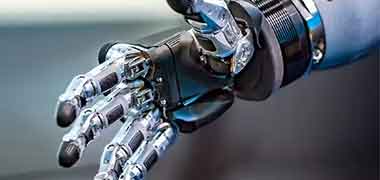
Robot Actuator Manufacturers
Joint parts supply for actuator module production — housings, bearing sleeves, preload spacer sets, circular splines, output flanges, and encoder mounting structures for harmonic, planetary, and QDD actuator assembly lines at 100,000+ annual unit volumes with PPAP Level 3 quality documentation and monthly blanket delivery for actuator assembly line supply.

Collaborative Robot Manufacturers
Cobot joint component programs — IATF 16949 certified joint parts production with PPAP Level 3 qualification for cobot actuator supply chains, covering all joint types from small shoulder modules through large base joint structures. Joint kit coordination reducing cobot assembly team's incoming part management from 400+ individual part numbers to one labeled kit per joint type per build slot.
Surgical Robot Companies
316L stainless and Ti-6Al-4V joint parts for surgical robotic wrist and instrument drive joint components — non-magnetic, biocompatible materials with ISO 13485-compatible documentation and passivation certification. Miniature bearing seats Ø4–12mm at ±0.002mm for surgical robot finger and wrist joint mechanisms. Complete joint part documentation traceability for surgical robot regulatory submission support.
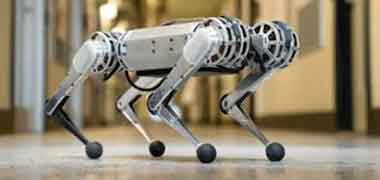
Legged Robot & Quadruped Developers
High-load hip, knee, and ankle joint components for quadruped and biped legged platforms — 42CrMo4 joint structural forks, GCr15 gear components at HRC 62–65, and matched preload spacer sets for the torque density that dynamic locomotion demands. Foot sole frame F/T sensor platforms; ankle differential housings in 5-axis single-setup; QDD shaft assemblies for backdrivable ankle and elbow joints.
Humanoid Robot Joint Components
Manufacturing Capabilities
CNCPioneer's four-platform manufacturing capability covers the complete joint parts manufacturing space — Swiss CNC for miniature precision pins at 78+ lathes, MAZAK mill-turn for bearing-quality housings at 66+ centers, 5-axis VARIAXIS for compound-angle joint structures, and dedicated wire EDM for hardened gear and spline profiles — all under one IATF 16949/AS9100D quality system.
24-Hour Joint-Level DFM Review
Joint treated as a system, not individual part DFM in isolation: bearing seat coaxiality feasibility · Preload stack-up analysis against designed joint stiffness · Encoder runout budget vs. position sensing requirement · Angular relationship achievability for multi-DOF cluster housings · Wire EDM spline sequencing with heat treatment · 5-axis accessibility for compound structures · Thin-wall distortion risk analysis · Mass target feasibility against robot payload budget · Left/right pairing symmetry · Joint-level cost optimization across all four platforms.
Swiss CNC — Pins, Shafts & Miniature Components
78+ Swiss CNC lathes (Star SR-32J, Citizen A20/A16, Tsugami B206) for all miniature precision joint parts: finger pivot pins Ø0.8–4.0mm at ±0.002mm, Ra 0.1μm, DLC standard · Planet pins Ø3–10mm at ±0.002mm cylindricity/30mm · Tendon pulley shafts at L/D to 18:1 · Encoder shafts ≤0.003mm TIR · Output and motor shafts complete with live-tool features in single cycle · 100% CCD automatic sorting on high-volume pivot pin programs · 15,000,000+ miniature joint parts annual capacity.
MAZAK Mill-Turn — Housings, Flanges & Structural Members
66+ MAZAK Integrex and Quick Turn mill-turn centers for all large joint parts: actuator housings with stator seat bore ±0.005mm, coaxial bearing seats 0.005mm single-setup · Bearing sleeves H6/H7 bore ±0.002mm, OD/ID concentricity ±0.003mm · Output flanges with cross roller seat ±0.002mm and output bolt circle ±0.010mm · Preload spacers with height ±0.002mm and face parallelism 0.003mm · Limb structural members with actuator interface angle ±0.02° and mass-optimized pocket geometry.
5-Axis VARIAXIS — Compound-Geometry Joint Structures
MAZAK VARIAXIS 5-axis simultaneous machining for three categories of humanoid robot joint components requiring compound-angle precision: Hip/shoulder cluster housings (three actuator interface planes at ±0.02° angular relationships, three bearing bore systems coaxiality 0.005mm — impossible in 3-axis without ±0.05–0.10° accumulated error) · Wrist/ankle differential housings (mechanism bores intersecting at designed angles, bore-to-bore angular accuracy ±0.02°) · Topology-optimized limb structural members (freeform external surfaces at ±0.050mm profile, load-path fillet network ±0.05mm radius governing fatigue life).
Wire EDM — Hardened Gears & Internal Splines
Dedicated wire EDM machining centers for all robot joint gear and spline components: circular splines (GCr15 HRC 62–65, tooth form ±0.003mm, pitch ±0.002mm, gear measurement center full tooth trace) · Internal coupling splines (zero broach tooling at any quantity — module 0.5–1.5mm, hardness-agnostic) · Ring gear internal teeth (thin-wall housing wire EDM, zero bore distortion) · Bevel and differential gear profiles (module 0.3–1.5mm, wire taper for compound angles) · Post-heat-treatment gear profile finishing (±0.003mm in hardened condition) · DIN 3962 Grade 5–7.
Joint Components Materials
7075-T6 (503 MPa yield, 60% of programs — actuator housings, structural forks, limb segments) · 6061-T6 (machinability, covers and non-structural joint parts) · AZ91D magnesium (1.81 g/cm³, lightest — distal joint shells, wrist and hand structural parts) · Ti-6Al-4V (fatigue strength, premium programs — high-load joint forks, finger skeletons) · 17-4PH H900 (1,310 MPa yield — output shafts, pins, spline hubs, flanges) · GCr15 HRC 62–65 (circular splines, planet gears, bearing components) · 42CrMo4 (toughness — high-torque shafts, carrier structures) · PEEK (isolation spacers, tendon guides) — all XRF-verified per lot; hardness verified post-treatment.
Materials for Humanoid
Robot Joint Components
Humanoid robot joint components material selection is governed by mass-to-stiffness ratio for joint structural parts, yield strength for load-path components, bearing steel hardness for gear and spline elements, and corrosion resistance for sealed joint environments. Aluminum 7075-T6 dominates at 60% of programs as the standard structural joint material; magnesium AZ91D for minimum-mass distal joint shells.
Aluminum 7075-T6
503 MPa yield · 2.80 g/cm³ · The dominant humanoid robot joint component structural material — actuator housings, structural forks, cluster housings, limb segments, bearing housing sleeves. 7075-T6 provides the highest specific strength (yield/density ratio) of any standard aluminum alloy, minimizing joint structural component mass at required stiffness. Type III hard anodize standard on structural joint parts; black anodize for camera-adjacent joint components. 5-axis machined in complex cluster housing geometries at ±0.02° angular relationships and ±0.050mm pocket wall tolerances.
Aluminum 6061-T6
276 MPa yield · 2.70 g/cm³ · Superior machinability for joint component covers, cable management brackets, non-structural joint panels, and sensor interface plates where moderate structural loading makes 6061-T6's lower yield strength adequate and its machinability advantage reduces cycle time on complex shaped parts. 6061-T6 also has superior resistance to stress corrosion cracking versus 7075-T6 for joint parts in humid outdoor robot environments. Type II and Type III anodize standard; same surface treatment options as 7075-T6.
Steel 17-4PH H900
HRC 44–47 · 1,310 MPa yield · The standard material for all output shafts, motor shafts, output flanges, spline hub elements, and pivot pins throughout the humanoid robot joint architecture — the combination of 1,310 MPa yield at machinable HRC 44–47 hardness, inherent corrosion resistance, and dimensional stability in H900 aging condition makes 17-4PH H900 the precision shaft and coupling hardware standard for every joint torque class from 1 Nm finger joints through 300 Nm hip joints.
Steel 42CrMo4
HRC 28–34 (through hardened) · 950 MPa yield · High-torque joint structural members, carrier bodies, and output shafts at hip and knee torque classes (80–350 Nm) where impact loading — gait foot strike, payload collision — requires 42CrMo4's tougher core. Journal finish-turning after heat treatment with laser micrometer verification confirming distortion remains within bearing-quality tolerance. Induction surface hardening on gear-tooth-carrying zones to HRC 45+ without distorting precision bearing-seat journals machined elsewhere on the same shaft.
Bearing Steel GCr15
HRC 62–65 (through hardened) · The standard material for harmonic drive circular splines, planet gears, and bearing components across all robot joint types. GCr15 through hardening to HRC 62–65 delivers the surface hardness for 10⁸+ cycle gear contact fatigue life — the life the harmonic drive joint must achieve across the humanoid robot's design service life. Wire EDM at HRC 62–65 as standard; gear measurement center full tooth trace documentation on every circular spline program.
Titanium Ti-6Al-4V
880 MPa yield · 4.43 g/cm³ · Non-magnetic · High-load joint structural forks, finger skeletal components, and premium dexterous hand joint parts where titanium's 43% mass reduction versus 7075-T6 at comparable strength is decisive in the distal inertia budget and hand mass budget. Ti-6Al-4V hip joint structural forks in payload-critical humanoid programs; Ti-6Al-4V MCP joint housings in premium dexterous hand programs. Non-magnetic property satisfies MRI-compatible surgical robot joint requirements. DLC coating on titanium bearing interfaces compensates lower surface hardness.
Stainless 316L
Non-magnetic · Biocompatible · Surgical robot wrist and instrument drive joint components requiring autoclave compatibility, non-magnetic property in MRI-compatible surgical systems, and biocompatibility in tissue-proximity applications. Internal splines and gear profiles in 316L machined by wire EDM at ±0.005mm profile accuracy. ISO 13485-compatible documentation for surgical robot joint programs: material certifications, CMM reports, passivation certification, and Certificate of Conformance supplied as standard for every 316L joint part program.
Magnesium AZ91D
1.81 g/cm³ · Lowest density structural material — 35% lighter than aluminum 7075-T6 at adequate structural stiffness for distal joint shells. Used for wrist housing covers, hand palm structural plates in lightweight programs, and distal joint shells where AZ91D's density advantage is decisive in the arm and hand mass budget. Electroless nickel MIL-C-26074 is mandatory on all AZ91D joint parts — magnesium's corrosion susceptibility requires uniform coating coverage on all surfaces. EN coating also provides wear resistance at joint assembly contact surfaces.
PEEK Engineering Grade
1.32 g/cm³ · Excellent dielectric · Chemical resistance · Electrical isolation spacers in robot joint electrical architecture — separating structural aluminum from motor housing ground paths and providing dielectric isolation between bearing inner race and shaft in magnetically-actuated joints. Tendon guides in dexterous hand mechanism where PEEK's combination of light weight, self-lubrication (low tendon friction), and machining precision at ±0.002mm bore diameter enables tendon routing geometry that metal guides cannot achieve at equivalent mass. CNC-machined in single-step operations without heat treatment.
Surface Treatments for
Humanoid Robot Joint Components
Humanoid robot joint components surface treatment selection addresses structural aluminum protection and wear resistance (anodize), magnesium joint parts corrosion sealing (electroless nickel), bearing and pivot interface friction reduction (DLC), stainless shaft and flange corrosion protection (passivation), and optical suppression at vision-system-adjacent joint locations (black anodize, black oxide).
Type III Hard Anodize — MIL-A-8625
The standard surface treatment for all aluminum 7075-T6 and 6061-T6 structural joint components — actuator housings, structural forks, cluster housing bodies, output flanges, and bearing housing sleeves. Type III hard anodize (HV 400+, 12–25μm) provides wear resistance at joint assembly contact interfaces, corrosion protection across robot service environments, and electrical isolation between aluminum structural joint parts and metallic sensor and electronic assemblies. Anodize allowance machined into precision bore and journal dimensions; post-anodize bore air gauge confirms final dimension within bearing fit class. All structural joint parts anodized before dimensional final inspection confirms critical bore and position dimensions in finished state.
Black Anodize & Black Oxide — Camera-Adjacent Joint Parts
Black anodize (MIL-A-8625 Type II black dye) for aluminum humanoid robot joint parts in camera-adjacent locations — robot head, wrist, and finger joint structural elements visible in the robot's own camera work envelopes, where bright aluminum joint part reflections corrupt structured-light 3D depth sensing and object detection. Black anodize reduces surface reflectance to <5% while retaining Type II corrosion protection; applied with the same dimensional allowance protocol as standard anodize. Black oxide for steel joint parts (output shaft flanges, preload spacers) in the same camera-adjacent joint locations — zero dimensional impact on precision joint part tolerances.
Electroless Nickel — MIL-C-26074
Mandatory corrosion protection for all magnesium AZ91D humanoid robot joint components — distal joint shells, wrist housings, hand palm plates. Magnesium's high corrosion susceptibility in humid, outdoor, and sweat-contaminated robot operating environments requires uniform electroless nickel coating on all surfaces, including internal cable channels and counterbored features that line-of-sight plating cannot reach. Mid-phosphorus EN (8–10% P, HV 500+) provides corrosion protection equivalent to stainless steel at 1/3 of the mass penalty. Also applied to steel gear-adjacent joint components in humidity-exposed environments. EN plating allowance machined into AZ91D joint part bore and feature dimensions; post-plate CMM confirms geometric accuracy in coated condition.
DLC Coating — Pivot Pins, Pulley Shafts & Sliding Interfaces
Diamond-like carbon (1–3μm, μ 0.05–0.15, HV 2,000–5,000) is the standard treatment for finger pivot pins (Ø0.8–4.0mm), tendon pulley shafts, and all sliding contact joint interfaces accumulating 10⁶–10⁷ articulation cycles across robot service life. DLC reduces pin-to-bore friction by 3–6× versus uncoated 17-4PH H900 in sealed robot hand joints — directly reducing the motor current required for dexterous manipulation tasks where sub-Newton force resolution matters. Applied post-Swiss-CNC after all pivot pin and shaft dimensional verification is complete; DLC adds 1–3μm uniformly with negligible effect on ±0.002mm journal diameter compliance. DLC-coated pins and shafts ship in individual protective packaging per joint kit to prevent contact scratching.
Passivation — ASTM A967
Mandatory treatment for all 17-4PH H900 and 316L stainless humanoid robot joint components — output shafts, motor shafts, output flanges, spline hub couplings, and stainless sensor interface plates. Passivation removes machining free iron from stainless joint part surfaces, builds the passive chromium oxide layer for maximum corrosion resistance across robot joint service life, and adds zero dimensional change — no post-passivation dimensional impact on bearing journal and bore tolerances. Passivation certificates included in the standard joint kit documentation package. Applied after all machining, Swiss CNC live-tool features, and grinding operations are complete on stainless joint parts.
Mass Verification & Left/Right Matched Pairs
Mass verification is a functional quality step for humanoid robot joint components — not a documentation formality. Finger phalanx bodies verified ±0.1g per phalanx to ensure that left and right hand mass and inertia match within the robot's dynamic model. Limb structural segments (thigh, shin, upper arm, forearm) verified ±0.5g per segment and matched left/right within ±0.5g differential — asymmetric limb mass degrades gait symmetry that no control algorithm fully compensates. Each joint kit ships with mass records per component; mass-critical joint parts (phalanx bodies, limb segments, hand structural plates) labeled with measured mass in the kit packing slip enabling robot assembler to verify matched pair selection before installation.
All humanoid robot joint component surface treatments — Type III hard anodize, black anodize, electroless nickel MIL-C-26074 for AZ91D magnesium, DLC coating on pivot pins and pulley shafts, passivation ASTM A967 for all stainless joint parts, and mass verification records for limb structural segments and hand joint parts — are documented with treatment certifications and post-treatment dimensional verification in the joint kit documentation package. Surface treatment selection guidance including anodize allowance planning for precision bore joint parts, EN allowance for AZ91D joint components, and DLC coating schedule within the joint kit delivery timeline is included in CNCPioneer's 24-hour joint-level DFM review at no additional cost.
Quality Assurance for
Humanoid Robot Joint Components
CNCPioneer's humanoid robot joint components quality assurance operates at joint-level scope — not individual part verification in isolation. Joint-level DFM, material verification across all four platforms, inter-part dimensional cross-checking within each kit, and kit completeness manifest verification before shipment address the assembly-level performance failures that individual-part tolerance compliance alone cannot prevent.
Joint-Level DFM & System Review
Every humanoid robot joint components inquiry receives 24-hour DFM review addressing the joint as a system: bearing seat coaxiality feasibility for each housing; preload stack-up analysis calculating statistical preload variation from spacer height, bearing ring width, and housing/shaft tolerances; encoder runout budget against position sensing requirement; angular relationship achievability for multi-DOF cluster structures; wire EDM spline sequencing with heat treatment; 5-axis accessibility for compound-angle structures; thin-wall distortion risk on wrist and hand joint housing walls below 2mm; mass target feasibility per joint type against robot payload budget; and joint-level cost optimization across all four manufacturing platforms.
Material Verification Across All Platforms
SII XRF composition verification per lot across all joint component materials — 7075-T6, 6061-T6, AZ91D, Ti-6Al-4V, 17-4PH H900, 42CrMo4, GCr15, 316L, and PEEK confirmed before machining operations on each platform begin. Hardness verification post-heat-treatment: GCr15 HRC 62–65, 42CrMo4 HRC 28–34, and 17-4PH H900 HRC 44–47 per lot. Full mill-certificate-to-robot-serial-number lot traceability — enabling field traceability from robot symptom to specific material lot in that joint's build.
Multi-Platform Production Quality Control
IATF 16949 SPC on all special characteristics: bearing seat bores (Cpk ≥1.67), output shaft journals (Cpk ≥1.67), preload spacer heights (Cpk ≥1.67), and pivot pin diameters (Cpk ≥1.67). 100% CCD automatic sorting on high-volume pivot pin programs (>10,000 units) — every pin measured, zero escapes to hand assembly lines. Gear measurement center verification on all wire EDM circular splines and bevel gear profiles — full tooth trace and pitch chart documentation. Adaptive CNC offset correction preventing diameter drift across long housing bore and shaft journal production runs. Roundness tester verification on all bearing-interface bore and journal programs.
Matched-Set & Left/Right Pair Verification
Preload spacer matched-set verification: inner and outer ring spacer sets assembled and total height measured on precision comparator at 20°C ±0.5°C; complementary pairing achieves total set height ±0.002mm versus ±0.010mm from individual tolerance stack-up. Sets tagged with per-spacer heights and verified total height — robot assembler confirms preload calculation before pressing bearings. Left/right limb structural member pairing: thigh, shin, upper arm, and forearm segments machined in mirrored programs, mass-verified on precision balance, and paired within ±0.5g differential — pairs tagged and packaged together in each joint kit packing slot.
Joint Kit Completeness & Traceability
Before shipment, every joint kit verified against the robot joints supplier kit manifest: each line item confirmed present by part number and quantity, dimensional record referenced by inspection report number, mass-critical parts with balance records attached, and joint part surface treatment certificates included. Robot serial number assigned to joint kit at lot level — enabling field traceability from robot symptom back to specific machined joint parts in that robot's build. Kit-level dimensional cross-checking flags potential fit issues (housing bore at H6 upper limit mated with bearing at k5 upper limit producing marginal interference) before they reach the customer's assembly station. Zero partial-kit shipments: kits ship only when all line items pass inspection and are present.
Documentation Package per Joint Kit
Certificate of Conformance per joint part · CMM dimensional reports (all structural interface positions, bearing seat concentricity, angular relationships, bolt circles, shoulder positions) · Laser micrometer and air gauge records per lot · Gear measurement center full tooth trace and pitch charts on all wire EDM programs · Roundness tester records on bearing bores and journals · Profilometer Ra records on bearing and tendon contact surfaces · Mass verification records per mass-critical component · Material certifications with lot traceability · Heat treatment and surface treatment certifications · Preload spacer matched-set height records · Left/right mass-pair records · PPAP Level 3 for volume humanoid robot programs · FAIR per AS9102 for research and defense programs · All records retained 20 years.
IATF 16949 Quality System for
Humanoid Robot Joint Components
CNCPioneer's IATF 16949 and AS9100D certified humanoid robot joint components quality system addresses the four quality dimensions unique to joint-level supply: joint-level inter-part relationship control, multi-platform SPC under one quality system, build-synchronized kit completeness, and PPAP Level 3 qualification bridging prototype to volume joint component supply.
Joint-Level vs Component-Level Quality
The quality failure mode that humanoid robot joint components programs from fragmented multi-supplier sourcing consistently experience is this: individual part tolerances are met, but assembled joint stiffness, friction, or preload doesn't match predictions — because the inter-part relationships no single supplier was responsible for controlling are the ones that govern assembled performance. CNCPioneer's joint-level quality system addresses this by defining inter-part relationships (bearing seat coaxiality between housing ends, encoder-seat-to-output-journal TIR, preload spacer stack-up, left/right limb mass differential) as controlled special characteristics — not consequences of individual-part tolerance compliance — with Cpk targets, measurement methods, and corrective action triggers assigned at the inter-part level rather than the individual-part level.
- Inter-part relationships as SPC special characteristics
- Housing-to-housing bearing seat coaxiality 0.005mm
- Encoder seat TIR to output axis ≤0.003mm
Multi-Platform SPC Under One Quality System
CNCPioneer's four manufacturing platforms (Swiss CNC, MAZAK mill-turn, 5-axis VARIAXIS, wire EDM) each have distinct quality control tools and measurement methods, but all operate under the same IATF 16949 quality system and contribute to the same joint kit traceability record. Swiss CNC pivot pin diameter Cpk ≥1.67 and 100% CCD sorting; MAZAK mill-turn bearing seat coaxiality Cpk ≥1.67 with roundness tester in-process verification; 5-axis VARIAXIS angular relationship CMM verification per actuator interface face; wire EDM gear measurement center tooth form and pitch documentation per gear — all consolidated into the single joint kit documentation package per robot serial number. One quality record, four manufacturing platforms, traceable to one robot build.
- Cpk ≥1.67 all special characteristics all platforms
- 100% CCD sorting on pivot pin programs
- Gear measurement center on all wire EDM programs
Build-Synchronized Kit Completeness — 100% Manifest Verification
Every joint kit is verified 100% complete against the robot joints supplier kit manifest before shipment — not sampled, not assumed complete, but every line item confirmed present and dimensionally compliant. The manifest cross-references individual joint part dimensional records to confirm that matched-set pairs (preload spacers, left/right limb segments) have been correctly selected and that the dimensional records for mating joint parts within each kit don't project assembly interference or excessive clearance from tolerance interaction at the high end of permitted variation. The kit completeness gate is the point at which CNCPioneer's robot joints supplier quality system can resolve assembly-prediction failures before they arrive at the customer's assembly station.
- 100% manifest verification before every shipment
- Dimensional cross-check of mating joint part records
- Robot serial number assigned to kit at lot level
PPAP Level 3 — Prototype-to-Volume Supply Continuity
PPAP Level 3 qualification for volume humanoid robot joint components supply: design records per joint part, process flow for each manufacturing platform (including multi-step sequences: blank → heat treat → wire EDM → gear measurement), PFMEA per joint part category (covering housing bore distortion from clamping, pivot pin diameter drift, circular spline recast layer, angular relationship error in 5-axis setup), control plan (in-process verification frequencies, measurement methods, out-of-control response), MSA Gage R&R on all measurement systems, initial process capability studies (Cpk ≥1.67 on all IATF special characteristics), and part submission warrant. Generated on the same platforms and programs used in prototype and volume production — dimensional continuity from first prototype joint kit through PPAP qualification through volume production is the quality foundation that makes production robot joints identical to the joints that passed robot-level qualification testing.
- PPAP Level 3 for all joint types all platforms
- Cpk ≥ 1.67 on all special characteristics
- FAIR per AS9102 for aerospace/defense programs
Humanoid Robot Joint Components FAQ
Common questions from humanoid robot OEMs, embodied AI hardware developers, robot actuator manufacturers, and research institutions about CNCPioneer's robot joints supplier approach, inter-part dimensional relationship management, 5-axis joint component requirements, and complete joint kit program economics.
The distinction is operational and dimensional. Operationally: a humanoid robot joint contains 15–45 machined components across four manufacturing processes — Swiss CNC pins, MAZAK mill-turn housings and shafts, 5-axis structural forks, and wire EDM splines and gear profiles. Sourcing these individually means 15–45 purchase orders per joint type, 4–6 supplier relationships per joint, and independent delivery schedules that reliably produce partial joint kits arriving over a three-week window rather than as a complete build set. CNCPioneer's robot joints supplier approach replaces this with one purchase order per joint type, one supplier relationship, and one synchronized delivery per build slot. Dimensionally: the critical performance parameters of a humanoid robot joint — bearing seat coaxiality, output shaft concentricity, preload spacer height, angular relationship between joint interfaces — are all inter-part geometric relationships, not individual part tolerances. These relationships are best controlled by a single robot joints supplier machining all relevant joint parts on common datum networks and performing matched-set verification, producing joint component packages whose dimensional relationships are documented. The humanoid programs that source joint parts from multiple independent suppliers consistently find that individual part tolerances are met but assembled joint stiffness, friction, or preload doesn't match predictions — because the inter-part relationships no single supplier was responsible for controlling are the ones that govern assembled performance.
Through four mechanisms that only single-supplier joint component programs can implement. First, common datum networks: when CNCPioneer machines the actuator housing bearing seats, output flange face, and encoder mounting pocket in a single MAZAK mill-turn setup, every feature's position is referenced to the same coordinate system — their mutual relationships are governed by machine positioning accuracy (±0.003mm), not by the ±0.010–0.030mm that sequential re-fixturing between separate suppliers accumulates. Second, matched-set verification: preload spacer sets are measured and paired as sets rather than verified individually, compressing assembled preload variation from ±0.010mm (individual tolerance stack-up) to ±0.002mm (matched-set selection). Third, left/right pairing: left and right limb joint structural members are machined from mirrored programs and mass-verified as matched pairs within ±0.5g — asymmetric limb mass degrades gait symmetry that no control algorithm fully compensates. Fourth, kit-level dimensional cross-checking: before shipment, CNCPioneer's quality system cross-references the dimensional records of mating joint parts within each kit — flagging potential fit issues before they arrive at the customer's assembly station. These mechanisms are not available when joint parts are sourced from independent suppliers whose records are separate and whose tolerances are verified only individually.
Three joint component categories specifically require 5-axis machining within CNCPioneer's humanoid robot joint components programs. Hip cluster housings integrating three actuated axes at compound orientations (yaw/roll/pitch) require 5-axis single-setup machining to hold the ±0.02° angular relationships between actuator mounting interfaces — in 3-axis machining, these interfaces would be machined in separate setups accumulating ±0.05–0.10° total angular error that would appear as systematic kinematic model deviation in the assembled robot. Wrist differential housings with bevel gear mechanism bores intersecting at designed angles similarly require 5-axis single-setup bore machining for bore-to-bore angular accuracy at ±0.02°. Topology-optimized limb structural members — thigh and shin segments designed by generative algorithms for minimum mass at required stiffness — have freeform external surfaces that 5-axis simultaneous contouring machines to ±0.050mm profile tolerance while holding the load-path fillet network at ±0.05mm radius accuracy that governs fatigue life. For these three categories, CNCPioneer automatically routes joint components to MAZAK VARIAXIS 5-axis platforms in the joint kit build plan — the customer receives 5-axis machined joint parts where they are required without having to specify the manufacturing process, which is determined by joint component geometry during DFM review.
For a single complete robot machined part kit (all joint types, all joint parts): 18–25 business days for aluminum-dominant programs; 22–30 days when Ti-6Al-4V, heat-treated steel, and wire EDM components are included at significant count. The scheduling logic: CNCPioneer releases wire EDM circular splines (10–12 days) and heat-treated steel components (12–14 days) on Day 1; MAZAK mill-turn housings and shafts (7–10 days) on Day 4–5; Swiss CNC pins and shafts (5–7 days) on Day 8–10; 5-axis structural forks (10–14 days) on Day 1 — all converging to a single packing date. For pilot fleet programs (10–50 robot builds): 4–6 weeks per batch with staggered batch releases enabling continuous robot assembly. For volume programs (100+ robot builds annually): PPAP Level 3 qualification in 6–8 weeks, then monthly blanket releases at 2–3 week manufacturing lead time with dedicated capacity reservation. Economics follow the joint kit structure: joint kit assembly efficiency produces 15–25% kit discount versus sum-of-parts individual pricing at prototype; 40–55% per-unit reduction at 10-robot batch; 55–65% at 100-robot annual volume. The robot joints supplier relationship also eliminates the hidden cost of multi-supplier coordination — engineering time managing 30–80 purchase orders per robot build and incoming inspection of 400–800 part numbers per robot — costs that are real but don't appear in individual component unit prices.
Get a Quote for Humanoid Robot Joint Components
Upload your joint component drawings, assembly models, or robot BOM and receive a free joint-level DFM review and complete robot joints supplier quotation within 24 hours — covering joint kit scope definition, bearing seat coaxiality and angular relationship feasibility, preload stack-up analysis, 5-axis accessibility for compound joint structures, wire EDM sequencing for hardened splines and gears, mass target feasibility, synchronized kit delivery scheduling, and complete pricing from prototype joint kits through volume robot joints supplier production programs.