
Tight Dimensional Control
The sliding headstock and guide bushing support the workpiece at the cutting zone, reducing deflection and supporting tolerances to ±0.005mm on bone screws, implant bodies and catheter components after engineering review.
CNCPioneer manufactures certified medical machining parts and medical machined components for surgical, orthopedic, diagnostic and drug-delivery devices.
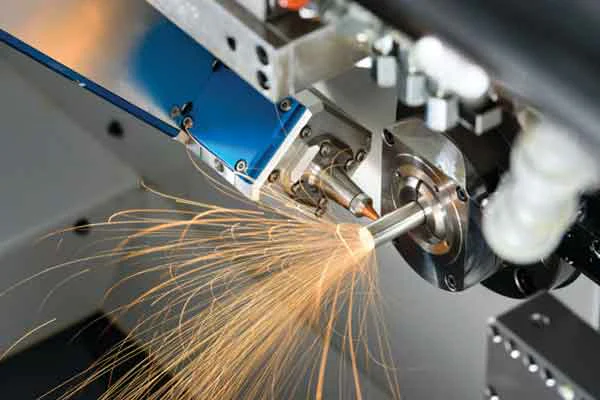
Medical machining parts are precision medical components manufactured by Swiss turning, MAZAK mill-turn machining, multi-axis milling and precision boring for medical devices, surgical instruments, diagnostic equipment, dental systems and implantable devices.
Medical device suppliers need repeatable geometry, biocompatible materials, controlled finishing and documentation that can support design verification and supplier audits.
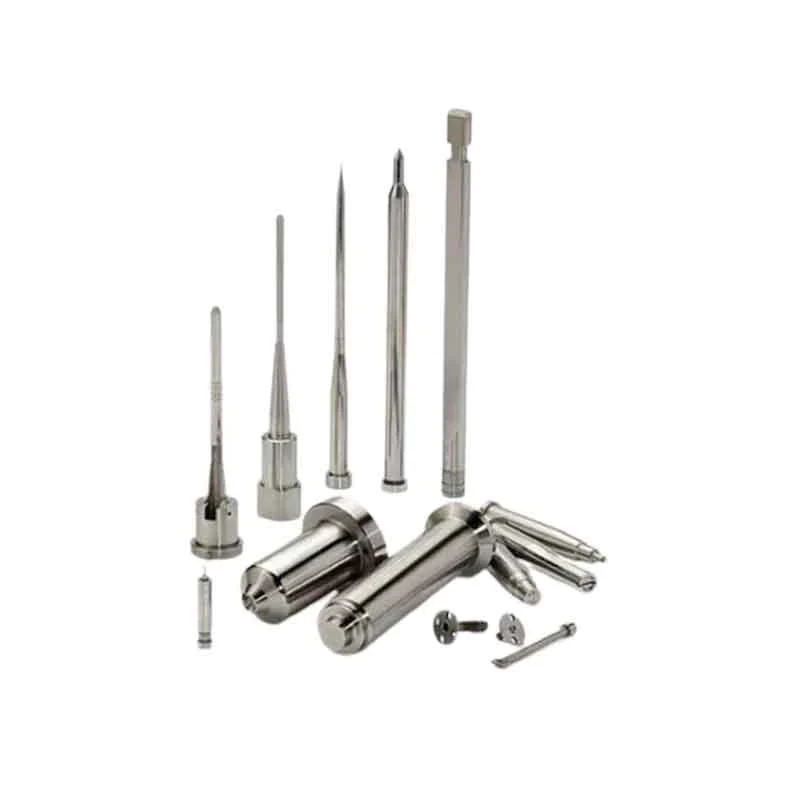
Coordinate geometry, material, finishing and inspection around the part's intended function.
The sliding headstock and guide bushing support the workpiece at the cutting zone, reducing deflection and supporting tolerances to ±0.005mm on bone screws, implant bodies and catheter components after engineering review.
Surgical shafts, pedicle screws, and dental implant bodies share a high length-to-diameter ratio that causes chatter on conventional lathes.
Medical implant surfaces require Ra ≤ 0.4 µm to minimize bacterial adhesion and tissue irritation.
Live tooling, sub-spindle, and back-working capability allow Swiss centers to mill, drill, thread, and groove in a continuous cycle.
Titanium Grade 23 ELI, 316L stainless, 17-4PH, Nitinol, and PEEK all present chip-control and work-hardening challenges.
Bar-fed Swiss automation runs lights-out with part-to-part variation held within statistical process control limits.
Explore representative configurations and share your drawing for a product-specific review.

Bone screws, cortical screws, cancellous screws, locking screws, and pedicle screws in titanium Grade 5 and Grade 23 ELI for fracture fixation, spinal fusion, and joint reconstruction — threaded to ISO 5835 accuracy.
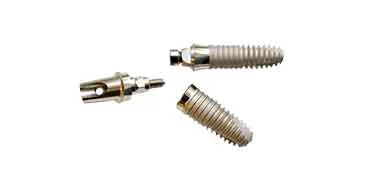
Titanium Grade 4 and Grade 5 dental implant bodies, healing abutments, and prosthetic abutments — internal connection concentricity of ±0.003mm and taper angle accuracy of ±0.01° for reliable prosthetic seating.
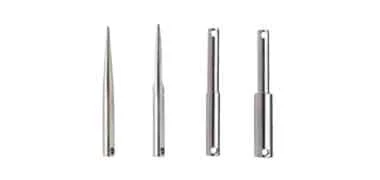
Precision shafts, jaw components, handle bodies, and linkage hardware for laparoscopic, endoscopic, biopsy, and hand instruments in 316L and 17-4PH stainless — compatible with autoclave sterilization and reprocessing cycles.
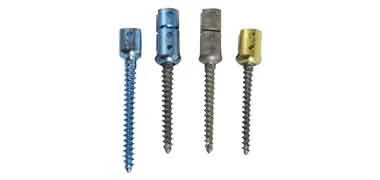
Titanium and PEEK spinal fusion components — pedicle screws, tulip heads, rod connectors, cross-links, and interbody fusion cages — with complex multi-start locking threads and anti-rotation features verified by CMM.
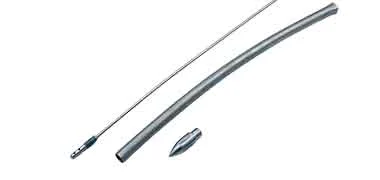
Nitinol and titanium medical machined components for cardiovascular devices — stent delivery system components, heart valve elements, and catheter tip components — with specialized Nitinol machining protocols preserving superelastic properties.
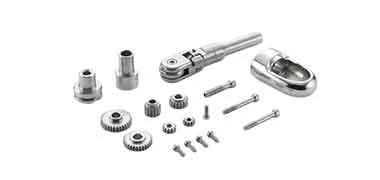
Metering components, valve bodies, dose counter mechanisms, and fluid pathway hardware for auto-injectors, infusion pumps, and pen injectors — tight tolerances on metering orifice geometry and valve seat dimensions govern dose accuracy.
Match the component to its operating environment, assembly interfaces and documentation requirements.
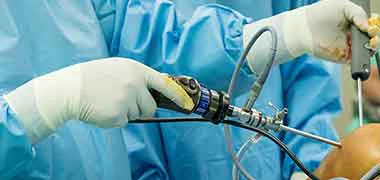
Medical Machining Parts for medical equipment, instruments and component assemblies, with material and inspection requirements confirmed for the application.

Medical Machining Parts for medical equipment, instruments and component assemblies, with material and inspection requirements confirmed for the application.
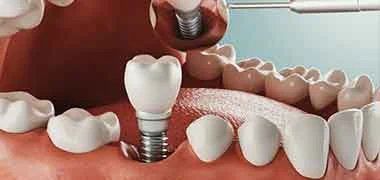
Titanium Grade 4 and Grade 5 dental implant bodies, abutments, and prosthetic components — SLA surface treatment for osseointegration and electropolishing for prosthetic connection surfaces available from our precision factory.
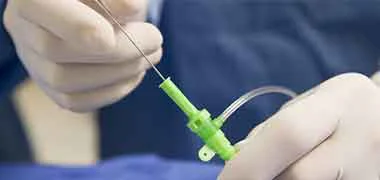
Nitinol and titanium medical machined components for stent delivery systems, heart valve elements, and vascular access hardware — specialized machining protocols preserving Nitinol superelastic and shape memory properties.

Medical Machining Parts for medical equipment, instruments and component assemblies, with material and inspection requirements confirmed for the application.
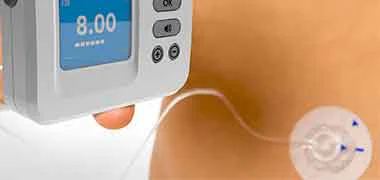
Metering components, valve bodies, and fluid pathway hardware for auto-injectors, infusion pumps, and pen injectors — wholesale medical machining parts supply with blanket order scheduling for high-volume device programs.
Explore machining capabilities, material options and quality support for medical components.
Explore medical machiningMaterials
Confirm the exact grade, delivery condition and finish compatibility with your drawing.
ISO 10993 compliant · Highest corrosion resistance · Dental implants · Cardiovascular fittings · Soft tissue contact
ISO 10993 compliant · High strength · Orthopedic screws · Spinal implants · Most-used implant titanium
Superior fracture toughness · Extra-low interstitials · Load-bearing orthopedic implants · Fatigue-critical applications
ISO 10993 compliant · Surgical instruments · Non-implantable parts · Excellent sterilization resistance
High strength · Reusable instrument shafts · Instrument mechanism components · Corrosion-resistant
High hardness · Surgical cutting blades · Maximum edge retention · Wear-resistant instrument components
Superelastic · Shape memory · Guidewires · Stent delivery components · Specialized machining protocols preserve Ttr
Finish selection
Select the finish around the specified material, functional surfaces and service conditions. Confirm process details and acceptance requirements with your drawing.
Preferred surface treatment for implantable stainless steel medical machining parts.
ASTM A967 compliant passivation for stainless steel surgical instrument components.
Color-coded size identification for orthopedic and spinal implant components.
Sandblasted, large-grit, acid-etched surface for bone-contact titanium dental and orthopedic implant surfaces.
Validated ultrasonic cleaning processes for particle-free, contamination-free surfaces — cleaning validation records available for device manufacturer quality system documentation.
Machining resources for drawing review, prototypes and repeat-production programs.
Inspection & documentation
Review material identity, machining datums, functional dimensions and production records for your component.
Final tolerances, inspection coverage and acceptance criteria are confirmed against your drawing, material and geometry.
Confirm the certificates, inspection reports and production records needed for your order when sharing your drawing.
The product range includes Orthopedic Implant Components, Dental Implant Components, Surgical Instrument Components. Custom geometry is reviewed against the approved drawing.
Material options include Grade 2 (CP Ti), Grade 5 (Ti-6Al-4V), Grade 23 (Ti-6Al-4V ELI). The exact grade and condition should be confirmed for your application.
Define critical dimensions, datums and mating features, together with datums, tolerances and required surface condition.
Finishing options include electropolishing (ep), passivation, titanium anodizing. Applicability is reviewed against the specified material and geometry.
Pricing and delivery are confirmed after reviewing the drawing, material availability, quantity, machining route, finishing and inspection scope.
CUSTOM CNC PARTS
Share your drawing or 3D model, material, critical dimensions, finish and order quantity. We’ll review the machining route, inspection scope and delivery requirements.
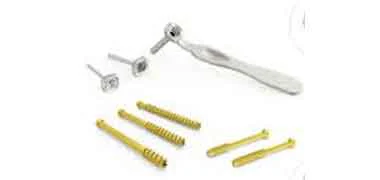 Medical Instrument Machining
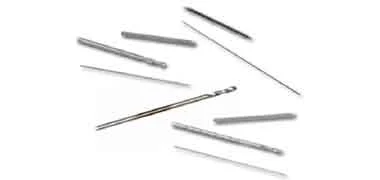 Medical Devices Pins CNC Turning
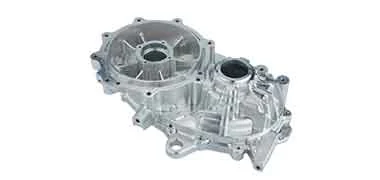 5-Axis Aluminum CNC Machining Parts
 5-Axis CNC Machining Aerospace Components