
Precision Turned EV
Charging Pins
CNCPioneer produces turned power, signal, pilot, guide, busbar, and socket contact pins for EV charging systems. Swiss CNC turning, selective plating, deburring, and conductivity documentation support brass, copper, stainless, and approved alloys. Qualified features reach ±0.005mm diameter and ±0.010mm concentricity; quotes arrive in 24 hours.

What Are Precision Turned
EV Charging Pins?
Precision turned EV charging pins are conductive or mechanical contact parts used in plugs, sockets, cables, wall boxes, charging posts, vehicle inlets, and connector modules. They can carry power or signals, guide mating parts, support spring contacts, locate insulators, or secure terminals.
Performance depends on contact geometry, conductivity, plating, current path, mating force, temperature rise, corrosion, insulation clearance, and repeatable dimensions. We review electrical and mechanical requirements together before defining alloy, process, finish, inspection, and packaging.
-
EV contact-pin DFM for current path, contact zone, and insulation We review function, contact length, mating force, spring or socket interface, retention, insulation, temperature, plating, cleaning, and assembly orientation.
-
Swiss CNC turning for miniature, concentric, repeatable geometry Guide-bushing Swiss CNC supports small pins; CNC turning and mill-turn equipment produce larger terminals, flanged pins, busbar interfaces, and complex contact components.
-
Copper and brass alloys matched to conductivity, heat, wear, and plating C36000 brass, C14500 tellurium copper, C17200 beryllium copper, C11000 copper, and approved alloys are selected for conductivity, strength, heat rise, corrosion, machining, and finish.
-
24-hour EV charging pin quotes from a China factory Send a drawing or STEP file with connector, current or signal, plating, quantity, and annual usage. Pricing returns in 24 hours, with DFM feedback in 48.

Why CNCPioneer for
Precision Turned EV Charging Pins?
Swiss CNC and mill-turn capability, conductive alloy selection, contact and insulation DFM, selective plating, and documented inspection give EV connector and charging-equipment OEMs a reliable pin supply partner.
Conductive Material Selection for EV Contact Pins
Materials balance conductivity, heat, strength, contact wear, corrosion, machining, and plating. C14500 combines machinability and conductivity; C17200 adds spring strength; C11000 prioritises conductivity; and C36000 suits economical terminals and signal pins.
Swiss CNC Turning for Miniature and Volume EV Pins
Guide-bushing Swiss CNC limits deflection in slender pins and holds stable diameters, contact noses, shoulders, grooves, and concentric zones. CNC turning and mill-turn equipment handle larger busbar terminals, flanged contacts, and multi-feature pins.
Contact Geometry, Mating Force, and Insulation DFM
We review contact length, tip profile, shoulders, grooves, retention, spring clearance, insulation, insertion and extraction force, orientation, and assembly sequence. This protects mating contacts from burrs and avoids interference with insulators or carriers.
Selective Plating for Power and Signal Contact Zones
Nickel, tin, silver, gold, and specified plating systems can be applied selectively for contact, solder, crimp, press-fit, or retention zones. Thickness, masking, allowance, contact resistance, solderability, corrosion, and wear are reviewed, with post-plate checks where needed.
Low-Burr, Clean, Assembly-Ready Contacts
We control tooling, chips, deburring, washing, contact-zone protection, drying, visual inspection, and packaging to prevent defects that affect contact, spring movement, sealing, or assembly. Clean handling, ultrasonic cleaning, tubes, trays, and compartment packs are available.
China Supply with OEM Documentation
Available records cover materials, alloy verification, dimensions, concentricity, plating, conductivity or contact resistance, compliance, conformance, PPAP Level 3, and traceability. Choose bulk, trays, tubes, VCI, clean packs, or bar-coded labels.
Precision Turned EV Charging Pins
Product Portfolio
Power, signal, pilot, guide, busbar, spring-contact, retention, socket, terminal, and fully custom turned components for EV charging systems.
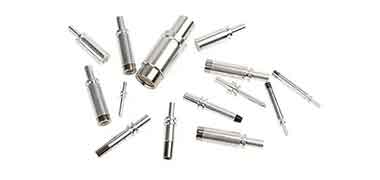
Power Contact Pins and High-Current Terminals
Power contact pins for plugs, sockets, vehicle inlets, wall boxes, posts, cables, and modules. Copper, brass, and approved conductive alloys are machined with controlled contact diameter, nose, retention, crimp or busbar interface, and plating zone.
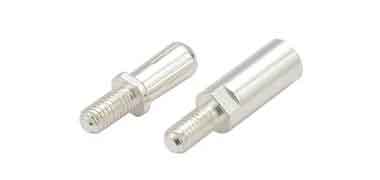
Signal, Pilot, and Control Contact Pins
Small signal, pilot, control, and auxiliary terminals for charging connectors and EV systems. Fine diameters, shoulders, grooves, spring interfaces, PCB or wire connections, gold or nickel plating, and clean packs are available with controlled tip profile, force, clearance, and burrs.
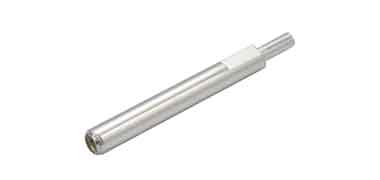
EV Connector Terminals and Socket Interfaces
Turned terminals and socket interfaces for plugs, couplers, vehicle inlets, and carriers. Hollow or solid contacts, shoulders, flanges, grooves, spring interfaces, attachments, and selective plating are controlled for concentricity, contact surface, mating depth, retention, insulation, and assembly direction.
Industries & Applications
Connector components for OEMs that need stable conductive contact, reliable mating, controlled heat, clean assembly, corrosion protection, and traceability.

EV Charging Stations
Power, pilot, signal, guide, and retention pins for public stations, AC wall boxes, DC chargers, plugs, couplers, and vehicle inlets. Copper-alloy selection, selective plating, geometry control, clean handling, and inspection records support equipment OEMs.

Automotive EV Vehicle
IATF 16949 pins for vehicle inlets, onboard interfaces, cables, battery systems, high-voltage connectors, and serviceable modules. Programmes can include PPAP Level 3, Cpk studies, material and plating records, contact-resistance checks, bar-coded packaging, and scheduled delivery.
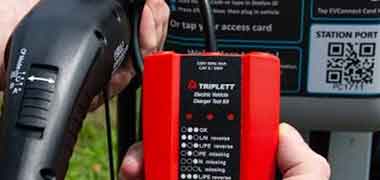
Charging Test Equipment
Custom pilot, signal, spring, test, guide, adapter, and service-tool parts for validation, automated fixtures, production equipment, and maintenance systems. Low-volume prototypes, replacements, and documented production include controls for geometry, fit, plating, cleaning, and packaging.
Materials
Materials for Precision Turned
EV Charging Pins
Free-machining brass, high-conductivity, tellurium, and beryllium copper, stainless, nickel alloys, and approved contact materials selected for current, heat, wear, strength, corrosion, plating, spring behaviour, and volume.
C36000 Free-Machining Brass
Efficiently machined for signal terminals, pilot contacts, guide pins, inserts, and connector hardware. C36000 offers clean turning, stable dimensions, useful conductivity, and economical plating; current, mating material, finish, spring interface, burrs, and electrical needs are reviewed.
C11000 / C10200 Copper
For high electrical conductivity and direct current paths. We review machining, burrs, contact pressure, heat rise, plating, oxidation, finish, and storage; contact noses, busbar seats, crimps, shoulders, grooves, and selective plating are available.
C14500 Tellurium Copper
A balance of conductivity and machinability for turned contact pins, terminals, and power interfaces. It supports complex small features with improved chip control over pure copper; current path, surface, plating, corrosion, heat, mating cycles, and stability are reviewed.
C17200 Beryllium Copper
For spring contacts, resilient interfaces, high-cycle parts, and designs requiring strength with conductivity. Treatment, machining sequence, hardness, contact force, plating, safety controls, and inspection are defined before production.
303 / 304 / 316L Stainless Steel
For guide and retention pins, housings, shafts, mechanical contacts, and parts needing corrosion resistance, strength, or electrical isolation. 303 machines easily, 304 provides general resistance, and 316L suits harsher environments. Passivation, polishing, cleaning, and material records are available.
Nickel Alloys and Special Contact Materials
Nickel alloys, phosphor bronze, aluminium bronze, plated steel, titanium, and approved materials can address temperature, corrosion, strength, conductivity, wear, magnetic, or weight needs. Availability, machining, contact resistance, plating, surface condition, compliance, and cost are reviewed before quote.
Surface Treatments for
Precision Turned EV Charging Pins
Treatments are selected for contact resistance, current, heat, wear, corrosion, mating cycles, solderability, and insulation. We define thickness, masking, allowance, contact protection, cleaning, and post-finish inspection before production.
Nickel Plating for Barrier and Corrosion Protection
Nickel provides a barrier layer, corrosion protection, wear resistance, and a stable base for selected contacts. Thickness, contact resistance, mating wear, masking, solder or crimp areas, diameter growth, and inspection are reviewed. It can be applied selectively for electrical and mechanical zones.
Tin Plating for Solderability and Contact Interfaces
Tin supports solderable wire or busbar interfaces, low-resistance terminals, and selected contacts. We review thickness, solderability, wear, storage requirements, masking, allowance, and cleaning, then check contact dimensions and assembly fit to plan.
Silver Plating for High-Conductivity Contact Zones
Silver plating suits high-conductivity power contacts, specialised terminals, busbar interfaces, and high-cycle surfaces. Thickness, resistance, wear, anti-tarnish protection, selective plating, masking, mating material, and packaging are reviewed; conductivity or resistance records are available when specified.
Gold Plating for Signal and Low-Level Contacts
Gold plating supports signal contacts, pilot pins, control interfaces, and stable low-level contact performance. We review gold thickness, nickel underlayer, contact force, mating cycles, selective plating, solder or crimp areas, and allowance before production.
Low-Burr Deburring and Contact-Zone Cleaning
Contact pins need controlled edges, clean grooves, burr-free noses, and low-particle surfaces. Precision deburring, brushing, washing, ultrasonic cleaning, drying, and visual inspection are tailored to the connector, while contact, spring, insulator, and crimp areas remain protected.
Laser Marking and Clean Connector Packaging
Part numbers, lot codes, orientation marks, clean trays, tubes, sealed bags, and compartment packaging protect contact areas and prevent mixed lots. Marking, contrast, protection, cleanliness, traceability, and labels are reviewed for manual or automated assembly.
DFM covers nickel, tin, silver, gold, selective plating, masking, deburring, cleaning, marking, resistance records, post-plate inspection, and protective packaging.
IATF 16949 & AS9100D Quality System for
Precision Turned EV Charging Pins
Our quality system controls four production risks: conductive alloy identity, contact and insulator geometry, plating and cleanliness, and documentation traceability from prototype through repeat production.
Conductive Alloy, Plating, and Contact DFM
Incoming copper, brass, stainless, and special-alloy lots are checked against certificates and can receive alloy verification. DFM confirms function, conductor area, contact zone, mating material, spring interface, plating, temperature, corrosion, insulation, assembly sequence, and inspection plan.
- Material and certificate review for every contact alloy
- Current path, force, mating cycles, heat, plating, masking, and insulation reviewed in DFM
- Resistance or conductivity records and post-plate gauges defined when specified
Swiss CNC and CNC Turning Contact Geometry Control
Swiss CNC, lathes, and mill-turn centres are selected for contact diameter, length, material, profile, features, quantity, and tolerance. Small pins receive close support; larger terminals and busbar interfaces use stable datums. Targets can include ±0.005mm diameter, ±0.010mm concentricity, controlled tip radius, and repeatable contact length.
- Swiss CNC support for miniature signal, pilot, and charging pins
- Turning and mill-turn for power terminals, busbar pins, and complex features
- First-piece optical, CMM, pin-gauge, contact-zone, and finish inspection
100% Critical Geometry and Post-Plating Inspection
Charging pins are inspected to the drawing for contact diameter, length, tip, shoulders, grooves, flanges, holes, retention, threads, concentricity, burrs, and finish. Plated parts receive post-plate checks for thickness, contact area, appearance, diameter, masking, and mating fit; cleanliness and packaging are checked before shipment.
- 100% inspection of specified critical dimensions
- Post-nickel, tin, silver, gold, or selective-plating review where specified
- Contact geometry, insulation, burr, cleanliness, finish, and label checks
Documentation — Dimensional Report, Plating Cert, PPAP, FAIR, and Traceability
Available records include dimensions, materials, alloy verification, plating and thickness, contact resistance or conductivity, finish, compliance, and conformance documents, plus PPAP Level 3 and AS9102 FAIR where required. Lot traceability links material, machining, plating, inspection, cleaning, and packaging.
- Dimensional, contact-geometry, material, plating, and conformance records
- PPAP Level 3 for EV, automotive, charging, and volume terminal programmes
- AS9102 FAIR for aerospace, test, power-electronics, and precision programmes
Precision Turned EV Charging Pins FAQ
Key answers on drawings, contact materials, plating, geometry, cleanliness, lead times, and production quotes.
Send a 2D drawing or STEP file with material, contact function, current or signal, diameter, length, contact geometry, mating socket or spring, key features, plating, insulation, cleanliness, quantity, and packaging. Without a drawing, photos or samples plus mating dimensions, current, temperature, cycles, and annual usage are enough to begin.
Material depends on current, heat, force, wear, conductivity, corrosion, machining, plating, and cost. C11000/C10200 prioritises conductivity; C14500 combines conductivity and machinability; C17200 adds strength and spring performance; C36000 suits economical terminals; and stainless supports guide or retention parts. DFM confirms the choice against connector duty.
Plating is selected for resistance, current, cycles, corrosion, wear, solderability, and appearance. Nickel forms a barrier; tin supports solderable or low-resistance interfaces; silver suits high-conductivity contacts; and gold suits signal or low-level zones. We review masking, thickness, allowance, cleaning, inspection, and electrical records where required.
Simple turned pins typically take 5–8 business days after drawing confirmation and material availability. Plated, spring-interface, busbar, high-current, clean-packaged, or documentation-heavy programmes commonly take 8–15 days. Volume timing depends on stock, CNC cycle, plating, inspection, cleaning, packaging, and quantity. Quotes return in 24 hours; DFM in 48.
Request an EV Charging Pins Quote
Upload a drawing or CAD model with mating socket or spring details, current or signal, material, plating, insulation, cleanliness, quantity, or annual usage. Receive a quote within 24 hours and EV charging pin DFM feedback within 48.