
Reducer Shaft
Turning Machining Factory
CNCPioneer is an IATF 16949 and AS9100D certified high-end reducer shaft turning machining factory delivering precision-turned transmission shaft components with tolerances as tight as ±0.003mm — 78+ Swiss CNC lathes and 66+ MAZAK mill-turn centers for input shafts, output shafts, intermediate shafts, hollow shafts, spline shafts, worm shafts, planetary sun gear shafts, and cycloidal reducer eccentric shafts for industrial gearbox OEMs, automotive transmission manufacturers, wind energy producers, and quality reducer shaft turning machining wholesale distribution programs worldwide since 2011.
What Is Reducer Shaft
Turning Machining?
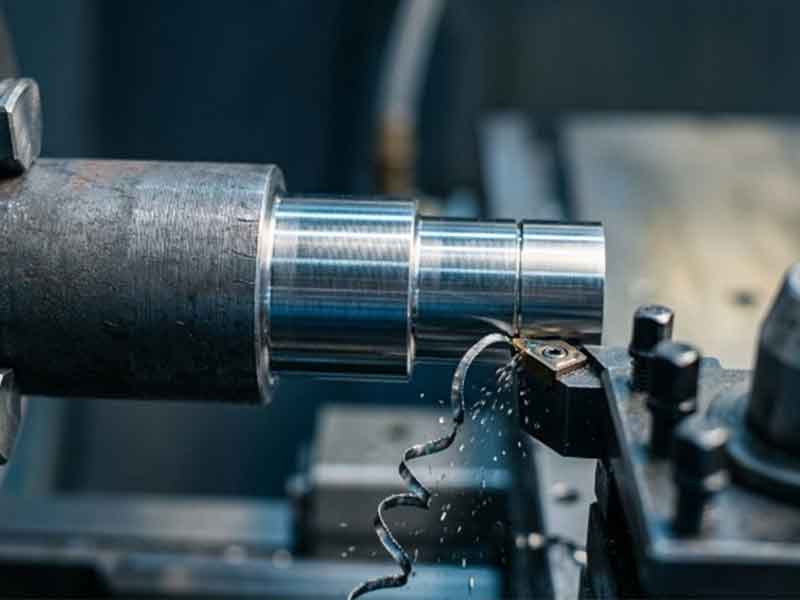
Reducer shaft turning machining is the precision CNC lathe manufacturing process that produces the rotating shaft components of gear reduction drives — the input shafts, output shafts, intermediate shafts, and specialized shaft variants that transmit mechanical power through industrial gearboxes, automotive transmissions, wind turbine main drives, robot joint reducers, conveyor drives, and precision servo reducers — through cylindrical turning, taper turning, threading, grooving, spline milling, keyway broaching, and precision grinding operations that achieve the bearing journal accuracy, gear seat concentricity, sealing surface finish, and thread form compliance that reducer shaft assembly performance, bearing service life, and transmission reliability demand.
The reducer shaft is the most precision-critical rotating component in any gear reduction drive assembly. Every dimension machined into the reducer shaft directly governs one or more transmission performance parameters: bearing journal diameter tolerance (±0.003mm) governs bearing inner race fit and radial clearance determining bearing fatigue life; journal roundness (±0.002mm) governs bearing contact stress uniformity determining whether the bearing achieves its design life; shaft runout (≤0.010mm) governs vibration amplitude and gearbox noise; gear seat diameter accuracy governs interference fit preventing gear fretting wear; and oil seal surface finish (Ra 0.4–0.8μm) governs sealing contact stress determining oil retention without premature lip wear.
-
Swiss CNC guide bushing — ±0.001mm bearing journal roundness Reducer shafts are characteristically slender — L/D ratios of 5:1 to 15:1 are common in industrial gearbox input and intermediate shaft designs — creating deflection under cutting forces that degrades journal roundness on conventional CNC lathes. CNCPioneer's Swiss CNC guide bushing support eliminates this deflection, achieving bearing journal roundness of ±0.002mm standard and ±0.001mm for high-end reducer shaft turning machining premium programs — with 100% Mitutoyo roundness tester verification at 0.0001mm resolution on all precision bearing journal components.
-
High-end reducer shaft turning machining material expertise Quality reducer shaft turning machining in case-hardening steels (20CrMnTi, 17CrNiMo6), medium-carbon alloy steels (42CrMo, 40Cr), stainless steels (17-4PH H900, 316L), and nitriding steels requires dedicated material-specific cutting protocols addressing each alloy's hardness, work-hardening tendency, chip formation, and heat generation. CNCPioneer's material-specific protocols consistently achieve ±0.003mm journal diameter and Ra 0.4μm surface finish across all primary reducer shaft alloys — with complete heat treatment verification (carburizing, induction hardening, Q&T, nitriding) and hardness certification.
-
Quality reducer shaft turning machining online — 24-hour quotation Every quality reducer shaft turning machining online inquiry receives comprehensive DFM review and competitive quotation within 24 hours — covering material feasibility, journal tolerance achievability, spline geometry assessment, heat treatment compatibility, and complete unit pricing at prototype through wholesale blanket order quantity tiers. Online drawing submission (STEP, IGES, SolidWorks, DXF, PDF) for immediate DFM review initiation. Online quality documentation access: CMM reports, material certifications, inspection records.
-
40–60% China supply reducer shaft factory cost advantage CNCPioneer's China high-end reducer shaft turning machining factory delivers 40–60% cost reduction versus equivalent reducer shaft turning machining from European and Japanese precision machining facilities — enabling gearbox OEMs and quality reducer shaft turning machining wholesale distributors to achieve competitive reducer shaft component pricing at bearing journal roundness ±0.002mm, journal diameter ±0.003mm, and IATF 16949 PPAP Level 3 documentation quality equivalent to Western suppliers. Distribution partners achieve 30–50% gross margin on reducer shaft wholesale programs.

Why CNCPioneer — High-End Reducer
Shaft Turning Machining Factory
CNCPioneer's high-end reducer shaft turning machining factory combines Swiss CNC guide bushing precision for slender shaft geometries, MAZAK mill-turn capability for complex multi-feature shaft configurations, complete heat treatment verification program, dual IATF 16949 and AS9100D certification, and China supply economics — creating the quality-to-cost positioning that makes our supply quality reducer shaft turning machining programs competitive with established Japanese and European reducer shaft machining suppliers.
Swiss CNC — ±0.001mm Journal Roundness
CNCPioneer's Swiss CNC lathe guide bushing support eliminates deflection on L/D ratios up to 20:1 reducer shaft geometries — achieving bearing journal roundness ±0.002mm standard and ±0.001mm high-precision using CBN cylindrical grinding with Mitutoyo roundness tester verification at 0.0001mm resolution. A 0.005mm journal roundness error increases peak Hertz contact stress 15–25% above design value, reducing bearing L10 life to 40–60% of catalog value. 100% roundness tester documentation on all precision bearing journal components.
Complete Heat Treatment Verification Program
CNCPioneer's quality reducer shaft turning machining heat treatment program covers all major reducer shaft heat treatment processes: carburizing 20CrMnTi/17CrNiMo6 to HRC 58–62 at 0.8–1.5mm case depth; induction hardening 42CrMo to HRC 52–58; Q&T to HRC 28–36; ion nitriding 31CrMoV9 to HV 700–900 with ≤0.008mm dimensional distortion. Post-treatment hardness testing, case depth metallographic sampling, and distortion measurement before grinding confirm heat treatment compliance on every quality reducer shaft turning machining production lot.
MAZAK Mill-Turn — Complex Multi-Feature Reducer Shafts
MAZAK mill-turn centers produce complex reducer shaft geometries — worm shaft thread form + bearing journals + coupling interface; planetary sun gear shaft splined input + gear seat + bearing journals; cycloidal reducer eccentric shaft stages — in single-setup operations preserving critical concentricity relationships between all shaft features. Gear seat concentricity to bearing journal ±0.003mm; worm OD concentricity ±0.005mm; multi-gear-seat mutual concentricity ±0.003mm — all from single-setup referencing the same shaft centerline datum.
Oil Seal Surface — Ra 0.4μm and Lead Angle Control
Oil seal contact surface finish is machined to Ra 0.4–0.8μm with 0°–0.05° lead angle per DIN 3760 for optimal radial lip seal performance. Surfaces smoother than Ra 0.4μm increase seal lip contact stress causing premature wear; rougher than Ra 0.8μm allow micro-leakage channels. Zero or minimal lead angle on oil seal surface prevents spiral transport of oil past seal lip — the most common cause of lip seal oil leakage independent of seal contact force. Lead angle verified by profilometer on all quality reducer shaft turning machining oil seal programs.
IATF 16949 PPAP Level 3 — Automotive OEM Supply
IATF 16949 certification with PPAP Level 3 capability qualifies CNCPioneer as a quality reducer shaft turning machining supplier for automotive transmission OEM supply chains — Cpk ≥ 1.67 on bearing journal diameter and roundness special characteristics; MSA Gage R&R for air gauge and roundness tester measurement systems; FMEA; control plan; material lot traceability to automotive recall investigation standard. Full PPAP Level 3 documentation for automotive quality reducer shaft turning machining programs. FAIR per AS9102 for aerospace reducer shaft programs.
Quality Reducer Shaft Wholesale — 30–50% Distributor Margin
CNCPioneer's quality reducer shaft turning machining wholesale programs deliver 40–60% cost reduction versus equivalent European and Japanese reducer shaft turning machining suppliers at equivalent dimensional accuracy and IATF 16949 documentation — creating 30–50% gross margin for industrial drivetrain component distributors. Tiered wholesale pricing from 15–20% at 10–49 pieces through maximum discount at 5,000+ pieces and annual blanket orders. Minimum wholesale: 50 pieces per configuration. Dedicated capacity reservation, inventory stocking, and monthly release scheduling for established accounts.
Reducer Shaft Turning Machining
— Complete Product Range
CNCPioneer's high-end reducer shaft turning machining covers every shaft type across all reducer designs — from miniature precision instrument reducer shafts (Ø5mm) through large-diameter industrial gearbox output shafts (Ø200mm+) — producing input shafts, output shafts, intermediate shafts, hollow shafts, spline shafts, worm shafts, planetary sun gear shafts, planet carrier shafts, and cycloidal reducer eccentric shafts in all primary reducer shaft alloys with complete heat treatment and surface treatment programs.

Input & Intermediate Shaft Turning Machining
Input shaft bearing journal specifications: k6/m6 interference fit ±0.003–0.006mm; roundness ±0.002mm standard/±0.001mm high-precision; cylindricity ±0.003mm/50mm; Ra 0.4μm (Ra 0.2μm for angular contact bearing high-speed programs). Motor coupling interface: keyway JS9 ±0.015mm; DIN 5480 or SAE spline ±0.005mm tooth form; shaft end thread ±0.005mm pitch diameter. Oil seal surface: h11 tolerance; Ra 0.4–0.8μm; 0°–0.05° lead angle per DIN 3760. Applications: industrial helical gearbox input shafts Ø20–Ø80mm in 42CrMo or 20CrMnTi; servo reducer input shafts Ø10–Ø30mm; automotive transmission input shafts (IATF 16949, PPAP Level 3); wind turbine main gearbox input shafts Ø80–Ø200mm. Intermediate shaft multi-gear-seat mutual concentricity ±0.003mm; gear seat-to-bearing journal concentricity ±0.003mm; shoulder face runout ≤0.010mm; gear seat-to-gear seat axial spacing ±0.050mm.

Output Shaft Turning Machining
Output shaft bearing journal specifications: k6/m6 ±0.005–0.008mm (larger absolute ISO 286 H tolerance for larger output shaft diameters); roundness ±0.003mm standard/±0.002mm high-end; cylindricity ±0.005mm/75mm; Ra 0.4μm. Keyed output shaft interface: key seat JS9 ±0.015mm width/±0.020mm depth/DIN 6885 standard; shaft end j6 for coupling hub press-fit; shaft end thread ±0.005mm for retaining nut. Splined output shaft: DIN 5480 or SAE involute spline ±0.005mm tooth form/±0.003mm pitch circle diameter/Ra 0.8μm. Hollow bore output shaft: H7 bore ±0.008–0.015mm; bore-to-journal concentricity ±0.005mm (the critical hollow shaft specification governing shaft-mount reducer angular alignment accuracy); bore Ra 1.6μm key-retained/Ra 0.8μm shrink-disc; 15°×1.0mm lead-in chamfer. High-volume wholesale quality reducer shaft turning machining programs for industrial gearbox OEMs: 1,000–100,000 output shaft pieces annually.

Worm Shaft Turning Machining
Worm shafts are the most geometrically complex reducer shaft turning machining product — combining precision bearing journals, precision-machined worm thread form, and motor coupling interface in a single component. Worm thread turning machining specifications: module and lead accuracy per DIN 3975 or AGMA 6022 ±0.005mm pitch error; worm thread profile (pressure angle) ±0.05° for correct worm-to-worm gear contact ratio; worm thread surface finish Ra 0.4μm (governing mixed-lubrication film formation that determines worm gear reducer efficiency — rougher surfaces increase boundary friction reducing efficiency below specification); worm OD concentricity to bearing journals ±0.005mm for correct center distance at assembly; lead angle accuracy ±0.01° governing self-locking or back-driving behavior. Materials: 20CrMnTi carburized and ground HRC 58–62 (standard industrial worm shaft); 42CrMo induction hardened HRC 52–58 (medium-duty cost-effective); 316L stainless (food processing worm gear reducers). Ra 0.4μm worm thread surface finish verified by profilometer on every worm shaft quality reducer shaft turning machining program.

Planetary, Sun Gear & Eccentric Shaft Turning
Sun gear shaft quality reducer shaft turning machining: sun gear seat ±0.003mm; sun gear seat-to-input bearing journal concentricity ±0.003mm; splined input DIN 5480 ±0.005mm; 20CrMnTi carburized HRC 58–62. Planet carrier output shaft: output bearing journal ±0.003mm diameter/±0.002mm roundness; carrier flange bolt circle ±0.020mm; ISO 9283 robot flange or standard coupling interface. Cycloidal reducer eccentric shaft turning machining for industrial robot joint RV and cycloidal pin-wheel reducers — the highest-precision reducer shaft turning machining product: eccentric bearing seat roundness ±0.001mm for cycloidal mesh accuracy governing robot arm positioning repeatability; eccentric offset accuracy ±0.003mm governing cycloidal transmission error; eccentric phase angle between stages ±0.05° for cycloidal disc load distribution; material 20CrMnTi carburized HRC 60–62 or 17CrNiMo6. FAIR per AS9102 for aerospace and robot OEM eccentric shaft programs.

Spline & Hollow Shaft Turning Machining
Involute spline quality reducer shaft turning machining: DIN 5480 module 0.5–5.0mm, 30°/45° pressure angle; spline pitch diameter ±0.005mm; tooth profile ±0.005mm; spline concentricity to bearing journals ±0.005mm; Ra 0.8μm; lead accuracy ±0.010mm/50mm for helical spline programs. Parallel key spline (DIN 5461/5462/5463): spline width JS9 ±0.015–0.020mm; height ±0.020mm; symmetry to shaft axis ±0.010mm for large-diameter output shaft applications. Thread rolling (cold rolling) for spline production: Ra 0.2–0.4μm surface finish with compressive residual stress improving spline fatigue life — preferred for high-volume quality reducer shaft turning machining wholesale programs. Hollow bore reducer shafts: external bearing journal ±0.003mm/±0.002mm roundness; hollow bore H7 ±0.008–0.012mm; bore-to-journal concentricity ±0.005mm; bore Ra 1.6μm key-retained/Ra 0.8μm shrink-disc.

Quality Reducer Shaft Wholesale Supply Programs
CNCPioneer's quality reducer shaft turning machining wholesale programs serve industrial gearbox component distributors, transmission assembly contractors, and mechanical power transmission resellers with tiered pricing (15–20% at 10–49 pcs; 25–35% at 50–199 pcs; 35–50% at 200–999 pcs; 50–60% at 1,000–4,999 pcs; maximum discount at 5,000+ pcs and annual blanket orders). Minimum wholesale: 50 pieces per reducer shaft configuration. Blanket order scheduling with monthly delivery releases; dedicated production capacity reservation; inventory stocking for fastest-moving standard shaft configurations. Quality reducer shaft turning machining online ordering: drawing submission → 24-hour DFM review and quotation → online quality documentation access (CMM reports, material certifications, inspection records). Every wholesale reducer shaft shipment: Certificate of Conformance, CMM dimensional report, material certifications, heat treatment records, surface treatment certifications.
Industries & Applications
CNCPioneer's high-end reducer shaft turning machining factory serves industrial gearbox OEMs, automotive transmission manufacturers, wind turbine gearbox producers, robotics and automation reducer developers, agricultural equipment drivetrain suppliers, construction and mining equipment makers, marine and offshore equipment producers, food and pharmaceutical processing equipment manufacturers, and quality reducer shaft turning machining wholesale distribution partners worldwide.
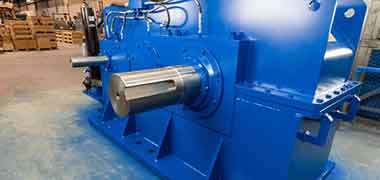
Industrial Gearbox Manufacturing
Supply quality reducer shaft turning machining for parallel shaft helical reducer input, intermediate, and output shaft programs; bevel-helical gearbox shaft components; worm gear reducer worm shaft turning machining; and multi-stage industrial reducer shaft component supply. High-volume quality reducer shaft turning machining wholesale programs for industrial gearbox OEMs supplying conveyor, pump, mixer, and fan drive applications in 42CrMo and 20CrMnTi.
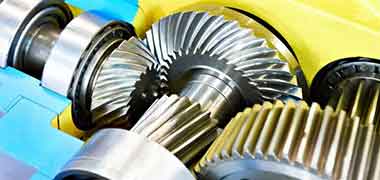
Automotive Transmission
IATF 16949 certified quality reducer shaft turning machining for automotive manual transmission input and output shaft components, automatic transmission sun gear shafts and planet carrier shafts, EV reducer shaft components, and transfer case shaft elements. Full PPAP Level 3 documentation with Cpk ≥ 1.67 on bearing journal special characteristics for automotive OEM reducer shaft supply chains.

Wind Energy
High-end reducer shaft turning machining for wind turbine main gearbox input shaft components Ø80–Ø200mm, intermediate shaft elements, and planet carrier shaft hardware in large-diameter 17CrNiMo6 or 18CrNiMo7-6 alloy steel with ultrasonic inspection of forged blanks and full heat treatment certification for wind turbine gearbox certification compliance. Carburized and ground HRC 60–62 for maximum gear tooth contact fatigue resistance.
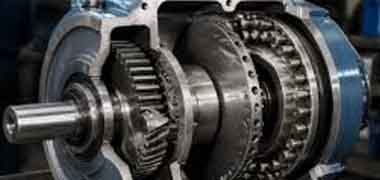
Robotics & Automation
High-end reducer shaft turning machining for industrial robot joint harmonic reducer eccentric shaft assemblies, collaborative robot joint cycloidal reducer shaft components (eccentric bearing seat roundness ±0.001mm for robot positioning repeatability), and servo reducer precision shaft elements. AS9100D certified with FAIR per AS9102 for robot OEM supply chains. 20CrMnTi carburized HRC 60–62 or 17CrNiMo6 for high-torque robot reducer eccentric shafts.

Construction, Mining & Agricultural
Heavy-duty quality reducer shaft turning machining for excavator final drive planetary reducer shaft components, wheel loader axle gearbox shaft elements, and mining equipment drive reducer shaft hardware in large-diameter alloy steel with full material certification for heavy equipment service conditions. Agricultural tractor PTO gearbox shaft components, combine harvester drive reducer shafts, and agricultural implement gearbox shaft elements.
Marine, Food & Pharmaceutical
Corrosion-resistant quality reducer shaft turning machining in 316L stainless and high-alloy materials for marine vessel propulsion gearbox shaft components, offshore platform equipment drive shafts, and marine winch reducer shaft elements. Supply quality reducer shaft turning machining in 316L stainless steel with electropolished surfaces for food processing mixer reducer shafts and pharmaceutical equipment drive shaft components requiring FDA-compliant materials and sanitary surface finishes.
High-End Reducer Shaft Turning
Machining Process & Capabilities
CNCPioneer's quality reducer shaft turning machining process transforms raw alloy steel bar, tube, or forging through a controlled 6-phase production sequence: material incoming inspection → rough turning → heat treatment → finish turning and grinding → secondary operations (keyway, spline, thread, cross-drilling) → surface treatment → final inspection and documentation. Every phase includes defined verification steps ensuring quality reducer shaft turning machining dimensional compliance before release to the next phase.
Swiss CNC — Precision Reducer Shaft Turning
78+ Swiss CNC lathes (Star SR-32J, Citizen A20/A16, Tsugami B206) with guide bushing support eliminating deflection on slender reducer shaft geometries (L/D up to 20:1) · Ø5–Ø50mm reducer shaft diameter range on Swiss platform · Positional accuracy ±0.002mm; repeatability ±0.001mm · Bearing journal diameter ±0.003mm; roundness ±0.002mm standard/±0.001mm high-precision; cylindricity ±0.003mm/50mm; Ra 0.4μm standard/Ra 0.2μm precision · PVD-coated carbide inserts with positive geometry for minimum cutting force and built-up edge prevention on alloy steel reducer shaft turning · Spline turning, worm thread single-point turning, thread cutting with pitch diameter ±0.005mm
MAZAK Mill-Turn — Complex Multi-Feature Shafts
66+ MAZAK mill-turn centers for complex multi-feature reducer shaft geometries · Ø10–Ø300mm reducer shaft diameter range; shaft length to 1,500mm · 5-axis simultaneous for worm thread + bearing journals + coupling interface in single-setup; planetary sun gear shaft splined input + gear seat + bearing journals; cycloidal reducer eccentric shaft multi-stage precision · Keyway milling (JS9 ±0.015mm width), cross-drilling for lubrication passages (±0.1mm position), multi-start thread forms · Single-setup concentricity preservation: gear seat-to-bearing journal ±0.003mm; multi-gear-seat mutual ±0.003mm from same shaft centerline datum
Heat Treatment Verification Program
Case carburizing (20CrMnTi, 17CrNiMo6): gas carburizing 0.8–1.5mm case depth; surface HRC 58–62; core HRC 30–40; post-carburizing CBN/diamond grinding for journal final size · Induction hardening (42CrMo): selective surface hardening HRC 52–58 at 1.5–3.0mm depth; ductile HRC 28–35 core · Quench and temper (42CrMo, 40Cr): uniform HRC 28–36 throughout cross-section · Ion nitriding (31CrMoV9, 40CrAlMo): HV 700–900 at 0.2–0.4mm case depth; ≤0.008mm dimensional distortion; no post-nitriding grinding required · Verification: post-treatment hardness testing every lot; case depth metallographic sampling; distortion measurement before grinding
Precision Journal Grinding
Between-centers cylindrical grinding for hardened reducer shaft bearing journal final dimensions: bearing journal diameter ±0.003mm post-grinding; roundness ±0.002mm standard/±0.001mm high-end; journal taper ≤0.002mm/50mm; surface finish Ra 0.4μm standard/Ra 0.2μm precision · Oil seal surface grinding: Ra 0.4–0.8μm with 0°–0.05° lead angle per DIN 3760 (spiral grinding finish preventing oil spiral transport past seal lip) · Gear seat finish grinding for carburized reducer shafts: gear seat diameter ±0.003mm; Ra 0.8μm for interference-fit gear hub · CBN and diamond grinding wheel specification per shaft alloy and hardness · 100% Mitutoyo roundness tester verification at 0.0001mm resolution on all precision bearing journal components
Reducer Shaft Turning Machining Materials
42CrMo (dominant supply quality reducer shaft turning machining wholesale material; Q&T 900–1,100 MPa UTS; induction hardenable; excellent machinability; widest standard specification acceptance) · 20CrMnTi (carburized HRC 58–62; automotive transmission and industrial gearbox input shaft standard) · 17CrNiMo6 / 18CrNiMo7-6 (heavy-duty wind turbine; superior core toughness; carburized HRC 60–62) · 34CrNiMo6 (large-diameter heavy-duty industrial output shafts) · 17-4PH H900 (precision servo reducer shafts; 1,310 MPa yield; corrosion resistant) · 316L stainless (food processing; marine; washdown reducer shafts) · 31CrMoV9 nitriding steel (HV 900+ nitrided; minimal dimensional distortion) · Ti-6Al-4V Grade 5 (aerospace; weight-critical robotic reducer shafts) · H13 tool steel (maximum worm thread wear resistance) · CuSn12 bronze (worm shaft in direct bronze worm gear contact)
IATF 16949 / PPAP Level 3 Documentation
PPAP Level 3 for automotive quality reducer shaft turning machining programs: Cpk ≥ 1.67 on bearing journal diameter, roundness, and gear seat concentricity special characteristics; MSA Gage R&R for air gauge, roundness tester, and profilometer; FMEA; control plan; material lot traceability to automotive recall standard; 100% CCD journal diameter sorting · FAIR per AS9102 for aerospace reducer shaft programs · Complete heat treatment record: carburizing lot, hardness test results, case depth metallographic, distortion measurement before grinding · Material certifications: XRF PMI + Brinell hardness + mill heat certificate on every production lot · Roundness tester records at 0.0001mm resolution on every high-precision bearing journal component · Records: 10 years industrial; 15 years automotive
Materials for High-End Reducer
Shaft Turning Machining
Reducer shaft turning machining material selection is governed by required bearing journal surface hardness for bearing fatigue resistance, core toughness for impact load survival, machinability enabling quality reducer shaft turning machining journal accuracy at competitive cycle times, heat treatment compatibility, corrosion resistance for operating environment, and international specification compliance. 42CrMo dominates standard industrial reducer shaft wholesale programs; 20CrMnTi dominates carburized automotive and high-duty industrial programs; 17CrNiMo6/18CrNiMo7-6 for heavy-duty wind turbine and high-impact applications.
42CrMo
Q&T: UTS 900–1,100 MPa; yield strength 750–950 MPa · Dominant supply quality reducer shaft turning machining wholesale material — optimal combination of Q&T mechanical properties, excellent machinability enabling ±0.003mm journal accuracy at competitive cycle times, induction hardenability for selective journal/gear seat surface hardening at lower cost than through-carburizing, and widest industrial gearbox specification acceptance (ISO 683, ASTM A434, EN 10250). Standard industrial helical gearbox input/output shafts, servo reducer shafts, intermediate shafts. Q&T 260–320 HBW pre-machining.
40Cr
Q&T: UTS 750–950 MPa; good machinability · General-purpose reducer shafts and light-duty gearbox shaft applications where 42CrMo's higher chromium-molybdenum content and toughness are not required by the design specification. Cost-effective supply quality reducer shaft turning machining for light-to-medium industrial gearbox shaft wholesale programs. Q&T 220–280 HBW; good machinability enabling competitive cycle times in quality reducer shaft turning machining online production programs.
34CrNiMo6
High-strength Q&T; excellent toughness · Large-diameter heavy-duty industrial reducer output shafts where 42CrMo's yield strength is insufficient at the required shaft cross-section for rated torque. 34CrNiMo6's higher nickel content provides superior core toughness for large-section shaft components at equivalent Q&T hardness — critical for construction equipment final drive output shafts and mining equipment reducer output shafts subject to high-impact cyclic overloads.
20CrMnTi
Carburized surface HRC 58–62; core HRC 30–40 · Dominant automotive transmission and high-duty industrial gearbox reducer shaft material — carburized case hardness 40–60% higher Hertz contact stress capacity than induction-hardened 42CrMo at equivalent case depth, governing gear tooth contact fatigue resistance and bearing journal wear resistance at high-speed/high-load conditions. Chinese national standard case-hardening steel (GB/T 3077). Automotive transmission input shafts, planetary sun gear shafts, industrial gearbox high-speed input shafts. Normalized 163–197 HBW pre-machining enabling precision quality reducer shaft turning machining before carburizing.
17CrNiMo6 / 18CrNiMo7-6
Carburized HRC 60–62; superior core toughness vs. 20CrMnTi · Heavy-duty wind turbine reducer shafts and high-impact industrial gearbox input shaft programs where 20CrMnTi's core toughness is insufficient for peak torque overloads at large shaft diameters. 17CrNiMo6 / 18CrNiMo7-6's higher nickel content provides outstanding core impact resistance at carburized case hardness — the standard alloy for European wind turbine gearbox shaft programs (EN 10084). Ultrasonic inspection of forged blanks above Ø80mm; full heat treatment certification for wind turbine gearbox compliance.
31CrMoV9 (Nitriding)
HV 700–900 after ion nitriding at 0.2–0.4mm case depth · ≤0.008mm dimensional distortion enabling post-nitriding precision dimensions without grinding · Precision nitrided reducer shafts for applications requiring the combination of surface hardness and minimal dimensional distortion post-treatment — servo reducer shafts, precision gearbox output shafts, and quality reducer shaft turning machining programs where post-hardening grinding would compromise dimensional accuracy or create unacceptable residual stress in the journal surface. 40CrAlMo/38CrMoAl alternative nitriding steels for gas nitriding programs.
17-4PH H900
Yield strength 1,310 MPa · Corrosion resistant · AMS 5643 · Precision servo reducer shafts and stainless output shaft programs for robot joint reducers, medical equipment reducers, and aerospace reducer shaft applications where both high strength and corrosion resistance are primary requirements. Non-magnetic for magnetically sensitive reducer applications. 17-4PH H900 also achieves the combination of strength and corrosion resistance that prevents gearbox internal corrosion from contaminated lubricant in outdoor-installed equipment reducer shaft applications.
316L & 303
316L: Non-magnetic · Corrosion resistant · Food processing mixer reducer shafts and pharmaceutical equipment drive shaft components in direct contact with process media or cleaning chemicals — FDA-compliant material with electropolished surfaces for sanitary reducer shaft applications. Marine vessel propulsion gearbox shaft components in permanent seawater service. Washdown-rated industrial gearbox shaft elements. 303: Improved machinability versus 316L for general corrosion-resistant reducer shaft applications where food contact or permanent seawater service are not required.
H13 (1.2344)
Excellent wear resistance after hardening · Worm shaft applications requiring maximum thread wear resistance — H13's superior hot hardness and wear resistance (HRC 48–52 after air hardening at 1,020–1,050°C) provides the worm thread surface durability at the highest contact stress cycle counts in high-load worm gear reducer applications where 20CrMnTi carburized worm shaft wear life is insufficient. Worm thread surface finish Ra 0.4μm verified by profilometer on all H13 worm shaft quality reducer shaft turning machining programs.
Ti-6Al-4V Grade 5
Specific strength 199 MPa·cm³/g · Lightweight · Corrosion resistant · Aerospace reducer shafts where mass minimization is the primary shaft design constraint, and weight-critical robotic reducer shaft programs (RV reducer eccentric shafts for robot arms where mass minimization extends collaborative robot safe speed envelope). Ti-6Al-4V Grade 5 reducer shaft turning machining requires dedicated material-specific cutting protocols to prevent built-up edge on titanium surfaces — positive geometry carbide inserts with high cutting speed and ample coolant flow maintaining Ra 0.4μm journal surface finish. AMS 4928 bar stock certification.
CuSn12
Excellent worm gear compatibility · Tin bronze CuSn12 for worm shaft applications in direct sliding contact with bronze worm gear wheels — the optimal worm gear pairing from a tribological perspective, where the softer bronze worm gear surface against the hardened steel worm shaft creates favorable running-in behavior distributing contact stress across increasing tooth contact area during initial operation. Worm shaft quality reducer shaft turning machining in CuSn12 requires sharp tooling and flood coolant to prevent smearing of the soft bronze worm thread surfaces that would compromise thread profile accuracy.
Phosphating, Chrome & Nitriding
Zinc/manganese phosphating: porous structure retains initial break-in lubricant preventing dry contact during reducer first-start — standard surface treatment for supply quality reducer shaft turning machining wholesale programs for industrial gearbox shaft components. Hard chrome plating (AMS 2406): HV 850–1,000 at 20–100μm for journal restoration and wear protection, post-plate ground to final bearing diameter. Gas/ion nitriding for 42CrMo and nitriding steels: HV 600–900 at 0.2–0.5mm case depth with minimal distortion (≤0.010mm growth) — enabling post-nitriding precision turning to final dimension. Black oxide for aesthetic finish and indoor corrosion protection.
Surface Treatments for Reducer
Shaft Turning Machining
Reducer shaft turning machining surface treatment selection is governed by break-in lubrication retention for first-start protection, bearing journal wear resistance for service life, corrosion resistance for operating environment (food processing, marine, outdoor), oil seal surface finish optimization for lip seal performance, and food-contact compliance for food processing reducer shaft programs.
Phosphating — Break-In Lubrication Retention
Zinc or manganese phosphate coating for reducer shaft break-in lubrication retention — phosphate coating's porous structure retains initial break-in lubricant preventing dry contact during reducer first-start lubrication establishment. Standard surface treatment for supply quality reducer shaft turning machining wholesale programs for industrial gearbox shaft components. Manganese phosphate provides superior wear resistance versus zinc phosphate for bearing journal surfaces subject to boundary lubrication during reducer break-in period. Applied after grinding for minimal dimensional impact on precision bearing journal features.
Hard Chrome Plating (AMS 2406) — Journal Restoration
Hard chrome plating per AMS 2406 for reducer shaft bearing journal restoration and wear protection — HV 850–1,000 surface hardness at 20–100μm plating thickness, post-plate ground to final bearing journal diameter for precision bearing fit. Applied to worn reducer shaft journals for service restoration without shaft replacement in high-value industrial gearbox programs; also applied to new reducer shaft journals requiring maximum wear resistance at bearing inner race contact surfaces under heavy-duty operating conditions exceeding standard alloy steel surface hardness limits.
Passivation — ASTM A967 (Stainless Reducer Shafts)
ASTM A967 passivation for stainless steel quality reducer shaft turning machining programs — food processing mixer reducer shafts in 316L stainless, marine vessel propulsion gearbox shaft components in permanent seawater service, and pharmaceutical equipment drive shaft elements requiring FDA-compliant sanitary surface preparation. Removes free iron from machined stainless reducer shaft surfaces, enhances chromium oxide passive layer for maximum corrosion resistance in food processing and marine reducer shaft operating environments.
Gas/Ion Nitriding — Surface Hardening Without Distortion
Gas nitriding or ion nitriding for 42CrMo and nitriding steel (31CrMoV9, 40CrAlMo) quality reducer shaft turning machining programs — achieving HV 600–900 surface hardness at 0.2–0.5mm case depth with minimal dimensional distortion (≤0.010mm growth). Nitrided quality reducer shaft turning machining provides excellent combination of surface hardness, corrosion resistance, and retained dimensional accuracy post-treatment — enabling post-nitriding precision turning to final dimension without grinding, reducing program cost versus post-carburizing grinding for medium-hardness precision reducer shaft applications requiring HV 600+ without HRC 58+ case hardness.
Black Oxide Treatment
Black oxide surface treatment for reducer shaft aesthetic finish and moderate corrosion protection in sheltered indoor installation environments — industrial gearbox reducer shafts stored in inventory or installed in climate-controlled indoor industrial facilities. Black oxide provides corrosion protection preventing atmospheric rust formation on unhardened journal and shoulder surfaces during storage and handling before reducer assembly. Zero dimensional impact on precision quality reducer shaft turning machining bearing journal features. Applied after grinding operations as standard cosmetic surface treatment for supply quality reducer shaft turning machining wholesale catalog programs.
Electropolishing & Oil Seal Surface Optimization
Electropolishing for 316L stainless steel food processing and pharmaceutical reducer shaft quality reducer shaft turning machining programs requiring Ra ≤ 0.4μm hygienic surface finish — removing machining stress layer from stainless reducer shaft surfaces for FDA-compliant sanitary surface quality. Oil seal surface finish optimization: spiral grinding finish per DIN 3760 with profilometer verification of Ra 0.4–0.8μm and ≤0.05° lead angle — the most critical surface quality parameter for lip seal oil retention in assembled reducers. Surface finish outside this band is the leading cause of premature lip seal failure or oil leakage in industrial reducer shaft programs.
All reducer shaft turning machining surface treatments — phosphating (zinc/manganese), hard chrome plating AMS 2406, passivation ASTM A967, gas/ion nitriding, black oxide, electropolishing, and oil seal surface grinding per DIN 3760 — are applied with the operating environment, break-in lubrication requirements, and assembly procedure of each quality reducer shaft turning machining program in mind. Surface treatment certifications and records are included in every quality reducer shaft turning machining shipment documentation package. Surface treatment recommendation is included in CNCPioneer's 24-hour quality reducer shaft turning machining online DFM review service.
Quality Assurance for Reducer
Shaft Turning Machining
CNCPioneer's quality reducer shaft turning machining quality system applies IATF 16949 and AS9100D protocols ensuring bearing journal roundness, gear seat concentricity, heat treatment hardness compliance, oil seal surface finish, and spline form accuracy are documented with traceable measurement records for every quality reducer shaft turning machining production lot — prototype through wholesale volume.
Contract & Drawing Review
Engineering review of reducer shaft turning machining drawing requirements, applicable ISO 286 tolerance standards, DIN gear and spline standards, heat treatment specifications, surface treatment requirements, and PPAP or FAIR requirements before order acceptance. Quality reducer shaft turning machining online inquiry DFM review completed within 24 hours — covering material feasibility, journal tolerance achievability, spline and keyway geometry, heat treatment compatibility, and documentation scope.
Material Incoming Inspection
XRF composition verification confirming 42CrMo, 20CrMnTi, 17CrNiMo6, or customer-specified alloy grade compliance on every quality reducer shaft turning machining material lot. Brinell hardness testing confirming heat treatment condition: 42CrMo Q&T 260–320 HBW; 20CrMnTi normalized 163–197 HBW before carburizing. Ultrasonic inspection for internal defects in forged reducer shaft blanks above Ø80mm. Full lot traceability from mill heat certificate through finished reducer shaft shipment. Counterfeit material prevention by approved supplier management.
First Article Inspection (FAIR) per AS9102
FAIR per AS9102 for aerospace reducer shaft programs. PPAP Level 3 with Cpk ≥ 1.67 on bearing journal diameter, roundness, and gear seat concentricity special characteristics; MSA Gage R&R for air gauge, roundness tester, and profilometer measurement systems; FMEA; control plan for automotive quality reducer shaft turning machining programs. Complete CMM dimensional verification with balloon drawing, roundness tester records, profilometer Ra records, heat treatment records, and material certifications. Customer approval required before production quantity release.
In-Process Statistical Control
100% CCD automatic sorting on critical bearing journal diameters and gear seat diameters in high-volume quality reducer shaft turning machining production runs. Air gauge monitoring at defined intervals during journal grinding operations. SPC control charts with Cpk ≥ 1.33 on special characteristics; Cpk ≥ 1.67 for IATF 16949 automotive quality reducer shaft turning machining programs. Tool wear management protocol preventing dimensional drift. Post-heat-treatment distortion measurement before grinding confirming journal change within grinding allowance.
Final Inspection & Cleanliness Verification
Mitutoyo CMM (±0.001mm) full dimensional report covering bearing journal diameter, roundness, cylindricity, gear seat concentricity, keyway/spline dimensions, shoulder face runout, oil seal surface finish, shaft straightness, overall length, and worm thread pitch accuracy. Mitutoyo roundness tester at 0.0001mm resolution on all high-end quality reducer shaft turning machining bearing journal components. Profilometer Ra measurement on bearing journal, gear seat, and oil seal surface finish specifications. Thread gauge verification for all threaded reducer shaft features. Visual inspection for burrs, scale, and heat treatment surface defects.
Shipment Documentation
Certificate of Conformance, CMM dimensional report, roundness tester records, profilometer Ra records, material certifications with full lot traceability from mill heat certificate, heat treatment hardness records (Brinell/Rockwell with lot reference), case depth metallographic records for carburized programs, surface treatment certifications, PPAP Level 3 package or FAIR per AS9102 for OEM programs, and thread gauge records. Records retained minimum 10 years industrial; 15 years automotive quality reducer shaft turning machining programs.
IATF 16949 & AS9100D Quality System for
Reducer Shaft Turning Machining
CNCPioneer holds IATF 16949:2016 certification for automotive quality reducer shaft turning machining OEM supply chains and AS9100D certification for aerospace reducer shaft programs — providing the independently audited quality framework demanded by industrial gearbox OEMs, automotive transmission manufacturers, quality reducer shaft turning machining wholesale distributors, and wind turbine gearbox certification bodies globally.
PPAP Level 3 — Automotive Reducer Shaft Supply
IATF 16949 PPAP Level 3 for automotive quality reducer shaft turning machining programs — process capability study confirming Cpk ≥ 1.67 on bearing journal diameter, roundness, and gear seat concentricity special characteristics; MSA Gage R&R for air gauge, roundness tester, and profilometer measurement systems; FMEA with critical reducer shaft manufacturing process risk identification; control plan; material lot traceability to automotive recall investigation standard. FAIR per AS9102 for aerospace reducer shaft programs. Customer approval required before production quantity release.
- PPAP Level 3 for automotive reducer shaft programs
- Cpk ≥ 1.67 on journal diameter, roundness, gear seat concentricity
- Records: 10 years industrial; 15 years automotive
Heat Treatment Verification — Every Production Lot
Post-heat-treatment hardness testing confirming carburizing (HRC 58–62 surface, HRC 30–40 core), induction hardening (HRC 52–58), or Q&T (HRC 28–36) hardness compliance on every quality reducer shaft turning machining production lot. Case depth verification by metallographic cross-section sampling on carburized quality reducer shaft turning machining lots. Distortion measurement confirming post-heat-treatment journal dimensional change within grinding allowance specification. XRF PMI composition verification on every material lot. Full mill heat certificate lot traceability.
- Post-HT hardness testing on every production lot
- Case depth metallographic sampling: carburized programs
- Distortion measurement before grinding
100% Roundness Tester — Journal Roundness Verification
Mitutoyo roundness tester measurement on all high-end quality reducer shaft turning machining bearing journal components — providing traceable roundness records at 0.0001mm resolution that quantitatively document journal geometry beyond what CMM dimensional inspection alone can provide. Bearing journal roundness ±0.001mm (high-precision) documented in every high-end reducer shaft turning machining inspection record, supporting gearbox OEM bearing life prediction calculations and warranty qualification requirements with quantitative dimensional evidence from production components.
- Mitutoyo roundness tester: 0.0001mm resolution
- Bearing journal roundness: ±0.001mm high-precision programs
- 100% roundness verification on all precision bearing journal programs
Oil Seal Surface Finish Verification (DIN 3760)
Profilometer Ra measurement and lead angle verification on all quality reducer shaft turning machining oil seal contact surface programs — confirming Ra 0.4–0.8μm target range and ≤0.05° lead angle per DIN 3760 spiral grinding finish specification. Oil seal surface finish outside the Ra 0.4–0.8μm range is the leading cause of premature lip seal failure in assembled reducers — surfaces rougher than Ra 0.8μm allow micro-leakage channels; surfaces smoother than Ra 0.4μm increase seal lip contact stress causing accelerated lip wear. Lead angle ≥0.1° causes spiral transport of oil past seal lip regardless of contact force. Surface finish verification records included in every quality reducer shaft turning machining shipment documentation package.
- Ra 0.4–0.8μm oil seal surface — profilometer verified
- Lead angle ≤0.05° per DIN 3760 verified
- Surface finish records in every reducer shaft shipment
Reducer Shaft Turning Machining FAQ
Common questions from industrial gearbox OEMs, automotive transmission manufacturers, wind turbine gearbox producers, robotics and automation reducer developers, and quality reducer shaft turning machining wholesale distributors about CNCPioneer's high-end reducer shaft turning machining factory capabilities, material selection, heat treatment, oil seal surface specifications, wholesale pricing economics, and lead times.
Bearing journal roundness is the single most critical dimension in quality reducer shaft turning machining because it directly governs bearing service life through contact stress distribution across the bearing inner race contact width. A bearing journal roundness error of 0.005mm in an industrial gearbox reducer shaft produces an elliptical contact zone between the shaft journal and bearing inner race that concentrates Hertz contact stress at the major axis of the ellipse — increasing peak contact stress by 15–25% above the design value assuming perfect roundness. This contact stress concentration causes accelerated surface fatigue, reducing bearing life to 40–60% of catalog L10 life at rated load. CNCPioneer's high-end reducer shaft turning machining achieves bearing journal roundness of ±0.002mm standard — keeping bearing contact stress within 2% of the perfect-roundness design value, enabling bearings to achieve 90–100% of catalog service life. For precision servo reducers, harmonic reducer eccentric shafts, and high-speed input shafts, we achieve ±0.001mm roundness using CBN cylindrical grinding with Mitutoyo roundness tester verification at 0.0001mm resolution — providing quantitative roundness evidence in the quality reducer shaft turning machining inspection documentation package.
For industrial gearbox input and intermediate reducer shafts in high-volume supply quality reducer shaft turning machining wholesale programs, we recommend 42CrMo with quench-and-temper treatment to HRC 28–35 (260–330 HBW) as the cost-optimized solution — providing adequate bearing journal surface hardness, good toughness for impact load survival in gearbox start-stop operation, and excellent machinability enabling tight journal dimensional compliance at competitive cycle times. For gear-carrying reducer shaft applications requiring gear tooth contact fatigue resistance at HRC 55+, we recommend 20CrMnTi case carburizing to HRC 58–62 at 0.8–1.5mm case depth with tough core at HRC 30–38 — the standard high-end reducer shaft turning machining heat treatment for automotive transmission reducer shafts and industrial gearbox input shaft components. For quality reducer shaft turning machining applications requiring post-treatment dimensional stability without final grinding, precision nitriding steel (31CrMoV9) with ion nitriding to HV 700–900 at 0.2–0.4mm case depth achieves ≤0.008mm dimensional distortion — enabling precision-turned finish dimensions to be maintained after nitriding without grinding, reducing supply quality reducer shaft turning machining program cost for medium-hardness precision applications.
High-end reducer shaft turning machining differs from standard shaft turning in four simultaneous quality dimensions. First, dimensional precision — high-end achieves bearing journal diameter ±0.003mm and roundness ±0.002mm versus standard shaft turning at ±0.010–0.020mm diameter and ±0.005–0.008mm roundness; this 3–5× improvement directly governs bearing fit, contact stress distribution, and service life. Second, surface finish quality — high-end achieves Ra 0.2–0.4μm bearing journal surface finish versus standard at Ra 1.6–3.2μm; the finer surface finish reduces running-in wear, maintains lubricant film thickness, and enables oil seal contact stress optimization determining seal life. Third, material certification depth — high-end includes XRF composition verification on every production lot, hardness testing confirming heat treatment condition, and dimensional inspection records traceable to individual production lots; standard typically provides only a generic Certificate of Conformance. Fourth, geometric verification rigor — high-end documents bearing journal roundness by roundness tester at 0.0001mm resolution, providing quantitative proof of journal geometry that CMM inspection alone cannot provide. CNCPioneer's China high-end reducer shaft turning machining factory delivers all four quality dimensions at China manufacturing economics — creating the value proposition that makes our supply quality reducer shaft turning machining factory programs competitive with premium Japanese and European reducer shaft suppliers at significantly lower supply cost.
CNCPioneer's quality reducer shaft turning machining online quotation process provides complete pricing and DFM feedback within 24 hours of drawing submission. Submit your reducer shaft drawing (2D DXF/PDF or 3D STEP/IGES/SolidWorks) through our online inquiry system. Our engineering team initiates DFM review covering: material feasibility for specified alloy and heat treatment combination; journal diameter and roundness tolerance achievability; spline form accuracy assessment; keyway and secondary feature feasibility; heat treatment sequence compatibility with dimensional tolerance specifications; surface treatment recommendation; and quality documentation scope recommendation (PPAP level, FAIR requirement, material certification standard). The quality reducer shaft turning machining online quotation response includes unit pricing at prototype (1–9 pieces), small batch (10–49), standard production (50–999), volume production (1,000+), and wholesale blanket order quantity tiers; production lead time confirmation; DFM feedback summary; and documentation scope confirmation. For supply quality reducer shaft turning machining wholesale programs requiring blanket order agreements, our commercial team follows up within 24 hours to discuss annual volume commitment terms, dedicated capacity, and pricing structure.
CNCPioneer's high-end reducer shaft turning machining lead times: alloy steel 42CrMo without heat treatment, small quantities 1–10 pieces — 7–10 business days; 42CrMo with quench-and-temper heat treatment — 10–14 business days (heat treatment adds 3–5 days); carburized reducer shaft (20CrMnTi or 17CrNiMo6) — 14–18 business days including carburizing cycle and post-treatment grinding; 17-4PH H900 precision reducer shafts — 7–12 business days; titanium Ti-6Al-4V aerospace reducer shafts — 7–12 business days. Standard production quantities for supply quality reducer shaft turning machining programs: 50–500 pieces alloy steel without heat treatment — 3–4 weeks; with heat treatment — 4–5 weeks; carburized and ground high-end programs — 5–7 weeks including heat treatment cycle. Quality reducer shaft turning machining wholesale programs with blanket order scheduling: after first article qualification, monthly production release deliveries at 2–4 week lead times for established supply quality reducer shaft turning machining wholesale accounts. Emergency expedite: alloy steel reducer shafts from material in stock machined in 24–48 hours plus shipping at expedite premium pricing.
CNCPioneer's supply quality reducer shaft turning machining wholesale pricing delivers 40–60% cost reduction versus equivalent quality reducer shaft turning machining from European and Japanese precision shaft machining suppliers at equivalent dimensional accuracy (bearing journal roundness ±0.002mm, journal diameter ±0.003mm) and quality documentation (IATF 16949 PPAP, material lot traceability, CMM inspection records). This pricing advantage reflects China manufacturing economics — 42CrMo and 20CrMnTi alloy steel procurement at Asian market pricing, manufacturing labor economics, and CNCPioneer's high-machine-utilization Swiss CNC and MAZAK fleet — not any compromise in dimensional accuracy, material certification, heat treatment rigor, or quality documentation completeness. Industrial drivetrain component distributors operating quality reducer shaft turning machining wholesale programs sourcing from CNCPioneer's supply quality reducer shaft turning machining factory achieve gross margin of 30–50% on reducer shaft components while pricing competitively against domestic and Asian reducer shaft suppliers — creating the profitable supply economics that make CNCPioneer's China high-end reducer shaft turning machining factory programs a commercially attractive component supply source.
Get a Quote for Reducer Shaft Turning Machining
Upload your reducer shaft drawing or CAD file and receive a free DFM review and competitive quality reducer shaft turning machining online quotation within 24 hours. CNCPioneer's engineering team will review your reducer shaft design for turning machining feasibility, confirm material and heat treatment specification for reducer application service conditions, assess bearing journal tolerance achievability against high-end reducer shaft turning machining capability, verify spline and keyway geometry, recommend surface treatment for reducer operating environment, and provide complete pricing options covering prototype, standard production, OEM supply high-end reducer shaft turning machining programs, and quality reducer shaft turning machining wholesale distribution supply terms.