
RF Connector
Manufacturing
CNCPioneer is a precision RF coaxial connector manufacturer in China, producing controlled-impedance components from DC to 110 GHz. Swiss CNC holds center conductor diameters to ±0.003mm, with TDR impedance verification, custom interfaces, and 24-hour DFM support.
Custom RF Connector
Manufacturing
CNCPioneer manufactures center conductors, outer bodies, dielectric elements, coupling nuts, and complete RF coaxial connector components for controlled-impedance signal paths. Our parts support wireless infrastructure, radar, test and measurement, aerospace, defense, automotive, and telecommunications equipment.
Every coaxial dimension affects impedance, insertion loss, reflection, and usable frequency. We control center conductor diameter, outer conductor bore, concentricity, surface finish, plating, and interface geometry together so your connector design can move from drawing review to repeatable production.
-
Controlled-impedance geometry Center conductor diameter to ±0.003mm and outer conductor bore to ±0.004mm, with inspection plans matched to your 50Ω, 75Ω, or custom impedance requirement.
-
DC to 110 GHz coverage SMA, SMP, 2.92mm, 2.4mm, 1.85mm, and 1.0mm series supported with Swiss CNC precision for miniature RF and mmWave connector components.
-
TDR impedance verification Time-domain reflectometry identifies impedance discontinuities along the connector body. TDR records are available for programs with a defined impedance specification.
-
Custom interface support Proprietary interfaces, 75Ω or 93Ω designs, space-constrained PCB layouts, and cable-specific components. DFM and impedance review are available within 24 hours.

Why Swiss CNC for
RF Connector Parts?
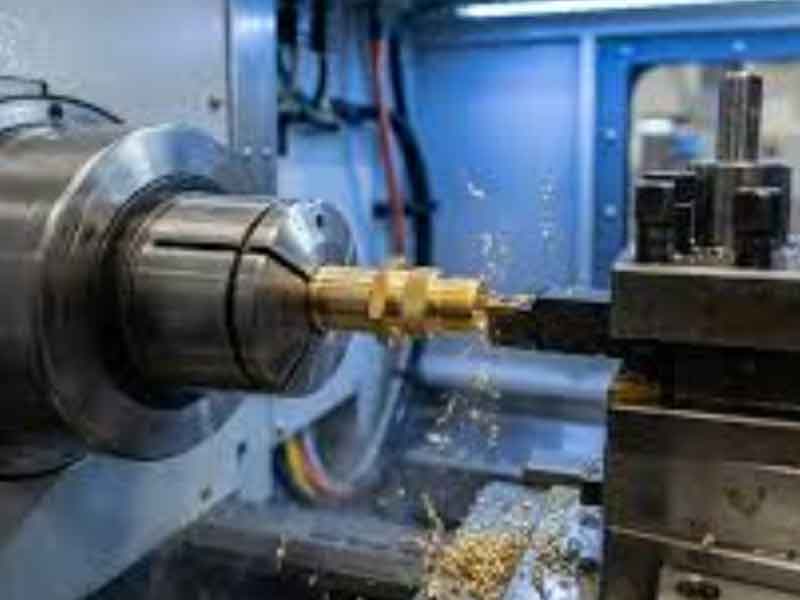
Swiss CNC guide bushing technology keeps miniature center conductors stable during machining. That control supports the roundness, concentricity, surface finish, and repeatability needed for controlled-impedance RF coaxial connectors from DC to 110 GHz.
Center Conductor Diameter ±0.003mm
The D/d ratio governs characteristic impedance. Swiss CNC guide bushing support reduces deflection on slender shafts and helps maintain center conductor tolerances from 1.27mm SMA pins to 0.122mm 1.0mm connector pins.
Outer Conductor Bore ±0.004mm
Outer conductor bore accuracy works with the center conductor diameter to establish the target impedance. We monitor the bore and mating geometry against the drawing, with TDR verification available for programs with impedance requirements.
Coaxial Concentricity ±0.003mm
Center conductor eccentricity can disturb the coaxial field and increase loss at microwave frequencies. CMM inspection and process control keep concentricity aligned with the connector series and drawing specification.
Ra 0.2μm Signal Path Surface Finish
Signal-path surface finish affects conductor loss and plating uniformity at microwave frequencies. We can specify Ra 0.2μm on critical surfaces where the connector design and operating band require it.
Millimeter-Wave Miniature Capability
1.0mm connector parts use center conductors as small as 0.122mm. Swiss CNC machining supports miniature RF components for applications up to 110 GHz, subject to the final drawing, material, and inspection requirements.
China RF Coaxial Connector Cost Advantage
Our China RF connector factory combines Swiss CNC capacity, local material supply, and process documentation to support competitive pricing for custom and standard RF connector programs. Final cost depends on series, material, plating, inspection, and volume.
RF Connector Series
We Manufacture
Choose standard RF connector series or send a custom design. CNCPioneer manufactures coaxial connector components for SMA, N-type, SMP, BNC, SMB, mmWave, cable, and proprietary interfaces from DC to 110 GHz.

SMA RF Coaxial Connectors
Standard SMA to 18 GHz and precision SMA to 26.5 GHz. We machine male pins, female sockets, 1/4-36 UNS threaded bodies, RP-SMA, right-angle, PCB launch, panel-mount, and adapter components in brass, stainless steel, and aluminum.

SMP & SMPM RF Connectors
Push-on SMP components to 40 GHz and SMPM components to 65 GHz. Smooth-bore, limited-detent, full-detent, end-launch, right-angle, blind-mate, and beryllium copper spring-contact options are available.

N-Type RF Connectors
50Ω and 75Ω N-type components to 18 GHz with 5/8-24 UNEF threads. Standard, CATV, weatherproof IP67, high-power, and RP-N variants are available in brass, stainless steel, and aluminum.

BNC & SMB RF Connectors
BNC and SMB components to 4 GHz in 50Ω and 75Ω configurations. Vertical, right-angle, end-launch, through-hole, and SMT options support automotive, telematics, IoT, and test equipment interfaces.

Millimeter-Wave RF Connectors
2.92mm K to 40 GHz, 2.4mm to 50 GHz, 1.85mm V to 67 GHz, and 1.0mm to 110 GHz. Center conductor diameters from 0.640mm to 0.122mm support 5G mmWave, 77 GHz radar, test, and high-frequency instrumentation.

Custom RF Connector Manufacturing
Custom-designed RF connectors for proprietary interfaces, 75Ω or 93Ω impedance, restricted PCB layouts, and cable-specific assemblies. Send a drawing or specification for a 24-hour DFM review, prototype plan, material and plating recommendation, and TDR verification proposal.
Industries & Applications
We supply RF connector components to equipment OEMs, cable assembly manufacturers, and infrastructure suppliers in 5G, aerospace, defense, automotive radar, satellite, test and measurement, and telecommunications.

5G Wireless Infrastructure
SMA, N-type, 7/16 DIN, and QMA for 5G macro base station RF distribution. SMP and SMPM RF connector manufacturing for 5G mmWave active antenna unit (AAU) internal RF routing at 24–47 GHz. Custom RF connector manufacturing for proprietary 5G equipment RF interface designs requiring non-catalog geometry.

Aerospace & Defense RF Systems
AS9100D certified RF SMA coaxial connector manufacturing with FAIR documentation for flight-critical avionics and EW systems. SMP RF connector manufacturing for AESA radar RF distribution. Non-magnetic titanium and aluminum RF connector manufacturing for magnetically sensitive defense sensor and guidance applications.

Automotive Radar & V2X
RF connector manufacturing for 77 GHz automotive radar sensor RF interfaces and V2X module antenna connections. PCB type SMB RF connector manufacturing for GPS receiver module connections. IATF 16949 certified with PPAP documentation for automotive connector manufacturing programs requiring ESD and vibration qualification.

Satellite & Space Systems
RF connector manufacturing for satellite payload RF distribution, ground station antenna feed connections, and spacecraft RF system interfaces. Outgassing-compatible material and plating selection. SMA and SMP RF connector manufacturing for CubeSat and small satellite RF subsystem assemblies.

Test & Measurement
Precision 3.5mm, 2.92mm, 2.4mm, and 1.85mm RF connector manufacturing for VNA, spectrum analyzer, and signal generator calibrated port connectors. BNC RF connector manufacturing for oscilloscope and bench test instruments to 4 GHz. Custom calibration reference connector manufacturing with traceable dimensional documentation.

Telecommunications Infrastructure
N-type and 7/16 DIN RF cable connector manufacturing for cellular base station antenna feed cable assemblies and microwave backhaul links. Weatherproof IP67 N-type for outdoor coaxial cable terminations. QMA and QN quick-lock RF connector manufacturing for base station equipment requiring rapid cable assembly maintenance.
RF Connector Manufacturing
Capabilities
Our Shenzhen facility combines 78+ Swiss CNC lathes and 66+ MAZAK mill-turn centers for miniature pins, coaxial bodies, threaded coupling parts, and custom RF connector components. Capacity covers standard and proprietary designs from DC to 110 GHz.
Swiss CNC Lathe Fleet
78+ Swiss CNC lathes for center conductors from 0.122mm to 3.18mm. Capability includes ±0.002–0.003mm diameter control, ±0.002mm roundness, Ra 0.2μm surface finish, and coaxial concentricity control.
MAZAK Mill-Turn Fleet
66+ MAZAK mill-turn centers for Ø5mm–Ø50mm outer bodies, 5-axis features, 1/4-36 UNS and 5/8-24 UNEF threads, 7/16 DIN interfaces, and inner bore control to ±0.004mm.
Frequency Coverage by Series
BNC/SMB DC–4 GHz · SMA/N-type DC–18 GHz · Precision SMA/SMX DC–26.5/40 GHz · SMP/2.92mm DC–40 GHz · 2.4mm DC–50 GHz · 1.85mm DC–67 GHz · 1.0mm DC–110 GHz · Custom: designed to specification.
RF Connector Materials
Brass C3604 / C2600 · Beryllium copper C17200 AT / C17500 · Stainless 303 / 304 / 17-4PH · Aluminum 6061 / 7075 · Titanium Grade 5 · Kovar ASTM F15 · Invar 36 · PTFE (εr 2.1) · PEEK (εr 3.27) · Alumina 99.5% dielectric.
RF-Specific Inspection
100% center conductor sorting, Mitutoyo CMM concentricity checks, air-gauge bore monitoring, Ra 0.2μm profilometry, optical contact-tip inspection, TDR impedance checks, and XRF plating measurement.
RF Connector Documentation
CMM dimensional reports, TDR and XRF records, contact resistance verification, material certifications, lot traceability, FAIR per AS9102, PPAP, and Certificates of Conformance are available by program.
Materials for RF Connectors
Material selection balances conductivity, spring performance, corrosion resistance, machinability, and dielectric constant. CNCPioneer machines primary RF connector alloys and dielectric materials, then matches plating and inspection to the application.
C3604 (Free-Cutting Brass)
Machinability rating 100 · Good conductivity · Outer conductor bodies, coupling nuts, SMA/N-type/BNC body components, standard RF connector series
C2600 (Cartridge Brass)
High ductility · Good conductivity · RF connector body components requiring post-machining forming or clinching operations
C11000 ETP
Highest electrical conductivity of all metals · 7/16 DIN and N-type high-power RF connector inner conductor applications minimizing signal path loss
C17200 AT
Highest strength copper alloy · Excellent spring properties · SMP spring contact plungers, center conductor socket contacts, SMX spring contact elements
C17500 (High-Conductivity BeCu)
High conductivity BeCu · Good spring properties · High-conductivity RF center conductor spring applications requiring both conductivity and spring retention
303 / 304
Good corrosion resistance · Non-magnetic · Outdoor N-type and 7/16 DIN RF connector bodies for weatherproof base station and naval defense RF applications
6061-T6 / 7075-T6
Lightweight · Anodizable · Weight-critical aerospace and defense RF connector bodies and flange components where mass is a primary design constraint
Grade 5 (Ti-6Al-4V)
Lightweight · Non-magnetic · Corrosion resistant · Non-magnetic military and MRI-compatible RF connector bodies for magnetically sensitive defense sensor and medical RF applications
ASTM F15 Kovar
Matched CTE with glass and ceramics · Hermetic RF connector feedthrough components for pressurized and hermetically sealed RF system interfaces
PTFE (εr = 2.1)
Excellent RF dielectric · Chemical resistant · Low loss · RF connector coaxial spacer elements and dielectric insulator components for SMA and N-type connector assemblies
PEEK (εr = 3.27)
Good RF dielectric · High temperature · Mechanical strength · High-temperature RF connector dielectric components for elevated temperature RF system environments
Alumina Al₂O₃ 99.5%
Low dielectric loss · Hermetic seal compatible · High-frequency RF connector ceramic dielectric elements and hermetic feedthrough insulators
Plating & Surface Finishing for
RF Connector Manufacturing
Surface plating on RF connector manufacturing components serves dual functions — electrical performance (contact resistance, RF conductivity, oxidation resistance across the signal path) and mechanical performance (wear resistance, mating cycle life, corrosion protection). CNCPioneer works with qualified plating partners to deliver RF connector components with certified plating per MIL-G-45204, ASTM B488, AMS 2403, and ASTM A967.
Gold Plating — MIL-G-45204 / ASTM B488
Gold is the universal standard for RF connector manufacturing contact surfaces and all internal signal path elements. Hard gold (cobalt-hardened, HV 130–200) for standard RF connector contact zones — 0.5–1.5μm over 1.27μm nickel underplate. All RF signal path surfaces — center conductor OD, outer conductor inner bore, dielectric-to-conductor interfaces — receive gold or gold flash to maintain consistent RF conductivity and prevent surface oxidation that increases insertion loss at microwave frequencies.
Silver Plating for High-Power RF
Silver plating for RF connector manufacturing outer conductor inner bore surfaces in high-power RF applications. Silver's highest electrical conductivity of all metals (6.30×10⁷ S/m) minimizes RF signal path conductor loss in high-power 7/16 DIN and N-type RF connectors for transmitter power amplifier and broadcast antenna applications where conductor loss reduction directly increases system power efficiency.
Selective Gold in RF Connector Manufacturing
Gold applied to RF contact mating zones with nickel on non-contact outer body surfaces — reducing precious metal cost in high-volume RF connector manufacturing programs while maintaining full RF contact performance at the critical electrical interface. Selective plating zone boundaries are defined by connector shoulder geometry, requiring dimensional accuracy on the shoulder transition to ±0.005mm achieved in CNCPioneer's RF connector manufacturing.
Passivation — ASTM A967
ASTM A967 passivation for stainless steel RF connector manufacturing body and coupling components in outdoor telecommunications infrastructure, naval defense RF system, and industrial RF connector applications requiring maximum stainless corrosion resistance without gold plating cost on non-contact outer body surfaces. Essential for weatherproof N-type and 7/16 DIN RF connectors in base station antenna environments.
Nickel Underplate — AMS 2403
Electroless nickel underplate beneath all gold and silver plating on RF connector manufacturing signal path surfaces. Nickel prevents base metal diffusion into gold plating over time and at elevated RF connector operating temperatures — maintaining stable contact resistance and signal path conductivity throughout the RF connector service life. Electroless nickel per AMS 2403 ensures uniform thickness on complex RF connector geometry including threads, inner bores, and mating face surfaces.
Anodizing for Aluminum RF Connectors
Type II standard anodizing and Type III hard coat anodizing for aluminum RF connector manufacturing body and flange components in weight-critical aerospace and defense RF connector applications. Type III hard coat for maximum wear resistance on aluminum RF connector mechanical interface surfaces subject to repeated engagement in field maintenance environments — without altering the RF signal path geometry or coaxial dimensional compliance.
All RF connector manufacturing plating — gold, silver, selective gold, nickel underplate — is verified by XRF thickness measurement on every production lot. Plating certifications, XRF thickness records, and contact resistance measurement results are included in the shipment documentation package for every RF connector manufacturing program. Salt spray corrosion testing and adhesion verification available where specified.
Quality Assurance for
RF Connector Components
Quality control covers dimensional conformance, coaxial geometry, impedance, contact resistance, plating thickness, and the records required for RF OEM qualification. Inspection plans are agreed during drawing and DFM review.
Contract & Drawing Review
Engineering reviews the drawing, connector series standard, plating callouts, impedance, frequency range, and FAIR or PPAP requirements before order acceptance. Coaxial geometry and manufacturability are checked during DFM.
Material Incoming Inspection
XRF composition verification confirms base alloy compliance; hardness and temper verification for beryllium copper and phosphor bronze materials; beryllium content documentation per OSHA for beryllium copper orders; RoHS/ELV restricted substance verification; full lot traceability from mill certificate through finished connector pin retained for every order.
First Article Dimensional Inspection
First-article reports can cover center conductor diameter, outer bore, coaxial concentricity, thread pitch diameter, mating face geometry, overall length, signal-path surface finish, and contact-tip geometry.
In-Process Dimensional Control
In-process controls include center conductor sorting, air-gauge monitoring, calibrated bore measurement, concentricity checks after bore machining, optical contact-tip inspection, and monitored tooling limits.
TDR Impedance Verification
TDR measurement can confirm characteristic impedance and locate discontinuities at connector transitions and dielectric interfaces. Records are included in the shipment package when impedance verification is specified.
Plating Verification & Documentation
Gold and nickel plating can be measured by XRF each production lot, with adhesion, contact resistance, visual uniformity, material certificates, inspection reports, and Certificates of Conformance documented by program.
AS9100D & IATF 16949
Quality System
AS9100D supports aerospace and defense programs. IATF 16949 supports automotive radar and other automotive connector programs. Both systems help align drawing review, process control, inspection, and documentation with RF OEM qualification needs.
AS9100D & FAIR for Aerospace RF
AS9100D-certified production with FAIR documentation per AS9102 for aerospace and defense connector programs. Material, plating, dimensional, and TDR records can be included for qualification.
- FAIR per AS9102 documentation
- TDR impedance records included
- MIL-G-45204 gold plating records
100% Center Conductor Sorting
100% center conductor diameter sorting helps control lot-to-lot variation in miniature RF connector parts. Sorting limits are set from the drawing and impedance requirements.
- Center conductor OD 100% sorted
- Outer conductor bore monitored
- Coaxial concentricity verified
TDR Impedance Verification
TDR measurement verifies the specified characteristic impedance and identifies discontinuities at connector transitions, dielectric interfaces, and center conductor changes before shipment.
- TDR verification every program
- 50Ω ±1Ω confirmed
- Discontinuity map included
XRF Plating & Contact Resistance
XRF plating measurement, contact resistance testing, and Certificates of Conformance support gold- and nickel-plated RF connector programs. Results are included in the shipment package when specified.
- XRF measurement every lot
- Contact resistance ≤5mΩ
- Certificate of Conformance (C of C)
RF Connector Manufacturing FAQ
Answers for RF equipment OEMs, cable assembly manufacturers, and engineering teams sourcing custom RF coaxial connector components.
The ratio between the outer conductor inner diameter and center conductor diameter is the key geometry for controlled impedance. Concentricity, dielectric material, surface finish, and interface transitions also affect performance. For a standard SMA design, the drawing may call for center conductor control around ±0.003mm and outer bore control around ±0.004mm. CNCPioneer reviews the complete coaxial geometry during DFM and matches inspection to the specified impedance.
Our standard range runs from DC to 110 GHz, depending on series and final design: SMA to 18 or 26.5 GHz, N-type to 18 GHz, BNC to 4 GHz, SMP and 2.92mm to 40 GHz, 2.4mm to 50 GHz, 1.85mm to 67 GHz, and 1.0mm to 110 GHz. We can also review waveguide flange and transition components for higher-frequency systems.
SMA uses a threaded 1/4-36 UNS coupling and is common in laboratory, test, and general RF systems to 18 or 26.5 GHz. SMP uses push-on engagement for high-density and blind-mate interconnects to 40 GHz, including radar and 5G mmWave modules. The correct machining and inspection plan depends on the connector series, frequency, material, and impedance target.
We use TDR measurement to verify impedance along the connector body and locate discontinuities at interfaces or dielectric transitions. For programs requiring frequency-domain data, VNA measurement can be coordinated at customer-specified frequencies. TDR and S-parameter records are included when specified in the inspection plan.
Yes. We can review 75Ω, 93Ω, and other customer-specified impedance designs by recalculating the D/d geometry for the target dielectric and frequency range. The DFM review checks manufacturability, material, plating, and prototype verification, with an initial engineering response available within 24 hours.
Typical prototype timing is 5–7 business days for standard unplated brass parts, 7–10 days for tighter SMP or SMX components, and 10–14 days for plated or millimeter-wave parts. Production timing is commonly 3–5 weeks for standard series and 4–6 weeks for custom designs. Final timing depends on drawing release, plating, inspection, and quantity.
CNCPioneer's China RF connector factory combines Swiss CNC capacity, local material supply, and documented inspection to support competitive pricing for OEM programs. Quote accuracy depends on connector series, material, plating, inspection, and volume. Send your drawing or specification for a detailed quotation and DFM response within 24 hours.
Get a Quote for Custom RF Connectors
Upload your RF connector drawing, series specification, or custom interface requirement. CNCPioneer's engineering team will review manufacturability, coaxial geometry, target impedance, material, plating, inspection, and lead time, then return a clear OEM quotation within 24 hours.