
Satellite Parts
CNC Machining Factory
CNCPioneer is an AS9100D certified satellite parts CNC machining factory delivering space-grade components with tolerances as tight as ±0.005mm — 78+ Swiss CNC lathes and 66+ MAZAK mill-turn centers for spacecraft structures, ADCS actuators, propulsion hardware, RF assemblies, and CubeSat platforms worldwide since 2011.

What Is Satellite Parts
CNC Machining?
Satellite parts CNC machining is the precision computer numerical control manufacturing of structural, mechanical, electrical, propulsion, and payload components for earth observation satellites, communications satellites, navigation satellites, scientific research payloads, military reconnaissance satellites, small satellites, CubeSats, and satellite ground support equipment — through Swiss turning, mill-turn machining, multi-axis milling, and precision boring processes.
Satellite parts CNC machining occupies a uniquely demanding position in the global precision manufacturing landscape — it combines the tightest dimensional tolerances of any industrial CNC machining application with outgassing constraints from vacuum environment requirements, thermal cycling stability across –180°C to +150°C orbital extremes, launch vibration survival at 20–150 grms acoustic loads, and zero-maintenance reliability requirements for 5–15 year mission lifetimes with no possibility of repair after launch.
-
78+ Swiss CNC lathes for miniature satellite parts Star SR-32J, Citizen A20/A16, Tsugami B206 — guide bushing eliminates deflection on slender satellite component shafts. Bearing seat roundness ±0.002mm, concentricity ±0.003mm, positional accuracy ±0.002mm, L/D ratios up to 20:1.
-
66+ MAZAK mill-turn centers for complex structures MAZAK Integrex and Quick Turn series — Ø10mm–Ø300mm, 5-axis simultaneous machining, deep bore capability for hollow satellite structural tubes. Single-setup production eliminating re-fixturing errors in satellite structural assemblies.
-
ASTM E595 outgassing-compatible processes Low-residue cutting fluids, inter-operation cleaning, post-machining ultrasonic cleaning, and vacuum bake-out coordination at 100–125°C for satellite parts CNC machining components proximate to optical and detector surfaces.
-
30–50% China satellite parts CNC machining cost advantage AS9100D certified satellite parts CNC machining factory at 30–50% lower cost than equivalent US and European aerospace precision machining facilities — enabling commercial satellite OEMs and CubeSat developers to achieve flight-ready parts at competitive total program cost.

Why CNCPioneer as Your Satellite
Parts CNC Machining Factory?
Among satellite parts CNC machining factories globally, CNCPioneer offers advanced machining capability, space-grade material expertise, outgassing-compatible process controls, and AS9100D certified quality documentation — making us a qualified and cost-competitive manufacturing partner for satellite programs across all orbital regimes and mission types.
AS9100D Certified Satellite Parts CNC Machining
AS9100D certification confirms our satellite parts CNC machining factory quality system meets risk management, configuration control, FAIR per AS9102, key characteristics management, and counterfeit part prevention requirements — eliminating the extensive supplier qualification required to approve non-certified satellite machining suppliers, reducing program schedule risk and qualification cost.
Swiss CNC Precision for Miniature Satellite Parts
Our satellite parts CNC machining factory's Swiss lathe guide bushing eliminates deflection on slender satellite component shafts — enabling bearing seat concentricity ±0.003mm, roundness ±0.002mm, and L/D up to 20:1 for reaction wheel shafts, star tracker barrels, nozzle bodies, and RF connector center conductors that conventional CNC turning cannot achieve with space-program consistency.
Outgassing-Compatible CNC Machining Processes
Satellite parts CNC machining factory outgassing control encompasses ASTM E595-compliant material selection, low-residue cutting fluid protocols, inter-operation cleaning, post-machining ultrasonic cleaning, and vacuum bake-out coordination at 100–125°C for satellite parts proximate to optical and detector surfaces — preventing vacuum-environment payload contamination.
Lightweight Material CNC Machining Expertise
Satellite launch cost at $3,000–$20,000 per kilogram makes mass minimization a primary satellite parts CNC machining design objective. CNCPioneer's factory machines aluminum 7075-T6, titanium Ti-6Al-4V, Invar 36, Kovar, and Inconel with the pocket geometry and thin-wall accuracy that minimum-mass satellite structural designs require without compromising stiffness and strength performance.
Rapid Prototype Delivery
Satellite program development schedules compress as commercial space competition intensifies. CNCPioneer's satellite parts CNC machining factory delivers first article aluminum satellite structural parts in 5–7 business days and titanium satellite mechanism parts in 7–12 business days — supporting EM, QM, and FM production timelines for commercial small satellite programs.
China Satellite Parts CNC Machining Factory Pricing
CNCPioneer's China satellite parts CNC machining factory delivers 30–50% cost reduction versus equivalent US, European, and Japanese aerospace precision machining facilities — same AS9100D documentation, same ASTM E595 material compliance, same CMM dimensional verification, competitive total satellite program cost.
Satellite Parts CNC Machining
Components We Manufacture
CNCPioneer's satellite parts CNC machining factory produces the complete range of precision components across all satellite system domains — spacecraft structure, ADCS, propulsion, payload instruments, communications/RF, power systems, and CubeSat platforms — with FAIR documentation per AS9102 and ASTM E595 outgassing compliance for every flight part.

Spacecraft Structural Satellite Parts
Bus panel inserts (thread pitch ±0.005mm, Al 6061-T6 MIL-A-8625), interface fitting components (bolt pattern ±0.02mm, Ti Grade 5), equipment mounting brackets (face flatness 0.01mm), truss node and longeron fittings (angular accuracy ±0.1°), and separation system clamp band interface hardware for satellite bus and payload structure.

ADCS Satellite Parts CNC Machining
Reaction wheel rotor and bearing housing (bearing seat ±0.003mm, roundness ±0.002mm, residual imbalance ≤±0.001g·mm), CMG gimbal frame components, star tracker baffle tube bodies (black anodize, optical axis perpendicularity ±0.01°), attitude sensor housings (non-magnetic 316L), and flexure hinge elements (web thickness ±0.005mm).

Propulsion Satellite Parts CNC Machining
Latch valve and pressure regulator body components (valve seat Ra 0.2μm, roundness ±0.002mm, Ti/Inconel 625 for hydrazine service), thruster mounting brackets (thrust vector ±0.1°), propellant tank boss fittings (sealing surface Ra 0.4μm), Hall thruster non-magnetic mounting elements, and cold gas nozzle inserts (throat Ø0.3mm ±0.01mm on Swiss CNC).

Payload & Communications Satellite Parts
Optical instrument mounts in Invar 36 (CTE 1.3 ppm/°C), waveguide feed horn bodies (±0.01mm WR-75/WR-51/WR-28 cross-section), SAR T/R module mounting plates, RF coaxial connector center conductors (±0.003mm, gold MIL-G-45204), transponder cavity housings (resonant dimension ±0.02mm), and phased array element plates (position ±0.05mm).

Power & Thermal Satellite Parts
SADA bearing housing components (concentricity ±0.003mm for continuous solar array rotation), solar panel deployment hinge elements, battery module mounting brackets (thermal interface flatness 0.01mm), heat pipe saddle components, thermal louver blade elements, and MLI blanket attachment hardware in non-magnetic aluminum or stainless steel.

CubeSat Satellite Parts CNC Machining
1U–12U CubeSat structure rails per CDS Rev. 14 (cross-section ±0.1mm, straightness 0.2mm/100mm, screw hole ±0.05mm, Al 6061-T6 Type III hard anodize), CubeSat mechanism body components, miniature propulsion nozzle inserts (Swiss CNC, Ø0.3mm throat), and CubeSat RF connector elements. First article in 5–7 business days.
Applications
CNCPioneer's satellite parts CNC machining factory supplies satellite OEMs, payload integrators, small satellite developers, CubeSat programs, and launch vehicle prime contractors across commercial earth observation, communications, navigation, scientific, military, and space exploration markets worldwide.
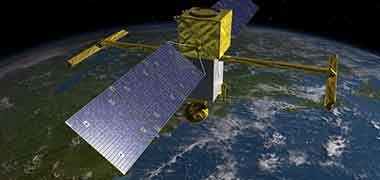
Commercial Earth Observation
Satellite parts CNC machining for optical and SAR earth observation constellation satellite structure, ADCS actuator parts, antenna mechanism elements, and optical instrument mounting hardware. High-resolution optical satellite parts CNC machining requires the tightest tolerances — reaction wheel bearing seat ±0.003mm directly determines image resolution performance.

Communications Satellites
Satellite parts CNC machining for GEO and LEO communications satellite bus structure, transponder cavity housing, antenna deployment mechanism parts, and electric propulsion components. GEO satellite parts must survive 15-year operational lifetimes — the longest zero-maintenance reliability requirement in any satellite parts CNC machining application.
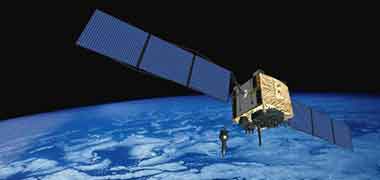
Navigation & Positioning Satellites
Satellite parts CNC machining for GPS, Galileo, GLONASS, and BeiDou atomic clock mounting hardware, antenna array structural parts, and SADA bearing housing elements. Navigation satellite parts CNC machining requires exceptional dimensional stability — sub-millimeter structural thermal deformation from CNC machining dimensional errors directly affects navigation signal timing accuracy.
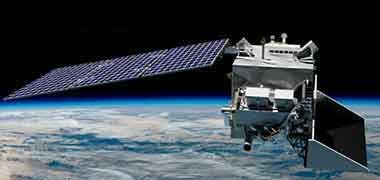
Scientific Research Satellites
Satellite parts CNC machining for astronomy, heliophysics, planetary science, and Earth science research satellite optical bench parts, detector mounting components, and cryogenic system structural elements. Science satellite parts CNC machining requires the lowest CVCM ≤ 0.1% outgassing and highest dimensional stability of any satellite application — Invar 36 CTE 1.3 ppm/°C for telescope structure.
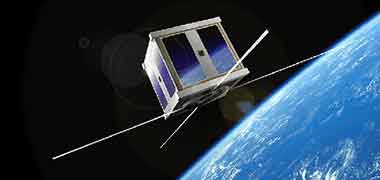
Small Satellites & CubeSats
Satellite parts CNC machining for 1U–12U CubeSat structures per CDS Rev. 14, SmallSat bus frame parts, miniature propulsion nozzle components (Swiss CNC, Ø0.3mm throat), and CubeSat mechanism hardware. First article satellite parts CNC machining in 5–7 business days for aluminum structures. No minimum order quantity for CubeSat prototype programs.

Military & Launch Vehicle Programs
AS9100D certified satellite parts CNC machining for military reconnaissance, SIGINT, and communications satellite structural parts, payload components, and mechanism hardware with the highest dimensional accuracy and most complete quality documentation. Space exploration satellite parts CNC machining for deep space, lunar, and Mars mission hardware requiring survival of deep space radiation and extreme thermal environments.
Satellite Parts CNC Machining
Factory Capabilities
CNCPioneer's satellite parts CNC machining factory operates two complementary CNC platforms — 78+ Swiss CNC lathes (Star SR-32J, Citizen A20/A16, Tsugami B206) for small-diameter complex satellite parts up to Ø32mm, and 66+ MAZAK mill-turn centers for larger satellite structural and mechanism parts up to Ø300mm — covering the full dimensional range of spacecraft component requirements.
Swiss CNC Lathe Platform
78+ Swiss CNC lathes · Ø0.5–Ø32mm · L/D up to 20:1 · Up to 9-axis simultaneous · Positional accuracy ±0.002mm · Repeatability ±0.001mm · Bearing seat ±0.003mm · Roundness ±0.002mm · Cold gas nozzle throat Ø0.3mm ±0.01mm · Ra 0.2μm on valve seating surfaces.
MAZAK Mill-Turn Platform
66+ MAZAK Integrex and Quick Turn centers · Ø10–Ø300mm · 5-axis simultaneous · Deep bore for hollow satellite structural tubes · Interface face flatness 0.005mm · Hole pattern position ±0.02mm · Single-setup elimination of re-fixturing errors · Cavity dimension ±0.02mm for waveguide and transponder parts.
Satellite Parts Measurement Equipment
Mitutoyo CMM ±0.001mm · Mitutoyo air gauges for bearing journal monitoring · Roundness tester for satellite bearing parts · Surface roughness tester Ra 0.2μm · SII XRF analyzer for incoming material verification · Precision balance for mass budget compliance · Optical microscopy for miniature satellite parts.
Space-Grade Satellite Parts Materials
Aluminum 6061-T6 / 7075-T6 / 2024-T351 · Titanium Ti-6Al-4V Grade 5 / Grade 23 ELI · Invar 36 (CTE 1.3 ppm/°C) / Invar M93 (CTE 0.5–1.0 ppm/°C) · Kovar ASTM F15 · Stainless 316L / 17-4PH H900 · Inconel 625 / 718 · Beryllium S-200F (export controlled) · PEEK space grade · PTFE space grade.
Outgassing Control Protocols
Low-residue cutting fluids documented per satellite parts CNC machining factory process records · Inter-operation solvent wipe and ultrasonic cleaning · Post-machining ultrasonic cleaning in aqueous agent + DI water rinse · Vacuum bake-out coordination 100–125°C / 24–48h · Contamination-controlled N₂-purged double-bag packaging for clean room delivery.
AS9100D Quality Documentation
FAIR per AS9102 for every new flight satellite parts CNC machining part number · CMM balloon drawing reports · Material test reports with heat traceability · ASTM E595 outgassing data references · Surface treatment certifications · Mass measurement records · Certificate of Conformance · All records retained 20 years.
Materials for Satellite Parts CNC Machining
Satellite parts CNC machining factory material selection is governed by ASTM E595 outgassing compliance, specific strength and stiffness, thermal stability across orbital temperature cycling from –180°C to +150°C, radiation tolerance, and chemical compatibility with satellite propellants and processing environments. CNCPioneer machines all primary satellite alloys with dedicated space-grade tooling and process protocols.
6061-T6
ASTM E595 compliant · Good machinability · Anodizable · Low density 2.7 g/cm³ · Satellite bus structure, panel inserts, bracket components, and antenna support elements
7075-T6
ASTM E595 compliant · Highest strength aluminum · Good machinability · Load-critical satellite structural fittings, separation system components, and deployment mechanism hardware
2024-T351 / 6082-T6
ASTM E595 compliant · High strength and excellent fatigue life (2024) · European standard good machinability (6082) · High-cycle satellite mechanism and European satellite program structural components
Ti-6Al-4V Grade 5
Very low outgassing · High specific strength · Low CTE matching CFRP · Satellite-to-launch-vehicle interface fittings, separation system components, and propulsion valve/fitting hardware
Ti-6Al-4V ELI Grade 23
Superior fracture toughness · Very low outgassing · High-reliability satellite mechanism components where fracture toughness is a primary design criterion
Inconel 625 / 718
Outstanding corrosion resistance · High temperature (625) · High strength age-hardenable (718) · Satellite propulsion system valve and fitting components for hydrazine and oxidizer service
316L / 303 / 17-4PH H900
Low outgassing · Corrosion resistant · Non-magnetic (316L) / High strength (17-4PH) · Satellite fastener hardware, non-structural mechanism components, and high-load shaft elements
Invar 36 / Invar M93
Ultra-low CTE 1.3 ppm/°C · Low outgassing · Optical bench components, telescope structure elements, and dimensionally stable satellite instrument mounts where structural thermal distortion corrupts instrument performance
Kovar ASTM F15
Matched CTE with glass and ceramics 5.5 ppm/°C · Low outgassing · Hermetic RF connector feedthrough components and glass-to-metal seal interface elements for satellite pressure vessel and RF assemblies
Beryllium S-200F
Ultra-low density 1.85 g/cm³ · Highest specific stiffness · Very low CTE · Ultra-lightweight optical bench and precision mirror substrate components — export controlled, handled per OSHA requirements
PEEK Space Grade
Low outgassing space-qualified grade · Good dielectric · Radiolucent · High temperature · Satellite electrical insulator components and non-metallic structural elements where electrical isolation is required
PTFE Space Grade
Low outgassing verified grade · Chemical resistant · Low friction · Satellite propulsion system seal and bearing components, coaxial insulator elements compatible with propellant media
Surface Treatments for Satellite
Parts CNC Machining Factory
Outgassing control is the defining quality requirement distinguishing a satellite parts CNC machining factory from a standard aerospace precision machining facility. All satellite parts CNC machining surface treatments are selected for ASTM E595 compliance — TML ≤ 1.0% and CVCM ≤ 0.1% — preventing vacuum-environment volatile compound deposition on optical coatings, solar cell junctions, and cryogenic detectors.
Type II & Type III Anodizing
Hard anodized aluminum satellite parts CNC machining factory components are universally ASTM E595 compliant. Type II anodizing for standard corrosion protection on satellite bus structural components. Type III hard coat anodizing for wear-resistant satellite mechanism aluminum components. Black anodize (α > 0.95) for star tracker baffle tubes and stray light control surfaces. Chromic acid anodize (CAA) for European satellite programs requiring maximum fatigue life preservation.
Chemical Film — MIL-DTL-5541
MIL-DTL-5541 chromate conversion coating (Alodine/Iridite) for aluminum satellite parts CNC machining factory components requiring electrical conductivity for satellite structure electrical bonding and grounding while maintaining corrosion protection compatible with satellite clean room handling environments. Low-contact-resistance surface for satellite structure electrical ground continuity and EMI control.
Passivation — ASTM A967
ASTM A967 passivation for stainless steel satellite parts CNC machining factory components. Removes free iron from machined surfaces and enhances chromium oxide passive layer for outgassing compatibility and corrosion resistance in satellite propellant and clean room processing environments. Standard treatment for stainless satellite propulsion system valve and fitting components in hydrazine and high-pressure pressurant service.
Gold Plating — MIL-G-45204
MIL-G-45204 gold plating for satellite parts CNC machining factory electrical contact components — RF connector center conductors, electrical connector contacts, and grounding hardware. Gold's negligible vapor pressure in vacuum and complete oxidation resistance make it the ideal contact surface treatment for satellite lifetime electrical connection reliability across temperature cycling from –180°C to +150°C. XRF thickness verification on every production lot.
Vacuum Bake-Out
Post-machining vacuum bake-out at 100–125°C for 24–48 hours for satellite parts CNC machining factory components requiring accelerated outgassing reduction before satellite integration. Standard practice for satellite optical bench components and components in close proximity to sensitive detector surfaces where outgassing-induced contamination risk is highest. Vacuum bake-out reduces residual volatile content by 1–2 orders of magnitude beyond standard cleaning.
Clean Room Handling & Cleanliness
Satellite parts CNC machining factory components requiring clean room handling are processed in ISO Class 7 compatible conditions with particle count and visual cleanliness verification before packaging. Components are individually bagged and sealed with desiccant for satellite integration environments. Cleanliness records — particle count and visual inspection results — are included in shipment documentation for all satellite parts CNC machining flight components requiring cleanliness certification.
All satellite parts CNC machining factory surface treatments — anodize, chemical film, passivation, and gold plating — are ASTM E595 compliant with TML ≤ 1.0% and CVCM ≤ 0.1%. Surface treatment certifications are included in the shipment documentation package for every satellite parts CNC machining flight component. Vacuum bake-out at 100–125°C is coordinated for satellite parts CNC machining components in proximity to optical and detector surfaces where residual outgassing would compromise mission performance.
AS9100D Quality System for Satellite
Parts CNC Machining Factory
Satellite parts CNC machining factory quality requirements are the most rigorous of any precision manufacturing application — a single non-conforming satellite part that passes inspection and is integrated into a spacecraft may cause mission failure worth hundreds of millions of dollars with no possibility of recovery. CNCPioneer's AS9100D quality system applies dedicated space-grade protocols to every satellite parts CNC machining order.
Contract & Drawing Review
Engineering and quality review of satellite parts CNC machining drawing requirements, applicable ECSS, NASA GSFC, MIL, and customer OEM satellite specifications, outgassing material requirements, surface treatment callouts, and FAIR requirements per AS9102 before order acceptance. All drawing ambiguities resolved with the customer before satellite parts production release — non-conformance during satellite parts CNC machining is unacceptable for flight hardware.
Material Incoming Inspection
XRF composition verification confirms base alloy compliance; hardness and temper verification for beryllium copper and phosphor bronze materials; beryllium content documentation per OSHA for beryllium copper orders; RoHS/ELV restricted substance verification; full lot traceability from mill certificate through finished connector pin retained for every order.
First Article Inspection (FAIR) per AS9102
Complete CMM dimensional verification of all drawing-dimensioned features on the first production article for every new satellite parts CNC machining component part number. FAIR documented in AS9102 balloon drawing format with full measurement results, material certifications, surface treatment certifications, and mass measurement results. FAIR approval by customer required before satellite parts production quantity release.
In-Process Statistical Control
Real-time dimensional monitoring with Mitutoyo gauging at defined satellite parts CNC machining production intervals. 100% CCD automatic sorting for safety-critical satellite parts dimensions. Dedicated process travelers with mandatory inspection sign-off points for satellite-specific critical features. Statistical process control with Cpk ≥ 1.33 for all flight satellite parts CNC machining components on key characteristics.
Final Inspection & Cleanliness Verification
Mitutoyo CMM (±0.001mm) full dimensional report. Surface roughness verification on bearing, sealing, and functional surfaces. Thread gauge verification per applicable aerospace thread standards. Visual inspection under clean room lighting for surface defects and contamination. Mass measurement against drawing mass specification. Particle count cleanliness verification for satellite parts CNC machining components requiring clean room delivery condition.
Shipment Documentation
Certificate of Conformance, CMM dimensional report, material test reports with full lot traceability, FAIR per AS9102, surface treatment certifications, ASTM E595 outgassing data references for non-metallic materials, mass measurement records, cleanliness verification records, and any satellite program-specific documentation. All satellite parts CNC machining factory quality records retained minimum 20 years for satellite program configuration management support.
AS9100D Quality System for
Satellite Parts CNC Machining Factory
CNCPioneer's AS9100D certified satellite parts CNC machining factory confirms independent audit compliance with the quality management framework demanded by satellite OEMs and space agency prime contractors — covering risk management, configuration control, FAIR per AS9102, key characteristics management, and counterfeit part prevention across all satellite parts CNC machining programs.
FAIR Documentation per AS9102
Complete FAIR documentation for every new satellite parts CNC machining component part number — AS9102 balloon drawing format with all drawing dimensions ballooned, measured, and recorded, with material certifications, surface treatment certifications, and mass measurement results. FAIR approval by customer required before satellite parts production quantity release. FAIR records retained 20 years for satellite program configuration management.
- FAIR per AS9102 for every new P/N
- Customer approval before production
- Records retained 20 years
Material Traceability & Authentication
Full material traceability chain from mill certificate heat number through finished satellite component shipment. SII XRF composition verification on incoming material for every satellite parts CNC machining component order. Counterfeit material prevention through approved supplier list management and incoming material certification authentication — a fundamental AS9100D satellite parts CNC machining factory requirement.
- XRF alloy verification every order
- Mill cert heat number traced
- Counterfeit part prevention
Outgassing Compliance Verification
All satellite parts CNC machining factory materials documented against ASTM E595 outgassing test data — TML ≤ 1.0% and CVCM ≤ 0.1%. Non-metallic satellite parts CNC machining materials including PEEK and PTFE require material-grade-specific ASTM E595 test data. Outgassing data references documented in material qualification records retained in satellite parts quality documentation. Vacuum bake-out coordinated for parts proximate to optical and detector surfaces.
- ASTM E595 data documented
- TML ≤ 1.0% / CVCM ≤ 0.1%
- Vacuum bake-out capability available
Cpk ≥ 1.33 Process Capability
Statistical process control with Cpk ≥ 1.33 minimum for flight satellite parts CNC machining factory components on key characteristics. 100% CCD automatic sorting for safety-critical satellite parts CNC machining factory dimensions. SPC control charts maintained for bearing seat diameter, concentricity, and thread pitch diameter on all satellite parts CNC machining factory programs with identified key characteristics.
- Cpk ≥ 1.33 on key characteristics
- 100% CCD sorting for safety-critical dims
- Certificate of Conformance (C of C)
Satellite Parts CNC Machining Factory FAQ
Common questions from satellite OEMs, payload integrators, small satellite developers, and CubeSat programs about CNCPioneer's satellite parts CNC machining factory capabilities, ASTM E595 outgassing compliance, and AS9100D quality system.
Satellite parts CNC machining differs from standard aerospace CNC machining in five fundamental areas. First, outgassing — standard aerospace components operate in atmospheric environments where outgassing is irrelevant; satellite parts CNC machining must use materials and processes minimizing vacuum-environment outgassing to prevent sensitive payload surface contamination. Second, thermal cycling range — standard aerospace components experience –65°C to +125°C; satellite parts CNC machining components must maintain dimensional stability across –180°C to +150°C repeated 16 times daily for 15+ year mission lifetimes. Third, radiation tolerance — satellites in MEO and GEO accumulate total ionizing dose levels requiring radiation-tolerant materials. Fourth, maintenance impossibility — failed satellite parts cannot be replaced after launch, requiring zero-tolerance quality assurance. Fifth, mass criticality — satellite launch cost of $3,000–$20,000 per kilogram makes satellite parts mass minimization a design and manufacturing priority with no equivalent in commercial aerospace machining applications.
Satellite machining services materials must meet ASTM E595 outgassing test criteria: total mass loss (TML) ≤ 1.0% and collected volatile condensable materials (CVCM) ≤ 0.1% of initial specimen mass, measured after 24 hours at 125°C in vacuum of ≤ 7×10⁻³ Pa. All metallic satellite parts CNC machining factory materials — aluminum 6061-T6 and 7075-T6, titanium Ti-6Al-4V, stainless steel, Invar, Kovar, and Inconel — are inherently ASTM E595 compliant when properly cleaned. Non-metallic satellite parts CNC machining materials — PTFE, PEEK, and adhesives — require ASTM E595 test data confirming compliance for the specific grade and lot. Surface treatments applied to satellite parts CNC machining factory components — anodize, chromate conversion, passivation, and gold plating — are inherently low-outgassing when properly processed. Vacuum bake-out at 100–125°C is applied to satellite parts CNC machining factory components requiring the lowest possible residual outgassing for proximity to sensitive optical and detector surfaces.
For satellite bus structural machining services components where minimum mass at required stiffness and strength is the primary design objective, we recommend aluminum 7075-T6 for maximum specific strength structural fittings and load path elements, aluminum 6061-T6 for moderate-load structural inserts and bracket components where machinability and weldability are important secondary requirements, and titanium Ti-6Al-4V for satellite bus-to-launch-vehicle interface fittings, separation system components, and CTE-critical fittings attaching to CFRP structural panels where titanium's excellent CTE match with CFRP (8.6 ppm/°C vs CFRP 0–2 ppm/°C in fiber direction) reduces thermal stress at bonded interfaces. For satellite optical instrument structural components requiring exceptional dimensional stability across orbital thermal cycling, Invar 36 provides ultra-low CTE (1.3 ppm/°C) for telescope structure and optical bench applications where structural thermal distortion would corrupt instrument performance.
CNCPioneer achieves reaction wheel and CMG bearing seat diameter tolerances of ±0.003mm and roundness of ±0.002mm for satellite attitude control actuator satellite parts CNC machining factory components. These tolerances support the precision bearing preload requirements that minimize micro-vibration generation — micro-vibration being the primary source of high-frequency satellite pointing jitter that degrades high-resolution earth observation image quality and scientific instrument measurement data. Bearing housing concentricity of ±0.003mm between bearing seat positions is verified by Mitutoyo CMM on every first article and at defined production intervals. For reaction wheel rotor dynamic balance requirements, we coordinate with customer-qualified precision balancing facilities to achieve residual imbalance within ±0.001g·mm specification for flight-qualified attitude control actuators.
Yes. CNCPioneer's satellite parts CNC machining factory is specifically well-positioned for CubeSat programs requiring rapid component delivery. For CubeSat structure rail components and end plates in aluminum 6061-T6, first article satellite parts are delivered in 5–7 business days. For CubeSat mechanism components, miniature propulsion parts in aluminum and titanium, prototype satellite parts CNC machining delivery is 7–12 business days. CubeSat programs benefit from CNCPioneer's satellite parts CNC machining factory flexible minimum order quantities — we accept orders from single engineering model prototype pieces through small constellation production quantities without minimum order size restrictions. Full dimensional documentation, material certification, and ASTM E595 outgassing compliance documentation are provided for all CubeSat satellite parts CNC machining components regardless of order quantity, supporting launch service provider component review requirements.
Satellite parts CNC machining factory components survive launch vibration through correct material selection for required specific stiffness and strength, dimensional accuracy that achieves correct bolt preload in structural joint assemblies, and surface finish compliance on thread engagement geometry preventing fastener loosening under vibration loading. CNCPioneer's satellite parts CNC machining factory dimensional verification — thread pitch diameter tolerance of ±0.005mm, seating face flatness of 0.005mm — ensures correct bolt preload in satellite structural joint assemblies that maintain joint integrity across 20–150 grms random vibration and 20–60g sine sweep launch vehicle ascent loads. For satellite parts CNC machining factory components requiring vibration qualification testing, we coordinate with qualified aerospace vibration test facilities and provide test specimen lot material certification and dimensional records supporting vibration test documentation.
CNCPioneer's satellite parts CNC machining factory prototype lead times: aluminum satellite structural parts 5–7 business days; aluminum satellite parts with anodize surface treatment 7–10 business days; titanium satellite parts 7–12 business days; Invar and Kovar satellite parts 10–14 business days; Inconel satellite propulsion parts 10–14 business days. Production quantities for standard satellite structural and mechanism satellite parts CNC machining: 4–6 weeks. Complex satellite parts with multiple secondary operations, tight geometric tolerances, and multiple surface treatment steps: 6–8 weeks. For satellite constellation programs requiring dedicated satellite parts CNC machining factory production capacity and long-term delivery schedule commitments supporting satellite factory production schedules, blanket order programs with committed lead times are available.
Get a Quote for Satellite Parts CNC Machining
Upload your satellite component drawing or CAD file and receive a free DFM review and competitive satellite parts CNC machining factory quotation within 24 hours. CNCPioneer's engineering team will review your component design for manufacturability, confirm outgassing material compliance, identify critical dimensions requiring special inspection controls, assess surface treatment requirements for space environment compatibility, and provide a complete satellite parts CNC machining factory quotation including FAIR documentation and AS9100D quality system requirements.