Home / Satellite Structures
Satellite Structure Manufacturer · Satellite Aluminum Structure Frame Specialist · AS9100D · Shenzhen · Est. 2011

Satellite Structures
Aluminum Structure Frame Manufacturer

CNCPioneer is an AS9100D certified satellite structure manufacturer and China satellite aluminum structure frame machining specialist delivering space-grade spacecraft structural components with tolerances as tight as ±0.005mm — 78+ Swiss CNC lathes and 66+ MAZAK mill-turn centers for satellite bus structures, LEO constellation programs, CubeSat platforms, and Starlink-class flat-panel satellite aluminum structure frames worldwide since 2011.

AS9100D Aerospace & Space Certified
24-Hour DFM & Quote Turnaround
FAIR Documentation per AS9102
Satellite Aluminum Structure Frame Expert
LEO Constellation Production Capacity
satellite structures aluminum structure frame
0.005mm Face Flatness
±0.02mm Hole Position

What Are
Satellite Structures?

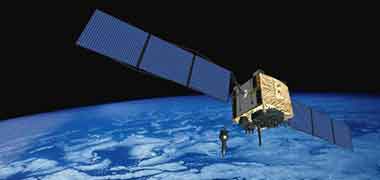
Satellite structures are the load-bearing mechanical frameworks that integrate all satellite subsystems — electronics, sensors, propulsion, power, communications, and payload instruments — into a single coherent spacecraft assembly capable of surviving launch and operating reliably in the space environment for the satellite's designed mission lifetime. The satellite aluminum structure frame — the aluminum alloy primary bus framework — is the most frequently produced satellite structure type, accounting for the majority of satellite structural component machining across all satellite program categories from small CubeSat platforms to large geostationary communications satellite buses.

The satellite structure is the spacecraft's skeleton — it determines the satellite's mass, stiffness, natural frequencies, thermal distortion behavior, and the accuracy with which every subsystem is positioned relative to the satellite's coordinate reference frame. Satellite aluminum structure frames must achieve maximum stiffness and strength at minimum mass through pocket geometry and rib stiffening, ASTM E595 outgassing compliance, survival of 20–150 grms launch vibration, dimensional stability across –180°C to +150°C orbital thermal cycling, and dimensional accuracy governing satellite subsystem positioning to tolerances that determine satellite mission pointing performance.

  • Satellite aluminum structure frame machining expertise Aluminum 6061-T6 and 7075-T6 satellite aluminum structure frame components with pocket geometry and rib stiffening achieving 30–50% mass reduction — directly reducing satellite launch cost at $3,000–$20,000 per kilogram. Mounting face flatness 0.005mm, hole position ±0.02mm verified by Mitutoyo CMM on every first article.
  • LEO constellation high-volume production capability Starlink-class and similar LEO constellation satellite aluminum structure frame programs require structural component production at hundreds to thousands of units per month — CNCPioneer's 78+ Swiss CNC lathes and 66+ MAZAK mill-turn centers provide constellation-scale production capacity at China satellite structure manufacturer pricing.
  • Complete satellite structural component coverage Primary bus structure fittings, secondary equipment brackets, deployable appendage structural interfaces, payload instrument mounting hardware, CubeSat rail and end plate components, and ground support equipment structural elements — single-source satellite structure manufacturer across the complete spacecraft structural architecture.
  • 30–50% China satellite structure manufacturer cost advantage AS9100D certified satellite aluminum structure frame machining at 30–50% lower cost than equivalent US, European, and Japanese aerospace precision machining facilities — DFM review, FAIR per AS9102, and outgassing compliance verification included in China satellite structure manufacturer program pricing without surcharges.
satellite aluminum structure frame machining
6061 / 7075
Aluminum Structure Frame
±0.005mm
Structural Tolerance

Why CNCPioneer as Your
Satellite Structure Manufacturer?

The satellite aluminum structure frame is the spacecraft's skeleton — dimensional inaccuracy in satellite structural components compromises every system it supports. CNCPioneer's AS9100D certified satellite structure machining capability addresses the five requirements that distinguish satellite structures from commercial aerospace structural components: mass minimization, ASTM E595 outgassing compliance, zero-maintenance lifetime reliability, orbital thermal cycling survival, and launch vibration resistance.

01

Satellite Aluminum Structure Frame Expertise

Aluminum 6061-T6 and 7075-T6 satellite aluminum structure frame machining with pocket geometry and rib stiffening achieving 30–50% mass reduction versus solid-machined alternatives at equivalent structural stiffness. Minimum wall thickness 1.5mm. Mounting face flatness 0.005mm, hole position ±0.02mm — the foundational dimensional requirements governing satellite aluminum structure frame structural joint performance.

02

AS9100D Certified Satellite Structure Quality

AS9100D certification confirms CNCPioneer's quality system meets risk management, configuration control, FAIR per AS9102, key characteristics management, and counterfeit part prevention — providing satellite program managers with documented assurance that satellite aluminum structure frame components are manufactured within an independently audited aerospace quality framework eliminating extensive supplier qualification activity.

03

LEO Constellation Production Capacity

Starlink satellite structure and similar LEO constellation programs require satellite aluminum structure frame component production at hundreds to thousands of units per month — rates that demand 100% automated CCD dimensional sorting replacing manual CMM verification. CNCPioneer's 78+ Swiss CNC lathes and 66+ MAZAK mill-turn centers provide constellation-scale satellite aluminum structure frame production capacity.

04

MAZAK Mill-Turn & Swiss CNC Dual Platform

MAZAK mill-turn centers handle complex multi-feature satellite aluminum structure frame bus fittings, panel elements, and mechanism housing bodies; Swiss CNC lathes produce precision satellite structure insert elements, pivot pin components, and precision interface geometry at minimum diameter capability — single-source satellite structure machining across the complete structural component size range.

05

24-Hour Satellite Structure DFM Review

Every satellite aluminum structure frame inquiry receives comprehensive DFM review within 24 hours: structural geometry feasibility, material selection guidance, ASTM E595 outgassing compatibility, mass optimization analysis, and manufacturing sequence recommendation — at no cost. DFM review is the single highest-return investment in satellite structure program cost and schedule risk reduction.

06

30–50% China Satellite Structure Manufacturer Cost

CNCPioneer's China satellite structure manufacturer cost structure delivers 30–50% cost reduction versus US and European satellite structure manufacturers — reflecting labor cost, competitive material supply chain, and manufacturing efficiency economics, not reduced quality system rigor. Engineering DFM review, FAIR per AS9102, and outgassing compliance verification are included in China satellite structure manufacturer pricing.

Satellite Structural Components
We Manufacture

CNCPioneer's satellite structure machining covers the complete range of spacecraft structural components across all satellite structural zones — primary bus structure fittings, secondary equipment brackets, deployable appendage structural interfaces, payload instrument mounting hardware, CubeSat rails, and ground support equipment structural components — with FAIR per AS9102 for every flight component.

Satellite Aluminum Structure Frame Primary Components

Primary Satellite Aluminum Structure Frame

Launch vehicle adapter interface ring fittings (bolt pattern ±0.02mm, face flatness 0.005mm), satellite bus panel inserts and closeout hardware (thread pitch ±0.005mm), satellite bus frame corner fittings, central cylinder and thrust tube components (roundness ±0.005mm, end flange flatness 0.005mm), and separation system clamp band interface hardware for satellite-to-launch-vehicle structural load transfer.

Satellite Secondary Structural Components

Secondary Satellite Structural Components

Equipment mounting brackets (face flatness 0.005mm, hole position ±0.02mm), reaction wheel structural support elements (spin axis perpendicularity 0.01mm/100mm), thruster mounting structural components (thrust vector ±0.1°), star tracker and attitude sensor structural mounting hardware (non-magnetic 316L), and battery module support structures (thermal interface flatness 0.01mm).

Starlink LEO Constellation Satellite Structure Components

Starlink-Class LEO Constellation Structural Components

Flat-panel satellite aluminum structure frame element machining for Starlink-class and similar LEO constellation programs — phased array antenna mounting structural hardware (element position ±0.05mm), Hall thruster structural integration fittings (non-magnetic, thrust vector ±0.1°), inter-satellite stacking interface structural components, and high-volume panel insert arrays for standardized constellation satellite aluminum structure frames at production rates of hundreds to thousands per month.

Satellite Deployable Structural Components

Deployable Appendage Structural Interfaces

Solar array SADA mounting structural elements (bearing housing concentricity ±0.003mm), solar panel hinge body hardware and deployment spring housing elements, deployable antenna reflector support rib attachment fittings (reflector rib geometry governing RF beam pattern after deployment), and instrument boom deployment hinge body elements (non-magnetic Al or 316L for magnetically sensitive science instruments).

Satellite Payload Structural Components

Payload & Thermal Structural Components

Optical bench structural components in Invar 36 (CTE 1.3 ppm/°C) for earth observation and science satellite telescope dimensional stability, SAR antenna panel structural mounting frames (T/R module position ±0.05mm across full aperture), heat pipe saddle mounting elements (bore roundness ±0.005mm, Ra 0.8μm), radiator panel support brackets, and MLI blanket attachment hardware (non-magnetic materials).

CubeSat and SmallSat Structural Components

CubeSat & SmallSat Structural Components

CubeSat 1U–12U structure rail components per CDS Rev. 14 (cross-section ±0.1mm, straightness 0.2mm/100mm), CubeSat end plates and PC-104 mounting standoffs, SmallSat bus structural frame fitting elements for ESPA-class platforms, rideshare payload adapter interface fitting hardware, CubeSat deployable antenna hinge structural elements, and CubeSat solar panel deployment mechanism structural components. First article in 5–7 business days.

Every satellite structural component ships with full material traceability from mill certificate through finished part, Mitutoyo CMM dimensional verification, surface treatment certifications, ASTM E595 outgassing compliance documentation, mass measurement record, and Certificate of Conformance — with FAIR documentation per AS9102 for every new satellite structural component part number. All quality records retained 20 years.

Industries & Applications

CNCPioneer's satellite structure machining supplies satellite OEMs, LEO constellation operators, commercial space program developers, government space agencies, and university CubeSat programs across commercial earth observation, LEO communications, GEO communications, scientific research, military, small satellite, navigation, and on-orbit servicing satellite structure programs worldwide.

Earth Observation Satellite

Commercial Earth Observation Constellations

Satellite aluminum structure frame and satellite structure machining for earth observation satellite bus structural fittings, panel insert arrays, reaction wheel bracket structural components, and payload instrument mounting hardware for high-resolution commercial remote sensing constellation programs requiring satellite structural component production at commercial manufacturing rates.

Communications Satellite

LEO & GEO Communications Satellites

Satellite aluminum structure frame machining for Starlink-class flat-panel satellite aluminum structure frame elements, phased array antenna mounting structural hardware, Hall thruster structural integration fittings, and inter-satellite stacking interface structural components for large-scale LEO constellation programs. GEO communications satellite aluminum structure frame machining for primary structure fittings, propulsion system interface hardware, and electric propulsion structural integration components.

Navigation Satellite

Scientific Research Satellites

Satellite structure machining for science satellite optical bench structural components in Invar 36 (CTE 1.3 ppm/°C), telescope structural support hardware, magnetometer boom structural elements, and cryogenic instrument structural mounting components for astronomy, heliophysics, and Earth science satellite programs requiring minimum satellite aluminum structure frame outgassing and maximum dimensional stability.

Scientific Research Satellite

Military & Intelligence Satellites

Satellite aluminum structure frame and satellite structure machining for military reconnaissance satellite structural fittings, intelligence payload structural mounting hardware, and strategic communications satellite structural components with AS9100D documentation supporting classified satellite program configuration management requirements.

Small Satellite CubeSat

Small Satellites & CubeSats

Satellite structure China manufacturing for commercial small satellite constellation operators, university CubeSat programs, and government technology demonstration missions. CubeSat rail and end plate satellite structure machining per CDS Rev. 14, SmallSat bus structural fitting production, and small satellite rideshare interface structural component manufacturing — with competitive China satellite structure manufacturer pricing and first article aluminum satellite structural components in 5–7 business days.

Military Reconnaissance Satellite

Navigation, On-Orbit Servicing & Exploration

Satellite aluminum structure frame machining for GPS, Galileo, GLONASS, and BeiDou navigation satellite structural components requiring dimensional stability for navigation signal timing accuracy compliance. Satellite structure machining for on-orbit servicing vehicle aluminum structure frame fittings, lunar orbiter structural elements, and deep space probe structural hardware for robotic exploration and satellite servicing spacecraft programs.

Satellite Structure Machining
Process & Capabilities

CNCPioneer's satellite structure machining process takes satellite aluminum structure frame and satellite structural component requirements from initial specification through flight-qualified production in four structured phases — 24-hour DFM review, prototype machining (Week 1–2), FAIR documentation (Week 2–3), production qualification (Week 3–6) — with minimum development iteration and maximum schedule predictability.

01 · PHASE 1

Satellite Structure DFM Review (24 Hours)

Structural geometry feasibility — satellite aluminum structure frame wall thickness, pocket geometry, and rib stiffening reviewed against satellite structure machining capability · Material selection review (6061-T6 vs 7075-T6 vs Ti-6Al-4V vs Invar 36) · ASTM E595 outgassing compatibility confirmation · Mass optimization — estimated mass vs. satellite budget allocation · Manufacturing sequence for critical satellite aluminum structure frame feature relationships.

02 · PHASE 2

Prototype Satellite Structure Machining (Week 1–2)

78+ Swiss CNC lathes (precision satellite structure insert elements, pivot pin components Ø0.3–Ø32mm) and 66+ MAZAK mill-turn centers (complex satellite aluminum structure frame bus fittings and structural bodies Ø10–Ø300mm) · In-process gauging of mounting face flatness, hole pattern position, wall thickness, and mass-critical material removal features · Post-machining surface treatment (hard anodize, Alodine, passivation).

03 · PHASE 3

First Article Inspection & FAIR (Week 2–3)

Complete Mitutoyo CMM dimensional verification (±0.001mm) of all satellite aluminum structure frame and satellite structural component drawing features · All dimensions balloon-referenced, measured, and recorded · Surface roughness verification · Thread gauge verification · Mass measurement from calibrated precision balance (±0.1g) · Material certification · Surface treatment certification · FAIR per AS9102 submitted for customer approval before production release.

04 · PHASE 4

Production & Statistical Control (Week 3–6)

Process capability Cpk ≥ 1.33 on satellite aluminum structure frame and satellite structural component critical dimensions · 100% CCD automatic sorting for safety-critical satellite structural component dimensions · Dedicated process travelers with mandatory inspection sign-off · Engineering change management for drawing revision incorporation · Blanket order programs with committed lead times for LEO constellation satellite aluminum structure frame production.

05 · MATERIALS

Satellite Structure Materials

Al 6061-T6 / 7075-T6 / 2024-T351 / 6082-T6 · Ti-6Al-4V Grade 5 / Grade 23 ELI · Invar 36 (CTE 1.3 ppm/°C) · Stainless 316L / 17-4PH H900 · Inconel 718 · Kovar ASTM F15 · Mg AZ91D (ultra-lightweight) — all materials sourced with full mill certificates and SII XRF composition verification confirming ASTM E595 outgassing compliance.

06 · DOCUMENTATION

AS9100D Quality Documentation

FAIR per AS9102 for every new satellite structural component part number · 100% CMM for all flight critical dimensions · Material certifications with full lot traceability · ASTM E595 outgassing data references · Surface treatment certifications · Mass measurement records · Certificate of Conformance · All satellite aluminum structure frame and satellite structural component quality records retained 20 years.

Materials for Satellite Structures
and Satellite Aluminum Structure Frames

Satellite structure material selection is governed by ASTM E595 outgassing compliance, specific strength for minimum satellite aluminum structure frame mass at required structural stiffness, CTE compatibility with adjacent CFRP panels, thermal conductivity for satellite thermal management, and machinability for complex satellite aluminum structure frame pocket and rib geometry. Aluminum 6061-T6 is the dominant satellite aluminum structure frame material globally for its combination of all five properties.

Titanium

Ti-6Al-4V Grade 5

TML <0.05% · Outstanding specific strength · CTE 8.6 ppm/°C (CFRP compatible) · Satellite aluminum structure frame-to-launch-vehicle interface fittings and CFRP-interface structural components — titanium's CTE match with CFRP minimizes thermal stress at bonded interfaces across orbital thermal cycling that would cause fatigue cracking in aluminum satellite aluminum structure frame designs

Titanium

Ti-6Al-4V Grade 23 ELI

TML <0.05% · Superior fracture toughness · High-reliability satellite structural mechanism components and separation system structural elements where fracture toughness is a primary design criterion in satellite aluminum structure frame structural joint design

Aluminum

7075-T6 / 6061-T6

TML <0.1% · Excellent/Good specific strength · CTE 23.4/23.6 ppm/°C · Standard satellite aluminum structure frame bus panels, equipment mounting brackets, panel inserts (6061-T6); high-load satellite aluminum structure frame interface fittings and structural junction hardware at load concentration points (7075-T6)

Stainless Steel

17-4PH H900

TML <0.1% · Excellent specific strength · CTE 10.8 ppm/°C · High-load compact satellite structural elements and separation system hardware where 17-4PH yield strength advantage enables minimum satellite aluminum structure frame cross-section at required structural load rating

Stainless Steel

316L

TML <0.1% · Non-magnetic · Good corrosion resistance · Non-magnetic science instrument structural mounting elements, sensor installation structural hardware, and magnetometer boom attachment components integrated into the satellite aluminum structure frame peripheral structure where ferromagnetic materials would corrupt magnetic field measurements

Stainless Steel

440C

TML <0.1% · CTE 5.5 ppm/°C · Matched CTE with glass and ceramics · Hermetic satellite structural feedthrough interface components in RF and communications satellite aluminum structure frame assemblies requiring glass-to-metal seal structural interfaces

Thermally Stable

Invar 36

TML <0.1% · Ultra-low CTE 1.3 ppm/°C · Satellite optical bench structural components, telescope structural support plates, and precision instrument reference frame elements integrated into the satellite aluminum structure frame payload zone — Invar's ultra-low CTE minimizes optical alignment distortion across orbital thermal cycling

High-Temperature

Inconel 718

TML <0.1% · Excellent specific strength · CTE 13.0 ppm/°C · High-temperature satellite structural deployment mechanism components and satellite aluminum structure frame propulsion system structural integration hardware where Inconel strength at elevated launch and propulsion heating environments exceeds titanium and stainless capability

Beryllium Copper

C17200 AT

TML <0.1% · Ultra-low density 1.81 g/cm³ · Good machinability · Ultra-lightweight satellite structural components where absolute minimum density is the primary design constraint — specialty satellite aluminum structure frame applications where magnesium's density advantage over aluminum justifies its lower corrosion resistance

Dry Bearing

PTFE Space Grade

Verified TML <1.0% · Low friction · Self-lubricating satellite structural mechanism bearing and bushing components for deployable satellite structural mechanism applications requiring lubrication-free operation in orbital vacuum service throughout the satellite operational lifetime

Dry Bearing

Vespel SP-3

Verified TML <1.0% · MoS₂-filled polyimide · Superior space vacuum dry lubrication · Satellite structural mechanism bearing cage and bushing components for deployable satellite structural mechanism applications in high-radiation orbital environments where PTFE degradation would compromise deployment performance

Insulator

PEEK Space Grade

Verified TML <1.0% · Good dielectric · Radiation resistant · Satellite structural electrical isolation insert components and non-metallic standoff elements integrated into the satellite aluminum structure frame bus panel structure where electrical isolation between structural zones is required for satellite power distribution grounding architecture

Aluminum 6061-T6 is the dominant material for satellite aluminum structure frame production globally — providing low density (2.70 g/cm³), adequate specific strength (yield 276 MPa), excellent machinability enabling complex pocket geometry at minimum satellite aluminum structure frame machining cost, thermal conductivity of 167 W/m·K for satellite thermal management, and inherent ASTM E595 outgassing compliance. The majority of satellite aluminum structure frame components across all bus architectures — box bus, flat-panel bus, central cylinder bus, and truss bus — are produced from aluminum 6061-T6 with hard anodize Type III. Aluminum 7075-T6 (yield 503 MPa) is specified for satellite aluminum structure frame components at structural load concentration points. Titanium Ti-6Al-4V is specified for satellite aluminum structure frame-to-CFRP interface fittings where titanium's CTE (8.6 ppm/°C) minimizes thermal stress. Invar 36 provides ultra-low CTE (1.3 ppm/°C) for optical instrument satellite structural components.

Surface Treatments for
Satellite Structural Components

Satellite structural component surface treatment selection is governed by ASTM E595 outgassing compliance (TML ≤ 1.0%, CVCM ≤ 0.1%), electrical conductivity for satellite aluminum structure frame bonding and ESD protection, thermal control optical properties (solar absorptivity for black anodize), corrosion resistance for satellite clean room and orbital environments, and dimensional impact from coating thickness on precision satellite aluminum structure frame features.

Au · MIL-G-45204

Hard Anodizing — MIL-A-8625 Type III / Type II

Universal standard surface treatment for satellite aluminum structure frame and aluminum satellite structural components. Type III hard anodize (HV 400+) for wear resistance at satellite structure assembly contact interfaces and deployment mechanism bracket structural elements. Type II (5–25μm) for standard corrosion protection on satellite aluminum structure frame components where thinner coating reduces dimensional impact on precision features. Black hard anodize for satellite aluminum structure frame external surfaces requiring high solar absorptivity (α > 0.95) for satellite thermal balance.

Ag · ASTM B700

Chemical Film — MIL-DTL-5541

Alodine chromate conversion coating for satellite aluminum structure frame components requiring electrical conductivity for satellite structure bonding and ESD protection. Class 3 for satellite aluminum structure frame electrical bonding (contact resistance <5 mΩ/cm²) — the standard satellite structure bonding surface preparation across the spacecraft industry. Class 1A for maximum corrosion protection on non-bonding satellite structural component surfaces.

Sn · MIL-T-10727

Passivation — ASTM A967

ASTM A967 passivation for stainless steel and titanium satellite structural components interfacing with the satellite aluminum structure frame. Removes free iron and machining surface contamination, enhances passive layer for outgassing compatibility and corrosion resistance in satellite clean room and propellant handling environments. Standard treatment for 316L, 17-4PH, and Ti-6Al-4V satellite structural components.

Pd-Ni · HV 400–600

Gold Plating — MIL-G-45204 (Tribological)

Hard gold plating per MIL-G-45204 for satellite structural component electrical contact surfaces — satellite aluminum structure frame bonding strap attachment points, grounding hardware contact areas, and separation system electrical interface surfaces. Gold's negligible vacuum vapor pressure ensures lifetime electrical continuity for satellite structural bonding applications across 15–25 year satellite operational lifetimes. XRF thickness verification every production lot.

Ni · AMS 2403

Vacuum Bake-Out

Post-machining vacuum bake-out at 100–125°C for 24–48 hours for satellite structural hardware requiring accelerated outgassing reduction before satellite integration. Standard practice for satellite optical bench components and components in close proximity to sensitive detector surfaces where outgassing-induced contamination risk is highest. Vacuum bake-out reduces residual volatile content by 1–2 orders of magnitude beyond standard cleaning.

Rh · HV 800–1000

Vacuum Bake-Out

Post-machining vacuum bake-out at 100–125°C for 24–48 hours for satellite aluminum structure frame and satellite structural components proximate to sensitive satellite payload surfaces requiring minimum residual outgassing before satellite integration. Standard practice for satellite optical bench structural components in Invar 36 and payload zone satellite aluminum structure frame elements in close proximity to optical mirror coatings, solar cell junctions, and cryogenic detector surfaces where outgassing-induced contamination has irreversible performance impact.

All satellite structural component surface treatments — hard anodize, chemical film (Alodine), passivation, gold plating, titanium anodize, and vacuum bake-out — are ASTM E595 compliant with TML ≤ 1.0% and CVCM ≤ 0.1%. Surface treatment certifications are included in the shipment documentation package for every satellite structural component program. Surface treatment selection for satellite aluminum structure frame and satellite structural components is included in CNCPioneer's 24-hour DFM review service.

AS9100D Quality System for Satellite
Parts CNC Machining Factory

Satellite structure machining quality requirements are among the most rigorous of any precision manufacturing application — a single non-conforming satellite structural component that passes inspection and is integrated into a spacecraft may cause mission failure worth hundreds of millions of dollars with no possibility of recovery. CNCPioneer's AS9100D quality system applies dedicated space-grade protocols to every satellite structure machining program.

01

Contract & Drawing Review

Engineering and quality review of satellite aluminum structure frame and satellite structural component drawing requirements, applicable ECSS, NASA GSFC, MIL, and customer OEM satellite specifications, outgassing material requirements, surface treatment callouts, and FAIR requirements per AS9102 before order acceptance. All drawing ambiguities resolved with the customer before satellite parts production release — non-conformance during satellite structure machining is unacceptable for flight hardware.

02

Material Incoming Inspection

XRF composition verification confirms base alloy compliance; hardness and temper verification for beryllium copper and phosphor bronze materials; beryllium content documentation per OSHA for beryllium copper orders; RoHS/ELV restricted substance verification; full lot traceability from mill certificate through finished connector pin retained for every order.

03

First Article Inspection (FAIR) per AS9102

Complete CMM dimensional verification of all drawing-dimensioned features on the first production article for every new satellite structural component part number. FAIR documented in AS9102 balloon drawing format with full measurement results, material certifications, surface treatment certifications, and mass measurement results. FAIR approval by customer required before satellite parts production quantity release.

04

In-Process Statistical Control

Real-time dimensional monitoring with Mitutoyo gauging at defined satellite structure machining production intervals. 100% CCD automatic sorting for safety-critical satellite parts dimensions. Dedicated process travelers with mandatory inspection sign-off points for satellite-specific critical features. Statistical process control with Cpk ≥ 1.33 for all flight satellite structural component critical dimensions on key characteristics.

05

Final Inspection & Cleanliness Verification

Mitutoyo CMM (±0.001mm) full dimensional report. Surface roughness verification on bearing, sealing, and functional surfaces. Thread gauge verification per applicable aerospace thread standards. Visual inspection under clean room lighting for surface defects and contamination. Mass measurement against drawing mass specification. Particle count cleanliness verification for satellite structure machining components requiring clean room delivery condition.

06

Shipment Documentation

Certificate of Conformance, CMM dimensional report, material test reports with full lot traceability, FAIR per AS9102, surface treatment certifications, ASTM E595 outgassing data references for non-metallic materials, mass measurement records, cleanliness verification records, and any satellite program-specific documentation. All satellite structure machining factory quality records retained minimum 20 years for satellite program configuration management support.

AS9100D Quality System for
Satellite Structures

CNCPioneer's AS9100D certified satellite structure machining factory confirms independent audit compliance with the quality management framework demanded by satellite OEMs and space agency prime contractors — covering risk management, configuration control, FAIR per AS9102, key characteristics management, and counterfeit part prevention across all satellite structure programs.

01

FAIR Documentation per AS9102

Complete FAIR documentation for every new satellite structural component part number — AS9102 balloon drawing format with all drawing dimensions ballooned, measured, and recorded, with material certifications, surface treatment certifications, and mass measurement results. FAIR approval by customer required before satellite parts production quantity release. FAIR records retained 20 years for satellite program configuration management.

  • FAIR per AS9102 for every new P/N
  • Customer approval before production
  • Records retained 20 years
02

Material Traceability & Authentication

Full material traceability chain from mill certificate heat number through finished satellite component shipment. SII XRF composition verification on incoming material for every satellite structure machining component order. Counterfeit material prevention through approved supplier list management and incoming material certification authentication — a fundamental AS9100D satellite structure machining factory requirement.

  • XRF alloy verification every order
  • Mill cert heat number traced
  • Counterfeit part prevention
03

Outgassing Compliance Verification

All satellite structure machining factory materials documented against ASTM E595 outgassing test data — TML ≤ 1.0% and CVCM ≤ 0.1%. Non-metallic satellite structure machining materials including PEEK and PTFE require material-grade-specific ASTM E595 test data. Outgassing data references documented in material qualification records retained in satellite parts quality documentation. Vacuum bake-out coordinated for parts proximate to optical and detector surfaces.

  • ASTM E595 data documented
  • TML ≤ 1.0% / CVCM ≤ 0.1%
  • Vacuum bake-out capability available
04

Cpk ≥ 1.33 Process Capability

Statistical process control with Cpk ≥ 1.33 minimum for flight satellite structural component critical dimensions on key characteristics. 100% CCD automatic sorting for safety-critical satellite structural component critical dimensions. SPC control charts maintained for bearing seat diameter, concentricity, and thread pitch diameter on all satellite structure programs with identified key characteristics.

  • Cpk ≥ 1.33 on key characteristics
  • 100% CCD sorting for safety-critical dims
  • Certificate of Conformance (C of C)
AS9100D Aerospace & Space Certified · IATF 16949:2016 Certified · ISO 10012:2003 Measurement Management Certified · FAIR per AS9102 for every new satellite structure machining flight component part number · ASTM E595 outgassing compliance documentation · All records retained 20 years · On-time delivery 100%.
78+
Swiss CNC Lathes
66+
MAZAK Mill-Turn Centers
±0.02mm
Hole Position Accuracy
40–60%
Cost vs. Western Suppliers

Satellite Structures FAQ

Common questions from satellite OEMs, payload integrators, small satellite developers, and CubeSat programs about CNCPioneer's satellite structure machining factory capabilities, ASTM E595 outgassing compliance, and AS9100D quality system.

Satellite aluminum structure frames are produced from two primary aluminum alloys. Aluminum 6061-T6 (yield strength 276 MPa, density 2.70 g/cm³, thermal conductivity 167 W/m·K) is the standard material for satellite aluminum structure frame bus panels, equipment mounting brackets, and secondary structural fittings where moderate load requirements and minimum satellite structure machining cost are the primary design objectives — its thermal conductivity also makes it the preferred satellite aluminum structure frame material for bus panels that double as thermal management surfaces. Aluminum 7075-T6 (yield strength 503 MPa, density 2.80 g/cm³) is specified for satellite aluminum structure frame components at load concentration points — interface ring fittings, separation system structural elements, and primary load path junction hardware — where 6061-T6's lower yield strength would require a heavier satellite aluminum structure frame cross-section exceeding the satellite mass budget. Both alloys are inherently ASTM E595 outgassing compliant (TML <0.1%) and are processed with hard anodize per MIL-A-8625 Type III as the standard satellite aluminum structure frame surface treatment. CNCPioneer also machines aluminum 6082-T6 for European satellite aluminum structure frame programs requiring EN-standard material specifications.

Satellite structures and satellite aluminum structure frames are distinguished from commercial aerospace structural components by five simultaneous requirements with no parallel in commercial aerospace manufacturing. First, mass minimization at extreme levels — satellite aluminum structure frame launch cost of $3,000–$20,000 per kilogram drives thin-wall pocket geometry (1.5mm minimum wall), rib-and-pocket design achieving 30–50% mass reduction, and material selection for maximum specific strength. Second, ASTM E595 outgassing compliance — satellite aluminum structure frame materials must release less than 1.0% TML and 0.1% CVCM in vacuum. Third, zero-maintenance lifetime reliability — satellite aluminum structure frame components must function for 5–25 years without maintenance. Fourth, orbital thermal cycling survival — satellite aluminum structure frames cycle between –180°C and +150°C 16 times daily. Fifth, launch vibration survival — satellite aluminum structure frames experience 20–150 grms random vibration during launch requiring structural stiffness and joint integrity governing survival at satellite structural random vibration qualification test levels.

The Starlink satellite structure is SpaceX's flat-panel satellite aluminum structure frame architecture — a wide, flat satellite aluminum structure frame approximately 3.0m × 1.0m that serves as bus structure, solar array base, and thermal radiator simultaneously, enabling high-density stacking of multiple satellites within a single launch vehicle payload fairing. The Starlink satellite aluminum structure frame represents a paradigm shift from traditional box satellite bus architecture to high-production-rate flat-panel design, influencing the entire LEO constellation satellite aluminum structure frame market — OneWeb, Amazon Kuiper, Telesat Lightspeed, and Chinese LEO constellation programs have adopted similar principles. For satellite structure manufacturers, this evolution means production volumes measured in thousands rather than tens; standardized satellite aluminum structure frame designs enabling tooling amortization; and cost-competitive China satellite structure manufacturer suppliers delivering AS9100D-compliant satellite aluminum structure frame components at competitive per-unit pricing. CNCPioneer's satellite structure machining capability addresses this market through high-volume Swiss CNC and MAZAK production, 100% CCD automated dimensional sorting, and competitive China satellite structure manufacturer pricing for constellation production quantities.

Three satellite structural component categories most directly govern satellite pointing performance within the satellite aluminum structure frame. First, reaction wheel mounting structural components — the angular relationship between reaction wheel spin axes and the satellite coordinate reference frame is governed by the reaction wheel bracket's spin axis perpendicularity (0.01mm per 100mm) and mounting face flatness (0.005mm) relative to the satellite aluminum structure frame reference datum. Second, attitude sensor mounting structural components — star tracker, sun sensor, and gyroscope mounting structural components on the satellite aluminum structure frame determine sensor boresight direction within the satellite reference frame; star tracker mounting structural component alignment error of 0.1° introduces 0.1° systematic attitude determination error propagating directly into satellite pointing accuracy budget. Third, payload instrument structural mounting components — optical telescope mirror cell mounting elements and focal plane assembly support hardware determine instrument boresight direction and maintain optical alignment across orbital thermal cycling. Invar 36 material (CTE 1.3 ppm/°C) for optical instrument structural components minimizes thermal distortion from orbital temperature changes that would corrupt optical alignment and instrument pointing.

Satellite aluminum structure frame materials must meet ASTM E595 outgassing criteria: TML ≤ 1.0% and CVCM ≤ 0.1% after 24 hours at 125°C in vacuum of ≤ 7×10⁻³ Pa. All standard satellite aluminum structure frame materials — aluminum alloys 6061-T6 and 7075-T6, titanium Ti-6Al-4V, stainless steel 316L and 17-4PH, Invar 36, Kovar, and Inconel — are inherently ASTM E595 compliant when properly cleaned after satellite structure machining. Non-metallic satellite aluminum structure frame materials — adhesives, O-rings, and composite elements — require material-grade-specific ASTM E595 test data confirming compliance. CNCPioneer's satellite aluminum structure frame machining uses ASTM E595-compliant cutting fluids with complete post-machining removal, ultrasonic post-machining cleaning in aqueous solution, and deionized water rinse — ensuring satellite aluminum structure frame components meet outgassing requirements through process control as well as material inherent compliance.

CNCPioneer's satellite aluminum structure frame machining prototype lead times: aluminum 6061-T6 or 7075-T6 satellite aluminum structure frame components without surface treatment 5–7 business days; with hard anodize Type III 7–10 business days; with chemical film (Alodine) 6–8 business days; titanium Ti-6Al-4V satellite structural components 7–12 business days; Invar 36 satellite structural components 10–14 business days; stainless steel satellite structural components 7–10 business days. FAIR documentation per AS9102 adds 2–3 business days. Aluminum satellite aluminum structure frame prototype delivery can be expedited to 3–4 business days for urgent engineering model programs. Production quantity lead times for standard satellite aluminum structure frame components: 4–6 weeks. Complex satellite aluminum structure frames with extensive pocket geometry: 6–8 weeks. For satellite constellation programs requiring dedicated satellite aluminum structure frame machining production capacity, blanket order programs with committed lead times support constellation factory production schedules.

CNCPioneer's China satellite structure manufacturer capability produces satellite aluminum structure frame dimensional accuracy, geometric tolerance compliance, surface treatment quality, outgassing control, and AS9100D documentation quality equivalent to established US and European satellite aluminum structure frame manufacturers. The critical quality enablers — MAZAK mill-turn dimensional capability of ±0.005mm, Swiss CNC lathe accuracy of ±0.003mm, Mitutoyo CMM verification at ±0.001mm, SII XRF material composition verification, and AS9100D certified quality system with FAIR per AS9102 — are equivalent at CNCPioneer's China satellite structure machining facility to those at Western aerospace satellite structure facilities. The 30–50% China satellite structure manufacturer cost advantage over US and European satellite aluminum structure frame suppliers reflects China's manufacturing economics — lower labor cost, competitive material supply chain, and manufacturing efficiency — not reduced quality system rigor or dimensional capability. Satellite program managers can verify China satellite aluminum structure frame manufacturing quality through AS9100D certification scope review, FAIR documentation sample requests from previous satellite aluminum structure frame programs, and on-site supplier qualification audits.

Get a Quote for Satellite Structure

Upload your satellite structure drawing or CAD file and receive a free DFM review and competitive satellite structure machining factory quotation within 24 hours. CNCPioneer's engineering team will review your component design for manufacturability, confirm outgassing material compliance, identify critical dimensions requiring special inspection controls, assess surface treatment requirements for space environment compatibility, and provide a complete satellite structure machining factory quotation including FAIR documentation and AS9100D quality system requirements.

Upload Drawing or CAD (STEP, IGES, SolidWorks) → 24-Hour DFM & Satellite Structure Quote → AS9100D Certified Production