
Sensor Housing
Machining
CNCPioneer manufactures custom sensor housing parts for automotive, radar, oil pressure, temperature, industrial sealed, aerospace, and power sensor assemblies. Our Swiss CNC and 5-axis mill-turn teams hold thread pitch diameter to ±0.003mm and IP67 O-ring grooves to ±0.02mm, with 24-hour DFM review and quotation from an IATF 16949 CNC factory in China.
What Is
Sensor Housing Machining?
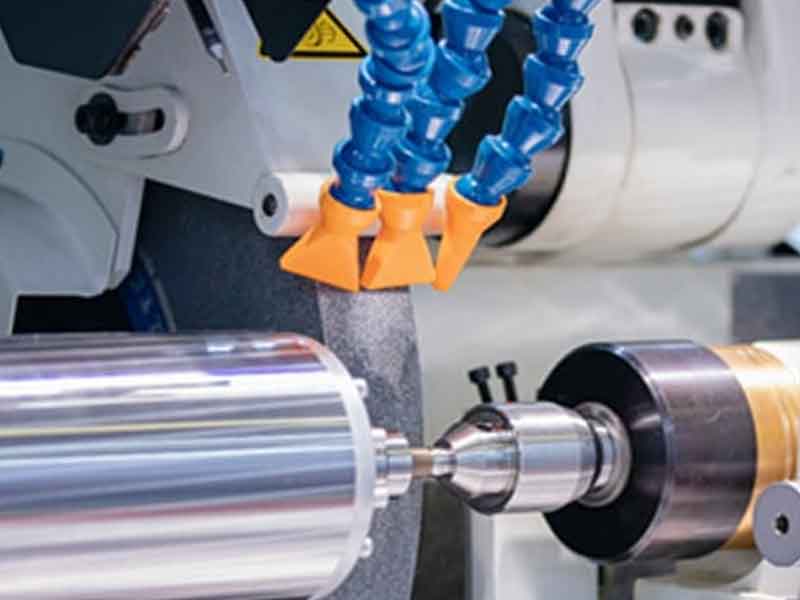
Sensor housing machining produces the metal, polymer, and specialty-material bodies that protect sensing elements while keeping the thread, bore, connector, and sealing interfaces repeatable. For OEM buyers, the critical question is not only whether a supplier can machine the shape. The supplier must hold process threads, sensing bores, O-ring grooves, sealing faces, and connector features tightly enough for stable assembly, IP-rated sealing, and long service life.
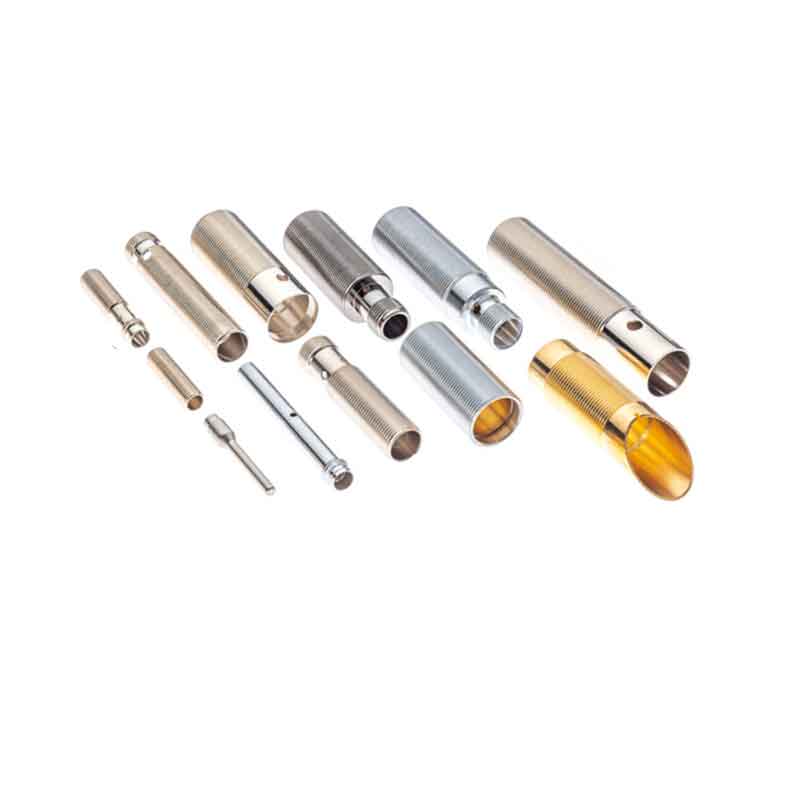
CNCPioneer machines sensor housing components for oil pressure sensors, temperature probes and thermowells, M12 connector housings, automotive and radar sensor enclosures, sealed industrial sensor housings, wind speed sensor bodies, aerospace sensor housings, and power sensor housings. Each RFQ receives a DFM check for material compatibility, thread standard, IP67/IP68 sealing geometry, surface finish, and inspection documentation before production starts.
-
Swiss CNC precision for small sensor housing parts Most sensor housings are compact, thin-walled, and feature dense: pressure sensor bodies Ø8–Ø25mm, thermowell tips Ø6–Ø20mm, M12 connector shells Ø12–Ø18mm, and oil pressure sensor housings Ø12–Ø22mm. Swiss CNC guide-bushing support helps us hold bore diameter ±0.003mm, concentricity ±0.002mm, and thread pitch diameter ±0.003mm on slender parts.
-
Single-source sensor housing manufacturing Our sensor housing factory manages material PMI, Swiss CNC turning, 5-axis milling, process threading, IP67 O-ring groove machining, surface treatment coordination, CMM inspection, and shipment documentation. That keeps custom sensor housing manufacturing under one controlled workflow instead of spreading critical interfaces across several suppliers.
-
Thread pitch diameter ±0.003mm for leak-resistant assembly Oil pressure and temperature sensor housings rely on thread accuracy for sealing, torque repeatability, and pressure rating. CNCPioneer machines NPT, BSPT, BSPP, M12×1.0, M10×1.0, and metric sensor threads to ±0.003mm pitch diameter, verified by calibrated thread gauges on every production lot.
-
China sensor housing factory with OEM documentation CNCPioneer supports prototype, low-volume, and high-volume sensor housing programs with China manufacturing economics and OEM-level documentation. Automotive projects can include PPAP Level 3; aerospace sensor housings can include FAIR per AS9102; high-volume industrial sealed sensor housings can include 100% CCD sorting on critical bore and O-ring groove features.
Why CNCPioneer for
Sensor Housing Machining?
CNCPioneer combines Swiss CNC turning, 5-axis mill-turn machining, material-specific process control, and IATF 16949 / AS9100D documentation for buyers sourcing custom sensor housing parts from China. The page is organized around the features procurement teams usually need to verify first: thread accuracy, sealed housing geometry, material compatibility, inspection control, and RFQ speed.
Swiss CNC Precision for Miniature Sensor Bodies
78+ Swiss CNC lathes with guide-bushing support machine small, slender sensor housing parts with bore diameter ±0.003mm, concentricity ±0.002mm, and thread pitch diameter ±0.003mm. Star SR-32J, Citizen A20/A16, and Tsugami B206 platforms cover Ø0.5mm–Ø32mm oil pressure sensor housings, M12 connector housings, and thermowell temperature sensor bodies.
IATF 16949 Automotive Sensor Housing Quality
IATF 16949 certification supports APQP, FMEA, PPAP Level 3, SPC, and MSA requirements for automotive sensor housing machining. Automotive programs can include 100% CCD sorting on critical bores and thread forms, Cpk ≥ 1.67 on special characteristics, and Level 3 PPAP documentation for OEM and Tier 1 supplier qualification.
OEM Sensor Housing Parts Manufacturer Support
Every RFQ receives engineering review for Swiss CNC and MAZAK capability, material compatibility with the measurement medium, O-ring groove geometry for the IP rating target, and process-thread standard compliance. The goal is simple: quote parts that can be machined, inspected, sealed, and assembled reliably before tooling or production time is committed.
Multi-Material Sensor Housing Expertise
316L stainless for oil pressure and temperature sensor housings; brass C3604 for M12 sensor connector housings; aluminum 6061-T6 for automotive, radar, and outdoor enclosures; PEEK and POM for machined plastic sensor housing parts; titanium, Inconel, Hastelloy, Kovar, and ceramic-interface programs for high-temperature, corrosive, hermetic, or aerospace applications.
IP67/IP68 O-Ring Groove ±0.02mm
Sealed industrial sensor housings need consistent O-ring compression across the full production lot. CNCPioneer machines O-ring groove width and depth to ±0.02mm, controls sealing face flatness to 0.005–0.010mm, and targets sealing surface finish Ra 1.6μm maximum. Automotive and high-volume industrial programs can add 100% CCD inspection.
China Sensor Housing Manufacturing Cost Control
For qualified programs, CNCPioneer can reduce sensor housing sourcing cost while retaining Swiss CNC ±0.003mm bore and thread capability, Mitutoyo CMM verification, XRF material PMI, calibrated thread gauge checks, CCD sorting where required, and IATF 16949 / AS9100D documentation quality. Send drawings for a 24-hour DFM review and quotation.
Sensor Housing Components
We Machine
CNCPioneer machines sensor housing components for pressure, temperature, connector, radar, industrial automation, wind, aerospace, medical, and power sensor programs. The examples below show the housing types, tolerances, materials, and documentation packages most often requested by OEM buyers.

Oil Pressure & Oil Filter Sensor Housing
Swiss CNC oil pressure sensor housing machining for NPT 1/8-27, NPT 1/4-18, BSP 1/8, M10×1.0, M12×1.5, and M14×1.5 process threads. Typical controls include ±0.003mm thread pitch diameter, ±0.005mm sensing-element bore, Ra 0.8μm crush-washer seat, and ±0.02mm BSPP O-ring groove. Programs include automotive oil pressure housings with PPAP Level 3, industrial 316L hydraulic housings, and oil filter differential-pressure housings with cross-drilled passages.

Temperature Sensor Housing
Thermowell and temperature sensor housing machining for thermocouple, RTD, ECT, EGT, IAT, transmission, and battery sensor assemblies. Typical controls include bore diameter ±0.005mm, OD taper ±0.1°, tip wall thickness ±0.05mm, and process thread ±0.005mm. Options include 316L sanitary housings with electropolished Ra ≤ 0.8μm, IATF 16949 automotive documentation, and Inconel 600 for high-temperature exhaust service.

M12 Sensor Connector Housing
M12 sensor connector housing machining in nickel-plated brass C3604 or 316L stainless for marine, food, and chemical environments. Critical features include M12×1.0 thread ±0.003mm pitch diameter, contact-retention bore ±0.003mm, IP67 O-ring groove ±0.02mm, contact bore pattern ±0.02mm, and shell OD h6 ±0.008mm. A-coded, B-coded, D-coded, X-coded, and L-coded configurations are available for straight, right-angle, panel-mount, overmolded, and shielded connectors.

Automotive & Radar Sensor Housing
Automotive sensor housing machining for engine management, chassis safety, TPMS, EV current, HV bus, exhaust emissions, and 77 GHz radar sensor assemblies. Typical radar and ADAS controls include cover flatness 0.05mm, connector interface position ±0.05mm, mounting geometry ±0.1mm, and low-loss PEEK or polymer radome options. Automotive programs can include IATF 16949 PPAP Level 3, Cpk reports, MSA, and control plans.

Wind Speed & Industrial Process Sensor Housing
Wind speed and sealed industrial sensor housing machining for cup anemometers, ultrasonic anemometers, duct velocity sensors, pressure transmitters, flow meters, level probes, proximity sensors, and vibration sensors. Controlled features include bearing bore ±0.005mm, shaft bore ±0.003mm, transducer spacing ±0.1mm, sensing face flatness 0.05mm, body roundness ±0.003mm, hygienic bore Ra 0.8μm, and IP66/IP67 outdoor sealing geometry.

Aerospace, Medical & Specialty Sensor Housing
Aerospace sensor housing parts manufacturing for air data sensors, fuel system sensors, engine health monitoring, and flight-control sensor elements with AS9100D documentation, FAIR per AS9102, and AMS material support. Specialty programs include medical 316L and PEEK housings, gas detection housings with Ø1–Ø3mm diffusion ports, acoustic and ultrasonic sensor housings with ±0.1° cavity orientation, and ceramic or composite sensor housing interface reviews where the sealing stack-up requires hybrid materials.
Industries & Applications
CNCPioneer supplies sensor housing machining for automotive OEMs, oil and gas instrumentation, industrial automation, process equipment, wind energy, aerospace, medical devices, marine systems, and power electronics. Each application group has different sealing, material, documentation, and inspection priorities, so our DFM review checks the housing against its actual operating environment.

Automotive & Transportation
Automotive sensor housing machining for engine management, chassis safety, TPMS valve bodies, ADAS camera and radar housings, EV battery temperature housings, and exhaust emissions sensors. IATF 16949 documentation, PPAP packages, Cpk studies, and inspection plans are available for OEM and Tier 1 supply chains.

Oil & Gas
Oil pressure and temperature sensor housing machining for downhole gauges, wellhead instrumentation, pipeline pressure transmitters, and process facility sensors. Materials include 316L stainless, Inconel 625, and Hastelloy C-276 with NACE MR0175 sour-service options for H₂S environments.

Industrial Automation
M12 sensor connector housings and proximity sensor housing components for inductive, photoelectric, capacitive, and fieldbus-connected industrial sensors. A, B, D, X, and L coding variants are available in nickel-plated brass C3604 or 316L stainless with IP67 sealing features for harsh industrial environments.

Process Industry
Thermowell components, pressure transmitter process connections, flow meter bodies, and level sensor housings for chemical plants, refineries, pharmaceutical facilities, food processing, and water treatment. Material options include 316L stainless, PEEK, Hastelloy, and sanitary process-connection thread forms.

Wind Energy & Meteorology
Wind speed sensor housing components for cup, ultrasonic, and Pitot anemometers; wind vane sensor housings; meteorological station enclosures; and wind turbine nacelle environmental sensors. Hard anodized aluminum and IP66/IP67 sealing features support permanent outdoor installation.

Aerospace, Defense & Medical
AS9100D aerospace sensor housing parts for aircraft air data sensors, fuel systems, engine health monitoring, and defense sensor enclosures with FAIR per AS9102 and AMS material support. Medical sensor housings in 316L stainless and PEEK can be manufactured with ISO 13485 documentation support for qualified programs.
Sensor Housing Factory
Capabilities & Process
CNCPioneer's sensor housing China factory combines Swiss CNC lathes for miniature bodies, MAZAK mill-turn centers for larger multi-feature housings, process thread control, IP sealing feature machining, material-specific tooling, and inspection documentation. Send drawings for a 24-hour DFM review and quotation.
Swiss CNC Lathe — Core Sensor Housing Platform
78+ Swiss CNC lathes with guide-bushing support for long, slender sensor housing bodies up to L/D 20:1 · Ø0.5–Ø32mm range · Up to 9-axis machining in one setup · Positional accuracy ±0.002mm; repeatability ±0.001mm · Bore diameter ±0.003mm; bore concentricity ±0.002mm; thread pitch diameter ±0.003mm · Suitable for high-volume oil pressure, M12 connector, and automotive sensor housing programs.
MAZAK Mill-Turn — Complex Sensor Housing Bodies
66+ MAZAK mill-turn centers for larger sensor housing bodies Ø10–Ø150mm · 5-axis machining for radar sensor housing covers, automotive enclosures, wind speed sensor assemblies, and power sensor housing parts · Positional accuracy ±0.003mm · Single-setup machining keeps connector cutouts, mounting geometry, IP sealing features, and process threads in controlled relationship.
Process Thread & Sealing Geometry
NPT 1/8-27, NPT 1/4-18, BSP 1/8, and BSP 1/4 tapered threads to ±0.003mm pitch diameter · BSPP M10×1.0, M12×1.5, M14×1.5, G1/4, and G1/2 parallel threads with ±0.02mm O-ring grooves · M12×1.0 connector threads to ±0.003mm · NPT, BSP, and metric thread gauge verification every lot · ASME B1.20.1, BS EN 10226, DIN EN ISO 228, and JIS B0203 support.
IP67/IP68 Sealing Feature Machining
O-ring groove width and depth ±0.02mm to support 20–30% O-ring compression · Corner radius R0.2–R0.4mm matched to O-ring cross-section · Sealing face flatness 0.005–0.010mm · Sealing surface finish Ra 1.6μm maximum · 100% CCD O-ring groove inspection available for automotive and high-volume industrial sealed sensor housing programs · TPMS TR414/TR418 valve stem thread support.
Sensor Housing Materials
316L stainless for process, oil, and food sensor housings · 303/304 stainless for general industrial housings · 17-4PH H900 for high-pressure bodies · Brass C3604 and C2600 for M12 connector housings · Aluminum 6061-T6 / 7075-T6 for automotive, radar, and wind housings · Titanium Grade 2 / Ti-6Al-4V for aggressive media and aerospace · PEEK and POM for machined plastic sensor housings · Inconel, Hastelloy, Kovar, ceramic-interface, and composite-related programs by DFM review.
IATF 16949 / AS9100D Documentation
PPAP Level 3 for automotive sensor housing OEM programs: APQP, FMEA, MSA Gage R&R, capability studies, control plan, and sorting plan where required · FAIR per AS9102 for aerospace sensor housing parts with balloon drawing and measurement records · XRF material PMI on every lot · RoHS certificates for automotive and consumer sensor programs · Records retained minimum 15 years.
Materials for Sensor Housing
Machining
Material choice drives corrosion resistance, thread life, sealing stability, magnetic behavior, thermal performance, and machining cost. 316L stainless is the common choice for industrial and process sensor housings, brass C3604 for M12 connector housings, aluminum 6061-T6 for automotive and outdoor housings, and PEEK or other engineered plastics where chemical resistance or electrical isolation matters. Ceramic, composite, and hermetic-interface designs are reviewed case by case during DFM.
316L
Primary material for industrial and process sensor housings. 316L provides corrosion resistance in oil, water, acids, and many process chemicals, with non-magnetic behavior for sensitive applications. CNCPioneer controls work hardening with sharp PVD-coated tooling, controlled depths of cut, and high-pressure coolant to keep bore and thread accuracy stable.
303
Cost-effective stainless choice for general industrial sensor housings and instrumentation fittings used indoors or away from aggressive media. The sulfur addition improves chip breaking compared with 316L, helping reduce cycle time while still supporting accurate thread forms.
17-4PH H900
Tensile strength 1,310 MPa. Precipitation-hardened stainless for high-pressure sensor housing bodies where 316L or 304 cannot meet the pressure requirement within the available wall thickness. Typical uses include downhole pressure sensors, hydraulic pressure sensors, and aerospace structural housings exposed to pressure and vibration.
C3604 Free-Cutting Brass
Machinability index 100. C3604 is the standard high-volume material for M12 sensor connector housings and instrumentation fittings because it machines quickly, holds threads well, and plates reliably with electroless nickel or gold contact finishes.
C2600 RoHS Lead-Free
RoHS-compliant lead-free brass for European automotive and consumer sensor programs where C3604 lead content is not acceptable. C2600 machines more slowly than C3604 but remains practical for M12 connector housings and instrumentation fittings at production volumes.
6061-T6 / 7075-T6
6061-T6 is the standard lightweight, anodizable material for automotive sensor housings, radar housings, and wind speed sensor bodies. 7075-T6 adds higher strength for weight-critical aerospace or high-load housings. Both alloys are non-magnetic and support hard anodize or chemical film finishes.
Grade 2 / Ti-6Al-4V
Used when 316L is not enough for seawater, oxidizing acids, or selected aggressive chemical media. Grade 2 suits corrosion-service process and marine housings; Ti-6Al-4V suits aerospace sensor housings that need high strength-to-weight ratio and corrosion resistance.
Inconel 600 / 625
Nickel alloys for high-temperature or corrosive service. Inconel 600 is used for exhaust gas temperature and oxygen sensor housings where stainless steel oxidizes; Inconel 625 supports sour gas, downhole, offshore, and chloride-bearing process environments when 316L pitting resistance is not enough.
Kovar ASTM F15 / Ceramic Interfaces
Kovar is used where the housing needs a controlled CTE match with glass or alumina ceramic feedthroughs. For ceramic composite CNC machining sensor housing parts, CNCPioneer reviews the drawing to confirm whether the part should be machined directly, supported by a metal carrier, or built as a hybrid housing assembly with hermetic or pressure-sealed interfaces.
PEEK
High-performance polymer for chemical resistance, electrical isolation, and radar-transparent features. PEEK handles many acids, bases, and solvents, supports continuous service up to 260°C, and is used for specialty sensor housings where metal would corrode, conduct, or disturb the measurement signal.
Delrin (POM)
Machined plastic option for light-duty sensor housing elements, spacers, connector bodies, and mounting fixtures where low friction, low weight, or electrical isolation is useful. POM can be a lower-cost alternative to PEEK when temperature, chemical exposure, and load requirements allow it.
Hastelloy C-276
Corrosion-resistant nickel alloy for aggressive chemical sensor housing service, including selected hydrofluoric acid, concentrated sulfuric acid, and high-chloride applications where 316L corrosion rate is too high. Higher machining cost is justified when service life or safety depends on corrosion performance.
Surface Treatments for
Sensor Housing Machining
Surface treatment is selected around corrosion resistance, EMC continuity, wear life, hygiene, and coating thickness on precision threads and O-ring grooves. CNCPioneer reviews coating allowance before machining so post-treatment dimensions still meet the housing drawing.
Passivation — ASTM A967 (Stainless Steel)
Standard treatment for stainless steel sensor housing components. Passivation removes free iron and machining contamination, strengthens the chromium oxide passive layer, and has no dimensional impact on thread pitch diameter or O-ring groove geometry. Common for oil pressure, temperature, food, pharmaceutical, and process sensor housings.
Electropolishing (Stainless Steel)
Premium finish for sanitary and high-purity stainless steel sensor housings used in food, pharmaceutical, and semiconductor process applications. Electropolishing can produce Ra ≤ 0.4μm mirror-like surfaces that reduce product adhesion and support CIP/SIP cleaning requirements.
Hard Anodize — MIL-A-8625 Type III (Aluminum)
Common finish for aluminum automotive, radar, and wind sensor housings. Hard anodize adds HV 400+ wear resistance, outdoor corrosion resistance, and electrical isolation where required. Coating thickness is included in machining allowance so finished dimensions remain within drawing tolerance.
Chemical Film — MIL-DTL-5541 (Aluminum)
Chromate conversion coating for aluminum housings that need corrosion resistance plus electrical conductivity. Class 3 is often used for EMC bonding on radar and automotive sensor housings because it supports shielding continuity with minimal dimensional impact on threads and O-ring grooves.
Nickel Plating (Brass M12 Sensor Connector Housing)
Electroless nickel plating is common for brass M12 sensor connector housings because it provides corrosion resistance, wear protection, and uniform deposit thickness across threads, contact-retention bores, and O-ring grooves. Gold plating can be applied to connector contacts for stable low contact resistance.
Gold Plating & PTFE Coating
Hard gold plating per MIL-G-45204 supports low-resistance sensor connector contacts in humid or contaminated industrial environments, with XRF thickness verification by lot. PTFE coating can be used on chemical sensor housing surfaces that contact aggressive acids or solvents when a non-stick, chemically resistant surface is required.
Available surface treatments include ASTM A967 passivation, electropolishing, hard anodize MIL-A-8625 Type III, chemical film MIL-DTL-5541, electroless nickel, hard gold MIL-G-45204, and PTFE coating. CNCPioneer reviews coating impact on thread pitch diameter, O-ring groove dimensions, sealing faces, and connector interfaces during the 24-hour sensor housing DFM review.
IATF 16949 Quality Assurance for
Sensor Housing Machining
CNCPioneer applies IATF 16949 and AS9100D quality controls to the features that decide sensor housing performance: thread pitch diameter, bore concentricity, O-ring groove geometry, sealing surface finish, material identity, and traceable inspection documentation.
Contract & Drawing Review
Engineering reviews the drawing, thread standard, IP rating target, O-ring groove design, measurement medium, material selection, surface treatment callouts, and PPAP or FAIR documentation needs before order acceptance.
Material Incoming Inspection
XRF composition verification confirms alloy grade on each material lot, including 316L vs 304 stainless differentiation and brass RoHS checks. Hardness, bar diameter, and straightness are verified before machining release, with traceability from mill certificate to finished shipment.
First Article Inspection (FAIR) per AS9102
Automotive programs can include PPAP Level 3 with balloon drawing, CMM dimensional results, MSA Gage R&R, capability studies, and Cpk ≥ 1.67 on special characteristics. Aerospace sensor housing programs can include FAIR per AS9102 before production release.
In-Process Statistical Control
Critical bore diameters and O-ring grooves can be checked by 100% CCD sorting. Air gauges monitor bore size at defined intervals; calibrated thread gauges verify threaded features; SPC tracks automotive special characteristics during production.
Final Inspection & Cleanliness Verification
Final inspection can include Mitutoyo CMM reporting, surface roughness checks on sealing faces, thread gauge verification, 10× visual inspection for burrs and sharp edges, and optical inspection of M12 contact-retention bores.
Shipment Documentation
Shipment documentation can include Certificate of Conformance, CMM report, material certificates, XRF PMI records, surface treatment certificates, RoHS certificates, PPAP Level 3 for automotive programs, and FAIR per AS9102 for aerospace programs. Automotive quality records are retained for a minimum of 15 years.
IATF 16949 & AS9100D Quality System for
Sensor Housing Machining
CNCPioneer holds IATF 16949:2016 certification for automotive sensor housing programs and AS9100D certification for aerospace OEM sensor housing parts. The system supports APQP, PPAP, FAIR, material traceability, calibrated inspection, and documented process control for critical sealing and thread features.
PPAP Level 3 & Swiss CNC Thread Accuracy
Automotive sensor housing programs can include PPAP Level 3 with APQP, FMEA, MSA, control plan, and capability data. Swiss CNC thread machining holds NPT, BSPT, M12×1.0, and metric sensor threads to ±0.003mm pitch diameter, with calibrated thread gauge verification on each production lot.
- PPAP Level 3 for automotive sensor housing
- Thread pitch diameter ±0.003mm every lot
- Records retained minimum 15 years
XRF Material PMI — 316L vs 304 Differentiation
XRF PMI verifies incoming material on every sensor housing material lot. This prevents 304 stainless from being substituted for 316L where molybdenum content is specified for corrosion resistance, and it supports RoHS checks for brass C3604 and C2600 used in automotive and consumer sensor programs.
- XRF PMI on every sensor housing lot
- 316L vs 304 differentiation confirmed
- RoHS compliance verified for brass alloys
IP67/IP68 O-Ring Groove 100% CCD Inspection
Automotive and high-volume industrial sealed sensor housing programs can use 100% CCD sorting on critical O-ring grooves and bore diameters. Groove width and depth are controlled to ±0.02mm to maintain 20–30% O-ring compression, with sealing face flatness and Ra checks verified during first article and production inspection.
- O-ring groove: 100% CCD sorting
- Groove width and depth: ±0.02mm
- Sealing face flatness: 0.005–0.010mm
Cpk ≥ 1.67 / AS9100D FAIR per AS9102
SPC supports Cpk ≥ 1.67 targets on selected IATF 16949 special characteristics such as bore diameter, thread pitch diameter, and O-ring groove dimensions. AS9100D aerospace sensor housing programs can include FAIR per AS9102 with balloon drawing and measurement results for each new part number.
- Cpk ≥ 1.67 on sensor housing special chars
- FAIR per AS9102 for aerospace programs
- Air gauge in-process bore monitoring
Sensor Housing Machining FAQ
Answers for buyers comparing sensor housing manufacturers, sealed industrial sensor housing suppliers, automotive sensor housing machining partners, and China CNC factories for custom sensor housing manufacturing.
Thread pitch diameter is usually the most critical dimension because it affects sealing reliability, installation torque, and pressure rating at the same time. For NPT and BSPT oil pressure sensor housings, thread engagement depth depends on pitch diameter accuracy. CNCPioneer machines process threads to ±0.003mm pitch diameter and verifies each production lot with calibrated thread gauges to reduce leakage, under-engagement, and over-torque risk.
For most sealed industrial sensor housings, 316L stainless steel is the first material to evaluate because it offers corrosion resistance, good machinability, and stable sealing performance. For M12 connector housings, nickel-plated C3604 brass is usually the most cost-effective. For lightweight outdoor housings, 6061-T6 aluminum with hard anodize is common. For aggressive chemical media, review Hastelloy, Inconel, titanium, or PEEK. Ceramic composite sensor housing parts should be reviewed by drawing because the correct approach may be direct machining, a metal carrier, or a hybrid sealed assembly.
M12 coding depends on the signal and protocol. A-coded housings cover most analog and digital industrial sensors. B-coded supports PROFIBUS. D-coded supports 100BASE-TX Fast Ethernet. X-coded supports Gigabit Ethernet and higher-speed industrial networks. L-coded supports power distribution. CNCPioneer machines the keying geometry, M12×1.0 thread, contact-retention bores, and O-ring groove in controlled setups so the connector housing remains consistent after plating and assembly.
IP67 sealing depends on the groove, the sealing face, and the surface finish. CNCPioneer controls O-ring groove width and depth to ±0.02mm to keep O-ring compression in the target range, machines sealing face flatness to 0.005–0.010mm, and targets Ra 1.6μm maximum on sealing surfaces. First articles are verified by CMM, and high-volume automotive or industrial sealed sensor housing programs can add 100% CCD O-ring groove inspection.
Typical prototype lead time is 5–7 business days for standard 316L or PEEK housings without complex finishing, 6–8 business days for nickel-plated brass M12 connector housings, 7–10 business days for anodized aluminum housings, 7–12 business days for titanium, and 10–14 business days for Inconel temperature sensor housings. FAIR documentation can add 2–3 business days. Full automotive PPAP Level 3 qualification normally requires a separate 6–8 week schedule because it includes MSA, capability study, FMEA, and control plan work.
Buyers should compare the specific controls behind the quote: Swiss CNC capability, CMM verification, calibrated thread gauge records, XRF PMI, O-ring groove inspection, PPAP or FAIR documentation, and quality-system certification scope. CNCPioneer supports those checks through IATF 16949 and AS9100D systems, lot-level material verification, CMM reports, thread gauge records, and customer audit support. Cost advantages come from China manufacturing economics, while the critical dimensions and documents remain controlled.
Get a Quote for Sensor Housing Machining
Upload your sensor housing drawing or CAD file for a 24-hour DFM review and CNC machining quote. CNCPioneer will check machining feasibility, material compatibility, process thread standard, IP67/IP68 O-ring groove geometry, sealing surface requirements, critical inspection points, and documentation needs such as PPAP for automotive sensor housings or FAIR for aerospace sensor housing parts.