
Titanium & High-Strength Aluminum
Machining for eVTOL
CNCPioneer is a precision titanium and high-strength aluminum eVTOL machining specialist and AS9100D certified China manufacturing facility delivering custom eVTOL materials machining programs — TC4 Ti-6Al-4V primary structural body precision 5-axis programs, 7075-T6 high-strength aluminum eVTOL structural component machining, 2024-T4 fatigue-critical structure programs, and complete multi-material interface precision machining.
What Is eVTOL Titanium and
High-Strength Aluminum Machining?
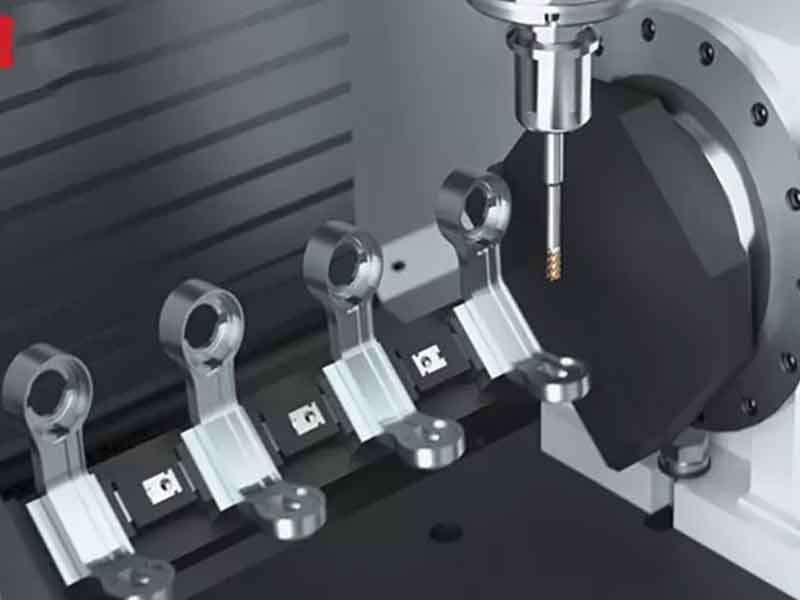
eVTOL titanium and high-strength aluminum machining is the precision CNC manufacturing discipline — executed on MAZAK VARIAXIS 5-axis simultaneous machining platforms, MAZAK mill-turn centers, Swiss CNC turning systems, and wire EDM — that produces the structural bodies, rotating components, airframe fittings, and mechanism elements of electric vertical takeoff and landing aircraft from the two material families that collectively account for more than 90% of all metallic structural mass in commercial eVTOL designs: titanium alloy TC4 (Ti-6Al-4V) and high-strength aluminum alloys (7075-T6, 2024-T4, and 7075-T651 plate).
The selection of eVTOL materials from this two-alloy family is not arbitrary — it is the outcome of structural optimization applied to the specific mass-criticality, corrosion exposure, fatigue spectrum, and manufacturing economics of commercial electric air taxis. TC4 titanium provides the highest specific strength and corrosion resistance of any commonly machined aerospace structural metal — but its cost and machining difficulty make it economically irrational where 7075-T6 is structurally adequate. 7075-T6 aluminum provides the lightest structural alloy with adequate strength for most secondary eVTOL structural applications — but its fatigue endurance limit and stress corrosion cracking susceptibility eliminate it from primary fatigue-governed rotating structure and corrosion-sensitive marine environment applications where TC4 has no substitute.
-
TC4 machining parameter database from 100+ eVTOL programs CNCPioneer has accumulated program-specific cutting parameters across more than 100 TC4 eVTOL machining programs — motor shafts, tilt shafts, propeller hubs, trunnion bodies, landing gear structural fittings, and airframe lugs — producing a TC4 cutting parameter library that new programs draw from directly. First-article qualification rate exceeds 99%, eliminating the 20–35% first-article failure rate that facilities without this accumulated TC4 experience produce.
-
5-axis thin-wall titanium structural machining Topology-optimized eVTOL structural bodies in TC4 have complex internal pocket geometries with 1.5–3.0mm thin-wall features. CNCPioneer's thin-wall TC4 machining applies reduced radial engagement (≤0.3×D), climb milling only, sequential opposing passes, and in-process CMM wall thickness probing — achieving ±0.050mm wall thickness uniformity on TC4 thin-wall structural bodies.
-
Materials for eVTOL selection engineering Every eVTOL structural component inquiry receives a materials-for-eVTOL selection review as a standard element of the 48-hour DFM, covering peak stress analysis, corrosion exposure, fatigue spectrum assessment, and manufacturing cost impact — preventing both over-specifying TC4 where 7075-T6 is adequate and under-specifying 7075-T6 where TC4 is required.
-
40–60% China eVTOL machining cost advantage TC4 titanium machining from US and European aerospace precision machining facilities costs 40–60% more than CNCPioneer's equivalent AS9100D programs; 7075-T6 structural machining costs 35–55% more. At identical ±0.010mm structural accuracy, ±0.050mm thin-wall tolerance, and AS9100D documentation — the cost advantage reflects China manufacturing economics, not a compromise on machining quality.

Why CNCPioneer for eVTOL
Titanium & Aluminum Machining?
Among eVTOL titanium and aluminum structural machining providers globally, CNCPioneer's accumulated TC4 parameter database, 5-axis thin-wall mass reduction competency, materials selection engineering, corrosion resistance program expertise, FEA-validated mass optimization, and China manufacturing cost advantage establish our facility as the preferred eVTOL structure design partner.
TC4 Machining Parameter Database
Titanium machining is governed by program-specific cutting parameters validated on the specific alloy condition (AMS 4928 annealed versus AMS 6931 STA), feature geometry, and surface integrity requirement of each individual eVTOL component program. CNCPioneer has accumulated this across more than 100 TC4 eVTOL machining programs — producing a cutting parameter library that new programs draw from directly. First-article qualification rate exceeds 99%, eliminating the 20–35% first-article failure rate that facilities without this experience produce.
5-Axis Thin-Wall Titanium Machining
Topology-optimized eVTOL structural bodies in TC4 have complex internal pocket geometries with 1.5–3.0mm thin-wall features. These cannot be machined by conventional strategies: cutting forces deflect 2mm walls by 0.050–0.100mm during machining. CNCPioneer's programs apply reduced radial engagement (≤0.3×D), climb milling only, sequential opposing passes, and in-process CMM wall thickness probing — achieving ±0.050mm wall thickness uniformity on TC4 thin-wall structural bodies.
Materials Selection Engineering DFM
Every eVTOL structural component inquiry receives a materials-for-eVTOL selection review as a standard element of the 48-hour DFM, covering: peak stress at minimum cross-section vs material yield/endurance limit; corrosion exposure analysis for the component's installation environment; fatigue spectrum assessment; and manufacturing cost impact. This prevents both over-specifying TC4 where 7075-T6 is adequate and under-specifying 7075-T6 where TC4 is required.
Corrosion Resistance eVTOL Structures
Commercial eVTOL air taxis operating in coastal urban environments experience salt-fog corrosion exposure materially more aggressive than inland environments. CNCPioneer's corrosion resistance eVTOL structures DFM review maps every structural component to its installation environment and specifies the correct material + surface treatment combination: TC4 requires no coating; 7075-T6 requires Type II anodize plus sealant; 2024-T4 is superior to 7075-T6 in salt-fog.
FEA-Validated Mass Optimization
CNCPioneer's DFM for topology-optimized eVTOL structural bodies includes wall thickness adequacy FEA from the actual load specification, identifying any designer-conservative wall that can be thinned without structural risk and quantifying the available mass reduction. For a 7075-T6 airframe fitting with 4.0mm designed wall where FEA shows 2.5mm is adequate: the 1.5mm wall reduction produces mass reduction that accumulates to meaningful payload improvement.
China eVTOL Machining Cost Advantage
TC4 titanium machining from US and European aerospace precision machining facilities costs 40–60% more than CNCPioneer's equivalent AS9100D programs; 7075-T6 structural machining costs 35–55% more. At identical ±0.010mm structural accuracy, ±0.050mm thin-wall tolerance, and AS9100D documentation — the cost advantage reflects China manufacturing economics, not a compromise on the machining quality that eVTOL structural components require.
eVTOL Titanium & Aluminum
Structural Components We Manufacture
CNCPioneer's eVTOL titanium and aluminum structural machining programs cover the complete metallic structural component architecture of electric vertical takeoff and landing aircraft — from TC4 primary structural lug fittings and rotor mast bodies through 7075-T6 nacelle panels and 2024-T4 coastal-operation fuselage frames, including multi-material titanium-to-composite and aluminum-to-composite interface fittings.

TC4 Primary Structural Lug Fittings
The metallic fitting that introduces structural loads from composite airframe panels into the primary load path — the highest-loaded single-point structural component in most eVTOL airframe designs. Lug bore pair: ±0.005mm H8 per lug; coaxiality ±0.005mm per pair; edge distance ±0.100mm; lug face perpendicularity 0.010mm. Composite attachment interface: flatness 0.010mm/200mm; countersunk hole pattern ±0.010mm true position. Material: TC4 AMS 4928 for moderate-load lugs; TC4 AMS 6931 STA for high-load lugs and all manned flight life-limited primary structural fittings. Mass: ±1g verified; matched left/right pair documentation.

TC4 Rotor Mast & Tilt Shaft Structures
The central structural column transmitting all rotor loads from hub to airframe — the primary structural body in helicopter-mode eVTOL propulsion units. Central bore: ±0.005mm for rotor shaft engagement; bore perpendicularity to mast base face 0.010mm/100mm. Trunnion attachment bores: ±0.005mm; compound angle from 5-axis program ±0.020°. Mast base attachment flange: flatness 0.010mm; bolt circle ±0.010mm from mast bore datum. Wall thickness minimum: ±0.050mm verified by in-process CMM probing. AMS 2430 shot peen: mandatory for manned flight classification.

TC4 Topology-Optimized Structural Bodies
Topology-optimized eVTOL structural bodies in TC4 with complex internal pocket geometries and 1.5–3.0mm thin-wall features at specific stress-flow locations — reducing component mass by 25–40% versus solid-machined equivalent bodies while maintaining structural adequacy from FEA. Thin-wall TC4 machining programs apply reduced radial engagement (≤0.3×D), climb milling only, sequential opposing passes, and in-process CMM wall thickness probing — achieving ±0.050mm wall thickness uniformity on TC4 thin-wall structural bodies.

7075-T6 Nacelle Structural Panels & Brackets
Structural panels forming the internal load-carrying structure of eVTOL propulsion nacelles — torsion-box ribs, skin stringers, and shear webs. Panel face machining: both faces flatness 0.050mm/300mm from T651 plate. Lightening pocket machining: pocket floor flatness 0.020mm; pocket radius ±0.050mm; web wall thickness ±0.100mm. Fastener hole pattern: countersink ±0.010mm true position from panel datum; perpendicularity 0.010mm for Hi-Lok fastener. Secondary structural brackets: attachment hole patterns ±0.010mm; radius at stress concentrations minimum R3.0mm.

2024-T4 Fatigue-Critical & Coastal Structures
Fuselage frame structural members in air taxis operating from offshore vertiports — where marine salt-fog exposure through cabin ventilation and vertiport deck drainage requires superior corrosion resistance. Material: 2024-T4 preferred over 7075-T6 for sustained-humidity structural frame applications. Frame section wall: ±0.100mm; inside radius ±0.050mm at bend/transition. Clad sheet program (Alclad 2024): for fuselage skin panels requiring corrosion resistance without anodize application on large-area panels — CNCPioneer machines Alclad panels maintaining cladding continuity at all machined edges.

Multi-Material Interface Fittings
Every load introduction into the CFRP composite airframe from a metallic component passes through a titanium-to-composite or aluminum-to-composite interface fitting. TC4-to-CFRP fitting: flatness 0.010mm/200mm; Ra 1.6μm bonding face; fastener hole pattern ±0.010mm true position; no galvanic barrier required. 7075-T6-to-CFRP fitting: Type II anodize + galvanic barrier groove + sealant specification; interface sealant groove 2.0mm × 1.5mm at perimeter; bore anodize mask to prevent fit change.
Industries & Applications
CNCPioneer's eVTOL titanium and aluminum structural machining serves every industry segment in the advanced air mobility ecosystem — from eVTOL aircraft manufacturers and electric air taxi structure design engineering teams through urban air mobility airframe integrators, Tier 1 structural component suppliers, and certification engineering partners.
eVTOL Aircraft
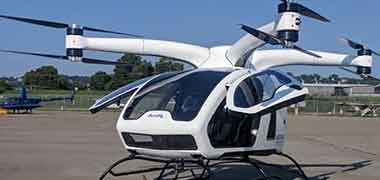
Complete eVTOL titanium and aluminum structural machining programs — TC4 primary structural fitting programs with AS9100D primary structure documentation; 7075-T6 and 2024-T4 secondary structural body and panel programs; topology-optimized TO structural body machining with wall thickness probing; corrosion resistance eVTOL structures specification for coastal-operating aircraft; and multi-material TC4/CFRP and Al/CFRP interface fitting programs.

Electric Air Taxi
eVTOL structure design support through CNCPioneer's 48-hour DFM — material selection analysis (TC4 vs 7075-T6 vs 2024-T4 for every new structural component), thin-wall achievability assessment for topology-optimized geometries, corrosion protection specification for the customer's operational geography, mass achievability from TO model, and composite interface fitting specification.

Urban Air Mobility Airframe
Airframe structural assembly houses integrating metallic fittings, brackets, lugs, and panels with composite primary structure — TC4-to-CFRP interface fitting programs with 0.010mm flatness and Ra 1.6μm bonding face; 7075-T6-to-CFRP fitting programs with anodize and galvanic barrier specification; fastener hole pattern programs with ±0.010mm true position for Hi-Lok structural fastener installation.
eVTOL Structural Component
structural component suppliers delivering metallic structural kits (lug fittings, joint fittings, frame sections, bracket assemblies) to eVTOL OEMs — CNCPioneer provides AS9100D titanium and aluminum structural machining with FAIR documentation supporting OEM qualification program.

Advanced Air Mobility
Third-party certification engineering firms supporting eVTOL structural compliance demonstrations — CNCPioneer provides manufacturing capability data (TC4 thin-wall Cpk records; lug bore coaxiality SPC data; material UT compliance; shot peen intensity records per serial number) supporting the structural manufacturing process adequacy showing required for FAA/EASA structural type inspection authorization.

Composite-Metal Hybrid Assembly
eVTOL composite-metal hybrid assembly builders requiring precision-machined titanium and aluminum interface fittings, brackets, and structural panels with documented dimensional accuracy, material compliance, and AS9100D aerospace quality for integration with CFRP primary structure.
eVTOL Machining
Process & Capabilities
CNCPioneer's eVTOL titanium and aluminum structural machining programs run on 66+ MAZAK Integrex and VARIAXIS 5-axis simultaneous machining platforms, 78+ Swiss CNC lathes, and wire EDM equipment — delivering complete eVTOL structural machining from single prototype first articles through wholesale production volume supply.
48-Hour eVTOL Structure Design DFM
Material selection analysis (TC4 vs 7075-T6 vs 2024-T4 for every new structural component) against peak stress, fatigue cycle count, corrosion environment, and mass budget. Thin-wall achievability assessment for topology-optimized geometries. Corrosion protection specification for the customer's operational geography. Composite interface fitting face flatness and surface finish specification. TO geometry tool access verification by CAM virtual simulation. Mass achievability from TO model including minimum-wall rounding and tool radius corner effects.
TC4 Ti-6Al-4V Precision 5-Axis Machining
AMS 4928 annealed (880 MPa yield; 600 MPa fatigue endurance) and AMS 6931 STA (1,000 MPa yield; 650 MPa fatigue). v_c = 40–80 m/min PVD AlTiN + uncoated K10 finish; 70 bar through-spindle coolant mandatory; trochoidal toolpath all pockets; fresh inserts all fatigue-critical features; thin-wall ±0.050mm from sequential opposing passes + 15% radial engagement + in-process CMM probing; 4-hour thermal stabilization between rough and finish; structural bore ±0.005mm; lug bore pair coaxiality ±0.005mm single-setup.
High-Strength Aluminum Structural Machining
7075-T6 AMS-QQ-A-225 (503 MPa yield); 7075-T651 plate (T651 stress-relieved for minimum distortion); 2024-T4 (324 MPa yield; SCC-resistant; preferred coastal corrosion resistance); 6061-T6 thermal priority. PCD tooling 500+ m/min zero built-up edge; thermal expansion compensation boring; bore temperature verified 20°C ± 1°C before measurement; thin-wall ±0.050mm from PCD 15% radial engagement + ultrasonic wall gauge; Type II/III anodize MIL-A-8625 bore masked.
Multi-Material Interface Precision Machining
TC4-to-CFRP fitting: flatness 0.010mm; Ra 1.6μm bonding face; no galvanic barrier required; fastener hole pattern ±0.010mm true position. 7075-T6-to-CFRP fitting: Type II anodize + galvanic barrier groove + sealant specification; interface sealant groove 2.0mm × 1.5mm; bore anodize mask to prevent fit change. TC4 + 7075-T6 hybrid assembly interface: both materials, coordinated datum, single-source supply.
In-Process Control & Final Inspection
SII XRF composition verification on every lot. AMS 2154 Class A UT for TC4 STA life-limited primary structure. In-process CMM wall thickness probing on all TO structural bodies. 7075-T6 bore temperature verified at 20°C ± 1°C before precision measurement. Panel distortion check after pocket machining. CMM (Mitutoyo ±0.001mm): all lug bore diameters, coaxiality, compound face angles, pocket floor flatness, fastener hole true positions, fillet radii. Ultrasonic wall thickness: Olympus 38DL Plus on accessible wall sections. Profilometry: composite interface face Ra; fatigue-critical surface Ra.
AS9100D Documentation & Certification
Certificate of Conformance · CMM dimensional reports · Material certifications with lot traceability · Heat treatment and surface treatment certifications · AMS 2430 shot peen certificates per serial number · AMS 2154 UT certificate per billet · PPAP Level 3 for volume programs · FAIR per AS9102 for all new part numbers · SPC monitoring · MSA Gage R&R ≤10% · Records retained 20 years.
Materials for eVTOL
Structural Machining
eVTOL material selection is governed by specific strength at structural load, fatigue endurance at cycle count, corrosion resistance for operational geography, and manufacturing cost at production volume. No single metallic material provides the best combination for the full range of eVTOL structural applications — correct partitioning between TC4 and 7075-T6 achieves minimum aircraft structural mass and maximum payload and range.
TC4 Ti-6Al-4V AMS 4928 Annealed
UTS: 950 MPa; Yield: 880 MPa; Elongation ≥10%; Hardness: HRC 30–36; Fatigue endurance: 600 MPa (true endurance limit at >10⁷ cycles); Density: 4.43 g/cm³. The baseline TC4 condition for eVTOL structural machining — mill-annealed duplex α+β microstructure. Applications: structural fittings, gear trunnion bodies, propeller hub bodies, landing gear primary fittings, actuator structural bodies. Machinability: moderate — v_c = 50–80 m/min, 0.10–0.20 mm/tooth with 70 bar coolant.
TC4 Ti-6Al-4V AMS 6931 STA
UTS: 1,100 MPa; Yield: 1,000 MPa; Elongation ≥8%; Hardness: HRC 35–40; Fatigue endurance: 650 MPa; Density: 4.43 g/cm³. STA heat treatment produces metastable β + transformed α microstructure with higher strength than annealed. Machinability: 15% cutting speed reduction from annealed parameters. Applications: motor shafts, tilt shafts (manned flight), rotor head primary structural bodies, high-stress structural lug fittings, landing gear trunnion at high nacelle mass.
TC4 AMS 4928 ELI
Extra-Low Interstitials grade (O ≤ 0.13%; Fe ≤ 0.25%) for cryogenic temperature applications and highest fracture toughness requirement. Fracture toughness K_IC ≥ 66 MPa·√m (versus ≥55 for standard TC4). Applications: cryo-cooled sensor and structural housing programs; medical-evacuation eVTOL structural components requiring maximum toughness at −40°C operational extreme temperature.
7075-T6 Aluminum
UTS: 572 MPa; Yield: 503 MPa; Elongation: 11%; Hardness: HRB 85–92; Fatigue: ~130 MPa at 10⁸ cycles (no true endurance limit); Density: 2.80 g/cm³. Highest strength aluminum alloy in common use. Machinability: excellent — PCD tooling at 500+ m/min. Corrosion: moderate; requires surface protection in salt-fog. Applications: motor housings, gearbox housings, structural brackets, battery enclosure frames, nacelle structural rings, landing gear secondary structure.
2024-T4 Aluminum
UTS: 470 MPa; Yield: 324 MPa; Elongation: 20%; Fatigue: ~138 MPa at 10⁸ cycles; Fracture toughness K_IC ≈ 33 MPa·√m; Density: 2.78 g/cm³. Natural age-hardened condition providing superior fatigue performance and SCC resistance to 7075-T6. Applications: structural lug fittings under sustained-load tension; fuselage frames in marine operating eVTOL; structural panels near battery electrolyte vapor exposure; lower-wing structural applications.
6061-T6 Aluminum
UTS: 310 MPa; Yield: 276 MPa; Thermal conductivity: 167 W/m·K; Density: 2.70 g/cm³. Lower strength but excellent thermal conductivity and weldability. Applications: motor stator housings (thermal conductivity priority), EV charger cold plates, heat sink structural bodies, coolant manifold structural housings, weldable airframe secondary structure.
4340 QT Steel
Yield: 1,380 MPa; Density: 7.85 g/cm³; Specific yield: 176 kN·m/kg. True fatigue endurance limit: 700 MPa. Defined endurance limit; excellent for fatigue-governed applications. Manufacturing cost factor: 1.5× relative to 7075-T6. Applications: fatigue-governed rotating components where steel's fatigue performance is required and mass penalty is acceptable.
17-4PH H900
Yield: 1,170 MPa; Density: 7.78 g/cm³; Specific yield: 150 kN·m/kg; Fatigue endurance: 620 MPa. Corrosion-resistant alternative to 4340 with defined endurance limit. Applications: corrosion-critical fatigue-governed structural components where stainless steel properties are advantageous and mass penalty is structurally acceptable.
Corrosion Protection & Surface Treatments
for eVTOL Structures
Commercial eVTOL air taxis operating in coastal metropolitan environments experience corrosion exposure substantially more aggressive than inland aviation. CNCPioneer's corrosion resistance eVTOL structures programs specify the correct material + surface treatment combination for every structural component based on operational geography.
TC4 Titanium — No Coating Required
TC4 forms a tenacious TiO₂ passive layer that spontaneously regenerates after mechanical damage — providing corrosion resistance equivalent to stainless steel in virtually all aviation environments including marine salt-fog, de-icing fluid, battery electrolyte vapor, and galvanic contact with CFRP. TC4 structure requires no protective coating for corrosion resistance in any commercial eVTOL operating environment — a mass saving of 50–150g per aircraft from elimination of anodize, primer, and topcoat that aluminum structure requires.
7075-T6 — Type II Anodize + Sealant
Required surface protection for 7075-T6 in corrosion resistance eVTOL structures programs: Type II clear anodize (5–10μm per MIL-A-8625) plus corrosion inhibiting primer (MIL-PRF-23377 epoxy primer, 15–20μm) for bare structure; or Type III hard anodize (40–70μm, no primer required) for thick-section structural bodies. Contact with CFRP requires anodize plus barrier sealant (polysulfide or silicone) at the metal-composite interface to prevent galvanic corrosion.
2024-T4 — Superior Coastal Corrosion Resistance
2024-T4 has superior corrosion resistance to 7075-T6 in sustained exposure (fewer and smaller grain boundary precipitates; lower anodic potential difference). Preferred for eVTOL structural applications where both fatigue resistance and corrosion exposure are design requirements simultaneously — sustained-load structural lugs in humid environments; structural frames near battery electrolyte vapor sources; fuselage structural fittings in coastal operation. Type II anodize + sealant standard.
Galvanic Isolation at CFRP Interfaces
CFRP electrochemical potential: approximately −0.25V vs SCE. Aluminum (7075-T6): −0.83V vs SCE → 0.58V potential difference → active galvanic corrosion when moisture bridges the metal-composite contact. TC4 titanium: approximately −0.14V vs SCE → 0.11V potential difference with CFRP → minimal galvanic activity. TC4 is galvanically compatible with CFRP and does not require galvanic isolation barrier; 7075-T6 and 2024-T4 require Type II anodize + galvanic barrier sealant at all CFRP contact interfaces.
Battery Bay Electrolyte Vapor Protection
LFP and NMC battery cells vent electrolyte vapor (ethylene carbonate, dimethyl carbonate, LiPF₆ decomposition products) during normal operation and at elevated rate during thermal events. LiPF₆ decomposition produces hydrofluoric acid (HF) generation from battery thermal events; HF attacks all unprotected metals. Structural components in battery bay enclosures require acid-resistant coating or TC4/stainless steel selection. CNCPioneer's DFM maps battery bay proximity for every structural component and specifies appropriate protection.
AMS 2430 Shot Peen for Life-Limited Structure
Mandatory for manned flight classification life-limited TC4 primary structural components. Almen A 0.18–0.22mm; 98% coverage; precision bores masked to prevent dimensional change. Shot peen increases TC4 fatigue endurance from 600 MPa to ~780 MPa — the surface treatment that enables infinite-life design at high-cycle rotating conditions. CNCPioneer coordinates shot peen as a complete program deliverable with certificate per serial number.
All surface treatments on eVTOL structural components programs — TC4 passivation, Type II/III anodize MIL-A-8625, AMS 2430 shot peen, and galvanic barrier sealant — are documented with treatment certifications and post-treatment dimensional verification in the shipment package. CNCPioneer's 48-hour DFM review for every eVTOL structural component inquiry assigns the appropriate corrosion protection specification from the operational geography matrix — preventing the common design error of applying inland-standard protection to coastal-operation components.
Quality Assurance for
eVTOL Materials Machining
CNCPioneer's AS9100D quality assurance for eVTOL titanium and aluminum structural machining addresses material verification, in-process thermal and dimensional control, thin-wall probing, and final inspection with FAIR per AS9102 — the documentation chain that eVTOL certification engineering requires.
Material Verification
SII XRF on every TC4 lot: Al 5.5–6.75%, V 3.5–4.5%, Fe ≤0.30%; AMS 4928/AMS 6931 STA condition verified. XRF on every 7075-T6 lot: Zn 5.1–6.1%, Mg 2.1–2.9%, Cu 1.2–2.0%; T6 condition hardness HRB 85–92 verified. XRF on every 2024-T4 lot: Cu 3.8–4.9%, Mg 1.2–1.8%; T4 hardness HRB 68–78. AMS 2154 Class A UT: TC4 STA life-limited primary structural billet — one sample per billet section. Full EN 10204 3.1 or AMS mill certificate archived per lot; traceability chain to component serial number.
In-Process Machining Control
TC4 tool wear: insert condition assessed every 5 components on precision bore and fillet operations; fresh inserts for all fatigue-critical features. TC4 thermal stabilization: 4 hours at 20°C ± 1°C ambient between rough and finish — time and temperature recorded per lot. Thin-wall CMM probing: every TO structural body — wall thickness CMM at all minimum-thickness locations after each pocket group. 7075-T6 bore temperature: workpiece temperature verified at 20°C ± 1°C before precision bore measurement.
Final Inspection & FAIR
CMM (Mitutoyo ±0.001mm): all lug bore diameters and coaxiality; compound face angles (5-axis angular measurement); pocket floor flatness; fastener hole true positions; fillet radii (CMM optical probe); panel flatness. Ultrasonic wall thickness: Olympus 38DL Plus on accessible minimum-wall features ≤2mm. Profilometry: composite interface face Ra; fatigue-critical surface Ra. Mass: calibrated balance ±0.1g; actual mass vs TO model mass recorded. FAIR per AS9102: 100% of drawing dimensions; material traceability chain; special process certificates; 5-axis angular measurement uncertainty documentation.
Production SPC & Cpk Monitoring
Cpk ≥1.67 on primary bore diameter and lug bore coaxiality for production programs. SPC monitoring on all critical dimensions with control limits set at 50% of drawing tolerance. MSA Gage R&R ≤10% on all measurement systems used for special characteristics. Adaptive offset correction for tool-wear diameter drift maintaining ±0.002mm compliance without operator intervention. 100% thin-wall CMM probing on TO structural bodies; 100% mass verification per serial number.
Shot Peen & Surface Treatment
AMS 2430 shot peen for life-limited TC4 primary structure: Almen A 0.18–0.22mm; 98% coverage; precision bores masked; certificate per serial number. Type II/III anodize MIL-A-8625 on 7075-T6 and 2024-T4 with bore masking to prevent fit change. Passivation ASTM A967 for stainless programs. Corrosion inhibiting primer MIL-PRF-23377 for coastal-exposed aluminum. All surface treatment certifications archived with component serial number chain.
Documentation Package
Certificate of Conformance · CMM dimensional report (all drawing dimensions, 5-axis compound angles, wall thickness at minimum sections) · Material certifications with lot traceability · Heat treatment hardness certificates · AMS 2430 shot peen certificate per serial number · AMS 2154 UT certificate per billet · Surface treatment certifications with post-treatment dimensional verification · PPAP Level 3 for volume programs · FAIR per AS9102 for all new part numbers · All records retained 20 years.
AS9100D Quality System for
eVTOL Structural Machining
CNCPioneer's AS9100D and IATF 16949:2016 certified eVTOL structural machining quality system addresses the four quality dimensions specific to eVTOL titanium and aluminum components: single-setup concentricity governance, in-process thermal stabilization, thin-wall CMM probing, and FAIR/PPAP documentation for certification.
Single-Setup 5-Axis Precision Governance
All lug bores, compound face angles, and structural features machined from one datum reference on MAZAK VARIAXIS 5-axis platforms. Lug bore pair coaxiality ±0.005mm per pair; compound face angle ±0.020°; fastener hole true position ±0.010mm — all governed by machine positioning accuracy rather than rechucking uncertainty. This structural guarantee extends through volume production without degradation.
- Lug bore pair coaxiality ±0.005mm structural
- Compound face angle ±0.020° 5-axis
- Fastener hole true position ±0.010mm
Thermal Stabilization Protocol
TC4's 7 W/m·K thermal conductivity means temperature gradients from roughing heat persist for 2–4 hours. CNCPioneer's protocol: 4-hour post-rough thermal stabilization at 20°C ± 1°C before finish machining; 30-minute post-semi-finish stabilization; bore measurement at 20°C ± 0.5°C in temperature-stabilized inspection room. Prevents dimensional drift from thermal gradient relaxation that destroys ±0.010mm structural accuracy.
- 4-hour post-rough thermal stabilization
- 20°C ± 1°C ambient control
- Bore measurement at 20°C ± 0.5°C
Thin-Wall CMM Probing & Ultrasonic Verification
Every topology-optimized eVTOL structural body receives in-process CMM wall thickness probing at all minimum-thickness locations after each pocket group completion. Any wall outside ±0.050mm TC4 (or ±0.100mm 7075-T6) triggers corrective assessment before proceeding. Olympus 38DL Plus ultrasonic gauge on accessible wall sections supplements CMM on closed-access interior wall features — verifying minimum wall at every critical section.
- 100% thin-wall CMM probing on TO bodies
- Ultrasonic gauge on accessible sections
- Corrective assessment before proceeding
FAIR per AS9102 & PPAP Level 3
100% FAIR on all new eVTOL structural part numbers: 100% of drawing dimensions; material traceability chain documented; special process certificates (shot peen Almen + coverage per serial number; UT certificate per billet); 5-axis angular measurement uncertainty documentation. PPAP Level 3 for volume programs: design records, process flow, PFMEA, control plan, MSA Gage R&R, initial capability studies (Cpk ≥1.67), and part submission warrant.
- 100% FAIR AS9102 all new part numbers
- PPAP Level 3 for volume programs
- Cpk ≥ 1.67 on critical characteristics
eVTOL Titanium & Aluminum Machining FAQ
Common questions from eVTOL aircraft manufacturers, electric air taxi structure design engineering teams, urban air mobility airframe integrators, Tier 1 suppliers, and certification engineering partners about CNCPioneer's eVTOL materials machining capability, material selection, TC4 thin-wall machining, corrosion protection, and production economics.
The correct material selection requires evaluating four engineering criteria simultaneously. Criterion 1 — fatigue life: if the component experiences >10⁷ load cycles at any stress above 110 MPa (7075-T6's 10⁸-cycle fatigue strength), 7075-T6 cannot achieve certified fatigue life — TC4 is required by material physics. This eliminates 7075-T6 for all rotating components (motor shafts, propeller hubs, blade grips, tilt shafts). Criterion 2 — peak stress at minimum cross-section vs allowable: if σ_peak > 7075-T6 allowable (335 MPa at yield with SF=1.5), TC4 required. Criterion 3 — corrosion exposure: marine salt-fog, CFRP direct contact, or battery electrolyte vapor require TC4's corrosion resistance or 7075-T6 with full protection. Criterion 4 — manufacturing cost: if all three above criteria are satisfied by 7075-T6, the 5–7× cost premium of TC4 is not justified. CNCPioneer's 48-hour DFM applies this four-criterion sequence to every new inquiry.
Four independent error sources are addressed simultaneously. First, cutting force deflection management: radial engagement reduced to 15% of cutter diameter reduces cutting force from 200N to 30N, reducing wall deflection from 0.070mm to 0.0087mm. Second, opposing-pass strategy: after machining one face of a wall at 15% engagement, the opposite face is machined from the other direction — canceling systematic bias deflection. Third, in-process CMM probing: after each 5-pocket group, wall thickness is measured at minimum-wall locations before proceeding to the next group — detecting deviation beyond ±0.030mm (early warning threshold). Fourth, toolholder run-out control: verified ≤0.002mm TIR before every setup. From a pilot production run of 24 TC4 AMS 4928 eVTOL nacelle structural ring bodies (912 data points), wall thickness mean deviation = −0.006mm; standard deviation σ = 0.011mm; Cpk = 1.33.
The most important difference is stress corrosion cracking (SCC) susceptibility in the short-transverse direction under sustained tensile stress. 7075-T6's SCC threshold in 3.5% NaCl is approximately 50–100 MPa in the short-transverse direction — well below its yield strength and within the sustained stress range of many structural fastener preloads. In salt-fog environments, 7075-T6 lug fittings under sustained through-thickness tensile load may initiate SCC within 1,000–5,000 hours. 2024-T4's SCC threshold is approximately 150–200 MPa — above the sustained stress in most eVTOL structural fastener preloads. For coastal-operation structural fittings carrying sustained through-thickness tension: 2024-T4 is the correct specification, accepting the 37% yield strength reduction (503 vs 324 MPa) as the structural cost of eliminating SCC risk.
Prototype lead times: TC4 AMS 4928 primary lug fitting — 8–12 business days; TC4 AMS 6931 STA life-limited fitting — 10–14 days; TC4 TO structural body — 12–16 days; 7075-T6 structural bracket set — 5–8 days; 7075-T6 T651 structural panel — 6–9 days; 2024-T4 coastal corrosion program — 7–10 days. Volume economics: TC4 AMS 4928 primary lug fitting at 8,000+/year $215–$320 (vs prototype $1,050); TC4 TO structural body at 8,000+/year $700–$1,050 (vs prototype $3,200); 7075-T6 structural bracket at 25,000+/year $48–$72 (vs prototype $350). The 40–60% China manufacturing cost advantage applies on top of correct material partitioning optimization — for a 500-aircraft/year program, total annual savings from correct material selection + China manufacturing can exceed $30M versus US-sourced TC4-throughout approach.
CNCPioneer provides manufacturing capability data supporting FAA/EASA structural type inspection authorization: TC4 thin-wall Cpk records from production runs; lug bore coaxiality SPC data with Cpk ≥1.67; material UT compliance records per AMS 2154 Class A; shot peen intensity records per serial number (Almen A, coverage percentage); material traceability chain from mill certificate to component serial number; FAIR per AS9102 with 100% drawing dimension verification and 5-axis angular measurement uncertainty documentation; PPAP Level 3 for volume programs including PFMEA, control plan, MSA Gage R&R, and initial capability studies. All records retained 20 years per AS9100D requirements.
Get a Quote for eVTOL Titanium & Aluminum Machining
Upload your eVTOL structural component drawings, material specifications, or structure design CAD models and receive a competitive quotation within 24 hours and complete materials engineering DFM within 48 hours — covering TC4 vs 7075-T6 vs 2024-T4 material selection, thin-wall achievability assessment, corrosion protection specification, composite interface fitting specification, and complete pricing from prototype through AS9100D-governed production.