
Inconel 625 CNC Machining Service
Inconel 625 machining demands expert precision techniques for this robust nickel-chromium-molybdenum superalloy. It delivers unmatched resistance to pitting, crevice corrosion, and oxidizing environments up to 980°C. Widely applied in aerospace ducts, marine hardware, chemical reactors, and sour gas wells.
Why Choose Inconel 625 for Precision Machining Parts?
Inconel 625 stands as the ultimate nickel-based superalloy for demanding precision CNC machining applications, excelling in extreme corrosive environments and elevated temperatures up to 1800°F (982°C) with remarkable fatigue strength, oxidation resistance, and immunity to chloride-induced stress corrosion cracking. Its unique composition—fortified with molybdenum and niobium—delivers non-age-hardenable high strength and outstanding weldability without post-weld heat treatment. Mastering its machinability requires specialized approaches: ultra-rigid setups, premium coated carbide or ceramic inserts, conservative climb milling strategies, precisely tuned parameters, and high-pressure through-tool coolant to counteract aggressive work hardening and poor heat dissipation, unlocking intricate geometries with tolerances as tight as ±0.0005″ (12.7 μm) and mirror-like surface finishes vital for mission-critical reliability.
- Exceptional mechanical strength and ductility across cryogenic to 1800°F service temperatures
- Unrivaled protection against pitting, crevice corrosion, intergranular attack, and chloride stress-corrosion cracking in aggressive media
- Outstanding resistance to oxidation, carburization, and high-temperature fatigue
- Stable microstructure and properties retained through machining, welding, and annealing cycles
- Proven capability for machining challenging features like thin ribs, deep cavities, complex contours, and high-aspect-ratio components
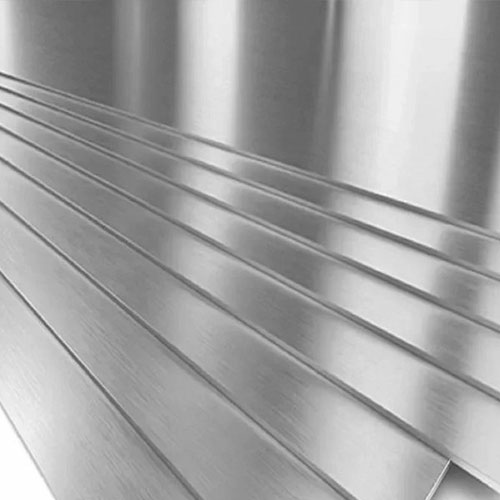
Available Parts for Inconel 625 CNC Machining
Inconel 625 CNC Machining is ideal for the high-performance nickel-chromium-molybdenum superalloy. It is readily supplied in a wide variety of mill forms including round bar, hexagonal bar, flat bar, plate, sheet, strip, coil, seamless and welded pipe, tube, fittings, flanges, forgings, and wire. Here are the precision parts we can provide for CNC Machining.
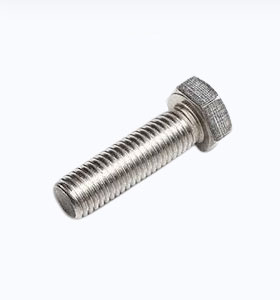
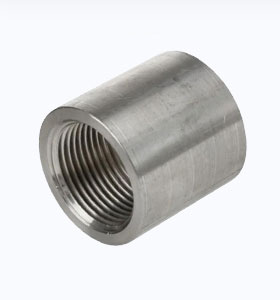
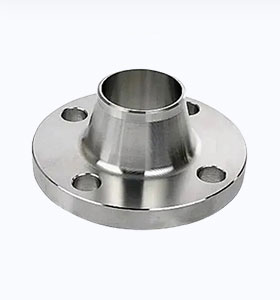
Inconel 625 CNC Services and Capabilities
Swiss Machining
Swiss machining: ultra-precise, small-diameter complex parts machined from bar stock in a single setup – with micron-level tolerances and zero secondary operations.
CNC Turning and Milling
CNC turning with live tooling combines both lathe and mill capabilities to machine parts with cylindrical features from metal rod stock.
FAQ's
Is Inconel 625 hard to machine?
Yes, Inconel 625 is considered difficult to machine—it is one of the more challenging nickel-based superalloys in the Inconel family.
Why It’s Hard to Machine
- Rapid work hardening: The material quickly becomes harder and stronger under the cutting tool, increasing cutting forces and accelerating tool wear.
- Low thermal conductivity: Heat generated during cutting stays concentrated at the tool tip rather than dissipating into the workpiece or chips, leading to very high tool temperatures.
- High strength and toughness at elevated temperatures: Even when hot from machining, Inconel 625 retains its strength, making it resist cutting rather than yielding easily.
- Abrasive alloying elements: Molybdenum and niobium carbides in the alloy act like hard particles that abrade cutting tools.
- Gummy chip formation: Chips tend to be stringy and weld to the tool edge (built-up edge), worsening surface finish and tool life.
Machinability ratings typically place Inconel 625 in the 15–25% range relative to free-cutting steels (like 1215 steel rated at 100%), which puts it in the “difficult” category alongside other superalloys like Inconel 718.
How It’s Successfully Machined
Despite the challenges, Inconel 625 is routinely precision CNC machined for aerospace, marine, chemical processing, and oil & gas components. Success requires:
- Rigid machine tools and fixturing
- Sharp, positive-rake coated carbide or ceramic inserts
- Climb milling
- Conservative cutting speeds (typically 20–50 m/min for carbide tools)
- Heavy feeds and depths of cut to stay under the work-hardened layer
- High-pressure through-tool coolant to break chips and cool the cutting zone
With modern tooling and optimized parameters, excellent surface finishes (Ra 0.4–0.8 μm) and tight tolerances (±0.0005″ / 12.7 μm) are consistently achieved.
In short: Yes, it’s hard to machine, but with the right expertise, equipment, and process controls, it’s very manageable and yields high-performance parts that justify the extra effort.
What is the machinability rating of Inconel 625?
Inconel 625 has a machinability rating of approximately 17% relative to AISI B1112 free-machining steel (rated at 100%).
What This Rating Means
This percentage indicates the relative cutting speed achievable for comparable tool life compared to B1112 steel. A 17% rating places Inconel 625 firmly in the “difficult-to-machine” category, similar to other nickel-based superalloys.
Ratings can vary slightly depending on material condition (e.g., annealed vs. aged), exact hardness (typically 25–35 HRC for Inconel 625), and testing methods:
- Some sources cite 16%.
- Others around 24% based on surface feet per minute comparisons.
- A few generalized guides mention 12–20%.
The consensus from modern machining databases and tool manufacturers is 15–20%, reflecting its challenges like work hardening, low thermal conductivity, and abrasive carbides.
For context:
- Easier materials like 304 stainless steel rate ~40–50%.
- More difficult ones like Inconel 718 rate ~10–15%.
Despite the low rating, Inconel 625 is considered slightly more machinable than age-hardened alloys like Inconel 718 due to its solution-annealed structure and better response to optimized tooling and parameters.
What are the disadvantages of Inconel 625?
Inconel 718, a precipitation-hardenable nickel-chromium superalloy, is notoriously difficult to machine due to a combination of its mechanical, thermal, and metallurgical properties. These characteristics lead to high cutting forces, excessive heat generation, rapid tool wear, and poor chip control, making it one of the most challenging materials in CNC machining.
Primary Reasons for Machining Difficulty
- Rapid Work Hardening The alloy hardens significantly during the initial cutting pass as plastic deformation occurs at the surface. This increases strength and hardness in the machined layer, making subsequent passes more resistant and accelerating tool wear.
- Low Thermal Conductivity Heat generated during cutting does not dissipate easily into the workpiece or chips, concentrating at the tool edge. This causes extremely high localized temperatures, softening the tool and promoting rapid degradation.
- High Strength Retention at Elevated Temperatures Unlike many metals that soften when heated, Inconel 718 maintains its high shear strength and toughness even at cutting temperatures, requiring sustained high cutting forces throughout the process.
- Abrasive Microstructure In its age-hardened condition, the alloy contains hard intermetallic precipitates (e.g., gamma prime γ’ and gamma double prime γ” phases) that act abrasively on cutting tools, similar to sandpaper, dramatically shortening tool life.
Additional Factors
- Chip Formation and Built-Up Edge — The material tends to produce gummy, segmented chips that weld to the tool (built-up edge), further complicating cutting and degrading surface finish.
- Material Condition Impact — Solution-annealed Inconel 718 is somewhat easier to machine than the fully age-hardened state, as the latter maximizes the abrasive precipitates. Many shops machine in the annealed condition and age-harden afterward.
These factors result in machining speeds often 5–10 times slower than mild steel, significantly higher costs, and the need for specialized techniques (e.g., rigid setups, coated carbide/ceramic tools, high-pressure coolant, and aggressive but controlled feeds). Despite the challenges, Inconel 718 is routinely machined for critical aerospace and turbine components with proper expertise.