
POM CNC Machining Service
Get instant quotes for custom CNC machined POM parts. High-precision prototyping and full production with exceptionally fast lead times. ISO 9001:2015 certified facility providing strong, wear-resistant components with excellent dimensional stability and dedicated in-house engineering support.
Why Choose POM for Precision Machining Parts?
POM (Acetal) stands out as a premier choice for CNC machining, offering outstanding dimensional stability, superb machinability, and excellent strength-to-weight performance combined with minimal moisture absorption and superior creep resistance. It machines effortlessly with sharp details, achieving tight tolerances down to ±0.001″ (25 μm), exceptional surface finishes, and reliable repeatability across prototype to high-volume production—making it the preferred material for precision gears, cams, rollers, fixtures, valve components, pump parts, and intricate mechanical assemblies.
- Exceptional dimensional stability and low moisture absorption
- High stiffness, strength, and creep resistance
- Very low friction coefficient with natural lubricity
- Outstanding surface finish and tight tolerance capability
- Perfect for precision fits, sliding mechanisms, and high-accuracy functional parts
Available Parts for POM CNC Machining
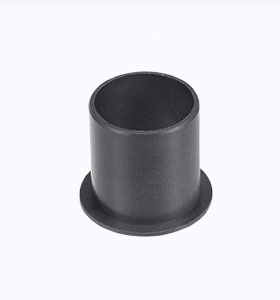
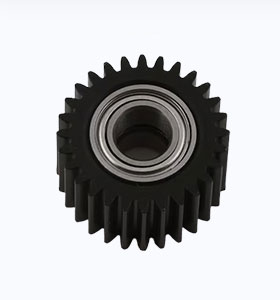
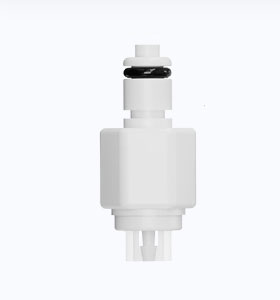
POM CNC machining is suitable for a wide range of acetal materials including standard POM homopolymer, POM copolymer, glass-filled POM, PTFE-filled POM, and specialty lubricated or UV-stabilized grades. The suitability depends on the material’s machinability. Here are the parts we can provide for CNC Machining.


POM CNC Services and Capabilities
Swiss Machining
Swiss machining: ultra-precise, small-diameter complex parts machined from bar stock in a single setup – with micron-level tolerances and zero secondary operations.
CNC Turning and Milling
CNC turning and milling with live tooling combines both lathe and mill capabilities to machine parts with cylindrical features from metal rod stock.
FAQs
What is the main difference between POM homopolymer and POM copolymer, and which one should I choose?
POM homopolymer (Delrin®) offers slightly higher strength, stiffness, and hardness, while POM copolymer provides better chemical resistance, lower porosity, and improved dimensional stability in humid environments. Choose homopolymer for maximum mechanical performance and copolymer for applications involving moisture, fuels, or chemicals.
Can POM parts hold tight tolerances and fine features in CNC machining?
Both PA6 and PA66 are widely machined, but PA66 (Nylon 6/6) is usually the go-to choice for most CNC projects.
Quick comparison of the two most common grades:
Yes, POM is one of the best-machining engineering plastics. It routinely achieves tolerances as tight as ±0.001″ (25 μm), excellent surface finishes (Ra 0.4–0.8 μm possible), and sharp, crisp details—even for thin walls, small threads, or intricate geometries—without significant tool wear or burr formation.
Is POM suitable for food-contact, medical, or high-wear applications?
Standard POM grades are FDA-compliant for food contact in many cases (check specific certifications). Medical-grade POM is available for certain applications. Its low friction, high wear resistance, and dimensional stability also make it ideal for sliding components, gears, bushings, rollers, pump parts, and precision assemblies that require long service life under load or continuous motion.
CNC Machining Learning Center
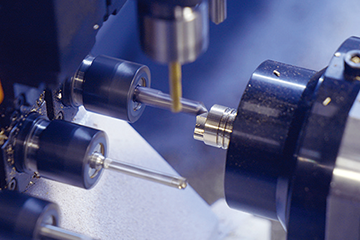
What is Swiss Machining?
Swiss machining uses a sliding headstock and guide bushing, unlike standard lathes, to support material while the tool remains stationary.
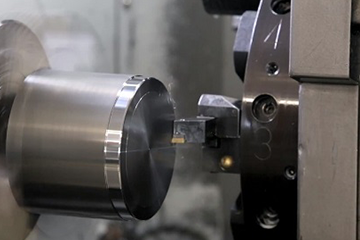
What is CNC Turning and Milling?
In CNC milling, the tool moves while the material is stationary. In CNC turning, the material spins while the tool moves.
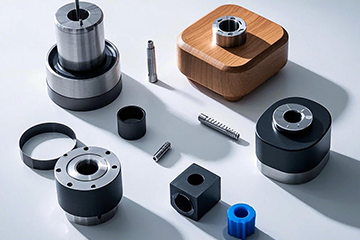
CNC Machining Materials: A Comprehensive Guide
CNC machining can be applied to a wide variety of materials, including but not limited to metals, plastics, and composites.