
CNC Machining
Servo Motor Parts
CNCPioneer is an AS9100D and IATF 16949 certified CNC machining servo motor parts specialist delivering high-reliability servo motor enclosures, actuator body elements, and motion system hardware with tolerances as tight as ±0.003mm — 78+ Swiss CNC lathes and 66+ MAZAK mill-turn centers for servo motor housing bodies, encoder and resolver mounting components, PMAC servo motor precision machining hardware, machining for actuator body elements, pneumatic actuator with CNC machining cylinder components, and servo motor for machining center axis drive hardware worldwide since 2011.
What Is CNC Machining
Servo Motor Parts?
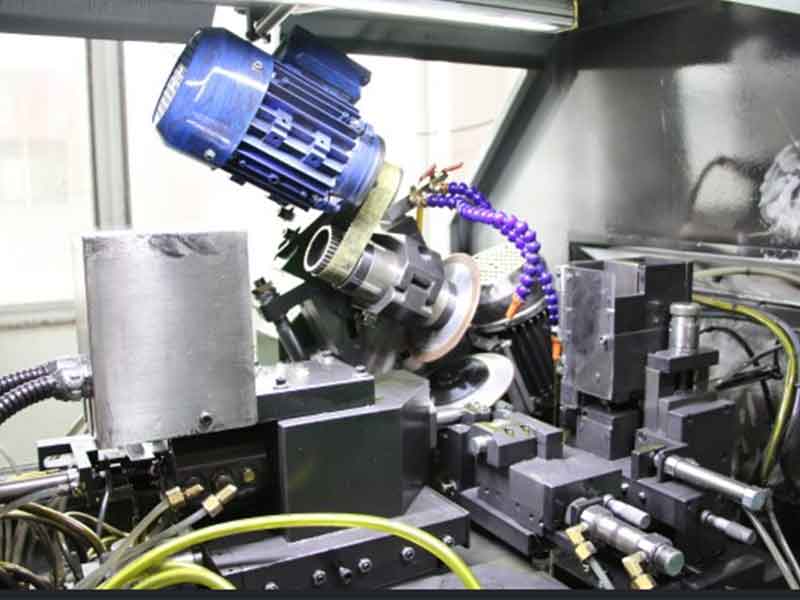
CNC machining servo motor parts is the precision computer numerical control manufacturing of the mechanical, structural, and electromechanical components that constitute servo motor assemblies — the housing bodies, bearing carriers, encoder mounting elements, resolver housings, stator frame components, rotor shaft elements, end bell covers, and drive interface fittings that together define servo motor performance, dimensional accuracy, thermal management, and service life in motion control systems from CNC machine tool axis drives and PMAC servo motor precision machining platforms through industrial robot joint actuators, aerospace electromechanical actuation systems, and pneumatic automation systems.
Every dimension machined into a servo motor component directly governs motor performance: stator bore roundness (±0.002mm) governs the air gap uniformity determining electromagnetic torque production and torque ripple that manifests as velocity ripple in servo motion profiles; bearing housing bore accuracy (±0.003mm) governs rotor shaft concentricity and bearing service life; encoder mounting surface runout (≤0.003mm) governs encoder signal quality and PMAC servo position feedback accuracy; resolver housing bore concentricity governs servo velocity and position loop accuracy; and pneumatic actuator bore surface finish (Ra 0.4–0.8μm) governs piston seal contact simultaneously for sealing, friction, and wear life — making machining for actuator one of the most technically accountable manufacturing relationships in the motion control supply chain.
-
PMAC servo motor precision machining platform experience CNCPioneer's own MAZAK mill-turn centers and Swiss CNC lathes operate under advanced multi-axis PMAC servo motor precision CNC machining motion control — providing first-hand understanding of the dimensional requirements that PMAC servo motor for precision CNC machining systems impose on housing components, encoder mounting elements, and drive shaft assemblies. This operational knowledge directly informs our encoder mounting hub runout ≤0.003mm and bearing housing bore roundness ±0.001mm standards for PMAC servo precision machining programs.
-
Complete machining for actuator single-source supply CNCPioneer's machining for actuator capability covers electric linear actuator bodies, pneumatic actuator with CNC machining cylinder components, rotary actuator housing elements, and servo motor for machining center axis drive hardware in a single supply relationship — eliminating the multi-supplier coordination that conventional actuator component machining workflows require. 100% pressure decay leak testing on all pneumatic actuator with CNC machining cylinder body components before shipment.
-
Servo motor for machining center — 5 unique accuracy demands Servo motor for machining center housing machining differs from standard industrial motor housing in five specific areas: encoder mounting face runout ≤0.003mm for position feedback accuracy; bearing housing roundness ±0.002mm governing cyclic shaft runout visible in encoder feedback; EMC shielding housing flatness 0.005mm + chemical film for servo drive EMI compliance per IEC 61800-3; liquid cooling water jacket geometry for high-duty-cycle contouring programs; and stator bore roundness ±0.002mm governing electromagnetic torque ripple appearing as machined surface waviness in precision contouring operations.
-
40–60% China CNC machining servo motor parts cost advantage CNCPioneer's China CNC machining servo motor parts factory delivers 40–60% cost reduction versus European and Japanese servo motor precision component machining — enabling servo motor OEMs and actuator manufacturers to achieve competitive product pricing with stator bore roundness ±0.001mm, encoder hub runout ≤0.003mm, Mitutoyo CMM ±0.001mm, 0.0001mm roundness tester, 100% leak testing, and IATF 16949 PPAP Level 3 / AS9100D FAIR documentation equivalent to established Western servo motor machining suppliers.

Why CNCPioneer for
CNC Machining Servo Motor Parts?
CNCPioneer's CNC machining servo motor parts combines Swiss CNC precision for encoder mounting and shaft components, MAZAK mill-turn capability for servo motor housing bodies and actuator cylinder assemblies, PMAC servo precision machining operational experience, dual AS9100D and IATF 16949 certification, and China manufacturing cost efficiency — serving servo motor OEMs, actuator system manufacturers, CNC machine tool component suppliers, and aerospace electromechanical actuator developers globally.
Stator Bore Roundness ±0.001mm — Air Gap Uniformity
CNCPioneer achieves stator bore roundness ±0.002mm standard and ±0.001mm for high-performance PMAC servo motor precision machining programs using PCD boring bar tooling with Mitutoyo roundness tester verification at 0.0001mm resolution. Any stator bore roundness error creates air gap non-uniformity producing electromagnetic torque ripple — manifesting as velocity ripple in servo motion profiles and surface waviness in precision PMAC servo motor for precision CNC machining contouring operations. 100% roundness tester verification on all bearing journal and encoder hub components.
Encoder Hub Runout ≤0.003mm — PMAC Servo Feedback
Encoder mounting hub face runout ≤0.003mm on Swiss CNC lathes — the most critical single specification in PMAC servo motor for precision machining systems. A 0.005mm hub runout on a PMAC spindle produces cyclic encoder signal error at spindle frequency that the PMAC servo loop interprets as actual position variation — generating corrective torque that creates surface waviness at spindle rotation frequency on precision-machined surfaces. Encoder hub bore-to-shaft concentricity ±0.002mm, hub OD-to-bore concentricity ±0.002mm, resolver housing bore concentricity ±0.003mm — all from Swiss CNC guide bushing precision.
Pneumatic Actuator Bore Ra 0.4–0.8μm + 100% Leak Testing
CNCPioneer's pneumatic actuator with CNC machining achieves Ra 0.4–0.8μm bore surface finish through CNC turning followed by single-pass fine honing — the precise window governing three interdependent performance characteristics simultaneously: bore Ra above 0.8μm creates micro-channels producing air leakage; Ra below 0.4μm causes piston seal lip extrusion producing high breakout friction. 100% pressure decay leak testing at 1.5× rated pneumatic working pressure on all pneumatic actuator cylinder components before shipment.
MAZAK Mill-Turn — Complete Servo Motor Housing Single-Setup
MAZAK mill-turn centers produce complete servo motor housing geometry — stator bore, bearing housings, encoder mounting face, water jacket channels, O-ring grooves, connector cutouts, and mounting flanges in single-setup operations preserving all critical concentricity relationships. Front-to-rear bearing housing concentricity ±0.003mm; stator bore-to-housing OD concentricity ±0.005mm; mounting flange register h6 ±0.008mm; O-ring groove ±0.020mm for IP67 servo motor sealing — all from the same single-fixturing referencing the housing bore datum.
AS9100D + IATF 16949 — Aerospace & Automotive Coverage
Dual certification qualifies CNCPioneer for aerospace electromechanical actuator programs (AS9100D + FAIR per AS9102, AMS material specification, ASTM E595 outgassing for space servo applications) and automotive servo motor for machining center housing programs (IATF 16949 + PPAP Level 3, Cpk ≥ 1.67 on stator bore diameter/roundness special characteristics, MSA Gage R&R, 100% CCD stator bore sorting) — the broadest quality certification coverage available from any single CNC machining servo motor parts factory.
40–60% China Servo Motor Parts Cost Advantage
CNCPioneer's China CNC machining servo motor parts delivers 40–60% cost reduction versus European and Japanese servo motor precision component machining — with equivalent stator bore ±0.001mm roundness, encoder hub ≤0.003mm runout, Mitutoyo CMM ±0.001mm, 0.0001mm roundness tester, 100% pneumatic actuator leak testing, and IATF 16949/AS9100D documentation quality. Rapid prototype: aluminum servo motor housing and actuator body 5–7 business days.
CNC Machining Servo Motor Parts
— Complete Component Range
CNCPioneer's CNC machining servo motor parts and machining for actuator capability covers every mechanical component category — servo motor housing and frame bodies, encoder and resolver mounting components, servo motor shaft and bearing elements, electric linear and rotary actuator bodies, pneumatic actuator with CNC machining cylinder and end cap components, and ball screw support housing elements for servo motor for machining center axis drive programs.

Servo Motor Housing & Frame Components
AC brushless (PMAC) servo motor housing CNC machining: stator bore H7 ±0.008mm standard/±0.005mm high-precision; stator bore roundness ±0.002mm/±0.001mm; bearing housing bore ±0.003mm/±0.002mm roundness; front-to-rear bearing concentricity ±0.003mm; mounting flange bolt circle ±0.020mm IEC 60072-1; register spigot h6 ±0.008mm; water jacket channel ±0.1mm + O-ring groove ±0.020mm for liquid-cooled servo motor for machining center programs; AlSi9Cu3 HPDC for high-volume / 6061-T6 for prototype. High-speed spindle motor housing for machining centers (10,000–80,000 RPM): stator bore roundness ±0.001mm; front bearing H5 ±0.006mm/±0.001mm roundness; front-to-rear concentricity ±0.002mm; cooling jacket ±0.08mm for continuous-duty thermal management. Rotary axis servo motor housing for five-axis machining centers (hollow shaft H7 ±0.008mm; output flange bolt circle ±0.020mm; encoder mounting face runout ≤0.003mm). Linear servo motor primary and torque motor housing.

Encoder & Resolver Mounting Components
Encoder hub and disc mounting components on Swiss CNC lathes (hub mounting bore on shaft ±0.002mm diameter/±0.001mm roundness for zero-clearance precision encoder fit; encoder disc mounting face runout ≤0.003mm governing cyclic encoder signal error; hub OD-to-bore concentricity ±0.002mm; 6061-T6 standard/303 stainless washdown/titanium weight-minimized high-speed spindle). Resolver rotor mounting and stator housing components (resolver rotor bore ±0.003mm; stator housing bore ±0.003mm governing resolver-to-rotor radial clearance; angular position cutout ±0.1° for resolver pole-to-motor pole alignment). Encoder housing rear end bell CNC machining (encoder housing bore ±0.003mm concentricity to bearing housing; bearing housing ±0.003mm/±0.002mm roundness; IP65/IP67 O-ring groove ±0.020mm; cable exit geometry ±0.500mm). Encoder cable connector interface (M23×1.0 or M17×1.0 ±0.005mm pitch diameter; IP67 O-ring groove ±0.020mm; contact retention bore ±0.003mm).

Servo Motor Shaft, Bearing & End Bell Components
Servo motor output shaft CNC machining on Swiss lathes (bearing journal diameter ±0.003mm/±0.001mm roundness; journal-to-journal concentricity ±0.002mm governing shaft runout; output keyway DIN 6885 ±0.010mm/DIN 5480 spline ±0.005mm; shaft end thread ±0.005mm pitch diameter; Ra 0.2–0.4μm bearing surface; 17-4PH H900 for maximum strength-to-diameter ratio; 42CrMo standard; 303 stainless corrosion-resistant). Bearing preload spacer and carrier (face parallelism 0.002mm/face pair for uniform angular contact preload; spacer thickness ±0.003mm for precise preload setting). Front end bell (drive-end cap) CNC machining integrating front bearing housing, oil seal geometry h11 bore, lead-in chamfer 15°×0.5mm, and mounting flange per IEC 60072-1/NEMA MG1. Ball screw bearing support housing (fixed-end angular contact bore ±0.003mm/±0.002mm roundness; floating-end H7 ±0.006mm; mounting face flatness 0.005mm; centerline height ±0.010mm; cast iron GG-25 or 316L stainless).

Pneumatic Actuator with CNC Machining
Standard pneumatic cylinder bore body CNC machining (bore H8 ±0.025–0.050mm; bore Ra 0.4–0.8μm through CNC turning + single-pass fine honing for crossed-hatch lay; cylindricity ±0.010mm/100mm; port thread G1/8–G3/8 BSPP ±0.005mm; ISO 15552/VDMA 24562 standard; 6061-T6 anodized or 316L stainless for food/corrosive applications; hard anodize for high-cycle bore wear resistance). Compact cylinder body ISO 6432 and ISO 21287 (Ø6–25mm ±0.020mm). Guided cylinder body (guide rod bore spacing ±0.050mm; guide bore ±0.005mm; parallelism 0.010mm/100mm stroke). Rod end cap (rod seal housing H9; snubber cushion needle bore ±0.010mm; G1/8–G1/4 port ±0.005mm). Blind end cap (cushion bypass bore ±0.020mm; tie rod thread ±0.005mm; magnetic sensor groove ±0.200mm axial). Piston rod (OD ±0.010mm; straightness ≤0.008mm/200mm; Ra 0.4–0.8μm; hard chrome 15–25μm; 316L stainless for washdown). Vane rotary actuator housing. 5/2 and 5/3 directional control valve body (spool bore H7 ±0.008mm/cylindricity ±0.003mm; Ra 0.4μm). 100% pressure decay leak testing at 1.5× rated pressure on all cylinder components before shipment.

Electric Linear & Rotary Actuator Components
Electric linear actuator body tube CNC machining (internal bore ±0.010mm; OD h8 ±0.015mm; mounting lug bore ±0.005mm; front/rear end cap thread ±0.005mm; 6061-T6/316L stainless/titanium for aircraft flight control actuator bodies). Actuator rod end component (rod OD ±0.005mm; rod end thread ISO metric/UNEF ±0.005mm; straightness ≤0.010mm/300mm; Ra 0.4–0.8μm; 316L stainless hardened). Actuator gear housing (bearing bore ±0.003mm/±0.002mm roundness; gear center distance ±0.020mm; mating flange flatness 0.005mm; 7075-T6 or 6061-T6). Ball screw nut housing (nut flange bore ±0.005mm; anti-rotation slot ±0.050mm; return tube bore ±0.020mm). Rotary actuator housing (output bearing bore ±0.003mm/±0.002mm roundness; mounting face flatness 0.005mm; gear ratio stage housing bore center distance ±0.010mm). Integrated servo-actuator housing (servo motor stator bore ±0.005mm/±0.002mm roundness; integrated gearbox bearing ±0.003mm; motor-to-gearbox shaft axis concentricity ±0.005mm). Cushion adjustment needle valve (M8×1.0 or 10-32 UNF ±0.003mm; 60° cone seat ±0.05°).

PMAC Servo Motor for Machining Center Programs
PMAC servo motor for precision CNC machining system component programs: encoder disc mounting hub (bore concentricity to shaft bearing journals ±0.002mm; face runout ≤0.003mm; hub OD-to-bore ±0.002mm — the ≤0.003mm runout specification preventing cyclic encoder signal distortion that appears as surface waviness in precision PMAC contouring operations). Bearing housing for PMAC servo (front bearing bore ±0.003mm/±0.002mm roundness; rear bearing bore ±0.003mm; front-to-rear concentricity ±0.003mm governing shaft runout that appears directly in PMAC encoder feedback). Resolver housing for PMAC (resolver rotor bore ±0.003mm concentricity to shaft journals; resolver stator bore ±0.003mm; readhead bracket position ±0.050mm). Servo motor for machining center coupling housing (servo motor shaft bore ±0.005mm; ball screw end bore ±0.005mm; OD concentricity ±0.005mm for minimum coupling-induced vibration). FAIR per AS9102 and AS9100D documentation for aerospace PMAC servo precision machining system qualification.
Applications
CNCPioneer's CNC machining servo motor parts and machining for actuator serves servo motor OEMs, CNC machine tool manufacturers, industrial automation and robotics producers, aerospace electromechanical actuator developers, medical device and surgical robotics manufacturers, semiconductor and precision equipment makers, pneumatic system integrators, and wind and renewable energy equipment producers worldwide.
CNC Machine Tools & Machining Centers
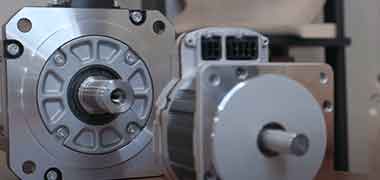
CNC machining servo motor parts and servo motor for machining center housing components for vertical machining center axis drives, horizontal machining center spindle motor housings, five-axis machining center rotary axis servo motors, and grinding machine servo axis drive components. PMAC servo motor for precision CNC machining housing programs for high-performance precision machining center systems requiring ultra-low velocity ripple and maximum positioning accuracy.
Industrial Automation & Robotics
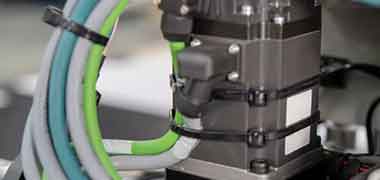
CNC machining servo motor parts for industrial robot joint servo motor housings, collaborative robot arm servo motor structural components, SCARA robot servo drive housing elements, and delta robot servo motor end bell components. Machining for actuator covering robot arm linear actuator body components, robot EOAT pneumatic actuator with CNC machining cylinder parts, and integrated servo-actuator housing elements for all robot technology categories.
Aerospace & Defense Actuation
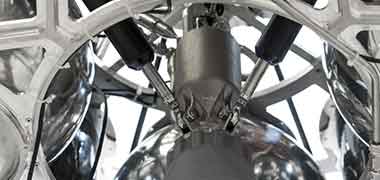
AS9100D certified CNC machining servo motor parts and machining for actuator for aircraft flight control surface electromechanical actuator body components, aerospace gimbal servo motor housing elements, missile fin actuator body parts, and unmanned aircraft servo actuator structural hardware with FAIR documentation per AS9102, AMS material specification compliance, and ASTM E595 outgassing compatibility for space servo motor applications.

Semiconductor & Precision Equipment
PMAC servo motor for precision machining component CNC machining for semiconductor wafer handling stage servo motor housing elements, photolithography system linear motor primary components, CMM servo axis drive housing parts, and optical grinding machine servo motor structural components requiring encoder hub runout ≤0.003mm and bearing housing bore roundness ±0.001mm for PMAC-controlled motion system precision.
Medical Devices & Surgical Robotics
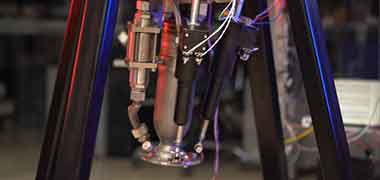
Precision CNC machining servo motor parts for surgical robot joint servo motor housing bodies, medical imaging system servo motor structural components, infusion pump servo actuator body elements, and rehabilitation robot servo motor end bell hardware in biocompatible 316L stainless and titanium with electropolished surfaces and ISO 13485 compatible quality documentation with FAIR per AS9102.
Pneumatic & Fluid Power Systems
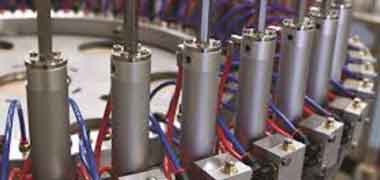
Pneumatic actuator with CNC machining cylinder body, end cap, piston rod, and valve body production for industrial automation pneumatic actuator programs — standard ISO 15552 tie-rod cylinders, compact ISO 21287 cylinders, guided cylinder bodies, pneumatic rotary actuator housings, and 5/2 directional control valve bodies for factory automation, machine tool clamping, and robot EOAT pneumatic actuation programs with 100% pressure decay leak testing.
CNC Machining Servo Motor Parts
Capabilities & Process
CNCPioneer's CNC machining servo motor parts combines Swiss CNC lathe precision for small-diameter servo motor shaft components, encoder mounting elements, and pneumatic actuator fitting bodies with MAZAK mill-turn capability for servo motor housing bodies, actuator cylinder assemblies, and complex multi-feature servo motor end bell components — complemented by roundness tester verification, profilometer surface finish verification, and 100% pneumatic actuator leak testing for complete machining for actuator quality assurance.
Swiss CNC — Encoder Hubs, Shafts & Miniature Actuator Parts
78+ Swiss CNC lathes (Star SR-32J, Citizen A20/A16, Tsugami B206) with guide bushing support for slender servo motor shaft and encoder hub components (L/D up to 20:1) · Ø0.5–Ø32mm servo motor parts diameter range · Positional accuracy ±0.002mm; repeatability ±0.001mm · Encoder hub bore ±0.002mm diameter/±0.001mm roundness; hub face runout ≤0.003mm; shaft bearing journal ±0.003mm/±0.001mm roundness; shaft journal-to-journal concentricity ±0.002mm · Resolver rotor bore ±0.003mm; encoder connector bodies M23×1.0/M17×1.0 ±0.005mm · Pneumatic actuator piston rod OD ±0.010mm; straightness ≤0.008mm/200mm; Ra 0.4–0.8μm; needle valve cone seat 60° ±0.05°
MAZAK Mill-Turn — Servo Motor Housings & Actuator Bodies
66+ MAZAK mill-turn centers for servo motor housing bodies, actuator cylinder assemblies, and end bell components · Ø10–Ø300mm servo motor/actuator part diameter range; housing length to 600mm · 5-axis simultaneous for stator bore + bearing housings + encoder mounting face + water jacket + O-ring grooves + connector cutouts + mounting flanges in single-setup operations preserving all critical concentricity relationships · Stator bore-to-bearing housing concentricity ±0.003mm; front-to-rear bearing concentricity ±0.003mm; mounting flange register h6 ±0.008mm — all from single-fixturing stator bore datum · IP67 O-ring groove ±0.020mm; water jacket channel ±0.1mm
Pneumatic Actuator Bore — Honing & 100% Leak Testing
Pneumatic actuator with CNC machining cylinder bore: CNC turning followed by single-pass fine honing achieving Ra 0.4–0.8μm crossed-hatch lay pattern (versus directional spiral lay of turning-only finish) that provides non-directional seal barrier preventing helical seal bypass as piston rotates under eccentric load · Bore H8 ±0.025–0.050mm; cylindricity ±0.010mm/100mm · Profilometer Ra verification on every first article and production sampling · 100% pressure decay leak testing at 1.5× rated pneumatic working pressure (0.75–1.2 MPa) on all cylinder body components before shipment — zero exceptions · Piston rod hard chrome 15–25μm for high-cycle seal life; post-chrome ground to final OD ±0.005mm
Roundness Tester — 0.0001mm Servo Motor Verification
Mitutoyo roundness tester (0.0001mm resolution) on all servo motor stator bore, bearing housing bore, encoder hub, and servo motor shaft journal components — the verification infrastructure that distinguishes a specialized servo motor parts machining company from a general precision machining supplier · Stator bore roundness ±0.001mm for PMAC servo motor precision machining programs; bearing housing bore roundness ±0.001mm; encoder hub bore roundness ±0.001mm · Traceable roundness records supporting servo motor OEM electromagnetic performance documentation, PMAC servo for precision machining qualification, and IATF 16949 automotive servo motor for machining center PPAP special characteristics
Servo Motor & Actuator Machining Materials
AlSi9Cu3 (96 W/m·K; dominant servo motor for machining center housing HPDC) · AlSi10Mg (130 W/m·K; high-heat-flux servo motor housing for continuous-duty PMAC programs) · 6061-T6 (167 W/m·K; prototype/precision servo programs; pneumatic actuator bodies) · 7075-T6 (503 MPa; weight-critical servo motor/actuator structural elements) · 17-4PH H900 (1,310 MPa; maximum servo motor shaft strength-to-diameter ratio; AMS 5643) · 316L stainless (food servo/washdown/medical; non-magnetic) · 303 stainless (standard servo shaft; actuator rod end components) · 42CrMo (actuator piston rod; ball screw support housing) · Ti-6Al-4V (aerospace servo actuator; weight-critical servo housing) · Invar 36 (CTE 1.3 ppm/°C inserts for thermally stable PMAC spindle housing) · Brass C3604 (pneumatic actuator fittings; connector bodies) · Cast iron GG-25 (heavy-duty ball screw support housing; servo motor for machining center base)
AS9100D / IATF 16949 Documentation
FAIR per AS9102 for aerospace electromechanical actuator and PMAC servo motor for precision machining aerospace programs · PPAP Level 3 with Cpk ≥ 1.67 on stator bore diameter/roundness and encoder hub runout special characteristics; MSA Gage R&R for bore air gauge, roundness tester, and profilometer; FMEA; control plan for automotive servo motor for machining center housing programs · 100% CCD stator bore diameter sorting; 100% roundness tester for all bearing journal and encoder hub components · 100% pressure decay leak test records on all pneumatic actuator with CNC machining programs · XRF PMI + RoHS compliance verification on every material lot · Records retained minimum 10 years
Materials for CNC Machining
Servo Motor Parts & Actuators
CNC machining servo motor parts and machining for actuator material selection is governed by thermal conductivity for servo motor heat rejection improving continuous duty current rating, specific strength for weight-critical aerospace servo actuator body components, non-magnetic properties for servo feedback sensor applications, biocompatibility for medical servo and actuator programs, corrosion resistance for food processing and marine servo motor programs, and EMC shielding conductivity for servo motor for machining center housing components.
AlSi9Cu3 / ASTM A380
Thermal conductivity 96 W/m·K · Density 2.71 g/cm³ · Dominant servo motor for machining center housing HPDC material for high-volume production — excellent die casting characteristics for complex stator bore boss geometry, water jacket channels, and bearing housing bosses. Standard high-volume automotive servo motor housing and industrial automation servo motor for machining center housing production. Linear actuator gear housing and pneumatic actuator body die-cast production.
AlSi10Mg / ASTM A360
Thermal conductivity 130 W/m·K (35% higher than AlSi9Cu3) · Recommended for high-heat-flux servo motor housing in PMAC servo motor for precision CNC machining and high-duty-cycle servo motor for machining center programs — directly increasing the continuous duty current rating that determines servo axis peak torque capability at high-duty-cycle precision contouring programs. Preferred for liquid-cooled spindle servo motor housings in advanced machining centers.
6061-T6 & 7075-T6
6061-T6 (167 W/m·K; highest aluminum thermal conductivity): Standard prototype servo motor housing and precision servo programs — 5–7 business day first article. Standard pneumatic actuator with CNC machining cylinder body material; standard encoder hub and end bell material. 7075-T6 (503 MPa yield): Weight-critical servo motor housing structural elements, precision actuator structural components, and aerospace servo motor housing where maximum aluminum specific strength enables minimum wall section at required structural loading. Hard anodize Type III standard surface treatment for both.
17-4PH H900
Yield strength 1,310 MPa · Corrosion resistant · Non-magnetic · AMS 5643 · Maximum servo motor shaft strength-to-diameter ratio — enabling minimum servo motor shaft cross-section at required torque transmission capacity, directly reducing servo motor rotor inertia and improving servo dynamic response. Precision servo actuator shaft components. Encoder hub components in washdown servo motor applications where 6061-T6 anodize is insufficient for chemical exposure. Servo motor shaft bearing journal ±0.001mm roundness achievable before H900 aging with minimal distortion.
316L & 303
316L: Non-magnetic · Biocompatible · Corrosion resistant · Food processing servo motor housing and washdown actuator components (FDA food contact compliant); medical servo motor shaft components and surgical robotic actuator housing bodies; marine servo motor housing in permanent seawater service; pharmaceutical cleanroom servo motor structural elements. Electropolished Ra ≤ 0.4μm for medical servo regulatory clearance. 303: Good machinability for standard servo motor shaft, actuator rod end components, encoder cable connector bodies, and resolver housing elements where 316L's molybdenum content is not required.
42CrMo & Cast Iron GG-25
42CrMo Q&T: UTS 900–1,100 MPa · Pneumatic actuator with CNC machining piston rod component material for high-cycle automation applications — combined with hard chrome plating 15–25μm for extended rod seal life in high-cycle pneumatic actuator programs. Ball screw support housing for servo motor for machining center ball screw drive systems. Servo motor shaft for standard servo programs where 17-4PH H900 cost is not justified. Cast iron GG-25: High stiffness + good damping — heavy-duty ball screw support housing and servo motor for machining center structural base components requiring vibration-damping properties.
Ti-6Al-4V Grade 5
Specific strength 199 MPa·cm³/g · Non-magnetic · Biocompatible · AMS 4928 · Aerospace servo actuator body components for aircraft flight control surface electromechanical actuator programs (titanium's specific strength enabling minimum actuator body mass at required structural loading); weight-critical servo motor housing elements for aerospace and space applications; medical servo motor and surgical robotic actuator structural components; encoder hub components in high-speed spindle applications requiring minimum rotating inertia. FAIR per AS9102 for aerospace servo actuator titanium programs.
Invar 36
CTE 1.3 ppm/°C · Ultra-low thermal expansion · Invar 36 insert structures within aluminum PMAC servo motor for precision machining spindle housing bodies — using Invar's ultra-low CTE at the dimensionally critical bearing housing bores while maintaining aluminum's thermal conductivity in the bulk housing structure. Critical for precision bore machining where 1°C spindle housing temperature rise produces approximately 10μm dimensional change in a 200mm spindle housing. Thermally stable servo motor for machining center reference components and laser interferometer mounting structures for servo axis calibration.
PEEK
Chemical resistant · Non-magnetic · Low density (1.32 g/cm³) · MRI-compatible · Medical device servo motor and surgical robotic actuator body structural components where metallic components would create MRI imaging artifacts; chemical environment servo motor parts where corrosive process media exposure requires non-metallic housing elements; pneumatic actuator components in oxygen or reactive gas service where metallic actuator body components create ignition risk; food processing servo motor components in aggressive cleaning chemical environments exceeding 316L corrosion resistance.
Brass C3604 & Beryllium Copper
Brass C3604: Excellent machinability · Pneumatic actuator with CNC machining port fittings, servo motor connector bodies (M23/M17 encoder connector shells), actuator needle valve bodies, and signal connector housing hardware. Nickel plated for servo motor and actuator corrosion resistance. Beryllium Copper C17200: Non-magnetic · High spring strength · Non-sparking · Servo motor electrical connector contact components requiring stable low contact resistance across high-cycle servo motor connection cycles and premium spring contact elements in servo motor for machining center power distribution. Gold plating MIL-G-45204 for stable contact resistance across servo service life.
CuSn12 Bronze
Low friction · Good worm gear compatibility · Servo motor worm gear actuator thread contact elements and actuator guide bushings where the bronze-on-steel tribological pairing provides the favorable running-in behavior and low friction coefficient that extends servo actuator worm gear service life. Rotary actuator vane housing materials for limited-rotation pneumatic rotary actuator programs where bronze's machinability enables complex vane slot geometry at precision dimensional compliance (±0.020mm vane slot width for correct vane-to-housing sealing contact force).
Hard Chrome AMS 2406 & PTFE
Hard chrome plating AMS 2406: HV 850–1,000 at 15–25μm for pneumatic actuator piston rod wear resistance and corrosion protection — maximum rod seal life in high-cycle pneumatic actuator automation applications. Post-plate ground to final rod OD ±0.005mm for correct rod seal contact. PTFE coating: Friction coefficient below 0.05 for pneumatic actuator with CNC machining cylinder bore surfaces and actuator guide rod surfaces in cleanroom and food processing applications where liquid lubricants are prohibited — smooth pneumatic actuator motion onset without stick-slip.
Surface Treatments for CNC Machining
Servo Motor Parts & Actuators
CNC machining servo motor parts and machining for actuator surface treatment selection is governed by EMC shielding conductivity for servo motor for machining center housing bonding, anodized aluminum thermal emissivity for servo motor continuous duty improvement, corrosion resistance for food processing and marine servo motor programs, biocompatibility for medical servo parts, bore wear resistance for high-cycle pneumatic actuator cylinder programs, and low-reflectance for machine vision guided CNC machining applications.
Hard Anodize — MIL-A-8625 Type III (Servo Motor & Actuator Aluminum Parts)
Standard surface treatment for aluminum CNC machining servo motor parts and pneumatic actuator with CNC machining components. HV 400+ surface hardness for bore wear resistance in pneumatic actuator cylinder bodies and servo motor housing assembly interfaces. Critical thermal benefit: anodized aluminum radiates heat 18× more effectively than bare aluminum — directly improving servo motor for machining center continuous duty current rating in convection-cooled servo motor programs. Black hard anodize on servo motor housing external surfaces increases thermal emissivity from 0.05 to 0.8–0.9 for improved passive heat dissipation in servo motor for machining center installation environments.
Chemical Film — MIL-DTL-5541 (Servo Motor EMC Shielding)
Alodine chromate conversion coating for aluminum servo motor housing components requiring EMC shielding conductivity — servo motor for machining center housings where metallic shielding continuity between housing sections is required for servo drive EMI compliance per IEC 61800-3. Class 3 for minimum contact resistance EMC bonding (contact resistance <5 mΩ/cm²) at servo motor for machining center housing mating interfaces where PWM switching noise from servo drive must be contained. Class 1A for maximum corrosion protection on servo motor housing components in outdoor machine tool installation environments.
Passivation — ASTM A967 (Stainless Servo & Actuator Parts)
Essential for stainless steel CNC machining servo motor parts in food processing, pharmaceutical, and marine servo motor applications. Removes free iron from servo motor shaft and housing surfaces for corrosion resistance and FDA food contact compliance in food processing servo motor for machining center applications. ASTM A967 passivation for stainless steel pneumatic actuator with CNC machining piston rod and cylinder body components in washdown and food processing pneumatic actuator programs — enhancing passive layer for chemical cleaning compatibility in automated food processing machinery.
Hard Chrome Plating & Gold Plating (Actuator & Connector Parts)
Hard chrome plating AMS 2406 (HV 850–1,000 at 15–25μm) for pneumatic actuator with CNC machining piston rod components — maximum rod seal life in high-cycle automation applications. Post-plate grinding achieves rod OD ±0.005mm for correct rod seal contact. Hard gold plating per MIL-G-45204 for servo motor and actuator electrical connector contact components — stable low contact resistance across servo joint slip ring service lifetimes, M23/M17 encoder connector mating cycles, and servo motor power distribution contact surfaces governing servo control signal reliability and motor power delivery integrity.
Electropolishing (Medical & Food Servo Parts)
Electropolishing for surgical robot joint servo motor housing bodies, medical device servo motor shaft components, and food processing servo motor and actuator stainless steel CNC machining servo motor parts requiring Ra ≤ 0.4μm biocompatible surface finish. Removes machining stress layer from stainless servo motor components — improving fatigue life in high-cycle servo motor operation. Required for medical servo motor shaft components and surgical robotic actuator housing parts in regulatory clearance programs (FDA 510(k), CE marking, ISO 13485 documentation). Standard on all 316L stainless CNC machining servo motor parts for surgical and food processing programs.
Electroless Nickel & PTFE (Actuator Wear & Friction)
Electroless nickel per MIL-C-26074 for complex servo motor housing and actuator body geometry requiring uniform corrosion and wear protection across cross-drilled oil passages, internal bore surfaces, and complex pneumatic actuator port geometry where hard chrome and electrodeposited nickel produce non-uniform coverage. PTFE coating for pneumatic actuator with CNC machining cylinder bore surfaces and actuator guide rod surfaces in cleanroom and food processing pneumatic actuator applications where liquid lubricants are prohibited — friction coefficient below 0.05 for smooth pneumatic actuator motion onset without stick-slip disrupting automation operation.
All CNC machining servo motor parts and machining for actuator surface treatments — hard anodize MIL-A-8625 Type III, chemical film MIL-DTL-5541, passivation ASTM A967, electropolishing, hard chrome plating AMS 2406, gold plating MIL-G-45204, electroless nickel MIL-C-26074, black oxide, and PTFE dry lube coating — are selected per servo motor operating environment, regulatory requirements (food contact, biocompatibility, EMC), and pneumatic actuator service cycle demands. Surface treatment certifications are included in every CNC machining servo motor parts and machining for actuator shipment. Surface treatment recommendation is included in CNCPioneer's 24-hour DFM review service.
Quality Assurance for CNC Machining
Servo Motor Parts & Actuators
CNCPioneer's CNC machining servo motor parts quality system applies AS9100D and IATF 16949 protocols — stator bore roundness tester verification, encoder hub runout measurement, bearing housing concentricity CMM verification, pneumatic actuator bore surface finish profilometry, and 100% pneumatic actuator pressure decay leak testing — ensuring every servo motor and actuator component meets dimensional and functional requirements before integration into servo motion systems.
Contract & Drawing Review
Engineering review of CNC machining servo motor parts drawing requirements, applicable IEC 60034, IEC 60072-1, ISO 15552 (pneumatic actuator), PMAC servo motor for precision machining dimensional requirements, air gap calculation for servo motor bearing concentricity verification, pneumatic actuator sealing bore compliance, and PPAP or FAIR requirements before order acceptance. DFM review completed within 24 hours — stator bore roundness achievability, encoder hub runout feasibility, actuator bore sealing geometry assessment, and documentation scope confirmation.
Material Incoming Inspection
SII XRF composition verification confirms alloy grade on every CNC machining servo motor parts material lot. Hardness testing for heat-treated servo motor shaft alloys (17-4PH H900 hardness 388–444 HBW). PMI for stainless servo motor components. RoHS compliance verification for consumer electronics and automotive servo motor for machining center housing parts. Full lot traceability from mill certificate through finished servo motor or actuator component shipment. Counterfeit material prevention for all OEM servo motor parts programs.
First Article Inspection (FAIR) per AS9102
Complete CMM dimensional verification on all drawing features for every new servo motor or actuator part number. FAIR per AS9102 with balloon drawing for aerospace electromechanical actuator and PMAC servo motor for precision machining aerospace programs. PPAP Level 3 with Cpk ≥ 1.67, MSA Gage R&R for bore air gauge, roundness tester, and profilometer, FMEA, and control plan for automotive servo motor for machining center housing programs. Customer approval required before production quantity release.
In-Process Statistical Control
100% CCD automatic sorting on stator bore diameter and bearing housing bore diameter for servo motor housing CNC machining production runs. Air gauge monitoring of servo motor shaft journal and bearing housing diameters at defined intervals. SPC control charts with Cpk ≥ 1.33 for all servo motor for machining center special characteristics; Cpk ≥ 1.67 for IATF 16949 automotive programs. 100% roundness tester on high-precision bearing journal, stator bore, and encoder hub components for PMAC servo motor for precision machining programs. 100% pneumatic actuator with CNC machining pressure decay leak testing at 1.5× rated working pressure before shipment.
Final Inspection & Cleanliness Verification
Mitutoyo CMM (±0.001mm) full dimensional report covering stator bore diameter/roundness, bearing housing bores, front-to-rear concentricity, encoder mounting face runout, O-ring groove dimensions, pneumatic actuator bore geometry, mounting bolt circle, mounting flange register diameter, actuator rod OD and straightness, thread pitch diameter, and overall dimensions. Mitutoyo roundness tester (0.0001mm resolution) on all stator bore, bearing housing bore, encoder hub, and servo motor shaft journal components. Profilometer Ra measurement on bearing journal, pneumatic actuator bore, and actuator rod seal surface finish specifications. Visual inspection for burrs on servo motor and actuator assembly interfaces.
Shipment Documentation
Certificate of Conformance, CMM dimensional report, roundness tester records, profilometer Ra records, material certifications with full lot traceability, surface treatment certifications, 100% pressure decay leak test records for all pneumatic actuator with CNC machining programs, PPAP Level 3 package or FAIR per AS9102 for OEM programs, and thread gauge records. Records retained minimum 10 years for all CNC machining servo motor parts and machining for actuator programs.
AS9100D & IATF 16949 Quality System for
Servo Motor Parts & Actuators
CNCPioneer holds AS9100D certification for aerospace electromechanical actuator and PMAC servo motor for precision machining programs and IATF 16949 certification for automotive servo motor for machining center housing programs — providing the independently audited quality framework demanded by servo motor OEMs, actuator system manufacturers, CNC machine tool component suppliers, and aerospace electromechanical actuator developers globally.
FAIR per AS9102 (Aerospace & PMAC Servo Programs)
Complete FAIR documentation per AS9102 for every new aerospace electromechanical actuator and PMAC servo motor for precision machining aerospace program part number — balloon drawing with all drawing dimensions ballooned, measured, and recorded, with roundness tester records for bearing housing and encoder hub components, material certifications, surface treatment certifications, AMS material specification compliance, and mass measurement results. Customer approval required before production quantity release.
- FAIR per AS9102 for aerospace/PMAC servo parts
- AMS material specification compliance for aerospace programs
- Records retained minimum 10 years
100% Roundness Tester — Stator Bore & Bearing Housing
Mitutoyo roundness tester at 0.0001mm resolution measures every servo motor stator bore, bearing housing bore, encoder hub, and servo motor shaft journal in PMAC servo motor for precision machining and high-performance servo motor for machining center programs — providing traceable roundness records that CMM alone cannot deliver. Stator bore roundness ±0.001mm for PMAC spindle programs; bearing housing bore roundness ±0.001mm; encoder hub bore roundness ±0.001mm. Results documented in servo motor component inspection record, supporting servo motor OEM electromagnetic performance qualification and PMAC precision machining system accuracy documentation.
- Roundness tester: 0.0001mm resolution
- Stator bore + bearing housing + encoder hub — all verified
- 100% verification on PMAC servo precision machining programs
100% Pneumatic Actuator Pressure Decay Leak Testing
Every pneumatic actuator with CNC machining cylinder body component undergoes 100% pressure decay leak testing at 1.5× rated pneumatic working pressure (typically 0.75–1.2 MPa) with assembled piston seal before shipment — confirming bore sealing compliance for IP-rated pneumatic actuator ingress protection. 30-second minimum pressure hold confirming zero pressure decay. Leak test pass/fail records documented in every pneumatic actuator with CNC machining shipment documentation package. Zero pneumatic actuator cylinder components released without 100% leak test pass confirmation — the most distinctive quality control step in machining for actuator manufacturing.
- 100% pressure decay at 1.5× rated pneumatic pressure
- 30-second minimum pressure hold per cylinder
- Leak test records in every pneumatic actuator shipment
PPAP Level 3 & Cpk ≥ 1.67 (Automotive Servo Programs)
IATF 16949 PPAP Level 3 for automotive servo motor for machining center housing programs — process capability study confirming Cpk ≥ 1.67 on stator bore diameter, stator bore roundness, and bearing housing concentricity special characteristics; MSA Gage R&R for stator bore air gauge, Mitutoyo roundness tester, and CMM measurement systems; FMEA with critical servo motor housing manufacturing process risk identification; control plan with 100% CCD stator bore diameter sorting. Cpk ≥ 1.33 for all other critical CNC machining servo motor parts dimensions across all servo motor and actuator programs.
- Cpk ≥ 1.67 on stator bore diameter, roundness, bearing concentricity
- MSA Gage R&R for air gauge, roundness tester, CMM
- 100% CCD sorting on stator bore diameter
CNC Machining Servo Motor Parts FAQ
Common questions from servo motor OEMs, CNC machine tool manufacturers, industrial automation producers, aerospace actuator developers, and pneumatic system integrators about CNCPioneer's CNC machining servo motor parts capabilities, PMAC servo precision machining requirements, machining for actuator sealing compliance, pneumatic bore surface finish, servo motor for machining center housing accuracy, and lead times.
PMAC (Programmable Multi-Axis Controller) servo motor for precision CNC machining systems are high-performance open-architecture motion control platforms combining PMAC programmable servo loop controllers with AC brushless servo motors and high-resolution encoder or resolver feedback — used in aerospace turbine blade machining, optics grinding, CMM axis drives, and semiconductor lithography stages where standard CNC servo drive architectures provide insufficient positioning accuracy or velocity loop bandwidth. PMAC servo motor for precision machining component machining accuracy requirements are significantly more stringent than standard industrial servo motor housing machining because PMAC systems' programmable servo algorithms amplify any periodic mechanical disturbance from servo motor geometric imperfections into servo position loop error visible in machined surface finish. Specifically: encoder mounting hub face runout of 0.005mm on a PMAC servo motor for precision machining spindle produces a cyclic encoder signal error at spindle frequency that the PMAC servo loop interprets as actual position variation — generating corrective torque that creates surface waviness at spindle rotation frequency on precision-machined surfaces. CNCPioneer's PMAC servo motor for precision CNC machining component programs achieve encoder mounting hub runout ≤0.003mm and bearing housing bore roundness ±0.001mm — the dimensional standards that prevent mechanical encoder signal distortion from limiting PMAC servo for precision machining system achievable surface finish.
Machining for actuator differs from standard CNC housing machining in four technical areas. First, sealing bore geometry — actuator cylinder bores and spool valve bores must achieve sealing-specific tolerances (H8/H9 bore, Ra 0.4–0.8μm, cylindricity ±0.010mm) simultaneously achieving correct seal contact force, minimum stick-slip friction, and adequate sealing contact pressure. Second, pressure integrity — machining for actuator components must achieve IP-rated sealing at all port, end cap, and body interfaces, requiring O-ring groove dimensional accuracy (±0.020mm) not typically required in standard housing machining. Third, dynamic surface function — pneumatic actuator with CNC machining piston rod surfaces and cylinder bores are active tribological surfaces where surface finish directly governs friction, wear rate, and service life rather than appearance. Fourth, stroke geometry — machining for actuator body components must achieve bore straightness governing linear actuator stroke travel that accumulates into positioning error over full stroke (≤0.010mm per 300mm), requiring straightness verification that standard housing machining does not systematically address. CNCPioneer's machining for actuator protocols address all four through dedicated sealing bore machining sequences, 100% pneumatic actuator leak testing, tribological surface finish profilometry verification, and CMM stroke geometry measurement on all actuator body components.
Bore surface finish (Ra 0.4–0.8μm) is the most critical single specification in pneumatic actuator with CNC machining cylinder body production — because bore finish simultaneously governs three interdependent performance characteristics. First, seal contact pressure distribution — bore Ra above 0.8μm allows piston seal rubber to follow individual surface asperities creating micro-channels past the seal that produce air leakage even when bore diameter is within H8 tolerance; Ra below 0.4μm produces such high seal contact stress that seal rubber extrudes into microscopic valleys causing high breakout friction and shortened seal service life. Second, stick-slip friction onset — Ra in the 0.4–0.8μm range enables mixed lubrication film (from aerosol lubricant in compressed air supply) to establish uniformly; rougher surfaces create boundary lubrication zones producing stick-slip actuator motion. Third, hone versus turning finish — turning-produced bore finish has a directional spiral lay that acts as a helical seal bypass path as the piston rotates under eccentric load; honed bore finish provides crossed-hatch lay that creates a non-directional seal barrier. CNCPioneer's pneumatic actuator with CNC machining cylinder body production achieves Ra 0.4–0.8μm bore finish through CNC turning followed by single-pass fine honing, verified by profilometry on every first article and 100% pressure decay leak tested at 1.5× rated working pressure before shipment.
Servo motor for machining center housing machining differs from standard industrial motor housing machining in five specific areas. First, encoder mounting face runout — servo motor for machining center encoder mounting surfaces must achieve ≤0.003mm runout for position feedback accuracy determining CNC axis positioning repeatability; standard industrial motor housings have no encoder mounting requirement. Second, bearing housing accuracy — servo motor for machining center bearing housing roundness ±0.002mm governs shaft runout that appears in encoder feedback as cyclic position error; standard TEFC industrial motors specify ±0.003–0.005mm. Third, EMC shielding geometry — servo motor for machining center housings require mating face flatness 0.005mm and chemical film surface treatment for EMI shielding continuity per IEC 61800-3 against PWM servo drive switching noise; standard industrial motors have no EMC shielding requirement. Fourth, thermal management — servo motor for machining center axis drives require liquid-cooled housing water jacket geometry (channel ±0.1mm, O-ring groove ±0.020mm); standard TEFC motors use external fan cooling without internal channels. Fifth, NVH — servo motor for machining center stator bore roundness ±0.002mm governs electromagnetic torque ripple appearing as machined surface waviness in precision contouring; standard industrial motors have no NVH specification traceable to machined stator bore geometry.
CNCPioneer's CNC machining servo motor parts prototype lead times: aluminum 6061-T6 or 7075-T6 servo motor housing without surface treatment — 5–7 business days; aluminum servo motor housing with hard anodize — 7–10 business days; aluminum servo motor housing with water jacket cooling channels and 100% leak testing — 8–12 business days; stainless steel 17-4PH servo motor shaft or encoder hub — 7–10 business days; titanium Ti-6Al-4V aerospace servo actuator body — 7–12 business days. Pneumatic actuator with CNC machining cylinder body prototypes in aluminum without surface treatment: 5–7 business days; with hard anodize bore and 100% leak testing: 8–10 business days. FAIR documentation per AS9102 adds 2–3 business days. PPAP Level 3 first article qualification for automotive servo motor for machining center housing programs: 6–8 weeks including MSA Gage R&R and capability study. Production quantity lead times: standard aluminum servo motor housing configurations 3–5 weeks; complex servo motor for machining center housing with bearing bores, cooling jacket, and encoder mounting features 5–7 weeks; pneumatic actuator with CNC machining cylinder body production quantities 3–4 weeks.
For PMAC servo motor for precision machining housing programs requiring maximum thermal performance and minimum mass, we recommend aluminum AlSi10Mg (ASTM A360) in T6 condition for high-volume die cast servo motor housing production and 6061-T6 for billet-machined prototype PMAC servo motor for precision machining housing programs. AlSi10Mg provides thermal conductivity of 130 W/m·K — 35% higher than AlSi9Cu3 — enabling more effective stator winding heat extraction, directly increasing the continuous duty current rating that determines PMAC servo motor for precision CNC machining axis drive peak torque capability at high-duty-cycle machining programs. For PMAC servo motor for precision machining spindle applications where servo motor housing thermal growth affects machined part dimensional accuracy — a critical concern in precision bore machining where 1°C spindle housing temperature rise produces approximately 10μm dimensional change in a 200mm spindle housing — we recommend Invar 36 insert structures within the aluminum PMAC servo motor for precision machining housing body, using Invar's ultra-low CTE of 1.3 ppm/°C at the dimensionally critical bearing housing bores while maintaining aluminum's thermal conductivity in the bulk housing structure. For aerospace PMAC servo motor for precision machining servo motor housings in weight-critical applications, titanium Ti-6Al-4V provides superior specific strength at density 4.43 g/cm³ — accepting the higher machining cost in exchange for mass reduction enabling compliance with aircraft servo system weight specifications.
Get a Quote for CNC Machining Servo Motor Parts
Upload your servo motor housing, actuator body, or pneumatic actuator drawing or CAD file and receive a free DFM review and competitive CNC machining servo motor parts quotation within 24 hours. CNCPioneer's engineering team will review your servo motor or actuator component design for machining feasibility, confirm stator bore roundness specifications for PMAC servo motor for precision machining accuracy requirements, assess encoder mounting runout for servo feedback compliance, verify pneumatic actuator with CNC machining bore sealing geometry for IP-rated actuator performance, recommend material selection for servo motor or actuator thermal and structural requirements, and provide complete options covering prototype, OEM servo motor for machining center production, and machining for actuator wholesale supply programs.