Carbon Steel CNC Machining Service

Get instant quotes for custom CNC machined carbon steel parts. Ultra-precision prototyping and full production with exceptionally fast turnaround times. ISO 9001:2015 certified job shop delivering complex, high-accuracy components with proven reliability and in-house expertise.

Why Choose Carbon Steel for Precision Machining Parts?

Carbon steel excels in CNC machining for its balanced combination of strength, machinability, and affordability, delivering reliable performance across a wide range of applications. It offers excellent chip-breaking characteristics, supports tight tolerances down to ±0.001″ (25 μm), and provides consistent repeatability in medium-to-high volume production—making it the preferred choice for structural brackets, fasteners, bushings, hydraulic components, machinery bases, and cost-sensitive yet durable parts.

Types of Carbon Steel Alloys

Custom Machined 1018 Steel Parts

CNC Pioneer makes custom metal parts using 1018 Steel. We have the right machines and know-how to work with common types of 1018 Steel, like 1018 Cold-Rolled Steel, 1018 Steel Bars, 1018 Steel Sheets and Plates, and 1018 Steel Wire.

AISI 1018 Carbon Steel, usually just called 1018 Steel, is a very popular low-carbon steel. People like it because it welds easily, machines well, and doesn’t cost much. 1018 steel works great for welding, heat treating, forging, drilling, cold drawing, and making carburized parts.

Custom Machined 1045 Steel Parts

CNC Pioneer makes custom metal parts using 1045 Carbon Steel. We have the equipment and experience to handle common forms of 1045 Steel, including 1045 Cold-Rolled Steel, 1045 Steel Bars, 1045 Steel Sheets and Plates, and 1045 Steel Rounds.

AISI 1045 Carbon Steel, often just called 1045 Steel, is a popular medium-carbon steel. It is widely used because it offers good strength, excellent machinability, and a fair price. 1045 steel performs well in turning, milling, drilling, heat treating, forging, and making induction-hardened or flame-hardened parts.

Custom Machined 4140 Alloy Steel Parts

CNC Pioneer makes custom metal parts using 4140 Alloy Steel. We have the right tools and experience to work with common forms of 4140 Steel, such as 4140 Cold-Rolled Steel, 4140 Steel Bars, 4140 Steel Sheets and Plates, and 4140 Steel Rounds.

AISI 4140 Alloy Steel, often simply called 4140 Steel, is a very popular chromium-molybdenum alloy steel. It is chosen for its great strength, good toughness, and excellent wear resistance, all at a reasonable cost. 4140 steel performs well in machining, heat treating, forging, welding (with proper care), and making high-strength parts like shafts, gears, bolts, tooling, and components that need to handle heavy loads or impact.

Custom Machined 4340 Alloy Steel Parts

CNC Pioneer manufactures custom metal parts using 4340 Alloy Steel. We have the expertise and equipment to produce high-quality components from common forms of 4340 Steel, including 4340 Sheet, 4340 Bar, 4340 Plate, 4340 Annealed, 4340 Hot Rolled, and 4340 Cold Rolled forms.

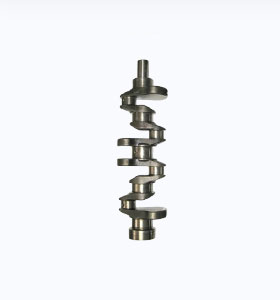
AISI 4340 Alloy Steel, commonly known as 4340 Steel, is a premium nickel-chromium-molybdenum low-alloy steel famous for its outstanding combination of high strength, exceptional toughness, and superior fatigue and impact resistance. This makes 4340 steel the top choice for demanding applications that require reliable performance under extreme stress. It is widely used in aerospace landing gear, crankshafts, connecting rods, heavy-duty gears, transmission components, mining equipment, and other critical parts where maximum durability and load-bearing capacity are non-negotiable.

Custom Machined A36 Carbon Steel Parts

CNC Pioneer specializes in fully custom parts made from A36 Carbon Steel. We are equipped to machine and produce components using common forms of ASTM A36 Steel, such as A36 Sheet, A36 Bar, A36 Plate, A36 Annealed, A36 Hot Rolled, and A36 Cold Rolled forms.

ASTM A36 Carbon Steel, widely known as A36 Steel, is one of the most affordable and commonly used mild steels. It provides solid strength, great formability, and top-notch weldability, allowing easy cutting, bending, drilling, and joining in any shop. A36 steel delivers consistent structural reliability and good electrical conductivity. It is the standard choice for welded frames, base plates, brackets, supports, machinery stands, bridges, buildings, and many general construction, fabrication, and industrial projects that don’t require extreme loads.

Available Parts for Carbon Steel CNC Machining

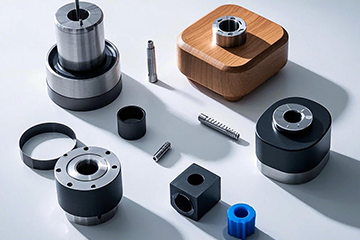
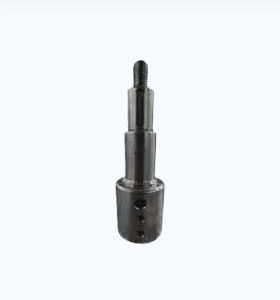
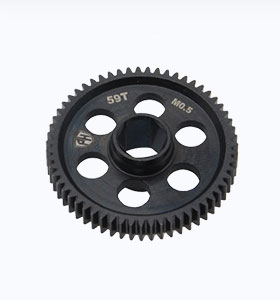
Carbon steel CNC machining is suitable for a wide range of carbon steel grades including 1018, 1045, 1144 stressproof, 12L14 free-machining, 1095 high-carbon, and low-carbon formulations like A36. The suitability depends on the material’s machinability and heat-treatment condition. Here are the parts we can provide for CNC Machining.

Carbon Steel CNC Services and Capabilities

Swiss Machining

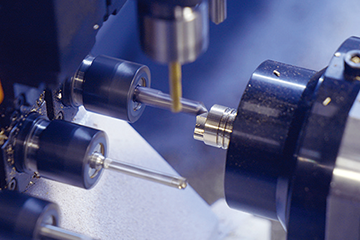
Swiss machining: ultra-precise, small-diameter complex parts machined from bar stock in a single setup – with micron-level tolerances and zero secondary operations.

CNC Turning and Milling

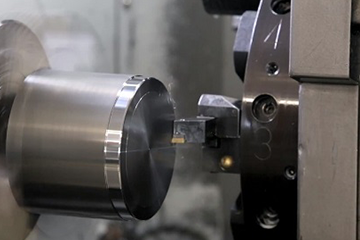
CNC turning and milling with live tooling combines both lathe and mill capabilities to machine parts with cylindrical features from metal rod stock.

FAQs

Machinability depends heavily on carbon content:

  • Low-carbon steel (e.g., 1018, 1020, 12L14; <0.3% C): Easiest to machine — low tool wear, excellent chip formation, good surface finish, and supports high speeds/feeds. Often called the “best machining” carbon steel grade.
  • Medium-carbon steel (e.g., 1045, 4140; 0.3–0.6% C): Moderate difficulty — higher hardness and cutting forces require slower speeds, reduced feeds, and coated carbide tools. Heat treatment (e.g., annealed vs. pre-hardened) makes a noticeable difference.
  • High-carbon steel (e.g., 1095; >0.6% C): Most challenging — rapid tool wear, work hardening, and potential for built-up edge. Best machined in annealed condition or with CBN/PCD inserts.

Yes — plain carbon steel (non-stainless) rusts very quickly, often showing flash rust within 24–48 hours after machining due to residual coolant, fingerprints, or humid air exposure.

Common rust-prevention options (ranked by cost / protection duration):

  1. Short-term / lowest cost: Rust-preventive oil or VCI paper (good for 1–6 months storage/transport).
  2. Best value for most parts: Black oxide (chemical conversion) + rust-preventive oil, or phosphate coating + oil.
  3. Better appearance & moderate protection: Electroplated zinc (clear/white/yellow), nickel plating.
  4. Higher corrosion resistance: Electroless nickel, Dacromet/Geomet, powder coating, or PVD.
  5. Wear + hardness focus: Nitriding, carburizing, induction hardening (followed by grinding) — improves wear but does not solve rust.

Carbon steel has good rigidity and moderate thermal expansion, so achievable precision depends mainly on machine condition, fixturing, tooling, and whether post-machining operations are used.

Typical commercial levels (3-axis / 4-axis / 5-axis machines):

  • Dimensional tolerances: ±0.01 mm (±0.0004″) standard; ±0.005 mm (±0.0002″) common with care; ±0.002–0.003 mm (±0.0001″) possible with fine tuning + temperature control.
  • Geometric tolerances (parallelism, perpendicularity, concentricity): 0.01–0.02 mm easy; below 0.005 mm requires special processes.
  • Surface roughness (Ra):
    • Turning: Ra 0.8–1.6 µm typical
    • Milling: Ra 0.8–3.2 µm typical
    • After finishing/polishing: Ra 0.4 µm or even Ra 0.2 µm achievable

For tolerances tighter than ±0.005 mm or Ra ≤0.4 µm, inform the supplier early — extra operations (grinding, honing, lapping) may be needed, affecting cost and lead time significantly.

CNC Machining Learning Center
What is Swiss Machining?

What is Swiss Machining?

Swiss machining uses a sliding headstock and guide bushing, unlike standard lathes, to support material while the tool remains stationary.
Questions?

Our experts are here for you!.