
Stainless Steel Swiss Machining Service
Stainless Steel is a resilient and sophisticated alloy widely used in architectural, culinary, and medical applications due to its unmatched corrosion resistance, exceptional strength, and sleek.
Why Choose Stainless Steel for Swiss Machining Parts?
Stainless Steel is a premier choice for Swiss machining, delivering unmatched corrosion resistance, exceptional mechanical strength, and long-term durability with optimized machinability in free-machining grades. It machines precisely at high speeds with controlled chip formation and reduced tool wear, producing superior surface finishes, ultra-tight tolerances down to ±0.0002″ (5 μm), and reliable repeatability in high-volume runs.
- Superior corrosion and oxidation resistance
- High strength-to-weight ratio with excellent toughness
- Outstanding surface finish and dimensional precision straight from the machine
- Clean, modern brushed or polished silver appearance
- Biocompatible and hygienic for medical and food applications
- Easy to plate, polish, or patina for premium aesthetics
- Versatile grades (e.g., 303, 416, 316L) tailored for machinability, corrosion, or temperature resistance
Available Parts for Stainless Steel Swiss Machining
Stainless steel swiss machining is suitable for a wide range of stainless steel grades including 303, 304, 316, 316L, 17-4PH, 416, etc., free-machining stainless, duplex stainless, and precipitation-hardening alloys. The suitability depends on the material’s machinability. Here are the parts we can provide for Swiss Machining.


Discover our Swiss Machining Learning Hub
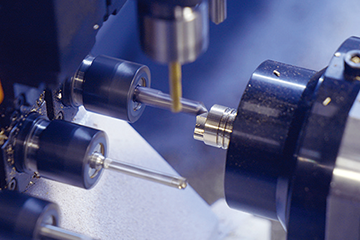
What is Swiss Machining?
Swiss machining uses a sliding headstock and guide bushing, unlike standard lathes, to support material while the tool remains stationary.
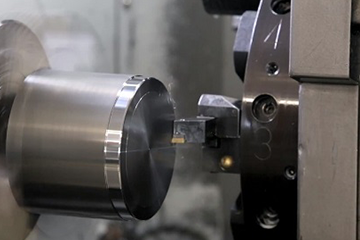
What is CNC Turning and Milling?
In CNC milling, the tool moves while the material is stationary. In CNC turning, the material spins while the tool moves.
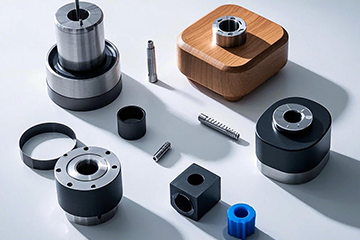
CNC Machining Materials: A Comprehensive Guide
CNC machining can be applied to a wide variety of materials, including but not limited to metals, plastics, and composites.