In modern metal part manufacturing, two dominant processes stand out: casting (a formative method dating back over 6,000 years) and CNC machining (a precise subtractive technique powered by digital code). Both deliver high-quality components for industries like automotive, aerospace, consumer electronics, medical devices, and robotics—but choosing the wrong one can inflate costs by 3–10×, extend lead times by weeks, or force unnecessary design compromises.
Today, precision high-pressure die casting for aluminum routinely achieves as-cast tolerances of ±0.05–0.15 mm (with advancements pushing tighter in controlled setups, often ±0.08 mm or better for critical features before secondary operations), while CNC machining holds ±0.005–0.025 mm standard—and down to ±0.002 mm (or even ±0.0005 mm on select features like reamed holes) in advanced shops. The decision hinges on geometry, volume, timeline, precision needs, and budget.
What Is Casting?
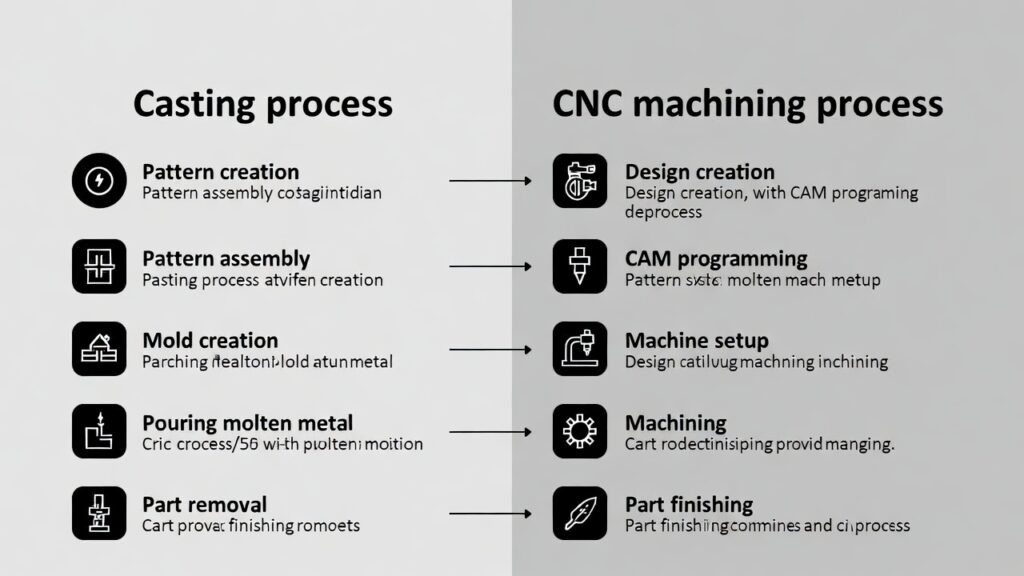
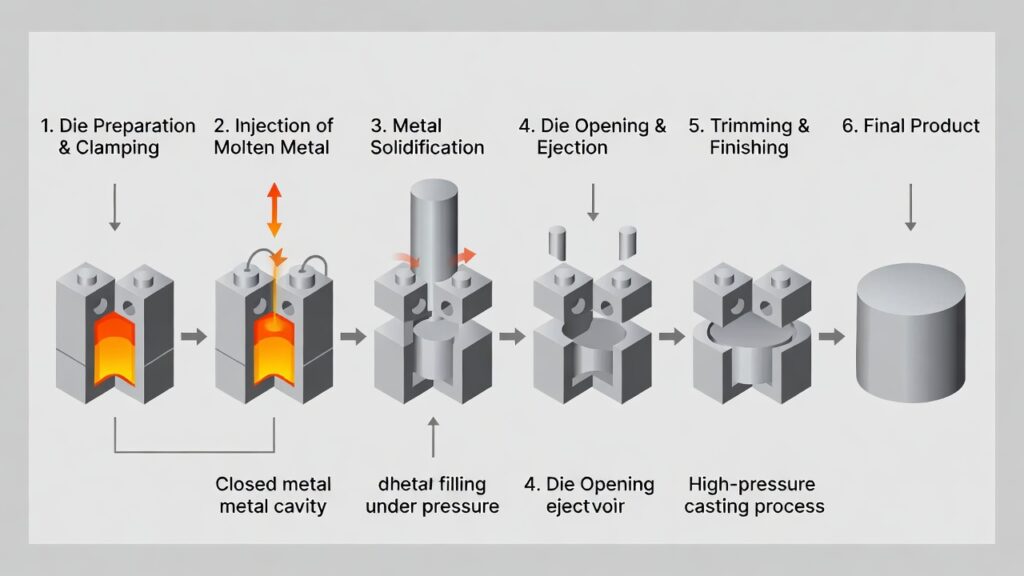
Casting pours molten metal into a mold to form the near-net shape. Key metal methods include the following:
- High-pressure die casting (aluminum, zinc, magnesium) — fastest for high volumes.
- Investment casting — excellent for complex, thin-wall parts.
- Sand casting & permanent mold — flexible for lower volumes or larger parts.
After solidification, parts undergo trimming, deburring, and often secondary CNC machining for flash removal and tight-tolerance features. Casting excels at creating complex internal cavities, thin walls, and integrated assemblies in one piece—reducing welds, fasteners, and assembly steps.
Typical applications: engine blocks, transmission housings, laptop chassis frames, drone structures, and medical housings.
What Is CNC Machining?
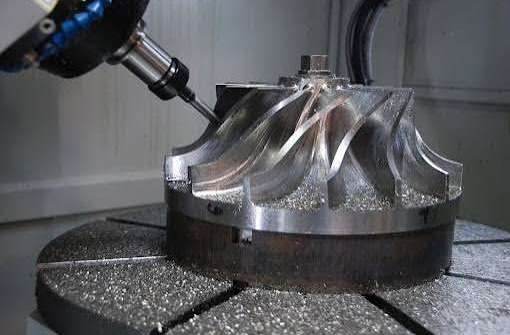
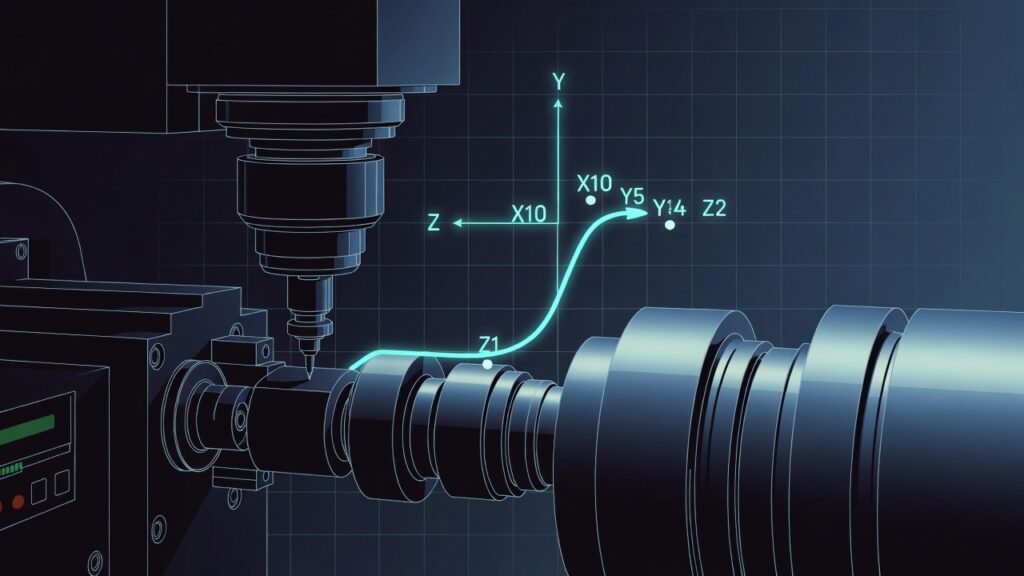
CNC machining removes material from solid billets using rotating tools controlled by G-code. It produces parts directly from CAD files with no tooling investment.
It shines for prototypes, complex external features (undercuts, sharp corners, and deep pockets), and any geometry that avoids excessive material waste.
Common uses: precision brackets, enclosures, fixtures, molds, aerospace fittings, and functional prototypes.
Casting vs. CNC Machining: Head-to-Head Comparison (2026 Benchmarks)
| Feature | Casting (Die / Investment / Sand) | CNC Machining | Clear Winner When… |
|---|---|---|---|
| Best Production Volume | Medium–high (1,000–100,000+ pcs) | Prototypes–low/medium (1–5,000 pcs) | Volume >3,000–5,000 → Casting |
| Per-Part Cost (High Vol.) | Very low after tooling | Higher (scales poorly) | High volume → Casting |
| Upfront Cost | High (tooling $5k–$100k+) | Near zero | Prototypes/low volume → CNC |
| Material Waste | Minimal (gates/risers recyclable) | High (up to 70–90% chips) | Expensive alloys or sustainability → Casting |
| Geometric Complexity | Excellent for thin walls, internal cavities, one-piece | Good, but slow/expensive for deep internals | Complex internals → Casting (or hybrid) |
| Typical Tolerances | ±0.05–0.3 mm (precision die casting ±0.05–0.15 mm, often ±0.08 mm achievable) | ±0.005–0.025 mm (down to ±0.002 mm or tighter possible) | Tight functional features → CNC |
| Surface Finish (As-Is) | Moderate (Ra 3–12 μm, needs secondary) | Excellent (Ra 0.4–1.6 μm possible) | Appearance/sealing → CNC or post-process |
| Lead Time (No Tooling) | Tooling 4–12 weeks; then fast cycle | Days to 2 weeks | Urgent/iterative → CNC |
| Prototyping Suitability | Poor (expensive mold changes) | Excellent (fast iteration) | Early stage → CNC |
| Common Hybrid Use | Cast near-net + CNC on critical faces/threads | — | Best of both worlds in production |
Decision Guide: When to Choose Each (or Both)
Choose Casting If:
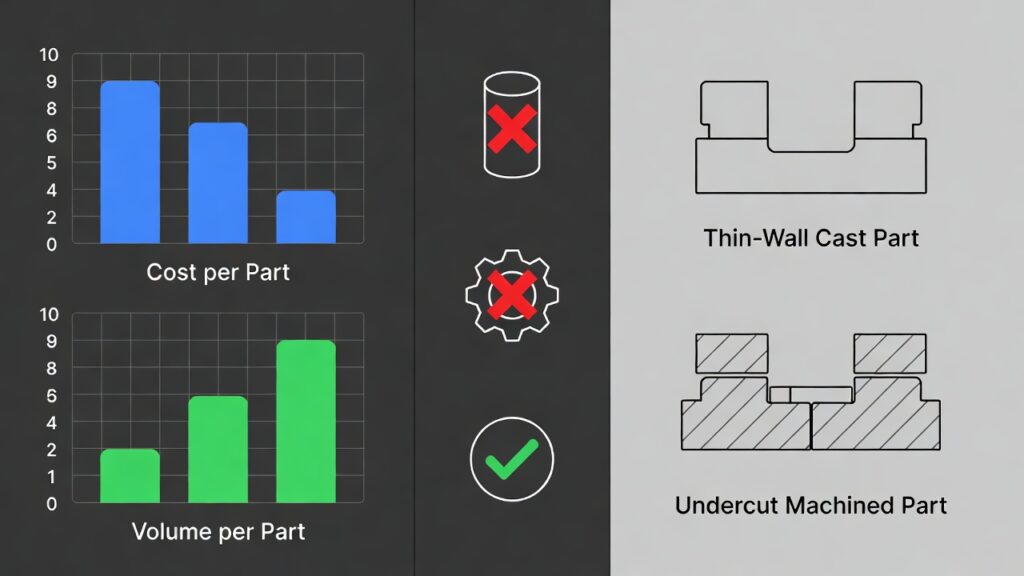
- Your design features thin walls, large internal cavities, undercuts via cores, or one-piece integration to eliminate assembly.
- Projected volume exceeds 3,000–5,000 units with stable design.
- Material efficiency and recyclability matter (e.g., aluminum/zinc alloys).
- Long-term unit cost is a priority over initial tooling investment.
Choose CNC Machining If:
- You need ±0.025 mm (or tighter) tolerances on functional surfaces, threads, or fits.
- Project is in the prototype/validation stage, or volumes stay under 2,000–5,000 pcs.
- Design changes are frequent—digital files allow instant iteration.
- Lead time is critical (under 4 weeks).
- Sharp corners, no draft angles, or minimal internal complexity required.
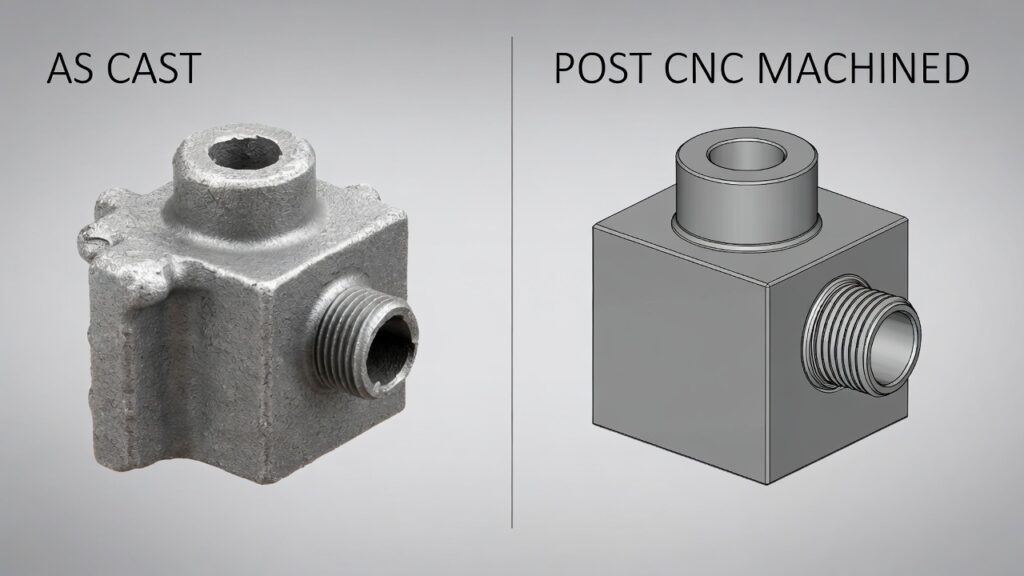
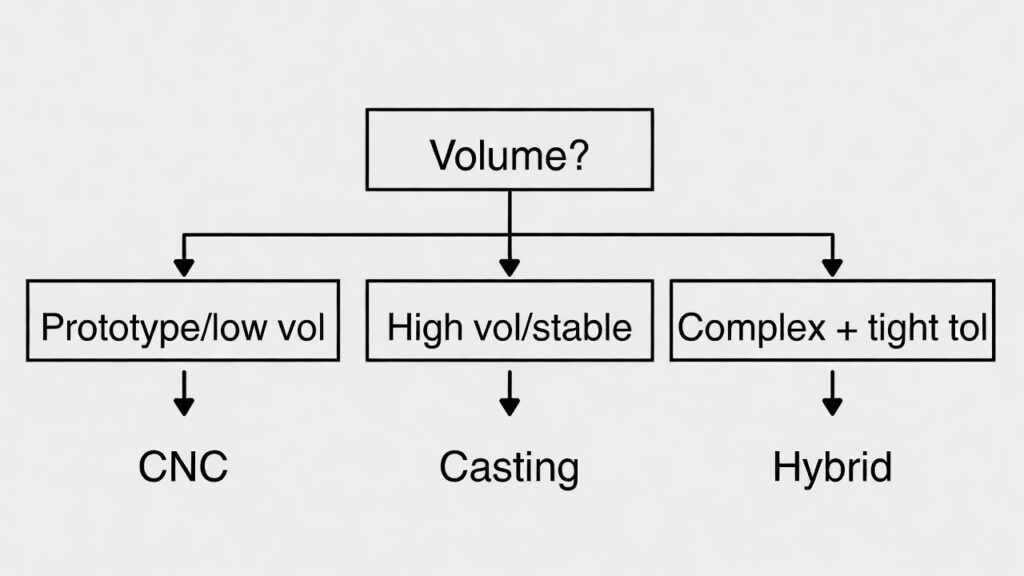
Smart Hybrid Approach (Most Common in 2026) Many high-volume parts now use die casting for the bulk shape + selective CNC post-machining on sealing faces, bearing bores, threads, or datums. This combines casting’s low unit cost and geometric freedom with CNC’s precision—widely adopted in automotive, drones, consumer electronics, and medical devices.
Quick Decision Checklist
Answer these to pick the right path:
- Critical tolerances tighter than ±0.05 mm? → CNC (or hybrid post-machining).
- Stable design and volume >5,000 pcs. → Die casting.
- Complex internal features or thin walls? → Casting (or hybrid).
- Frequent design changes or prototyping? → CNC first.
- Time-to-first-article < 4 weeks? → CNC.
- Long-term cost per part is the top priority? → Casting after tooling amortization.
Frequently Asked Questions (FAQ)
Can I use casting for prototypes?
Technically yes (via sand casting or 3D-printed molds), but it’s rarely cost-effective or fast. Tooling changes are expensive and slow. CNC machining is almost always the better choice for prototypes and early validation runs (1–500 pcs).
What’s the real cost difference at different volumes?
At 100 pieces: CNC is usually 2–5× cheaper due to no tooling. At 1,000–2,000 pieces: costs become similar (hybrid often wins). At 5,000+ pieces: casting drops unit price dramatically (often 50–80% lower than CNC after tooling is amortized).
Is hybrid casting + CNC machining always the best of both worlds?
In most production scenarios, yes—especially for aluminum parts needing both complex geometry and tight tolerances on specific features. However, if your entire part requires ultra-tight tolerances everywhere (e.g., optical or high-precision aerospace), full CNC from billet may still be simpler and more consistent.
Which process is more environmentally friendly?
Casting generally wins on material efficiency (near-net shape, high recyclability of gates/risers) and lower energy per part at scale. CNC produces significant scrap (70–90% chips), though aluminum chips are highly recyclable. For sustainability-focused projects, casting + minimal post-machining is often preferred.
How do I decide when my tolerances fall in the gray zone (±0.05 to ±0.15 mm)?
If the tight tolerance is only on a few critical features (e.g., bearing seats, mating faces), go hybrid: cast the bulk shape and CNC only those areas. If the entire part needs that level of precision, full CNC is usually safer and avoids secondary operation risks/variability.
Final Thoughts
Neither process is universally superior—success comes from matching method to project realities. In 2026, the smartest engineers increasingly blend both: casting for scale and shape and machining for precision.