Nickel-based alloys represent some of the most advanced and reliable materials in modern engineering, prized for their exceptional corrosion resistance, mechanical strength, and ability to perform in environments where ordinary metals would quickly degrade or fail. These superalloys are essential in critical industries such as aerospace, marine engineering, chemical processing, oil and gas, and nuclear power, where failure is not an option.
While many nickel alloys exist, two stand out as particularly versatile and widely used: Inconel and Monel. Both are built around a high nickel content that provides inherent toughness and resistance to attack, but they diverge significantly in their secondary alloying elements and resulting performance profiles. Inconel, a nickel-chromium family, is engineered for extreme heat and oxidizing conditions. Monel, a nickel-copper alloy, excels in highly corrosive, often reducing or marine environments.
Choosing between Inconel and Monel can make or break project performance, cost efficiency, and longevity. Read on to learn more about each alloy family, their key properties, and practical guidance on selecting the right one for your next demanding application!
Pro-tip: The primary alloying element defines their strengths—chromium in Inconel creates a protective oxide scale for high-temperature oxidation resistance, while copper in Monel enhances resistance to reducing acids and seawater corrosion.
Inconel – High-Performance Superalloy for Extreme Heat
Inconel is a family of nickel-chromium-based superalloys renowned for outstanding strength and oxidation resistance at elevated temperatures. Developed primarily for demanding aerospace and high-temperature industrial environments, Inconel maintains structural integrity where most metals would fail due to creep, oxidation, or thermal fatigue.
Key characteristics of Inconel include:
- Exceptional high-temperature strength and creep resistance up to 2200°F (1204°C) in many grades
- Superior oxidation and corrosion resistance in oxidizing environments thanks to a protective chromium oxide layer
- Good resistance to pitting and crevice corrosion, especially in grades like 625
- Excellent fatigue resistance under cyclic loading
- Precipitation-hardenable grades (e.g., 718, X-750) for enhanced mechanical properties
- Weldable with proper techniques, though some grades require post-weld heat treatment
Common applications for Inconel:
- Aerospace turbine blades, combustors, and exhaust systems
- Gas turbine engine components
- Nuclear reactor parts and steam generators
- Chemical processing equipment exposed to hot acids or gases
- Automotive turbochargers and exhaust manifolds
- Heat shields and furnace fixtures
Popular grades include Inconel 600 (general high-heat oxidation resistance), 625 (excellent marine and acid resistance), 718 (aerospace precipitation-hardened strength), and X-750 (high-strength springs and fasteners).
Monel – Reliable Nickel-Copper Alloy for Corrosive Environments
Monel is a nickel-copper solid-solution alloy celebrated for its exceptional resistance to corrosive media, particularly in marine and reducing acid conditions. Introduced in the early 1900s, Monel has become a go-to material where seawater, hydrofluoric acid, or sulfuric acid exposure demands long-term durability without excessive cost.
Key characteristics of Monel include:
- Outstanding resistance to seawater, brackish water, and marine atmospheres
- Excellent performance in reducing acids (hydrofluoric, sulfuric, hydrochloric) and alkalis
- High resistance to chloride stress corrosion cracking in many conditions
- Good mechanical strength and ductility, with age-hardenable grades like K-500 offering doubled tensile strength
- Non-magnetic in most conditions
- Readily weldable and formable
Common applications for Monel:
- Marine propeller shafts, valves, pumps, and seawater piping
- Chemical processing tanks, heat exchangers, and reaction vessels for acids
- Oil and gas downhole tubing and wellhead components
- Aerospace structural parts and exhaust systems (especially K-500)
- Electronics and instrumentation where low magnetism is required
- Food processing equipment in corrosive cleaning environments
Popular grades include Monel 400 (general-purpose corrosion resistance), K-500 (age-hardened for higher strength), 404 (low Curie temperature for electronics), and 405 (improved machinability).
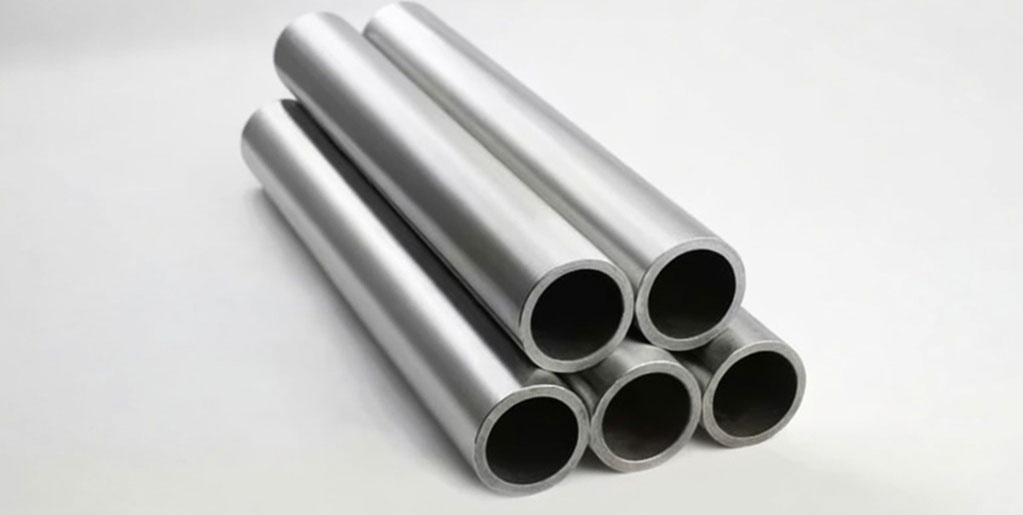
Inconel vs. Monel Quick Comparison
While both are premium nickel-based alloys offering far superior corrosion resistance than stainless steels in harsh conditions, they target different challenges:
- Temperature capability — Inconel excels at high temperatures (up to 2200°F); Monel is limited to around 1000°F (538°C) before significant softening.
- Corrosion type — Monel dominates in reducing environments and seawater; Inconel performs better in oxidizing, high-heat, or mixed corrosive gases.
- Strength at temperature — Inconel retains strength and resists creep far better at elevated temperatures.
- Cost — Monel is generally more economical (often 40-60% less expensive than equivalent Inconel forms due to simpler composition and processing); Inconel commands a premium for its advanced high-temp performance.
- Machinability — Both are challenging, but Monel (especially 405 or annealed conditions) is somewhat easier; Inconel work-hardens aggressively and requires rigid setups.
- Interchangeability — They are rarely direct substitutes. Using Monel in high-heat service risks deformation; using Inconel in simple seawater applications wastes budget.
Neither alloy is truly “rustproof,” but both provide exceptional longevity in their intended niches compared to carbon steel or even 316 stainless.
Composition of Inconel vs. Monel
Typical elemental composition varies by grade, but representative values for common alloys (Inconel 625 and Monel 400) illustrate the core differences:
(Note: Values are approximate weight percentages; actual specs reference UNS designations and standards like ASTM.)
| Alloy | Ni | Cr | Cu | Mo | Fe | Nb+Ta | Al | Ti | Mn | Si | C | Other |
|---|---|---|---|---|---|---|---|---|---|---|---|---|
| Inconel 625 | 58 min | 20-23 | — | 8-10 | 5 max | 3.15-4.15 | 0.40 max | 0.40 max | 0.50 max | 0.50 max | 0.10 max | Co ≤1, others trace |
| Monel 400 | 63-70 | — | 28-34 | — | 2.5 max | — | — | — | 2 max | 0.5 max | 0.3 max | — |
Inconel relies on chromium (and often molybdenum/niobium) for oxidation protection and strengthening. Monel depends on high copper content for resistance to reducing acids and seawater.
Mechanical Properties of Inconel vs. Monel
Typical room-temperature properties (annealed condition unless noted; values approximate from industry datasheets like Special Metals and ASM):
| Alloy | Density (g/cm³) | Ultimate Tensile Strength (MPa) | Yield Strength (0.2% offset, MPa) | Elongation (%) | Rockwell Hardness | Max Service Temp (°F) |
|---|---|---|---|---|---|---|
| Inconel 625 (annealed) | 8.44 | 930 | 517 | 42.5 | ~90 HRB | ~1800-2200 |
| Monel 400 (annealed) | 8.80 | 550 | 240 | 40 | ~65-80 HRB | ~1000 |
| Inconel 718 (aged) | 8.19 | 1275 | 1034 | 12-20 | ~40 HRC | ~1300 |
| Monel K-500 (aged) | 8.44 | 1100 | 790 | 20 | ~30-35 HRC | ~1000 |
Inconel grades show higher strength retention at temperature and better creep resistance. Monel offers good ductility and is often chosen when moderate strength combined with top-tier corrosion resistance is sufficient.
Sourcing Simplified – Start Your Next Project With Confidence
Both Inconel and Monel are high-value materials best sourced from reputable suppliers with full traceability (mill certificates, heat numbers, and testing reports). For precision components, consider partners offering CNC machining, forging, or additive manufacturing expertise in nickel alloys.
Review the specific grade properties, environmental demands, temperature range, and budget for your application. Inconel is the clear choice for extreme heat and oxidation; Monel delivers excellent value for marine, acid, and general corrosive service.
FAQs
Here are some common questions related to Inconel vs. Monel, based on popular searches:
What is the main difference in composition between Inconel and Monel?
Monel is primarily nickel-copper, while Inconel is nickel-chromium (often with molybdenum or niobium). This makes Monel better for reducing acids and seawater, and Inconel superior for high-temperature oxidation.
Which is more expensive, Inconel or Monel?
Inconel is generally more expensive—often 1.5–3 times the cost—due to complex alloying elements, higher processing requirements, and premium high-temperature performance.
Can Inconel and Monel be used interchangeably?
Rarely. Inconel handles extreme heat where Monel would soften or creep; Monel excels in seawater or acids where Inconel would be unnecessarily costly.
Which alloy has better corrosion resistance?
It depends on the environment: Monel is superior in reducing acids, hydrofluoric acid, and seawater; Inconel outperforms in oxidizing gases, hot acids, and chloride pitting at high temperatures.
What are common applications for Monel?
Marine hardware (propeller shafts, valves), chemical processing (acid tanks, heat exchangers), oil/gas tubing, and nonmagnetic electronics components.
What are common applications for Inconel?
Jet engine turbines, nuclear reactors, chemical processing in hot oxidizing conditions, turbochargers, and high-temperature furnace parts.
Is Monel easier to machine than Inconel?
Generally yes—Monel (especially grades like 405) is more machinable; Inconel work-hardens rapidly and requires slower speeds, rigid tooling, and coolant.
How do Inconel and Monel compare to stainless steel?
Both far exceed 304/316 stainless in specialized corrosion resistance and temperature capability, but at much higher cost. Use stainless for general purposes; reserve nickel alloys for extreme conditions.
What Inconel grade is best for seawater or marine use?
Inconel 625 offers excellent resistance to pitting, crevice corrosion, and chloride stress cracking in marine environments.
Are there any similarities between Inconel and Monel?
Yes, both are nickel-based, austenitic, highly corrosion-resistant, non-magnetic in most conditions, and used in demanding industries like aerospace, marine, chemical, and energy.