Thread milling and tapping are two essential machining processes used to create threads in materials, particularly metals. Threads are spiral grooves that allow screws, bolts, and other fasteners to secure components together. While both methods achieve similar results, they differ significantly in their approaches, tools, and applications. Thread milling involves a specialized cutter that interpolates around the hole on a CNC machine, offering precision and flexibility. In contrast, tapping uses a tap tool that rotates directly into the hole, mimicking a screw’s action.
This article explores these methods in detail, addressing common questions from machinists and engineers, such as when to choose one over the other, their advantages in specific materials, and performance factors like speed and tool life. By comparing them side by side, we’ll help you decide the best option for your project.
What is Thread Milling?
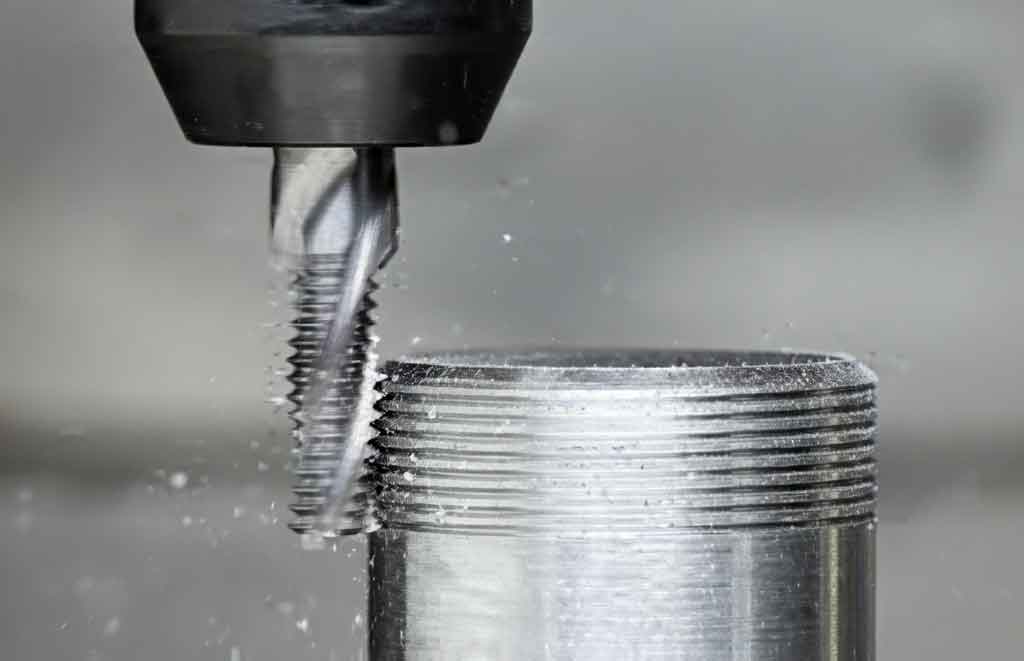
Thread milling is a versatile CNC machining technique that uses a thread mill—a carbide tool resembling an end mill but with thread-forming teeth—to create precise threads. The tool moves in a helical path around the hole’s diameter, allowing for customizable thread sizes and pitches without needing multiple specialized tools. This method is ideal for high-precision work and is commonly discussed in machining forums for its adaptability.
How Does Thread Milling Work?
The process begins by drilling a pilot hole slightly smaller than the desired thread diameter. The thread mill is then inserted and guided by CNC programming to cut the threads through interpolation: it orbits the hole while advancing along the Z-axis in increments to achieve the full thread depth. A common question is whether thread milling can achieve full threads to the bottom of a hole better than tapping—yes, especially in blind holes, as it offers better control and avoids the incomplete threads often seen with taps.
Key points from discussions: The tool’s circular motion ensures even cutting, but depth is typically limited to 1.5 times the hole diameter to prevent deflection. For setups without reverse capability on CNC mills, thread milling shines because it doesn’t require spindle reversal like rigid tapping might.
How Is Thread Milling Used in Manufacturing?
Thread milling is widely applied in industries requiring precision components, such as aerospace, automotive, and medical devices. It handles internal and external threads and right- or left-hand orientations and works well with a variety of materials, including hard ones like titanium, Inconel, or even 62RC D2 steel where tapping might fail.
Frequently asked: Is thread milling preferred for hard materials? Absolutely, due to its lower torque requirements and ability to use carbide tools that withstand high hardness. It’s also better for coarse- or fine-pitch threads, reducing risks like part scrapping in coarse applications, and excels in unusual thread sizes or complex jobs where custom programming is key.
What Are the Advantages of Thread Milling?
Thread milling offers superior precision, versatility, and tool longevity. A single tool can produce multiple thread sizes and types by adjusting CNC offsets, making it cost-effective for low-volume or custom work. It reduces tool breakage risks in fragile materials and provides high accuracy for tight tolerances.
Common queries: How does it compare in tool life? Thread mills often outlast taps, especially in tough materials, and allow for easy adjustments without additional tooling. It’s ideal for high-value parts where scrapping is costly.
What Are the Disadvantages of Thread Milling?
Despite its benefits, thread milling requires advanced CNC equipment capable of high speeds (up to 60,000 RPM), which can be expensive. It’s less suitable for very small threads, like those in watches, and setup can be more complex for beginners compared to tapping.
Addressed in forums: Is the cost justified? For specialized or low-volume runs, yes, but for high-volume standard threads, the initial investment in machinery and CAM software (considering clearance and helix) might not pay off.
What is Tapping?
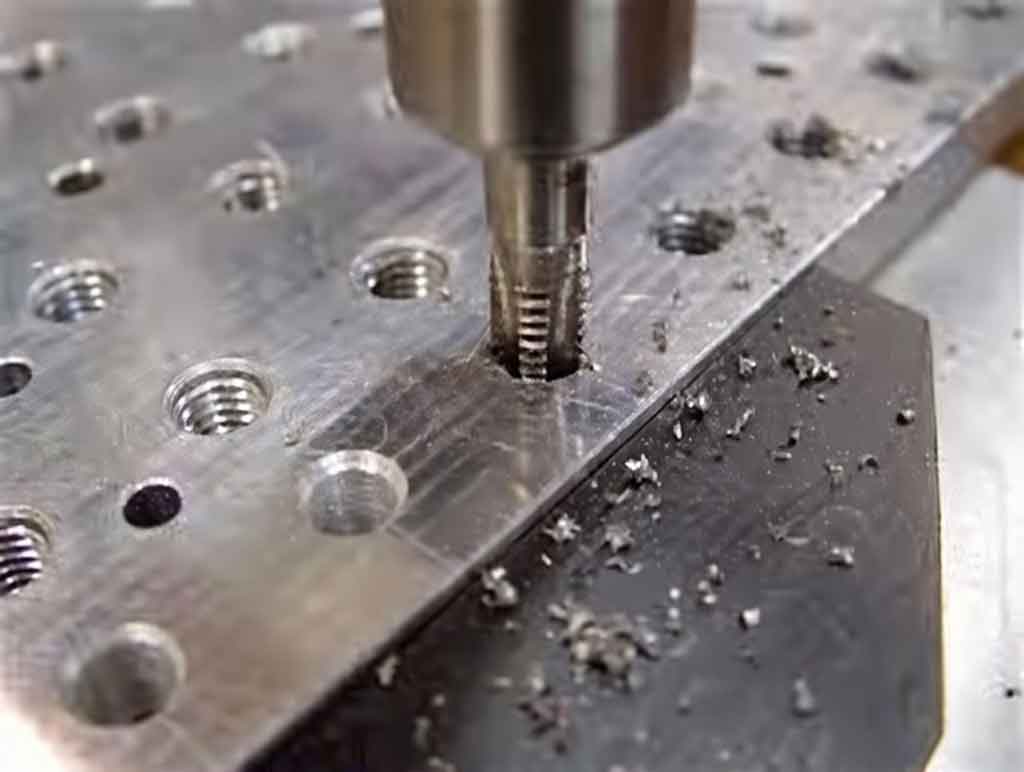
Tapping is a straightforward method for creating internal threads using a tap—a hardened tool with flutes for chip evacuation, resembling a screw. It’s inserted into a pre-drilled hole and rotated to cut the threads, either manually or via machine. Taps are affordable and come in various types, like spiral point or flute, making this a go-to for many machinists.
How Does Tapping Work?
Start by drilling a precise hole based on the tap’s specifications, then align and lubricate the tap. Rotate it clockwise (for right-hand threads) while applying pressure, reversing periodically to clear chips. Post-tapping, clean the hole of debris. Questions often arise about tapping on machines without reverse—rigid tapping requires it, but alternatives like tension-compression holders can help.
Highlights: It’s efficient for deep threads, but in blind holes, chip buildup can be an issue unless using form taps.
How Is Tapping Used in Manufacturing?
Tapping is prevalent in high-volume production across automotive (e.g., engine blocks), aerospace, electronics, and construction for creating threaded holes in assemblies. It suits materials like aluminum, steel, and some plastics.
Common question: What about specific machines or scenarios? For CNC mills without reverse, floating holders enable tapping, but it’s best for standard internal threads in tough materials where speed is prioritized.
What Are the Advantages of Tapping?
Tapping is fast—often 4–5 seconds per thread—and economical for multiple identical threads. It excels in small or deep threads in hard materials like steel, where thread milling might be slower.
From discussions: Is tapping faster? Yes, especially in high-volume setups, and it’s simpler for beginners with minimal setup.
What Are the Disadvantages of Tapping?
It lacks flexibility: each thread size requires a specific tap, and adjustments post-cut are difficult. It’s limited to internal threads and can risk tool breakage in hard or brittle materials.
Queried often: How does it handle custom sizes? Poorly tapping isn’t ideal for non-standard threads, leading to higher costs for variety.
How To Choose Between Thread Milling and Tapping?
Selecting between thread milling and tapping depends on factors like production volume, material, thread specifications, machine capabilities, and cost. Tapping is quicker and cheaper for standard, high-volume internal threads, while thread milling offers flexibility for custom, large, or hard-material applications. Personal preference plays a role, but data from machining communities emphasizes evaluating speed, accuracy, and risk.
How do Thread Milling and Tapping Differ in the Cutting Process?
Tapping cuts threads by rotating the tap directly into the hole, forming them in one pass but limited to internal use. Thread milling interpolates around the diameter, enabling both internal and external threads with programmable control.
Fundamental difference question: Thread milling’s orbital path vs. tapping’s axial rotation—milling reduces torque and breakage risks.
What Is the Accuracy of Thread Milling?
Thread milling achieves high accuracy with CNC precision, maintaining tight tolerances for dimensions and profiles. Tapping can be accurate but is more prone to variations from tool wear.
What Is the Size of the Thread Mill?
Thread mills vary widely, from small for fine threads to large for bigger diameters, based on pitch, depth, and material. Unlike taps, one mill can handle multiple sizes via programming.
How do Thread Milling and Tapping Differ in Applications?
Thread milling suits thin-walled parts, asymmetric components, high-force materials, large holes, and custom threads. Tapping is better for speed in standard sizes, deep threads in tough materials, and small threads (e.g., medical devices).
Machine power and quantity influence: For low-volume precision, milling; for high volume, tapping.
How Flexible Are Thread Milling and Tapping?
Thread milling is highly flexible—change sizes, pitches, or offsets via software with one tool. Tapping requires dedicated tools per size, with limited adjustments.
Setup ease: Tapping is simpler, but milling’s CAM needs (e.g., tooling specs) offer long-term versatility.
What Is the Typical Life Span of Thread Mills and Taps?
Carbide thread mills last thousands of holes with proper maintenance, outperforming HSS or carbide taps, which may last dozens to hundreds, especially in hard materials. Factors like lubrication affect both.
Are Thread Milling and Tapping Common Methods Used in Milling Processes?
Yes, both are staples in CNC milling. Tapping for efficiency in volume production; thread milling for versatility in specialized jobs. Discussions often note milling’s edge in reducing risks like tool breakage.
In summary, thread milling provides adaptability and precision for complex or custom needs, while tapping excels in speed and simplicity for standard applications. If you’re tackling a project, consider your machine setup, material, and volume to choose wisely.